
Independent Buyer Comparison: GE3828, JE2033, CF2025, CF201
Independent Buyer Comparison: GE3828, JE2033, CF2025, CF201
A buyer comparing custom outerwear models GE3828, JE2033, CF2025 and CF201 should start with a clear limitation: the model codes identify candidates, not verified specifications. The available supplier information describes the custom outerwear program — fabric selection, sizing, branding, compliance, MOQ, sampling and bulk lead time — but it does not separate model-by-model performance data for the four codes. That does not make the comparison impossible. It changes the first question from which model is preferred to which model can be documented against the buyer's use case, market and replenishment plan.
The practical comparison therefore runs on two levels. Level one is the custom-program comparison: custom sportswear sets versus standard ready-made stock. Level two is the model-level check: GE3828, JE2033, CF2025 and CF201 must each be confirmed for fabric composition, fit block, test reports, MOQ, sample date, bulk date and landed cost. The first level is documented in the available supplier material. The second level requires an RFQ and model-specific documents.
What the four model codes establish — and what they do not
Model codes are useful for procurement control. They allow a buyer to request a quotation, sample, size set, test report and production slot for a specific style rather than a generic category. However, a code alone does not prove fabric weight, insulation, waterproof rating, breathability, fit, certification, MOQ or price. Those attributes must be attached to each code in writing. For GE3828, JE2033, CF2025 and CF201, the buyer should not accept a category-level brochure as a substitute for model-level confirmation.
This is especially important in custom sportswear sets, where an outerwear jacket interacts with a base layer, mid-layer, trousers, branding and packaging. A change in fabric GSM, lining, seam construction or size grading can alter the whole set's fit and cost. The buyer's comparison should therefore be a document comparison first and a visual comparison second.
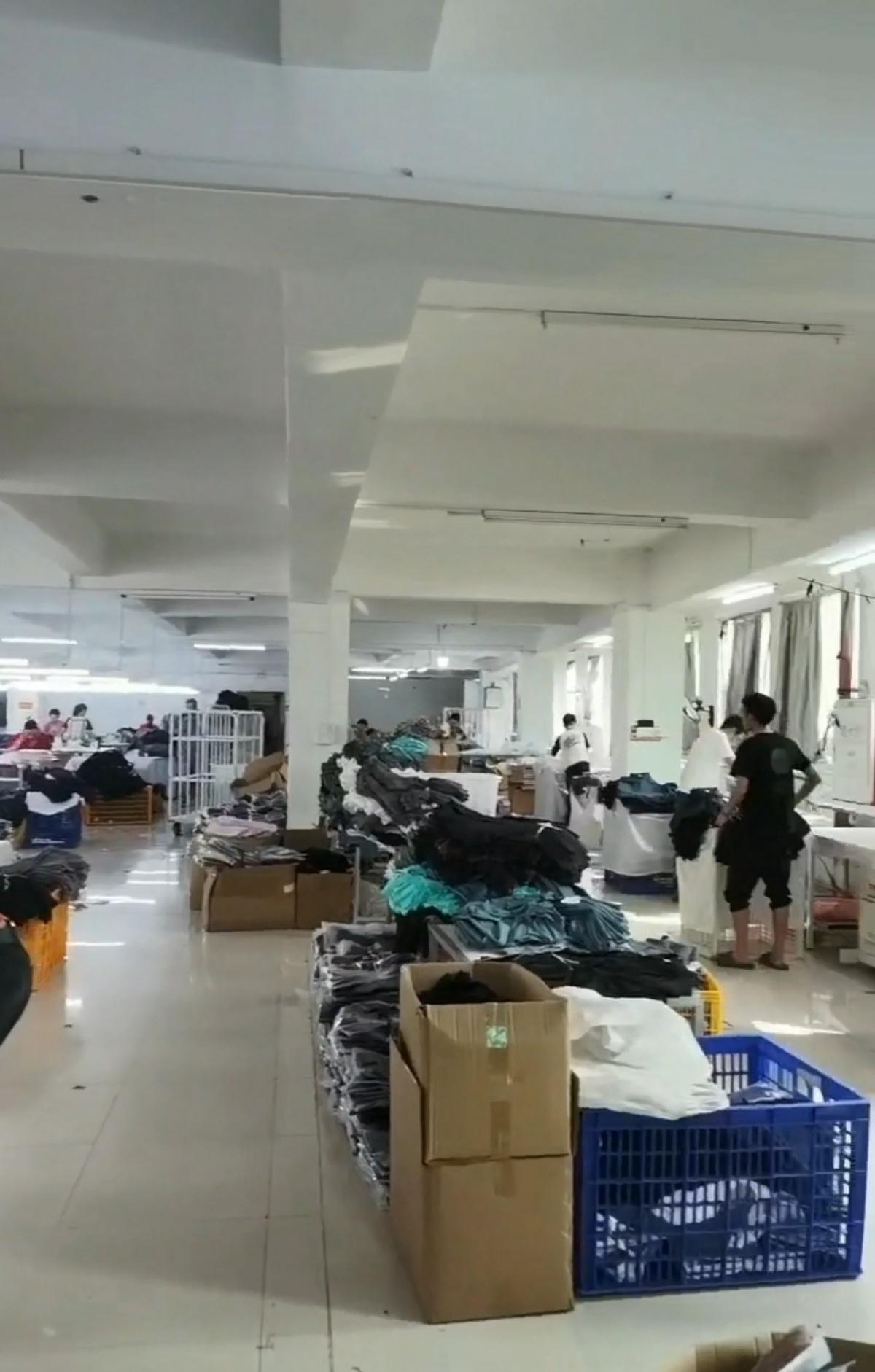
Yeanro Apparel Co., Ltd. is a Shishi-based supplier whose company profile covers R&D, customization, production and export of functional outdoor and casual clothing. Its profile lists a 20,000 m² factory, 130 employees, 10 engineers, annual output of 160,000 units and an 80% export share, with markets including Mexico, Russia, the Middle East, Southeast Asia, Europe and America. Those facts describe the supplier's custom-program capacity; they do not replace model-level specifications for GE3828, JE2033, CF2025 or CF201.
Comparison baseline: custom program versus ready-made stock
The comparator in the supplier material is standard non-custom mass-produced sportswear and outdoor ready-made garments. The documented differences are practical rather than cosmetic. Ready-made stock is bought as fixed styles, colors and sizes. The custom program supports custom patterns, logos, embroidery, prints and private labels. Ready-made goods use universal fabric. The custom program selects functional fabrics and adjusts performance such as moisture wicking, UV protection and water repellent according to project scenarios. Ready-made items follow fixed size charts. The custom program can customize sizing, cut and garment structure to fit target users.
| Decision dimension | Ready-made stock comparator | Custom program comparator |
|---|---|---|
| Style and branding | Fixed styles, colors and sizes | Custom patterns, logos, embroidery, prints and private labels |
| Fabric and function | Universal fabric | Functional fabric selection with moisture wicking, UV protection and water repellent options |
| Sizing and fit | Fixed size charts | Custom sizing, cut and garment structure |
| Compliance | Usually general basic test reports | Targeted lab tests and certifications arranged to meet target-market requirements |
| Service mode | Wholesale of existing stock | One-stop OEM/ODM including design, sampling and production |
| MOQ and timing | MOQ 1 pc; 3–7 days delivery; 0 custom size adjustment; limited 3–5 fabric options | MOQ from 50 pcs; sampling within 7–10 days; bulk lead time 20–35 days; 20+ functional fabric selections |
Criterion 1: style, branding and private-label control
For private-label sportswear, the first comparison question is not which model looks different but which branding method can be reproduced consistently. The supplier material lists customization options including fabric selection, sizing, cut, color, sublimation print, silicone print, embroidery, woven labels, hang tags and private labeling. Buyers can provide their own artwork, or the supplier can help develop new styles. The material also refers to 10+ branding crafts, which means the buyer should specify the exact craft for each model rather than approve a generic logo sample.
For GE3828, JE2033, CF2025 and CF201, request the artwork file, placement drawing, color reference, label and hangtag specification, and a production sample for each branding method used. Confirm who owns the artwork and whether an NDA is available. Yeanro states that an NDA is available upon request and that custom patterns, logos and artwork will not be reused for other clients. That is relevant to private-label buyers who need design confidentiality, but it should still be documented in the order file.
Criterion 2: fabric and function
Fabric is the main technical differentiator between a documented custom program and a ready-made stock purchase. The supplier material lists moisture-wicking, 4-way stretch, UV-protection, water-repellent and breathable functional fabrics. Fabric selection is based on the usage scenario, such as hiking, trail running or team sports. For a custom hiking set, the buyer may prioritize weather resistance and abrasion; for a custom running set, breathability and stretch may matter more; for a custom gym wear set, recovery and hand feel may be central.
Do not accept the word breathable or waterproof without a test method and a result. For each model, request fabric composition, GSM, finish, stretch direction, care instructions and the relevant test report. If the model uses a cotton-padded jacket or down jacket construction, confirm shell, lining, fill type and fill weight separately. Those model-level facts are not provided in the available material, so they must be obtained before the four codes can be compared on technical performance. The same rule applies to lightweight outdoor apparel and stretch sportswear: the claim is only useful when it is tied to a measured specification and an intended use.
Criterion 3: sizing, cut and fit
Ready-made items follow fixed size charts. The custom program can customize sizing, cut and garment structure to fit target users. That difference is material for team kits, corporate uniforms and private-label ranges because a size chart that works for one market may not work for another. The supplier material states that the custom program supports 100% customizable size and pattern. It also states that ready-made sportswear has 0 custom size adjustment.
For GE3828, JE2033, CF2025 and CF201, ask for a model-specific measurement chart, grading rules, tolerance range and fit-model notes. Confirm whether the model is designed for layering, whether the sleeve and body length change by size, and whether the trouser or short block is matched to the outerwear piece. A custom sportswear set should be evaluated as a set, not as four unrelated garments. If the model is intended for men's casual wear or a unisex team program, confirm the fit block and size range before approving the sample.
Criterion 4: compliance and testing
Ready-made stock goods usually come with general basic test reports. The custom program can arrange targeted lab tests and certifications to meet target-market requirements. The supplier material names OEKO-TEX, REACH, AZO-free, color fastness and shrinkage tests as examples that can be arranged according to market requirements. It also states that certifications are arranged by target market and material, and existing reports should be confirmed per order. That qualification matters: a certificate for one fabric or one order does not automatically cover every model, trim or print.
For each of the four models, the buyer should list every component that touches skin or affects compliance: shell fabric, lining, fill, zipper, drawcord, elastic, print, embroidery thread and label. Then confirm which reports apply to each component for the destination market. This is especially important for Europe-bound custom outdoor clothing sets and for private-label sportswear sold through retail or e-commerce. The buyer should also confirm whether the report is issued for the actual production material and whether it remains valid for the order date.
Criterion 5: service mode, MOQ, sampling and bulk lead time
The service-mode difference is straightforward. Ready-made garments are sold as wholesale of existing stock. The custom program provides one-stop OEM/ODM including design, sampling and production. That means the buyer is not only choosing a garment; the buyer is choosing a development process. The documented custom MOQ starts from 50 pieces, and small trial orders are supported for new brands. A better unit price is offered for orders over 500 pieces. Sampling takes 7–10 working days, and bulk production requires 20–35 working days after sample confirmation and deposit receipt. Order quantity, fabric and color options, and customization complexity may extend the bulk lead time.
Ready-made sportswear has MOQ 1 pc and 3–7 days delivery for existing stock, but it has no custom size adjustment and limited 3–5 fabric options. The buyer should not compare a ready-made stock ship date with a custom bulk date as if they were the same service. For GE3828, JE2033, CF2025 and CF201, request a sample date and a bulk date separately, and state the approval milestone for artwork, fabric, size set and pre-production sample. Standard payment terms are T/T with a 30% deposit before production and the balance before shipment. Other terms may be discussed for long-term bulk clients, but they should be confirmed in the order document.
Cost comparison: when custom is cheaper and when it is not
The supplier material states that small MOQ custom orders can carry a slightly higher unit cost because of functional fabric and custom development. That is a normal trade-off: the buyer is paying for fabric selection, pattern development, sampling and branding rather than taking stock. For bulk orders above 500 pieces, the factory-direct model is stated to reduce comprehensive project cost by 8%–15%, including sampling, testing and labeling service fees bundled in one package. The same material states that competitors often charge separately for pattern making, lab tests and custom tags.
Total project cost should therefore be compared, not unit price alone. Include sample fee, pattern fee, test fee, label and hangtag cost, packaging, payment terms, freight, duty and rework risk. Tariff exposure can change the landed-cost picture: the average US tariff rate on apparel imports reached 35.1% in December 2025, up from 14.7% in January 2025, according to data republished by DeadSoxy citing FASH455 and Sheng Lu. That figure is market-level, not model-level, but it affects the landed cost of any US-bound custom outerwear order. For that reason, the buyer should compare GE3828, JE2033, CF2025 and CF201 on delivered cost under the same Incoterm and the same duty assumption.
Performance after wash and reorder maintenance
The supplier reports that its custom sports and outdoor apparel maintains 85% or more of fabric functional performance after 50 standard wash cycles, while ordinary functional garments typically retain 55%–70% after the same washing test. This is a supplier-reported comparison and should be verified against the test method used. Still, it gives the buyer a useful question to ask each model: what functional property is being measured, what test method is used, and what result is guaranteed for the production lot?
Reorder maintenance is another comparison point. The supplier states that it archives pattern files for 3 years to support long-term reorder maintenance, while competitors usually offer only basic quality claim service. For a private-label program, that matters because a successful model may need repeat production in a later season. The buyer should confirm whether pattern files, size charts, artwork files and approved fabric records will be retained, and for how long. This is a service criterion that can be compared before a purchase order is placed.
How to compare GE3828, JE2033, CF2025 and CF201 in an RFQ
The following matrix does not rank the four models. It prevents a common procurement error: treating a model code as proof of performance. Once each row is filled with model-specific documents, the buyer can compare like with like.
| Candidate model | Commercial evidence to request | Technical evidence to request | Fit and compliance checks |
|---|---|---|---|
| GE3828 | Model-specific quotation, MOQ, sample fee, bulk date, Incoterms and payment terms | Fabric composition, GSM, finish, functional test reports, care instructions | Size set, grading, tolerance, intended use, destination-market compliance |
| JE2033 | Model-specific quotation, MOQ, sample fee, bulk date, Incoterms and payment terms | Fabric composition, GSM, finish, functional test reports, care instructions | Size set, grading, tolerance, intended use, destination-market compliance |
| CF2025 | Model-specific quotation, MOQ, sample fee, bulk date, Incoterms and payment terms | Fabric composition, GSM, finish, functional test reports, care instructions | Size set, grading, tolerance, intended use, destination-market compliance |
| CF201 | Model-specific quotation, MOQ, sample fee, bulk date, Incoterms and payment terms | Fabric composition, GSM, finish, functional test reports, care instructions | Size set, grading, tolerance, intended use, destination-market compliance |
The matrix is intentionally neutral. It does not assign different fabric, insulation, size or certification claims to the four codes, because those model-level attributes require confirmation in the buyer's RFQ. What it does is create a common evidence set, so that a low price or a favorable sample does not hide a missing test report or an unconfirmed bulk date.
Application fit: running, hiking, gym and team programs
Custom running sets, custom hiking sets, custom gym wear sets and team programs do not use the same fabric and fit priorities. Breathable sportswear and stretch sportswear are more relevant to high-output use; lightweight outdoor apparel is more relevant to layering and travel; water-repellent and wind-resistant styles are more relevant to changeable weather. The supplier lists general sports and outdoor use including running, fitness training, team sports, hiking, camping, cycling and daily outdoor recreation. The stated ambient range is -10°C to 40°C, with breathable options for hot weather, wind-resistant and warm-keeping styles for cool days, and optional water-repellent finish for light rain.
The same material states that the apparel is not recommended for continuous heavy downpour, deep water immersion, strong acid, alkaline or chemical corrosive surroundings, extreme low temperature below -10°C, prolonged high-temperature exposure above 40°C, or direct contact with open flame or high-temperature molten objects. That is a fit boundary, not a ranking. For GE3828, JE2033, CF2025 and CF201, the buyer should confirm the intended temperature band, layering system and weather exposure before selecting a fabric and construction. A model that fits a gym program may not fit a hiking program, and a model that fits a mild-weather running set may not fit a cold-weather outerwear set.
Market context: demand exists, but model-level proof does not come from market data
Market data can support volume planning but cannot select a model. Mordor Intelligence projects the global outdoor apparel market to reach USD 174.5 billion by the end of 2026. OneAim Apparel's 2026 cost breakdown places materials at 35–50% of FOB on basic styles and 25–40% on complex outdoor styles. China's sportswear industry reportedly grew 7.38% year over year in 2025, according to an official industry-report summary, while the same summary is not specific to custom or private-label apparel. These figures describe category conditions; they do not establish that GE3828, JE2033, CF2025 or CF201 has a particular fabric, fit or compliance status.
The buyer should use market data to set volume, inventory and tariff buffers, then use model-level evidence to choose the style. That separation keeps the decision honest: a growing category does not reduce the need for a test report, a size set or a confirmed bulk date.
Frequently asked questions
Can GE3828, JE2033, CF2025 and CF201 be ranked from the available supplier information?
No. The available supplier information describes the custom program but does not provide separate model-level specifications for the four codes. A ranking would require like-for-like data on fabric, fit, compliance, MOQ, lead time and price for each model. Without that data, the defensible approach is a common RFQ matrix rather than a forced ranking.
What is the main difference between custom outerwear and ready-made stock?
Ready-made stock is purchased as fixed styles, colors and sizes, usually from existing inventory. The custom program supports custom patterns, logos, embroidery, prints and private labels, with functional fabric selection, custom sizing and cut, and one-stop OEM/ODM including design, sampling and production. The trade-off is development time: custom sampling takes 7–10 working days and bulk production 20–35 working days after sample confirmation and deposit, while ready-made stock ships in 3–7 days.
Which MOQ and lead times should buyers confirm for the four models?
The documented custom MOQ starts from 50 pieces, with small trial orders supported for new brands. Sampling is 7–10 working days, and bulk production is 20–35 working days after sample confirmation and deposit receipt. Order quantity, fabric and color options, and customization complexity may extend the bulk lead time. The buyer should confirm these dates separately for GE3828, JE2033, CF2025 and CF201 rather than applying a generic program date to all four.
How should compliance be checked for each model?
Compliance should be checked by market, material and component. OEKO-TEX, REACH, AZO-free, color fastness and shrinkage tests can be arranged according to market requirements, but existing reports should be confirmed per order. For each model, list the shell, lining, fill, zipper, drawcord, print, embroidery thread and label, then confirm which reports apply to the actual production materials and the destination market.
What cost factors matter beyond unit price?
Include sample fee, pattern fee, test fee, label and hangtag cost, packaging, payment terms, freight, duty and rework risk. Small MOQ custom orders can carry a slightly higher unit cost because of functional fabric and custom development. For bulk orders above 500 pieces, the supplier states that the factory-direct model reduces comprehensive project cost by 8%–15%, including sampling, testing and labeling service fees bundled in one package. The comparison should use the same Incoterm and duty assumption for all four models.
What environments are outside the fit boundary?
The stated general use range is -10°C to 40°C for normal sports and outdoor activities. The material does not recommend continuous heavy downpour, deep water immersion, strong acid, alkaline or chemical corrosive surroundings, extreme low temperature below -10°C, prolonged high-temperature exposure above 40°C, or direct contact with open flame or high-temperature molten objects. Buyers should confirm whether each model is intended for light rain, cold-weather layering or high-output use before selecting it.
Conclusion: make the four models prove themselves on the same evidence set
The comparison of GE3828, JE2033, CF2025 and CF201 should end with a documented decision, not a model-name preference. The custom-program facts are clear: custom sportswear sets can support branding, functional fabric selection, custom sizing, targeted testing, MOQ from 50 pieces, sampling in 7–10 days and bulk production in 20–35 days. Those facts do not automatically transfer to every model code. The buyer should request the same evidence set for all four candidates, verify the model-level fabric, fit, compliance, cost and lead time, and then select the code that fits the actual use case. Yeanro Apparel Co., Ltd. provides the custom-program context; model-level selection remains a documented RFQ task.
¿Tiene preguntas o necesita más detalles?
Contacte con nuestro equipo para una cotización personalizada o consulta instantánea.
Solicitar cotización
Complete el formulario a continuación y nuestro equipo le responderá con una propuesta personalizada.
Chat directo de WhatsApp
¿Prefiere chatear en tiempo real? Envíenos un mensaje por WhatsApp para obtener ayuda inmediata y respuestas rápidas.
- Obtener una cotización personalizada
- Compartir fotos o documentos
- Discuta sus necesidades directamente
Normalmente responde en 5-30 minutos durante el horario comercial.