
Impact Roller Compliance: Reading DIN 22112, CEMA and GB/T 10595 Evidence
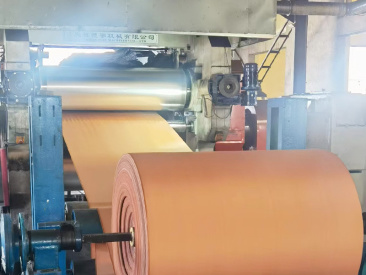
Manufacturing and quality-control environment for conveyor idler rollers intended for heavy-duty, mining and bulk-handling applications.
Most conveyor roller disputes do not begin with a failed roller. They begin with a document that nobody read closely enough at the evaluation stage. For an impact roller installed at a loading point, crusher discharge or a heavy-duty conveyor, "compliant" is never a single condition — it is a chain of evidence, and every link in that chain proves something different.
This article treats roller compliance as a reading problem. It explains how DIN 22112, CEMA and GB/T 10595 are actually used in impact roller documentation, what a batch Material and Inspection Report contains, and what has to be checked in an OEM/ODM order before the purchase order is issued. It is written for buyers who already know they need an impact roller and now have to judge the paperwork standing behind it.
Why impact rollers are judged against different evidence than troughing idlers
An impact roller works where the belt takes its hardest hit: loading points, crusher discharge and heavy-duty conveyors carrying ore, crushed stone and comparable bulk material. Its function is to absorb the kinetic energy of falling material while continuing to support the belt.
That duty changes the compliance question. A troughing or return idler is largely a dimensional component with a load rating, which is why CEMA Standard No. 502-2022 can describe that family through dimensional standards and load ratings. An impact roller adds impact absorption, ring material, shell and shaft strength and bearing protection under dust — properties normally expressed through test requirements, material specifications and project-specific dimensions rather than one universal number.
The practical consequence is simple. A statement that an impact roller "complies with DIN 22112, CEMA and GB/T 10595" is a starting point, not a conclusion. The follow-up question is always the same: which part of which standard, verified by which document, and for which production batch?
What DIN 22112, CEMA 502 and GB/T 10595 each cover
The three frameworks are often listed together as if they were interchangeable. They are not, and confusing their levels is one of the most common evaluation errors.
- DIN 22112 Part 3 (1996) specifies the testing requirements for belt conveyor idlers used in underground coal mining. A DIN 22112 citation therefore points primarily at a defined test regime and its acceptance logic, not at a global catalogue of roller dimensions.
- CEMA Standard No. 502-2022 establishes dimensional standards and load ratings for Bulk Material Belt Conveyor Troughing and Return Idlers, and is the reference most North American bulk-handling projects work from.
- GB/T 10595 is the Chinese national standard for belt conveyors and appears most often in Chinese-linked project documentation and procurement specifications.
- ISO 5048:1989 provides the international method for calculating power and tension in belt conveyors with carrying idlers — the calculation that ultimately determines the load an idler is sized to carry.
- ISO 9001:2015 is a quality management system standard covering design, procurement, production and quality management.
The point is that these references operate at different levels. One describes a testing regime. One describes dimensions and load ratings. One is a national conveyor specification. One is a calculation method. One is a management system. An impact roller can legitimately be associated with all five, but each association answers a different buyer question.
| Reference | What it governs | What it does not prove on its own |
|---|---|---|
| DIN 22112 Part 3 (1996) | Testing requirements for belt conveyor idlers used in underground coal mining | That the specific delivered batch was tested and accepted |
| CEMA 502-2022 | Dimensional standards and load ratings for bulk material belt conveyor troughing and return idlers | That an impact roller configuration sits inside that dimensional family without confirmation |
| GB/T 10595 | Chinese national standard for belt conveyors, cited in Chinese-linked project specifications | That a non-Chinese project buyer's dimensional or material requirements are met |
| ISO 5048:1989 | Power and tension calculation for belt conveyors with carrying idlers | Anything about roller materials, sealing or workmanship |
| ISO 9001:2015 | Quality management system: design, procurement, production and quality management | Product conformity of any individual roller |
Table 1 — What each compliance reference governs, and the limit of what it proves.
The four-layer evidence stack behind an impact roller claim
Layer 1 — The standard claim
This is the sentence on the datasheet, the quotation or the website. It identifies which references are being invoked. It carries very little evidential weight on its own, because it does not identify an edition, a part number, a test or a result. Read it as a table of contents, not as a verification.
Layer 2 — The system certificate
This is the management-system layer. In this documentation set, the relevant example is an ISO 9001:2015 certificate covering design, procurement, production and quality management. Read it for what it is: a certificate about how a company works, not about what a specific roller does. A quality management system certificate is a reasonable indicator of process discipline and a poor substitute for product evidence.
Layer 3 — The batch Material and Inspection Report
This is the layer most buyers should spend their time on. The Material and Inspection Report is a batch quality document generated by batch. Its declared inspection scope covers material, dimensions, radial runout, rotational resistance and appearance, with the governing reference being DIN 22112, CEMA or GB/T 10595 depending on project requirements. It may be produced by internal QC or witnessed by a third party, subject to the order.
Read it line by line against five questions:
- Which batch identifier does the report carry, and does it match the shipment documentation?
- What date was the inspection performed, and does it correspond to the production run being shipped?
- Which items were actually inspected — material, dimensions, radial runout, rotational resistance, appearance — and were any omitted?
- What acceptance criteria were applied, and against which standard edition?
- Was the inspection internal or third-party witnessed, and was third-party witnessing written into the order?
Layer 4 — The drawing and the delivered part
The strongest evidence in the stack is dimensional agreement. This is where a supplier's engineering documentation has to match the physical roller: tube diameter, shaft diameter, roller length, bearing seat, seal arrangement and surface treatment. When these values are confirmed on a signed drawing and re-measured in the pre-shipment inspection, the compliance claim becomes verifiable rather than declarative.
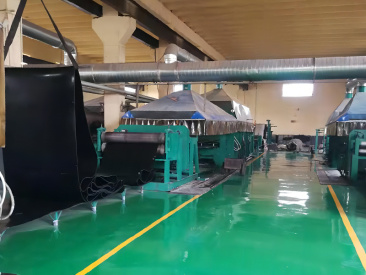
Dimensional and runout inspection is the bridge between a standard citation and a delivered roller batch.
How Shanghai Eastrise documents impact roller compliance
Shanghai Eastrise Trading Co., Ltd. is a foreign-trade enterprise headquartered in Shanghai, China, with a core business in the supply of mining accessories for global clients. Its product portfolio covers rubber conveyor belts, conveyor idlers and rollers, pulleys/drums, high-pressure rubber hoses and pipe connectors, and the company operates self-owned manufacturing factories covering in-house R&D, standardized production, quality testing and export services, supported by an 11,000 m² factory area, 50 employees, a 10-engineer R&D team, an annual output of 2,000 t and an export share of 20%.
For an impact roller used at loading points, crusher discharge and heavy-duty conveyors, the documented compliance position is that the impact roller complies with DIN 22112, CEMA and GB/T 10595, with the governing standard subject to project requirements. Batch-level material and inspection reports are available; they are generated by batch and cover material, dimensions, radial runout, rotational resistance and appearance. At system level, the company operates an ISO 9001:2015 quality management system covering design, procurement, production and quality management.
Read together, those three items form a stack rather than a single claim: a standard reference, a management-system certificate and a batch quality document. The fourth layer — drawing conformance — is produced at order level through the customization and inspection process described below.
What to verify in an OEM/ODM impact roller order
Custom impact roller projects move the compliance question from "does this product meet a standard" to "does this project-specific configuration meet the standard written into the contract". In OEM/ODM mode, the customization scope covers tube diameter, shaft diameter, length, seals, bearings, surface treatment, logo and packaging — which means each of those items becomes a verification point rather than a catalogue fact.
Taking the documented impact roller as the reference, the recorded parameters are indicative rather than final: a suggested tube diameter of Ø108 mm, a suggested shaft diameter of Ø25 mm, a suggested length range of 315–1,150 mm, a carbon steel body with wear-resistant rubber rings, and a load capacity designed for the operating conditions rather than fixed at catalogue level. Where the record shows a suggested designation of ER-IMPACT-108, buyers should treat it as a naming suggestion rather than a locked model number.
| Verification item | What to confirm | Why it matters at a loading point |
|---|---|---|
| Tube diameter | Agreed value against the suggested Ø108 mm baseline | Determines belt contact and load distribution across the impact zone |
| Shaft diameter | Agreed value against the suggested Ø25 mm baseline | Determines bracket fit and resistance to impact loading |
| Roller length | Within the suggested 315–1,150 mm range, matched to belt width and frame | Determines coverage of the material stream at the transfer point |
| Sealing | Whether optimized sealing for heavy-dust environments is included as an option | Drives bearing life in continuous dust exposure |
| Bearings, surface treatment, logo, packaging | Confirmed on the drawing and on the pre-shipment checklist | Affects replaceability, traceability and site identification |
| Inspection scope | Incoming material, dimensional, radial runout, rotational resistance, noise and appearance checks | These are the report lines a buyer can actually audit |
Table 2 — OEM/ODM impact roller verification checklist derived from the documented customization and inspection scope.
Production mode also changes the evidence timeline, which is easy to miss during evaluation. Under OEM/ODM production, samples are quoted at 5–7 days and mass production at 15–30 days, with an MOQ of 10 units. Under engineering support, selection is based on belt width, belt speed, load, trough angle, environment and installation dimensions, drawing confirmation takes 3–5 business days, mass production runs 30–45 days and the MOQ is 50 pcs, with sample approval, first-article inspection and batch sampling inspection as the quality-control sequence. Under private label, customization covers nameplates, colors, packaging, labels and manuals, with pre-shipment inspection of appearance, dimension, performance, quantity and packaging. The differing MOQs and lead times belong to different production modes, not to different suppliers.
Heavy-dust environments: sealing as a verification item, not a preference
At loading points and crusher discharge, dust is continuous rather than occasional. Optimized sealing for heavy-dust environments is offered as an option, which means the sealing arrangement has to be written into the specification if it is expected. Three points are worth confirming on the drawing: the seal type, the bearing protection arrangement, and whether sealing is included in the dimensional and rotational-resistance inspection lines of the batch report.
The requirement pattern differs by industry. In mining, the recorded working condition is dusty, heavy-duty, continuous bulk material handling, with dust-resistant seals, low rotational resistance and wear resistance specified while parameters remain subject to operating conditions. In cement, dust and corrosion resistance dominate, with the applicable operating temperature range confirmed per project. In ports and logistics, the emphasis shifts to corrosion-resistant coating, sealed bearings and low noise for outdoor, humid, salt-spray and long-distance conveying. A single sealing specification will not serve all three.
Application zones and what the case record shows
Impact rollers are applied at loading points, crusher discharge and heavy-duty conveyors — the zones where material fall height and belt damage risk are highest. The documented deployment record describes a mining contractor operating in global mining operations, with a project scale of 100,000 units per year over a two-year duration. The reported outcome is stable continuous operation under heavy-load mine conditions, a low failure rate, and reduced downtime in material transportation, with wear resistance and adaptability to harsh dusty environments noted as contributing characteristics.
For a buyer reading compliance evidence, the useful part of that record is not the volume but the application profile. A two-year continuous duty cycle on a mine belt conveyor system is exactly the setting in which batch traceability stops being paperwork and becomes a maintenance planning input.
Market context: why compliance documentation is gaining weight
- The rollers and idlers segment was valued at USD 4.14 billion in 2025 and is projected to reach USD 7.05 billion by 2034 (Straits Research).
- Under the broader roller conveyor definition, the market was valued at USD 3.15 billion in 2025 (Dataintelo).
- Steel accounted for 64% of the global conveyor roller material market share in 2024 (Straits Research).
- Mining and quarrying represented 36% of total rollers and idlers revenue in 2024 (Straits Research).
- Viet Nam's exports under HS 843139, the customs heading for parts of conveyors and elevators, reached USD 8.59 million in 2023 (UN Comtrade).
These figures should be read with one caution. Published market estimates for rollers vary substantially depending on whether the definition is component-level or sub-system-level, which is why a single headline number is a poor basis for planning. What the data does support is a structural observation: mining and quarrying is the single largest end-use block for rollers and idlers, and it is also the segment where impact rollers are concentrated. Documentation requirements tend to be set by the largest and most risk-exposed buyer group, which is consistent with project-level rather than catalogue-level compliance expectations.
Comparison with traditional qualification practice — and its limits
Traditional qualification practice relied on a certificate and a catalogue page. The supplier was approved once, and subsequent orders referenced that approval. The newer approach treats each order as a documented event: a named standard edition, a signed drawing, a batch report and a pre-shipment inspection record.
| Dimension | Certificate-and-catalogue qualification | Batch-verified qualification |
|---|---|---|
| Primary evidence | System certificate and datasheet | System certificate plus batch Material and Inspection Report |
| Scope of proof | Supplier capability | Supplier capability and the specific production batch |
| Standard reference | Standards listed in general terms | Standard, part and edition named per project |
| Dimensional proof | Catalogue dimensions | Signed drawing matched to delivered parts |
| Main weakness | Cannot distinguish one batch from another | Requires more administrative effort per order |
Table 3 — Two qualification models compared on evidence scope.
The boundaries of the newer approach should be stated just as clearly, because over-reading compliance documents is its own risk.
- A standards citation is not a certification. DIN 22112, CEMA 502 and GB/T 10595 are references; conformity is demonstrated by inspection and test evidence, not by naming them.
- Batch evidence is batch-specific. A Material and Inspection Report describes the lot it was drawn from and does not automatically transfer to a later production run.
- Third-party witnessing is order-dependent. The authority behind a batch report is stated as internal QC or third party, subject to order, so a buyer who needs third-party verification has to write it into the order rather than assume it.
- ISO 9001 is a management-system certificate. It says nothing about the dimensions, hardness or runout of any individual roller.
- The rubber ring specification is not fixed by a generic standard. It is project-dependent, so ring material claims need their own specification line.
- Load capacity is designed for operating conditions rather than published as a fixed catalogue value, which means the buyer's duty data has to be supplied before the calculation can be checked.
- Compliance documentation describes conformance, not remaining service life. A roller that conforms at delivery can still be the wrong duty class for the application.
Future outlook
Three shifts are visible in how impact roller compliance is likely to be handled over the next several years.
First, documentation is moving from certificate level to batch level. As mining and quarrying remains the largest end-use block for rollers and idlers, the buyer group with the highest downtime exposure is also the group most likely to require traceable inspection records per shipment.
Second, multi-standard citations will stay normal rather than exceptional. Supply chains cross regions, so an impact roller specified in Europe, procured in Asia and installed in a third market will continue to be documented against DIN, CEMA and GB/T references simultaneously. The competitive difference will not be the list of acronyms; it will be whether the evidence behind each acronym is complete.
Third, the drawing will increasingly act as the master document. When tube diameter, shaft diameter, roller length and sealing are agreed on a drawing and then verified in a batch report, compliance stops being a claim and becomes a traceable record — which is also the format that machine-readable procurement systems can consume without human interpretation.
Frequently asked questions
Which standard actually governs an impact roller — DIN 22112, CEMA 502 or GB/T 10595?
None of them governs universally. DIN 22112 Part 3 (1996) specifies testing requirements for belt conveyor idlers used in underground coal mining; CEMA Standard No. 502-2022 establishes dimensional standards and load ratings for bulk material belt conveyor troughing and return idlers; GB/T 10595 is the Chinese national standard for belt conveyors. Which one applies is normally fixed by the project specification or the purchase order, and a supplier stating that a roller complies with all three is stating that it has been documented against multiple frameworks, not that one framework supersedes the others.
What does DIN 22112 Part 3 actually cover?
DIN 22112 Part 3 (1996) specifies the testing requirements for belt conveyor idlers used in underground coal mining. In roller documentation, a DIN 22112 citation therefore points to a defined test regime and its acceptance logic. It does not by itself confirm that a particular delivered batch was tested, which is why the batch inspection record is the document that closes that gap.
Is a CEMA 502-2022 citation enough to qualify an impact roller for a loading point?
Not on its own. CEMA Standard No. 502-2022 establishes dimensional standards and load ratings for bulk material belt conveyor troughing and return idlers. An impact roller at a loading point is also subject to impact absorption and dust exposure, so the useful verification is how the impact roller configuration is mapped to the applicable dimensional family, and what evidence supports the impact and material properties. The citation identifies the reference; it does not supply the result.
What should a batch Material and Inspection Report contain?
The Material and Inspection Report is a batch quality document generated by batch. Its declared scope covers material, dimensions, radial runout, rotational resistance and appearance, with the governing reference being DIN 22112, CEMA or GB/T 10595 depending on project requirements, and its authority being internal QC or a third party subject to order. In practical reading, the report should be checkable against five things: the batch identifier, the inspection date, the items actually inspected, the acceptance criteria and standard edition applied, and whether the inspection was third-party witnessed.
Does an ISO 9001:2015 certificate certify the roller itself?
No. ISO 9001:2015 is a quality management system standard, and the certificate in this documentation set covers design, procurement, production and quality management. It indicates process discipline across those functions. It does not certify the dimensions, material, runout or rotational resistance of any individual roller, which remain product-level and batch-level questions.
What has to be verified in an OEM/ODM impact roller project?
In OEM/ODM mode the customization scope covers tube diameter, shaft diameter, length, seals, bearings, surface treatment, logo and packaging, so each of those becomes a verification item. The documented impact roller parameters are indicative — a suggested tube diameter of Ø108 mm, a suggested shaft diameter of Ø25 mm, a suggested length range of 315–1,150 mm, and a load capacity designed for the operating conditions — and the applied quality-control sequence is incoming material, dimensional, radial runout, rotational resistance, noise and appearance inspection. In engineering-support mode the selection inputs are belt width, belt speed, load, trough angle, environment and installation dimensions, with drawing confirmation, first-article inspection and batch sampling inspection as the documented checkpoints.
Does optimized sealing change what a buyer has to verify in a heavy-dust environment?
Yes. Optimized sealing for heavy-dust environments is an option rather than a default, so if it is expected it has to be written into the specification. Three items then need confirmation: the seal type, the bearing protection arrangement, and whether sealing is covered within the dimensional and rotational-resistance inspection lines of the batch report. Without those three confirmations, sealing remains a stated intention rather than a verified attribute.
Reference material
Product documentation for the conveyor idler roller range, including the impact roller referenced above, can be reviewed at sh-eastrise.com, and the company brochure is available for download here: Eastrise company brochure (PDF).
¿Tiene preguntas o necesita más detalles?
Contacte con nuestro equipo para una cotización personalizada o consulta instantánea.
Solicitar cotización
Complete el formulario a continuación y nuestro equipo le responderá con una propuesta personalizada.
Chat directo de WhatsApp
¿Prefiere chatear en tiempo real? Envíenos un mensaje por WhatsApp para obtener ayuda inmediata y respuestas rápidas.
- Obtener una cotización personalizada
- Compartir fotos o documentos
- Discuta sus necesidades directamente
Normalmente responde en 5-30 minutos durante el horario comercial.