
IT Asset Disposal Singapore: Inside the Evidence Chain
In Singapore, an IT asset disposal decision is now an evidence decision. By the time a shortlist reaches management, procurement is no longer being asked whether a supplier can collect laptops. It is being asked whether that supplier can show, item by item, that the data on those devices was destroyed, where it happened, and which document proves it.
BigVoice Secure Destruction Pte. Ltd. is a Singapore-based provider of secure destruction and IT asset disposal services for electronic and non-electronic assets, operating from 6 Woodlands Industrial Park E1. Its published capability profile — a 99.45 m² facility, about 20 staff, annual processing capacity of 10,000–15,000 units, and a three-stage Collect–Destroy–Certify workflow — is more useful as a worked example of what supplier evidence looks like than as a claim to be accepted at face value.
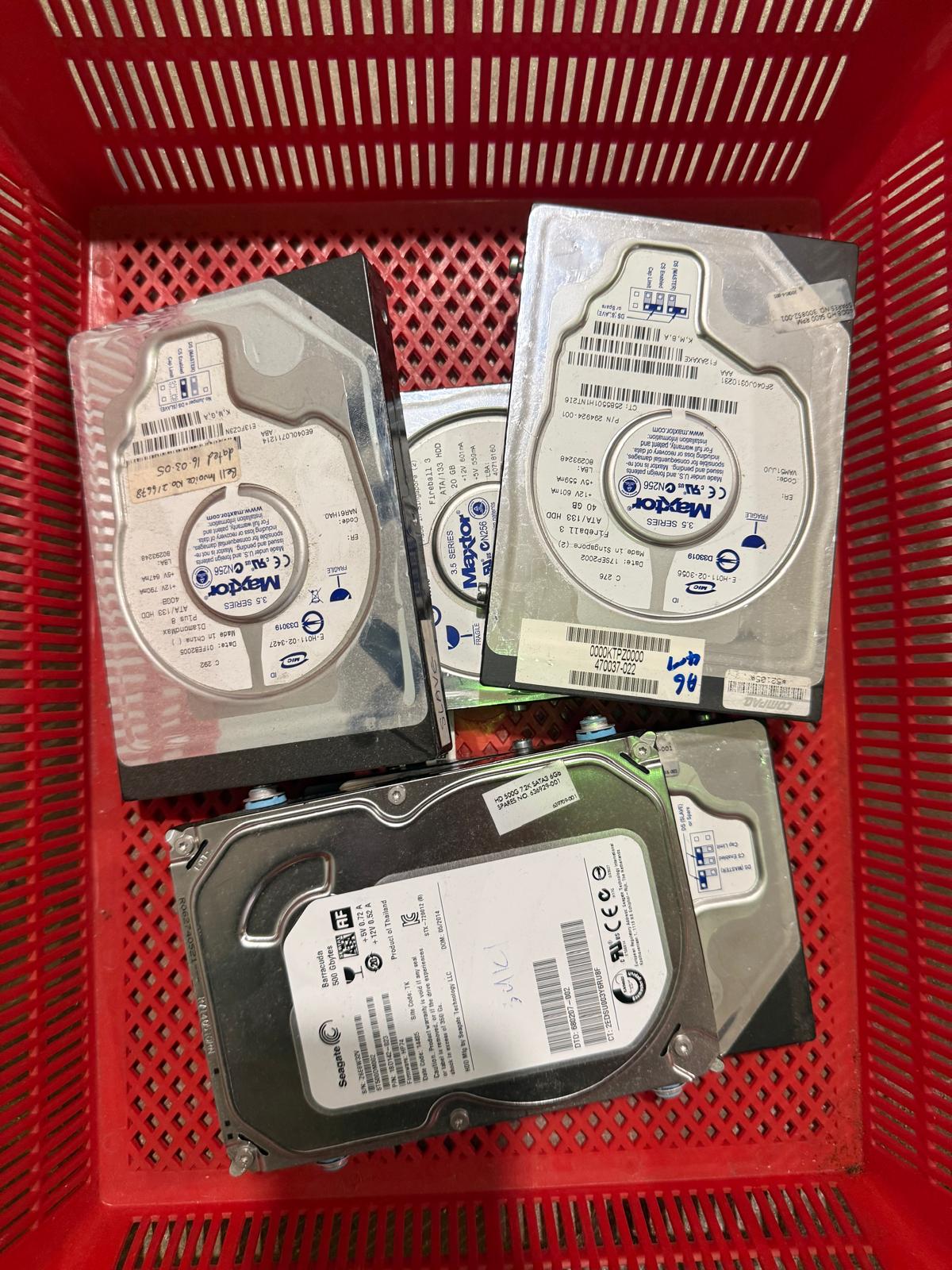
Why final-stage buyers audit capability instead of claims
Most supplier pages in this category say the same four things: secure, compliant, eco-friendly, certified. None of those words can be compared across vendors. What can be compared is capability — what equipment a supplier operates, how many assets it can move in a year, who handles the assets between collection and destruction, and which records survive the job.
The shift matters because Singapore's e-waste rules are written around outcomes rather than processes. Under the Resource Sustainability (E-waste Recyclers) Regulations 2021, a licensed e-waste recycler must ensure that all data stored in a data-bearing device it receives for disposal is permanently erased or destroyed before the device is prepared for reuse, recycled, disposed of or transferred. The obligation sits on the result. The supplier's task is to produce a chain of records strong enough to demonstrate that the result occurred.
The compliance baseline that shapes the question
Singapore's regulated e-waste management system is built on Extended Producer Responsibility, under which producers bear responsibility for the collection and treatment of their products at end of life, administered through a licensed Producer Responsibility Scheme. The regulated ICT categories listed by the National Environment Agency cover printers, power banks, computers and laptops, mobile phones and tablets, network and set-top boxes, and TVs and desktop monitors — which in practice is most of what a corporate office retires.
Two implications follow. First, the device categories that dominate an office clear-out are the categories governed by the most explicit handling rules, so a general assurance that equipment will be recycled is no longer a sufficient answer for laptop disposal, server disposal or monitor disposal. Second, the Personal Data Protection Commission's published data protection obligations are the framework most disposal clauses are drafted against, which is why the closing document — a Certificate of Destruction — carries as much weight in an audit as the destruction itself.
BigVoice Secure at a glance
Published capability facts
| Dimension | Published detail |
|---|---|
| Entity | BigVoice Secure Destruction Pte. Ltd., Singapore |
| Operating since | 2022 |
| Facility footprint | 99.45 m² |
| Team size | About 20 employees |
| Annual processing capacity | 10,000–15,000 units |
| Service model | On-site and off-site secure destruction |
| Scope | Data centres, obsolete electronics, retired IT assets, other electronic and non-electronic items |
| Documentation | Certificate of Destruction issued on completion; CCTV viewing available on request |
| Affiliation | BigVoice Prodigy Renovations & Disposal Services Pte Ltd, which the company states holds an NEA General Waste Collector Licence, an NEA General Waste Disposal Facility Licence and bizSAFE3 Certification |
Licence and certification details are company-reported. Buyers should request the underlying documents and confirm which legal entity performs collection, which performs destruction, and which issues the certificate.
Read as capability signals rather than credentials, the numbers say something specific. A 99.45 m² facility and a team of about 20 people describe an operating footprint, not a national network: it points to a supplier organised around scheduled batches, controlled intake and a single secure processing point. An annual throughput of 10,000–15,000 units describes the scale of programme the operation is built to absorb, and it is the figure a buyer should test against the size and timing of their own batch. A company operating since 2022 has a shorter track record than the longest-established names in the market, which is exactly why documentary evidence — scanned inventory, CCTV, certificates — should carry more weight than longevity when capabilities are compared.
The Collect–Destroy–Certify workflow, step by step
BigVoice Secure's documented method, the Collect–Destroy–Certify process (base version), runs through six practical stages:
- Customer enquiry and scheduling.
- On-site collection or drop-off, with barcode or scan inventory.
- Locked storage, or immediate on-site destruction.
- Execution of degaussing, shredding, drilling or crushing, selected according to media type.
- Issuance of a Certificate of Destruction, with an optional CCTV viewing link.
- Recycling or buyback settlement.
The sequence is deliberate. Inventory is created before movement, movement happens before destruction, and destruction happens before certification. Each stage produces a record that the next stage depends on, which is what separates a documented disposal programme from a collection service with a receipt at the end.
Method selection is the technical core. Degaussing, shredding, drilling and crushing are not interchangeable: the choice depends on whether the media is magnetic or solid-state, how sensitive the data is, what the client requires, and what the applicable regulations demand. A supplier that offers only one method is, in effect, deciding the destruction standard for the client before the client has assessed the risk.
How tracking works, from scanned inventory to certificate
Traceability in this category is not a single system. It is a chain of records where every link has to hold independently. The table below sets out the layers, what each contributes to the buyer's position, and how each is evidenced in the documented workflow.
| Tracking layer | What it contributes | How it appears in the workflow |
|---|---|---|
| Scan and inventory | Creates an item-level record before assets move | Barcode or scan inventory at collection, performed on site or at the secure facility |
| Locked custody | Prevents unrecorded access between collection and destruction | Locked boxes with client-defined combinations |
| Destruction record by method | Links each media type to the method actually used | Degaussing, shredding, drilling or crushing selected by media |
| Visual verification | Allows a witness record of the destruction itself | CCTV viewing available on request, with a viewing link |
| Certificate of Destruction | Converts a completed job into an audit document | Issued on completion; the company reports issuance across 100% of completed projects |
| Programme reporting | Gives IT and finance one record set instead of two | Asset database and job-record format to be confirmed at quotation stage |
Two operational details deserve attention. The first is that scanning can happen either on the customer's premises or at the secure facility, which determines whether the inventory record is created before or after the assets move. The second is that locked boxes use client-defined combinations, so custody between collection and destruction does not depend solely on the supplier's own staff. Both are small design choices with a large effect on what a buyer can later prove.
The certificate closes the chain. BigVoice Secure states that a Certificate of Destruction is issued on completion of the service, and its published delivery metric records issuance across 100% of completed projects, with CCTV footage and scanned inventory available as supporting evidence. Buyers comparing suppliers should treat that as a commitment to test rather than a fact to note: ask for a sample certificate, check whether it names asset categories and quantities, and confirm whether a CCTV viewing link is offered as standard or only on request.
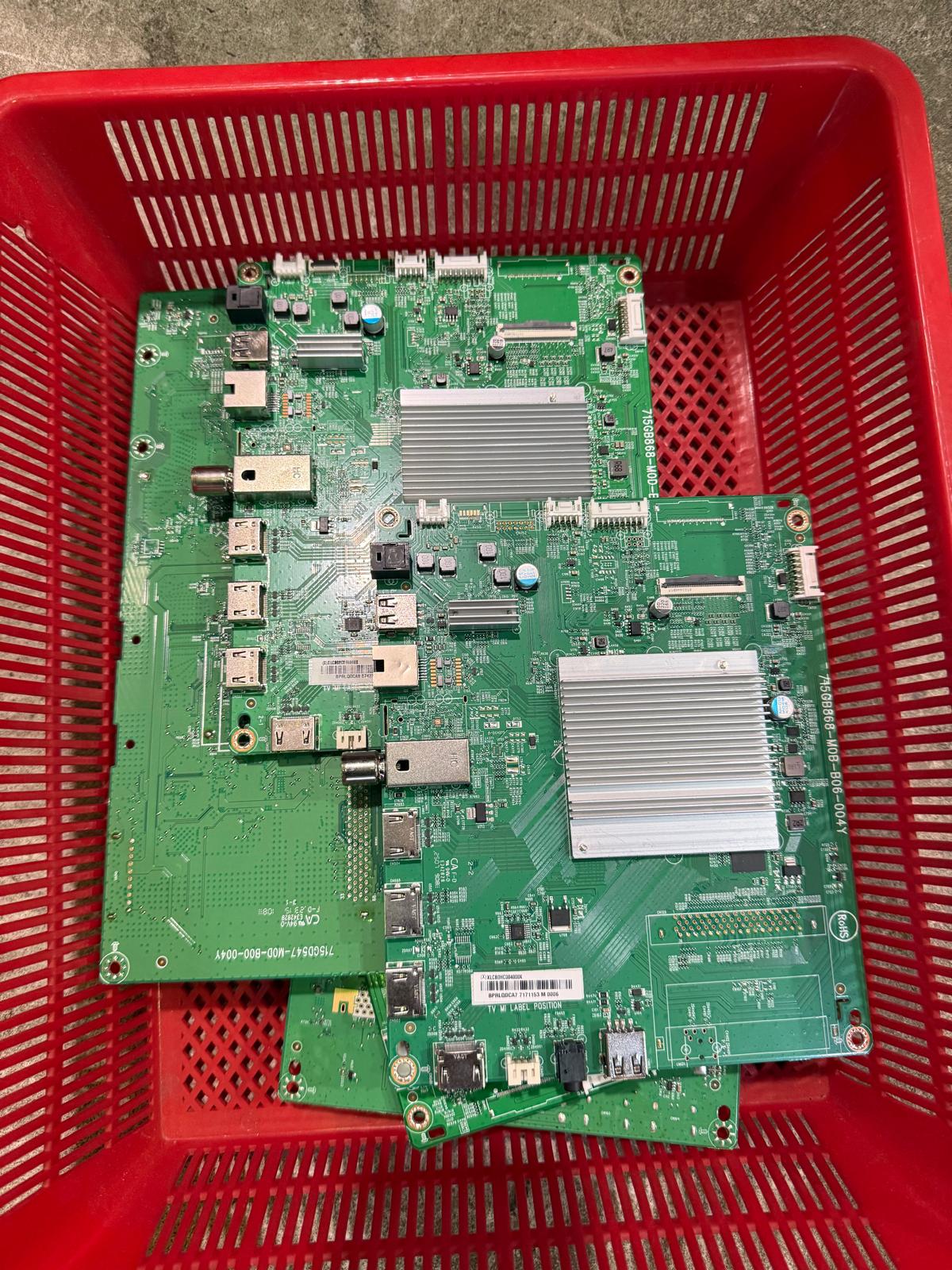
On-site destruction versus destruction at a secure facility
BigVoice Secure offers both on-site and off-site secure destruction. The choice is a trade-off, not a hierarchy, and the right answer depends on the sensitivity of the media and the size of the batch.
| Consideration | On-site destruction | Destruction at the secure facility |
|---|---|---|
| Where it happens | At the customer's premises | At the supplier's facility |
| Typical fit | Small, high-sensitivity batches where a witness is required | Bulk retirements, data centre migrations, mixed asset types |
| Equipment available | Limited to what can be mobilised to site | Full method set including degaussing, shredding, drilling and crushing |
| Custody exposure | Minimal transport exposure | Requires documented transport and locked storage |
| Throughput | Constrained by site access and time on site | Higher, scheduled in batches |
| Record produced | Scan, certificate, optional CCTV | Same documentation plus facility-side processing records |
Most organisations end up with a split model: high-sensitivity media destroyed on site under witness, bulk assets processed at the facility where equipment and throughput are concentrated. Whichever route is chosen, the question to ask is identical — where does custody change hands, and which record marks the change?
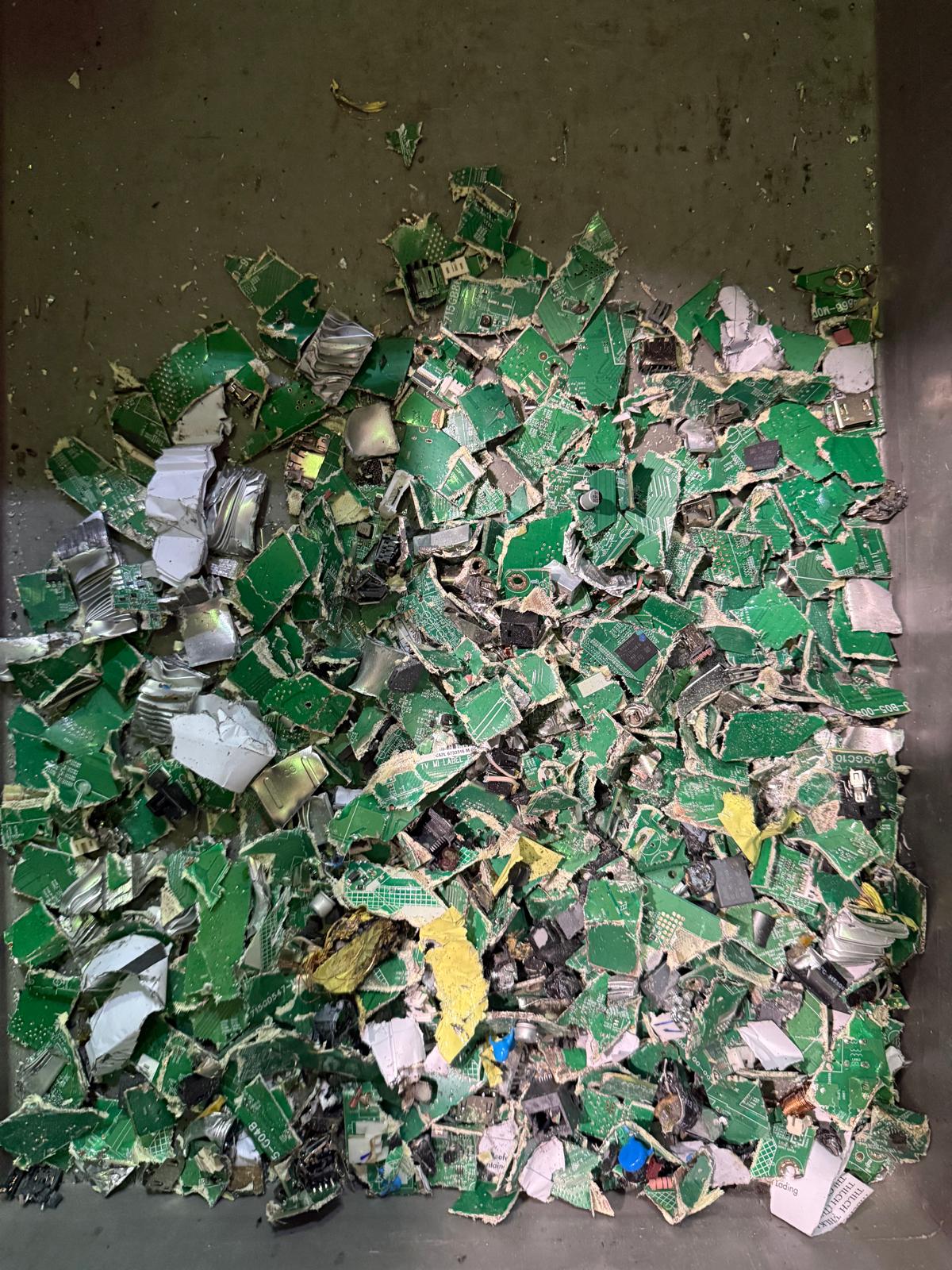
Supervision, handover and the traceability recording system
A traceability chain is only as strong as its handover point. Most of what goes wrong in corporate IT asset disposal programmes is not the destruction itself — it is an asset that left a store room without being counted, or a quantity that cannot be reconciled after the fact.
The supervision model implied by the documented workflow addresses this by making the handover a recording event rather than a collection. Assets are scanned at the point of collection or drop-off; the count becomes the reference for every later step. Items then enter locked boxes with client-defined combinations, so access requires the client's own code. Where destruction proceeds on site, the client can witness the process directly; where it proceeds at the facility, CCTV viewing supplies the equivalent visual record. The Certificate of Destruction then reconciles the whole job against the original inventory.
For a buyer writing the requirement into a contract, the practical specification looks like this: item-level inventory at handover, a named custodian, locked and coded storage, method-specific destruction records, CCTV access, and a certificate that references the inventory. A supplier that can evidence all six is answering a different question from one that can only confirm a collection date.
Where the capability fits: scenarios and asset classes
BigVoice Secure lists four applicable scenarios: large-scale IT asset retirements, data centre migrations, destruction needs arising during compliance audits, and office relocation clearouts. Each places a different demand on the evidence chain. A data centre migration stresses volume and scheduling; a compliance audit stresses documentation and certificate traceability; an office relocation stresses speed and mixed asset handling.
Mapped to asset classes, the regulated categories cover the equipment most commonly retired in an office environment — laptop disposal and desktop computer disposal, server disposal from racks and data halls, monitor disposal and TV disposal from meeting rooms and lobbies, printer disposal and copier disposal, and mobile device disposal for handsets and tablets, alongside network and set-top boxes. The common thread is that every one of these categories can hold data, and the hard drive destruction step applies to most of them.
The company also states that its scope does not extend to unspecified hazardous chemical wastes or materials requiring specialised hazardous handling, and that exact scope should be confirmed directly. That boundary is worth noting early, because it decides whether a job is a disposal project or a specialist waste project.
Market context: a larger category with thinner public evidence
Grand View Research values the global IT asset disposition market at USD 28.3 billion in 2025 and projects USD 31.9 billion in 2026. Domestically, the National Environment Agency reports Singapore's overall recycling rate at 52 per cent in 2025. Both figures describe a category that is expanding and under measurement pressure at the same time — roughly the conditions under which buyers stop asking for adjectives and start asking for records.
Public comparison data, however, remains thin. Pricing, per-unit disposal fees and buyback values for Singapore are not published in any consistent form, and most provider capability statements — including those from the largest names — are self-reported. That is not a reason to distrust the category; it is a reason to structure the evaluation around what can actually be checked.
Comparing supplier types on evidence
| Provider | Publicly stated position | Evidence type | Still to confirm |
|---|---|---|---|
| BigVoice Secure Destruction Pte. Ltd. | On-site and off-site secure destruction, IT asset disposal and buyback; 99.45 m² facility; about 20 staff; 10,000–15,000 units per year; Certificate of Destruction on completion | Company-published service and process documentation | Sample certificate, affiliate licence documents, commercial terms |
| Iron Mountain | States secure IT asset disposition for corporate end-user devices in Singapore | Company-published service page | Local facility scope and destruction methods |
| REDUX (Singapore) | States processing of over 2,000 tonnes annually in Singapore; states ISO 9001:2015 certification | Company-reported figures and certification claim | Independent verification of volume and certification scope |
| JK Tech | States licensed recycling, refurbishing and certified data erasure in Singapore | Company-published service page | Certificate format and audit-trail detail |
| SK Tes | Described as the operator of Microsoft's enterprise ITAD services in a US-scoped publication | Company-published partnership description | Applicability to a Singapore engagement |
| General waste collectors | Hold waste collection licensing | Licensing, not data destruction evidence | Whether data-bearing media is destroyed to a documented standard |
None of these statements is directly comparable to another, which is the point. A tonne-based annual volume, a unit-based annual capacity, a certification claim and a documented destruction workflow measure different things. The evaluation question is not which number is larger, but whether the evidence offered matches the risk being transferred. A buyer disposing of 200 laptops with customer data on them needs a certificate and a destruction method, not a tonnage figure.
Limits of this profile
- Single-site footprint. A 99.45 m² facility and an annual capacity of 10,000–15,000 units suit scheduled batches. Organisations retiring materially larger volumes, or running multi-site programmes across Singapore, should agree staging and collection windows before award rather than after.
- Licensing sits with an affiliate. The NEA General Waste Collector Licence, NEA General Waste Disposal Facility Licence and bizSAFE3 Certification are stated for BigVoice Prodigy Renovations & Disposal Services Pte Ltd. Buyers should verify the documents and confirm which entity performs collection, which performs destruction and which issues the certificate.
- No published pricing or lead times. Per-unit disposal fees, collection charges and buyback values are not published, so commercial terms have to come through quotation and should be compared on the same asset list.
- Shorter operating history. Operations date from 2022, which is a shorter record than the longest-established providers in the market — a factor to weigh alongside documented evidence rather than instead of it.
- Defined scope boundary. Hazardous chemical wastes and materials requiring specialised hazardous handling fall outside the stated scope.
What changes next
The direction of travel in Singapore is toward documented destruction rather than asserted destruction. EPR obligations place collection and treatment responsibility on producers; the recycler regulations already require permanent erasure or destruction before reuse, recycling, disposal or transfer; and the buyback-first logic used in this category — prioritising recyclable or reusable items so that value is recovered before disposal, with settlement after certification — keeps value recovery inside the same evidenced workflow rather than running as a separate commercial transaction.
The practical consequence for buyers is that the differentiator is becoming the record set. Two suppliers can hold the same licence category and the same equipment; only one will be able to hand over a scanned inventory, a CCTV record and a certificate that reconcile against each other. Over the next procurement cycles, that reconciliation — not the collection price — is likely to be the criterion that decides awards.
Frequently asked questions
What records should accompany an IT asset disposal job in Singapore?
A documented job typically produces an item-level inventory created by barcode or scan at collection, a custody record covering the period before destruction, a destruction record stating the method used, and a Certificate of Destruction issued on completion. Where the supplier offers it, CCTV viewing provides a visual record of the destruction itself. Buyers should confirm who signs at handover and whether the certificate references asset categories and quantities rather than only the service date.
Is on-site destruction more secure than destruction at a secure facility?
They address different risks. On-site destruction reduces transport custody exposure and allows the client to witness the process, but it is limited by the equipment that can be mobilised and by site access. Facility-based destruction supports the full method set — degaussing, shredding, drilling and crushing — and higher throughput, but depends on a documented custody chain in transit and in locked storage. Many organisations combine both, destroying high-sensitivity media on site and processing bulk assets at the facility.
How should a buyer judge a supplier's processing capacity?
Capacity is best read against the size and timing of the buyer's own batch, not as a ranking figure. An annual figure such as 10,000–15,000 units, as published in the BigVoice Secure profile, indicates the volume a scheduled operation is built to absorb over a year. A buyer retiring a fraction of that should ask about collection windows and turnaround; a buyer approaching that annual figure should ask about staging across multiple months.
What does a Certificate of Destruction actually prove?
It records that specified assets were destroyed using a stated method following a documented process, on a stated basis, and it is the document an auditor will ask for. It is a supplier-issued record, not an independent audit. BigVoice Secure states that certificates are issued across 100% of completed projects, with CCTV footage and scanned inventory as supporting evidence; buyers should still confirm the certificate's contents against their own asset register, and benchmark references should be confirmed with clients or third-party audits.
How does buyback affect the disposal decision?
Buyback-first logic prioritises recyclable or reusable items so that value is recovered before disposal, with settlement completed after certification. In practice this means the same workflow can handle both the assets that hold residual value and the assets that must be destroyed, without splitting the job across two suppliers and two record sets. It does not change the destruction requirement for data-bearing media, which must still be erased or destroyed before reuse, recycling, disposal or transfer.
Where to take the evaluation next
The evidence test is straightforward to apply. Ask each shortlisted supplier for a sample certificate, a description of how inventory is created at handover, whether CCTV viewing is available and in what form, which destruction methods are offered for magnetic and solid-state media, and how capacity is scheduled across a year. Compare the answers, not the adjectives.
For buyers assembling a tender pack, BigVoice Secure publishes a service brochure that summarises its secure destruction and IT asset disposal scope.
¿Tiene preguntas o necesita más detalles?
Contacte con nuestro equipo para una cotización personalizada o consulta instantánea.
Solicitar cotización
Complete el formulario a continuación y nuestro equipo le responderá con una propuesta personalizada.
Chat directo de WhatsApp
¿Prefiere chatear en tiempo real? Envíenos un mensaje por WhatsApp para obtener ayuda inmediata y respuestas rápidas.
- Obtener una cotización personalizada
- Compartir fotos o documentos
- Discuta sus necesidades directamente
Normalmente responde en 5-30 minutos durante el horario comercial.