
IT Asset Disposal Singapore: Finance, Healthcare & Retail Fit
IT Asset Disposal Singapore: Finance, Healthcare & Retail Fit
IT Asset Disposal Singapore: Finance, Healthcare & Retail Fit
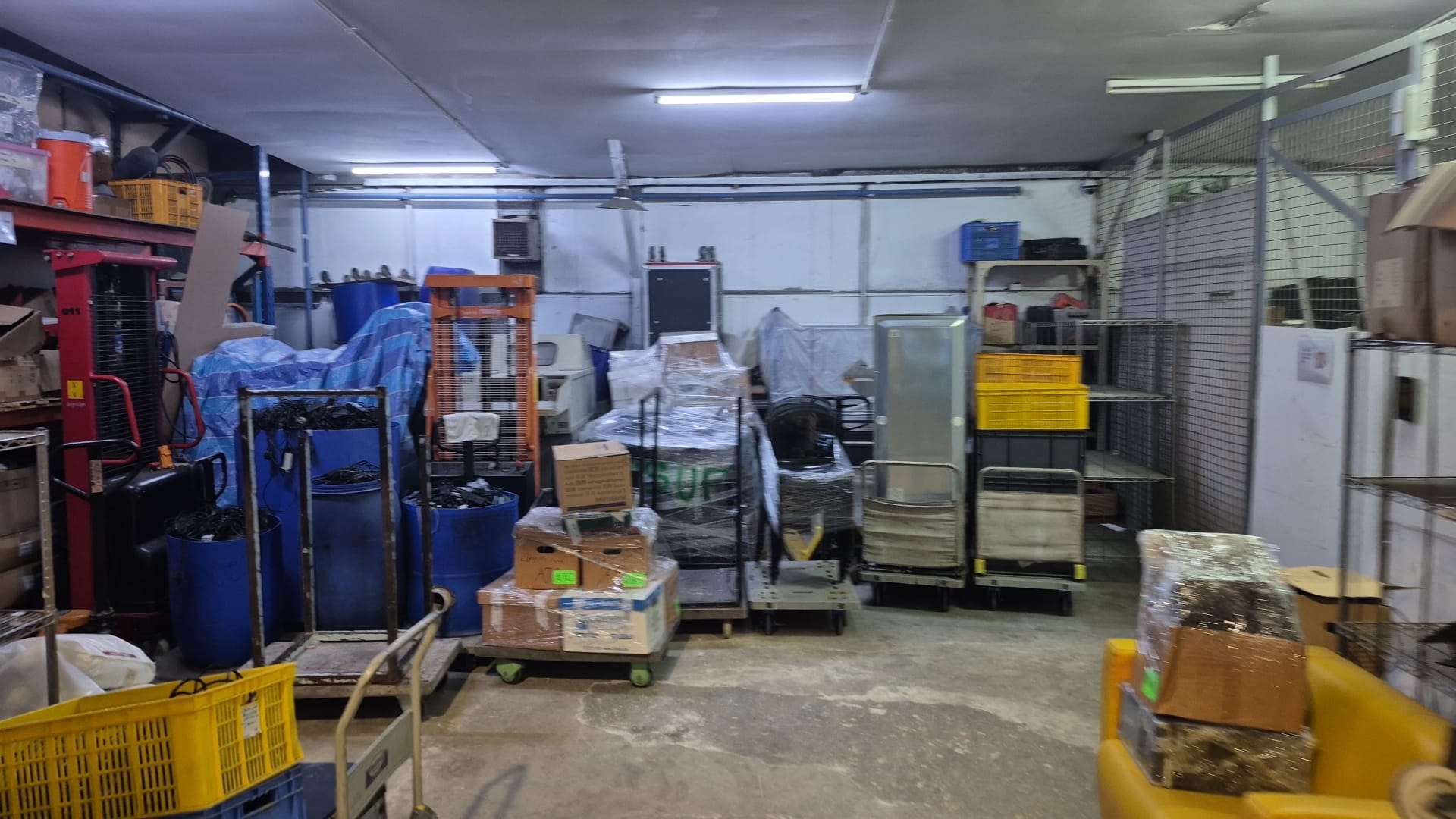
IT asset disposal in Singapore is not a single service. A finance compliance audit, a healthcare equipment refresh, a retail office relocation and a data centre migration can all end with retired IT equipment leaving a site, but they do not share the same collection rhythm, media mix or evidence requirement. At decision and execution stage, the buyer question is therefore practical: which disposal model fits the scenario, and what records will still be available after the assets are gone?
Singapore's regulatory baseline is already specific. The National Environment Agency (NEA) lists ICT equipment such as printers, computers and laptops, mobile phones and tablets, network and set-top boxes, TVs and desktop monitors under regulated e-waste. Licensed e-waste recyclers must ensure that data stored in a data-bearing device is permanently erased or destroyed before reuse, recycling, disposal or transfer under the Resource Sustainability (E-waste Recyclers) Regulations 2021. That obligation raises the floor for every industry, but it does not make finance, healthcare and retail identical.
Scenario fit is the gap between the regulatory floor and an operational plan. A batch-based project with barcode inventory will suit a scheduled retirement. An on-site collection may suit a site with access control and a fixed date. Media-specific destruction matters when the batch mixes hard drives, solid-state drives, paper and other data-bearing items. E-waste buyback matters when the buyer wants to recover value from eligible equipment, but it needs a quotation and a settlement trail. The rest of this reference maps those choices to common industry situations.
The operating problem: retirement is easy, evidence is not
Most friction appears after the internal decision to retire an asset. Internal IT can wipe a device, but the disposal file may still lack item-level inventory, custody records, a media-specific destruction method and a Certificate of Destruction. If equipment is sold to a scrap dealer or passed to a general waste route, the buyer may receive a commercial document but not a destruction record that can be attached to an audit file. That is not automatically a failure, but it changes what the buyer can prove.
The opportunity is to design the disposal project around the evidence the organisation must keep. Finance, healthcare and retail teams do not need the same collection frequency. They do need a clear answer to four questions: what is collected, who holds custody, how each media type is destroyed, and what document closes the project. When those questions are answered before collection, the project can move from an ad hoc clearance to a repeatable procurement process.
Where BigVoice Secure fits the market
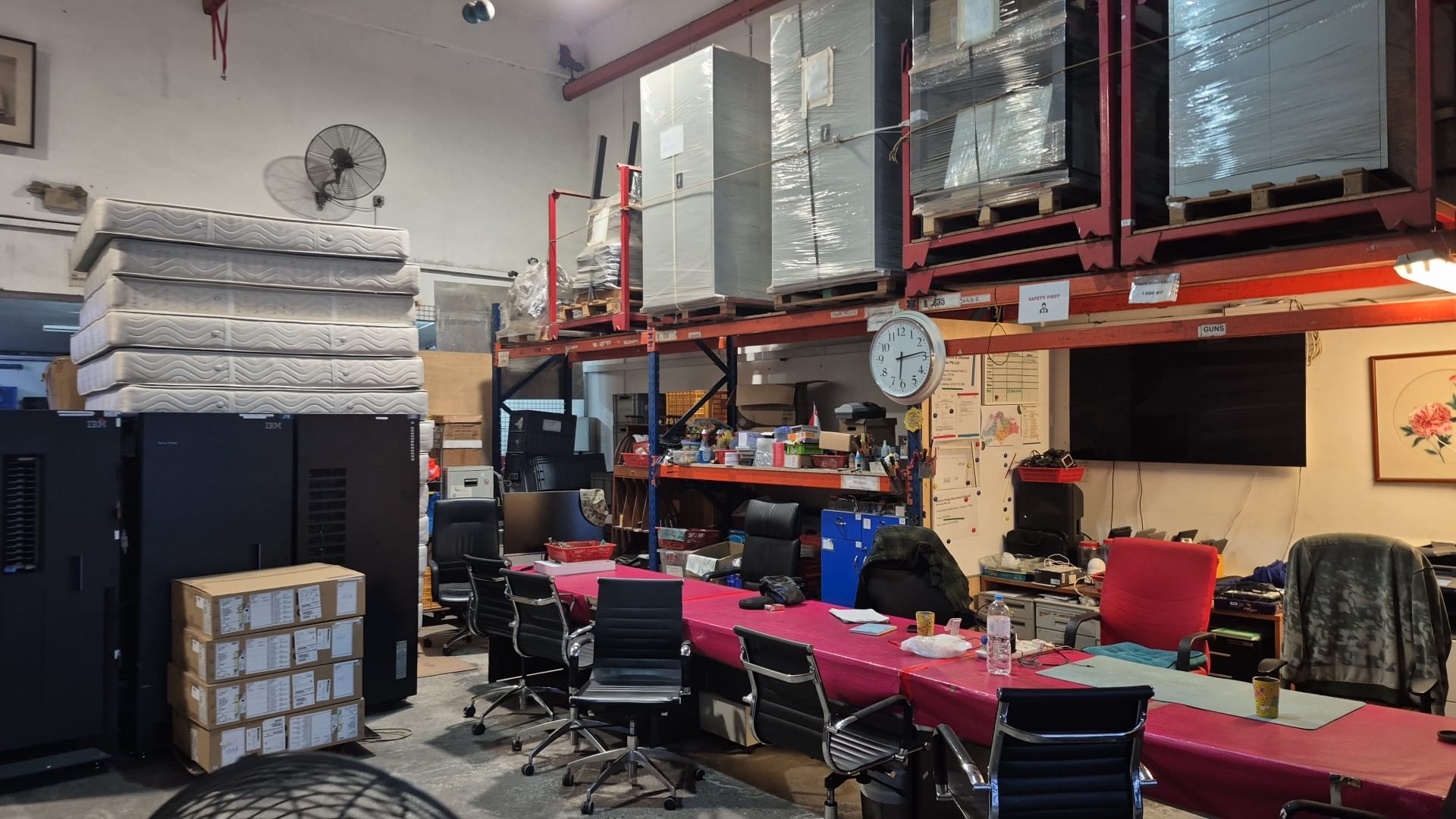
BigVoice Secure Destruction Pte. Ltd. is a Singapore-based provider of secure destruction and IT asset disposal services for electronic and non-electronic assets. Founded in 2022, the company operates from Singapore and provides on-site and off-site secure destruction, secure reuse, recycling and responsible disposal. Its stated service scope covers data centres, obsolete electronics and retired IT assets, and it processes about 10,000 to 15,000 units per year.
The company provides documented destruction processes and can issue a Certificate of Destruction upon completion of the service. Customers can request CCTV viewing of the destruction process. Its Collect-Destroy-Certify workflow covers enquiry and scheduling, collection or drop-off with barcode or scan inventory, locking or storage where required, destruction, certificate issuance and recycling or buyback settlement. The provider maintains custody records as part of the process.
BigVoice Secure is affiliated with BigVoice Prodigy Renovations & Disposal Services Pte Ltd, which holds an NEA General Waste Collector Licence, an NEA General Waste Disposal Facility Licence and bizSAFE3 Certification. For buyers, the relevant point is not the affiliation by itself, but the operational layer it adds: licensed waste collection and disposal capability alongside secure destruction and IT asset disposal. BigVoice Secure also offers e-waste buyback, with quotation based on client-provided photos or lists and a buyback settlement receipt as part of the Certify phase.
Technical explanation: why media type changes the disposal plan
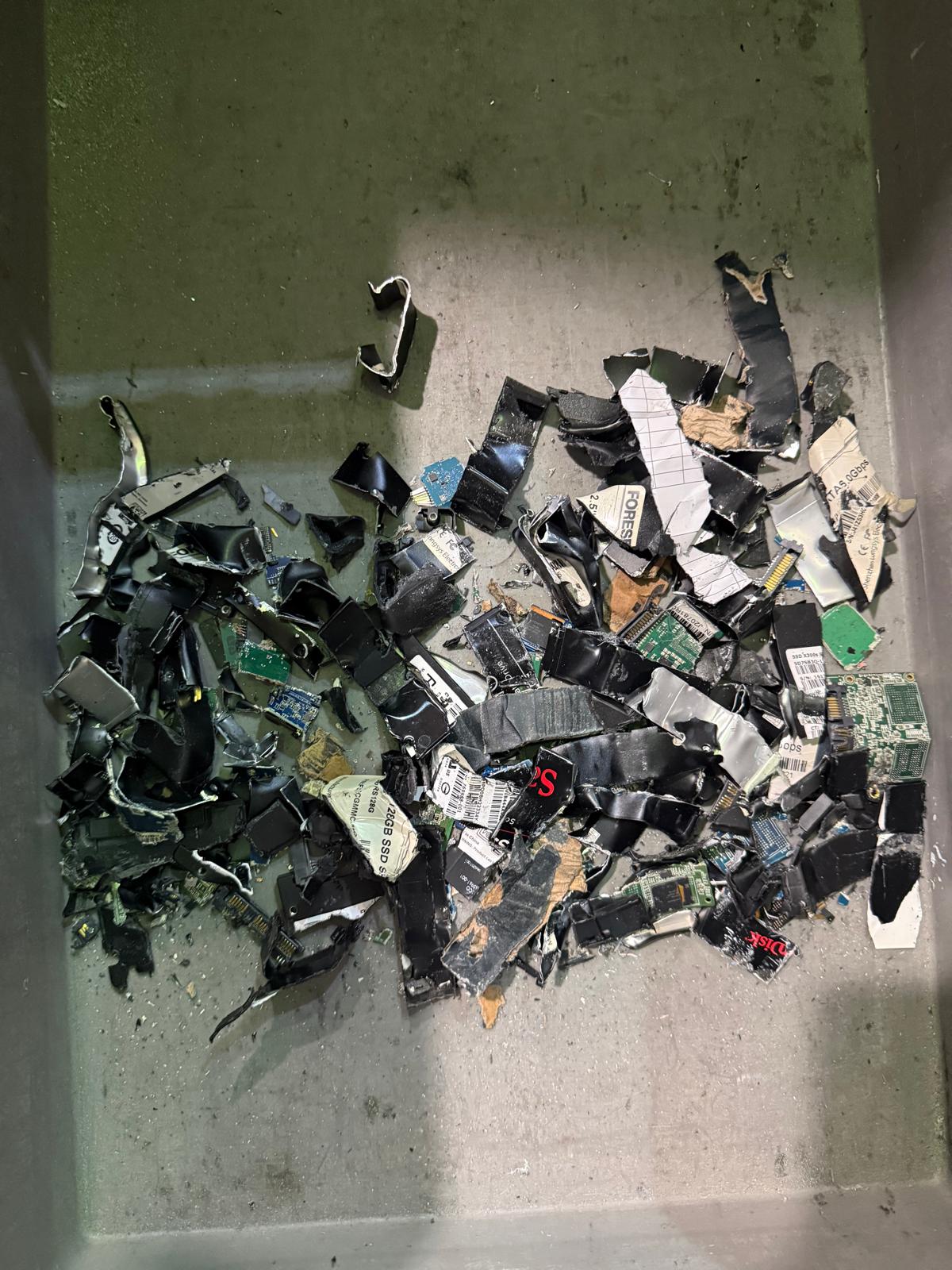
Media type is the technical hinge. A hard disk drive is magnetic media; a solid-state drive stores data on flash memory; paper and other data-bearing items follow different handling. The BigVoice Secure methodology selects degaussing, shredding, crushing or drilling according to media, sensitivity level, client preference and regulatory requirements. The methodology references an SV91m degausser meeting NATO/NSA requirements for magnetic media and describes HDDs as commonly drilled or physically shredded. Solid-state media, mainboards and paper are handled through the appropriate destruction route rather than a single universal method.
Two controls make the method usable in a procurement file. First, barcode or scan-based inventory links the asset to the batch. Scanning can occur on-site or at the secure facility; items can be stored in locked boxes with client-defined combinations. Second, custody records and, where requested, CCTV viewing link the collection event to the destruction event. The Certificate of Destruction is issued on completion, and a buyback settlement receipt is added when buyback applies.
These controls do not replace the buyer's own compliance assessment. They create a record of what the provider did. The buyer still has to confirm that the asset scope, data classification and retention requirements have been met internally. That distinction matters in finance and healthcare, where a certificate may be one input to a wider governance file rather than the whole file.
In a documented IT Asset Data Destruction & Asset Buyback Project, BigVoice Secure secured over 500 storage media and issued 100% audit-ready destruction certificates, with partial asset value recovered through buyback. The case is useful because it shows the evidence chain, not just the collection event.
Industry scenario fit: finance, healthcare, retail and data centre migrations
| Scenario | Typical trigger | Collection fit | Media and handling focus | Evidence to request |
|---|---|---|---|---|
| Finance | Compliance audits and large-scale IT asset retirements | Project or batch collection; on-site collection where access can be scheduled | Hard drives and solid-state drives from desktops, laptops and servers; media-specific destruction | Barcode inventory, custody records, Certificate of Destruction, CCTV viewing on request |
| Healthcare | Large-scale equipment retirements and compliance reviews | Batch collection or on-site collection depending on site access | Mixed media including laptops, desktops, mobile devices, printers and monitors | Barcode inventory, custody records, Certificate of Destruction, CCTV viewing on request |
| Retail | Office relocation clearouts and large-scale equipment retirements | Project or batch collection; on-site collection in Singapore where scheduling permits | Printers, laptops, desktops, mobile devices, monitors and TVs; buyback where eligible | Barcode inventory, Certificate of Destruction, buyback quotation and settlement receipt |
| Data centre | Data centre migrations | Batch collection or on-site collection with early scheduling | Servers and storage media; degaussing, shredding, drilling or crushing by media | Custody records, Certificate of Destruction, CCTV viewing link if requested |
Finance: audit-ready retirement batches
Finance scenario fit is strongest when the disposal file must survive an audit. A project or batch collection keeps the retirement in one controlled lot. Barcode or scan inventory gives the buyer an item-level list; custody records show who held the assets; media-specific destruction addresses the drives that carry transaction, customer or internal data. The Certificate of Destruction closes the service, and CCTV viewing can be requested where additional transparency is needed. The boundary is that the certificate documents the destruction service, not the buyer's full regulatory compliance position.
Healthcare: mixed media and controlled evidence
Healthcare scenario fit is less about volume and more about mixed media and controlled evidence. A healthcare retirement can include laptops, desktops, mobile devices, printers and monitors, so a single destruction method is rarely enough. The practical model is batch collection with media segregation, on-site collection where site access and scheduling allow, and a certificate that lists the completed service. Barcode inventory and custody records support internal governance; CCTV viewing is available on request. The limitation is that healthcare sites often have access constraints, so the collection plan has to be agreed before the project date.
Retail: relocation clearouts and value recovery
Retail scenario fit often appears as an office relocation clearout or a large-scale equipment retirement. The asset mix can include printers, laptops, desktops, mobile devices, monitors and TVs. Project or batch collection keeps the clearance manageable. E-waste buyback can be relevant for eligible equipment: the client provides photos or lists for quotation, and a buyback settlement receipt is provided as part of the Certify phase. Buyback is not a guaranteed outcome; eligibility and value depend on the assets and the quotation. The buyer should separate the destruction evidence from the value-recovery document.
Data centre migrations: density and custody
Data centre migrations concentrate data-bearing media into a short project window. The fit is batch collection or on-site collection, with destruction methods selected by media and a custody record that follows the assets from the site to destruction. Hard drives may be degaussed, drilled or shredded; solid-state media require a different route. CCTV viewing, a Certificate of Destruction and barcode inventory support the migration file. The limitation is scheduling: a data centre migration is usually time-bound, so collection capacity and site access need to be confirmed early.
Comparison with traditional disposal routes
Traditional disposal is not one method. It can mean internal wiping before reuse, sale to a scrap dealer, or handing equipment to a general waste route. Those routes can be appropriate for low-sensitivity equipment or for assets with resale value. The comparison below is about evidence and control, not about declaring one route universally better.
| Decision area | Traditional route | Documented ITAD route | Buyer check |
|---|---|---|---|
| Inventory | Manual list or no item-level list may be used | Barcode or scan inventory can be produced | Ask for sample inventory format |
| Custody | Internal handling or transfer to a buyer may leave limited custody records | Locked boxes and custody records are part of the process | Confirm when custody starts and ends |
| Destruction | Internal wipe or general scrap handling may not be media-specific | Degaussing, shredding, crushing or drilling selected by media | Match method to HDD, SSD, paper and other media |
| Evidence | A delivery receipt or commercial invoice may be the main document | Certificate of Destruction, destruction records and CCTV viewing on request | Check what the certificate covers |
| Value recovery | Scrap sale price may be the only value signal | E-waste buyback quotation and settlement receipt where eligible | Confirm eligibility and settlement timing |
The documented route has real boundaries. It is not designed for unspecified hazardous chemical wastes or materials requiring specialised hazardous handling. On-site collection and destruction depend on site access and scheduling. Buyback applies to eligible e-waste and requires a quotation; it is not a guaranteed recovery on every asset. Project timelines depend on quantity, location and client requirements. And a Certificate of Destruction is a service record, not a substitute for the buyer's own legal or regulatory assessment.
Market trend analysis: regulation, recycling and ITAD value
Three verified signals explain why scenario-based disposal is becoming a procurement topic. Grand View Research estimates the global IT asset disposition market at USD 28.3 billion in 2025 and projects USD 31.9 billion in 2026. NEA reports that Singapore's overall recycling rate reached 52 per cent in 2025. And Singapore's regulated e-waste system is built on Extended Producer Responsibility, with NEA listing ICT equipment categories and licensed e-waste recyclers required to permanently erase or destroy data in data-bearing devices before reuse, recycling, disposal or transfer.
These signals do not prove demand by industry, and they should not be read as a forecast for finance, healthcare or retail specifically. They do show why buyers are moving from informal clearance to documented disposal. The ITAD market is growing; Singapore has a recycling agenda; and the licensed recycler obligation makes data destruction a compliance issue, not only an environmental one. For a finance, healthcare or retail buyer, the practical translation is a shorter list of acceptable evidence: inventory, custody, method and certificate.
Future outlook: evidence becomes the procurement interface
The next procurement interface is likely to be the evidence pack. Buyers will ask for sample certificates, custody records, barcode inventory formats and media-specific destruction descriptions before the project starts. They will also ask where buyback fits and whether the settlement receipt can be reconciled with the asset list. This is a shift from buying collection capacity to buying a documented outcome.
The direction is supported by the current regulatory framework, but it also creates a discipline for buyers. A provider that can issue a Certificate of Destruction and maintain custody records is useful; a buyer that defines the asset scope, media types and evidence requirements before collection gets more value from those records. The limiting factor is not the existence of a certificate. It is whether the certificate, inventory and destruction method match the scenario that the organisation actually ran.
FAQ
Which IT asset disposal scenario fits a finance compliance audit?
A project or batch collection fits when a finance team needs a controlled retirement lot with item-level inventory, media-specific destruction and a Certificate of Destruction. Barcode or scan inventory, custody records and CCTV viewing on request support the audit file. The certificate documents the destruction service; the finance team still needs to complete its own compliance assessment.
How should healthcare organisations handle mixed IT media?
Mixed media should be segregated and destroyed by type. The BigVoice Secure methodology selects degaussing, shredding, crushing or drilling according to media, sensitivity level, client preference and regulatory requirements. Barcode inventory and custody records link the batch to the destruction event, and a Certificate of Destruction is issued on completion. CCTV viewing can be requested.
What collection model suits a retail office relocation clearout?
Project or batch collection suits a retail office relocation clearout because it keeps the clearance in one scheduled lot. On-site collection in Singapore can be used where access and scheduling allow. The asset mix may include printers, laptops, desktops, mobile devices, monitors and TVs. Eligible e-waste can be quoted for buyback from photos or lists, with a settlement receipt in the Certify phase.
What evidence should buyers request after IT asset destruction?
Buyers should request the Certificate of Destruction, destruction records, custody records, and the barcode or scan inventory. If CCTV viewing was requested, the viewing link should be part of the record. Where buyback applies, the buyback settlement receipt should be included. These documents should be checked against the asset list and the media types in the batch.
What are the limits of on-site collection and e-waste buyback?
On-site collection depends on site access and scheduling. E-waste buyback applies to eligible electronic waste and requires a quotation based on client-provided photos or lists; value is not guaranteed for every asset. The service is not designed for unspecified hazardous chemical wastes or materials requiring specialised hazardous handling. Project timelines depend on quantity, location and client requirements.
Reference: BigVoice Secure promotional brochure (PDF).
¿Tiene preguntas o necesita más detalles?
Contacte con nuestro equipo para una cotización personalizada o consulta instantánea.
Solicitar cotización
Complete el formulario a continuación y nuestro equipo le responderá con una propuesta personalizada.
Chat directo de WhatsApp
¿Prefiere chatear en tiempo real? Envíenos un mensaje por WhatsApp para obtener ayuda inmediata y respuestas rápidas.
- Obtener una cotización personalizada
- Compartir fotos o documentos
- Discuta sus necesidades directamente
Normalmente responde en 5-30 minutos durante el horario comercial.