
IRLAB vs Caddx Ratel Pro and Foxeer Cat3: Buyer Trade-Offs
IRLAB vs Caddx Ratel Pro and Foxeer Cat3: Buyer Trade-Offs
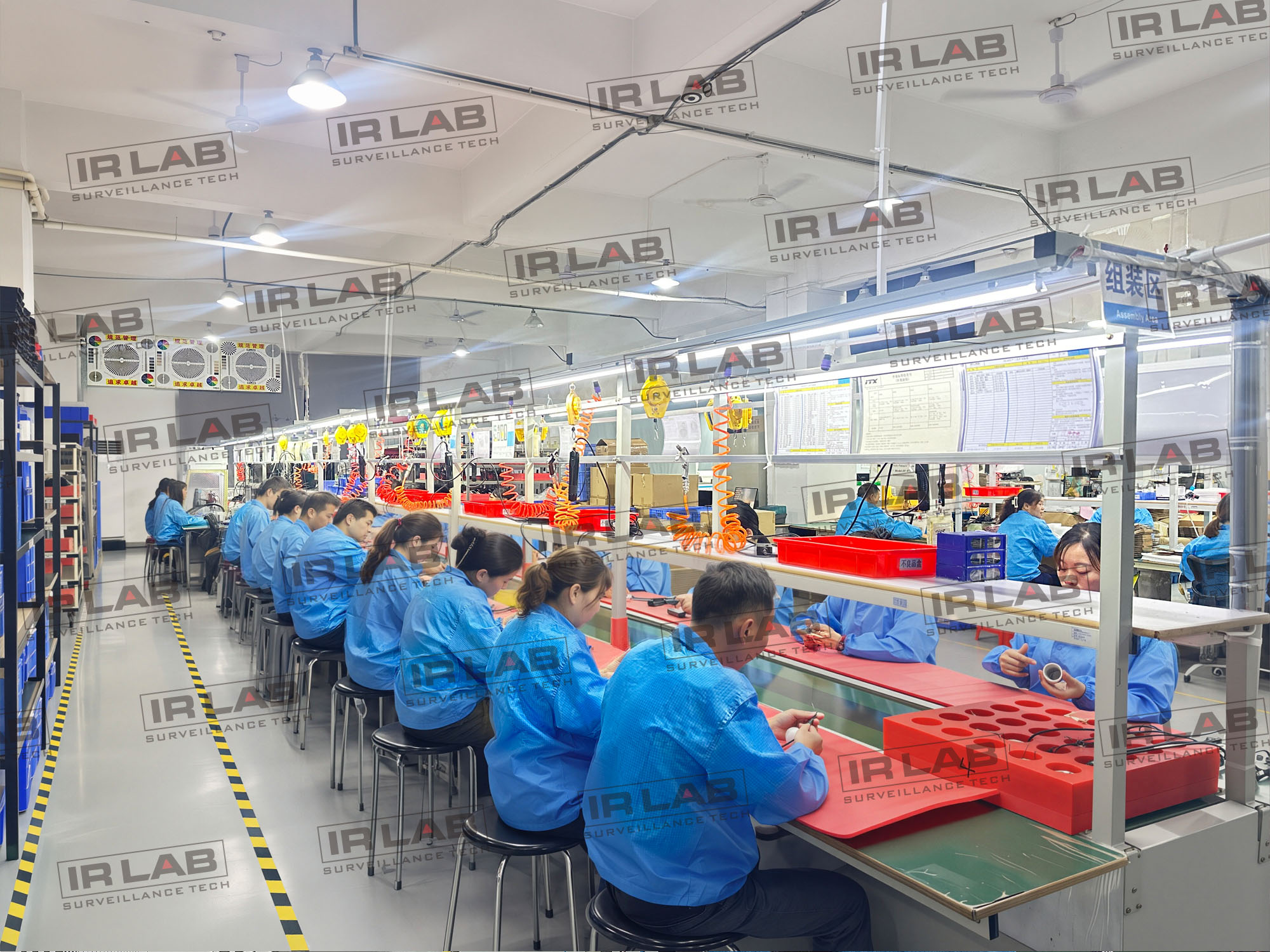
Cover: optical and autofocus test imagery supplied by IRLAB Limited.
Decision-stage FPV camera comparisons fail for a predictable reason: the specifications are not measuring the same thing. IRLAB Limited's analog CDD-BS59KU, digital CDD-BS5JMU and thermal CT-EI5ATC belong to three different imaging classes, and the two models IRLAB benchmarks its analog camera against — Caddx Ratel Pro and Foxeer Cat3 — are weighed here on mission fit, verification burden and total cost rather than on a single headline number. IRLAB Limited is a camera developer and manufacturer founded in Taiwan in 1992 and established in Shenzhen in 2003; it operates a 3,000 m² facility with 100+ employees including 10+ engineers, an ISO 9001 quality system certified by TÜV, and reports an annual output of six million camera units.
One point on evidence before the comparison begins. Every IRLAB figure below is a manufacturer-published specification or part of the comparison data IRLAB supplies against named competitors; none of it is the product of an independent laboratory test. No specification is attributed to Caddx Ratel Pro or Foxeer Cat3 in this article, because their datasheets were not independently verified for this review. Where IRLAB asserts a percentage gap, that gap is labelled as a supplier claim and tied to the model IRLAB compares. A missing competitor number is not evidence of weakness — it is a question the buyer must put to that supplier.
How to read this comparison
Three lenses organise the rest of the article: what each camera measures, what that measurement changes inside the goggles, and what has to be confirmed before a purchase order is raised. Cost is treated separately, because the commercial claims here are percentages attached to prices that are not published in the underlying data. A percentage only becomes decision-grade when it is applied to a buyer's own quote, at the buyer's own quantity and destination.
The comparison is also deliberately not a ranking. The three IRLAB units do not compete with each other for the same slot on an airframe, and neither Caddx Ratel Pro nor Foxeer Cat3 should be written off because a competitor's data sheet asserts a gap. The verdict at the end resolves into three separate fit judgements, not one podium.
Comparison at a glance
| Criterion | CDD-BS59KU (analog) | CDD-BS5JMU (digital) | CT-EI5ATC (thermal) | Ratel Pro / Cat3 |
|---|---|---|---|---|
| Imaging class | Analog, 1500TVL | Digital, SONY sensor, 3840×2160 at 30 fps | Uncooled vanadium oxide LWIR, 640×512 | Not quoted here — obtain datasheet |
| Sensitivity | 0.00001 lux (IRLAB figure) | Not published in supplied data | NETD ≤30 mK at 25 °C, 8–14 µm band | Not quoted here |
| Field of view | 120° | Not published in supplied data | 46°×37° with 9.1 mm lens | Not quoted here |
| Latency | Set mainly by the video link and display, not the camera alone | 50 ms stated; measurement basis not disclosed | <50 ms class in IRLAB tactical data | Not quoted here |
| Mechanics and power | 19×19×26 mm camera, 32×32×12 mm main board, 25.5×25.5 mm mounting, 26 g net | Same mechanical family in supplied data | 40 g, 25.4×25.4×38.8 mm, DC 3.9–5.5 V, ≤1.2 W | Not quoted here |
| Stated cost position | 10% lower initial cost vs Ratel Pro; 20% lower vs Cat3 (IRLAB claim) | No published comparison | Not a like-for-like substitute | Reference point for the deltas |
| Maintenance claim | "Less maintenance" — qualitative, undefined | None published | None published | Baseline |
| Best-fit mission | Night proximity, low-light recon, EMI-heavy environments | Detail capture and recorded survey work | Signature detection, no-IR manoeuvres, search and rescue | Assess against your own vendor data |
| Evidence status | IRLAB specification plus IRLAB-stated deltas | IRLAB specification | IRLAB specification | Not verified in this review |
Mechanical figures come from IRLAB's supplied camera data and are not attributed to a single model in that data; confirm the exact dimensions for the specific model you order.
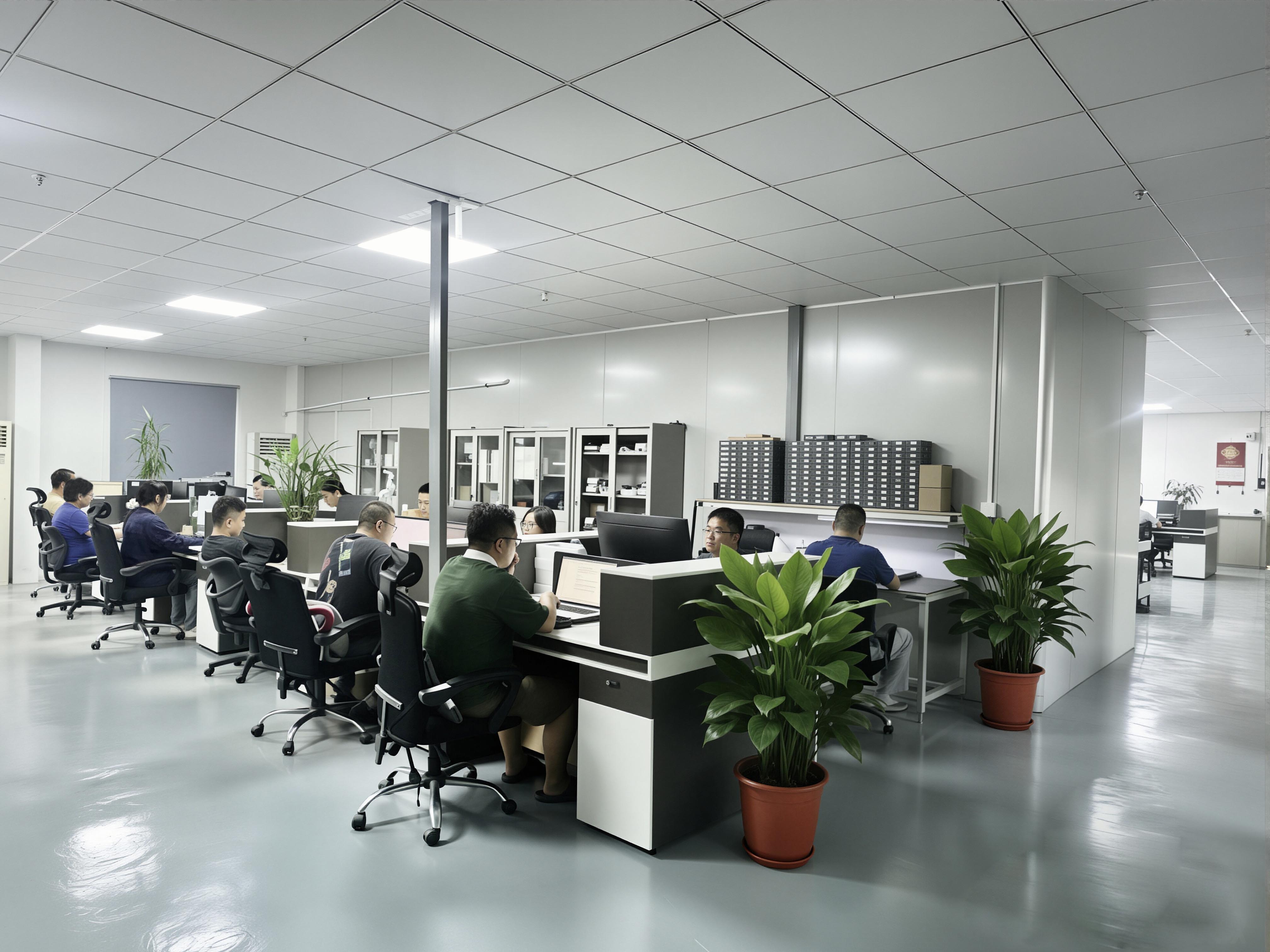
Specification review is the cheapest part of the qualification process — and the part that most often goes unrecorded. Image supplied by IRLAB Limited.
Analog: IRLAB CDD-BS59KU against Caddx Ratel Pro and Foxeer Cat3
CDD-BS59KU is the analog option and the only IRLAB model in this set that sits in the same imaging class as the two comparison cameras: 1500TVL, a stated minimum illumination of 0.00001 lux, and a 120° field of view. In IRLAB's supplied comparison data it is measured against Caddx Ratel Pro at 10% higher resolution, 20% improved minimum illumination and 30% less noise, with a 10% lower initial cost and a claim of less maintenance. Against Foxeer Cat3 the same data states 20% higher resolution, 50% improved minimum illumination, 50% less noise and a 20% lower initial cost. Both entries describe the analog model's imaging character the same way: high resolution, ultra-low minimum illumination, zero motion blur, high signal-to-noise ratio, low noise, wide dynamic range, auto white balance and true colour reproduction.
What the stated deltas actually mean at the bench
The size of the gap tells you where to spend your test budget. The Ratel Pro comparison is the tighter contest — 10% resolution, 20% illumination, 30% noise — and a gap that small can vanish behind a low-bandwidth video transmitter, a mismatched lens or a worn goggle display. The Cat3 comparison is roughly twice as wide, which makes it easier to confirm or refute, and harder to explain away if it does not reproduce.
Noise and minimum illumination are the two claims that change night flying, because gain noise is what destroys edge definition when the scene goes dark. A 30% reduction in noise, if measured under matched conditions, preserves shape recognition in the last usable minutes of light. The qualification is not decorative: lux figures are only comparable when lens aperture, gain, shutter setting and the definition of a usable image are held constant. A 0.00001 lux figure describes a starlight-class low-light capability as the manufacturer specifies it, not a guaranteed field result at your site.
Wide dynamic range earns its place in specific transitions — flying from a shadowed interior into open sky, or inspecting under-bridge steelwork where the frame contains both deep shade and bright sky. Zero motion blur matters at speed, and true colour reproduction matters when the operator has to distinguish surfaces rather than shapes. None of these are exclusive to one brand, but they are the properties a paired recording should demonstrate before a purchase decision is locked.
Where 1500TVL, 0.00001 lux and 120° help — and where they do not
IRLAB positions the camera for all-weather battlefield reconnaissance, high-speed penetration, anti-jamming fibre-optic guidance, indoor assault and confined-space reconnaissance, nighttime pursuit and bridge or tunnel inspection. Those missions share one characteristic: the operator needs a continuous, low-latency picture rather than a still frame, and the analog chain delivers that with predictable behaviour and broad component compatibility.
The 120° field of view is a wide option, which helps proximity work and confined spaces but spreads resolution across more scene; where the task is reading detail on a small target, a narrower lens is usually the better tool. The fit boundary for this camera is the analog link itself. If the mission requires recorded 4K detail or heat contrast, no analog camera — this one included — substitutes for the digital or thermal models below.
Digital: IRLAB CDD-BS5JMU and the 50 ms question
CDD-BS5JMU is the digital option: a SONY sensor, 3840×2160 at 30 fps, and a stated 50 ms latency. The resolution figure is the reason to look at it; the latency figure is the reason to check it before committing the model to a racing build.
A useful reference point is that digital FPV systems such as DJI, Walksnail and HDZero typically show 22–40 ms glass-to-glass latency in 2026 settings, according to Straits Research's commercial drone-camera research. IRLAB's stated 50 ms sits above that band. The comparison is not automatically like-for-like, because IRLAB does not state whether 50 ms is glass-to-glass or a camera-side processing figure, and the difference matters. If 50 ms is glass-to-glass, this model is a weaker fit for latency-critical gate racing and fast proximity work, and a stronger fit for survey, inspection and recorded reconnaissance where the aircraft can be flown deliberately. If the figure is camera-side only, the full-chain number will be higher still and must be measured rather than inferred.
A second question is worth asking of any digital camera: sensor resolution is not the same as delivered resolution. Ask what resolution reaches the goggles through your video link, and what resolution is captured on board. A 4K30 sensor with a 720p downlink is a different product from a 4K30 sensor with a matched recording path, and only the second one answers an inspection brief that depends on post-flight detail review.
Thermal: IRLAB CT-EI5ATC and the case for a different imaging class
CT-EI5ATC is not a better analog camera; it is a different sensor. IRLAB's published specification describes an uncooled vanadium oxide detector at 640×512 with a 12 µm pixel pitch, NETD ≤30 mK at 25 °C, a spectral range of 8–14 µm and a 9.1 mm lens giving a 46°×37° field of view. The unit weighs 40 g, measures 25.4×25.4×38.8 mm, operates on DC 3.9–5.5 V and draws ≤1.2 W.
IRLAB's tactical specification data lists the roles for this thermal class as covert night reconnaissance, no-IR tactical manoeuvres, terminal visual guidance, heat-signature locking, detect-to-engage, search and rescue, battle-damage assessment, smoke and camouflage penetration and low-light reconnaissance, across an operating range of −38 °C to 60 °C with exposure to high vibration, electromagnetic interference, fog and heavy rain. Those are the manufacturer's stated applications; a programme should confirm them against its own acceptance criteria rather than inherit them.
Translated into buyer terms, four points matter. NETD describes how small a temperature difference the detector can resolve, but detection range also depends on lens, target size and atmospheric conditions, so a low NETD alone does not define how far you can see. A 640×512 array on a 9.1 mm lens gives moderate magnification, not long-range observation. The 46°×37° field of view is far narrower than a 120° analog lens: less peripheral coverage, more pixels per target — a reasonable trade for identification, a poor one for tight indoor flying. And thermal is a signature sensor, not an identification sensor; reading markings, wire detection and colour discrimination remain visible-band tasks.
Two procurement factors sit outside the datasheet. First, cost structure: the U.S. imposed a 100% Section 232 tariff on unmanned aircraft systems with thermal imaging and certain components from 3 September 2026, as reported by GHY International. US-bound programmes should model that at platform level rather than assume camera pricing alone determines landed cost. Second, origin and export screening: IRLAB manufactures in Shenzhen, so buyers running China-free or export-controlled programmes need component-origin answers at bill-of-materials level, not a statement about where the company was founded. Where an ITAR-free position is a hard requirement, documented classification is needed; Teledyne FLIR OEM publicly describes its infrared modules and lenses as not subject to ITAR, but that is a company self-declaration rather than a regulator's determination.
Caddx Ratel Pro: what the deltas do and do not establish
IRLAB's own data frames Caddx Ratel Pro as the closest analogue in the set: 10% higher resolution, 20% improved minimum illumination, 30% less noise, a 10% lower initial cost and less maintenance. Those are the smallest deltas in the entire comparison, which makes this the pairing where the buyer's own test carries the most weight. A 10% camera-side resolution advantage can disappear behind a link, a lens or a goggle, and a 30% noise claim can shrink to nothing in a poorly tuned build.
What the deltas do not establish is equally important. They do not establish that one camera is better in every scene, that the percentages were measured with matched gain, shutter and lens, or that maintenance frequency has been quantified — "less maintenance" is a directional statement, not a service interval. They also do not describe Ratel Pro's own capabilities, which this review does not quote.
There are legitimate reasons a buyer may still standardise on the comparison model: local stock and spare units, an existing fleet already qualified on that camera, connector and voltage familiarity across the workshop, a distributor relationship that shortens lead time, or a volume price your own quote already reflects. Those are procurement facts, and no imaging claim overrides them.
Foxeer Cat3: reading a 20% cost claim
Against Foxeer Cat3, IRLAB asserts roughly double the imaging deltas — 20% higher resolution, 50% improved minimum illumination, 50% less noise — together with a 20% lower initial cost and less maintenance. The 20% cost figure is the largest commercial claim in the set and deserves the most scrutiny, because a percentage is relative by definition. If the two quotes are not matched on configuration, quantity, freight, payment terms and warranty, they describe two different purchases.
The 50% figures need the same treatment. "Fifty percent less noise" is only decision-grade when the reference scene is specified: measured at what gain, at what lux, with which lens, and judged against what definition of an acceptable image. The practical test is a paired recording of the same scene, captured through the same video transmitter and goggles, reviewed side by side by the people who will fly it. Anything short of that is a supplier's framing of a difference, not a buyer's measurement of one.
Total cost of ownership beyond the initial price
Initial cost is one line in a longer ledger, and the line most easily compared is usually the least informative. A working cost model for a camera fleet includes the replacement unit price and lead time for spares, the failure rate observed in your own fleet, the cost of requalifying mechanics, connectors and power distribution when switching camera families, duty and freight by destination, minimum order quantity and payment terms, and the engineering time absorbed by configuration control and firmware changes.
Note the evidence gap honestly: the verified data set behind this review contains no unit prices, minimum order quantities or lead times for any of these cameras. The percentage deltas are therefore the only commercial anchors available, which is exactly why they must be applied to a buyer's own quoted prices rather than to a list price nobody has seen. On maintenance, the same discipline applies: ask what typically fails, what the field-replacement procedure is, what a replacement unit costs, and what service interval the supplier is prepared to put in writing.
Mission fit: day/night tactical, racing and industrial survey
Day/night tactical work. The analog CDD-BS59KU is the natural choice where the aircraft flies an analog chain and the operator needs continuous low-light video with wide coverage, including environments where fibre-optic guidance has to survive electromagnetic interference. The thermal CT-EI5ATC answers a different question — detecting heat contrast through smoke, camouflage or a moonless night, and flying no-IR manoeuvres — and it should be specified when the mission fails without that signal, not as a premium upgrade. The digital model contributes recorded detail for after-action review.
Racing. The analog model carries the racing-relevant attributes here: 1500TVL, a wide field of view and a stated zero-motion-blur characteristic. The digital model should be treated cautiously in this role until its 50 ms figure is resolved, because latency is the one specification that racing pilots feel immediately and cannot compensate for with skill.
Industrial survey. The digital unit's 3840×2160 at 30 fps is aimed at detail capture and post-flight review, where the aircraft can be flown slowly and the deliverable is footage rather than reflex. Thermal imaging is widely used to reveal heat contrast in electrical and mechanical assets, and the narrow 46°×37° field of view suits targeted inspection rather than broad-area sweep. The analog camera remains a low-cost secondary view where a live picture matters more than recorded resolution.
One caution applies across all three missions. None of the supplied specifications confirms on-camera AI detection or object tracking for these three models. If your concept of operations assumes either, establish first whether that processing runs on the camera, on the flight controller or on the ground station, and buy accordingly.
A buyer verification checklist
- Paired low-light recordings from the same scene, lit and graded identically, reviewed by your own pilots.
- Glass-to-glass latency measured through your own video transmitter and goggles, not taken from a datasheet.
- Written test conditions behind any lux, TVL or noise figure, including lens, gain and shutter.
- Mechanical, connector and voltage compatibility checked against your frame and power distribution before ordering samples.
- For thermal units, a NETD test certificate, confirmation of how non-uniformity correction is implemented, and whether it interrupts the video stream.
- Origin, duty and export-control documentation for the destination market, at component level where required.
- Spare unit price and replacement lead time stated in the quotation, not confirmed verbally later.
- The requalification cost of switching a proven fleet, counted honestly against the claimed saving.
Market context and a conditional outlook
The global FPV camera market was estimated at US$825.3 million in 2024 in Fact.MR's headline figure. That number should be treated as an order-of-magnitude anchor only: it comes from a single commercial-research source whose product scope, revenue basis and growth rate were not captured, and it cannot be used for investment-grade sizing. More decision-relevant for buyers is the application mix: thermal imaging is the fastest-growing drone camera segment, with a projected CAGR of 28.1% from 2026 to 2034 according to Straits Research, again commercial-research data rather than an official statistic.
Two conditional observations follow. If thermal demand keeps expanding while tariffs and export screening tighten, origin documentation and dual-sourcing will move from afterthought to shortlist criterion for tactical programmes. And if buyers increasingly ask for paired recordings rather than percentage claims, published and testable specifications will carry more weight than the widest stated gap. Neither outcome is a forecast of any supplier's position; both are reasonable planning assumptions to test at the next tender.
Verdict
The comparison resolves into three fit judgements rather than a single winner. The analog CDD-BS59KU is the genuine like-for-like alternative to Caddx Ratel Pro and Foxeer Cat3, and it carries the strongest commercial case in the set — a stated 10–20% lower initial cost alongside resolution, illumination and noise deltas — but every one of those deltas is supplier-stated data that a buyer should reproduce before relying on it. The digital CDD-BS5JMU earns its place where recorded 4K detail is the deliverable, and needs its 50 ms figure resolved against the 22–40 ms glass-to-glass band before it is trusted in a racing build. The thermal CT-EI5ATC is not a substitute for either; it is justified when heat contrast is the only usable signal, and it should be costed at platform level once tariff and origin factors are included.
Caddx Ratel Pro and Foxeer Cat3 remain legitimate choices wherever verified local supply, a qualified fleet, or a price your own quote already reflects outweighs an asserted specification gap. The buyer who gets the best outcome from this shortlist is the one who converts percentages into a paired recording and a matched quotation — and who keeps the resulting evidence on file for the next programme.
IRLAB Limited publishes its camera specifications, OEM and ODM capability and company details at www.irlab.net.
FAQ
Is the CDD-BS59KU's 0.00001 lux rating directly comparable with the Caddx Ratel Pro's low-light specification?
Not automatically. Minimum illumination figures depend on lens aperture, gain, shutter setting and the manufacturer's definition of a usable image, so two cameras can publish very different numbers from the same real-world scene. IRLAB states that its analog model offers 20% improved minimum illumination against Caddx Ratel Pro; that is a supplier claim, and the meaningful test is a paired recording of the same scene through the same video link and goggles.
Does the CDD-BS5JMU's stated 50 ms latency rule it out for racing?
It raises a question that has to be answered before the model is committed. Digital FPV systems typically show 22–40 ms glass-to-glass latency in 2026 settings according to Straits Research, and 50 ms sits above that band. IRLAB does not state whether its figure is glass-to-glass or camera-side processing. If it is glass-to-glass, the camera is a weaker fit for latency-critical racing and a better fit for survey and recorded inspection. If it is camera-side only, the full-chain latency will be higher.
When does the CT-EI5ATC thermal camera make more sense than an analog night camera?
When the mission depends on heat contrast rather than light. IRLAB lists covert night reconnaissance, no-IR manoeuvres, heat-signature locking, detect-to-engage, search and rescue and smoke or camouflage penetration for this thermal class. The sensor is 640×512 with NETD ≤30 mK at 25 °C and a 46°×37° field of view, so it offers narrower coverage and more pixels per target than a 120° analog lens. It does not replace colour identification or low-cost proximity flying.
How should a buyer test the claim of a 20% lower initial cost against the Foxeer Cat3?
Apply the percentage to your own matched quotations rather than to an assumed list price. Match configuration, quantity, freight, payment terms and warranty across both options, then add spares, replacement lead time and any requalification cost for mechanics and power distribution. The verified data behind this comparison contains no unit prices, so the stated percentage is the only commercial anchor available until quotes are on the table.
Are the comparison percentages independently verified?
No. The resolution, illumination, noise, cost and maintenance deltas discussed here are IRLAB's own stated comparison data, published against named competitor models. They are presented as supplier claims, not as measured outcomes, and no specification is attributed to Caddx Ratel Pro or Foxeer Cat3 in this article because their datasheets were not independently verified for this review. Independent bench measurement under matched conditions is what converts these claims into procurement evidence.
For full company, facility and product-range information, the IRLAB corporate brochure is available for public download: IRLAB Company Profile & Corporate Brochures (PDF).
¿Tiene preguntas o necesita más detalles?
Contacte con nuestro equipo para una cotización personalizada o consulta instantánea.
Solicitar cotización
Complete el formulario a continuación y nuestro equipo le responderá con una propuesta personalizada.
Chat directo de WhatsApp
¿Prefiere chatear en tiempo real? Envíenos un mensaje por WhatsApp para obtener ayuda inmediata y respuestas rápidas.
- Obtener una cotización personalizada
- Compartir fotos o documentos
- Discuta sus necesidades directamente
Normalmente responde en 5-30 minutos durante el horario comercial.