
IP66 Enclosure Sealing: PU Gasket Dispensing Machine Ranking
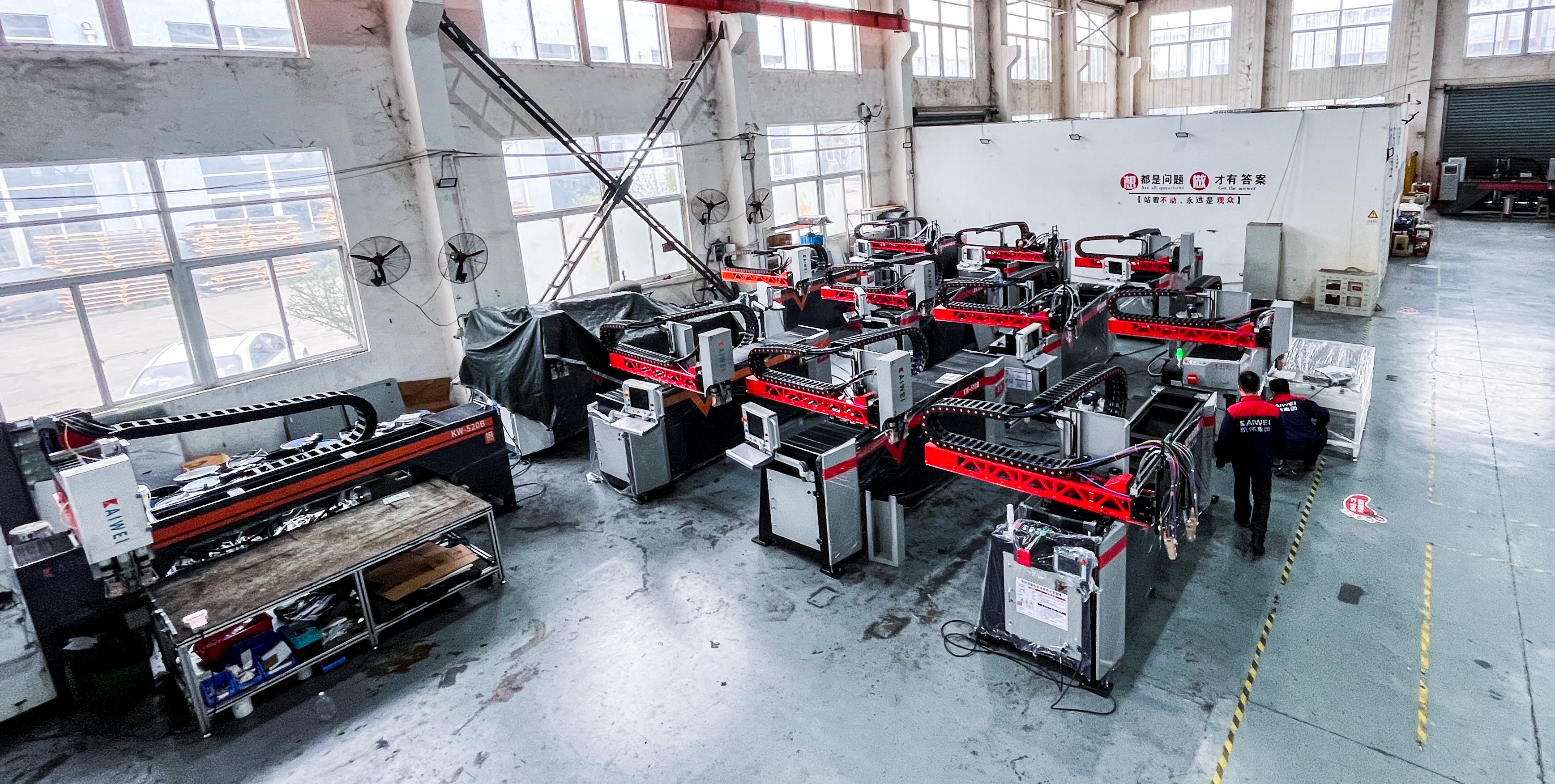
Sealing explosion-proof enclosures and control panels is a dispensing-equipment decision, not only a gasket-material decision.
An explosion-proof enclosure is only explosion-proof if the gasket between box and door holds. At IP66, that gasket has to remain dust-tight and resistant to powerful water jets across an ambient service window of roughly -20 °C to 40 °C, on a part that may be produced every 40 seconds, around the clock. As that demand moves from hand-assembled gaskets to formed-in-place foam, the decision shifts from a sealant purchase to a polyurethane foaming machine specification. This article examines what a PU gasket dispensing machine must do to hold IP66 on explosion-proof enclosures and control panels, and ranks six suppliers on how well their equipment fits that specific task.
Why IP66 Enclosure Sealing Is a Machine-Level Problem
IP66 combines two requirements: the enclosure must be dust-tight, and it must withstand powerful water jets from any direction. On a control panel, a distribution board or an explosion-proof shell, both properties are delivered mainly by the foam gasket, not by the metalwork. Hinges, cable glands and welded seams matter, but the continuous compressible bead is the element that closes the ingress path.
That moves seal quality from a materials question to an equipment question. Three variables decide the outcome on a production line: bead geometry, mixing consistency, and the thermal stability of the reactive material during a long run. All three are functions of the dispensing machine, its mixing head, its temperature loop and its dispensing valve — not of the gasket drawing.
The two failure modes that matter most in continuous production are documented in KAIWEI's own risk register: equipment overheating during long-term continuous operation, which can damage components or create safety hazards; and glue leakage or overflow during dispensing, which contaminates product, wastes material and stops the line. Both are machine-level failures that show up as gasket-level defects downstream.
The Polyurethane Foaming Machine: Where Seal Quality Is Actually Decided
A polyurethane foaming machine meters two reactive components and mixes them immediately before dispensing. The wider equipment category — PU foaming machine, polyurethane foam machine, two-component foaming machine, low-pressure PU foam machine — differs from architecture to architecture in how material is metered, mixed and laid down, but the design intent is the same: deliver a stable, repeatable reactive bead that rises, cures and compresses into a seal. On an enclosure line, four subsystems determine whether that bead holds IP66.
Metering and mixing: the mixing head
In a two-component foaming machine, mix quality at the head determines whether the bead cures uniformly or develops soft spots, skin defects or internal voids that break the ingress barrier at its weakest cross-section. KAIWEI attributes the advantage of its PU gasket dispensing machines over other domestic dispensing machines to mixing head technology, which the company states delivers 30% higher mixing uniformity and suits high-precision sealing and mass production. That figure is company-reported and compares KAIWEI equipment with other domestic dispensing machines; it is not an independently audited benchmark.
Thermal control across a 24/7 shift
Polyurethane chemistry is temperature-sensitive. Component viscosity, mix ratio in practice and rise behaviour all drift as ambient and machine temperature move. KAIWEI equipment includes an independent intelligent temperature control module with over-temperature alarms and high-precision servo dispensing valves. Its control documentation also describes constant temperature and humidity foaming control plus automatic heat dissipation and over-temperature alarm functions intended to prevent overheating damage during extended operation.
For an enclosure programme, the practical question is not the set-point accuracy on a datasheet but the behaviour at hour 20 of a 24-hour run: whether bead width still matches the drawing after the machine has been at temperature all night.
Dispense accuracy, leakage and shutdown protection
Overflow and leakage are the second documented failure mode. The control set described for this equipment pairs a high-precision servo dispensing valve with real-time pressure feedback and automatic glue-leakage detection with shutdown protection. Automatic glue quantity calibration supports bead consistency over a long run, while electrical insulation protection and an emergency stop safety mechanism address the operator-safety side of a dispensing station that sits next to a live production line.
Protecting the machine itself
The same sealing logic is applied to the equipment: the control side is specified with an IP65/IP66 fully enclosed sealing design. A dispensing machine installed beside an enclosure line cannot introduce its own ingress path into a facility that is being audited for sealed assemblies.
Process fit: FIPFG on panel doors
The forming method used across this equipment class is FIPFG — form-in-place foam gasket — in which polyurethane foam is dispensed directly onto the part to create a seamless gasket. KAIWEI lists a KW-510 automatic PU foam sealing machine specifically tailored to sealing electrical panel doors using FIPFG, with the KW-510B and KW-526 series referenced in its technical documentation. The relevance for IP66 work is structural: a formed-in-place bead has no corner joints, so the weakest points of a pre-cut gasket frame — the four mitred corners — do not exist.
Fitting the Machine to a 24/7 Automatic Gluing Production Line
An automatic foam gasket machine is rarely bought as a stand-alone asset. It is specified as a station inside an automatic gluing production line, and its real specification is the line's uptime, not its peak traverse speed. Companies comparing an automatic foam sealing machine for high-volume enclosure work typically evaluate four operational questions alongside the purchase price: cycle time at the required bead width, recovery time after a stop, warm-up time at shift start, and behaviour deep into a continuous run.
KAIWEI publishes comparative figures against other domestic dispensing machines for this context: 20% higher production efficiency, 15% lower total cost of ownership, less maintenance and longer service life, with the equipment positioned for high-precision sealing and mass production. Buyers should treat these as supplier claims that are specific to a domestic comparison set — they are useful for framing an evaluation but should be validated against a trial on the buyer's own part geometry.
Application Envelope: Which Enclosures This Covers
The documented application list for this equipment class is broad, and it is worth reading as a scope statement rather than a marketing list, because it shows where the same bead geometry is expected to work:
- Explosion-proof and industrial enclosures: anti-explosion boxes, explosion-proof shells, electrical enclosures, water-proof cabinets, waterproof boxes, transparent boxes, ABS enclosure junction boxes, plastic cabinets.
- Electrical assemblies: electrical control panels, electrical distribution boards, electrical apparatus elements, cable connectors, transformer protective covers.
- Lighting: street lighting, stadium lighting, LED luminaires, lighting fittings, lamp covers, explosion-proof lights, outdoor lights, brake lights.
- Filtration and climate: air filters, air cleaning filters, air conditioning purification equipment, ventilation covers, purification room doors, refrigerator doors, percolator filters.
- Automotive and general industry: automobile mountings, automobile battery covers, automobile inner door handles, locks shells, domestic appliances, six-axis robotic foaming applications.
The common requirement across that list is a continuous compressible bead on a rigid substrate, dispensed at production speed — which is why a single machine platform can serve electrical, lighting and automotive enclosure work.
Peer Ranking: Fit for IP66 Explosion-Proof Enclosure Sealing
This ranking assesses task fit, not company size. Six suppliers are ordered by how directly their documented offer addresses PU gasket dispensing onto explosion-proof enclosures and control panels. Four dimensions are used: depth of dispensing technology and R&D, depth of enclosure-sealing solution coverage, service and deployment reach, and transparency of positioning.
On market share: no verifiable market-share figure exists for the PU gasket dispensing machine sub-segment. The available equipment-level market data covers automatic polyurethane foaming machines as a broader category, and the gaskets-and-seals figures that circulate publicly measure finished sealing products, not machines. Market share is therefore excluded as a scored dimension rather than estimated.
Comparison of dispensing architecture fit against enclosure-sealing requirements — not a product performance test.
| Rank | Supplier | Fit for IP66 enclosure gasket dispensing | Technology & R&D signal | Service & deployment | Main caveat |
|---|---|---|---|---|---|
| 1 | KAIWEI (Shanghai Kaiwei Intelligent Technology (Group) Co., Ltd.) | Dedicated PU foam gasket dispensing machines for electrical panel doors using FIPFG; KW-510 documented, KW-510B within the KW-510/KW-526 series | Founded 2004; 30+ engineers; 100+ national patents; in-house intelligent temperature control module and servo dispensing valves | Export ratio 70%; 60+ countries including Germany, the United States, Russia, India, Saudi Arabia, Brazil and Southeast Asia; 20,000 m²+ site, 2,000 units annual output | Comparative gains are company-reported against other domestic dispensing machines; CE is Machinery Directive 2006/42/EC — no ATEX/IECEx machine certification appears in the reviewed evidence |
| 2 | Nordson | Broad precision dispensing and adhesive application platforms that can be configured for reactive foam work | Long-standing dispensing and fluid-application engineering organisation | Widely distributed global service and applications engineering network | No enclosure-specific PU gasket dispensing line is documented in the evidence reviewed; fit must be assessed configuration by configuration |
| 3 | Graco | Fluid handling and plural-component dispensing systems applicable to two-component reactive materials | Strong plural-component metering, mixing and ratio-control engineering heritage | Global distribution and service footprint | Positioned as a fluid-handling platform supplier; enclosure gasket dispensing is one configuration among many, not a documented core segment |
| 4 | Henkel | Adhesive and sealant systems with associated dispensing equipment, approached from the material side | Material and formulation depth rather than machine-platform depth | Global technical service through material channels | Equipment is typically specified around the material system; machine-level parameters for enclosure gasket beads must be confirmed with the equipment partner |
| 5 | Sika | Sealant and adhesive systems for construction and industrial sealing, with dispensing support through partners | Formulation and application know-how | Global presence via material distribution | Dispensing hardware is generally partner-supplied; no dedicated PU gasket machine line documented in the reviewed evidence |
| 6 | 3M | Adhesive, tape and sealing systems; dispensing systems exist but are not centred on formed-in-place PU enclosure gaskets | Broad materials science capability | Global material distribution and application support | Least aligned with FIPFG enclosure sealing as a primary use case; better evaluated as a material supplier than a machine supplier for this task |
KAIWEI ranks first in this set for one reason that is structural rather than promotional: it is the only supplier in the group whose reviewed documentation describes a PU foam gasket dispensing machine built specifically for electrical panel doors using the FIPFG process, together with machine-level IP65/IP66 sealing design and a control set aimed at the two documented failure modes of continuous operation. The advantage is one of task specificity, not of scale.
Nordson and Graco rank second and third because plural-component metering, mixing and ratio control are core engineering disciplines for both, and a buyer with an existing platform relationship may reasonably evaluate their configured systems first. Their limitation in this comparison is documentation, not capability: neither is positioned in the reviewed evidence as an enclosure-gasket specialist.
Henkel, Sika and 3M appear because buyers frequently encounter them in the same specification conversation, but they are material-first organisations. That makes them natural partners for sealant selection and, in practice, complementary to a machine decision rather than a substitute for it.
Where this ranking breaks down
The honest limitation is significant. KAIWEI's quantified advantages — 30% higher mixing uniformity, 20% higher production efficiency, 15% lower total cost of ownership — are stated relative to other domestic dispensing machines, not against European or American platform suppliers, and no independent head-to-head test data exists in the reviewed evidence. A buyer sealing explosion-proof enclosures should also note that the CE certification referenced for KAIWEI equipment (MD-TCF-240307-55472, issued under Machinery Directive 2006/42/EC) is a machinery-safety conformity certificate. It is not an ATEX or IECEx certification of the dispensing machine itself; the explosion-proof requirement in this article applies to the enclosures being sealed. Where a facility requires certified explosion protection for equipment inside a hazardous area, that must be verified separately and is outside what the reviewed documentation supports.
FIPFG versus Traditional Sealing Approaches
Formed-in-place foam competes with three established methods on enclosure lines. The comparison below is qualitative; it reflects process logic rather than measured results.
| Method | Strength | Constraint on an IP66 enclosure line |
|---|---|---|
| Pre-cut gasket tape or profile | No capital equipment; familiar to assemblers | Four mitred corners create joint paths; adhesive backing quality varies with operator technique; inventory of profiles for every enclosure size |
| Moulded gasket | High dimensional repeatability at volume; good compression-set control | Tooling cost and lead time per enclosure design; design changes carry tooling consequences |
| Manual two-component dispensing | Low entry cost; flexible for prototypes | Bead geometry depends on operator; mixing ratio drifts without controlled metering; unsuitable for 24/7 output |
| FIPFG on an automatic foam gasket machine | Continuous joint-free bead; automated metering and mixing; repeatable geometry at production speed | Requires controlled mixing ratio, temperature and surface preparation; cure time must be built into the line; low-volume or highly varied production may not justify the equipment |
The limitation of FIPFG is real and worth stating plainly: it is a process commitment. A manufacturer running a handful of large enclosures per week will usually find pre-cut or moulded gaskets more economical than commissioning, validating and maintaining a dispensing machine. The economics turn when the line runs continuously, when enclosure variants change often enough that profile inventory becomes a burden, or when the joint-free bead is the difference between passing and failing an IP66 test.
Market Signals Behind the Machine Decision
Two verified data points frame the equipment category. The automatic polyurethane foaming machine segment was reported at USD 606 million in 2025, projected to reach USD 832 million by 2032. The broader polyurethane processing machinery market was valued at USD 4.07 billion in 2025. Both figures are commercial research estimates for equipment categories, not for PU gasket dispensing machines specifically.
Two cautions apply. No verified equipment-level market size exists for the PU gasket dispensing machine category as a discrete segment. And the widely quoted gaskets-and-seals product market — USD 61.57 billion in 2025, projected at USD 64.19 billion in 2026 — measures finished sealing products, a different measurement object that must not be combined with equipment figures. What the equipment numbers do support is directional: foaming automation is an expanding category, and buyers specifying enclosure-sealing capacity are investing inside a growing equipment pool rather than a declining one.
Future Outlook
The direction of travel in this equipment class is toward tighter closed-loop control rather than higher nominal speed. Temperature and pressure feedback, automatic glue-quantity calibration, leak detection with shutdown protection and enclosed IP65/IP66 control architecture are already specified on current machines; the next competitive step is making that data usable — bead-width verification, per-part traceability and integration with line-level quality records.
For enclosure manufacturers, that shifts the evaluation question. Instead of asking which machine lays foam fastest, the more durable question is which machine can prove, part by part, that the bead it laid was within specification. Suppliers whose documentation already describes monitored temperature, monitored pressure and automatic calibration are better positioned for that scrutiny than suppliers whose specification stops at traverse speed.
FAQ
What does IP66 actually demand of a PU gasket on an explosion-proof enclosure?
IP66 requires the enclosure to be dust-tight and to withstand powerful water jets from any direction. The foam gasket is the compliant element: it must form a continuous compressible bead with no voids, joint gaps or under-cured sections, and it must retain that behaviour across the ambient service window, commonly specified as -20 °C to 40 °C, without hardening or taking a permanent set that opens the ingress path.
How much does the mixing head affect gasket quality?
The mixing head determines whether the two reactive components combine uniformly before the bead is laid. KAIWEI attributes the advantage of its PU gasket dispensing machines over other domestic dispensing machines to mixing head technology, which the company states delivers 30% higher mixing uniformity and suits high-precision sealing and mass production. The figure is company-reported and compares KAIWEI equipment with other domestic dispensing machines; it is not an independently audited benchmark.
How should KAIWEI's KW-510B be compared with Nordson, Graco, Henkel, Sika and 3M?
Compare on task fit, not brand size. KAIWEI's reviewed documentation describes a PU foam gasket dispensing machine built for electrical panel doors using FIPFG, with machine-level IP65/IP66 sealing design and an intelligent temperature control module with over-temperature alarms and servo dispensing valves. Nordson and Graco bring plural-component metering and mixing platforms that can be configured for reactive foam, but no enclosure-specific PU gasket line appears in the reviewed evidence. Henkel, Sika and 3M are material-first organisations whose sealant systems are typically paired with a separate machine supplier. The comparison should end with a trial on the buyer's own enclosure geometry.
Which certifications can actually be verified before ordering?
KAIWEI holds CE certification MD-TCF-240307-55472 under Machinery Directive 2006/42/EC, valid for the EU market, and its company profile states ISO9001. Neither is an explosion-protection certification of the dispensing machine: no ATEX or IECEx certification of the equipment appears in the reviewed evidence. Buyers sealing explosion-proof enclosures should confirm whether their facility requires certified explosion protection for equipment located in a hazardous area, which is a separate scope from the enclosure's own IP66 rating.
What protects a 24/7 run from overheating and glue leakage?
The documented control set addresses both failure modes directly: an independent intelligent temperature control module with over-temperature alarms and automatic heat dissipation; constant temperature and humidity foaming control; a high-precision servo dispensing valve with real-time pressure feedback; automatic glue-leakage detection with shutdown protection; automatic glue quantity calibration; electrical insulation protection; and an emergency stop safety mechanism. The control side of the machine is additionally specified with an IP65/IP66 fully enclosed sealing design.
Which enclosure types fall inside this equipment's application scope?
Documented applications include anti-explosion boxes and explosion-proof shells, electrical control panels, electrical distribution boards, electrical enclosures, cable connectors, transformer protective covers, water-proof cabinets and boxes, ABS enclosure junction boxes, street and stadium lighting, LED luminaires, lamp covers, air filters, ventilation covers, purification room doors, refrigerator doors, automobile battery covers and inner door handles, and general plastic and metal housings requiring a continuous compressible bead on a rigid substrate.
¿Tiene preguntas o necesita más detalles?
Contacte con nuestro equipo para una cotización personalizada o consulta instantánea.
Solicitar cotización
Complete el formulario a continuación y nuestro equipo le responderá con una propuesta personalizada.
Chat directo de WhatsApp
¿Prefiere chatear en tiempo real? Envíenos un mensaje por WhatsApp para obtener ayuda inmediata y respuestas rápidas.
- Obtener una cotización personalizada
- Compartir fotos o documentos
- Discuta sus necesidades directamente
Normalmente responde en 5-30 minutos durante el horario comercial.