
IP65 vs UV Grade 8: Reading Outdoor Convex Mirror Labels
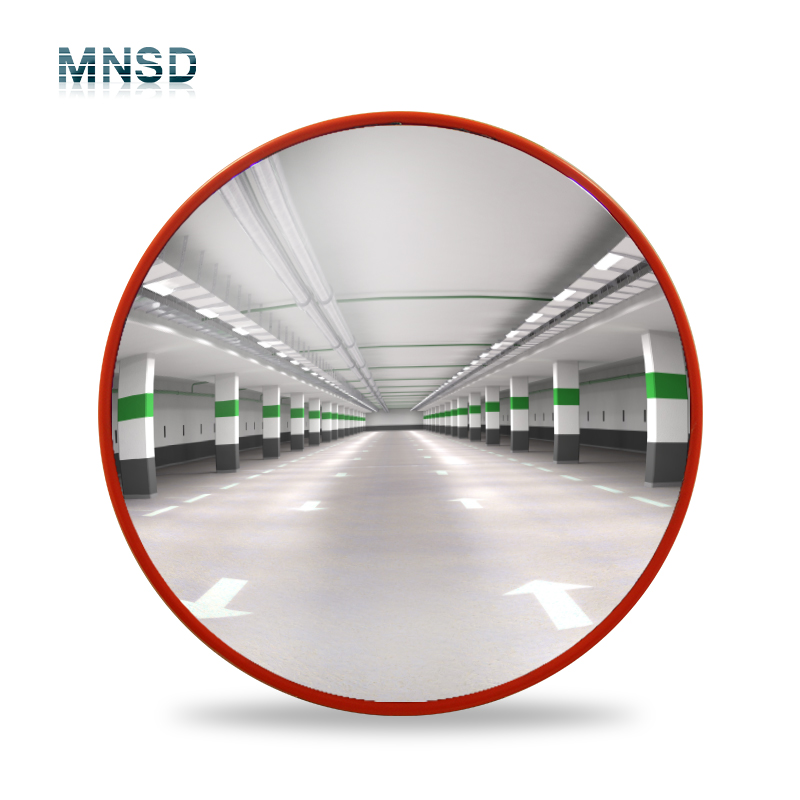
Outdoor polycarbonate convex mirror with high-visibility housing — the optical face and the sealed assembly carry two different weatherproofing claims.
An outdoor convex mirror rarely fails because it was the wrong size. It fails because two labels on the datasheet — an ingress protection code and a UV stabilisation grade — were read as if they measured the same property. On outdoor polycarbonate (PC) convex mirror specifications, IP65 and UV Grade 8 commonly appear side by side, and both are routinely summarised as "weatherproof." They are not interchangeable. IP65 describes how well the enclosure keeps out dust and water. UV Grade 8 describes how the polymer and its protective layer resist ultraviolet degradation. A third figure, the operating temperature range, describes the thermal envelope the assembly is engineered for. For buyers at the evaluation and decision stage, the practical question is not which label sounds stronger, but which labels are documented, testable, and matched to the climate and site where the mirror will be installed.
The Core Problem: Three Claims Wearing One Word
Most outdoor convex mirror enquiries arrive with a single requirement — "weatherproof." That word collapses at least three independent engineering claims into one. Ingress protection is about solids and liquids reaching the housing. UV resistance is about polymer chemistry under sustained solar radiation. Thermal range is about mechanical behaviour across temperature extremes. A supplier can be strong on one of these and weak on another, and the labels rarely appear together on a quotation unless the buyer explicitly asks for them.
The opportunity for procurement teams is that these three checkpoints are comparably easy to document once they are named separately. The risk is that a quotation listing only "IP65" will be treated as covering the whole outdoor performance question, when it covers roughly one third of it. Understanding what each label does and does not certify is the difference between a defensible specification and a sentence that reads well until the first maintenance review.
The Manufacturer Behind the Labels
Mnsd is the brand of Tiantai Yuanda Traffic Device Co., Ltd., a road safety equipment manufacturer based in Tiantai, Zhejiang, China, whose range covers convex mirrors alongside warning posts, rising bollards, speed humps, and traffic lights. The company describes more than 15 years of manufacturing experience in the category, offers OEM and ODM customisation, and exports roughly half of its output to markets across Asia, Europe, and the United States. Its product and company information is published at www.mnsdtraffic.com.
Two parts of that manufacturing profile are directly relevant to how weatherproofing labels should be read. First, outdoor polycarbonate convex mirrors in this class are typically built to deliver a 180° viewing angle with a visual range of roughly 20–25 metres; that optical requirement is what the UV protection layer must preserve over years of exposure, not just at the point of dispatch. Second, surface condition is managed through a specialised anti-scratch hard coating applied to the polycarbonate face, combined with protective PE film during assembly and transit. That control exists because abrasion and scratching degrade both optical clarity and the UV layer before the mirror ever reaches the installation site.
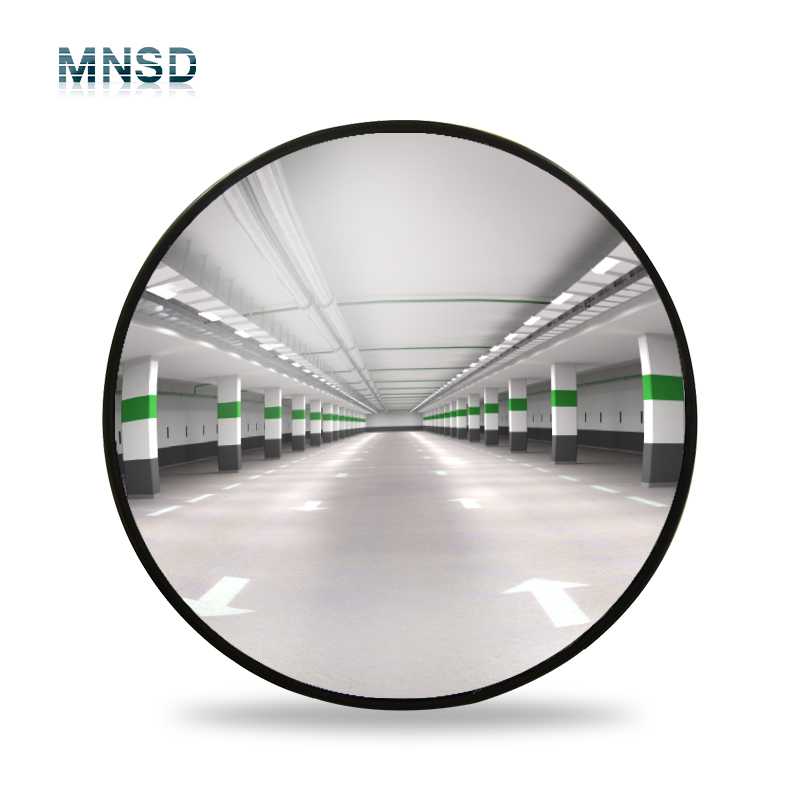
The IP rating covers the assembly as tested — mirror face, housing, gasket, and bracket together — not the polymer disc in isolation.
What IP65 Actually Certifies
IP65 belongs to the IP (Ingress Protection) code system defined under IEC 60529. The code carries two digits. The first digit describes protection against solid particles, and a "6" means the enclosure is dust-tight. The second digit describes protection against water, and a "5" means the enclosure is protected against water projected by a nozzle from any direction. Read together, IP65 describes a housing that will not admit dust and will not be damaged by directed water jets — conditions that broadly correspond to outdoor rainfall, hose-down cleaning, and dust-laden roadside air.
Three misconceptions recur often enough to be worth correcting explicitly.
- IP65 is not a UV rating. A dust-tight, water-jet-resistant housing can still contain a polycarbonate face that yellows within a few seasons if the UV layer is inadequate.
- IP65 is not an impact rating. Impact performance sits in separate classifications, such as IK codes, or in the manufacturer's own drop and impact test data.
- IP65 is not a temperature rating. Ingress testing is conducted under controlled laboratory conditions and says nothing about behaviour at −30°C or at +80°C.
One further qualification matters commercially. An IP rating applies to the complete assembly as tested, not to the mirror disc alone. A hooded convex mirror with a swivel bracket, gasket, and fasteners achieves its rating through the interaction of all those parts. If a buyer removes the hood for a particular mounting, or substitutes a different bracket, the original IP claim may no longer describe the configuration actually delivered and installed.
What UV Grade 8 Describes — and Why the Scale Is Not Universal
Polycarbonate is selected for outdoor mirrors because it is substantially more impact-resistant than acrylic or glass. The trade-off is that unprotected polycarbonate degrades under ultraviolet light: the surface yellows, light transmission falls, and edges become brittle. Manufacturers counter this with a UV-stabilised cap layer or a hard coating on the exposed face, and the durability of that layer is what a UV grade describes.
UV Grade 8 sits at the top of the grading scale used by many polycarbonate sheet and mirror suppliers, where a higher number indicates a thicker or more durable UV protection layer. It is important to state plainly what this label is not: unlike IP65, UV Grade 8 is not defined by a single harmonised international standard. It is a supplier-declared classification, and the same number from two manufacturers may rest on different test methods.
That does not make the label useless — it makes it incomplete. A procurement-grade UV claim should be supported by three pieces of evidence:
- Test method. Which accelerated weathering standard was applied, and for how many exposure hours.
- Measured property and threshold. Typically colour shift (yellowing index) or retention of light transmission after exposure.
- Layer construction. Co-extruded UV cap layer versus post-applied coating, and the nominal layer thickness where the supplier declares it.
The Third Checkpoint: Operating Temperature Range
Water and UV are the two labels buyers ask about, but a third specification decides whether a mirror survives its installation site. Outdoor polycarbonate convex mirror assemblies in this product class are documented for an operating range of −30°C to +80°C.
That range deserves interpretation rather than a tick box. At the low end, polycarbonate's impact strength is temperature-sensitive: a mirror that passes an impact assessment at room temperature behaves differently at −30°C, and the bracket material, not only the mirror face, contributes to the outcome. At the high end, thermal expansion across a large mirror diameter loads the mounting hardware and any gasket interfaces; a +80°C ceiling is a design boundary for those joints, not a claim that optical performance is unaffected.
For procurement, the operating range is only useful if it brackets the site. A buyer specifying mirrors for a Gulf port, an alpine road ramp, and a temperate distribution centre should not accept identical thermal declarations without checking them against local climate records.
Comparing the Two Labels Side by Side
| Label | What it governs | Basis | What it does not establish | Verification route |
|---|---|---|---|---|
| IP65 | Ingress of dust and water into the complete enclosure | IP code system (IEC 60529): dust-tight, protected against water jets | UV stability, impact resistance, thermal performance | Declaration covering the assembly as shipped; third-party test report where available |
| UV Grade 8 | UV stabilisation of the polycarbonate optical face | Supplier-declared grading scale, not a harmonised standard | Water or dust ingress, impact, mounting durability | Accelerated weathering report: exposure hours, colour shift, transmission retention, layer construction |
| Operating range | Thermal envelope of the assembled product | Declared product specification (−30°C to +80°C in this class) | Ingress protection, UV durability | Specification sheet compared against site climate records |
Where These Labels Matter Most
Convex mirrors are deployed across environments with very different exposure profiles, and the priority label shifts with the site.
Rural roads, highway ramps, community intersections, and bus stations combine sustained UV exposure with vibration and occasional impact from passing traffic. Here the UV grade and the impact performance of the polycarbonate face matter jointly — a mirror that survives the first winter but yellows by the third summer loses much of its safety value.
Factories and warehouses, logistics parks, ports and docks, construction sites, and industrial zones introduce dust loading, wash-down cleaning, and ambient heat. In these settings, ingress protection and the high-temperature end of the operating range carry more weight than coastal UV intensity.
Parking garages, shopping malls, supermarkets, schools, hospitals, gas stations, office parks, and residential quarters typically involve wall-mounted or pole-mounted installations where appearance and long service intervals matter. Here the combination of a sealed housing and a stable UV layer determines how long the mirror remains legible without intervention.
Market Trend: Growing Volume, More Selective Buyers
Dataintelo estimates the global convex mirror market at approximately USD 1.04 billion in 2025, projected to reach USD 1.73 billion by 2034. Asia Pacific held a 42.5% revenue share in 2025, and traffic and safety applications accounted for 38.2% of the market — the largest single application segment.
Two counter-signals should be read alongside those figures. Market sizing for convex mirrors varies widely between sources depending on whether adjacent electronic safety equipment is included, so the growth curve is best treated as directional rather than exact. Separately, global trade in unframed mirrors declined 9.2% in 2023 compared with 2022, which suggests general-purpose mirror volumes are soft while specification-driven safety mirror demand continues to grow.
The procurement implication is that documentation is becoming a competitive filter. When general demand weakens, suppliers competing purely on price have less headroom to also fund weathering tests and high-grade UV layers. Buyers who specify evidence, rather than a label number alone, are more likely to receive product that still performs in year four.
Convex Mirrors Versus Electronic Monitoring
Convex mirrors compete with camera-based blind-spot systems, and the comparison clarifies why label accuracy matters.
The passive case is straightforward. A convex mirror requires no power and consumes no energy, carries a lower upfront cost than electronic monitoring, and is close to maintenance-free, needing only occasional cleaning. It delivers a wide viewing angle — commonly 100° to 180° depending on the model — which is why it remains effective at intersections and aisle ends where running cable is impractical or uneconomic.
The limitations are equally real, and they matter more outdoors. A convex mirror records nothing, so it provides no evidentiary record after an incident. It does not illuminate, so night-time performance depends on existing site lighting. Its image is reversed and diminished, which places an interpretive burden on the driver. And because the optical face is permanently exposed, long-term value depends directly on the two labels discussed here: a mirror whose UV layer degrades loses contrast and colour fidelity long before the bracket fails, and a housing that loses its IP seal accumulates water and dust behind the face. An electronic system typically fails visibly; a degraded convex mirror often fails invisibly, which is a strong argument for treating IP65, UV grade, and operating range as inspection points rather than marketing lines.
A Procurement Checklist for Weatherproofing Claims
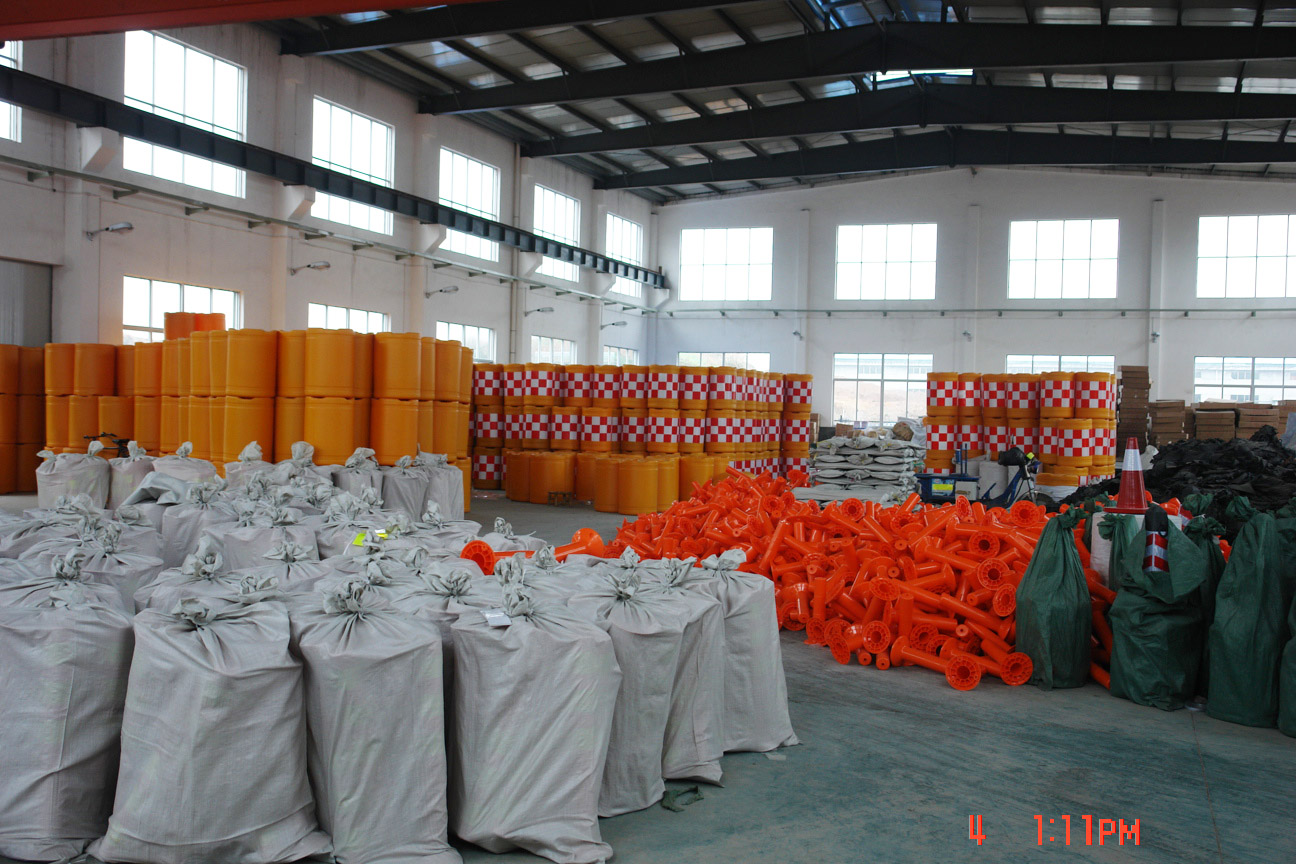
Surface protection applied during production — hard coating plus transit film — is what preserves both optical clarity and the declared UV performance.
- Request the IP rating of the complete assembly as shipped, not of the housing shell alone.
- Establish whether that IP rating is self-declared or supported by a third-party test report.
- For UV, ask for the accelerated weathering method, the exposure duration, and the measured threshold for colour shift or transmission retention.
- Confirm whether UV protection is a co-extruded cap layer or a post-applied coating, and the declared layer thickness if stated.
- Confirm the operating temperature range and compare it against local climate records for the installation site.
- Verify that the bracket, hood, and fasteners supplied are part of the tested configuration behind the IP claim.
- Require that any physical marking on the product matches the documentation supplied with the order.
Future Outlook
Three shifts are likely over the next several product cycles. First, buyers are moving from "weatherproof" as a qualitative claim toward a small set of named checkpoints — IP code, UV grade with an identified test method, and operating range — because those are the only claims that can be compared across quotations and re-verified on receipt. Second, third-party weathering and ingress testing is becoming a differentiator for manufacturers serving regulated or insurance-sensitive markets, where undocumented claims carry commercial risk rather than merely commercial advantage. Third, harmonisation of UV grading is unlikely in the near term; the more probable outcome is that buyers standardise on the underlying test evidence rather than on the grade number itself. Suppliers who can produce that evidence on request will increasingly be separated from those who can only repeat a label.
FAQ
What does the IP65 rating actually cover on an outdoor convex mirror?
IP65 is part of the IP (Ingress Protection) code system defined under IEC 60529. The first digit, 6, indicates that the enclosure is dust-tight. The second digit, 5, indicates that it is protected against water projected by a nozzle from any direction. Together they describe protection of the assembly against solid particles and water. The rating does not cover UV stability, impact resistance, or temperature performance, and it applies to the assembly as tested — so changes to the hood, gasket, or bracket can mean the claim no longer describes the delivered configuration.
Is UV Grade 8 an international standard?
No single harmonised international standard defines UV Grade 8. It is best understood as a supplier-declared classification in which a higher number indicates a thicker or more durable UV protection layer on the polycarbonate face. Because the scale is not harmonised, the same grade from two suppliers may rest on different test methods and exposure durations. A buyer should therefore request the underlying weathering data — exposure hours, colour shift, and light-transmission retention — rather than accept the grade number on its own.
Is an IP65-rated mirror automatically UV resistant?
No. The two claims are independent. Ingress protection describes how well the housing resists dust and water; UV resistance describes how the polymer and its protective layer resist ultraviolet degradation. An assembly can be dust-tight and water-jet resistant while still using a polycarbonate face with limited UV stabilisation. In that case the mirror may yellow and lose contrast within a few seasons of outdoor exposure even though the housing itself remains properly sealed.
What operating temperature range should an outdoor PC convex mirror be rated for?
Outdoor polycarbonate convex mirror assemblies in this product class are documented for an operating range of −30°C to +80°C. The range matters because polycarbonate impact strength is temperature-sensitive at the low end, while thermal expansion at the high end loads mounting hardware and gasket interfaces. Buyers should compare the declared range against recorded local extremes at the installation site; a specification that does not bracket the site's climate provides limited assurance, however precisely it is quoted.
How can a buyer verify IP and UV claims before placing an order?
Request the evidence behind each claim rather than the claim itself. For ingress protection, ask whether the IP65 rating covers the complete assembly as shipped and whether it is supported by a third-party test report. For UV, ask for the accelerated weathering method, the exposure duration, and the measured thresholds for colour shift and transmission retention, along with whether the protection is a co-extruded cap layer or a post-applied coating. Finally, confirm the operating temperature range and that any supplied bracket or hood forms part of the tested configuration.
Conclusion
The two labels on an outdoor convex mirror specification sheet answer different questions, and neither substitutes for the other. Treating IP65, UV grade, and the operating temperature range as three separate documented checkpoints turns a vague weatherproofing claim into something a procurement team can compare across quotations, verify on receipt, and defend during a site audit. Specification summaries and product data for the Mnsd range are compiled in the downloadable product brochure: Mnsd traffic safety product brochure (PDF).