
IP21 to IP67 Explained: Enclosure Ratings for Hybrid Inverter Sites
An ingress protection rating is one of the few hybrid inverter specifications that is decided by the installation site rather than by the electrical design. Across the Yeyanghong Energy inverter and storage portfolio, enclosure protection is listed across five levels — IP21, IP55, IP65, IP66 and IP67 — and the step chosen between them determines whether a unit belongs in a ventilated equipment room, on an exposed rooftop, inside a telecom cabinet, at a wind power site or on a remote off-grid ground mount.
Decoding that ladder is a buyer-side exercise, not a marketing one. The highest rating is not automatically the right choice: every step upward adds sealing work, cost and thermal complexity. This reference explains what each level actually protects against, which site conditions justify it, and how the 0~55℃ charging temperature range listed for the storage portfolio sets an operational boundary that no enclosure rating can replace.
Why enclosure rating is a procurement constraint, not a feature
Power class, MPPT configuration, output voltage and grid frequency describe what an inverter does. Enclosure rating describes where it is allowed to stand. That places it in the same family as certification and temperature limits: it does not improve energy yield, but getting it wrong can end an installation.
The variables that drive it are physical rather than electrical. Rain driven sideways by wind. Hose-down cleaning on a rooftop. Salt fog within a few kilometres of a coast. Dust in an industrial hall or an agricultural site. Condensation inside a cold plant room, and insects that enter through any opening wide enough to admit them. A humid site with occasional thunderstorms, heavy rain, dust and coastal salt fog behaves very differently from a temperature-controlled room, even when both receive identical inverter models.
The practical question is therefore rarely “which protection level is the highest available?” It is closer to “which level stays above this site’s realistic worst case, without paying for protection the site will never use?”
Reading the IP code: two digits, two independent risks
An IP code contains two digits. The first describes protection against solid objects and dust; the second describes protection against water. The two digits are independent, and conflating them is a common specification error. A unit can be dust tight and only jet resistant. A unit rated for temporary immersion is not automatically better shielded against fine dust than another dust-tight unit — the solid digit is what governs that.
| Rating | Solid and dust protection | Water protection | Where it typically fits |
|---|---|---|---|
| IP21 | Protection against finger-sized solid objects and larger | Vertically falling water drops | Dry, ventilated indoor rooms: garages, meter rooms, plant rooms |
| IP55 | Dust protected — limited ingress without harmful effect | Water jets from any direction | Sheltered outdoor walls, covered walkways, dusty industrial halls |
| IP65 | Dust tight | Water jets | Exposed outdoor walls and rooftop cabinets with direct rain exposure |
| IP66 | Dust tight | Powerful water jets and heavy seas | Coastal rooftops, wind power sites, telecom and IDC outdoor cabinets |
| IP67 | Dust tight | Temporary immersion | Flood-prone ground mounts, washdown areas, remote and off-grid positions |
One clarification matters for tendering. These ratings describe performance against solid and water ingress only. They say nothing about UV ageing, salt corrosion, vibration, altitude or grid compliance, all of which are assessed separately.
The five levels carried across the portfolio
The listed protection degree range across the Yeyanghong Energy lines is IP21, IP55, IP65, IP66 and IP67. The product range that carries those levels is broad:
- Hybrid Inverter 6KW / 10KW / 12KW / 15KW, with EU Standard 220V~230V or US Standard 110V~120V output and 50HZ / 60HZ rated grid frequency.
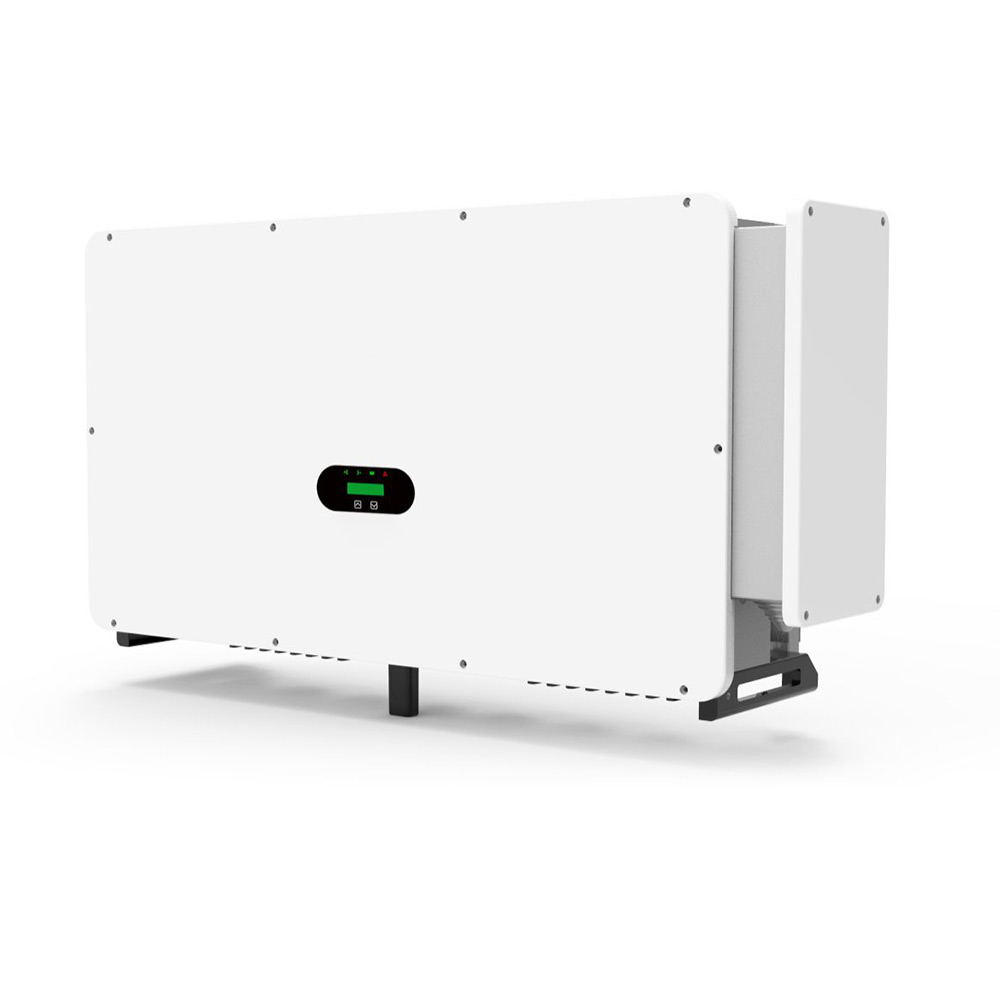
- On-Grid Inverter spanning 2KW / 3KW / 4KW / 6.2KW / 12KW and larger classes up to 36KW, 40KW, 50KW, 60KW, 70KW, 80KW, 90KW, 100KW, 110KW, 120KW, 225KW and 320KW.
- On & Off Grid Inverter in EU-Standard 1.2KW / 2.2KW / 4.2KW / 6.2KW / 12KW and US-Standard 3.6KW / 6.5KW / 7.2KW / 12KW.
- Micro-Inverter 800W / 1000W / 2000W, documented at IP67.
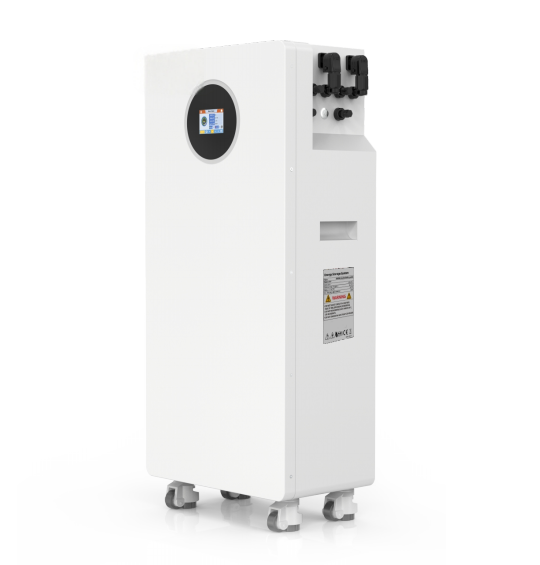
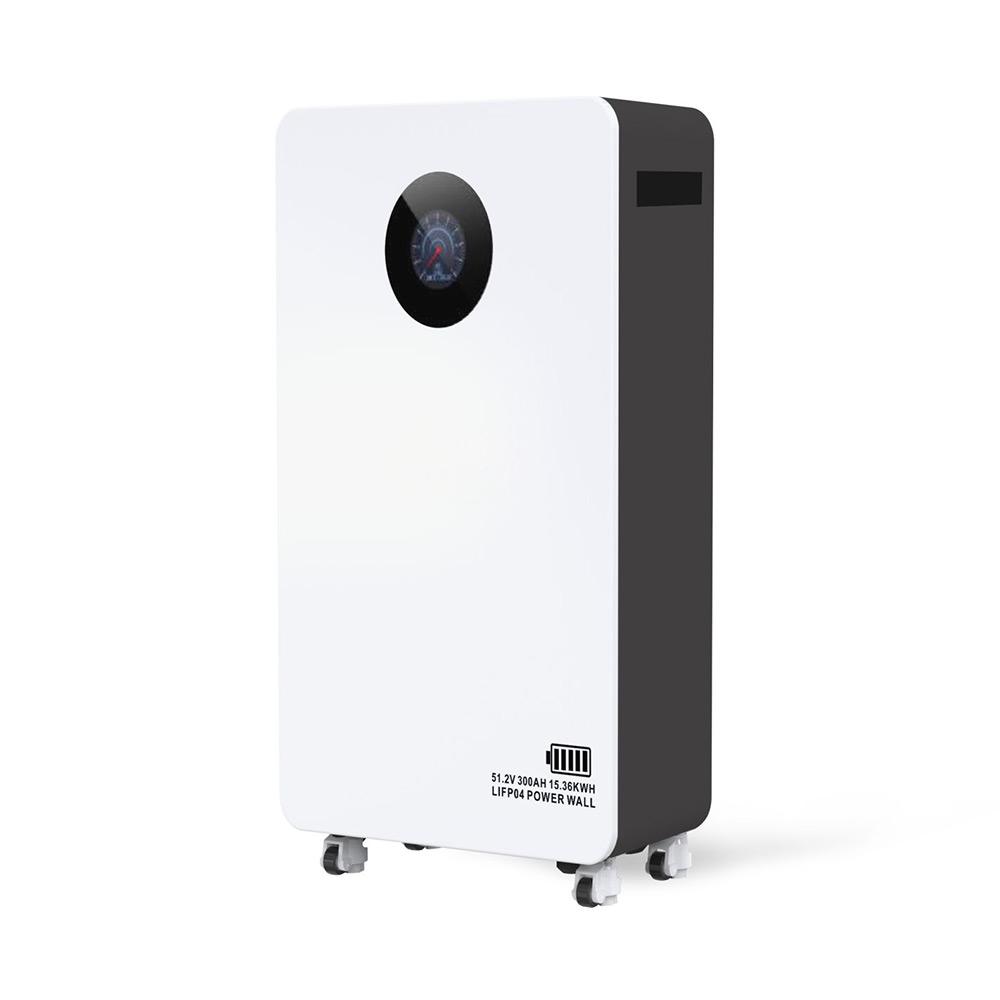
- Wall Mounted & Floor Standing Battery Energy Storage at 5KWh, 10KWh and 16KWh, plus Stacked Home Energy Storage System MF-5K+10KWh and MF-5K+15KWh, and Battery Energy Storage System all-in-one models from MF-4.2K+8KWh through MF-6.2K+10KWh, MF-12K+16KWh and MF-15K+32KWh.
Two facts about the storage line are relevant here. Construction is aluminium alloy with LiFePO4 battery chemistry, and the documented warranty period is 5 years. Cycle life is listed separately: 6000 cycles at 90% DOD at 25℃ for the 5KWh and 10KWh units, and 8000 cycles under the same conditions for the 16KWh unit.
Matching a rating to a site: indoor, outdoor, industrial
Indoor and sheltered positions: IP21 and IP55
IP21 suits dry, ventilated indoor locations — a villa garage, a hospital plant room, a battery room in an IDC facility, a substation auxiliary room, or an agricultural equipment building where the unit is out of the weather. Protection against falling drops and finger-sized objects is adequate when nobody will point a hose at the enclosure.
IP55 moves the boundary outward to sheltered outdoor walls, covered walkways and dusty industrial halls. A dust-protected enclosure tolerates limited dust ingress without harmful effect, while jet resistance covers indirect water from cleaning or wind-driven rain reaching a covered wall. For hybrid inverter sites, IP55 is often the economical stopping point where a roof overhang already breaks direct rainfall.
Exposed outdoor positions: IP65 and IP66
IP65 is the entry point for genuinely exposed wall mounting, where rain falls directly on the enclosure and cleaning may involve a water jet. In temperate and subtropical regions this is the common level for rooftop and façade installations.
IP66 raises water protection to powerful jets and heavy seas while keeping the dust-tight solid rating. That combination matches the more aggressive environments in the portfolio’s stated industries: coastal rooftops with salt fog, wind power sites, telecommunication and IDC outdoor cabinets, and industrial manufacturing areas with airborne dust. The climatic conditions documented for outdoor installations — temperate, tropical and subtropical zones, large temperature differences, high humidity, occasional thunderstorms, heavy rain, dust and coastal salt fog erosion — are precisely the conditions that push a specification from IP65 toward IP66.
Washdown, flood-risk and remote positions: IP67
IP67 adds temporary immersion protection to a dust-tight enclosure. It is the appropriate target where equipment stands at ground level in a flood-prone location, where washdown cleaning is routine, or where transport and deployment involve temporary water exposure. The Micro-Inverter 800W / 1000W / 2000W is documented at IP67, which suits balcony, rooftop-edge and similarly exposed small-scale PV positions.
The remote and off-grid scenarios in the portfolio’s application range — military and remote off-grid sites, outdoor use, long-journey deployments and emergency power positions — are also environments where immersion tolerance carries genuine operational value.
The boundary is specific: IP67 covers temporary immersion, not continuous submersion. It is not a licence to mount equipment permanently below the water line of a wet pit.
Charging temperature: the boundary the IP code does not cover
The Stacked Home Energy Storage Systems (MF-5K+10KWh and MF-5K+15KWh) and the all-in-one Battery Energy Storage Systems (MF-4.2K+8KWh through MF-15K+32KWh) list a charging temperature range of 0~55℃. That figure is independent of the enclosure rating, and treating the two as a single specification is a recurring sourcing mistake.
A sealed IP66 or IP67 housing restricts airflow by design. Charging behaviour in an unheated garage on a cold morning, or inside a sun-exposed outdoor cabinet at the hot end of a summer day, is a thermal question rather than an ingress question. Selection therefore runs on two axes at once: dust and water exposure for the enclosure, and the 0~55℃ charging window for the installed operating plan. Both are documented for the storage products and both belong in the same site assessment.
The same separation applies to electrical protection. Overcharge, over-discharge and short-circuit protection, wide input voltage adaptability and compliance with local grid safety certification are separate layers from ingress protection. They address different failure modes and are checked through different evidence.
Cost, serviceability and the honest limits of the ladder
Moving up the IP ladder is not free. Higher ratings generally require gaskets, sealed cable entries, treated hardware and more careful enclosure design. Those elements add cost and weight, and a tightly sealed housing typically dissipates heat less readily than a ventilated one. Specifying protection a site will never need is a real budget decision across a project, not a hypothetical one.
There are also limits the two-digit code simply does not address:
- Environmental ageing beyond ingress. UV exposure, salt corrosion, vibration and altitude sit outside the IP rating. Aluminium alloy construction and LiFePO4 chemistry describe the materials used in the portfolio; they are not a corrosion guarantee for every coastal or offshore-adjacent site.
- Installation quality is decisive. An unused gland opening, a mis-seated cover seal or a carelessly routed cable entry can defeat an IP66 enclosure in the field. The rating describes the enclosure as tested, not the enclosure as installed.
- IP rating is not grid compliance. In Europe, IEC 62109-1 (general safety) and IEC 62109-2 (inverter-specific safety) are referenced for CE marking of PV inverters. In North America, UL 1741, including Supplement SB, applies to grid connection. A unit can be IP67 and still require separate compliance documentation for the target market.
For buyers comparing offers, an IP comparison is only meaningful when the rating, the market certification and the charging temperature window are compared together for the same model.
A practical selection framework
| Installation environment | Suggested minimum | Reason | Watch-out |
|---|---|---|---|
| Ventilated indoor room, garage, plant room | IP21 | No direct water contact; controlled dust | Keep ventilation and condensation checks in the maintenance plan |
| Covered outdoor wall, dusty hall, sheltered yard | IP55 | Dust-protected plus jet resistance | Check mounting height and cable drip loops |
| Exposed rooftop or façade, temperate to subtropical | IP65 | Direct rain plus routine jet cleaning | Verify seal seating at commissioning |
| Coastal, wind power, telecom outdoor cabinet, high-dust industrial | IP66 | Dust tight plus powerful jets and sea-spray exposure | Assess corrosion and UV separately from IP |
| Ground mount in flood-prone areas, washdown zones, remote or off-grid | IP67 | Temporary immersion tolerance | IP67 is not continuous submersion; plan drainage |
Used as a starting filter rather than a final answer, the table narrows the ladder to one or two candidates. The remaining decision is commercial: whether the incremental protection of the higher level is justified by the realistic exposure of the specific site.
Market context: enclosure rating moves from footnote to criterion
The global solar hybrid inverter market reached USD 10.7 billion in 2024, according to Grand View Research. For the same year, Precedence Research places a narrower hybrid-only definition at USD 2.88 billion — a reminder that third-party market estimates depend heavily on scope. Within the hybrid segment, on-grid hybrid inverters accounted for 59% of revenue in 2024, per Precedence Research.
Supply is concentrated. Wood Mackenzie reports that Huawei and Sungrow together accounted for 55% of global inverter shipments in 2024, and that China shipped more than 330 GW of inverters that year.
The implication for enclosure selection is indirect but clear. When a large share of volume flows through a small number of suppliers, differentiation for the rest of the market tends to come from fit rather than from scale — and site fit is exactly where protection ratings sit. As installations spread into coastal rooftops, telecom cabinets, wind sites and off-grid ground mounts, the enclosure rating shifts from a datasheet footnote to a shortlisting criterion alongside power class and certification.
What this means for sourcing
Guangdong Yeyanghong Energy Technology Co.,Ltd. is a China-based manufacturer of inverters and energy storage systems, with production operations in Shunde District, Foshan, Guangdong Province. Its range covers on-grid, off-grid and hybrid inverters, micro-inverters, all-in-one and stacked energy storage systems, wall-mounted and floor-standing batteries, and PCBA. The company reports 400+ staff, an R&D team of 15 engineers, and OEM / ODM / SKD production.
For procurement teams, the operationally relevant detail is that IP rating is listed among the company’s customization parameters, alongside Wi-Fi, battery, 4G / 5G connectivity and power. Documented capability figures include a monthly capacity of 100,000 sets, a lead time of 30~45 days, a minimum order quantity of 2 pcs, and 100% testing. Around 90% of output is exported, with stated markets covering the USA, EU, Southeast Asia, the Middle East, Australia, Africa, South America and Central America. After-sales scope covers replacement of accessories, warranty extension and remote installation services.
Read together, this means a protection level can be treated as a specified line item in an enquiry rather than a fixed characteristic of a catalogue model — which is the practical difference between buying a hybrid inverter and buying a hybrid inverter for a particular site.
Future outlook
Two directions look durable. First, installation environments continue to diversify: more rooftop and ground-mount systems in coastal zones, more cabinet-level deployments in telecom and IDC, more hybrid capacity at wind and industrial sites. Each shift raises the average protection level a project needs. Second, documentation expectations are rising — buyers increasingly expect IP rating, charging temperature window, cycle life and market certification to be stated together for the exact model, rather than inferred from a portfolio range.
The counterweight is cost discipline. Not every site needs IP67, and treating the highest rating as a default raises project cost without adding field benefit. The reasonable expectation is a portfolio that covers the full ladder from IP21 to IP67, and a specification process disciplined enough to stop at the level the site actually requires.
FAQ
What is the difference between IP65, IP66 and IP67 for a hybrid inverter?
All three share the same solid protection level — dust tight. They differ in water protection. IP65 covers water jets; IP66 covers powerful water jets and heavy seas; IP67 adds protection during temporary immersion. For most exposed rooftop installations, IP65 or IP66 is sufficient. IP67 becomes relevant where ground-level flooding, washdown or temporary immersion is a realistic condition.
Can an IP21 hybrid inverter be installed outdoors?
IP21 protects against vertically falling water drops and finger-sized solid objects. Direct rain, wind-driven water, hose-down cleaning and heavy dust fall outside that scope. Mounting an IP21 unit under a shelter reduces its exposure, but the rating itself does not change. IP21 is best matched to dry, ventilated indoor positions such as garages, meter rooms and plant rooms.
Does a high IP rating replace CE or North American certification?
No. Ingress protection and grid safety compliance are separate. IEC 62109-1 and IEC 62109-2 are referenced for CE marking of PV inverters in Europe, and UL 1741 including Supplement SB applies to grid connection in North America. A unit may be rated IP67 and still require market-specific compliance documentation.
Which temperature range should be checked together with the IP rating?
The Stacked Home Energy Storage Systems and the all-in-one Battery Energy Storage Systems list a charging temperature range of 0~55℃. That window determines where and when the system can be charged, and it should be assessed together with the enclosure rating, because a sealed high-IP housing restricts airflow.
Is the IP rating identical across the whole product range?
No. The listed protection degree range across the lines is IP21, IP55, IP65, IP66 and IP67. The 16KWh storage unit, for example, appears in both IP21 and IP66 documentation, and the Micro-Inverter 800W / 1000W / 2000W is documented at IP67. The rating of the exact model and configuration should be confirmed from its own specification sheet.
What warranty applies to the storage portfolio?
The documented warranty period for the battery energy storage products is 5 years. Cycle life is listed separately: 6000 cycles at 90% DOD at 25℃ for the 5KWh and 10KWh units, and 8000 cycles under the same conditions for the 16KWh unit.