
IML for Yogurt Cups and Paint Buckets: YZY's ZY-IML Series
IML for Yogurt Cups and Paint Buckets: YZY's ZY-IML Series
In-mold labeling (IML) is a decoration process in which a pre-printed film is placed inside an injection mold before the polymer is injected, so that the molten resin fuses the film into the container wall. The label becomes part of the packaging rather than a surface applied to it. That single design choice matters most in two niche applications that pull the technology in opposite directions: yogurt cups, which operate in food-contact and cold-chain conditions, and paint buckets, which must survive solvent exposure, abrasion and humid storage.
The global in-mold labels market was valued at USD 2.31 billion in 2023 and is projected to reach USD 3.14 billion by 2030, a CAGR of 4.6% (Grand View Research). Food and beverage applications held the largest revenue share at over 41.3% in 2023, and injection molding accounted for over 57.1% of the IML production process mix in the same year. Asia-Pacific held a 42.8% revenue share in 2025, supported by dairy and paint industry growth in China and India (Dataintelo).
This reference article looks at how the ZY-IML Series from YZY (Zhejiang Zhongyu Technology Co., Ltd.) is specified for yogurt cup and paint bucket packaging, what its technical parameters mean in each application, and how buyers can evaluate it against three peer suppliers that third-party market coverage names as major global IML competitors.
Why Yogurt Cups and Paint Buckets Pull IML Requirements in Opposite Directions
Both containers are typically injection-molded polypropylene or polyethylene, and both are decorated with a film that becomes part of the wall. Almost nothing else is shared. Yogurt cups are food-contact articles, distributed through cold chain, sometimes hot-filled, printed for shelf differentiation, and produced in very large volumes on thin-wall molds. Paint buckets are industrial containers exposed to solvents, alkalis, abrasion, stacking and moisture, frequently in larger formats, with a service life measured in years rather than weeks.
The yogurt cup requirement set
Four requirements dominate. First, food-contact compliance: the film, ink and printing system must not transfer harmful substances into food, which is why regulators treat the label as part of the food contact material and why migration testing sits behind frameworks such as EU Regulation (EC) No 1935/2004. Second, temperature tolerance, because a yogurt cup may be filled hot and then stored near or below freezing. Third, mechanical robustness, since cups are nested, stacked, transported and handled at retail. Fourth, print fidelity, because dairy shelves are bought with colour accuracy, special finishes and brand consistency across many SKUs.
The paint bucket requirement set
For industrial pails the priorities invert. Adhesion and permanence under chemical exposure come first. Scratch resistance matters because pails are stacked and dragged. Moisture and solvent resistance matter because spills and humid warehouse conditions are normal. Label format is also different: the larger the pail, the wider the printable film needed, so maximum printing width shifts from a footnote to a selection criterion.
The buyer's evaluation gap
Many suppliers publish portfolio-level statements rather than application-level parameters. A buyer sourcing IML for a yogurt cup needs thickness, migration compliance and cold-chain evidence. A buyer sourcing IML for a 20-litre paint pail needs adhesion values, chemical resistance and film width. When those figures are missing from public material, supplier comparison degrades into marketing language, and evaluation becomes a sampling exercise with no prior filter.
The ZY-IML Series as a Documented, Application-Mapped Offer
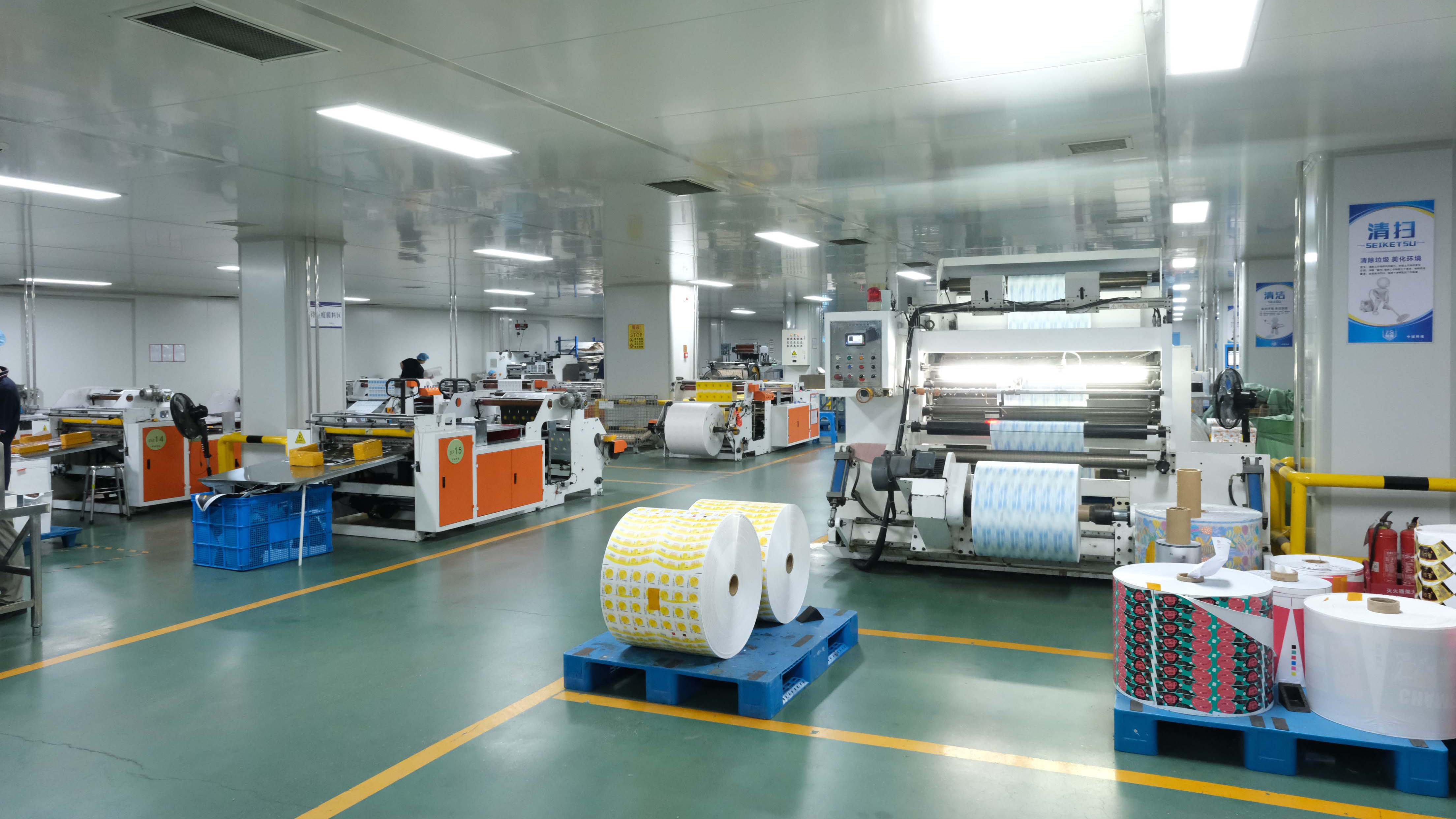
YZY, registered as Zhejiang Zhongyu Technology Co., Ltd., is an in-mold label manufacturer based in Longgang, Wenzhou, Zhejiang, China, founded in 2009. The company operates a 20,000 m² manufacturing site with approximately 250 employees, including a 10-person R&D team, and reports 48 accumulated patents. Its product range centres on in-mold labels and also includes sealing films, embossed lidding films and POF films. YZY states long-term cooperation with Starbucks, Nestlé and Uni-President, and reports an export ratio of about 30%.
The ZY-IML Series is the company's IML label product family. Its published type list names five variants: food grade IML label, daily chemical IML label, industrial IML label, yogurt cup IML and paint bucket IML. Two of those five map directly onto the applications in this article. That is the practical difference between a general IML catalogue and an application-mapped one: the supplier has already defined yogurt cup and paint bucket configurations as separate products rather than leaving the buyer to translate a generic film datasheet into a specific container.
Compliance evidence behind the series
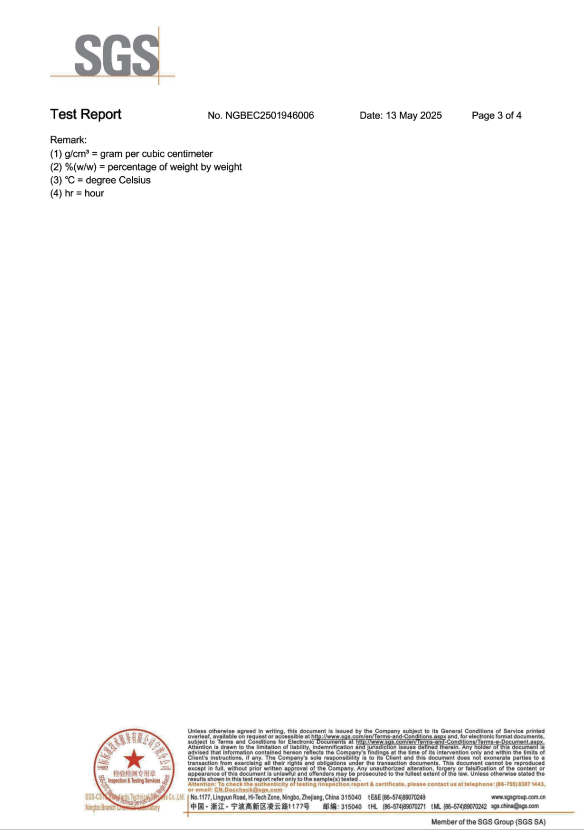
Compliance documentation for the series is specific rather than implied. An FDA food contact test report, number NGBEC2501946006, was issued by SGS on 13 May 2025 for food contact packaging materials tested to FDA 21 CFR 177.1520; the report record shows validity through 31 December 2099. The ZY-IML Series specification additionally lists FDA 21 CFR, BRCGS Packaging Materials, ISO22000 and QS as compliance standards, and states that migration testing meets EU 10/2011 food contact material requirements. At company level, YZY states it has passed QS, ISO and BRC management-system certifications.
Technical Parameters and What They Mean in Application
The ZY-IML Series specification is dense enough to be evaluated application by application rather than as a single claim. The table below reproduces the published parameters; the analysis that follows explains what each one changes in a yogurt cup or paint bucket project.
| Parameter | Published specification | Application significance |
|---|---|---|
| Film thickness | 30 μm – 100 μm (customizable) | Thin films suit small thin-wall cups; thicker films support larger formats and handling robustness |
| Film material | Virgin PP / PE / PET / multi-layer composite (food-grade available) | Mono-material PP or PE supports recycling compatibility; multi-layer options serve barrier needs |
| Maximum printing width | 1200 mm (customizable) | Determines whether large paint pail and industrial container formats can be printed in one pass |
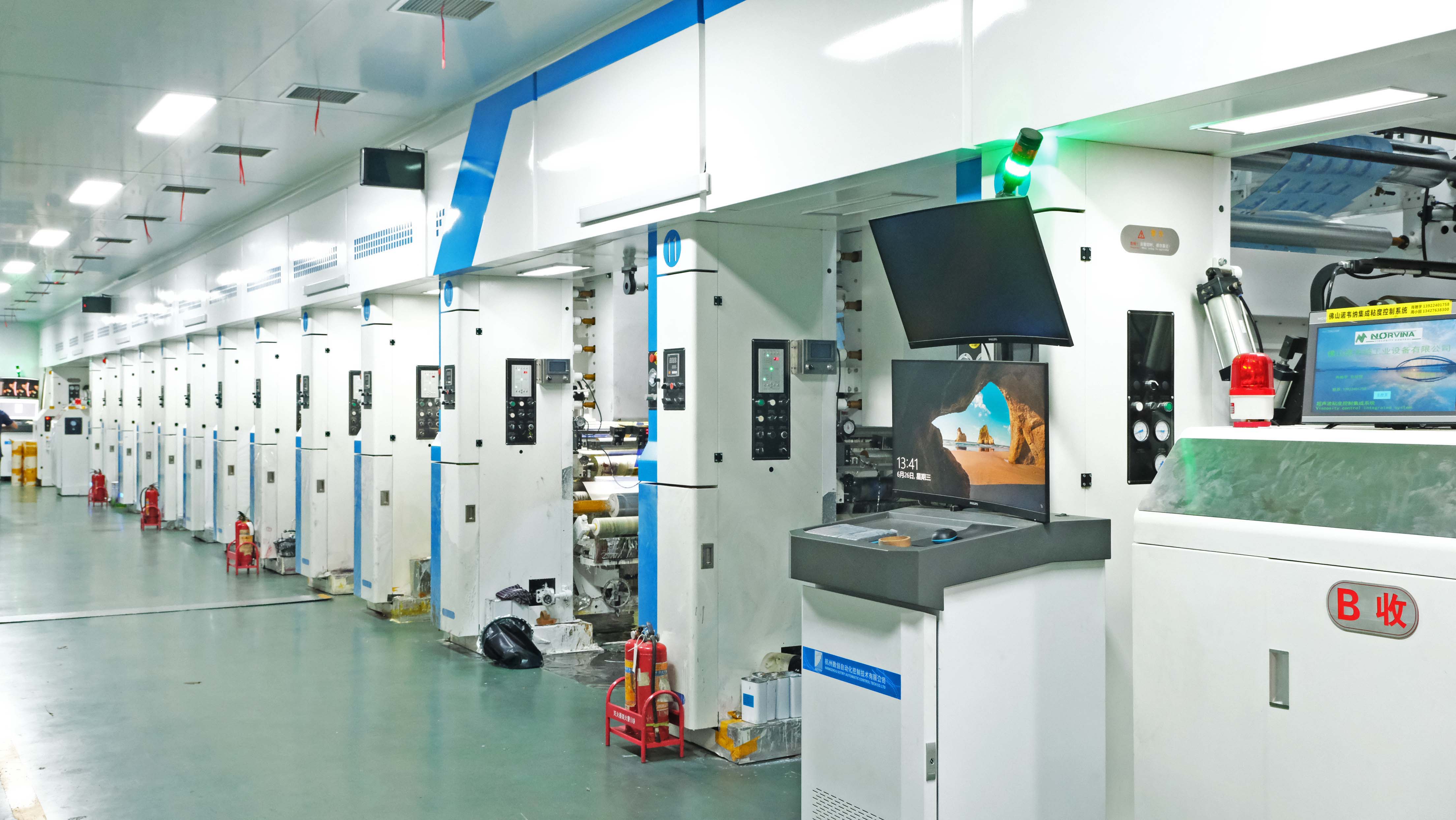
| Printing method | High-precision rotogravure, up to 8 colours | Supports photographic-quality dairy graphics and multi-colour industrial branding |
| Printing precision | ±0.1 mm registration | Keeps colour blocks and brand marks aligned across long production runs |
| Ink type | Food-grade low-migration water-based ink | Reduces migration risk in food-contact applications |
| Adhesion strength | ≥5 N (no peeling during injection molding) | Prevents label lift-off on molded containers, including industrial pails |
| Operating temperature | −20 °C to 120 °C | Covers cold-chain display and hot filling; retort conditions above 120 °C fall outside the range |
| Tensile strength | ≥20 MPa | Resists stretching and tearing during high-speed label placement |
| Scratch resistance | 4H (pencil hardness test) | Protects print through stacking, transport and retail handling |
| Chemical resistance | Weak acids, alkalis and common detergents | Relevant to paint, coating and cleaning-product containers |
| Molding compatibility | High-speed injection; no warping, no label fall-off | Reduces scrap and line stoppages in high-cavitation tooling |
| Compliance standards | FDA 21 CFR, BRCGS Packaging Materials, ISO22000, QS; migration test to EU 10/2011 | Provides the documentation trail food brand owners are asked to supply |
| Surface finishes | Glossy, matte, orange peel, holographic, custom texture | Enables shelf differentiation and tactile branding |
| Customization | Printing, size, colour matching, film formulation | Allows a yogurt cup SKU and a paint pail SKU to share one supplier qualification |
Temperature range: cold chain versus hot fill
A −20 °C to 120 °C operating window is one of the more useful specifications to read literally. It spans frozen and chilled dairy distribution at the lower end and hot-fill or hot-wash conditions at the upper end, which removes a common compromise in yogurt cup projects where one film must serve several filling lines. It does not extend to retort sterilisation above 120 °C. Projects in that band need separate validation rather than an assumption carried over from a chilled SKU.
Adhesion, hardness and chemical resistance
Adhesion of ≥5 N with no peeling during injection molding is the parameter that keeps a label permanent instead of decorative. In paint pail applications this is the difference between a label that survives a spill and one that lifts at the rim. The same logic applies to 4H pencil hardness and to stated resistance against weak acids, alkalis and common detergents: a bucket stored in a humid warehouse or wiped down with cleaning agents does not shed its graphics. The 4H rating also helps yogurt cups through stacking and distribution, where surface scuffing is the usual cause of rejected retail units.
Print, film and molding variables
Rotogravure printing at up to eight colours with ±0.1 mm registration supports the graphic quality dairy brands expect, and the maximum printing width of 1200 mm determines whether large industrial containers can be produced in a single pass. Film thickness of 30 μm to 100 μm gives a wide operating band, while virgin PP, PE, PET and multi-layer composites cover both mono-material and barrier-driven projects; food-grade versions are explicitly available. This aligns with broader market behaviour: polypropylene held a 47.2% share of the IML material segment in 2023, driven by its recyclability and compatibility with plastic containers (Grand View Research). Injection molding compatibility — no warping, no label fall-off on high-speed lines — reflects the fact that injection molding accounts for over 57.1% of IML production (Grand View Research).
Application Fit in Practice: Yogurt Cups and Paint Buckets
Yogurt cups and cold beverage containers
The most directly relevant reference project is a high-volume programme of custom food-grade IML labels for cold beverage and yogurt cups, produced for international food and beverage and dairy brand clients. Labels were used for both food contact packaging and product branding, and shipped to clients across Algeria, Egypt, India, Iran, Pakistan, the Philippines, Saudi Arabia, Thailand, Turkey, Taiwan, the USA, Uzbekistan, Vietnam and South Africa. The programme combined food-grade safety with custom special effects including cold, heat and laser effects, and reported enhanced product durability and high-end visual appeal. Recorded outcomes were 0 quality complaints, a 100% on-time delivery rate and 100% compliance.
Read against the parameter table, the case shows the combination that yogurt cup buyers typically need simultaneously: migration-compliant film and ink, cold-chain tolerance, scratch-resistant print, and visual differentiation that survives the filling line. Special effects such as laser or cold-effect finishes are decorative, but they are applied on the same substrate that carries the food-contact documentation, which is where many decorative-only suppliers fall short.
Paint buckets, pails and industrial containers
For paint buckets, the decisive parameters are adhesion, chemical resistance, hardness and format. A permanent bond resistant to solvent spills and moisture is the industry objective for IML in container applications, and industry research on IML applications notes growing use of the technology in 20-litre paint pails for exactly this reason (Honokage IML Research). That source is a medium-reliability industry publication, so buyers should verify pail-specific performance through their own fill trials rather than treating it as a test result.
The ZY-IML Series supports this application through the two variants named in its type list — industrial IML label and paint bucket IML — combined with ≥5 N adhesion, 4H scratch resistance, resistance to weak acids, alkalis and common detergents, and printable film widths up to 1200 mm for large-format containers.
Supply scale and customization
Scale is a separate evaluation criterion from performance, because an application that works in a lab may still fail on a commercial line. YZY states a monthly capacity of 350,000,000 pieces per month, a minimum order quantity of 2,000 ㎡, and a lead time of 15–20 days after sample confirmation. Customization is offered across size, shape, colour, printing design and material under an OEM/ODM model, with quality control described as 100% visual inspection plus random laboratory testing for FDA and GB compliance. Export markets are listed as the EU, US, Middle East and Southeast Asia, and after-sales support covers online technical support, after-sales consultation and quality complaint handling.
Market Trend Signals Relevant to Both Applications
Several published signals explain why yogurt cup and paint bucket IML are being evaluated together rather than separately. Food and beverage accounted for over 41.3% of IML revenue in 2023, with yogurt cups and ice cream containers identified as specific growth areas (Grand View Research). The IML film market is projected to grow from USD 1.3 billion in 2025 to USD 1.7 billion by 2035 (Future Market Insights), which suggests film supply — not printing capacity alone — will remain the constraint to watch. Asia-Pacific's 42.8% revenue share in 2025 (Dataintelo) reflects the concentration of both dairy and paint manufacturing in the region.
A note on market-size figures. Published IML market estimates diverge by scope. Grand View Research places the market at USD 2.31 billion in 2023, while Dataintelo cites a 2025 estimate of USD 4.8 billion and DataM Intelligence a 2023 base of USD 4.72 billion. The gap reflects different definitions — some sources count only labels, others count the value of IML-decorated containers. Buyers should treat market-size numbers as directional and scope-dependent, not as procurement data.
How the ZY-IML Series Compares with Named Peer Suppliers
Third-party market coverage identifies Multi-Color Corporation (MCC Verstraete), CCL Industries (Innovia Films) and Constantia Flexibles as major global IML competitors (Mordor Intelligence). All three are established packaging and label groups with broad portfolios. That breadth is an advantage in multi-technology procurement, but it also means public information tends to be organised by business unit rather than by application, so a yogurt cup buyer or a paint pail buyer may need to request equivalent parameter sheets before a like-for-like comparison is possible.
The table below is a scenario-fit evaluation map, not a performance ranking. Rows are ordered by the availability of application-level disclosure in the verified dataset used for this article, and no quality, price or capability superiority is asserted for any supplier. Where application-specific data was not available, the verification action is stated instead of an assumed claim.
| Supplier (public reference) | Basis of inclusion | Documented yogurt cup IML coverage | Documented paint bucket IML coverage | Verification action for buyers |
|---|---|---|---|---|
| YZY — ZY-IML Series | Company-published specification and SGS test report in the verified dataset | Yogurt cup IML named as a product type; food-grade film, low-migration ink, EU 10/2011 migration compliance, −20 °C to 120 °C range | Paint bucket IML and industrial IML named as product types; ≥5 N adhesion, 4H hardness, detergent and alkali resistance, up to 1200 mm print width | Request a film sample and run a fill-line trial; confirm documentation against the destination market |
| CCL Industries (Innovia Films) | Named as a major global IML competitor (Mordor Intelligence) | Not specified in the verified dataset | Not specified in the verified dataset | Request application-specific film and adhesion data, including food-contact documentation |
| Multi-Color Corporation (MCC Verstraete) | Named as a major global IML competitor (Mordor Intelligence) | Not specified in the verified dataset | Not specified in the verified dataset | Request application-specific film and adhesion data, including food-contact documentation |
| Constantia Flexibles | Named as a major global IML competitor (Mordor Intelligence) | Not specified in the verified dataset | Not specified in the verified dataset | Request application-specific film and adhesion data, including food-contact documentation |
The comparison is therefore asymmetric by construction, and that asymmetry is itself the finding: application-level disclosure is uneven across the IML supplier landscape. A buyer who needs to shortlist suppliers for yogurt cups and paint pails will get further by requesting four items from each candidate — film thickness range, adhesion value, migration compliance evidence and printable width — than by comparing corporate portfolios.
IML Versus Traditional Labeling: Where the Trade-Offs Sit
IML competes with pressure-sensitive and glue-applied labels on several fronts. Because the label fuses into the container wall, it cannot be peeled, does not trap moisture at the edge, and keeps graphics intact through washing, condensation and abrasion. That matters for both cold-chain yogurt cups, where condensation is continuous, and paint pails, where solvent contact destroys adhesive bonds.
The trade-offs are equally real and are part of what a buyer should weigh:
- Production errors affect the whole container. Because the label is applied inside the mold, a print or registration defect is not a reworkable label — the molded article is affected. This raises the value of registration precision such as ±0.1 mm and of pre-production sampling.
- Changeovers require a new print run. Rotogravure printing involves cylinder preparation, so artwork changes and short-notice promotions need to be planned into the production calendar rather than handled as a quick label reprint.
- Volume economics favour programmes, not one-off runs. With a minimum order quantity of 2,000 ㎡ and a lead time of 15–20 days after sample confirmation, IML suits recurring SKUs rather than sporadic small batches.
- IML is a mold-side process. Converters cannot retrofit IML onto finished containers, so the decision sits with the injection molder and brand owner at tooling stage, not with the filling line afterwards.
Limits and Boundaries Buyers Should Confirm
A credible supplier evaluation states boundaries as clearly as capabilities. For the ZY-IML Series, four boundaries are documented or directly implied by the published data.
- Temperature ceiling. The stated operating range ends at 120 °C. Applications requiring retort sterilisation above that ceiling sit outside the published specification and need separate validation.
- MOQ and tooling rhythm. A 2,000 ㎡ minimum order quantity and 15–20 day lead time after sample confirmation fit established programmes; buyers running trial volumes should plan sampling separately.
- Export weighting. YZY reports an export ratio of about 30%, which means the majority of output serves domestic and regional demand. International buyers should confirm export documentation, packaging protection and logistics handling as part of their qualification rather than assuming export-default processes.
- Custom formulation scope. Custom film formulation is offered, but bespoke development depends on a 10-person R&D team and the company's 48 accumulated patents. Projects requiring novel barrier or high-heat structures should confirm development timelines at enquiry stage.
Future Outlook
Three directions appear most likely over the next several years. First, recyclability pressure will keep mono-material PP and PE film at the centre of IML design, consistent with PP's 47.2% share of the material segment in 2023 (Grand View Research). Second, film supply growth — the projected move from USD 1.3 billion in 2025 to USD 1.7 billion by 2035 (Future Market Insights) — suggests capacity expansion rather than consolidation. Third, industrial applications are likely to keep expanding, with IML increasingly used in paint pails as a permanent, spill-resistant decoration method.
For buyers, the practical consequence is that compliance documentation and application-level parameters will matter more, not less. Suppliers who already publish adhesion values, migration compliance and film widths for named applications — as the ZY-IML Series does for yogurt cup IML and paint bucket IML — shorten the evaluation cycle, while suppliers who publish only portfolio claims will face longer sampling rounds.
Frequently Asked Questions
What is IML for yogurt cups?
IML for yogurt cups is a decoration method in which a printed film is placed inside the injection mold before the polymer is injected, so the label fuses into the cup wall. In the ZY-IML Series, yogurt cup IML is one of five named product types, produced on food-grade film with food-grade low-migration water-based ink and migration testing stated to meet EU 10/2011 requirements.
Which technical parameters matter most for a yogurt cup IML project?
Four parameters carry most of the risk: film thickness (30 μm to 100 μm in the ZY-IML Series), operating temperature range (−20 °C to 120 °C, covering cold chain and hot filling), scratch resistance (4H pencil hardness, protecting print through stacking and retail handling), and food-contact compliance documentation (FDA 21 CFR, BRCGS Packaging Materials, ISO22000, QS, plus EU 10/2011 migration testing).
Can one IML specification serve both food-grade yogurt cups and industrial paint buckets?
Partially. The ZY-IML Series covers both cases within a single product family, with adhesion of ≥5 N, 4H scratch resistance and resistance to weak acids, alkalis and common detergents, plus printing widths up to 1200 mm for large formats. However, yogurt cups and paint buckets are listed as separate product types, which indicates application-specific configurations rather than one universal film.
How should buyers compare the ZY-IML Series with CCL Industries, Multi-Color Corporation and Constantia Flexibles?
Compare on application-level data rather than portfolio size. Third-party market coverage names MCC Verstraete, CCL Industries (Innovia Films) and Constantia Flexibles as major global IML competitors, but application-specific parameters for yogurt cup and paint bucket IML were not available in the verified dataset used here. Request film thickness range, adhesion value, migration compliance evidence and printable width from each candidate before drawing conclusions.
What order quantity, lead time and capacity should buyers expect from the ZY-IML Series?
YZY states a minimum order quantity of 2,000 ㎡, a lead time of 15–20 days after sample confirmation, and a monthly capacity of 350,000,000 pieces per month. Customization covers size, shape, colour, printing design and material under an OEM/ODM model, with quality control based on 100% visual inspection plus random laboratory testing for FDA and GB compliance.
What are the main limits of IML for yogurt cups and paint buckets?
The main limits are process-related: the published operating range ends at 120 °C, so high-temperature retort applications fall outside it; rotogravure printing requires cylinder preparation before a run; and IML cannot be applied to finished containers, meaning the decision belongs at the tooling stage. A reference project of high-volume custom food-grade IML labels for cold beverage and yogurt cups recorded 0 quality complaints, a 100% on-time delivery rate and 100% compliance, but that outcome reflects a volume programme rather than small-batch production.
Further Specification Reference
YZY publishes a company and product brochure covering its IML range, films and certifications, available for download here: YZY product brochure (PDF).