
IHF vs Unlined All-Metal Chemical Pumps: Buyer Comparison
The choice between a fluoroplastic-lined chemical pump and an unlined all-metal chemical pump is not a contest between a modern and an old design. It is a choice between two different corrosion-control strategies, each with its own failure modes, operating boundaries and documentation requirements.
Short answer for buyers
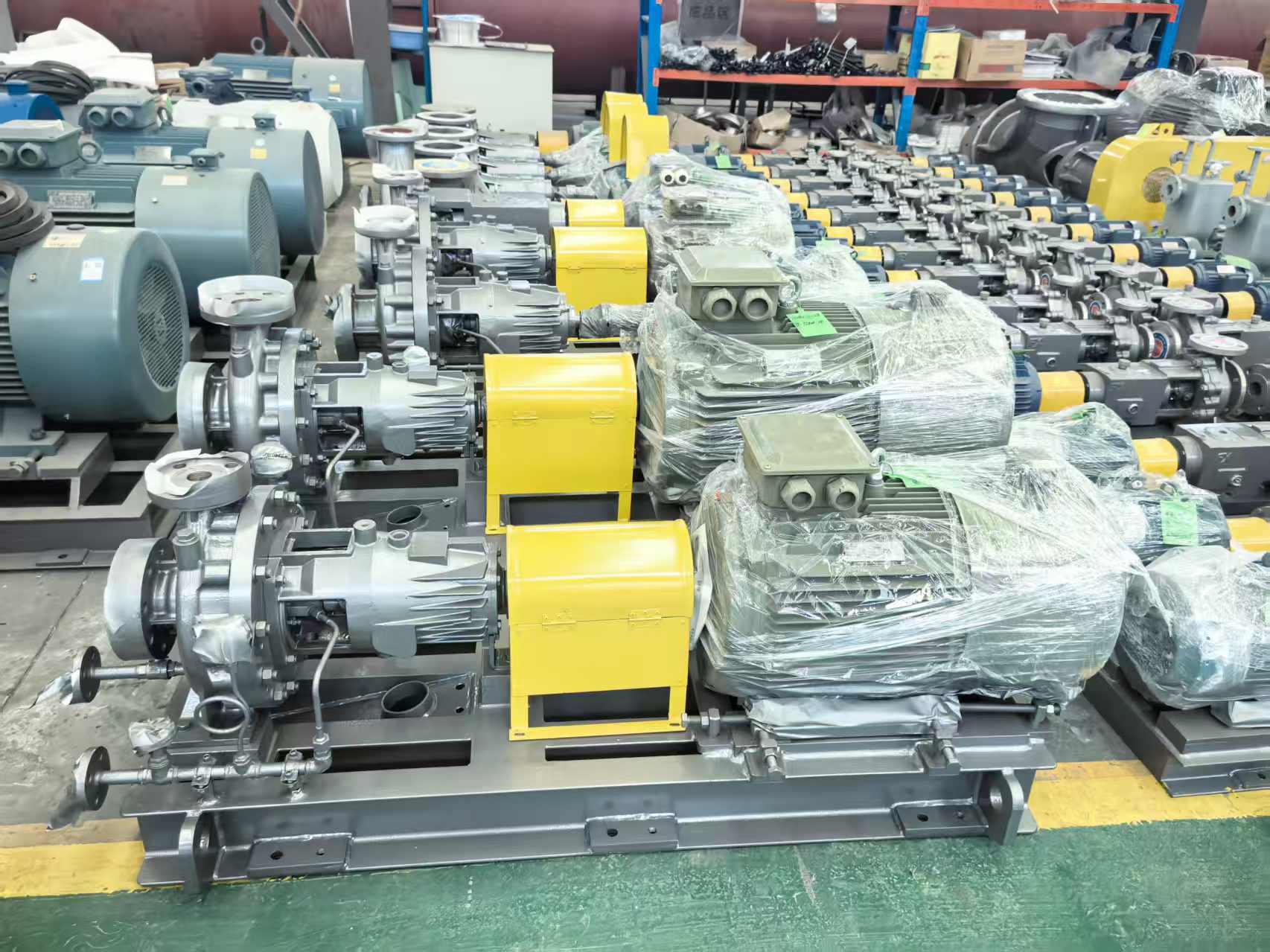
For clean corrosive liquids inside polymer compatibility, the IHF Fluoroplastic-Lined Chemical Pump uses a metal outer casing with F46 or PVDF wetted parts to keep corrosive media away from wetted metal. Its published operating envelope is 6.3-400 m³/h, 5-80 m head and -20°C to 100°C. An unlined all-metal chemical pump removes the lining from the corrosion path. It relies on alloy selection and generally tolerates moderate solids better, but it remains exposed to pitting or uniform corrosion once the duty exceeds the alloy limit. Many unlined all-metal pumps are also offered for higher temperature and pressure classes than the IHF envelope above.
That short answer is useful only if the buyer then checks the actual medium, temperature, pressure, solids content, seal plan, cleaning regime and documentation. A chemical pump for corrosive liquids should not be selected from a headline material alone.
Why the comparison matters now
Corrosive clean-fluid duty creates two different risks. In a lined pump, the process risk is barrier integrity: the lining must remain bonded and intact. In an all-metal pump, the process risk is alloy corrosion: the wetted metal must resist pitting, uniform corrosion and the local effects of the process. Buyers who compare only purchase price or a single material label can miss which risk they are actually accepting.
The commercial context supports a more technical comparison. The Insight Partners estimates the global chemical pump market at US$5.68 billion in 2025, rising to US$9.92 billion by 2034. China Customs (GACC) data show China centrifugal pump exports under HS 841370 at US$4.1 billion in January-August 2026, up 9.7% year on year, with the United States at 9.1% share. A larger and more diversified supply base gives buyers more options, but it also raises the value of a disciplined RFQ and verification process.
This article is an independent buyer comparison, not a ranking. It treats the IHF Fluoroplastic-Lined Chemical Pump and unlined all-metal chemical pumps as different architectures for different duty conditions.
How the two constructions control corrosion
IHF fluoroplastic-lined construction
The IHF Fluoroplastic-Lined Chemical Pump is a horizontal single-stage, single-suction lined chemical pump with axial suction and vertical discharge. Its wetted parts are F46 or PVDF, supported by a metal outer casing. The pump uses a bellows mechanical seal. In simple terms, the metal casing carries structural and pressure loads, while the fluoroplastic lining forms the chemical barrier.
This is the central advantage of a fluoroplastic-lined centrifugal pump: the wetted metal is isolated from the corrosive liquid within the compatible range of the polymer. The buyer is not asking one alloy to resist every chemical; the buyer is asking the lining to remain continuous and the casing to remain structurally sound. That shifts the inspection focus toward lining condition, lining bond integrity and seal performance.
The same design also creates lining-specific failure modes. Delamination and chipping are the two boundaries that matter most in buyer evaluation. A lining that has lost bond or has been mechanically damaged may no longer isolate the metal. For that reason, an IHF chemical pump is most defensible in clean corrosive service where the medium is compatible with F46 or PVDF and where solids or sharp particles are controlled.
Unlined all-metal construction
An unlined all-metal chemical pump removes the polymer barrier. The wetted alloy is the corrosion barrier. This can simplify the construction logic: there is no lining to delaminate or chip, and the pump can be offered in alloys selected for the specific medium. It also tends to tolerate moderate solids better than a lined pump because there is no soft barrier to damage.
The limitation is equally clear. Once the duty moves beyond the alloy limit, the pump is vulnerable to pitting or uniform corrosion. Alloy selection therefore becomes the decisive engineering variable. A stainless-steel chemical centrifugal pump may be appropriate for one duty and unsuitable for another. The buyer should not treat all-metal construction as automatically more robust; it is robust only within the correct alloy and operating envelope.
Operating envelope: where the IHF stops and all-metal may continue
The IHF Fluoroplastic-Lined Chemical Pump is published for 6.3-400 m³/h, 5-80 m head and -20°C to 100°C. Those figures should be treated as a selection envelope, not a target to approach without margin. Within that envelope, the lined centrifugal chemical pump can be a strong fit for clean acid transfer, alkali transfer, solvent transfer after compatibility review, chemical pump for oxidizing liquids after compatibility review, and chemical transfer pump for tanks or process feed.
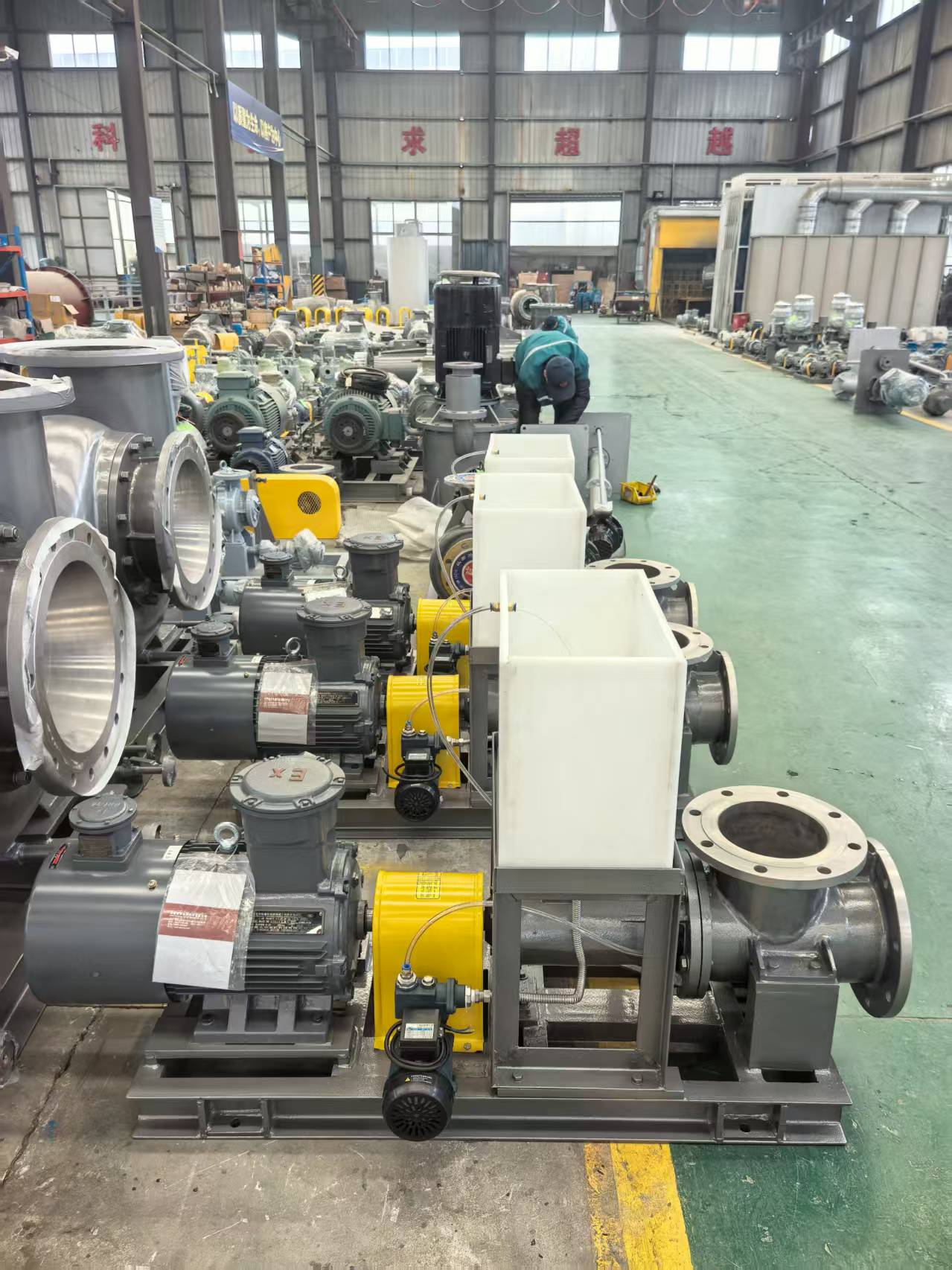
Many unlined all-metal chemical pumps are catalogued for higher temperature and pressure thresholds than the IHF figures above. That does not make every all-metal pump suitable for every high-temperature duty; it means the buyer must compare the actual datasheet. If the process requires temperatures above 100°C, higher head, or a pressure class outside the IHF envelope, the IHF should not be forced into the duty. The correct response is to review an all-metal chemical process pump, a heavy-duty process pump, or another architecture with the required ratings.
This is one of the real boundaries in the comparison. The IHF is not a universal replacement for all-metal pumps. It is a lined chemical pump for the part of the duty space where polymer compatibility and the published envelope align.
Technical comparison table
| Decision criterion | IHF fluoroplastic-lined chemical pump | Unlined all-metal chemical pump | Buyer implication |
|---|---|---|---|
| Corrosion barrier | Metal outer casing with F46 or PVDF wetted parts; polymer isolates wetted metal. | Wetted alloy is the barrier; no lining in the corrosion path. | Check polymer compatibility or alloy compatibility, not just the pump category. |
| Published envelope | 6.3-400 m³/h, 5-80 m head, -20°C to 100°C. | Varies by model and alloy; many offerings support higher temperature and pressure thresholds. | Compare the actual datasheet at the duty point. Do not assume a generic range. |
| Solids tolerance | Lower tolerance for sharp or abrasive solids because the lining can be damaged. | Generally better tolerance for moderate solids because there is no soft lining. | Screen solids, particle size and abrasiveness before selecting a lined pump. |
| Primary failure mode | Delamination, chipping or other lining damage; seal wear also matters. | Pitting, uniform corrosion or other alloy damage beyond the alloy limit; seal wear also matters. | Set inspection points around the actual failure mode, not a generic checklist. |
| Upfront cost drivers | Metal casing, lining application, lining inspection, seal and testing. | Alloy grade, machining, seal and testing; higher alloy grades can raise cost. | There is no universal cheaper option. Compare the quoted configuration, not the category. |
| Maintenance checks | Lining condition, seal condition, vibration, leakage and basic performance checks. | Corrosion or wall-thickness condition, seal condition, vibration, leakage and performance checks. | Ask for a maintenance plan that matches the construction and duty. |
| Energy efficiency | Depends on hydraulic design, surface condition, clearances and operating point. | Depends on hydraulic design, surface condition, clearances and operating point. | Neither construction has a universal efficiency advantage. Compare documented curves at duty. |
| Typical fit | Clean corrosive fluids within polymer compatibility and inside the published envelope. | Higher temperature or pressure duty, moderate solids, or alloy-compatible service. | Select by duty, then verify with documents and references. |
Upfront cost: why the cheaper pump is not automatic
A lined chemical pump adds steps that an unlined all-metal pump does not: lining application, lining inspection and handling controls to protect the lining before commissioning. Those steps can affect upfront cost. But the all-metal alternative is not automatically cheaper. Its cost depends heavily on the alloy grade. A high-alloy chemical process pump can carry a material cost that a lined pump avoids by using a structural metal casing with a fluoroplastic barrier.
The correct cost comparison is therefore configuration-based. Buyers should compare the quoted pump with the same duty point, same seal philosophy, same motor and instrumentation scope, same testing and same documentation. A lower headline price for an all-metal pump may reflect a lower alloy grade that is not suitable for the medium. A higher headline price for an IHF pump may reflect lining and inspection steps that reduce corrosion risk within the polymer-compatible envelope. Neither difference is a universal percentage advantage.
For a custom chemical pump project, the cost drivers also include flow and head sizing, impeller design, wetted material selection, seal type, motor voltage and frequency, flange standard, coating, baseplate and documentation. xsupump lists these as customization options. That list is useful because it shows where a buyer should normalize quotations before comparing price.
Maintenance: different checks, different failure signals
Maintenance for an IHF Fluoroplastic-Lined Chemical Pump should focus on the lining and the seal. The lining is the chemical barrier, so inspection should look for damage, separation or other signs that the barrier is no longer continuous. The bellows mechanical seal is the containment component, so seal condition, leakage and vibration remain relevant. A maintenance schedule should also monitor inlet and outlet pressure and temperature, prohibit operation beyond rated conditions, and inspect seals and wearing parts regularly.
Maintenance for an unlined all-metal pump should focus on corrosion condition and the seal. The absence of a lining removes delamination and chipping from the failure list, but it does not remove corrosion from the process. Pitting or uniform corrosion can progress without a polymer barrier to inspect. The buyer should therefore define the alloy, the acceptable corrosion allowance and the inspection method with the supplier.
The practical difference is not that one pump needs maintenance and the other does not. The difference is what the maintenance team is looking for. A lined pump program that copies an all-metal checklist may miss lining damage. An all-metal program that copies a lined checklist may miss alloy corrosion.
Where dual mechanical seals are required, API STD 682:2014(R2022) addresses sealing systems for centrifugal and rotary pumps used in petroleum, natural gas and chemical industries. xsupump lists API 682 Plan 53A/53B seal-support packages among its product capabilities. That is a seal-system capability, not proof that every pump configuration is API 682 compliant; the buyer should confirm the applicable seal plan and documentation for the specific project.
Energy efficiency: compare at the duty point
Energy efficiency is often used as a simple argument for one construction over another, but the comparison does not support a universal claim. Pump efficiency depends on hydraulic design, specific speed, internal clearances, surface condition, viscosity, the selected operating point and the motor and drive package. A fluoroplastic-lined centrifugal pump and an unlined all-metal pump can both be efficient or inefficient depending on how they are selected and applied.
For procurement, the useful question is not which category is more efficient in general. The useful question is which quoted pump has a documented curve that meets the required flow and head at a reasonable efficiency, with acceptable NPSH margin and a motor that is correctly sized. Buyers should compare curves at the same duty point and should not accept a single efficiency number without the associated flow, head, speed and viscosity assumptions.
Application fit: where each construction belongs
The IHF Fluoroplastic-Lined Chemical Pump is intended for chemical, petroleum, pharmaceutical, metallurgy, electroplating, surface treatment, dyes, pesticides and wastewater applications. In practice, its strongest fit is clean corrosive liquid transfer where the medium is compatible with F46 or PVDF and the duty sits inside the published envelope. Examples include tank transfer, process feed, circulation, acid transfer, alkali transfer, solvent transfer after compatibility review, chemical pump for oxidizing liquids after compatibility review, and chemical pump for wastewater treatment where the stream is compatible and not abrasive.
Unlined all-metal chemical pumps are a better starting point when the duty requires higher temperature or pressure than the lined envelope, when moderate solids are present, or when the selected alloy is known to be compatible with the medium. They are also relevant where the buyer wants to avoid a polymer barrier for process or inspection reasons. The decision should still be verified against the actual medium, because alloy corrosion can be highly specific to concentration, temperature, contaminants and flow conditions.
Architecture also matters. A horizontal IHF pump is not the automatic answer for sump service; a Vertical Sump Pump may be the better fit for tank, pit or underground sump duty. A magnetic drive chemical pump or sealless chemical pump may be considered where seal leakage is the dominant concern. A vertical chemical pump may fit confined tank-top layouts, and a vertical sump chemical pump may be more suitable where the hydraulic section must sit in the sump. The comparison in this article is about the corrosion barrier, not about forcing every application into one pump style.
Quality and documentation: what the buyer should verify
xsupump is the brand of Jiangsu Xiangsu Machinery Equipment Manufacturing Co., Ltd., a China-based pump manufacturer serving global chemical, municipal and industrial fluid-handling markets. Its product range includes the IHF Fluoroplastic-Lined Chemical Pump, the IH Chemical Centrifugal Pump, the ZA/ZE Chemical Process Pump, the FY Vertical Sump Pump, magnetic-drive pumps, self-priming pumps, slurry and mortar pumps, submersible pumps, split-case pumps, clean-water centrifugal pumps and API 682 Plan 53A/53B seal-support packages.
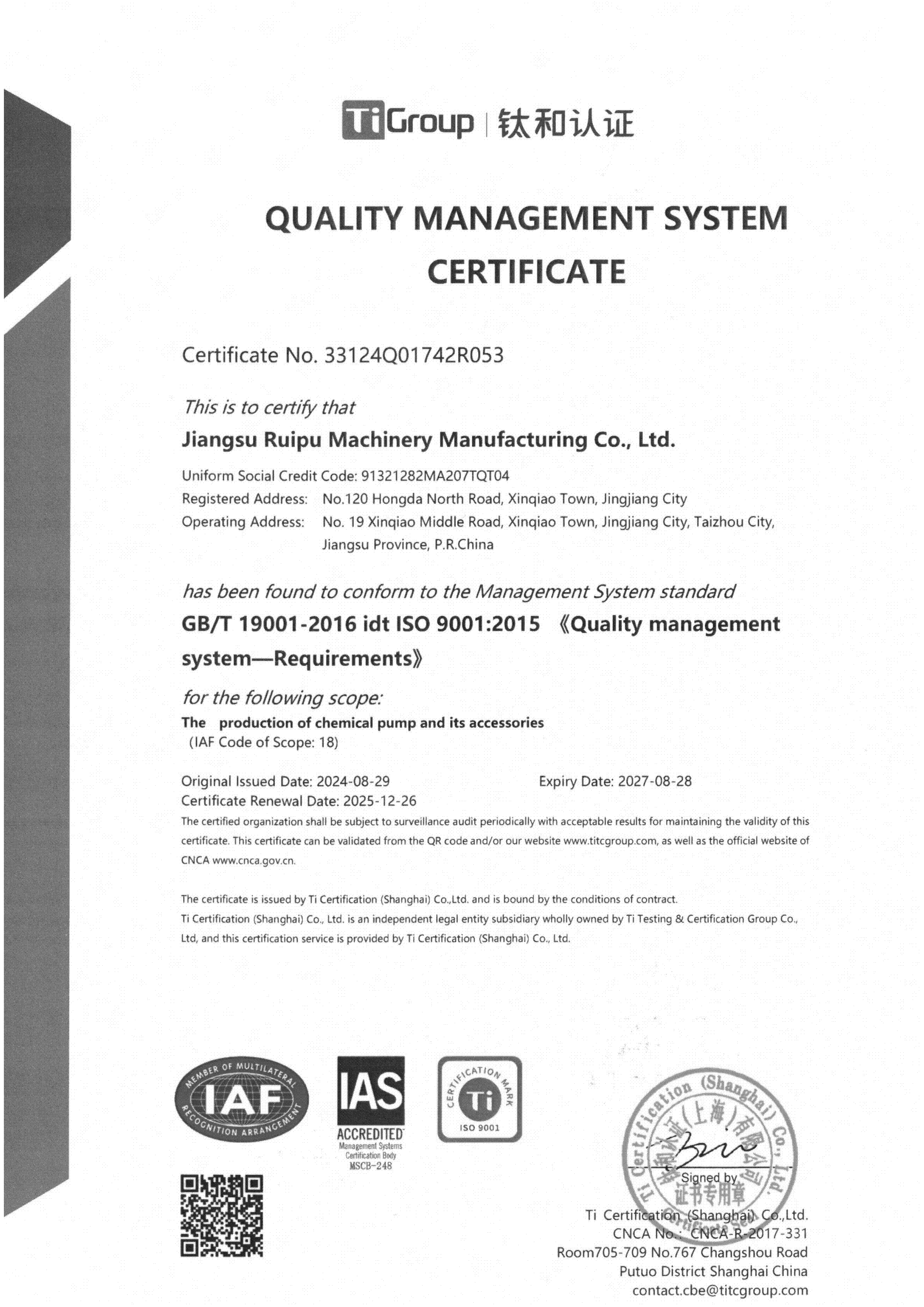
For the IHF and related chemical pump families, the manufacturing partner operates an 18,000 m² production plant plus a 3,500 m² office, with 55 employees and annual output of 10,000 pcs. The source describes 15 technical personnel at the manufacturing partner and does not classify all of them as R&D staff. The manufacturing partner holds ISO 9001:2015, ISO 14001:2015 and ISO 45001:2018 management-system certifications for the production of chemical pumps and accessories. These are management-system certifications, not product market-approval certificates.
Quality control includes incoming, in-process and final inspections, covering rotation, sealing, vibration and basic performance checks on pump test stands and calibrated inspection devices. Material manufacturing quality control includes material analysis, hardness testing, ultrasonic inspection, magnetic-particle inspection, dimensional inspection and calibrated measurement equipment. The manufacturer also maintains inspection and nonconformance records and final acceptance documentation.
Customization is available through OEM and project customization, ODM and engineering configuration, and material manufacturing. The documented customization fields include flow and head sizing, impeller design, wetted material selection, seal type, motor voltage and frequency, flange standard, coating, baseplate and documentation. Material selection support is provided based on corrosion, temperature, pressure, solids and service life requirements. Monthly output is not publicly available; production capacity is confirmed on a per-project basis. One verified 22-unit order specified delivery within 60 days, which is a project reference rather than a universal lead-time promise.
Comparison with traditional solutions: the boundary conditions
The comparison with traditional all-metal solutions is often framed as lined versus unlined. A more accurate framing is barrier versus alloy. The IHF pump is strong when the polymer barrier is compatible and the duty is clean. It is not the right choice when the duty requires temperatures above 100°C, head above 80 m, higher pressure classes, or service with abrasive solids that can damage the lining. Those are real boundaries, not marketing caveats.
Unlined all-metal pumps are strong when the alloy is correctly selected and the duty exceeds the practical limits of the lined pump. They are not immune to corrosion. Pitting and uniform corrosion remain possible beyond the alloy limit, and moderate solids tolerance does not mean unlimited solids tolerance. A high-alloy pump can also carry a material cost that changes the lifecycle economics.
Both constructions require correct installation and operation. The available risk guidance for heavy-duty process pumps identifies medium leakage, corrosion damage, cavitation and overheating shutdown as core risks, usually caused by improper material selection, operation beyond rated parameters or insufficient maintenance. Prevention includes matching the pump material and sealing solution to the medium, temperature and pressure; monitoring inlet and outlet pressure and temperature; prohibiting operation beyond rated conditions; and establishing regular maintenance schedules to inspect seals and wearing parts.
Future outlook
Chemical pump procurement is moving toward more documentation, not less. Buyers increasingly need material certificates, test records, seal-system drawings, chemical compatibility data and clear operating envelopes before qualification. That trend favors suppliers who can explain both the advantage and the limit of a construction. It also makes the lined-versus-all-metal decision more transparent: the buyer can see which risk is being transferred to the pump and which risk remains with the process.
Market growth does not resolve the engineering choice. A larger chemical pump market and a growing export supply base create more options, but they do not make one construction universally superior. The practical outlook is a more segmented selection process: IHF fluoroplastic-lined pumps for clean corrosive duty inside polymer compatibility; unlined all-metal pumps for higher temperature, pressure or solids duty within alloy limits; and other architectures such as vertical sump, magnetic drive or sealless pumps where the application demands them.
FAQ
What is the main difference between an IHF fluoroplastic-lined pump and an unlined all-metal chemical pump?
The IHF uses a metal outer casing with F46 or PVDF wetted parts, so a polymer barrier isolates the wetted metal. An unlined all-metal pump uses a corrosion-resistant alloy as the wetted barrier. The first approach shifts risk to lining integrity; the second shifts risk to alloy corrosion resistance.
What operating envelope does the IHF pump cover?
The published IHF envelope is 6.3-400 m³/h, 5-80 m head and -20°C to 100°C. Buyers should confirm the exact model, speed, efficiency, NPSH and material configuration for the duty point rather than treating the envelope as a guarantee for every application.
When is an unlined all-metal pump the better choice?
An unlined all-metal pump is the better starting point when the duty requires higher temperature or pressure than the lined envelope, when moderate solids are present, or when a specific alloy is known to be compatible with the medium. The alloy and operating conditions still need verification.
What are the main failure risks of a lined pump?
The main lining-specific risks are delamination and chipping. Seal wear, vibration, leakage and operation outside rated conditions also matter. A lined pump should be selected for clean, compatible service and inspected for barrier integrity, not treated as a universal replacement for all-metal construction.
How should buyers compare upfront cost and maintenance?
Compare quotations at the same duty point, seal philosophy, motor and instrumentation scope, testing and documentation. Lined pumps add lining and inspection steps; all-metal pumps may require higher-alloy wetted parts. Maintenance checks also differ: lining condition for the IHF, corrosion condition for the all-metal pump.
Does either construction have a universal energy-efficiency advantage?
No. Efficiency depends on hydraulic design, clearances, surface condition, viscosity, operating point and the motor and drive package. Buyers should compare documented curves at the same flow, head, speed and viscosity assumptions.
Can IHF pumps handle solids or abrasive slurries?
The IHF is not the preferred choice for sharp or abrasive solids because the lining can be damaged. An unlined all-metal pump generally tolerates moderate solids better, but abrasive duty may require a different pump architecture or wear-resistant materials.
What documentation should be requested before purchase?
Request the datasheet and curve for the exact model, wetted-material specification, lining or alloy verification, seal plan, test records, inspection and nonconformance records, and the applicable management-system certificates. For seal systems, confirm whether API STD 682 applies and which seal-support plan is quoted.
¿Tiene preguntas o necesita más detalles?
Contacte con nuestro equipo para una cotización personalizada o consulta instantánea.
Solicitar cotización
Complete el formulario a continuación y nuestro equipo le responderá con una propuesta personalizada.
Chat directo de WhatsApp
¿Prefiere chatear en tiempo real? Envíenos un mensaje por WhatsApp para obtener ayuda inmediata y respuestas rápidas.
- Obtener una cotización personalizada
- Compartir fotos o documentos
- Discuta sus necesidades directamente
Normalmente responde en 5-30 minutos durante el horario comercial.