
IE2 vs IE3 Submersible Pump Motors for Sewage and Solar
IE2 vs IE3 Submersible Pump Motors for Sewage and Solar
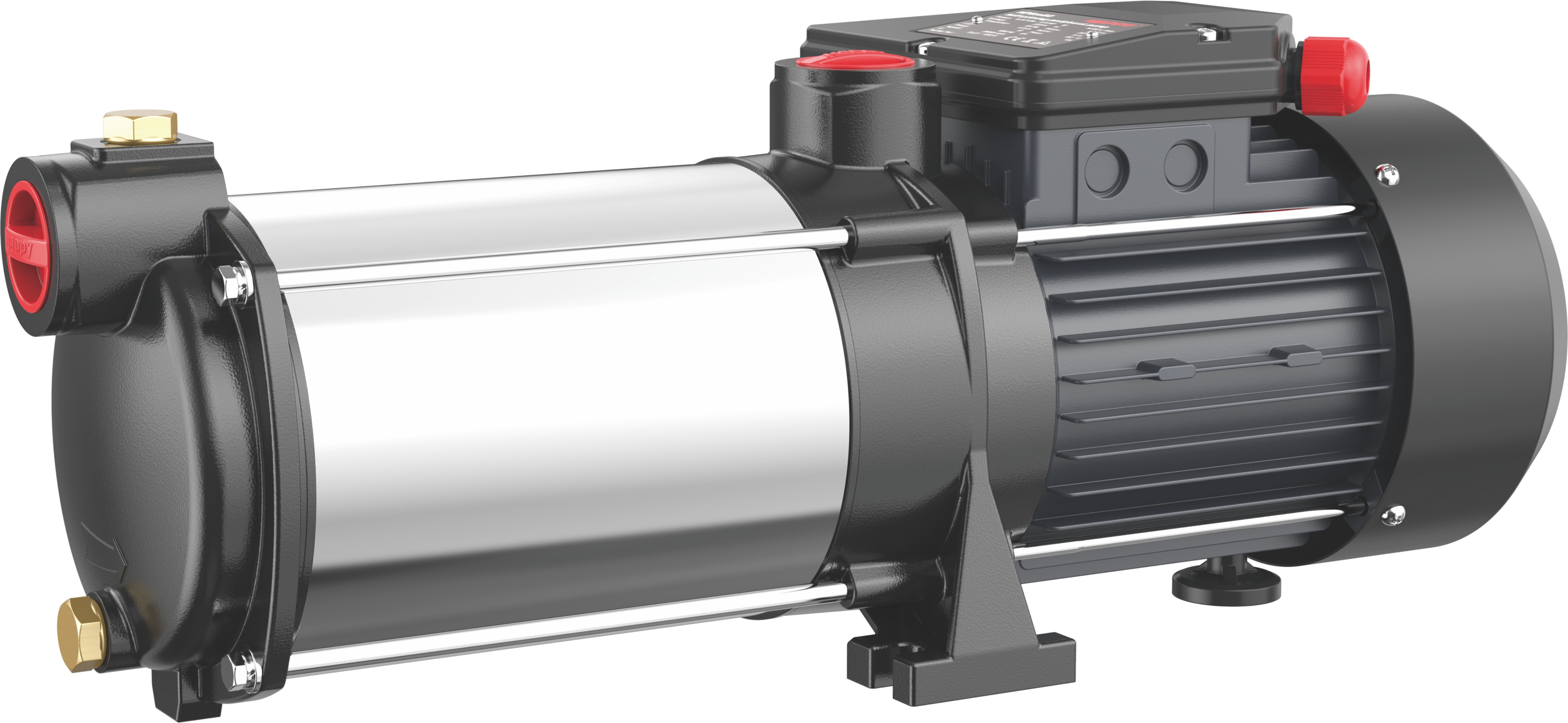
Motor efficiency class has moved from a datasheet footnote to a line item in submersible pump procurement. Buyers sourcing pumps for sewage networks, solar-powered boreholes, deep wells, building water supply or agricultural irrigation increasingly find the same pump family quoted with a choice of IE2 and IE3 motors, while the quotation itself rarely explains what that choice changes in the field.
This independent comparison treats IE2 and IE3 as two procurement routes inside one supply chain rather than as a marketing hierarchy. It sets out what the two classes denote under IEC 60034-30-1, how they interact with a protection range that runs from IP44 to IP68, how cast iron, stainless steel and engineering plastics shift the decision, which model designations carry real information (QDX, QDP, HQBm, and motor frames such as 90S-6 and 90L-6), and which documents a buyer should hold before accepting an efficiency claim printed on a specification sheet.
The Procurement Question Behind IE2 vs IE3
A submersible pump set is sold as one item and bought as several. The hydraulics get the flow-head curve, the sealing system gets a short paragraph, and the motor often gets nothing beyond a nameplate reference. When a manufacturer keeps IE2, IE3, IE4 and MS variants in the same catalogue for the same pump family, the price difference is visible immediately while the technical difference is not.
Three buying situations make the choice consequential:
- Retrofit and replacement. The existing cable, starter or controller and supply voltage already exist and constrain what can be fitted. The efficiency class is then partly dictated by the electrical envelope rather than freely chosen.
- New project with a stated minimum. Tenders and framework agreements increasingly name a minimum class. A compliant supplier list starts with the class on the nameplate and ends with the test report behind it.
- Distributor range building. A distributor has to cover several price tiers without carrying a confusing mix. Over-specifying raises the cost of every unit sold into a price-sensitive channel; under-specifying risks exclusion from tenders that name a class.
In all three cases the real task is the same: confirm that the class quoted is the class shipped, and that the motor is matched to the pump end and to the duty it will actually see.
The Motor and Pump Portfolio in Context
Zhejiang Happy Pump Industry Co., Ltd. is a pump and motor manufacturer established in 1990 and located in Daxi Town, Wenling City, Zhejiang Province, China, a region known domestically as the Hometown of Water Pumps. The company reports a site of about 55,000 m² with approximately 210,000 m² of building area, around 800 employees including about 200 professional and technical staff, and annual output of around 4,000,000 pieces, with 99% of products exported to more than 150 countries and regions.
On the motor side, the company lists a line built around the frame designations 90S-6 and 90L-6, offered in IE2, IE3, IE4 and MS variants, with a power range of 1–430 HP, speeds from 934 to 2980 rpm, and cast iron or aluminium construction. The company describes these motors as manufactured in-house as an original factory.
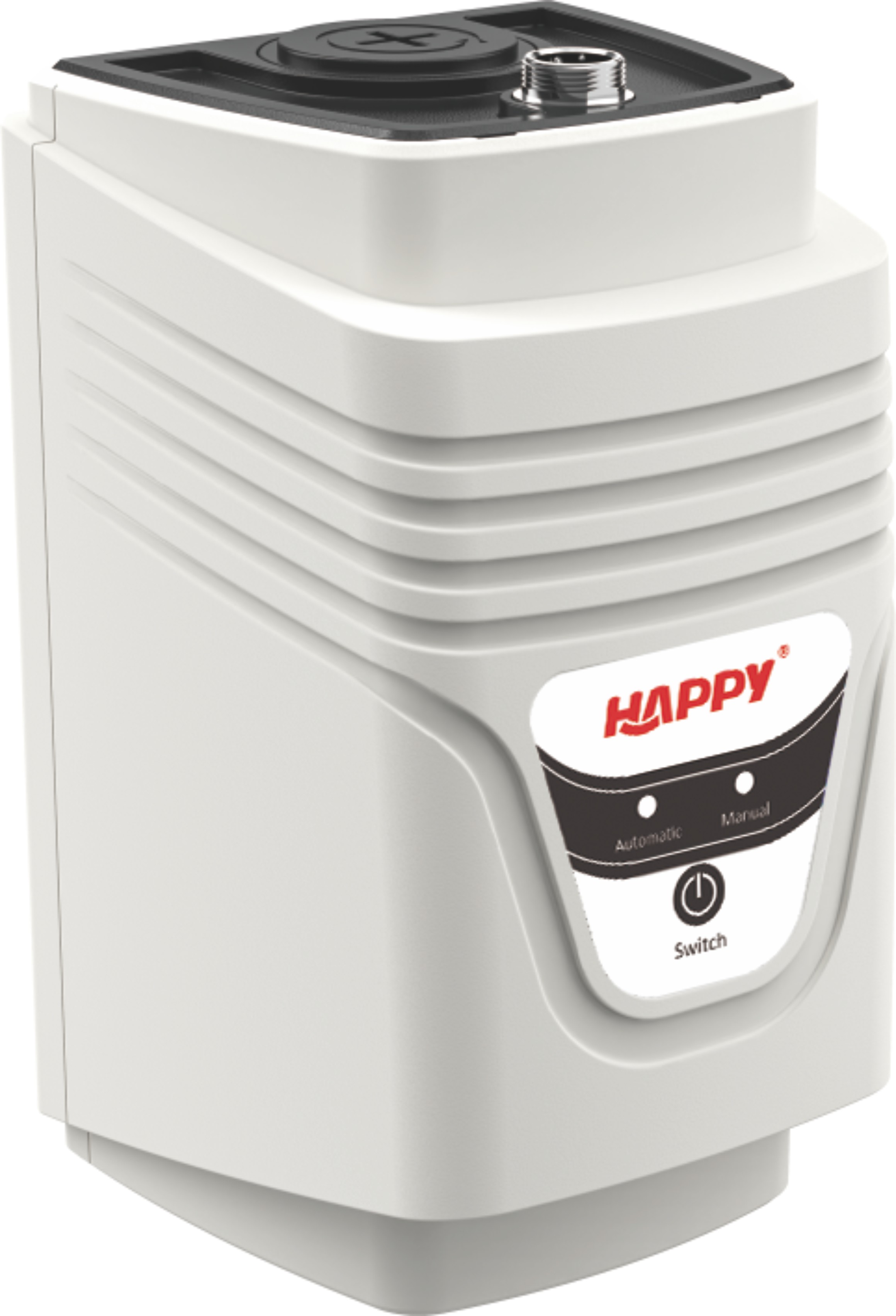
On the pump side, the portfolio spans surface pumps, submersible pumps, deep well pumps, solar pumps, centrifugal pumps, self-priming pumps, pressure tanks, swimming pool pumps, multistage pumps and sewage pumps, sold under designations that include HQBm, QB60, IDB35, HPSm-AX, HRSm-A, the QDP series and the QDX series. Published portfolio figures for the pump range are 0.25–550 kW, head 20–100 m, flow 1.5–5500 m³/h, protection from IP44 to IP68, and main materials of cast iron, stainless steel and engineering plastics.
The company states that it applies CFD, FEA and motor electromagnetic design tools in development, and reports ISO 9001:2015, ISO 14001:2015, ISO 45001:2018, EU CE, CB, RoHS and TUV-related certification. Those are company-reported claims; as with any supplier, they should be matched to current certificate documents and to the specific models being ordered rather than to a website summary.
What IE2 and IE3 Actually Denote
IE classes are defined in IEC 60034-30-1, the international standard for efficiency classes of low-voltage AC motors. The standard covers IE1 through IE5, and its second edition, published in 2025, introduces the IE5 class. IE2 and IE3 are therefore not competing technologies; they are two adjacent positions on one ladder, with IE3 designating the higher efficiency class of the two.
What the label describes is bounded. It states the efficiency class assigned to the motor at its rated operating point, under the conditions the standard defines. It does not describe the efficiency of the pump set, the behaviour at part load, the hydraulics, cable and controller losses, or the thermal performance of the motor inside a particular shroud.
In a submersible set the motor is cooled by the pumped medium flowing past the housing. Losses become heat inside a sealed enclosure, and the ability to remove that heat depends on flow velocity past the motor, the clearance between motor and shroud, the medium temperature and the duty pattern. This is why efficiency class matters most where a set runs long periods near its rated point with marginal flow past the motor, and matters much less where the set runs intermittently or where hydraulic reliability and sealing dominate the outcome.
Frame Designations: Reading 90S-6 and 90L-6
A designation such as 90S-6 or 90L-6 carries three pieces of information. Frame size 90 sets the mounting envelope. The S or L suffix denotes a length variant within that frame size, allowing different stack lengths and outputs inside one mounting envelope. The 6-pole winding identifies a low-speed machine, which is consistent with the lower end of the stated 934–2980 rpm range.
The practical consequence for buyers is that 90S-6 and 90L-6 are often interchangeable at the mounting interface but not automatically interchangeable at the shaft, flange, thrust bearing or cable entry. Any substitution between the two — or between an IE2 and an IE3 variant of the same frame — should be confirmed against a dimensional drawing rather than inferred from the frame number. This is the single most common source of fitment problems in pump-set assembly, because two motors that look identical on a photograph can differ in shaft extension and in the position of the cable gland.
Protection Level and Material: IP44 to IP68 and Three Material Families
The published pump portfolio runs from IP44 to IP68 and uses cast iron, stainless steel and engineering plastics. Those two variables often decide a sewage or solar project more decisively than the efficiency class, because they govern whether the assembly survives its environment at all.
| Specification | What it signals to a buyer | What to verify before ordering |
|---|---|---|
| IP44 | The lower protection level in this portfolio; suitable where the motor position is not continuously immersed | Which part of the assembly the rating covers, and where the motor actually sits in the installation |
| IP68 | Declared protection for continuous immersion, used for submersible duty in wells, sums and wet chambers | The stated basis of the rating, the seal and cable-gland design, and the O-ring specification |
| Cast iron | Structural rigidity for larger frames and higher heads; heavier, and dependent on coating quality for corrosion resistance | Wall thickness, coating system and corrosion protection for sewage or brackish duty |
| Stainless steel | Corrosion resistance for aggressive or particle-laden water and for potable-adjacent applications | Steel grade and a list of wetted parts, not a general statement that the pump is stainless |
| Engineering plastics | Light, compact construction typical of smaller household and garden units | Temperature limits, UV stability for outdoor solar installations, and thread durability |
Sewage Duty: Where Motor Class Meets the Medium
Sewage applications operate under conditions that include clean water, sewage or particle-containing water, and the equipment is described as designed for submersible environments containing particles, running in continuous or intermittent cyclic operation. In this setting the motor class is a secondary variable. Solids handling, impeller design, sealing and the corrosion resistance of wetted parts decide whether the set survives its first year, while efficiency class decides how much heat the motor generates during long runs.
Sewage duty in wastewater procurement also involves cutting-type designs, where the impeller and cutting geometry rather than the motor class determine what the pump can pass. For municipal drainage and industrial circulation, published portfolio figures extend to flow rates up to 5500 m³/h, which is a scale at which motor efficiency and heat management start to matter commercially because the units run for long continuous periods.
The practical rule for sewage buyers is straightforward: select IE2 or IE3 only after the sealing system, the material of wetted parts and the solids capability have been settled. An IE3 motor inside a housing that lets moisture past the mechanical seal is a worse decision than an IE2 motor in a robust, correctly specified assembly.
Solar Duty: When the Operating Point Is Not Fixed
Solar water pumping pushes a pump set into a regime where the rated operating point is not where the equipment spends most of its time. Systems are typically built as an assembly of pump, motor, controller and array, often in parallel configurations, and the manufacturer states that solar power compatibility and special input or output voltage and frequency are customization items requiring confirmation.
Because array output varies through the day, the motor frequently runs away from its rated point. That does not make the efficiency class irrelevant, but it changes its role: the class becomes a documentation anchor and a filter between suppliers, while part-load behaviour and controller matching decide actual performance. Buyers should therefore treat the class as the beginning of the electrical conversation, not the end of it.
Voltage, frequency and phase must also be stated explicitly on the order. A 50 Hz submersible pump and a 60 Hz submersible pump are not interchangeable without confirmation, and single-phase and three-phase submersible configurations have different starting characteristics, cable requirements and controller options. Where the local grid or the controller output differs from the standard offer, the requirement is handled as a customization item that must be confirmed in writing before production.
Application Fit Across the Portfolio
The same motor question appears differently depending on which application the set serves:
- Deep well and borehole pumping. High-head duty with a tight shroud, where flow past the motor is restricted and thermal margin has real value. The QDX series and HQBm are named in the portfolio for agricultural irrigation and borehole pumping projects.
- Residential and building water supply. Domestic and household water supply, where single-phase configurations and low noise matter more than a marginal efficiency step, and where the duty is intermittent rather than continuous.
- Municipal drainage and industrial circulation. Large flow rates up to 5500 m³/h, continuous operation and long service intervals, where motor losses translate into sustained energy consumption and heat.
- Solar off-grid water supply. Variable input, controller dependence and remote locations, where documentation and spare-part support matter as much as the nameplate class.
- Swimming pool and sewage treatment. Corrosive or particle-laden water, where material selection dominates the decision.
Installation can be submersible or surface-based depending on the configuration, and the product is designed to operate under clean water, sewage or particle-containing water and high-head pumping conditions, used with motors and pressure control units for correct operation.
Market Trend: Efficiency Regulation Is Still Moving
Market research from Grand View Research values the global submersible pumps market at USD 13.3 billion in 2025, with a forecast period running to 2033. A second commercial estimate circulating in the same period places the figure materially higher, and the divergence is usually traceable to product scope — whether oil and gas electrical submersible pumps are counted inside the category. Buyers should treat headline market values as directional context rather than as a planning input, and should ask any supplier citing them what product scope the number describes.
The regulatory direction is clearer than the market sizing. IEC 60034-30-1 second edition introduced the IE5 class in 2025, which confirms that the efficiency ladder continues beyond IE3 rather than stopping there. For a buyer specifying motors today, that has two consequences: an IE3 specification is a defensible minimum rather than an advanced choice, and a supplier's readiness to move to higher classes is a reasonable question during evaluation.
Supply geography reinforces the same point. China was the leading exporter of parts of pumps for liquids in 2024, at USD 3.29 billion under HS 8413.91, according to the Observatory of Economic Complexity. Trade classification also has limits: HS 841370 covers centrifugal pumps not elsewhere classified, so customs data cannot be read as a dedicated submersible-pump statistic without confirming national tariff lines.
Safety standards are moving as well. IEC 60335-2-41:2012 sets particular safety requirements for electric pumps for household and similar purposes, and the IEC publication page notes that a newer 2024 edition exists. Buyers entering regulated markets should check the current edition rather than relying on an older reference quoted in a supplier catalogue.
IE2 vs IE3 Against a Traditional Specification Approach
The traditional approach to buying a submersible pump is to specify by horsepower and price, accept whichever motor the factory fits, and treat the datasheet as the technical record. That approach worked when motor options were limited and when buyers had no realistic way to check a nameplate. It breaks down in three places: the class printed on a catalogue page is not evidence of the class shipped; efficiency at the rated point is not efficiency at the duty point; and no efficiency class says anything about the pump end, the seal or the controller.
| Decision dimension | IE2 route | IE3 route | Buyer action |
|---|---|---|---|
| Position under IEC 60034-30-1 | Lower of the two classes | Higher of the two classes | Match the tender minimum, not the catalogue headline |
| Nameplate and marking | Class marked on nameplate | Class marked on nameplate | Photograph the nameplate at pre-shipment inspection |
| Rated-point evidence | Test report required | Test report required | Request the report for the ordered frame, not the family |
| Heat generated at rated duty | Higher losses, more heat to remove | Lower losses, less heat to remove | Confirm flow past the motor and shroud clearance |
| Part-load behaviour | Not described by the class | Not described by the class | Ask for duty-point data where the set runs off rated point |
| Sewage duty fit | Acceptable where sealing and solids handling are robust | Preferred where long continuous runs dominate | Settle sealing and materials first, class second |
| Solar duty fit | Workable with a matched controller | Workable with a matched controller | Confirm voltage, frequency and controller compatibility in writing |
| Documentation burden | Lower | Higher | Budget review time before the purchase order is released |
| Commercial position | Quotation-dependent | Generally quoted at a higher unit price | Compare total landed cost rather than unit price |
Purchasing Terms and Acceptance Criteria
Because the efficiency class is a claim until it is documented, the purchasing terms and the acceptance checklist are where this comparison becomes operational.
Stated commercial terms
| Term | Stated position | What the buyer should confirm |
|---|---|---|
| Production mode | OEM and ODM | Drawing approval route and ownership of tooling |
| Customization | Voltage and logo | Voltage, frequency and phase in writing; logo artwork approval |
| Minimum order | Below 3 HP: 100 pcs; above 3 HP: 50 pcs | MOQ per model variant, not per product family |
| Lead time | 30–45 days | Lead time per order quantity and per customization item |
| Monthly capacity | 400,000 units | Capacity allocation for the specific model being ordered |
| Quality control | 100% test | Test record and pass criteria supplied with the shipment |
| After-sales | Remote support | Response path and spare-parts policy in the contract |
| Service life reference | Company case material describes around 10 years of normal use with a one-year warranty | Warranty terms and exclusions written into the agreement |
Acceptance checklist
| Check | Document | Pass criterion |
|---|---|---|
| Efficiency class | Nameplate photograph plus test report | Class on the motor matches the purchase order and the report |
| Rated output and speed | Datasheet for the ordered frame | Power and speed fall inside the stated 1–430 HP and 934–2980 rpm range |
| Protection level | Declaration of the IP rating basis | Immersion basis stated where IP68 is ordered |
| Materials | Material declaration | Cast iron, stainless steel or engineering plastics as ordered, with wetted parts listed |
| Electrical data | Datasheet | Voltage, frequency, phase and single or three-phase configuration as ordered |
| Solar configuration | Controller compatibility statement | Controller model, array configuration and input voltage confirmed |
| Mechanical interface | Dimensional drawing | Shaft, flange, mounting and cable entry match the pump end |
| Testing | 100% test record | Record provided with the shipment |
| Marking and packing | Packing list | Model, quantity and labelling verified against the order |
Run the checklist against documents, not against samples alone. A sample can demonstrate that a factory can produce a good unit; only a document trail demonstrates that the unit in the container is the one that was specified.
Future Outlook
Three developments are likely to shape how this comparison is made over the next few buying cycles. The first is the continued extension of the efficiency ladder, which makes the IE3 question a floor rather than a ceiling and pushes buyers towards suppliers who can document higher classes when a tender requires them. The second is the integration of solar pumping as a matched set of pump, motor and controller rather than a pump with an accessory, which shifts evaluation weight towards system-level documentation. The third is the steady digitisation of procurement evidence: nameplate photographs, test records and dimensional drawings are becoming ordinary attachments to a purchase order rather than special requests.
For buyers, the practical implication is to build the acceptance checklist once and reuse it, rather than renegotiating the definition of evidence on every order. For suppliers, the differentiation increasingly sits in how quickly and consistently those documents can be produced for a specific frame, market and voltage.
FAQ
A downloadable company brochure covering the pump and motor range is available here: 2026 product brochure (PDF).
¿Tiene preguntas o necesita más detalles?
Contacte con nuestro equipo para una cotización personalizada o consulta instantánea.
Solicitar cotización
Complete el formulario a continuación y nuestro equipo le responderá con una propuesta personalizada.
Chat directo de WhatsApp
¿Prefiere chatear en tiempo real? Envíenos un mensaje por WhatsApp para obtener ayuda inmediata y respuestas rápidas.
- Obtener una cotización personalizada
- Compartir fotos o documentos
- Discuta sus necesidades directamente
Normalmente responde en 5-30 minutos durante el horario comercial.