
IDEA PACKAGE Glass Jars: A Buyer-Facing Industry Analysis
Glass packaging is a large, structurally stable category — Grand View Research projects the global glass packaging market to reach USD 102.31 billion by 2030. Inside that category, the humble glass jar carries a disproportionate share of compliance, sealing and shelf-presentation decisions. This analysis examines one supplier, IDEA PACKAGE, as a working case study in how a glass jar programme is actually specified, tested and bought.

1. The Glass Jar Category, Defined for Buyers
A glass jar is a rigid glass container used for the conveyance, packing and storage of goods. In international trade terms it falls under HS heading 7010, which covers carboys, bottles, flasks, jars, pots, phials and ampoules of glass and explicitly lists preserving jars of glass; standard glass containers for food and packing are commonly declared under HS 7010.90.
That classification matters for three practical reasons. First, it gives buyers a single, internationally comparable lens for trade-data research and duty planning. Second, it confirms that "glass jar" is not one SKU but a family spanning neck finish, capacity, wall thickness, heat resistance and closure type. Third, the jar and its lid are normally evaluated as one packaging unit, because the seal — not the glass — determines shelf life.
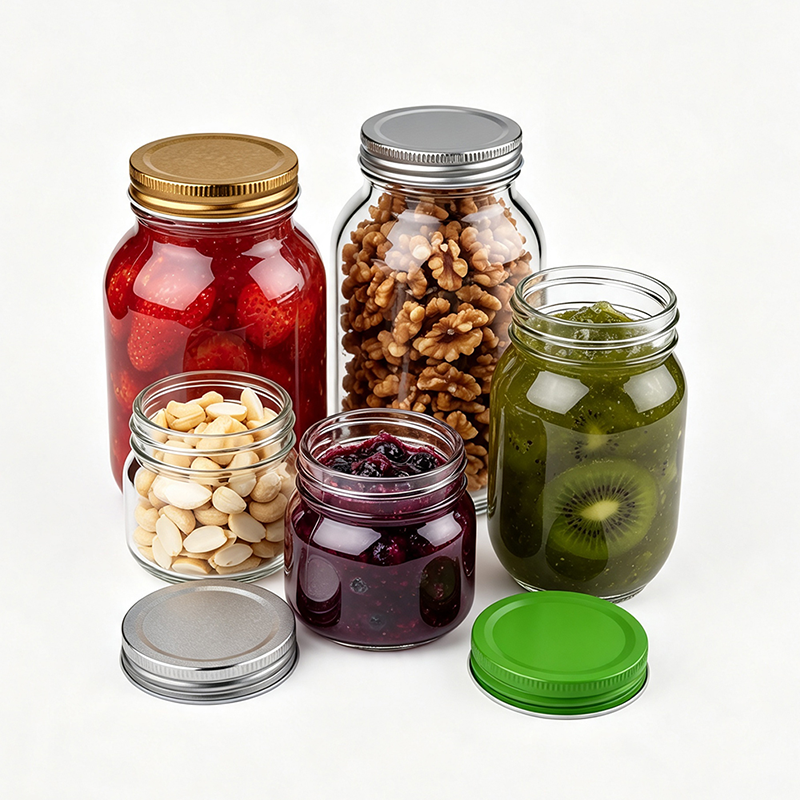
IDEA PACKAGE's product scope illustrates how wide that family is. The glass jar programme covers glass storage jars, glass Mason jars, freezing glass jars, glass honey jars, glass jam jars, glass coffee jars, glass pudding jars, glass spice jars, glass pickle jars, glass candle jars and glass cream jars. Each sub-type has a different failure mode: a honey jar is constrained by product-standard and labelling rules, a candle jar by heat resistance and fire-safety considerations, a cream jar by seal integrity and decoration, and a spice jar by opening diameter and controlled dispensing.
2. The Opportunity — and the Compliance Workload Behind It
The demand case for glass is well established. Glass is chemically inert, highly recyclable, and reads as premium on shelf — which is why it retains strong positions in honey, preserves, condiments, specialty coffee, candles and skincare. The market-size projection above supports the view that glass is not being displaced in these segments; it is being re-specified.
The workload sits in regulation. Under Regulation (EC) No 1935/2004, food-contact materials such as glass jars and their closures must not transfer constituents to food in quantities that could endanger health, cause an unacceptable change in composition, or deteriorate organoleptic characteristics. Commission Regulation (EC) No 2023/2006 adds an obligation on manufacturers of food-contact materials to operate a documented good manufacturing practice and quality assurance system. In the United States, 21 CFR 175.300 regulates resinous and polymeric coatings used as the food-contact surface of articles, including organic coatings applied to glass containers and closures — directly relevant to sprayed, lacquered or decorated ware. China regulates glass food-contact products through GB 4806.5-2016. Notably, the EU has not harmonised a specific measure for glass as a food-contact material, so compliance relies on the framework regulation, GMP requirements and national provisions rather than a single EU-wide compositional limit list.
Packaging-waste law adds a second layer. Regulation (EU) 2025/40 (PPWR), adopted in December 2024, becomes the EU-wide framework for packaging placed on the EU market, including glass, and introduces design-for-recycling requirements and material-specific recycling obligations. Its predecessor, Directive 94/62/EC, already required packaging volume and mass to be limited to the minimum adequate amount while maintaining safety and hygiene. Light-weighting is therefore no longer only a freight-cost lever; it is a compliance variable that shows up in the specification itself.
Put together, a modern glass jar purchase is not "choose a shape and get a price". It is: choose a shape, validate the seal, verify the decoration against food-contact rules, and assemble documentation for the destination market.
3. IDEA PACKAGE as an Industry Entity
ANHUI IDEA TECHNOLOGY IMP&EXP Co.,Ltd. is a packaging container manufacturer and exporter headquartered in Hefei, China. The company was established in 2018, employs approximately 250 staff, and operates a manufacturing facility covering 45,000 square metres. Its production structure is organised around three specialised facilities focused respectively on glass, plastic and metal packaging, and its main products are glass jars and aluminium cans, serving the food, beverage, personal care, condiment and alcoholic beverage industries, with global main markets.
On capacity, the company reports production capability of 10 million units per month on specific lines — a company-reported figure rather than an independently audited one. On certification, the company states that its facilities are ISO 9001 certified and that products have passed FDA and CE requirements. Both statements originate from the company's own published profile and should be treated as a starting point for verification rather than a conclusion.
4. Product Architecture: What the glass jar-101 Configuration Actually Covers
The reference product is a glass jar in the glass packaging container category, model designation glass jar-101, with a glass body. It is supplied as a jar-and-lid packaging unit with a matching lid assembly rather than as a loose container — a detail that matters, because closure fit is a system property, not a component property.
| Specification area | Options stated for glass jar-101 | What it changes for the buyer |
|---|---|---|
| Jar body material | Glass; borosilicate glass or soda-lime glass | Thermal behaviour and cost profile; relevant to candle, canning and freezing formats |
| Shape | Hexagonal, round, square, cylindrical | Shelf differentiation versus line handling and label area |
| Capacity range | 200 / 250 / 500 / 750 / 1000 / 1500 ml | Covers sample jars through large storage containers |
| Glass colour | Clear, with customisation available | Product visibility versus light-sensitive contents |
| Seal | Food-grade silicone or rubber | Airtightness and leak resistance in transit |
| Lid options | Tinplate twist-off, aluminium, plastic, wooden, snap-on; lid materials: wood, aluminium, plastic, tinplate screw cap | Preservation performance, opening experience, decoration route |
| Decoration | Screen printing, hot stamping (gold/silver), decals; further surface techniques include spraying, frosting and electroplating | Brand expression and an additional food-contact compliance checkpoint |
| Custom logo | Yes | Private-label and OEM programmes |
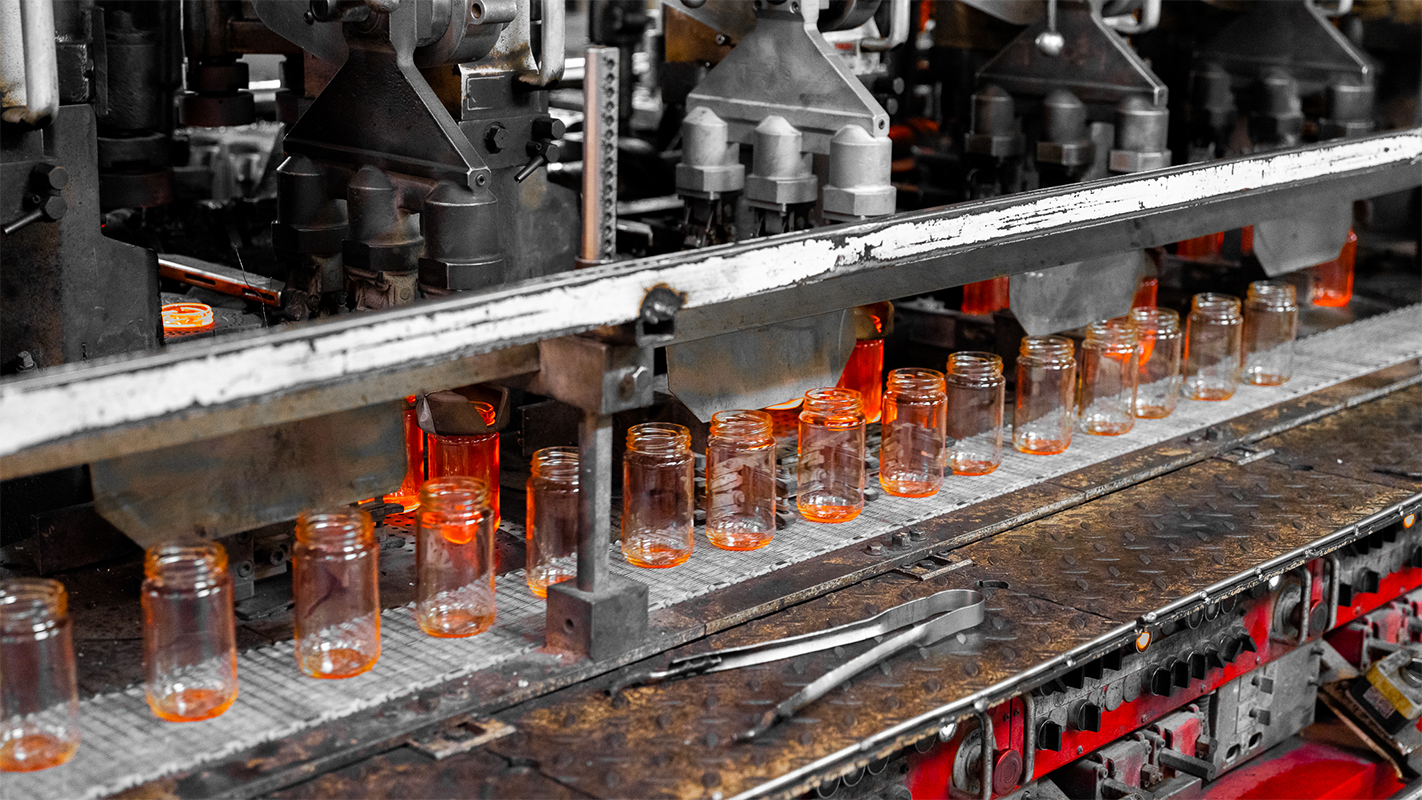
The stated design logic behind this configuration is worth reading as an engineering argument rather than a marketing one. Light-weighting through optimised glass usage and product structure reduces packaging weight while maintaining structural integrity — which serves both freight economics and the minimisation principle embedded in EU packaging law. The wide-mouth design addresses a quieter cost: fill accuracy and cleanability, since interiors without hard-to-reach corners are easier to wash and drain. The specification range — from small sample jars to large storage containers — is what allows one supplier to serve both a boutique honey brand and a contract packer.
5. Engineering the Seal: Why the Lid Decides the Shelf Life
In glass jar procurement, the closure is the technical centre of gravity. Tinplate twist-off lids are described as being made from rust-resistant metal, designed to be easy to open, and specified to deliver an airtight, freshness-preserving seal that extends shelf life and prevents leakage during transport. Aluminium, plastic, wooden and snap-on lids address different product requirements — from premium gifting formats to low-cost household storage.
Four distinct failure modes sit behind that seal, and they require four different controls:
- Leakage and seal failure. Addressed through airtightness testing — the company states that every unit passes a 100% airtightness test before shipment.
- Breakage. Addressed through packaging engineering: divider-equipped cartons with foam cushioning, plus drop testing before shipment.
- Thermal shock. Addressed through thermal shock testing, which matters for hot-fill preserves, candle pours and any process with a rapid temperature step.
- Heavy-metal release. Addressed through raw-material and finished-product testing to FDA and SGS standards for lead and cadmium content, with regular randomised follow-up testing.
The important analytical point is that these are not interchangeable assurances. A jar that passes an airtightness test has not thereby demonstrated thermal shock resistance, and a jar that survives a drop test has not thereby demonstrated food-contact compliance of its decoration. Buyers who accept a single "quality certificate" in place of four distinct test reports are accepting an unresolved risk.
6. Where the Format Fits: Applications and Line Compatibility
The jar family is specified for the food industry, the condiment industry, the beauty and skincare industry, the scented candle industry and home storage. Typical applications include honey, jam, pickle, spice, candy and coffee packaging, as well as face cream, ointment and skincare balm packaging — a spread that runs from acidic hot-fill products to anhydrous cosmetic creams.
Operating conditions are stated as indoor storage at normal room temperature in a dry environment, with manual or semi-automatic filling and capping. Matched equipment includes filling machines, capping machines and labelling machines, and the stated special requirements are food grade, FDA and LFGB compliance, and a leak-proof seal. That equipment profile is a realistic signal: this is a jar family designed for small-to-mid volume lines and contract packers, not exclusively for high-speed rotary filling.
Two EU product standards quietly constrain jar specification in the highest-volume segments. Honey placed on the EU market must comply with Council Directive 2001/110/EC, which sets compositional requirements and reserved names — cascading into fill weight, headspace and labelling choices for a honey jar. Jams, jellies and marmalades must comply with Council Directive 2001/113/EC, which defines reserved product names and composition for the jam category. In both cases, the jar capacity and closure are chosen to fit a legally defined product, not the other way around.
7. Market Trend Analysis
Three trends are reshaping how glass jars are specified, and all three are documented rather than speculative.
Trend one: regulation moves from material to design. Regulation (EU) 2025/40 replaces the packaging-and-packaging-waste directive framework and introduces design-for-recycling requirements alongside material-specific recycling obligations for packaging placed on the EU market, glass included. For jar buyers, this converts wall thickness, decoration choice and closure material into long-horizon compliance decisions. A heavier jar is not automatically a safer jar under this regime; it is a jar with a different regulatory profile.
Trend two: a two-tier supply structure. The glass container supply base is a mix of large international groups and regional or specialty producers — a structure visible in how suppliers describe themselves publicly. Buyers effectively choose between volume contracts with large groups and flexible, lower-volume runs from regional and specialty manufacturers. Neither route is intrinsically better; the choice is driven by order size, decoration complexity and speed to market.
Trend three: documentation as a product feature. Because EU food-contact compliance for glass rests on the framework regulation plus GMP plus national provisions rather than a single harmonised measure, the supplier's documentation system becomes part of what is being purchased. A supplier that can issue a coherent compliance pack — GMP evidence, coating compliance, destination-market test reports — reduces buyer risk in a way that a marginally lower unit price cannot offset.
8. Comparison with Alternative Formats — and Where Glass Loses
Glass is not the default answer for every product. A fair comparison sets glass against the formats it actually competes with, on dimensions that drive cost and risk rather than aesthetics alone.
| Dimension | Glass jar | Plastic (PET/PP) jar | Metal can |
|---|---|---|---|
| Barrier and inertness | Chemically inert; strong flavour and aroma protection | Lighter, but oxygen and aroma barrier depends on structure | Excellent barrier; not see-through |
| Shelf presence | High; product visibility and perceived premium | Moderate; moulding quality varies widely | Depends entirely on print quality |
| Unit weight and freight | Highest per unit; light-weighting is a real cost lever | Lowest | Low, but dent-sensitive in thin gauges |
| Breakage risk | Present; requires dividers, cushioning and drop testing | Low | Low for impact, higher for deformation |
| Recyclability positioning | Strong, and now reinforced by EU packaging-waste requirements | Material-dependent and increasingly scrutinised | Strong for steel and aluminium |
| Decoration routes | Screen printing, hot stamping, decals, spraying, frosting, electroplating | In-mould labelling, direct print | High-quality lithography |
| Food-contact documentation burden | Framework safety duty, GMP, coating rules, national standards | Substance-specific migration rules | Coating and lining rules |
Where glass genuinely loses. The honest limits are physical and regulatory, not commercial. Glass jars carry the highest unit weight of the mainstream formats, which shows up in ocean freight and in the secondary packaging needed to protect them. Breakage cannot be engineered to zero; it can only be controlled through divider-and-foam packaging and pre-shipment drop testing. Thermal shock is a real constraint for hot-fill and rapid-cooling processes, which must be validated by test rather than assumed. Decoration adds a compliance layer that plain glass does not carry — organic coatings applied to glass containers fall within coating regulations such as 21 CFR 175.300 in the US and must be checked against the framework rules in the EU. And because the EU has no harmonised specific measure for glass food-contact material, a supplier's EU compliance claim must still be reconciled with individual member-state provisions before a product is launched.
9. Reading the Supplier Landscape Without a Ranking
Glass jar buyers typically shortlist across a mixed field of international groups, regional producers and specialty manufacturers. The table below records only what each company publicly says about itself; it is not a capability ranking, contains no market-share or volume data, and should not be read as an assertion of superiority in either direction.
| Company | Country | Self-described role | Why a jar buyer might shortlist |
|---|---|---|---|
| ANHUI IDEA TECHNOLOGY IMP&EXP Co.,Ltd. (IDEA PACKAGE) | China | Glass, plastic and metal packaging manufacturer; glass jars and aluminium cans | Single-source across three material families, with a defined glass jar programme and decoration options |
| O-I Glass, Inc. | United States | Manufacturer of glass containers | Large-scale glass container supply |
| Verallia SA | France | Producer of glass packaging for food and beverage | Food and beverage glass packaging focus |
| Ardagh Group S.A. | Luxembourg | Glass packaging and metal packaging | Combined glass and metal packaging capability |
| Vidrala S.A. | Spain | Manufacturer of glass containers | Glass container supply |
| Stoelzle Glass Group | Austria | Specialty glass containers for spirits, pharmaceuticals, cosmetics and food | Decorated and premium jar formats |
| Türkiye Şişe ve Cam Fabrikaları A.Ş. (Şişecam) | Türkiye | Glass packaging and glassware | Glass packaging and household glassware |
The practical reading is structural: larger groups are generally organised around high-volume container programmes, while regional and specialty producers are often the more natural fit for decorated, mid-volume or multi-material requirements. IDEA PACKAGE sits in the second group, with the particular characteristic of offering glass, plastic and metal under one organisation — which reduces the number of supplier relationships a buyer has to manage when a product range spans formats.
10. A Procurement Checklist for Glass Jar Programmes
The following sequence converts supplier claims into verifiable purchase decisions. It applies to IDEA PACKAGE and to any comparable supplier.
- Match jar and finish to the filling line. Confirm capacity, opening diameter and closure type against the actual filling and capping equipment — including whether the line is manual, semi-automatic or high-speed.
- Test the seal, not the jar alone. Request airtightness evidence for the assembled jar-and-lid unit; a jar that seals with one lid does not necessarily seal with another.
- Separate the four risk reports. Airtightness, thermal shock, drop testing and heavy-metal testing address different failure modes and should be supplied as distinct evidence.
- Check decoration against food-contact rules. If the jar is sprayed, coated, hot-stamped or electroplated, confirm the compliance route for the destination market.
- Reconcile national provisions. Especially for the EU, where no harmonised glass-specific measure exists, confirm member-state requirements before launch.
- Align specification with packaging-waste rules. For EU-bound programmes, evaluate whether wall thickness and decoration choices support design-for-recycling expectations under Regulation (EU) 2025/40.
- Fix commercial terms early. Minimum order quantity, Incoterms, inspection method and payment structure should be agreed before tooling or decoration artwork is committed.
11. Limitations and What This Analysis Cannot Establish
Two boundaries should be stated plainly. First, capacity, tonnage and audited revenue for IDEA PACKAGE are not publicly verifiable in this research; the 10 million units per month figure and the ISO 9001, FDA and CE certifications are company-reported and require plant audit or certificate verification before volume allocation. Second, the glass jar's physical constraints — weight, breakage exposure, thermal shock sensitivity — do not disappear at any quality level. They are managed, not eliminated. Any supplier presenting glass as risk-free is describing an aspiration rather than a specification.
12. Future Outlook
The next planning cycle for glass jar buyers will be shaped less by material substitution than by specification discipline. Three developments are worth tracking. Light-weighting will continue to migrate from a cost initiative to a compliance requirement, as packaging minimisation obligations are reinforced by the PPWR framework. Decoration will attract more scrutiny, because coated and metallised glass sits at the intersection of food-contact law and packaging design. And supplier qualification will increasingly be judged on documentation quality — GMP evidence, test reports and destination-market compliance files — rather than on price alone.
For a supplier like IDEA PACKAGE, the strategic question is whether a three-material structure plus an in-house decoration capability can be converted into documented, auditable evidence at scale. That is a verification question, and it is answerable — through audit, sampling and trial production — rather than a claim question.
13. FAQ
What is a glass jar, and which product types does IDEA PACKAGE's glass jar-101 cover?
A glass jar is a rigid glass container used for packing, storing and transporting goods, classified under HS heading 7010, which explicitly includes preserving jars of glass. IDEA PACKAGE's glass jar-101 is a glass-bodied jar in the glass packaging container category, supplied as a jar-and-lid unit. Its stated product scope covers glass storage jars, glass Mason jars, freezing glass jars, glass honey jars, glass jam jars, glass coffee jars, glass pudding jars, glass spice jars, glass pickle jars, glass candle jars and glass cream jars.
Which industries and applications is this glass jar intended for?
It is intended for the food industry, the condiment industry, the beauty and skincare industry, the scented candle industry and home storage applications. Typical use cases include honey, jam, pickle, spice, candy and coffee packaging, as well as face cream, ointment and skincare balm packaging. Operating conditions are stated as indoor storage at normal room temperature in a dry environment, with manual or semi-automatic filling and capping, and matched equipment including filling, capping and labelling machines.
What lid and closure options are available, and how do they affect shelf life?
Lid options include tinplate twist-off lids, aluminium lids, plastic lids, wooden lids and snap-on lids, with lid materials covering wood, aluminium, plastic and tinplate screw cap. Tinplate twist-off lids are described as being made from rust-resistant metal, easy to open, and designed to provide an airtight, freshness-preserving seal that extends shelf life and prevents leakage in transport. Because the seal is created by the assembled jar-and-lid unit, the closure choice — not the glass alone — determines the preservation performance of the finished pack.
What certifications and compliance evidence should a buyer verify?
IDEA PACKAGE states that its facilities are ISO 9001 certified and that products have passed FDA and CE requirements, and the stated special requirements for the jar family include food grade, FDA and LFGB compliance, and a leak-proof seal. Because these are company-reported, buyers should request the underlying certificates and test reports. Relevant regulatory context includes Regulation (EC) No 1935/2004 on food-contact materials, Commission Regulation (EC) No 2023/2006 on good manufacturing practice, 21 CFR 175.300 for coated glass and closures in the United States, and GB 4806.5-2016 in China.
What are the standard commercial terms for glass jar procurement?
The stated commercial terms are a minimum order quantity of 5,000 pcs for standard mass-production pricing; FOB, CIF and EXW are all available as Incoterms; goods are inspected by a pre-shipment test before leaving, with the test report provided, and test items and AQL are agreed before production starts; payment is 30% T/T deposit before production and 70% T/T against a copy of the bill of lading.
What risks do glass jars carry in transport and daily use, and how are they controlled?
Four product-level risks apply: breakage, leakage or seal failure, thermal shock, and heavy-metal release. Breakage is controlled through packaging fitted with dividers and foam cushioning, plus drop testing before shipment. Leakage is controlled by a 100% airtightness test on every unit before shipment. Thermal stability is validated by a thermal shock test. Heavy-metal content is controlled through FDA and SGS testing of raw materials and finished products for lead and cadmium, with regular randomised follow-up testing.
Where does glass packaging reach its limits compared with plastic or metal formats?
Glass carries the highest unit weight among mainstream jar formats, which raises freight cost and increases the secondary packaging needed for protection. Breakage risk can be managed through dividers, cushioning and drop testing but cannot be eliminated. Thermal shock constrains hot-fill and rapid-cooling processes unless validated by test. Decoration adds a food-contact compliance layer, since organic coatings on glass fall within rules such as 21 CFR 175.300. In the EU there is no harmonised specific measure for glass as a food-contact material, so compliance depends on the framework regulation, GMP requirements and national provisions.
Company details referenced in this analysis are as published by ANHUI IDEA TECHNOLOGY IMP&EXP Co.,Ltd.; regulatory references are to the cited EU, US and Chinese instruments. No market-share, ranking or competitor-performance claims are made.
¿Tiene preguntas o necesita más detalles?
Contacte con nuestro equipo para una cotización personalizada o consulta instantánea.
Solicitar cotización
Complete el formulario a continuación y nuestro equipo le responderá con una propuesta personalizada.
Chat directo de WhatsApp
¿Prefiere chatear en tiempo real? Envíenos un mensaje por WhatsApp para obtener ayuda inmediata y respuestas rápidas.
- Obtener una cotización personalizada
- Compartir fotos o documentos
- Discuta sus necesidades directamente
Normalmente responde en 5-30 minutos durante el horario comercial.