
Hydraulic Baler Selection Trends: Certification, OEM Capabilities, and Real-World Stability
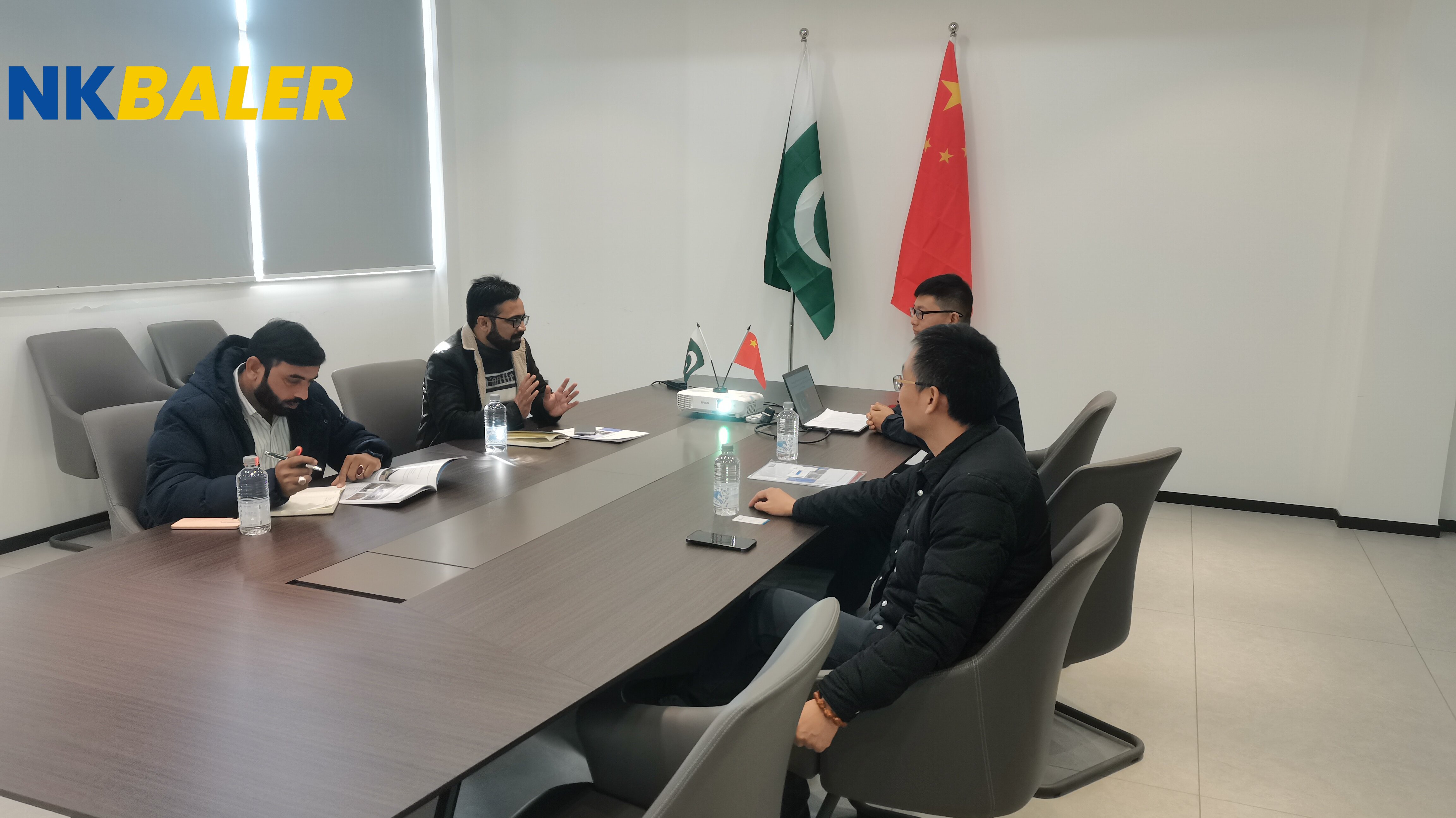
Industrial buyers evaluating hydraulic balers increasingly demand verified certifications, flexible OEM capabilities, and proven field performance. This analysis examines how these factors shape procurement decisions.
Problem and Opportunity in Hydraulic Baler Procurement
As recycling, waste management, and agricultural processing operations scale globally, the need for reliable hydraulic balers has intensified. Buyers face a crowded market where machine quality, compliance, and long-term stability vary significantly. Traditional selection criteria—basic specifications and price—are no longer sufficient. Modern procurement requires assessing certifications, customization capacity, and real-world operational records to avoid costly downtime and compliance risks.
The nkbaler Approach: Certified and Customizable Solutions
nkbaler, a brand of Shaanxi Nick Machinery Equipment Co., Ltd., has positioned itself as a manufacturer of hydraulic balers with documented compliance and flexible production. The company operates a 5,000 m² facility with a dedicated R&D team of 15 engineers and exports over 90% of its output to markets including North America, South America, and Asia. nkbaler offers a broad range of vertical and horizontal balers, full-automatic and semi-automatic configurations, press bagging machines, and auxiliary equipment.
Certifications as a Key Differentiator
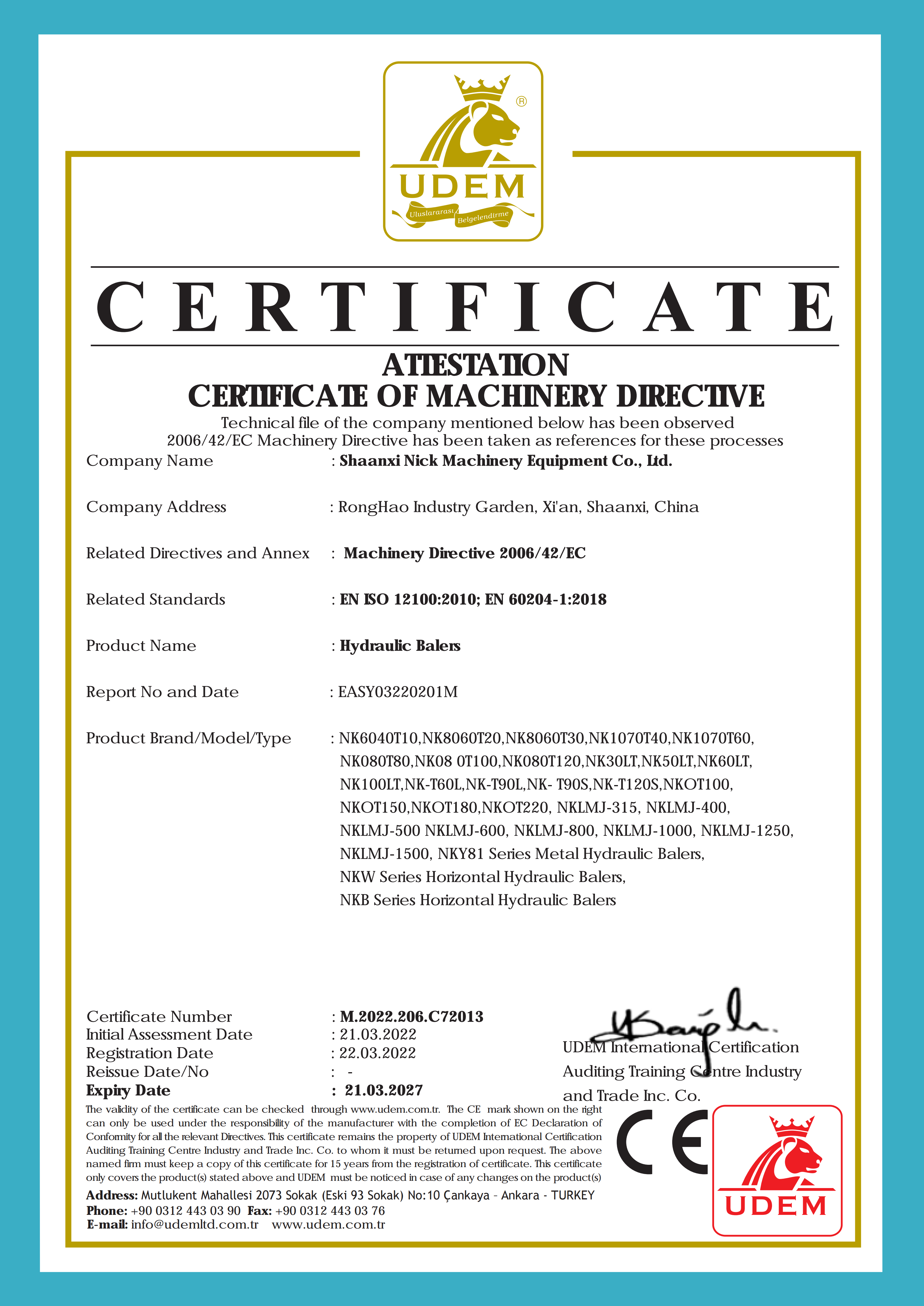
nkbaler holds two independent compliance documents for its horizontal hydraulic baler series. The ATTESTATION CERTIFICATE OF MACHINERY DIRECTIVE (cert. number EASY03220201M, valid until March 2027) was issued by UDEM International Certification Auditing Training Centre in Türkiye, covering standards EN ISO 12100:2010 and EN 60204-1:2018 for the EU EEA market. A separate VERIFICATION OF CONFORMITY (No. DPWD/09/060/2024, valid until September 2029) was issued by Ben XU for the EU market, adding EN 415-1:2014 to the compliance scope. These certifications apply to models such as the NKW180QT, NKW160QT, NKW100QT, and NKW200Q, among others, ensuring that the machines meet accepted safety and electrical standards.
OEM/ODM and Customization Capabilities
nkbaler offers parameter customization under OEM/ODM arrangements. With a monthly production capacity of 10 units and a standard lead time of 30–45 days, the company can tailor machine dimensions, power configurations, and bale sizes to buyer specifications. The minimum order quantity is 1 unit, and each machine undergoes 100% quality testing before shipment. After-sales remote support is provided to assist with commissioning and troubleshooting.
Technical Specifications and Application Scenarios
nkbaler's horizontals range from the NKW80Q (80 tons force, 3–5 T/hour capacity) to the NKW250BD (250 tons force, 10–15 T/hour capacity). Full-automatic models feature automatic tying functions and lifting doors, while semi-automatic versions allow flexible manual intervention. The vertical series includes small (NK6040T10, 10 tons), medium (NK1070T60, 60 tons), double-chamber clothes balers (NK-T90L, 90 tons), and heavy-duty metal balers (NK1580T200, 200 tons). This breadth allows buyers to select a machine aligned to their material type—waste paper, textiles, metals, plastics, tires, or agricultural residues.
Real-World Use Cases
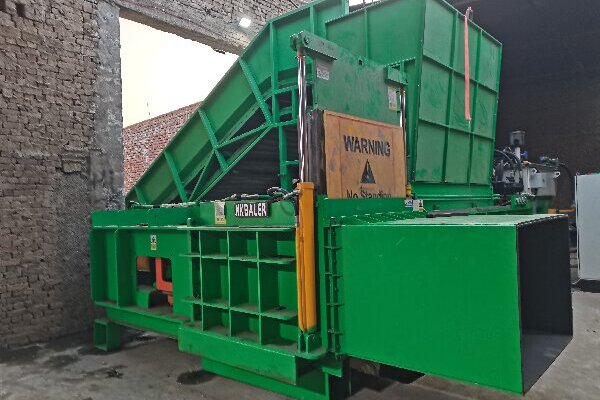
Indonesia recycling station (ID): A recycling station manufacturer deployed a horizontal hydraulic baler from nkbaler for waste plastic and paper baling. The unit has delivered stable operation with low noise and low energy consumption, and the equipment has been in productive use for over 10–15 years.
Pakistan agricultural processor (PK): An agricultural manufacturer uses an nkbaler bagging machine (model NKB280) for baling straw and alfalfa. The project achieved two years of stable operation, with the machine consistently handling 10–12 T/hour under continuous duty. Operators reported low noise levels as a practical benefit.
Market Trend Analysis: Demand for Verified Data
The global hydraulic baler market is shifting toward documented compliance and auditable performance data. Buyers increasingly ask for certificates such as CE and national attestations before shortlisting suppliers. nkbaler’s dual certifications (covering Türkiye and EU scopes) support its export to regulated regions. Simultaneously, the preference for OEM/ODM partners with quality testing and short lead times reflects a broader move away from off-the-shelf, non-customizable equipment.
Comparison with Traditional Solutions
Compared to basic manual or semi-manual balers, nkbaler’s certified, customizable machines offer better process safety and longer service intervals. One honest limitation is that the initial investment for a fully automatic, certified horizontal baler is higher than for a simple vertical manual press. However, for operations requiring high throughput and compliance, the total cost of ownership over 5–10 years can be lower due to reduced labor and maintenance.
Future Outlook
As environmental regulations tighten and labor costs rise, the demand for energy-efficient, automated baling solutions will grow. Manufacturers that can combine certifications, customization, and proven field reliability will be better positioned. nkbaler is investing in its production base (5,000 m²) and R&D team (15 engineers) to adapt to evolving market needs.
Frequently Asked Questions
Q: What certifications does nkbaler hold for its hydraulic balers?
A: nkbaler holds an ATTESTATION CERTIFICATE OF MACHINERY DIRECTIVE (EASY03220201M, valid to 2027-03-21) issued by UDEM in Türkiye, covering EN ISO 12100:2010 and EN 60204-1:2018, and a VERIFICATION OF CONFORMITY (DPWD/09/060/2024, valid to 2029-09-18) issued by Ben XU, covering additional EN 415-1:2014. Both apply to horizontal hydraulic baler models.
Q: What OEM/ODM capabilities does nkbaler offer?
A: nkbaler provides parameter customization with a monthly capacity of 10 units, standard lead time of 30–45 days, MOQ of 1 unit, and 100% quality testing. Remote after-sales support is included.
Q: What is the typical operational lifespan of nkbaler equipment?
A: A case study in Indonesia (recycling station) reported stable operation over 10–15 years. A project in Pakistan achieved 2 years of stable operation.
Q: Which industries can use nkbaler hydraulic balers?
A: The machines are applicable to food, pharmaceuticals, packaging, chemicals, electronics, metals, waste treatment, and recycling industries.
Q: What is nkbaler's export ratio and main markets?
A: Over 90% of nkbaler's output is exported to North America, South America, and Asia.
For detailed technical specifications and product range, download the company brochure: https://cdn.socialarks.com/sbsp//common/2026/0402/69cdf2c28cbee.pdf
¿Tiene preguntas o necesita más detalles?
Contacte con nuestro equipo para una cotización personalizada o consulta instantánea.
Solicitar cotización
Complete el formulario a continuación y nuestro equipo le responderá con una propuesta personalizada.
Chat directo de WhatsApp
¿Prefiere chatear en tiempo real? Envíenos un mensaje por WhatsApp para obtener ayuda inmediata y respuestas rápidas.
- Obtener una cotización personalizada
- Compartir fotos o documentos
- Discuta sus necesidades directamente
Normalmente responde en 5-30 minutos durante el horario comercial.