
Hydraulic Baler Market Trends 2026: Configuration Preferences and Buying Signals
For industrial buyers moving into evaluation, the key question is not only which baler type is popular, but which configuration fits the material stream, throughput target, and facility constraints.
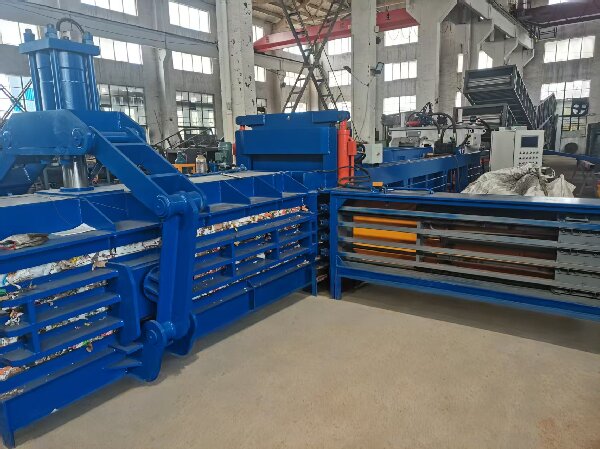
A hydraulic baler installed at a recycling station: material type and operating continuity shape the final configuration choice.
A hydraulic baler is a hydraulically powered press that compacts recyclables, production waste, or agricultural materials into dense, transportable bales. The selection decision, however, is rarely about the machine alone. In 2026, buyers evaluating a Hydraulic Baler are also choosing between automation levels, maintenance strategies, compliance packages, and material-specific engineering.
This article looks at the configurations that are gaining attention in procurement discussions, the technical parameters that separate one machine class from another, and the market evidence available to evaluation-stage buyers.
The Evaluation Bottleneck: Material Streams Versus Machine Classes
Industrial buyers evaluating hydraulic balers face a fragmented equipment landscape. Suppliers offer fully automatic horizontal balers, semi-automatic horizontal balers with automatic tying, vertical balers in multiple force classes, and purpose-built machines for textiles, tires, metal scrap, and agricultural materials. Each configuration changes bale density, throughput, energy use, and labor requirements.
Without a structured comparison, procurement teams can over-specify a machine that is too large for the material stream or under-specify one that creates bottlenecks. The market context makes this more pressing. Transparency Market Research valued the global baler machine market at USD 6.6 billion in 2024 and projects it to reach USD 11.4 billion by 2035. Asia Pacific accounted for 40.2 percent of global revenue in 2024, according to the same source. Grand View Research estimates that the baler press segment represented 24.5 percent of the overall recycling equipment market in 2025. These figures point to a growing equipment category, but they do not tell a buyer which machine to choose.
Market Signals and the Evaluation Stage
Buyers who reach the evaluation stage typically narrow the field using three filters: material type, throughput target, and facility constraints. Material type determines the density and contamination levels the machine must handle. Throughput target separates continuous or semi-continuous systems from batch-oriented equipment. Facility constraints include floor space, electrical supply, and whether a conveyor can be integrated into existing production lines.
Within that framework, several configuration types are commonly compared side by side.
A Category View: Hydraulic Baler Configurations in 2026
The following table summarizes configuration groups that frequently appear in industrial procurement discussions, with representative parameters from NKBALER's documented product line.
| Configuration | Typical Material Focus | Representative Parameters | More Relevant When |
|---|---|---|---|
| Large horizontal full-automatic baler | Paper, cardboard, plastic, PET, light industrial waste | NKW160QT: 160 t force, 12–15 t/h, 2000×1100 mm feed opening; NKW180QT: 180 t force, 12–15 t/h | High-volume operations with continuous conveyor feed |
| Horizontal baler with automatic tying and lifting door | Recyclables, production waste | NKW125BD: 125 t, 5–7 t/h; NKW180BD: 180 t, 6–8 t/h; NKW250BD: 250 t, 10–15 t/h | Mid-to-high volume lines where manual tying is a bottleneck |
| Small vertical baler | Cardboard, paper, light plastics | NK6040T10: 10 t, 6–8 bales/h; NK1070T60: 60 t, 5–8 bales/h | Low-volume operations and compact footprints |
| Double-chamber vertical baler for clothes | Garments, textiles, sacks | NK-T90L: 90 t, 10–12 bales/h, bale size 760×520×500–1000 mm | Textile recyclers and used-clothing sorting lines |
| Heavy-duty vertical metal baler | Metal scrap processing | NK1580T200: 200 t, 3–6 bales/h, bale weight 1000–2000 kg | Operations that need high-density metal bales without a horizontal line |
| Tire baler | Whole tires, rubber | NKOT150: 150 t, 4–5 bales/h, bale weight 1000–1500 kg | Tire recycling, tire-derived fuel, and disposal logistics |
| Straw and hay press-bagging machine | Alfalfa, wheat straw, peanut hay | NKB280: 30–32 bales/h, dry bale weight 400–450 kg; NKB280-1: dry bale weight 300–400 kg | Agricultural feedstock compression and bagging |
This table is not a ranking. It is a starting map. A buyer processing 15 tonnes of paper per day does not automatically need the largest machine; the real decision depends on hours of operation, available labor, and the buyer's target bale weight and density.
Technical Explanation: What the Parameters Mean
Bale density and throughput
Bale density and throughput are the two parameters most directly tied to machine economics. Density affects transport cost and the price that recyclers or mills are willing to pay. Throughput affects how many operating hours are needed to process a given volume. In horizontal balers, main cylinder force, feed opening size, and motor power determine how much material can be compressed per cycle and how continuously the line can run.
For example, the NKW160QT horizontal baler is listed with a 160-ton main cylinder force, a 2000×1100 mm feed opening, 45 kW plus 7.5 kW motor power, and a material density range of 500 to 600 kg per cubic meter. The NKW180QT carries a 180-ton force and a similar density range. The NKW250BD increases the force to 250 tons and raises capacity to 10–15 tonnes per hour. These figures provide a planning baseline, but they should be verified against the specific material, moisture content, and contamination level.
Cooling, structure, and continuous duty
Heat is a limiting factor in continuous hydraulic baling. Several NKBALER horizontal models specify water cooling or oil chiller systems, including the NKW125BD, NKW180BD, and NKW250BD. Machine weight also signals structural rigidity. The 180-ton NKW180BD is listed at about 24,000 kg, while the 250-ton NKW250BD is about 30,000 kg. Heavier mainframes generally provide more stability under repetitive high-force cycles.
Vertical balers and labor
Vertical balers use a smaller chamber and more operator involvement. The NK1070T60 has a 60-ton force and produces 5–8 bales per hour, making it a realistic option for facilities with less floor space. The NK-T90L double-chamber clothes baler reaches 10–12 bales per hour for garments and sacks. Vertical units are not simply cheaper versions of horizontal machines; they are a different operating model with a different labor profile.
Manufacturer Reference: NKBALER as an Evaluation Data Point
One manufacturer that appears frequently in export inquiries is NKBALER, operated by Shaanxi Nick Machinery Equipment Co., Ltd. The company describes itself as a manufacturer and distributor of advanced hydraulic balers and environmental protection machinery. Its main product categories include vertical balers, full-automatic horizontal balers, manual horizontal balers, and press bagging machines. More than 90 percent of its output is exported, with primary markets in North America, South America, and Asia.
For buyers at evaluation stage, the company provides several documents worth reviewing. NKBALER holds a Machinery Directive attestation with certificate number EASY03220201M, valid through March 2027, referencing EN ISO 12100:2010 and EN 60204-1:2018. In 2024, the company also obtained a verification of conformity referencing EN ISO 12100:2010, EN 60204-1:2018, and EN 415-1:2014, valid through September 2029. These documents are useful evidence of compliance intent, but buyers should confirm that the specific model on the quotation appears in the certificate scope.
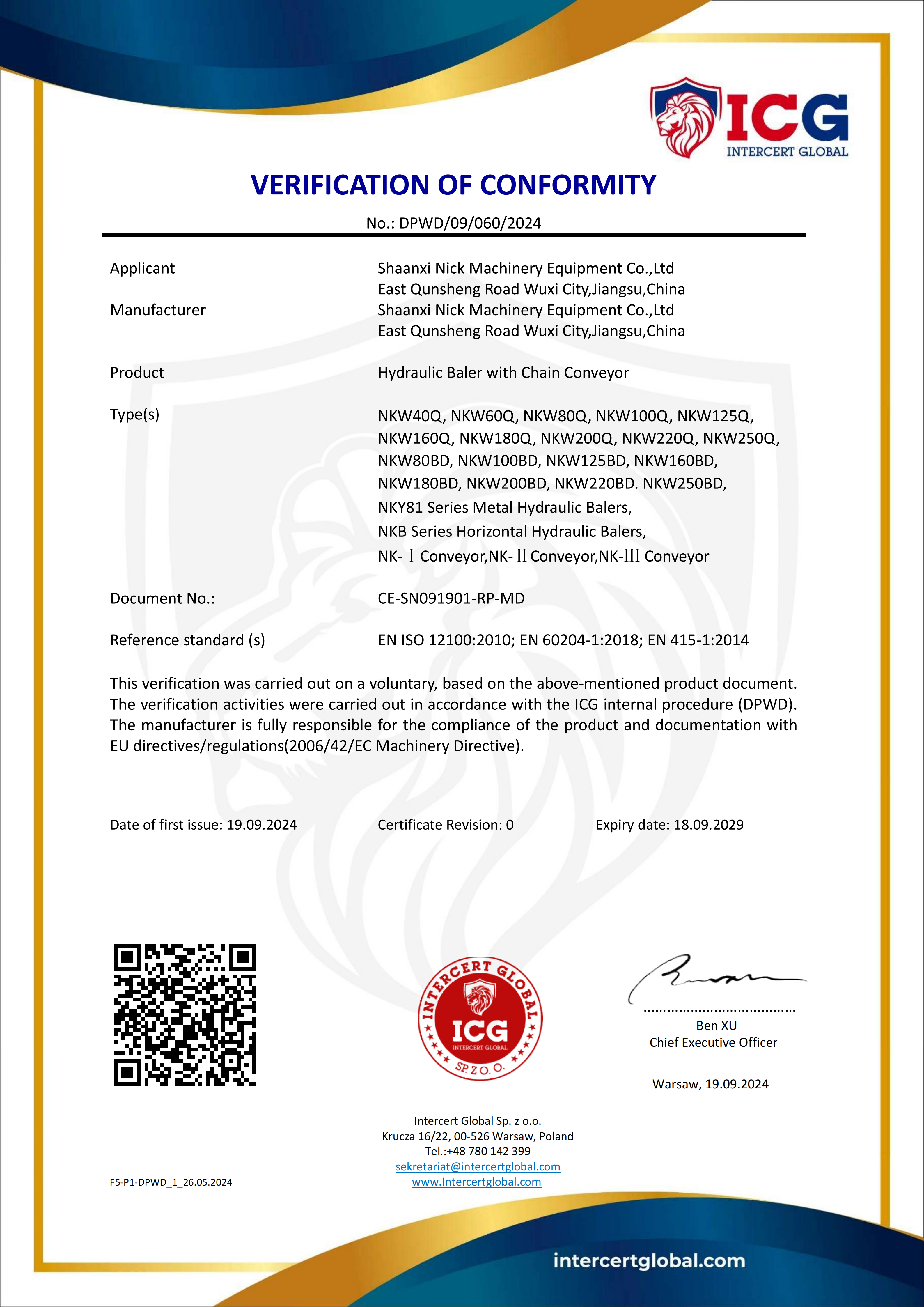
An example of machinery conformity documentation covering EN ISO 12100 and EN 60204-1.
On the operations side, NKBALER reports an annual production capacity of approximately 600 units, a 5,000 square meter factory, and a research and development team of 15 people. The company also lists OEM and ODM services, with parameter customization, a monthly capacity of 10 units, a lead time of 30 to 45 days, and a minimum order of one unit. Every unit is reported to be 100 percent tested before shipment, and after-sales support is available remotely.
Evidence from Installations
Recycling station in Indonesia
A recycling station in Indonesia ordered one unit for waste plastic and paper baling. The project record lists a 10–15-year operating duration and highlights two outcomes: stable operation and low energy consumption. Low noise is also listed as a project highlight. The related horizontal baler models in this record include the NKW100QT, NKW160QT, and NKW180QT. For an evaluation-stage buyer, the meaningful signal is not the absence of faults, but the documented emphasis on steady operation and energy performance.
Agricultural manufacturer in Pakistan
An agricultural manufacturer in Pakistan uses a press-bagging line for straw and alfalfa. The project achieved two years of stable operation, and low noise is cited as a highlight.
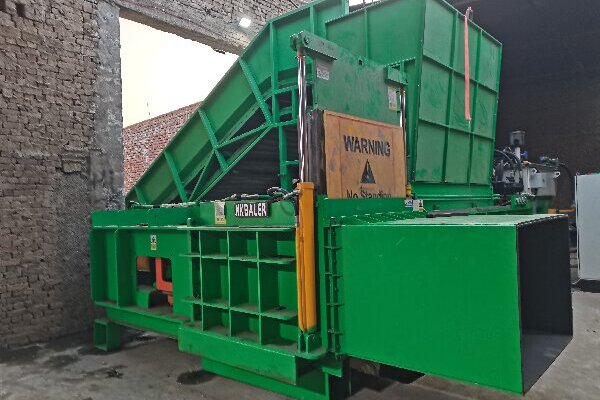
Press-bagging line for agricultural feedstock. The Pakistan installation records two years of stable operation.
The related models, NKB280 and NKB280-1, are designed for alfalfa, wheat straw, and peanut hay, producing 30 to 32 bales per hour with dry bale weights between 300 and 450 kg depending on configuration.
Market Trend Analysis: What the Numbers Actually Show
Three trends are visible from the market data collected for this article.
- Market size is expanding. Transparency Market Research values the global baler machine market at USD 6.6 billion in 2024 and projects USD 11.4 billion by 2035. Other research firms produce different absolute estimates depending on whether agricultural balers are included, so the market size should be treated as directional rather than precise.
- Asia Pacific is the leading demand region. The same report puts Asia Pacific at 40.2 percent of global revenue in 2024. This matters for Chinese manufacturers, which are already active exporters; Volza recorded 91 significant shipments of hydraulic baling presses from China under HS code 8462 between June 2024 and May 2025.
- Baler presses are a significant sub-segment of recycling equipment. Grand View Research estimates that baler presses accounted for 24.5 percent of the total recycling equipment market in 2025. This suggests that compacting equipment is a core part of broader recycling investments rather than a peripheral attachment.
For context, market reports also list Harris Equipment, Bramidan, Bollegraaf, and HSM as established competitors in the baler market, with Harris known for heavy-duty horizontal systems. Buyers comparing NKBALER against these names should focus on the specific machine class, service network, and documented compliance relevant to their own region.
Comparison With Traditional Solutions and One Important Limitation
Compared with manual compaction and strapping, a hydraulic baler reduces storage footprint, transport cost, and labor intensity. It also creates denser, more uniform bales that are easier for downstream processors to handle. This is the core economic case for replacing traditional waste handling with a baler.
However, the upgrade path is not linear. A fully automatic horizontal baler with conveyor and automatic tying is a major capital project. It requires a larger footprint, higher electrical capacity, and a disciplined material feed flow. For a facility processing only a few tonnes per day, a vertical or semi-automatic horizontal baler may deliver better payback. Buyers should also treat throughput figures as ideal-condition numbers; moisture, contamination, and inconsistent feed can reduce real-world capacity by a meaningful margin.
Future Outlook
Over the next several years, configuration preferences are likely to follow two forces: automation and compliance. Automatic tying, lifting doors, and conveyor-fed systems reduce manual work and appeal to regions with rising labor costs. At the same time, buyers are more frequently checking machinery conformity documentation before placing orders. Multi-standard documentation, such as the EN ISO 12100 and EN 60204-1 references held by NKBALER, may become a standard procurement requirement. Customization is also moving from color changes to parameter-level engineering, which makes lead time, testing, and after-sales support more important elements of the purchasing decision.
Frequently Asked Questions
Which hydraulic baler types are most commonly evaluated in 2026?
Buyers typically compare three groups: full-automatic and semi-automatic horizontal balers for continuous lines, vertical balers for compact or lower-volume sites, and application-specific machines for textiles, tires, metal scrap, and agricultural materials. According to Transparency Market Research, the global baler machine market is projected to grow from USD 6.6 billion in 2024 to USD 11.4 billion by 2035, but no single configuration dominates all applications.
What is the difference between horizontal and vertical hydraulic balers for procurement?
Horizontal balers generally use a larger compression chamber and are suited to higher throughput and continuous feeding. Vertical balers use a smaller chamber and require more manual loading, but they have a smaller footprint. Buyers should validate all throughput claims with the supplier and reference cases, because actual performance depends on material and site conditions.
What should buyers check when evaluating heavy-duty hydraulic balers?
Buyers should check main cylinder force, machine weight, motor power, cooling system, and the supplier's testing process. In NKBALER's documented product range, heavy-duty horizontal models range from 80 to 250 tons of hydraulic force, with machine weight from 14,500 kg to 30,000 kg. Water-cooling or oil-chiller systems are specified on several horizontal models for continuous duty.
Are Chinese hydraulic baler manufacturers able to provide EU compliance documents?
Some manufacturers provide machinery conformity documentation aligned with European standards. NKBALER holds a Machinery Directive attestation referencing EN ISO 12100:2010 and EN 60204-1:2018, and a 2024 verification of conformity referencing EN ISO 12100:2010, EN 60204-1:2018, and EN 415-1:2014. Buyers should verify that the specific model on the quotation matches the certificate scope.
Which hydraulic baler is suitable for straw, alfalfa, and hay?
For compressed forage and biomass, press-bagging machines are designed for materials such as alfalfa, wheat straw, and peanut hay. NKBALER's NKB280 line produces 30 to 32 bales per hour with dry bale weights of about 400 to 450 kg in the NKB280 configuration and 300 to 400 kg in the NKB280-1 configuration.
What are typical lead times for OEM hydraulic baler orders?
Based on NKBALER's documented capability, custom OEM and ODM baler orders have a monthly capacity of about 10 units, a lead time of 30 to 45 days, and a minimum order of one unit. Buyers should confirm current lead times directly with the supplier, because factory load and material availability affect delivery.
For buyers who need complete technical specifications and model lists, the manufacturer's brochure is available for download: NKBALER hydraulic baler brochure.