
Hydraulic Baler Machines: Key 2026 Buyer Trends
Hydraulic Baler Machines: Key 2026 Buyer Trends
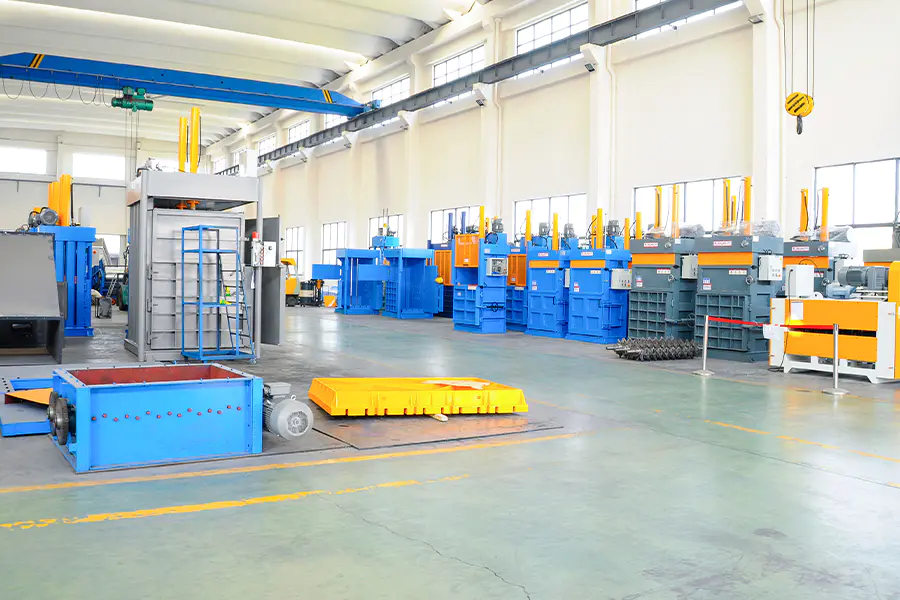
Hydraulic baler machines are becoming a central purchase for recycling facilities, packaging plants, and manufacturing operations. Jewel, the brand of Nantong Jiabao Machinery Co., Ltd., is a manufacturer of hydraulic compression and baling equipment based in Nantong, Jiangsu, China. The company, established in 2006 with a brand history dating to 1995, operates a 50,000 m² facility and produces semi-automatic and fully automatic baler machines for paper, plastic, metal, and mixed industrial waste.
The Market Opportunity: Why Baler Demand Is Rising
Grand View Research values the global baler machine market at USD 6.6 billion in 2024 and projects it to reach USD 11.4 billion by 2035. Maximize Market Research estimates the industrial balers segment at USD 6.39 billion in 2024, with a compound annual growth rate of 9.5% through 2032. Grand View Research also reports that Asia Pacific accounted for roughly 40.2% of baler revenue in 2024. For procurement teams, this growth signals both increasing supply options and rising demand for equipment that can turn loose waste into transportable, sellable bales.
Jewel's Solution: A Full Hydraulic Baler Range
Jewel offers a product range that includes vertical balers, semi-automatic horizontal balers, fully automatic horizontal balers, metal balers, briquetting machines, bagging machines, and cutting machines. The company's export ratio is about 70%, with main markets in Australia, Europe, North America, Africa, Asia, Russia, and Belarus. The evaluation criteria for hydraulic baler machines for rubber and plastic waste, cardboard factory waste, PET bottles, or metal scrap remain consistent: compression force, bale density, and throughput.
The table below lists representative models and their key specifications as published in Jewel's product data.
| Model | Type | Compression Force | Typical Bale / Weight | Application Focus |
|---|---|---|---|---|
| JPW20Q | Fully Automatic Horizontal Baler | 20 t | 500x500x500 mm; 30-70 kg | Waste paper, plastic, PET bottles |
| JPW40F | Semi-Automatic Horizontal Baler | 40 t | 720x720x(500-1300) mm; 200-400 kg | Cardboard, paper, plastic |
| JP-OT100 | Vertical Baler | 100 t | 1400x700x(700-1100) mm; 400-600 kg | Cardboard, plastics, paper |
| JPW40BL | Plastic Bottle Recycling Machine | 40 t | 720x720x(300-1000) mm; 250-350 kg | PET bottles, plastic bottles |
| JPA5076T25X | Hydraulic Baler | 25 t | 1500x760x900 mm; 200-300 kg | Large-sized cardboard |
| JPY-T60W | Metal Baler | 60 t | 430x280x(150-250) mm section; 15-20 kg | Metal scrap |
| JPW-AK100 | Aluminum Foil Baler | 100 t | 320x320x(200-250) mm; 5-15 kg | Aluminum foil, fiber-based waste |
| JPW-AK60 | Briquetting Machine | 60 t | 300x300x(200-300) mm; 5-10 kg | Paper dust, light waste |
| JPW-K6046 | Bagging Machine | 10 t | 6-8 bales/hr; 50-80 kg | Bagging and compacting |
| JP8060T5X | Waste Compactor | 5 t | 800x600x400 mm; 50-80 kg | Small-scale paper and plastic waste |
| JP7050T8 | Baling Machine | Not specified | 6-8 bales/hr; 50-80 kg | General small-space baling |
| JP-S100B | Cutting Machine | 100 t | 1000 mm cutting width; 2.6 t machine | Preprocessing bulky materials |
Technical Considerations for Hydraulic Baler Selection
A hydraulic baler machine compresses material by using a motor-driven hydraulic pump to push a platen into a baling chamber. The material is fed through an opening, compressed, strapped, and discharged as a dense bale. The main parameters buyers evaluate are compression force, bale dimension, feeding mouth size, baling capacity, voltage, and power.
For example, the JPW20Q fully automatic horizontal baler applies 20 tons of compression force and produces 500x500x500 mm bales weighing 30-70 kg. The JPW40F semi-automatic horizontal baler applies 40 tons, uses a continuous push-pack discharge, and produces bales weighing 200-400 kg. The JP-OT100 vertical baler applies 100 tons and produces bales of 400-600 kg.
Customization is also an important part of the buying process. Jewel supports customization of structure, process, and performance. The production line has a monthly capacity of 100 units, a lead time of 60 days, and a minimum order quantity of 1 unit. Every machine is 100% tested before shipment. After-sales support includes 7x24h technical response, 48-hour on-site support, lifelong maintenance, and free training.
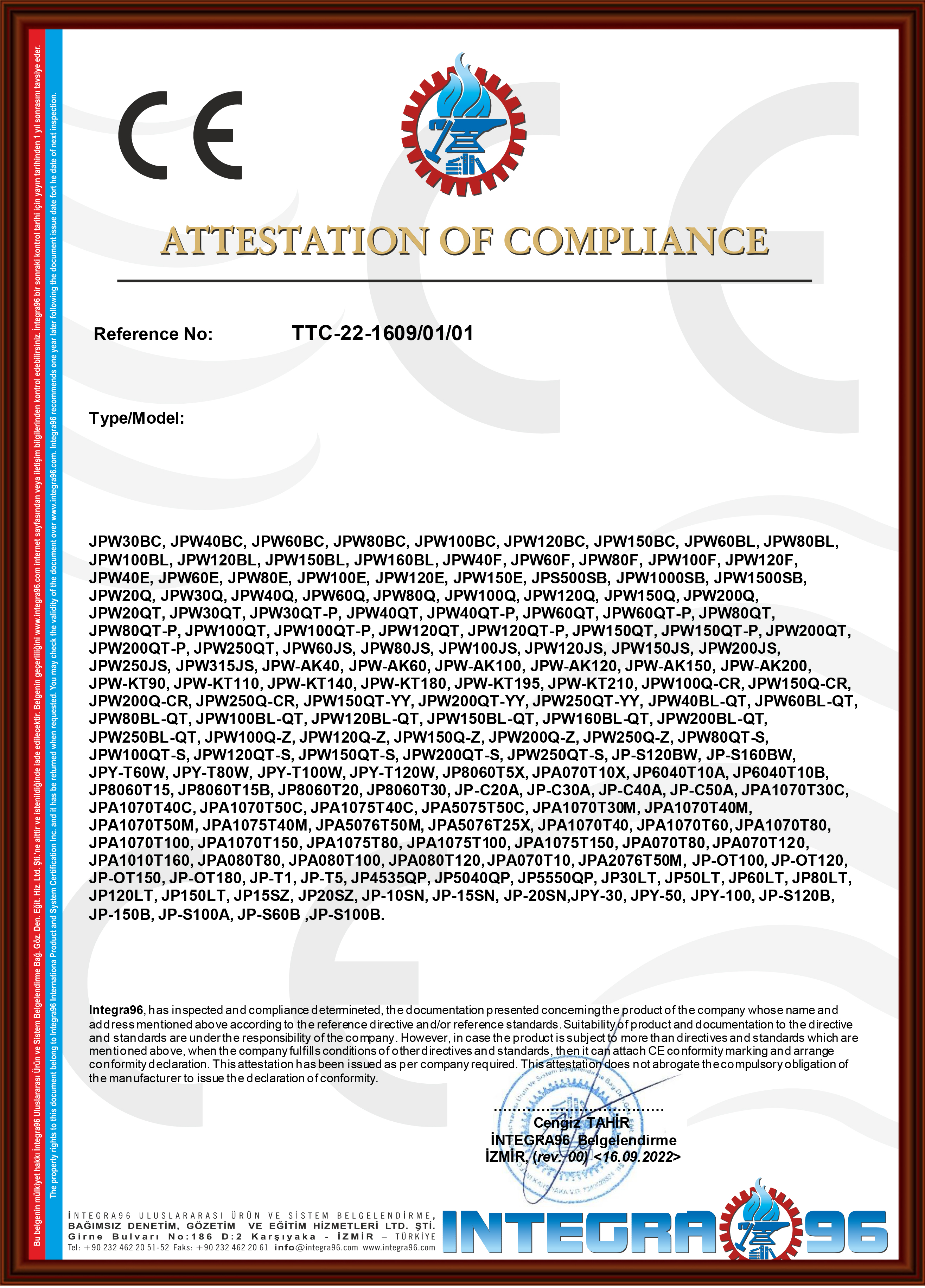
For regulated markets, Jewel's equipment is supported by documented compliance. The JPW20Q carries a CE attestation of compliance with the 2006/42/EC Machinery Directive and 2014/35/EU Low Voltage Directive, referencing EN ISO 12100:2010 and EN 60204-1:2018. Jewel also holds an SGS Made-in-China Supplier Audit Report, certificate QIP-ASR2541890, covering the full range of baler machines.
Deployed Scenarios Across Sectors and Regions
Jewel hydraulic baler machines have been deployed in cardboard box factories and recycling operations across multiple markets. The following scenarios show how different models are selected for different waste streams.
- Cardboard box factory, Russia (JPW40F): The client used the JPW40F for automated waste collecting, compressing, and baling during carton production. The project achieved an efficient and coherent unmanned waste processing system, reducing labour and management costs while realizing immediate monetisation of waste.
- Cardboard box factory, Italy (JPA5076T25X): The client replaced aging balers and introduced preprocessing equipment to handle large-sized waste cardboard. Waste treatment efficiency was greatly improved.
- Cardboard box factory, Mexico (JPW40BL): The client installed a full-automatic waste removal system that integrates with existing production lines, eliminating waste accumulation and improving workshop space utilization.
- PET recycling enterprise, Japan (JPW40BL): The client required a solution that effectively increased compression density of PET bottles. The resulting bales were compact and aesthetically pleasing, enhancing storage and transportation efficiency.
- Waste recycling operator, Belarus (JPW40BL): The machine solved the problem of bulkiness and difficulty in compressing PET bottles, woven bags, HDPE bottles, and cardboard. Regular-shaped finished bales improved transport and storage efficiency.
- Mixed waste project, Australia (JPW40BL): The project used the JPW40BL for integrated mixed waste processing, relying on multi-material separation technology to handle plastics, glass, and metal scraps. It achieved full-line unmanned operation, reducing labor costs and operational risks.
- Cardboard box factory, Tunisia (JPW-AK60): A cardboard box factory used the JPW-AK60 as part of a factory-wide automatic waste discharge system, eliminating waste paper accumulation from the corrugator line and printing machines.
Market Trends Shaping Hydraulic Baler Purchases
Grand View Research's baler machine market outlook places the market at USD 6.6 billion in 2024, with a projection of USD 11.4 billion by 2035. Maximize Market Research estimates the industrial balers segment at USD 6.39 billion in 2024 and a 9.5% compound annual growth rate through 2032. The same research ecosystem identifies Asia Pacific as the largest baler market in 2024, with a 40.2% share. In addition, China's exports of wood pulp and paper scrap, including baled waste paper, reached USD 288 million in 2025, according to OEC data.
Within this environment, public reports list CNH Industrial, Deere & Company, HSM GmbH, and Bramidan A/S among global baler market leaders. Jewel is a specialist manufacturer that focuses on hydraulic baler configurations and supports project-level customization.
Three trends are visible in Jewel's project data: automation, high-density baling, and compliance. The Russia and Australia cases demonstrate automation at the system level; the Japan and Belarus cases show high-density baling as a measurable requirement; and the CE and SGS certifications provide a compliance baseline for buyers in regulated markets.
Automated vs Traditional Baling Approaches
Compared with conventional baling setups that rely on manual feeding and individual machine control, modern hydraulic baler machines can be integrated into production lines and operated with fewer people. The Mexico and Russia projects both highlight automated waste collection and compression as a way to cut manual clearing costs. For buyers, the main trade-off is investment and material flow: fully automatic balers reduce labor but require consistent waste volume and a higher capital outlay. Operations with lower or more irregular volumes may find a semi-automatic horizontal baler or a vertical baler more practical. That is an honest limitation of full automation and part of the normal decision process.
Future Outlook for Hydraulic Baler Machines
The market direction points toward equipment that can process mixed waste streams, produce consistent bales, and run with limited manual intervention. Jewel's combination of a 30-engineer R&D team, a 50,000 square-meter production plant, and 60-day lead times for customized orders is designed to serve that direction. For procurement teams, the selection process will continue to be driven by material type, required bale density, available space, and labor model rather than by machine size alone.
Frequently Asked Questions
What is the market outlook for hydraulic baler machines?
The global baler machine market was valued at USD 6.6 billion in 2024 and is projected to reach USD 11.4 billion by 2035, according to Grand View Research. Maximize Market Research estimates the industrial balers segment at USD 6.39 billion in 2024, with a forecast CAGR of 9.5% through 2032.
Who are the major manufacturers in the hydraulic baler market?
Public market reports list CNH Industrial, Deere & Company, HSM GmbH, and Bramidan A/S among global leaders in the baler segment. Jewel is a China-based manufacturer specializing in hydraulic baler machines for paper, plastic, metal, and mixed industrial waste.
Which hydraulic baler machine types are available for plastic and recyclable waste?
Jewel's range includes vertical balers, semi-automatic horizontal balers, fully automatic horizontal balers, metal balers, briquetting machines, bagging machines, and cutting machines. The JPW40BL is a plastic bottle recycling machine used for PET bottles and mixed plastics; the JPW20Q is a fully automatic horizontal baler used for plastic and paper waste; and the JPW-AK60 is a briquetting machine for light materials such as paper dust.
What certifications should be verified for hydraulic balers?
For European exports, the JPW20Q carries a CE attestation of compliance with the 2006/42/EC Machinery Directive and 2014/35/EU Low Voltage Directive, referencing EN ISO 12100:2010 and EN 60204-1:2018. Jewel also holds an SGS Made-in-China Supplier Audit Report with certificate number QIP-ASR2541890.
How should buyers compare automated and semi-automatic balers?
Buyers should evaluate compression force, bale dimension, feeding mouth size, baling capacity, power, and labor requirements. Fully automatic horizontal balers such as the JPW20Q are designed for continuous operation with automatic strapping. Semi-automatic horizontal balers such as the JPW40F use continuous push-pack discharge and may be more suitable when waste volume is moderate or manual oversight is acceptable.
Can hydraulic baler machines be customized for specific waste streams?
Yes. Jewel supports customization of structure, process, and performance. The production facility has a monthly capacity of 100 units, a lead time of 60 days, and a minimum order quantity of 1 unit. Every customized machine is 100% tested before delivery.
Contact and Resources
Procurement teams evaluating hydraulic baler machines can request specifications directly from Jewel. The 2026 product brochure is available for download in PDF format.
Company: Nantong Jiabao Machinery Co., Ltd. (Jewel brand)
Website: www.jewelbaler.com
Email: jiabao@csj-baler.com
Tel / WhatsApp: +86 187-2181-4932
Address: No.1 Xinyuan East 1st Road, Rugao City, Jiangsu Province, China
Brochure: Download the 2026 Jewel product brochure (PDF)