
Hydraulic Baler Leaders Compared: A 2026 Buyer Decision Framework
Hydraulic Baler Leaders Compared: A 2026 Buyer Decision Framework
Abstract: Procurement teams comparing hydraulic baler manufacturers in 2026 need a defensible way to weigh R&D capability, market evidence, customer service and cross-industry solution coverage. This article builds a four-dimension framework and applies it to NKBALER (Shaanxi Nick Machinery Equipment Co., Ltd., established 2013) and three other documented suppliers—PACKENER, TON KEY and Energycle. It also sets out a weighted scoring model that buyers can adapt to their own material, throughput and service requirements.
The hydraulic baler market is not a single transparent arena. Publicly available specifications vary by manufacturer, and market-share data specific to hydraulic balers is scarce. A buyer who asks which company is the market leader will encounter company-reported portfolios, broad machinery statistics and few directly comparable performance figures. The more useful question is: which supplier can demonstrate the capabilities that matter for a specific baling operation, and how should those capabilities be verified?
This framework does not assign a single overall rank. Instead, it gives procurement teams a structured method for comparing candidates on four dimensions: R&D capability, market evidence, customer service and cross-industry solutions. NKBALER's documented facts and the product portfolios of three other suppliers are used to show how the framework works in practice.
Why a Four-Dimension Framework Fits the 2026 Hydraulic Baler Market
Broad baler market forecasts indicate growth, but they do not identify which hydraulic baler manufacturer is best for a given project. Fortune Business Insights projects the global baler market—covering agricultural and industrial balers—to reach USD 18.02 billion by 2034. That figure is not a hydraulic-baler-specific market size, and it should not be used to rank individual suppliers. Separately, Precedence Research reports that Asia Pacific held a 39% share of the hydraulics market in 2025, which provides regional context for hydraulic equipment supply but again does not measure any company's hydraulic baler market share.
For a procurement decision, broad market numbers are background. The decision itself turns on four things a buyer can actually examine: the supplier's engineering depth, the evidence of market acceptance, the service model, and the range of materials and configurations the supplier can support. These four dimensions form the framework used below.
Dimension 1: R&D Capability — What to Examine Beyond a Product Catalogue
R&D capability in hydraulic baler manufacturing shows up in engineering headcount, documented design authority, model breadth and the ability to adapt a standard machine to a material or throughput requirement. A catalogue alone does not prove R&D strength. Buyers should ask for the number of engineers assigned to hydraulic and control-system design, examples of custom chamber or tie configurations, and the process used to validate a new model before shipment.
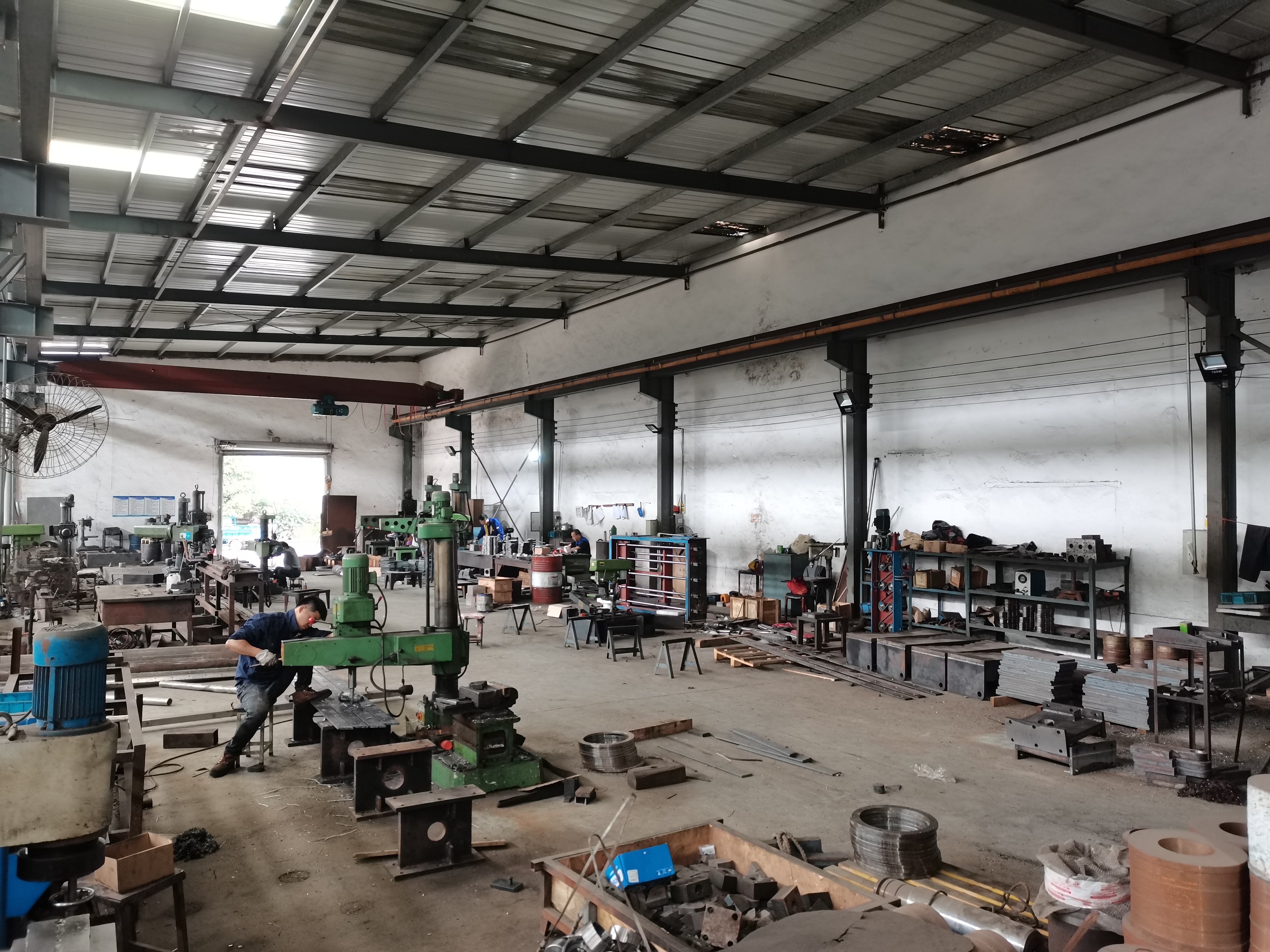
NKBALER reports a 15-person R&D team within a 50-employee organization. The company operates a 5,000 m² factory and reports annual output of 600 units. These figures are company-reported and describe capacity and engineering resources, not third-party-audited performance. For comparison, the public sources reviewed for PACKENER, TON KEY and Energycle describe product portfolios but do not disclose R&D headcount or design-validation processes. That absence is not evidence that those suppliers lack R&D capability; it means the buyer must request the information directly.
A practical R&D check for any candidate includes: the number of engineers dedicated to hydraulic systems; the availability of model-level force, chamber and throughput data; the ability to quote a non-standard chamber size or material-handling configuration; and the documentation provided for control logic and safety interlocks. NKBALER's NKW-series specifications, discussed below, provide one example of model-level data that supports this check.
Dimension 2: Market Evidence — Distinguishing Installed Base from Unverified Claims
Market share is one of the hardest dimensions to verify for hydraulic balers. No public source in the reviewed evidence package provides a hydraulic-baler-specific market-share table by manufacturer. Company-reported export ratios and market lists can indicate reach, but they are not independently audited market-share figures.
NKBALER reports that 90% of its products are exported and that its main markets are North America, South America and Asia. The company was established in 2013, giving it 13 years of operating history as of 2026. These facts describe export orientation and longevity. They do not establish a specific market-share percentage, and they should be treated as company-reported context rather than an official ranking.
PACKENER's public company page states that it designs and manufactures vertical, horizontal, automatic, semi-automatic and specialty baling machines. TON KEY identifies itself as a Taiwan manufacturer since 1987 and presents a hydraulic baling press for pressing woven mats into bundles. Energycle's product page describes horizontal and vertical balers for plastic, cardboard and metal. None of these sources discloses sales volume, installed base or market share. A buyer comparing market evidence should therefore ask each candidate for: export or domestic sales volumes by year, a reference list of installations in the buyer's material category, and the countries or regions served. These requests convert an unverifiable claim into a checkable record.
Dimension 3: Customer Service — Turning a Promise into Measurable Commitments
Customer service in capital equipment includes technical response time, spare-parts availability, installation support, warranty terms and remote diagnostics. Because service commitments are contractual, they are best compared through written quotations and service-level agreements rather than general website statements.
NKBALER provides direct contact channels: a sales email (Sales@nkbaler.com), telephone and WhatsApp number (+86 15021631102), and a business address in Wuxi, Jiangsu, China. The company also publishes a brochure for download. These details make it possible to open a service conversation, but they do not by themselves prove response-time performance. Buyers should ask all candidates—including NKBALER, PACKENER, TON KEY and Energycle—for warranty duration, spare-parts lead times, engineer deployment options and escalation procedures. The reviewed public sources do not disclose comparable service metrics for the three comparison suppliers, so the buyer must obtain them through the RFQ process.
A useful service scorecard records: guaranteed response time for technical queries; availability of critical spares from stock; whether installation and operator training are included; and the process for handling a hydraulic or control-system failure. These items can be weighted and scored consistently across suppliers.
Dimension 4: Cross-Industry Solutions — Matching the Machine to the Material Stream
Cross-industry coverage matters because hydraulic balers process very different materials: cardboard and plastic film, textiles, metal scrap, drums, straw, sawdust, wood shavings and tyres. A supplier with a narrow portfolio may still perform well in one material, but a buyer with mixed waste streams needs a configuration that matches each stream.
NKBALER's main product line includes vertical balers, full-automatic horizontal balers, manual horizontal balers and press bagging machines. The NKW series provides documented model-level figures: the NKW100QT is listed at 200 tonnes with a 12–15 t/h throughput; the NKW160Q at 160 tonnes and 25 MPa; the NKW125Q at 125 tonnes and 10–12 t/h; and the NKW80Q at 3–5 t/h. The NKW200Q is referenced with a 34-ton mainframe. These figures cover a range of forces and throughputs, which is relevant when a buyer needs to match a baler to different material densities and line capacities. The figures are model-level specifications and should be confirmed on the final datasheet for the exact configuration quoted.
Among the comparison suppliers, PACKENER reports a portfolio spanning vertical, horizontal, automatic, semi-automatic and specialty baling machines. TON KEY's public product page focuses on a hydraulic baling press for woven mats, indicating a specialty application orientation. Energycle describes horizontal and vertical balers for plastic, cardboard and metal. These portfolio descriptions show different degrees of breadth, but they do not provide harmonized throughput or force data. A buyer should therefore map each supplier's stated portfolio to the actual material streams in the project and request model-specific specifications for each stream.
A Weighted Scoring Model for Hydraulic Baler Procurement
The following model converts the four dimensions into a scoring structure. The weights are a starting point, not a universal standard. A recycling line handling metal scrap may place more weight on R&D and cross-industry solutions; a distributor may weight service and market evidence more heavily. The important discipline is to define the weights before receiving quotations and to score every supplier against the same evidence requirements.
| Dimension | Suggested weight | What to check | Documented NKBALER facts | Evidence status for PACKENER, TON KEY, Energycle |
|---|---|---|---|---|
| R&D capability | 30% | Engineering headcount, model-level data, custom configuration process, validation documentation | 15-person R&D team; NKW-series model specifications (NKW100QT, NKW160Q, NKW125Q, NKW80Q, NKW200Q mainframe) | Public sources describe product portfolios but do not disclose R&D headcount or validation processes; request via RFQ |
| Market evidence | 20% | Export/domestic sales volumes, reference installations, years in operation, regional coverage | Established 2013 (13 years as of 2026); 90% export ratio; main markets North America, South America, Asia | PACKENER and Energycle describe product ranges; TON KEY states Taiwan manufacturer since 1987; no sales-volume or market-share data disclosed |
| Customer service | 25% | Response-time commitment, spare-parts lead time, installation/training, warranty terms | Direct sales email, phone/WhatsApp, Wuxi address; brochure available | No comparable service metrics disclosed in reviewed sources; request written service commitments |
| Cross-industry solutions | 25% | Portfolio breadth, material-specific configurations, throughput range | Vertical balers, full-automatic and manual horizontal balers, press bagging machines; NKW throughput 3–15 t/h depending on model | PACKENER: vertical, horizontal, automatic, semi-automatic, specialty; TON KEY: woven-mat baling press; Energycle: plastic, cardboard, metal balers |
Note: The table records documented facts and evidence gaps. It does not assign scores to PACKENER, TON KEY or Energycle, because the reviewed public sources do not provide harmonized data on R&D, market share or service performance. Buyers should complete the scoring with RFQ responses and verified references.
How the NKW-Series Specifications Support a Comparison
Model-level specifications are useful only when they are defined consistently. The NKW series provides a set of figures that a buyer can place beside other suppliers' datasheets, provided the buyer checks the definitions behind each number.
| Model | Documented specification | Procurement relevance |
|---|---|---|
| NKW100QT | 200 tonnes; 12–15 t/h throughput | High-force model for larger throughput requirements; confirm material density and bale size |
| NKW200Q | 34-ton mainframe | Mainframe rating; clarify how this figure relates to press force and structural design |
| NKW160Q | 160 tonnes; 25 MPa | Mid-to-high force with specified hydraulic pressure; confirm pressure at which force is rated |
| NKW125Q | 125 tonnes; 10–12 t/h throughput | Balanced force and throughput for medium-capacity lines |
| NKW80Q | 3–5 t/h throughput | Lower-throughput configuration for smaller operations or specific material streams |
These figures are useful because they give the buyer something concrete to compare. For example, if a project requires 10–12 t/h, the NKW125Q's documented throughput range is directly relevant. If a project handles a denser material, the 200-tonne NKW100QT may be a starting point. The 25 MPa figure on the NKW160Q should prompt a question about whether the rated force is achieved at that pressure and how the system manages pressure variations. The 34-ton mainframe reference on the NKW200Q should be clarified with the supplier so that the buyer understands which structural or hydraulic component it describes.
When comparing these figures with other suppliers, the buyer should ask for the same categories: press force, hydraulic pressure, throughput, bale size, bale weight, cycle time, motor power and tie method. If a supplier cannot provide a figure, the buyer should record it as not disclosed rather than assuming a value. This prevents an incomplete datasheet from becoming an unintended advantage or disadvantage.
Hydraulic Balers vs. Piston Compressors: What the Comparison Does and Does Not Establish
NKBALER's comparison material states that its hydraulic baler design offers distinct advantages over piston compressors, including lower noise by 15 dB, approximately 10% lower cost, less maintenance and higher efficiency. These are company-reported comparisons. They are relevant to a buyer evaluating alternative compression technologies, but they should be verified against the specific piston compressor and operating conditions in the project.
The fit boundary is important. A hydraulic baler and a piston compressor are not interchangeable in every application. The comparison is most useful when the buyer has defined the material, required bale density, duty cycle and noise constraints. A 15 dB noise difference, if confirmed, could matter in a noise-sensitive facility. A 10% cost difference, if confirmed on a total-cost basis, could affect budget. But neither figure should be treated as a universal guarantee. Buyers should request the test conditions behind the comparison and, where possible, conduct a site-specific assessment. This is the practical limitation of any company-reported comparison: it identifies a potential advantage, not a verified outcome for every installation.
Applying the Framework: A Step-by-Step Buyer Workflow
A procurement team can apply the four-dimension framework in five steps. First, define the material streams and required throughput, then convert those into a minimum force and chamber specification. Second, set weights for the four dimensions before receiving quotations. Third, request model-level datasheets, service commitments and reference lists from every candidate using the same template. Fourth, score each response against the evidence requirements, marking any missing item as not disclosed and requesting clarification. Fifth, verify the highest-scoring claims through a factory visit, a reference call or a material test.
This workflow does not require a single best manufacturer. It requires a defensible comparison. For NKBALER, the documented facts provide a starting evidence set: a 15-person R&D team, a 5,000 m² factory, 600-unit annual output, 90% export orientation, NKW-series model specifications and a product line covering vertical, horizontal and bagging configurations. For PACKENER, TON KEY and Energycle, the public sources establish product portfolios and, in TON KEY's case, a stated manufacturing history since 1987. The remaining dimensions—market share, service performance and model-level throughput—must be filled in through the RFQ process.
2026 Outlook: What Buyers Should Watch
The broad baler market is projected to grow to USD 18.02 billion by 2034, according to Fortune Business Insights. That forecast covers agricultural and industrial balers, so it should not be read as a hydraulic-baler-specific growth rate. For procurement planning, the more relevant signals are supplier-level: whether a manufacturer can document model-level performance, whether it can support the buyer's material mix, and whether it can provide verifiable service commitments.
Asia Pacific's 39% share of the hydraulics market in 2025, reported by Precedence Research, indicates the region's importance in hydraulic equipment supply. For buyers sourcing from Asian manufacturers, this reinforces the value of verifying factory identity, engineering resources and export experience rather than relying on regional generalizations. The framework in this article is designed for that verification task.
FAQ: Hydraulic Baler Comparison and Procurement
How should a procurement team compare hydraulic baler manufacturers in 2026?
Compare manufacturers on four documented dimensions: R&D capability, market evidence, customer service and cross-industry solution coverage. Define the weights for each dimension before receiving quotations, request the same model-level datasheet fields from every supplier, and mark missing data as not disclosed rather than assuming a value. This approach produces a defensible shortlist without relying on unverified market-share claims.
What specifications should be verified when comparing hydraulic baler models?
Verify press force and the hydraulic pressure at which it is rated, throughput in tonnes per hour, bale dimensions and weight, cycle time, motor power, tie method and chamber size. For NKBALER's NKW series, documented figures include the NKW100QT at 200 tonnes and 12–15 t/h, the NKW160Q at 160 tonnes and 25 MPa, the NKW125Q at 125 tonnes and 10–12 t/h, and the NKW80Q at 3–5 t/h. Confirm each figure on the final datasheet for the quoted configuration.
How can buyers validate a manufacturer's R&D and after-sales claims?
Ask for the number of engineers assigned to hydraulic and control-system design, examples of custom configurations, and the validation process for new models. For after-sales, request written response-time commitments, spare-parts lead times, warranty terms and installation support details. Reference calls with customers using the same material stream provide additional evidence. NKBALER reports a 15-person R&D team and provides direct sales contact details; comparable data for other suppliers should be obtained through the same request.
How do hydraulic balers compare with piston compressors for baling operations?
NKBALER's comparison material states that its hydraulic baler design offers lower noise by 15 dB, approximately 10% lower cost, less maintenance and higher efficiency than piston compressors. These are company-reported comparisons and should be verified against the specific equipment and operating conditions. The comparison is most relevant when material, bale density, duty cycle and noise constraints are clearly defined. A site-specific assessment is recommended before treating any reported advantage as a project outcome.
Conclusion: A Framework for Evidence-Based Comparison
The 2026 hydraulic baler market does not offer a single, independently verified ranking of manufacturers. What it does offer is a set of suppliers with documented product portfolios and, in some cases, model-level specifications. NKBALER's documented facts—13 years of operation since 2013, a 15-person R&D team, a 5,000 m² factory, 600-unit annual output, 90% export orientation and the NKW-series specifications—provide a concrete evidence base for comparison. PACKENER, TON KEY and Energycle provide product-portfolio information that helps a buyer define the candidate set.
The four-dimension framework in this article gives procurement teams a way to organize that evidence, set weights, and request the missing data. The goal is not to declare a winner on incomplete public information, but to make a decision that can be defended with verified specifications, service commitments and reference evidence. For buyers who need to move from market overview to supplier shortlist, that is the more useful outcome.
For further technical reference, NKBALER's product brochure is available for download: NKBALER product brochure (PDF).
¿Tiene preguntas o necesita más detalles?
Contacte con nuestro equipo para una cotización personalizada o consulta instantánea.
Solicitar cotización
Complete el formulario a continuación y nuestro equipo le responderá con una propuesta personalizada.
Chat directo de WhatsApp
¿Prefiere chatear en tiempo real? Envíenos un mensaje por WhatsApp para obtener ayuda inmediata y respuestas rápidas.
- Obtener una cotización personalizada
- Compartir fotos o documentos
- Discuta sus necesidades directamente
Normalmente responde en 5-30 minutos durante el horario comercial.