
Hydraulic Adapter Compliance: SAE, BSP, and NPT in Supplier Qualification
Hydraulic adapter compliance is normally treated as a paperwork milestone. A supplier sends a certificate, a material report and a price list, and the part joins the approved list. That approach survives a single order. It does not survive a distribution program or a multi-year production contract, because a certificate on file does not tell an engineer whether the BSP to NPT adapter in the carton matches the port on the machine.
In practice, adapter qualification is a mapping exercise. Every adapter joins two interfaces, and each interface belongs to a standard family — SAE (JIC 37° flare, ORB, ORFS), BSP (BSPP and BSPT), NPT / NPTF, or a metric and DIN system. A conversion item such as an npt to jic adapter carries two standard obligations at once. When a buyer qualifies a supplier for repeat supply rather than for a project, the binding question shifts from whether the part can be made to whether the interface can be proven, part by part, every time the order repeats.
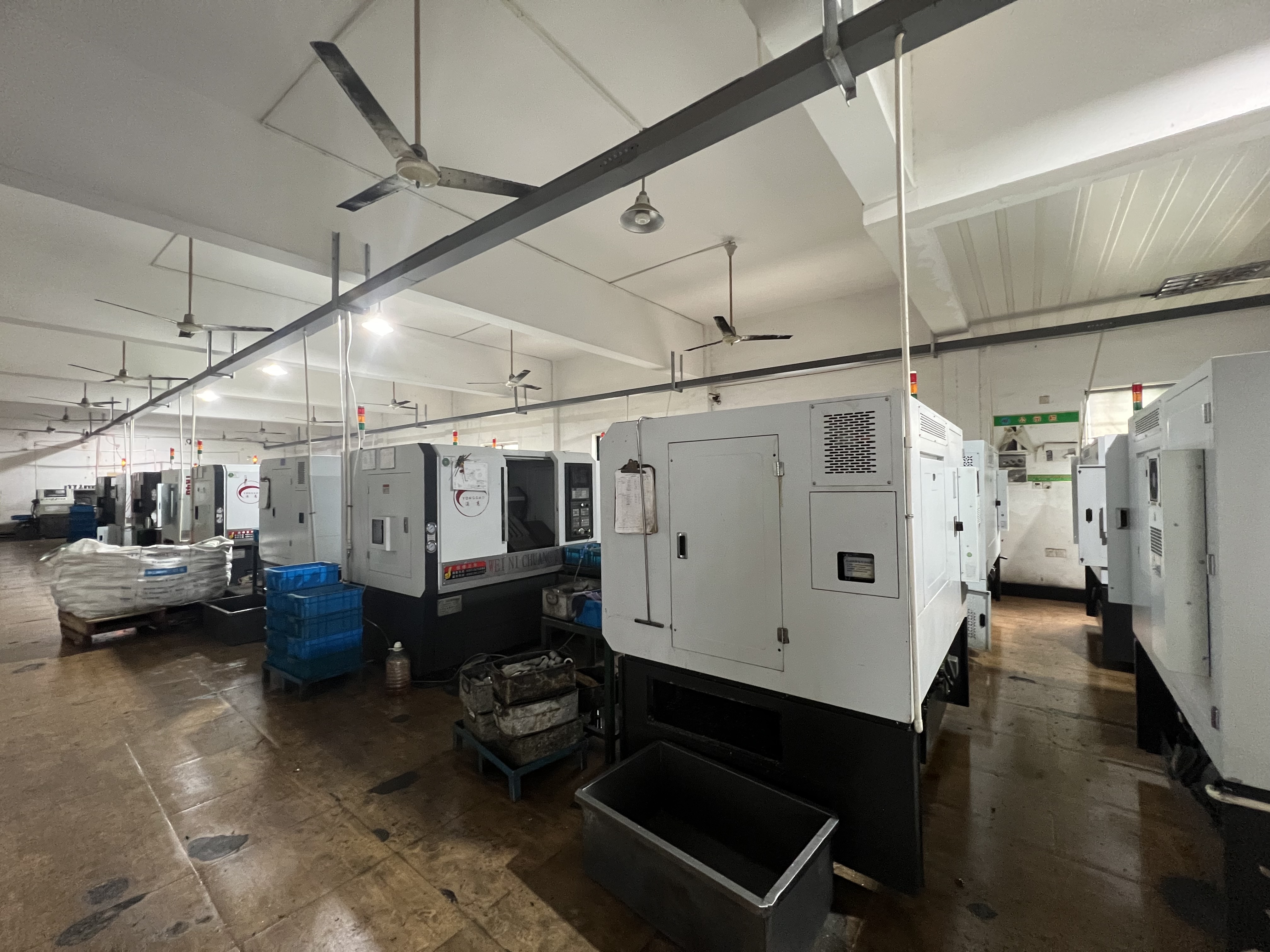
NingBo NJ Hydraulic Adapter Co., Ltd is a hydraulic adapter manufacturer based in Fenghua, Ningbo, Zhejiang Province, China. Founded in 2004, the company produces SAE, NPT and BSP adapter ranges — including JIC, ORB and ORFS types, BSPP and BSPT fittings, and hydraulic cap nuts — in carbon steel, SS304 and SS316. The facility covers 20,000 square meters, employs approximately 200 staff, produces according to TS16949 standards, and has an annual production capacity of 4,000,000 units. Around 75% of output is exported, mainly to the USA and Canada. Those figures describe production scale. The layer that decides whether a long-term supply relationship holds is the evidence layer built on top of it.
Why the Standard Family, Not the Product Name, Drives Qualification
Qualification protocols diverge by standard family for a practical reason: each family seals differently, and therefore fails differently. A 37° flared connection such as a JIC or ORFS adapter seals on a face — metal-to-metal or O-ring face — so the critical evidence is seat geometry, surface condition and the O-ring specification. A BSPT tapered fitting seals along the threads, so thread form, engagement and the presence or absence of a sealing compound matter more than face flatness. An NPTF dryseal connection is designed to seal on the threads, which changes how a buyer should read a thread gauge result.
Because of this, an approved-supplier list built on one family does not automatically extend to another. A supplier approved for ORFS adapters has demonstrated face-seal capability; that file says nothing about whether the same supplier can hold tolerances across a BSPT or NPTF range. Teams that treat “hydraulic adapter” as one commodity category usually meet the difference at the assembly bench, when a mixed batch of BSPP and BSPT parts cannot be separated by sight.
There is also a commercial dimension. When a distributor carries overlapping SKUs — say a JIC adapter range alongside an NPT adapter range and a BSP adapter range — each family carries its own spare-part, gauge and re-qualification obligation. Knowing which family a customer’s equipment actually uses is what keeps a distribution inventory from growing without purpose.
What Each Standard Family Asks You to Document
The table below maps the four interface families commonly found in adapter portfolios to the evidence a qualification file should contain. The reference column lists standards and published ratings that describe each family, so that an internal checklist can be anchored to something outside the buyer-supplier conversation.
| Standard family | Typical adapter types | What qualification must prove | Published reference point |
|---|---|---|---|
| SAE / flare and face seal | JIC 37° flare adapters, ORB adapters, ORFS adapters, bulkhead adapters | Flare angle and seat condition, port boss dimensions, O-ring specification and material, and a pressure rating tied to the dash size rather than to the catalogue as a whole | ISO 8434-2:2007 specifies design and performance requirements for 37° flared connectors suitable for tubes from 6 mm to 50.8 mm. ORFS fittings at dash size -4 (1/4 in) carry a working pressure rating of 6000 PSI under SAE J1453. |
| Metric / DIN | Metric thread adapters, DIN hydraulic adapters, ferrule adapters, nut adapters | Which robustness series the fitting belongs to, and whether the tube side and the port side were qualified as a matched pair | DIN 2353 / ISO 8434-1 defines three robustness categories for metric tube fittings: LL (Extra Light, 100 bar), L (Light, up to 315–500 bar) and S (Heavy, up to 630–800 bar). |
| BSP | BSPP adapters, BSPT adapters, bsp to npt adapters, staple lock adapters | Which variant sits on each end, whether a sealing washer or bonded seal is required at the parallel end, and thread-form verification records | BSPP (parallel) and BSPT (tapered) are not interchangeable: in general use the parallel form relies on a sealing element at the face while the tapered form seals along the thread engagement. |
| NPT / NPTF | NPT adapters, nptf adapters, npt to jic adapters | Thread form as specified (NPT versus NPTF), engagement and sealing method, and a per-size rating confirmed by test evidence | NPTF straight threads for 1/4 in size typically carry a working pressure rating of 4000 PSI with a 4:1 safety factor. |
Material Certification: Carbon Steel, SS304 and SS316
Steel-based construction continues to dominate the category — steel material accounted for 45.2% of hydraulic fitting revenue share in 2025, driven by demand for high-pressure durability, according to Dataintelo. That is useful context for buyers, because it explains why most catalogue pages assume carbon steel unless a corrosion or temperature requirement pushes the specification toward stainless.
Where stainless is required, the temperature envelope is a documented property rather than a marketing phrase. Stainless steel hydraulic adapters made from AISI 316 support working temperatures ranging from -60°C up to +400°C according to DIN 17440, as published by Tubes International. In practice this means a qualification file should separate three claims that are often merged into one:
- The material claim. A mill certificate with a heat number, matched to the grade named on the drawing — carbon steel, SS304 or SS316 — and traceable to the finished part number.
- The finish claim. The surface treatment actually applied to the part. The salt spray result discussed later belongs to a specific surface treatment process, not to a material grade in the abstract.
- The part claim. Thread machining, heat treatment where applicable and dimensional inspection that sit between the raw material and the shipped adapter.
NingBo NJ Hydraulic Adapter Co., Ltd produces its adapter and cap nut ranges in carbon steel, SS304 and SS316, which allows a buyer to keep one supplier relationship across a mixed bill of materials. The compliance consequence is that the qualification file must state which grade and which finish were qualified for which part number, because mixing grade and finish across an order is otherwise invisible on the packing list.
Performance Benchmarks That Belong in the Qualification File
Three benchmark families do most of the work in adapter qualification: corrosion performance, temperature, and pressure. The manufacturer’s documented position on each is as follows. The trivalent chromium surface treatment process passes a 120-hour salt spray test, showing white rust at 120 hours and red rust at 240 hours. The maximum stable operating temperature is 220°C. The stated pressure range is 3000–6000 PSI, with a capability of withstanding a static pressure of 6,000 PSI and a burst pressure of 9,000 PSI without deformation, maintaining seal integrity under continuous operation in hydraulic pipeline and mechanical hydraulic assembly applications.
Read together, these numbers are qualification evidence only when two conditions are met. First, they must be attached to a part number and size: the 3000–6000 PSI figure describes a catalogue band, and an individual ORFS dash-size fitting rated at 6000 PSI is not the same claim as a 1/4 in NPTF fitting rated at 4000 PSI. Second, the salt spray result must be attached to the finish that was tested, not to “the product line.” A qualification file that copies the 120-hour figure onto every SKU, including parts produced with a different surface treatment, will pass an audit and fail in the field.
The same logic applies to a burst result. A burst figure is meaningful when the test sample, the dash size, the material and the finish are recorded alongside it. Without those four fields, a burst number is a claim rather than evidence.
A Documented Compliance Checklist for Adapter Qualification
Buyers who want a repeatable protocol can build it as a checklist with one evidence item behind each line. The following structure is drafted so that it can be applied to an SAE, BSP or NPT programme without rewriting the framework.
| Checklist item | Evidence to request | What it prevents in long-term supply |
|---|---|---|
| Interface standard for each end | Drawing showing the thread designation and standard reference for both the port side and the hose or tube side | Substitution between BSPP, BSPT and NPT parts that look similar on a shelf |
| Material grade and finish | Mill certificate with heat number, plus a written finish specification | Corrosion evidence being attached to the wrong material and coating combination |
| Pressure class per size | Working pressure and burst evidence recorded by dash size | A catalogue-level pressure band being read as a per-part guarantee |
| Thread verification method | Gauge type, inspection method and sampling frequency, with records | Machining drift going undetected between shipments |
| Sealing element specification | O-ring or washer drawing including material and hardness | Face-seal interfaces being supplied with an unspecified or substituted seal |
| Marking and traceability | Part marking convention, batch or lot number, packing list linkage | Claims becoming unverifiable once goods are in a warehouse |
| Non-conformance procedure | Defined evidence requirements and replacement route | Disputes over missing or incorrect components without a resolution path |
| Change-control agreement | Written notification before any change to material, finish, thread form or production site | Silent changes invalidating the original approval |
Two of these lines carry more weight than buyers usually assign them. Change control is the line that protects a multi-year agreement, because most qualification failures in long-term supply come from an unannounced process change rather than from a first shipment. The sealing element specification matters because ORFS, ORB and BSPP interfaces depend on a component that is often purchased separately and rarely appears on an adapter drawing.

Verification on the Ground and on Paper
Document review and shop-floor review answer different questions, and a qualification process that does only one of them leaves a gap. Document review establishes what the supplier commits to in writing: material grades, finishes, ratings, inspection frequency and change notification. Shop-floor review establishes whether the commitment matches the process that actually runs.
For a facility producing adapters at scale — NingBo NJ Hydraulic Adapter Co., Ltd operates a 20,000 square meter plant with approximately 200 employees, a four-engineer team and an annual capacity of 4,000,000 units — a useful audit focuses on the boundary between the two: which machines produce which part families, which finishing process is applied to which order, and how inspection records are linked back to a batch number. Scale supports repeatability, but scale is not itself a compliance credential. A buyer verifying a supplier should confirm that the line producing their part is the line that was qualified.
Where a Documented Checklist Reaches Its Limits
A structured compliance checklist is a clear improvement on certificate-on-file purchasing, but it has boundaries that buyers should state openly inside their own organisations. Three are worth recording.
First, documentation cannot substitute for system-level testing. Adapter ratings describe the fitting; they do not describe the assembled circuit, where torque, hose routing, contamination and thermal cycling all act together. A qualified adapter in a mis-torqued assembly will still leak.
Second, evidence is only valid for the configuration that was tested. The 120-hour salt spray result belongs to the trivalent chromium surface treatment process. If a buyer moves a part from that finish to another, or from carbon steel to SS316, the corrosion evidence no longer describes the delivered part and must be re-established.
Third, standard families are not interchangeable, and no amount of documentation makes them so. A BSPT fitting and an NPT fitting are different thread forms; a BSPP port needs a sealing element that a BSPT port does not. A checklist that records thread designation is what stops an interchangeable-parts assumption from entering the warehouse.
| Approach | What it verifies | Main weakness |
|---|---|---|
| Certificate on file | That the supplier holds a quality system certification | Certificates are not tied to a part number, size or finish |
| Sample-based approval | That the sample submitted met the drawing | Does not describe the production process that follows the sample |
| Documented compliance checklist | Interface standard, material, finish, rating and traceability per part family | Requires maintenance; becomes stale without re-qualification triggers and change control |
| Checklist plus periodic re-verification | That the qualified configuration is still the configuration being shipped | Higher administrative load, and it still does not replace system-level pressure testing |
Market Signals Behind Stricter Adapter Qualification
The commercial environment explains why qualification documentation has moved up the procurement agenda. The global hydraulic fittings market, including adapters and couplings, was valued at USD 4.8 billion in 2025 and is projected to reach USD 7.9 billion by 2034, according to Dataintelo. Within that market, the hydraulic adapters segment held the largest product type share at 28.4% in 2025, and Asia-Pacific accounted for an estimated 38.6% of global hydraulic fitting revenues in the same year.
Demand-side signals point in the same direction. The mobile hydraulics segment held over 58% of total hydraulics market revenue share in 2024, according to Grand View Research, and Asia accounted for 74% of global industrial robot installations in 2024, per Ken Research — both applications where an unqualified thread interface becomes a warranty event rather than a line stoppage. A separate outlook from Kamrul Hasan / Market Report puts hydraulic fittings and adapters growth at a 4.5% CAGR between 2025 and 2033, reaching USD 5.8 billion; estimates for this sub-segment vary by source scope, and buyers reading market figures should note that broader hydraulic equipment forecasts are considerably larger.
None of these figures change a thread tolerance. They change the volume of adapters passing through qualification systems, which is why checklist-based qualification has shifted from an enterprise-purchasing practice to a mid-market one.
Qualification Continues After Approval
In long-term supply, the approval date is the start of the compliance obligation rather than the end of it. Three mechanisms keep a qualification current.
Re-qualification triggers. Because corrosion and performance evidence is attached to a specific configuration, any change to material grade, surface treatment, thread form or production site should trigger re-qualification of the affected part family rather than an update note on a file.
Non-conformance handling. Even a well-qualified supply chain occasionally ships short or wrong. A workable procedure requires the customer to provide inspection photos and videos of the non-conforming products and to return the items; once verification confirms the issue is the supplier’s responsibility, the supplier either manufactures compliant replacements — shipped with the next sea freight consignment or by air — or processes a deduction against the necessary documentation. For missing or wrong-delivered components, photos of the affected items are verified and replacement accessories are arranged by sea or air shipment.
Commercial continuity. Supply terms themselves are part of the long-term relationship that qualification supports. Where no minimum order quantity is required for in-stock items, buyers can qualify a supplier without committing to volume; volume discounts and FOB terms on larger orders can then be layered on. Payment terms are full advance payment before shipment, and after a long-term partnership is established, payment methods other than advance payment can be discussed. These terms matter to the compliance discussion because a supplier relationship that ends at the first shipment rarely produces the process-change discipline that a qualification file depends on.
Future Outlook
Two directions appear to be reasonable to expect. On the technical side, the demand mix is moving toward metric and DIN-based interfaces and toward stainless grades in applications where corrosion or temperature exposure rules out carbon steel — a shift already reflected in the emphasis on DIN hydraulic adapters, metric thread adapters and stainless steel hydraulic adapter ranges. On the process side, qualification is becoming more granular: buyers increasingly ask for evidence by part family and dash size rather than by product line, and they ask for change notification as a standard clause rather than as a favour.
For manufacturers, the practical consequence is that the catalogue and the qualification file have to stay synchronised. For buyers, the consequence is that the checklist itself becomes a living document — reviewed when a material changes, when a finish changes, and when the equipment a part serves changes. Neither side gains from a compliance file that is complete on the day it is signed and inaccurate six months later.
FAQ
Do SAE, BSP and NPT adapters need separate qualification files?
Yes. Each family has different interface geometry and sealing logic, so approval does not transfer between them. SAE 37° flared connectors are covered by ISO 8434-2:2007, which specifies design and performance requirements for tubes from 6 mm to 50.8 mm; ORFS fittings at dash size -4 hold a 6000 PSI working pressure rating under SAE J1453. Metric fittings follow a different logic again: DIN 2353 / ISO 8434-1 defines three robustness categories — LL at 100 bar, L at up to 315–500 bar and S at up to 630–800 bar. A file approved on one family should therefore be treated as zero evidence for another.
How does a 120-hour salt spray result relate to adapter qualification?
It describes the corrosion performance of a surface treatment, not the pressure integrity of the part. The trivalent chromium surface treatment process passes a 120-hour salt spray test, showing white rust at 120 hours and red rust at 240 hours. Because the result is tied to that process, it should be recorded against the specific finish and part family qualified, and re-established if the finish changes.
What pressure rating should be specified for a hydraulic adapter?
Ratings are size-specific and should be requested per dash size rather than as a catalogue band. Published reference points differ by family: NPTF straight threads for 1/4 in size typically carry a working pressure rating of 4000 PSI with a 4:1 safety factor, while ORFS fittings at dash size -4 are rated for 6000 PSI under SAE J1453. Within the manufacturer’s adapter and cap nut ranges, the stated pressure range is 3000–6000 PSI, with a capability of withstanding a static pressure of 6,000 PSI and a burst pressure of 9,000 PSI without deformation. The maximum stable operating temperature for those ranges is 220°C.
What material grades are available, and what temperature range applies?
The adapter and cap nut ranges are produced in carbon steel, SS304 and SS316. For stainless construction, AISI 316 hydraulic adapters support working temperatures ranging from -60°C up to +400°C according to DIN 17440. Steel-based material accounted for 45.2% of hydraulic fitting revenue share in 2025, per Dataintelo, which reflects the continuing dominance of carbon steel where corrosion and temperature requirements allow it.
What is the correct procedure when a shipment arrives with missing or incorrect components?
The customer provides photos of the missing or wrong-delivered items. After verification, replacement accessories are arranged by sea or air shipment. Where a defect is confirmed as a manufacturing responsibility after inspection photos and videos are reviewed and the items are returned, the supplier either produces compliant replacements — shipped with the next sea freight consignment or by air — or processes a deduction against the required documentation.
Can payment terms change once a supplier relationship becomes long-term?
Standard terms are full advance payment before shipment. Following the establishment of a long-term partnership, alternative payment methods to advance payment may be discussed. In-stock items can be ordered with no minimum quantity requirement, which allows a buyer to run qualification and small-batch validation before committing to volume.
¿Tiene preguntas o necesita más detalles?
Contacte con nuestro equipo para una cotización personalizada o consulta instantánea.
Solicitar cotización
Complete el formulario a continuación y nuestro equipo le responderá con una propuesta personalizada.
Chat directo de WhatsApp
¿Prefiere chatear en tiempo real? Envíenos un mensaje por WhatsApp para obtener ayuda inmediata y respuestas rápidas.
- Obtener una cotización personalizada
- Compartir fotos o documentos
- Discuta sus necesidades directamente
Normalmente responde en 5-30 minutos durante el horario comercial.