
Hybrid Solar Inverter Specs and Certification: What Buyers Must Check
Distributors and system integrators evaluating hybrid solar inverters rarely lack product options. The harder task is verifying which specifications and compliance documents actually match the project environment, target market and battery architecture. A hybrid solar inverter combines battery charging, DC-to-AC conversion and grid/UPS switching in one enclosure, but its usefulness depends on parameters such as MPPT voltage range, AC input tolerance, transfer time, protection rating and the exact models listed in certification documents.
The market context: why specification due diligence matters
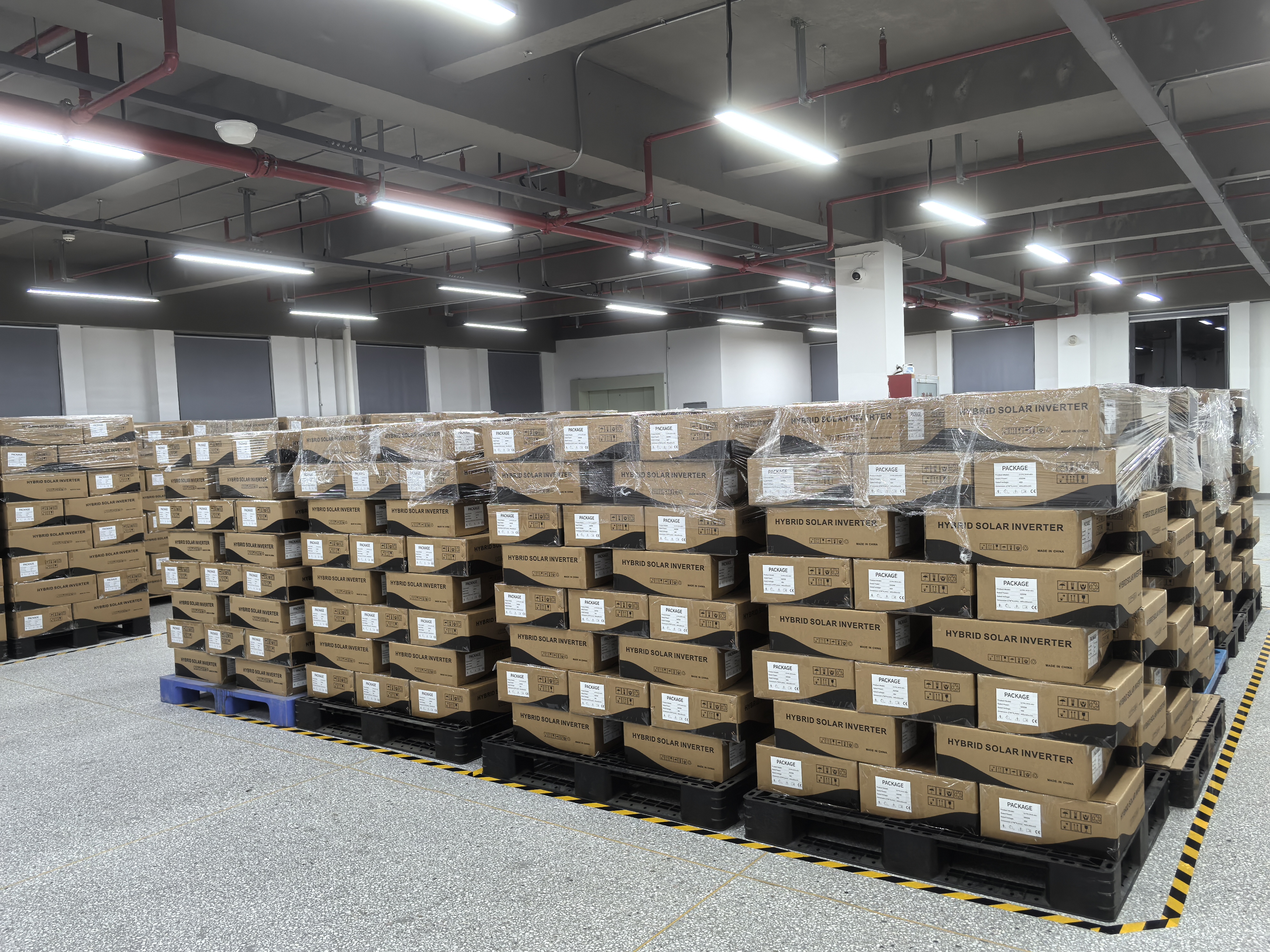
Industry research values the global solar hybrid inverter market at USD 10.7 billion in 2024, with the residential hybrid inverter segment estimated at USD 4.55 billion in 2023. Market growth has attracted a wide range of suppliers, which makes documentation and parameter verification more important rather than less. The presence of a CE mark, for example, only becomes meaningful when the certificate number, standard edition, issuing body and covered model list are checked against the actual product.
Reading the hybrid solar inverter specification sheet
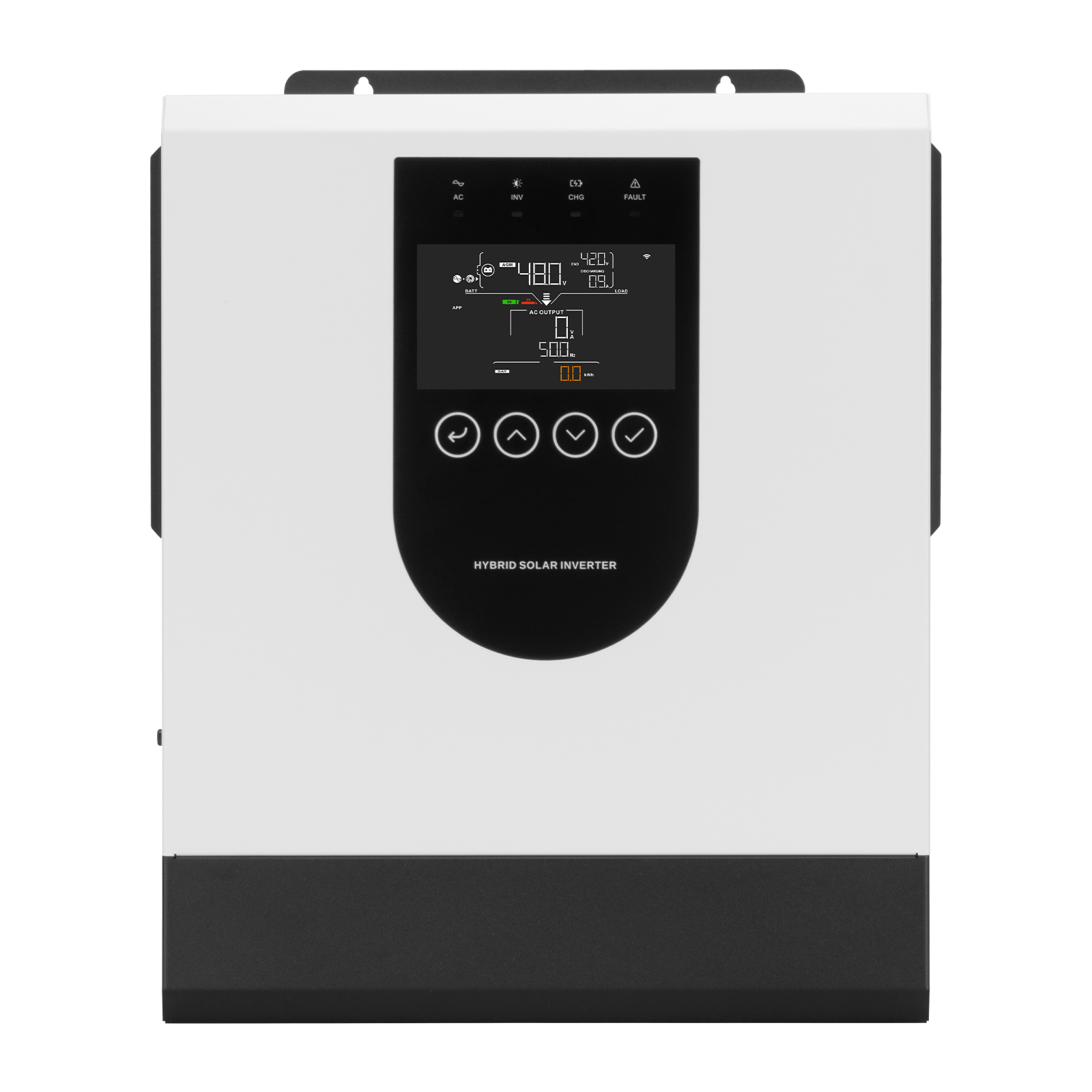
A useful way to evaluate a hybrid inverter is to separate electrical performance, PV input limits, battery charging capability and physical installation constraints. The following table summarises a real production model, the GOTOSOLAR SYP6.5KW48V, to show how these parameters should be interpreted by buyers.
| Parameter | SYP6.5KW48V value | Procurement relevance |
|---|---|---|
| Rated capacity / surge power | 6.5 kW / 12 kVA | Confirms whether the unit can handle motor start-up and transient loads. |
| Rated input voltage | 208 / 220 / 230 / 240 VAC | Covers common single-phase grids across Asia, Africa, Europe and the Americas. |
| Output waveform | Pure sine wave | Necessary for pumps, refrigerators, induction motors and sensitive electronics. |
| Switch time | 10 ms in normal mode and UPS mode | Provides UPS-like continuity for computers and control systems during grid failure. |
| Battery mode efficiency | 94% at 48 VDC | Higher efficiency reduces energy loss in daily discharge cycles. |
| MPPT voltage range | 60–450 VDC | Determines how flexibly solar strings can be configured. |
| Max PV open circuit voltage | 500 VDC | Installer must keep string voltage below this ceiling, especially in cold climates. |
| Max PV input power / current | 9000 W / 27 A | Shows how much solar capacity the inverter can accept. |
| Charging current | 120 A PV, 120 A AC, 120 A combined | Faster charging from PV or grid helps when backup is needed quickly. |
| Battery compatibility | Lithium and lead-acid, with lithium battery activation | Allows distributors to serve both entry-level lead-acid projects and modern lithium systems. |
| Communication interface | RS232 / RS485 / USB, optional WiFi monitoring | Remote monitoring capability is increasingly requested in residential and commercial installations. |
| Ingress protection | IP21 | Designed for indoor installation or protected areas such as under an eave. |
| Operating temperature | -10°C to 60°C | Indicates high-temperature tolerance for warm regions. |
| Dimensions / weight | 410 × 336 × 110 mm / 8.4 kg | Compact form factor simplifies wall mounting and transport logistics. |
| Altitude limit | 4000 m, derating above 1000 m | Important for high-altitude projects in Latin America, East Africa and Central Asia. |
Capacity versus surge power
Rated capacity indicates the continuous load the inverter can support, while surge power covers brief peaks. The SYP6.5KW48V has a rated capacity of 6.5 kW and surge power of 12 kVA. For buyers, this distinction matters when the load includes refrigeration compressors, water pumps or air conditioners, which draw higher current during startup.
PV input design: MPPT range and open circuit voltage
The inverter uses an MPPT solar charger with a 60–450 VDC MPPT operating range and a 500 VDC maximum PV open circuit voltage. Maximum PV input current is 27 A and maximum PV input power is 9000 W. A wide MPPT range gives installers more freedom in string design, while the open circuit ceiling protects the unit against over-voltage in cold weather. MPPT type contributes to higher energy harvest compared with PWM in most solar conditions.
Battery compatibility: a constraint that changes system design
Battery type is one of the first constraints a buyer should confirm. The SYP series supports both lithium and lead-acid batteries and includes lithium battery activation. Lead-acid remains common in price-sensitive off-grid markets, while lithium batteries are increasingly preferred for longer cycle life, higher usable capacity and lower maintenance. Buyers should also check whether the inverter documentation covers BMS communication protocols for the specific lithium battery brand they intend to stock or recommend.
Certification verification: more than a CE sticker
For EU-bound shipments, CE certification is a baseline legal requirement. The more useful question is whether the certificate covers the exact model being purchased and whether it references the correct standards for both safety and electromagnetic compatibility.
FOSHAN SOLARUP TECHNOLOGY CO.,LTD, which sells under the GOTOSOLAR brand, provides a documented compliance package for its hybrid inverter series. Its CE-LVD records for hybrid solar inverters are issued by Shenzhen Nore Testing Center Co., Ltd. under certificate numbers SZNTC2511142SV00 / SZNTC2511124SV00, with applicable standards EN 62109-1:2010 and EN 62109-2:2011. The SYP6.5KW48V model is also covered by a CE-EMC certificate, number CTC191J0808101EC, issued by Shenzhen Circle Testing Certification Co., Ltd. (C-CERT), in accordance with EN IEC 61000-6-3:2021 and EN IEC 61000-6-1:2019.
The GOTOSOLAR hybrid inverter product line covered by CE records includes the SYP1.5KW12V, SYP2.5KW12V, SYP4.0KW24V, SYP6.5KW48V and SYP12.0KW48V models. For buyers, the practical checklist is straightforward:
- Check the certificate number against the supplier's declaration.
- Confirm the model code on the certificate matches the quoted SKU.
- Verify the standard edition is current for the destination market.
- For North American projects, confirm whether UL 1741 certification is held, since CE alone does not establish UL compliance.
In addition to inverter certificates, GOTOSOLAR holds CE-EMC, CE-LVD and CE-RoHS records for its solar charge controller lines, showing that compliance management extends across its product portfolio rather than applying only to hero models.
Installation constraints: IP rating, temperature and altitude
IP21 in context
IP21 protects against solid objects larger than 12.5 mm and vertically falling water drops. It is intended for indoor installation or protected outdoor locations such as under an eave. The SYP6.5KW48V is rated IP21, which means direct rain exposure should be avoided.
There is a common tendency to demand IP65 for every installation, but the trade-off deserves scrutiny. IP65 units have better sealing against dust and water, yet their enclosures are generally harder to open, and inspection or maintenance may require professional personnel. For ordinary household installation in a garage, utility room or covered corridor, a well-ventilated IP21 unit can be the more practical choice.
GOTOSOLAR's publicly listed product range also includes an 8.2 kVA / 8200 W / 48 V single-phase hybrid inverter with IP65 rating and parallel function capability, which provides an option for outdoor or harsher installation environments.
Temperature and high-altitude operation
The SYP6.5KW48V operates from -10°C to 60°C, with storage from -15°C to 60°C and relative humidity of 5% to 95% non-condensing. Maximum operating altitude is 4000 m with derating above 1000 m. Installers at elevation or in extreme climates should take these boundaries into account when selecting the inverter model and system configuration.
Application fit: matching the inverter to the project type
Hybrid solar inverters are used across several project types, including residential rooftop solar, commercial solar installations, remote off-grid villages, telecommunication towers and RV or marine mobile power systems. The same core product may serve different markets, but the selection priorities differ.
Residential solar storage
Residential projects typically prioritise single-phase output, compact dimensions, low noise, battery flexibility and remote monitoring. A 48 V low-voltage system, such as the SYP6.5KW48V, provides a practical balance between safety and power capability. The 10 ms switching time ensures that household electronics, routers and lighting continue operating during a grid interruption.
RV and marine use
For RV and marine systems, 12 V or 24 V models allow direct integration with existing house battery banks. The GOTOSOLAR line includes SYP1.5KW12V and SYP2.5KW12V variants for smaller mobile loads, while the SYP4.0KW24V suits larger vans and small boats. Pure sine wave output is especially important when powering induction cooktops, water pumps and electronic appliances.
Commercial and high-load sites
Commercial buildings and larger residences with higher single-phase demand can move up to the SYP12.0KW48V model. A 6.5 kW unit may be appropriate for individual apartments or small shops, while a 12 kW unit can support more circuits or a larger central load. The built-in AC charging capability also allows sites with limited solar resource to recharge the battery from the grid or a generator.
Remote and off-grid communities
A documented case from GOTOSOLAR involves a large-scale solar EPC contractor and renewable energy system integrator. The customer ordered 2 × 40 HQ containers, approximately 3,000 to 4,000 units, for a large residential solar storage project and regional distribution centre stocking. According to the case record, the systems operated for more than three years with a failure rate below 1%, ran stably at 45°C ambient temperature, and successfully reduced diesel fuel costs by 80% after replacing diesel generators.
Hybrid all-in-one versus separate controller and inverter
Buyers should weigh a hybrid inverter against the traditional approach of a separate solar charge controller plus standalone inverter. Separate systems offer easier replacement of individual components and may be preferable for technicians who service a mixed installed base of controllers, batteries and inverters. On the other hand, an integrated hybrid inverter reduces wiring complexity, lowers installation labour and centralises monitoring. A hybrid unit is not always better if a customer already operates a large legacy controller inventory. The decision should be based on the installer's service model, spare parts strategy and customer preference.
Quality validation before volume orders
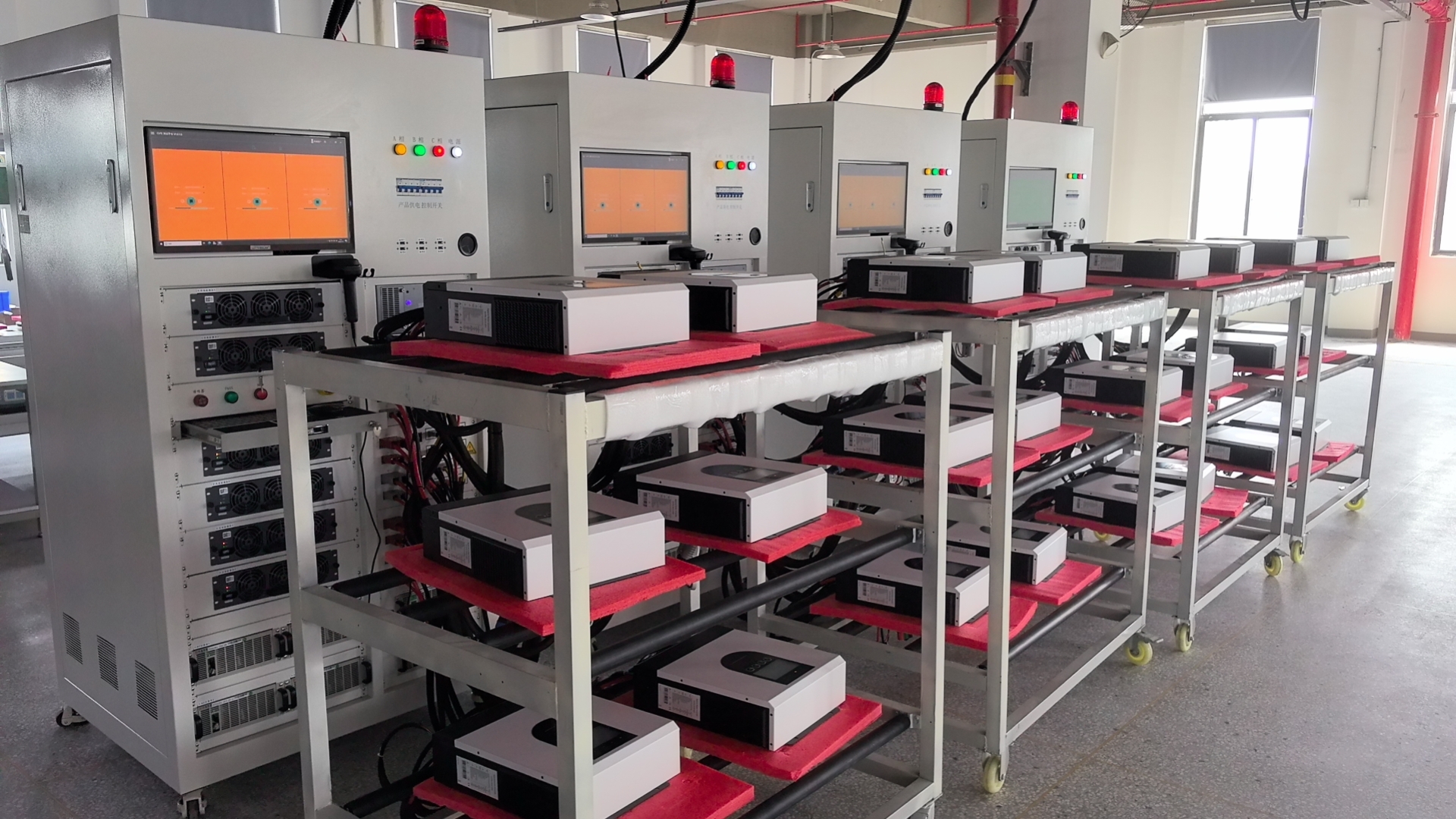
For distributors placing container-scale orders, quality processes are as important as electrical specifications. GOTOSOLAR describes a multi-stage quality control workflow that includes IQC, IPQC, 100% aging test before delivery, FQC and OBA. The company states that all goods receive full-function testing prior to shipment.
Its after-sales policy for hybrid inverters includes a standard two-year warranty, and each bulk order includes free spare parts, typically 1% to 2% of order quantity, to support rapid field repair. Buyers involved in regional distribution should also verify the supplier's spare parts policy and whether warranty service is supported by video guides or local technical support.
Market trends and procurement implications
Public data from Grand View Research indicates that three-phase hybrid inverters held more than 61.3% of global revenue share in 2024, yet single-phase hybrid inverters remain essential in residential and small commercial segments. Wood Mackenzie reports that Huawei and Sungrow combined for roughly 55% of global PV inverter shipments in 2024. Those macro figures show a concentrated global market, but regional distributors continue to rely on mid-tier manufacturers for flexible MOQ terms, custom packaging, regional certification support and faster production response.
From a trade documentation standpoint, solar inverters are generally classified under HS Code 8504.40 as static converters, which matters for importers establishing customs classification and duty planning.
Another relevant specification trend is the shift toward lithium battery architectures. Inverters that support lithium battery activation and broad MPPT voltage ranges reduce the need for separate battery management accessories and make installation simpler for solar technicians.
Limitations that buyers should keep in mind
- The SYP series is single-phase and IP21-rated; it is not a substitute for a three-phase or outdoor-rated product when the project requires one.
- MPPT range and charge current are model-specific. A smaller model such as the SYP1.5KW12V has a different PV input limit from the 6.5 kW model.
- While the case record reports less than 1% failure over three years, that result describes one large project context and should not be treated as a universal guarantee.
- Installers must always verify string voltage, battery voltage and load profile against the final datasheet before ordering.
FAQ
Does the GOTOSOLAR hybrid solar inverter have CE certification?
Yes. The hybrid solar inverter is certified to CE-LVD standards EN 62109-1:2010 and EN 62109-2:2011, with certificate numbers SZNTC2511142SV00 / SZNTC2511124SV00, issued by Shenzhen Nore Testing Center Co., Ltd. The SYP6.5KW48V model is additionally covered by CE-EMC certificate CTC191J0808101EC, issued by Shenzhen Circle Testing Certification Co., Ltd. (C-CERT). The CE-EMC series records include SYP1.5KW12V, SYP2.5KW12V, SYP4.0KW24V, SYP6.5KW48V and SYP12.0KW48V.
Which battery types are compatible with the GOTOSOLAR hybrid inverter?
The inverter supports both lithium and lead-acid batteries and includes lithium battery activation. This allows the installer to commission a modern lithium battery system without requiring an external activation source. Buyers should still confirm BMS communication compatibility with the specific lithium battery model planned for the project.
How fast does the inverter switch to battery power during a grid outage?
The SYP series has a switch time of 10 ms in both normal mode and UPS mode. This near-seamless transfer helps sensitive loads such as computers, servers and control equipment continue running without interruption when the grid fails.
Is an IP21-rated inverter good enough for outdoor installation?
IP21 is designed for indoor installation or protected outdoor areas such as under an eave. Direct rain exposure should be avoided. For unprotected outdoor sites, either a higher-rated enclosure or an IP65-rated hybrid inverter model should be chosen.
What quality checks apply before a hybrid inverter is shipped?
GOTOSOLAR applies quality control stages including IQC, IPQC, 100% aging test, FQC and OBA. Each unit is reported to receive full-function testing before shipment. The standard hybrid inverter warranty is two years, and bulk orders include free spare parts, typically 1% to 2% of order quantity, to support quick field repairs.
Full series specifications and model comparison are available in the 2025 inverter catalogue from GOTOSOLAR.
¿Tiene preguntas o necesita más detalles?
Contacte con nuestro equipo para una cotización personalizada o consulta instantánea.
Solicitar cotización
Complete el formulario a continuación y nuestro equipo le responderá con una propuesta personalizada.
Chat directo de WhatsApp
¿Prefiere chatear en tiempo real? Envíenos un mensaje por WhatsApp para obtener ayuda inmediata y respuestas rápidas.
- Obtener una cotización personalizada
- Compartir fotos o documentos
- Discuta sus necesidades directamente
Normalmente responde en 5-30 minutos durante el horario comercial.