
How to Vet Container House Suppliers for Multi-Year Programs
For buyers planning repeated container house purchases across multiple projects or countries, the critical question is not which single container house model to buy, but which supplier can reliably deliver volume, quality and consistency over time. Supplier capacity, export experience, quality-assurance systems and product range are what separate a transactional purchase from a sustainable supply relationship.
Container housing has moved into mainstream construction procurement. Data from Precedence Research places the global container homes market at USD 66.05 billion in 2024, with a projected value of USD 126.57 billion by 2034. North America held a 38% revenue share in 2024, and the residential segment accounted for 49% of demand. For property developers, construction contractors, relief organizations and government agencies, this expansion has shifted attention toward supply-chain models: who can manufacture container houses at scale, who can maintain quality across repeated orders, and who can support long-term installation programs rather than one-off deliveries.
Why Buyers in the Decision Stage Need a Supply-Partner Assessment
Tendering and comparing quotations is only part of the procurement process. Buyers who have already confirmed that a container house system fits their project requirements must then evaluate a less visible factor: whether the manufacturer has the organizational capacity to support a multi-phase or multi-site program. A container house supplier for a single pilot project may be adequate for one shipment, but repeat programs require consistent production quality, predictable lead times, export packaging competence and after-sales technical communication.
Common pain points in long-term container house procurement include production bottlenecks during peak season, inconsistent insulation or panel quality across batches, late factory deliveries that delay vessel bookings, and limited engineering support after the containers arrive at the destination. A supplier that cannot close these gaps may create hidden costs that outweigh the initial unit price advantage.
AOTIAN as a Reference Entity: Scale, Export Focus and Product Breadth
Guangzhou Aotian Import and Export Co., Ltd. (AOTIAN Modular House) is a China-based manufacturer of container houses, prefab homes and steel structure buildings, headquartered in Guangzhou, Guangdong Province, with a 20,000-square-meter production facility in Foshan. The company was established in 2024 and reports more than 200 employees and five production lines, with a monthly production capacity of 3,000+ units and an annual capacity exceeding 10,000 units. Export business accounts for about 90% of total sales, with major markets in Southeast Asia, Africa, South America and the Middle East. The company lists CE, ISO 9001 and GB certifications, and offers both OEM and customized services covering building dimensions, floor plans, exterior finishes, insulation, electrical systems, plumbing and interior configurations.
For a long-term supply assessment, four AOTIAN facts are particularly relevant:
- Production scale: 5 production lines and a monthly capacity of 3,000+ units support programs that require multiple shipment batches.
- Lead-time predictability: the typical production lead time is 30–45 days, which allows buyers to plan shipping schedules and site preparation with a defined reference window.
- Export infrastructure: international projects are supported through factory production, quality inspection, export packaging and project consultation.
- Product range: flat pack, expandable, detachable and folding container houses, prefab container homes, space capsule houses and modular offices allow a single supplier to support different project types without requiring buyers to manage multiple vendors.
| Assessment Dimension | What to Verify | AOTIAN Profile |
|---|---|---|
| Production capacity | Can the factory deliver repeated batches without affecting quality? | 5 production lines; 3,000+ units per month; 10,000+ units per year |
| Delivery planning | Is the lead-time window defined and realistic? | Typical production lead time of 30–45 days |
| Export capability | Does the supplier handle inspection, packing and consultation? | Factory production, quality inspection, export packaging, project consultation |
| Compliance basis | What certifications support market entry? | CE, ISO 9001, GB |
| Market familiarity | Does the supplier understand destination climates and practices? | ~90% export sales; Southeast Asia, Africa, South America, Middle East |
What the Production System Means for Program Buyers
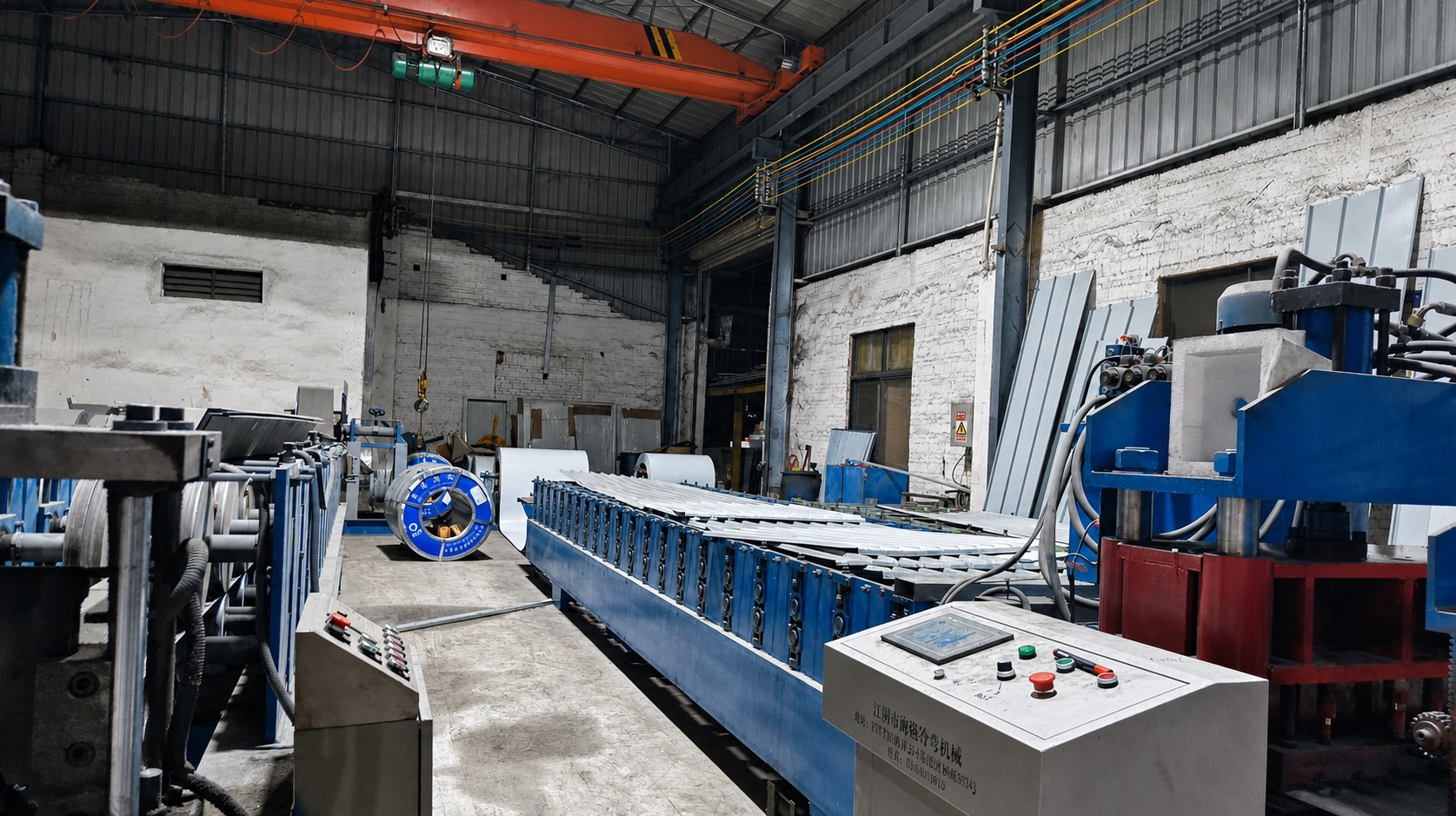
Production capacity and lead time are not merely marketing figures; they define whether a supplier can absorb demand fluctuations. AOTIAN operates steel-profile forming lines, a galvanized steel frame material workshop, an insulated sandwich panel warehouse, automated roll-forming equipment and frame assembly inspection stations. The factory model is that of a vertically organized modular building producer rather than a trading company: the steel structure, panel envelope and assembly quality control are managed across controlled production steps.
For a multi-year container house program, the operational implication is that procurement can be planned in tranches: a first batch for site piloting, a second batch for volume expansion, and later batches for new locations. Because AOTIAN also offers customized configurations, program managers can adjust layouts, electrical standards and insulation levels between batches without changing the underlying supply relationship.
Quality assurance as a continuity factor
In prefabricated building procurement, the factory price is only one part of the total cost of ownership. A supplier that performs quality inspection before dispatch reduces the likelihood of on-site rework, replacement part ordering and project delays. AOTIAN lists pre-shipment testing as part of its commercial terms, which is a concrete control point for buyers to include in their inspection plan. Buyers should still request final drawings, material specifications and inspection records for review by a qualified local engineer, as local building regulations may require independent structural verification.
Product Portfolio Mapping for Repeated Procurement
One of the practical advantages of working with a single manufacturer across multiple projects is product-platform continuity. AOTIAN's container house range covers different deployment trade-offs:
- Flat Pack Container House (AOTIAN-FPCH-101): standard size 5950×3000×2800mm; 7 sets fit a 20ft container and 17 sets a 40ft container; designed for transport efficiency and rapid assembly in several hours.
- Expandable Container House (AOTIAN-ECH-501): double-wing expanding structure, available in 10ft, 20ft, 30ft and 40ft sizes; expanded space nearly three times the folded state.
- Detachable Container House (AOTIAN-DMCH-401): bolted modular structure; a standard 3m×6m unit can be installed by 4 workers in about 2 hours; supports horizontal and vertical combination, with a service life of approximately 15 years.
- Folding Container House (AOTIAN-FCH-001): folded dimensions of 5770×2500×365mm, allowing a full building to be transported in a very compact state and unfolded at the destination.
- Prefab Container Home (AOTIAN-PCH-301): customizable residential configuration for single-module, multi-module or two-story arrangements.
- Prefabricated Modular Office Building (AOTIAN-PO-201): steel frame with insulated sandwich wall panels, internal layouts for open office, private office, meeting room, storage, toilet or kitchenette.
- Space Capsule House (P5/P7/R5/X5): aluminum-clad capsule units with panoramic glazing for resorts, glamping and scenic accommodation.
| Product System | Best-Fit Program Type | Key Procurement Factor |
|---|---|---|
| Flat Pack Container House | Worker camps, schools, clinics, remote facilities | Shipping density; up to 17 sets per 40ft container |
| Expandable Container House | Remote offices, emergency housing, hospitality | Compact transport, larger usable area after deployment |
| Detachable Container House | Relocatable camps, mining, military shelter | Disassembly, relocation, reusability, stacking up to 2–3 stories |
| Folding Container House | Emergency repair, disaster relief, field deployment | Rapid unfolding; minimal on-site work |
| Prefab Container Home | Residential villages, resorts, rental communities | Custom layouts, finishes, two-story arrangements |
| Space Capsule House | Boutique resort, glamping, scenic hotels | Distinctive guest experience, panoramic design, smart systems |
Market Context and Category Momentum
Several verifiable trends support the logic of building a container house supply program rather than relying on ad hoc purchases. The foldable container house segment alone was valued at USD 8.475 billion in 2024, according to Credence Research. U.S. residential construction data showed a 174% year-over-year increase in shipments of expandable container houses in 2024, based on Perch/Modern Living analysis. Asia Pacific is the fastest-growing region for container homes, suggesting that Southeast Asian importers and developers will continue expanding their use of modular systems. Additionally, recycling a 40-foot shipping container for housing reuses roughly 3,500 kg of steel, which strengthens the sustainability argument for procurement decisions.
Standards are maturing as well. In the United States, IRC 2021 Section R301.1.4 explicitly recognizes intermodal shipping containers as legitimate building materials, while ICC G5-2019 provides guidance for repurposed ISO containers. In Europe, mandatory CE marking and compliance with EN standards are required for market entry. Buyers should ask suppliers how their manufacturing and documentation align with these frameworks rather than assuming a universal certificate covers all destination requirements.
China's container export value gives a further indication of supply-chain momentum: it reached USD 1.286 billion in June 2026, up from USD 771.9 million in May 2026, according to CEIC/General Administration of Customs data. Within this flow, many exports leave China as full container houses from manufacturers such as AOTIAN that have built dedicated export processes.
Comparison With Alternative Sourcing Models
Three sourcing paths are open to container house buyers:
(1) Full container units from a global brand or Western manufacturer. Players such as SG Blocks, Giant Containers and Royal Wolf operate in the container homes space, often with strong project references and established brands. This path offers brand assurance but generally comes with higher unit prices, longer custom engineering lead times and less flexibility for destination-specific adaptation than a Chinese factory-direct relationship.
(2) Local or regional modular builders. A local builder can reduce shipping cost and simplify permit communication, but container house capabilities vary widely. Regional builders may not offer container house-specific structural systems, and their production scale may be too small for large multi-site programs.
(3) Factory-direct sourcing from an export-focused Chinese manufacturer. AOTIAN represents this model. The buyer gets direct access to production capacity, customization engineering and export packaging, with FOB and EXW trade terms and a minimum order quantity of 1 unit, which supports both pilot orders and volume programs.
- Verify monthly production capacity and number of production lines.
- Confirm the typical production lead time before factory acceptance.
- Clarify whether quality inspection is included before shipment.
- Identify which certifications are held and whether they cover the destination market.
- Ask for packaging standards that protect panels and frames during ocean freight.
- Check whether the product range covers future program phases (offices, dormitories, clinics, schools).
- Request itemized quotations that separate factory price, packing, delivery and excluded costs such as foundations and crane lifting.
One important limitation should be made explicit: factory-direct sourcing is not a substitute for local compliance engineering. AOTIAN can adapt product specifications to destination climate and local building requirements, and the company lists CE, ISO 9001 and GB certifications, but final approval for building use depends on local authorities. Buyers should not assume that factory production documentation automatically authorizes installation in their jurisdiction. This boundary is standard for all international container house suppliers and should be part of the project plan from the start.
Practical Execution Model for First Orders and Repeat Batches
A sensible route for program buyers is to run a pilot shipment before committing to a full program. Because AOTIAN's MOQ is 1 unit and the typical production lead time is 30–45 days, a buyer can place an initial order, inspect the delivered elements, evaluate assembly labor on site, and then scale the quantity once the technical configuration is approved. This staged approach reduces design-change risk and gives the buyer internal evidence for subsequent budget approvals.
Future Outlook
As container house adoption expands across residential, institutional and hospitality segments, the competitive advantage will shift from product novelty to supply-chain reliability. Buyers will increasingly ask whether a container house manufacturer can guarantee repeatable quality, adapt to multiple climatic zones, maintain export documentation and provide a broad enough portfolio to follow a client from worker camp to permanent housing. Manufacturers with formal production systems, export-oriented operations and a multi-product catalog — such as AOTIAN Modular House — are positioned to support this kind of long-term relationship. For procurement teams, the evaluation framework must therefore include not only price comparison but also capacity evidence, compliance documentation, packing competence and the supplier's ability to stay aligned with the buyer's expansion timeline.
For further reference, the company profile is available for download: AOTIAN Modular House Company Profile.
FAQ
AOTIAN's flat pack container houses are designed with a collapsible modular configuration. A standard AOTIAN-FPCH-101 unit measures 5950×3000×2800mm, and up to 7 sets can be packed into a 20ft container, while 17 sets fit into a 40ft container. Reducing transport volume per unit lowers ocean freight costs, which is a central consideration for multi-unit projects.
No. The factory price of a container house does not necessarily include international shipping, import duties, foundations, crane lifting, site labor, utility connections, permits and landscaping. Buyers should request an itemized quotation from the supplier distinguishing the structure, finishes, equipment, packaging and delivery, and then confirm all excluded costs separately. AOTIAN's standard trade terms include FOB and EXW, with pre-shipment testing as part of the acceptance process.
Customization should start from project requirements: site location, building use, dimensions, layout, doors and windows, insulation needs, electrical and plumbing specifications, and exterior finishes. AOTIAN supports customized configurations for layout, dimensions, finishes, electrical standards and plumbing positions across its product lines. Buyers should review and approve drawings and technical specifications before production to avoid expensive mid-manufacturing changes.
Yes. Multiple flat pack container units can be combined and arranged into larger buildings or complete modular campuses. AOTIAN's product description for flat pack container houses states they are suitable for workforce camps, dormitories, offices, schools, clinics and other multi-unit developments. Buyers should still have combinations and stacking reviewed through structural design, especially when local codes require engineering approval.
AOTIAN lists a typical production lead time of 30–45 days. Total project completion time also depends on design confirmation, permits, shipping, customs clearance, foundation preparation, lifting and on-site assembly. Buyers should request a complete project schedule rather than relying only on factory production time.
Detachable container houses are generally a strong fit when relocation, reusability and flexible expansion matter. AOTIAN's detachable model (AOTIAN-DMCH-401) uses bolted connections, can be installed by 4 workers in about 2 hours per standard unit, supports 2–3 story stacking and is designed for disassembly, transport and reassembly at another site. Flat pack containers are also suitable for medium- and large-scale camps where transport density is the main priority.
Buyers should compare the delivered modules against the approved production drawings, check structural connections, wall and roof joints, doors, windows, seals, insulation placement, floor condition, electrical distribution and plumbing interfaces, and verify that packaging protected the panels during transit. AOTIAN supports factory production, quality inspection and export packaging as part of its international project service, but final on-site acceptance remains the buyer's responsibility.
¿Tiene preguntas o necesita más detalles?
Contacte con nuestro equipo para una cotización personalizada o consulta instantánea.
Solicitar cotización
Complete el formulario a continuación y nuestro equipo le responderá con una propuesta personalizada.
Chat directo de WhatsApp
¿Prefiere chatear en tiempo real? Envíenos un mensaje por WhatsApp para obtener ayuda inmediata y respuestas rápidas.
- Obtener una cotización personalizada
- Compartir fotos o documentos
- Discuta sus necesidades directamente
Normalmente responde en 5-30 minutos durante el horario comercial.