
How to Verify a Seaweed Fiber Mill: What to Ask Before You Commit
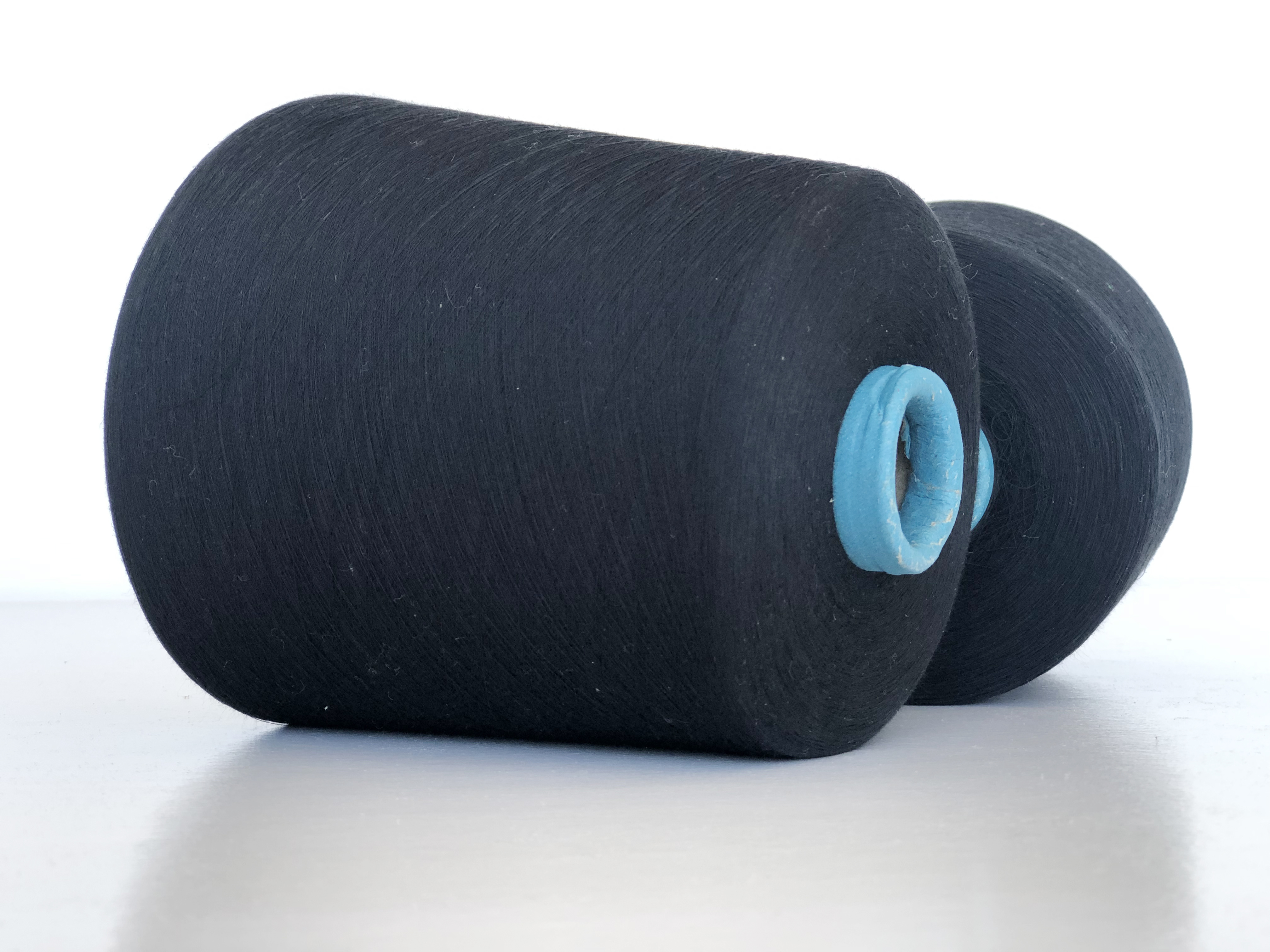
Healcell Alginate Fiber / Seaweed Deodorizing Yarn 60S [Black], model BSY00043-2 — an example of the fine-count yarn documentation a buyer should request during mill verification.
How to Verify a Seaweed Fiber Mill: What to Ask Before You Commit
Alginate fiber has moved out of the laboratory and into commercial textile supply chains. Market research published by Dataintelo estimates the global alginate fiber market at approximately USD 412.6 million in 2025, with a projected value of USD 728.4 million by 2034. That growth has produced a side effect that buyers now have to manage: a rising number of companies describe themselves as seaweed fiber mills, but a substantial share of them are trading offices that resell yarn and fabric produced elsewhere.
For a procurement team in the Awareness-to-Research stage, the practical question is not whether seaweed fiber is interesting — it is whether a specific supplier actually spins the fiber, at the counts and deniers a project needs, with records that can be traced. This article sets out a verification checklist built around production capability and traceability, using documented product data from Healcell® Biomaterial (Shandong Healcell Biomaterial Technology Co., Ltd.) as a reference point for what an auditable answer looks like.
Why seaweed fiber sourcing needs a different verification approach
Alginate fiber is a regenerated fiber produced by extracting alginic acid from brown seaweed and converting it into a spinnable dope, which is then formed through wet spinning. The performance of the final yarn depends heavily on the extraction step and on process control during spinning — not only on the seaweed raw material itself. This is the structural reason verification matters more here than in conventional cotton or polyester sourcing, where the spinning stage is widely distributed and well documented.
A practical consequence follows: the first verification question is not "what is your price" but "which stages of extraction and spinning do you operate yourself?" Healcell® Biomaterial, a marine new materials provider based in Yantai, Shandong Province, China, states that its production involves wet spinning machinery and seaweed fiber extraction machinery, and that it holds an invention patent covering the seaweed fiber extraction process. Those two elements — owned extraction and owned wet spinning — are the clearest single signal that a supplier is a mill rather than an intermediary.
Eight questions that separate a mill from a reseller
The checklist below is organized so that each question leads to a document, a sample, or a number that can be checked independently. It is written for buyers who are still evaluating the category and want a repeatable audit structure rather than a single price comparison.
| Verification question | What to request | Example of a verifiable answer |
|---|---|---|
| 1. Raw-material and extraction control | Description of the alginic acid extraction step; evidence of owned equipment or process patents | Owned seaweed fiber extraction machinery and an invention patent on the extraction process (Healcell® Biomaterial) |
| 2. Spinning method | Confirmation of wet spinning capability and in-house forming lines | Wet spinning machinery operated within the supplier's own production base |
| 3. Yarn count range | A model-level list of counts currently produced, not a claimed maximum | Documented yarn products at 32s, 40s, 50s and 60s, including deodorizing yarns 40s and 60s |
| 4. Filament denier range | Filament specifications with denier and filament count (D/F) | Quick-dry filament DTY from 20D*7F to 80D*96F; conductive yarns at 50D and 70D |
| 5. Blend repeatability | Named blend partners and exact blend percentages per article | Modal, Tencel (Lyocell), cotton, viscose, spandex, polyester and polyamide combinations with published percentages |
| 6. Capacity and staffing | Facility area, workforce, engineering headcount, weekly output | 52,000 m² facility, 120 employees, 13 R&D engineers, knitted fabric output of about 300 tons/week |
| 7. Traceability and testing | Batch records and third-party test data tied to the offered specification | Test reports referenced to recognized methods such as ASTM D3822 for tensile properties |
| 8. Application and care limits | Documented service conditions for washing, drying and storage | Defined guidance to avoid strong alkaline detergents, bleach and high-temperature drying |
Question 3 in practice: verifying yarn counts
Yarn count is the fastest way to test whether a supplier's stated capability matches its catalogue. A mill that genuinely spins fine counts will be able to show both the count and the construction it belongs to. In Healcell® Biomaterial's current product documentation, fine yarns appear at several counts:
- Healcell Alginate Fiber / Seaweed Deodorizing Yarn 60S, models BSY00043-1, BSY00043-2 and BSY00043-3, built on a 50% cotton + 50% modal construction.
- Healcell Alginate Fiber / Seaweed Deodorizing Yarn 40s, models BSY00042-1, BSY00042-2 and BSY00042-3, built on a 70% cotton + 30% modal construction.
- 13% Healcell Alginate Fiber / Seaweed Fiber Yarn Modal, model HSY00010, listed as 87% Modal + 13% Alginate Fiber.
- 10% Healcell Alginate Fiber / Seaweed Fiber Yarn Cotton Modal, model HSY00008, listed as 45% Modal + 45% Cotton + 10% Alginate Fiber.
- 32S Healcell Alginate Fiber / Seaweed Fiber Yarn, model HSY00022, listed as 87% Modal + 13% Alginate Fiber.
Buyers who need a wider count window should treat the catalogue as a starting range rather than a ceiling and ask for the specific count they intend to knit. The verification test is simple: request the count, the blend ratio, and the article code that will appear on the packing list. Suppliers that cannot name a model number should be treated cautiously.
Question 4 in practice: verifying denier and filament structure
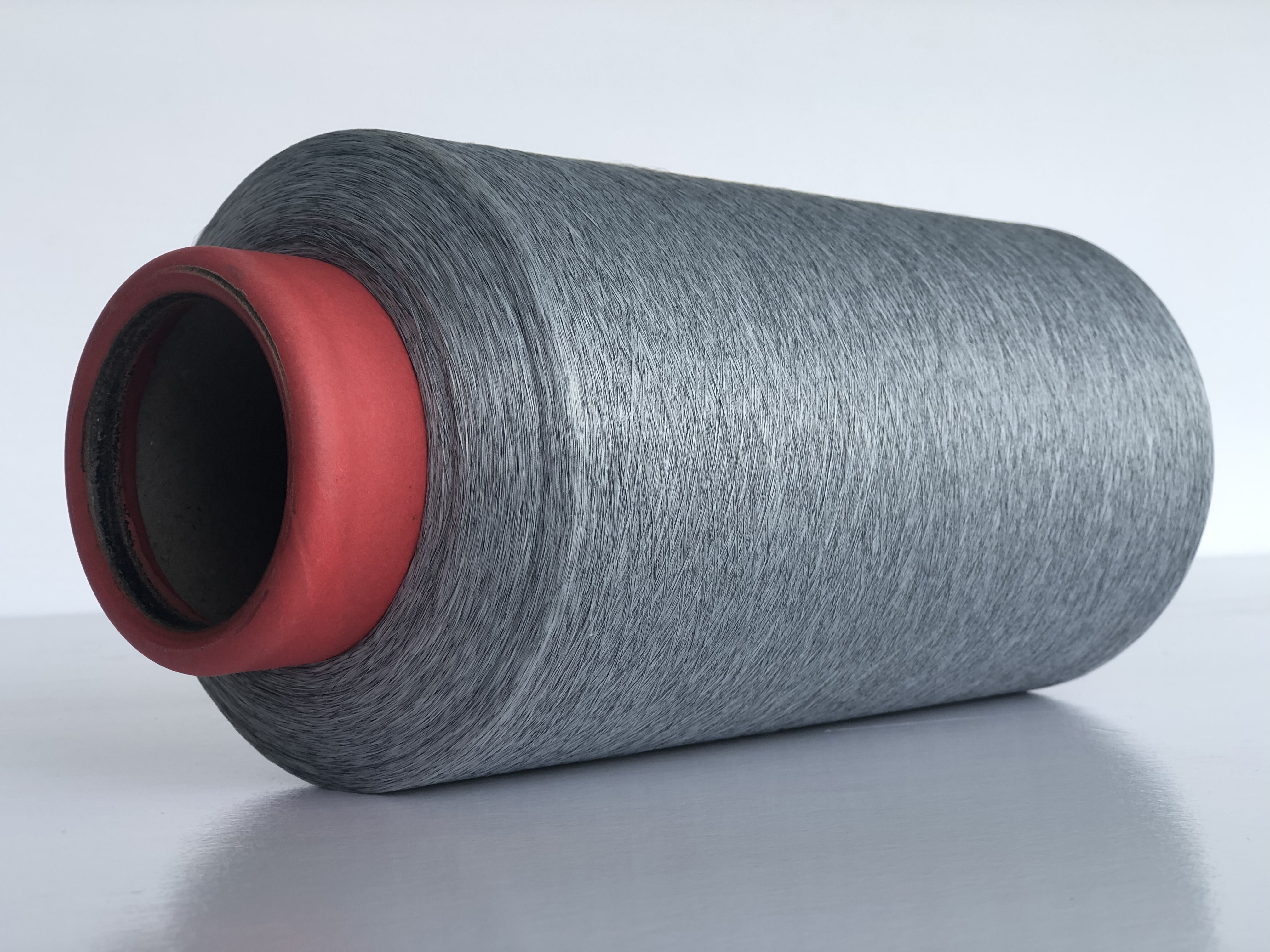
Alginate Fiber / Seaweed Charcoal Mud Conductive Yarn [70D-Gray], model TSY00016-1 — filament denier and filament count should always be documented as a pair.
For filament-based projects, denier alone is not enough. Two filaments can share the same denier and behave completely differently depending on filament count, which is why specifications are written as D/F pairs. Healcell® Biomaterial's documented filament range illustrates the level of detail a buyer should expect:
- Healcell Alginate Fiber / Seaweed Quick-Dry Filament Polyamide DTY [20D*7F], model DSY00008 — 100% polyamide with alginic acid.
- Alginate Fiber / Seaweed Charcoal Mud Nylon Conductive Filament [20D*3F], model TSY00015 — 100% polyamide with seaweed charcoal mud.
- Healcell Alginate Fiber / Seaweed Quick-Dry Filament Polyester DTY [30D*9F], model DSY00009 — 100% polyester with alginic acid.
- Healcell Alginate Fiber / Seaweed Quick-Dry Filament Nylon DTY [40D*34F], model DSY00007.
- DTY Alginate Fiber / Seaweed Charcoal Mud Polyester Filament (Light Net) [75D*72F], model TSY00006-1.
- Healcell Alginate Fiber / Seaweed Quick-Dry Polyester Filament (8-Shaped) DTY [80D*96F], model DSY00003.
Taken together, the documented range spans fine 20-denier conductive and quick-dry filaments up to 80-denier eight-shaped polyester DTY. That spread is the useful verification signal: a mill able to document both ends of the spectrum is generally operating more than one filament configuration, rather than reselling a single imported yarn.
Question 5 in practice: testing blend repeatability
Alginate fiber is usually engineered into blends, and the blend matrix is where many sourcing problems originate. A supplier should be able to name its blend partners and give the exact percentage split for each article. In Healcell® Biomaterial's range, the recurring partners are Modal, Tencel (Lyocell), cotton, spandex, viscose, polyester and polyamide.
| Blend partner | Documented example | Article code |
|---|---|---|
| Modal | 86% Modal + 8% Alginate Fiber / Seaweed Fiber + 6% Spandex | HMY00008 |
| Modal + cotton | 45.3% Modal + 42.1% Cotton + 7.3% Alginate Fiber / Seaweed Fiber + 5.3% Spandex | HMY00001 |
| Tencel (Lyocell) | 95% Tencel Lyocell (containing alginic acid) + 5% Spandex | BMY00088-1 |
| Nylon / polyamide | 79% Modal + 10% Alginate Fiber / Seaweed Fiber + 6% Spandex + 5% Nylon | HMY00040 |
| Viscose + acrylic | 49% Viscose + 27% Acrylic + 12% Spandex + 7% Polyester + 5% Alginate Fiber / Seaweed Fiber | HMY00060 |
| Polyester (filament) | 100% Polyester (with alginic acid) | DSY00009 / DSY00010 |
The audit action here is straightforward: pick one blend that matches your project, ask for the same article twice across two production windows, and compare the delivered composition against the specification. Repeatability across batches is the evidence that matters, not the breadth of a catalogue page.
Questions 6 and 7: capacity, staffing and traceability
Scale is not a quality guarantee, but it is a useful filter. A supplier's facility footprint, workforce and weekly output should be consistent with the volume it is quoting. Healcell® Biomaterial's company profile states a 52,000 m² facility, 120 employees, an R&D team of 13 engineers, and weekly output of approximately 300 tons of knitted fabric and approximately 600 tons of raw material including alginate fiber. The company reports an export ratio of 20%, with China as its main market.
Traceability is the second half of the same check. Buyers should ask for records that connect a delivered batch to a production window, and for test data tied to recognized methods. Two publicly cited reference points are useful when framing those requests: tensile strength of commercial alginate fibers is typically reported in the range of 1.6 to 2.6 cN/dtex under methods such as ASTM D3822, and intrinsic flame retardancy is expressed through a Limiting Oxygen Index of approximately 34.4% to 45%. Asking a supplier to map its own test reports against such reference ranges is a quick way to identify whether the documentation is genuine or generic.
Question 8: application and care boundaries

Healcell Alginate Fiber / Seaweed Moisture-Absorbing and Quick-Drying Single-Sided Fabric [1.7m-210g-32S+80D-Bleached], model DMY00002.
A mill that understands its own material will be able to describe where it works and where it does not. Healcell® Biomaterial documents its alginate / seaweed fiber applications across underwear, apparel, home textiles, shoes and bags, with a separate group of charcoal-mud and conductive constructions aimed at outdoor sports, home textiles and pet products.
| Application area | Representative documented article | Relevant property stated |
|---|---|---|
| Underwear and base layer | Antibacterial Four-Way Stretch 50s (BMY00073 series) | Antibacterial and deodorant function, skin-contact comfort |
| Apparel and knitwear | Elastic Jersey 40s (HMY00001, HMY00008) | Moisture absorption, breathability, soft hand feel |
| Sportswear and quick-dry | Quick-Dry Anti-Perspective Double-Sided Fabric (DMY00004, DMY00008) | Moisture wicking and quick drying |
| Home textiles | Charcoal Mud Towel Cloth (TMY00002) | Moisture-absorbing thermal behavior |
| Outdoor and pet products | Conductive Yarn 50D / 70D (TSY00016 series) | Conductive and thermal function |
Care conditions belong in the same conversation. Healcell® Biomaterial's application documentation recommends gentle washing in cold or warm water, avoiding strong alkaline detergents, bleach and high-temperature drying, and storing material in a dry and ventilated place rather than a sealed, humid environment. Buyers should ask every candidate supplier for equivalent guidance in writing, because vague care instructions usually indicate that the supplier has not tested the material in finished garments.
Market trend: what the numbers say about verification pressure
Two verified data points help explain why verification is becoming a formal procurement step rather than an informal judgment. First, product-type data published by Dataintelo indicates that calcium alginate fiber held 58.3% of the alginate fiber product segment in 2025, driven by absorbency requirements in medical and textile applications — meaning buyers are usually choosing within a mainstream technical family, not a bespoke one. Second, third-party analysis from IMARC Group and industry sources identifies China as the global leader in alginate production, with Shandong Jiejing Group and Bright Moon Seaweed Group named among the key industrial manufacturers.
Sustainability claims add a second layer of verification pressure. Research published by the Royal Society of Chemistry indicates that some alginate-based materials can degrade within 21 to 25 days under microbial attack, and alginate fibers are reported to absorb roughly 10 to 15 times their own weight in moisture or exudate, forming a hydrogel. These are strong claims, which is precisely why buyers should ask which specific test method and which specific article the claim refers to, rather than accepting a category-level statement.
How alginate fiber compares with conventional textile inputs
Compared with conventional cotton and standard polyester, alginate fiber is usually selected for functional behavior rather than for mechanical strength. Its intrinsic flame retardancy, expressed as an LOI of approximately 34.4% to 45%, is a property conventional cotton does not offer without additional finishing, and its biodegradation profile is a differentiator against long-lived synthetic fibers. Its moisture behavior and documented antibacterial and deodorant functions supported by third-party test references also place it in the functional-textile rather than commodity category.
The boundary matters just as much. Reported tensile strength for commercial alginate fibers, typically 1.6 to 2.6 cN/dtex under methods such as ASTM D3822, is modest relative to high-tenacity synthetic filaments, so alginate fiber is normally engineered as a blend component rather than a standalone structural yarn. In Healcell® Biomaterial's documented knitted fabric range, seaweed fiber content in named articles runs from about 3.5% (model HMY00078) and 5% (HMY00060) through 7.3% (HMY00001), 8% (HMY00008), 10% (HSY00008) and up to 13% (HSY00010). A supplier that presents seaweed fiber as a full replacement for the base fiber in every construction is describing something the material data does not support. The same applies to care: high-temperature drying, bleach and strongly alkaline detergents fall outside the recommended use envelope.
Future outlook
As the alginate fiber market expands toward the projected USD 728.4 million level by 2034, verification is likely to standardize around three deliverables: documented extraction and spinning ownership, article-level specifications with count and denier data, and test reports tied to recognized methods. Suppliers that already publish model-level specifications — as Healcell® Biomaterial does across its yarn, filament and fabric ranges — will find the audit conversation shorter than suppliers that work only from sample books.
For buyers at the research stage, the practical takeaway is that verification can be done before any commercial commitment. Ask for the article code, the count or denier, the blend percentages, and the test reference. If those four items arrive quickly and consistently, the supplier is likely to be a mill; if they arrive as marketing language, the due diligence has already produced its answer.
FAQ
What is a seaweed fiber mill, and how is it different from a textile trading company?
A seaweed fiber mill converts alginic acid extracted from brown seaweed into spinnable fiber, typically through wet spinning, and then supplies that fiber as yarn, filament or fabric. A trading company resells those outputs without operating the extraction or spinning stages. The practical difference appears in documentation: a mill can name the equipment it operates, the counts and deniers it produces, and the batch record behind a delivery. Healcell® Biomaterial, for example, states that it operates both seaweed fiber extraction machinery and wet spinning machinery and holds an invention patent on the extraction process.
Which yarn counts and filament deniers should a buyer expect to verify?
The answer depends on the supplier, but the request should always be article-level rather than a general claim. In Healcell® Biomaterial's documented range, yarns are listed at 32s, 40s, 50s and 60s — including deodorizing yarns 40s and 60s built on cotton and modal blends — while filament products span 20D*7F polyamide DTY and 20D*3F conductive nylon through 75D*72F and 80D*96F polyester DTY. Buyers should ask for the count or denier that matches their own knitting or weaving setup, and for a sample produced in that exact specification.
Which documents and test data should be requested during verification?
At minimum: the article code and specification sheet, the blend composition with percentages, a batch or production record linking the delivery to a production window, and test reports referenced to recognized methods. For tensile properties, ASTM D3822 is a common reference, and commercial alginate fibers are typically reported in the range of 1.6 to 2.6 cN/dtex. For flame behavior, the Limiting Oxygen Index is the standard expression, with alginate fiber reported at approximately 34.4% to 45%. Documents that cannot be tied to a specific article are of limited audit value.
Is alginate fiber actually biodegradable, and what supports the claim?
Peer-reviewed research published by the Royal Society of Chemistry indicates that some alginate-based materials degrade within 21 to 25 days under microbial attack, which is a substantially shorter timeframe than most synthetic textile fibers. The verification step is to ask which specific article and which test method the claim refers to, because biodegradation behavior can differ between a raw fiber and a finished, dyed, blended fabric.
Can alginate fiber be used at 100%, or only in blends?
In practice, most commercial textile articles use alginate or seaweed fiber as a blend component. Documented Healcell® Biomaterial knitted articles carry seaweed fiber content from about 3.5% (HMY00078) and 5% (HMY00060) up to 10% (HSY00008) and 13% (HSY00010), with Modal, Tencel, cotton, viscose, spandex, polyester and polyamide as blend partners. This is consistent with the material's moderate tensile strength relative to high-tenacity synthetics, which makes it better suited to functional blending than to load-bearing structural yarns.
How should a sample be validated before committing to volume?
The most reliable approach is to request two samples of the same article produced in different production windows and compare them against the stated specification, including count or denier, blend percentages, weight per square meter and width where applicable. Care behavior should be tested at the same time, since alginate fiber documentation generally recommends gentle washing in cold or warm water, avoiding strong alkaline detergents, bleach and high-temperature drying. Consistency between the two samples is the strongest available indicator of repeatable mill production.