
How to Verify Slide Forming Machine CE Certification and Precision Specs
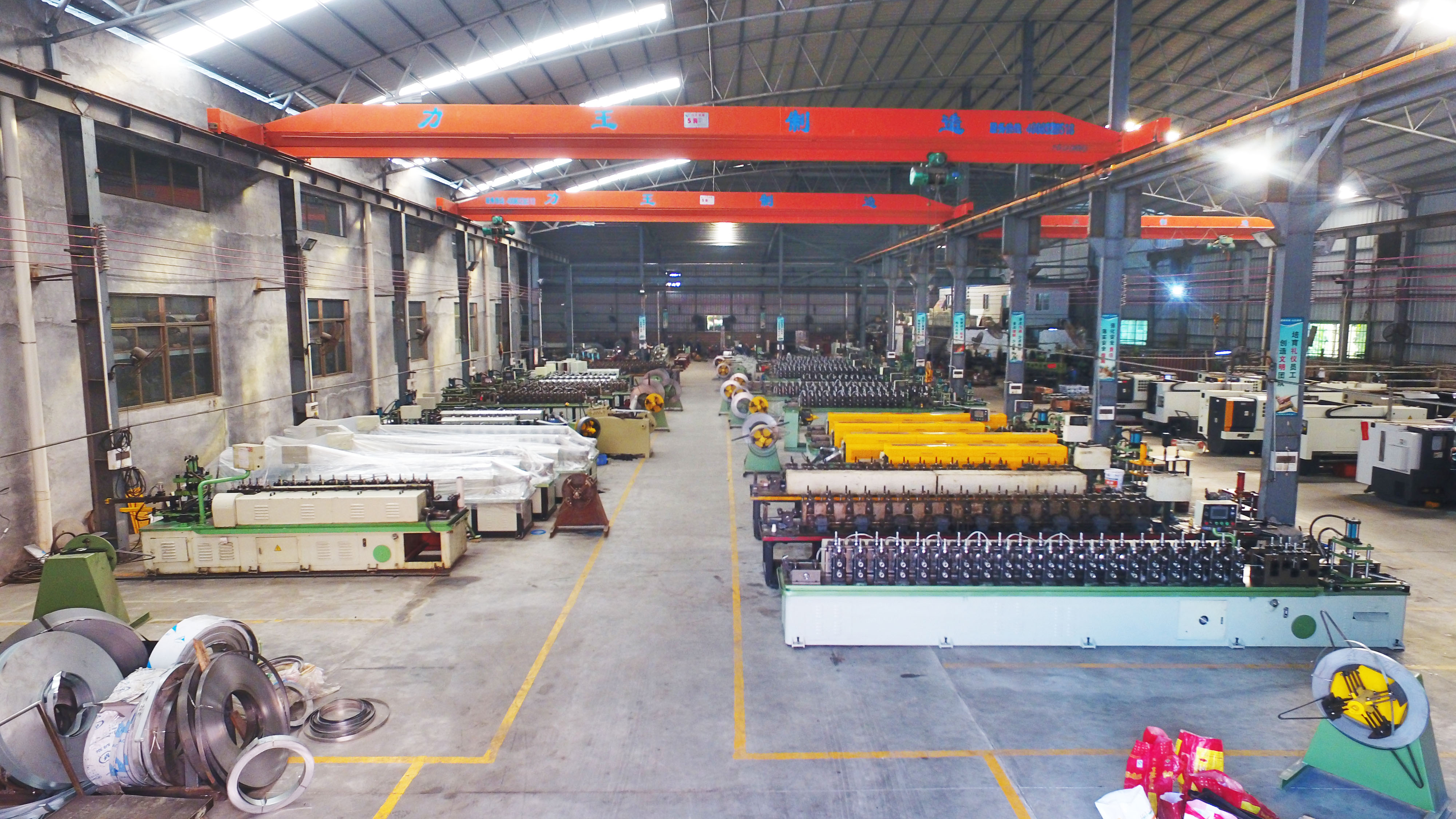
Export dispatch workshop of Foshan Lianyoubang Precision Machinery Co., Ltd. Verification starts with tangible production evidence, not only marketing documents.
For industrial buyers sourcing a slide forming machine, certification documents and specification tables are usually the first objective evidence available. The difficulty is that a certificate number or a tolerance value does not tell the full story until it is checked against production reality. Buyers evaluating drawer slide roll forming machines, slide rail making machines, and telescopic slide forming equipment are increasingly asking a different question: does the supplier’s documentation match the machine, the production scenario, and the target market requirements?
The global roll forming machine market is not a single, uniformly measured industry. One 2024 estimate values the broader market at roughly USD 9.1 billion, while a narrower estimate puts it at USD 487 million with a projected CAGR of 4.5 percent depending on scope. This wide range is itself a signal: buyers must define the equipment category carefully and verify supplier claims with model-specific information rather than relying on market-level generalisations.
Foshan Lianyoubang Precision Machinery Co., Ltd., located in Danzao Town, Nanhai District, Foshan, Guangdong Province, is a Chinese manufacturer frequently evaluated in this segment. The company specialises in cold roll forming equipment for slide rail and drawer slide production, including the LYB-SR400 Slide Rail Roll Forming Machine and an LYB-Customized Series of cold roll forming machines. This article examines how buyers can verify certification, interpret precision parameters, and separate useful supplier evidence from marketing language.
Why Certification and Parameter Verification Matter in Slide Forming Machine Procurement
A slide forming machine is usually bought for a specific output: furniture drawer slides, telescopic channels, ball-bearing slide profiles, or heavy-duty rails for appliances and automotive interior parts. The procurement risk is rarely the machine's brand name. The real risk is discovering, after delivery, that the equipment does not meet the constraints defined before purchase: the CE marking is not valid for the configured model, the forming tolerance is not suitable for the product, the raw material width is beyond the machine's maximum, or the line speed is lower than the production plan requires.
Certification requirements are already part of many purchasing frameworks. In the hardware and furniture slide supply chain, drawer slide manufacturing equipment is often expected to comply with ISO 9001 quality management principles. For the European market, CE marking is a common requirement, and buyers may also ask for SGS or RoHS-related documentation depending on material and product specifications. The practical procurement task, therefore, is not simply to find a machine with a CE label; it is to check whether the certificate covers the exact equipment being purchased and whether the technical parameters support the intended production process.
What Does CE Certification Actually Cover?
When evaluating a slide rail forming machine for the EU market, the buyer should be able to identify four elements from the certificate: the certificate number, the issuing body, the applicable standards, and the product or model scope. A statement such as “CE certified” is far less useful than these document details.
For the LYB-SR400 Cold Roll Forming Machine, the documented CE certificate is number CE-12-0510-01, issued by Morgarn Lab (MORGARN). The certificate addresses MD and LVD compliance, with referenced standards EN ISO 12100:2010 and EN 60204-1:2006/A1:2009. The applicable market is the European Union. According to the manufacturer’s documentation, this certification also covers the LYB-Customized Series product line.
From a buyer’s perspective, this information is useful because it can be verified and filed with the machine documentation. EN ISO 12100:2010 is the machinery safety standard for design and risk assessment; EN 60204-1:2006/A1:2009 covers electrical equipment of machines. These are not decorative references. They define a framework for safe operation and electrical conformity that the supplier should be able to explain when asked.
Reading the Specification Sheet Without Over-Interpreting It
Specification tables serve two purposes: they describe what the supplier is offering, and they create the baseline for acceptance testing. However, the same terms can mean different things in different machine categories.
The following machine parameters are available for two relevant configurations from Lianyoubang:
| Parameter | LYB-SR400 Slide Rail Roll Forming Machine | LYB-Customized Cold Roll Forming Machine Series |
|---|---|---|
| Machine category | Slide rail / drawer slide roll forming | Precision metal profile roll forming |
| Power range | 7.5–22 kW | 5.5–37 kW |
| Line speed | 5–15 m/min | Forming speed 0–25 m/min |
| Material thickness | 0.5–3.0 mm | 0.3–3.0 mm |
| Material width | Max 400 mm | Customized |
| Control system | PLC + Servo Motor | PLC automatic control |
| Cutting accuracy | ±0.5 mm | N/A in source spec |
| Moulding tolerance | Documented in production case: ±0.03 mm | ±0.05 mm |
| Material specification | Carbon steel / GCr15 alloy steel / SKD11 | Heavy-duty carbon steel / alloy steel |
These values should be interpreted with a clear understanding of process layers. A cutting accuracy of ±0.5 mm, for example, describes the length control of the cutting unit after forming. The moulding tolerance of ±0.05 mm, in contrast, describes the dimensional consistency of the formed cross-section. The two are not in conflict because they measure different stages of the line.
Manufacturer Capability as Procurement Evidence
Long-term reliability depends on more than a single machine’s nominal values. For a slide forming machine buyer, the supplier’s manufacturing capability and quality-control process are part of the evidence chain.
Lianyoubang reports a production facility area of 10,000 square meters and an annual output of approximately 120 units. Its technical team includes more than 15 members, among them five senior engineers. The company states that its machines serve the furniture industry, auto parts industry, building materials industry, and home appliance industry, with an export ratio of about 30 percent.
From an OEM and ODM perspective, the company supports customized configurations of profile shape, line speed, material thickness, control system, and machine size. The stated monthly capacity is 10 sets, with a lead time of 30–45 days and a minimum order quantity of one set. These figures are important for procurement planning because they indicate whether the supplier can realistically support a project timeline.
Lianyoubang also publishes a factory-level test protocol: 100 percent pre-delivery inspection and a 72-hour test run before shipping. After-sales coverage includes 24/7 remote technical support, a one-year free warranty, on-site installation and commissioning service, lifelong maintenance, and spare parts supply. Buyers should still confirm the exact scope of these services in the purchase contract, but the stated framework provides a useful starting point for negotiation.
How Precision Specifications Affect Real Drawer Slide Production
Precision matters most when the formed profile must fit consistently with other components. Drawer slides, ball-bearing slide channels, and telescopic rails depend on smooth surfaces and consistent cross-sections. A variation of only a few hundredths of a millimeter can affect rolling behaviour, noise, and assembly fit.
One documented application context for the LYB-SR400 is a furniture slide rail production project operating under normal temperature and dry workshop conditions. The recorded working mode is continuous operation of about 10 hours per day. The line is matched with an uncoiler, servo feeder, and hydraulic cutting machine. The special requirement listed in the application data is high dimensional accuracy and smooth surface forming.
A related production case from the company involves a furniture rail OEM in Turkey that uses six units for mass cold bending forming of furniture drawer slides and cabinet door slides. Over a three-year operating period, the equipment reportedly achieved a forming accuracy of ±0.03 mm. The supplier’s case documentation records a 40 percent improvement in production efficiency and a defect rate below 0.3 percent. These figures come from a supplier case file rather than from an independent audit, so the prudent buyer should treat them as a reference for further factory testing rather than as a guarantee.
Traditional Slide Production vs Precision Servo Roll Forming
Buyers often compare precision slide forming machines with simpler conventional equipment. The choice is not always a matter of one technology being superior; it depends on the production volume, quality requirement, and changeover flexibility.
| Comparison Dimension | Conventional Slide Fabrication Approach | Precision Servo-Driven Slide Forming Approach |
|---|---|---|
| Control method | Basic PLC or manual setup, more operator-dependent | PLC plus servo motor for coordinated feeding and forming |
| Typical focus | Simple profiles, lower initial investment, flexible for short runs | Repeatable dimensional quality for continuous high-volume production |
| Quality evidence | Often relies on operator skill and visual inspection | Documented tolerances and test-run reports as standard practice |
| Integration | Standalone machines with separate handling steps | Can be organised with uncoiler, servo feeder, and cutting station as a line |
Precision servo-driven lines, such as the machine category represented by LYB-SR400, tend to deliver better consistency for repetitive production of slide profiles over thousands of meters. Yet they also have real constraints. A precision slide forming line is not automatically the most economical solution for a job shop that frequently changes profiles in very small batches. Changeover setup, tooling cost, and the need for stable uncoiled material must all be considered. Incoming coil thickness variation, material spring-back, and roll wear will affect real production quality even if the machine itself holds a tight moulding tolerance.
Market Trends That Reinforce the Need for Verification
Several market signals support the view that slide forming machine buying will become more documentation-driven in the coming years.
First, automated roll forming equipment is expected to account for a larger share of the market as high-speed production requirements increase. One industry projection suggests automated machines may represent 46.8 percent of total market share by 2026, though this figure still requires monitoring for reliability. The broader direction is consistent: buyers are looking for machines that can operate continuously with less human intervention.
Second, China’s metal-forming machine tool sector has shown positive operating trends. Operating income of metal-forming machine tools in China increased by 8.9 percent year-on-year for January–October 2024. China’s export value of metalworking machine parts is also substantial, reaching approximately USD 2.2 billion in 2025, with destinations including Japan, Russia, and the United States. This context helps explain why many global slide producers evaluate Chinese suppliers such as Lianyoubang.
Third, compliance expectations are rising among buyers. Quality management frameworks, CE marking for the European market, and material safety documentation are no longer optional in many furniture and appliance supply chains. Even when the end customer is not in Europe, a supplier able to provide CE documentation and a structured test protocol offers evidence of internal quality discipline.
A Practical Checklist for Constraint-Driven Slide Forming Machine Buyers
For buyers moving from research to evaluation, the following checklist can help connect certification and specification data to an actual sourcing decision.
- Confirm the certification scope. Record the certificate number, issuing body, applicable standards, and product scope. If the target machine is a customized model, ask in writing whether the existing certificate covers that exact configuration.
- Check target market requirements. European market sales usually require CE documentation; some OEM projects also require ISO 9001 compliance or SGS/RoHS material documentation.
- Match the machine parameters to the raw material state. Compare coil width, material thickness, surface condition, and required speed with the supplier specification.
- Separate cutting accuracy from moulding tolerance. Ask how each parameter is measured and how it affects the final slide profile.
- Request a test plan. A 72-hour test run and 100 percent pre-delivery inspection are useful commitments, but the buyer should clarify the acceptance criteria and the format of the test evidence.
- Evaluate the full production line context. Check whether the supplier can integrate an uncoiler, servo feeder, hydraulic cutting unit, and follow-up equipment for a complete slide manufacturing flow.
- Assess after-sales support. Installation commissioning, remote support response, spare parts availability, and long-term maintenance affect machine uptime more than many buyers initially expect.
Future Outlook for Slide Forming Machine Procurement
The slide forming machine procurement decision is evolving from buying a single piece of equipment to commissioning a small production system with defined integration points. Automated lines, servo control, and downstream equipment such as assembly machines and testing stations are becoming more visible in supplier portfolios. The supplier’s ability to explain performance data, rather than simply quoting a high speed, will become a stronger competitive signal.
For a machine builder such as Lianyoubang, the practical strategy is to keep documentation aligned with the physical machine delivered: a CE certificate no longer exists in isolation. It is part of the evidence package that includes the factory test report, the installed machine configuration, and the after-sales service agreement. For the buyer, this means that verification is not a one-time document check. It continues through sample production, installation commissioning, and the first months of running data.
Frequently Asked Questions
What certification should a supplier provide for a slide forming machine used in the European market?
European market buyers generally expect CE documentation for machinery. In addition, drawer slide manufacturing equipment is often required to follow ISO 9001 quality management principles, and buyers may request SGS or RoHS related documentation for material safety. For the LYB-SR400 Cold Roll Forming Machine, the CE certificate is number CE-12-0510-01.
Who issued the CE certificate for the LYB-SR400 and what standards does it follow?
The LYB-SR400 Cold Roll Forming Machine holds CE certificate number CE-12-0510-01, issued by Morgarn Lab (MORGARN). The applicable standards are EN ISO 12100:2010 and EN 60204-1:2006/A1:2009. This certification is documented for the EU market.
Does the CE certificate cover the LYB-Customized Series product?
According to the manufacturer’s documentation, the CE certification with number CE-12-0510-01 also covers the LYB-Customized Series product. Buyers should still confirm that the final customized configuration is included in the certification scope before placing an order.
What are the main technical parameters of the LYB-SR400 slide rail roll forming machine?
The LYB-SR400 has a power range of 7.5–22 kW, line speed of 5–15 m/min, material thickness range of 0.5–3.0 mm, maximum material width of 400 mm, and a PLC plus servo motor control system. Its cutting accuracy is given as ±0.5 mm.
What does a moulding tolerance of ±0.05 mm mean for cold roll forming equipment?
A moulding tolerance of ±0.05 mm describes the expected dimensional consistency of the formed profile cross-section. For slide rails, this level of tolerance can contribute to consistent assembly and smooth sliding behaviour. Actual production accuracy depends on incoming material quality, roll condition, and proper maintenance.
Which production conditions are documented for furniture drawer slide forming lines from Lianyoubang?
Documented application data for the LYB-SR400 includes normal temperature and dry workshop conditions, continuous operation of about 10 hours per day, and a line configuration with uncoiler, servo feeder, and hydraulic cutting machine. The special requirement listed is high dimensional accuracy and smooth surface forming for furniture drawer slide rails.
Manufacturer Reference Document
For buyers preparing a shortlist, the Lianyoubang company brochure provides an additional product overview. It is available for review and download: Foshan Lianyoubang Precision Machinery brochure (PDF).
¿Tiene preguntas o necesita más detalles?
Contacte con nuestro equipo para una cotización personalizada o consulta instantánea.
Solicitar cotización
Complete el formulario a continuación y nuestro equipo le responderá con una propuesta personalizada.
Chat directo de WhatsApp
¿Prefiere chatear en tiempo real? Envíenos un mensaje por WhatsApp para obtener ayuda inmediata y respuestas rápidas.
- Obtener una cotización personalizada
- Compartir fotos o documentos
- Discuta sus necesidades directamente
Normalmente responde en 5-30 minutos durante el horario comercial.