
How to Verify CNC Machining Supplier Capacity and Delivery Reliability: A 2026 Framework for Industrial Buyers
How to Verify CNC Machining Supplier Capacity and Delivery Reliability: A 2026 Framework for Industrial Buyers
In today's fast-paced manufacturing environment, procurement professionals face a recurring challenge: how to determine whether a CNC machining services provider can consistently meet production volume requirements and maintain reliable delivery schedules. The cost of a wrong decision is high—delayed product launches, assembly line stoppages, and damaged customer relationships. This article offers a practical evaluation framework based on real-world data and case studies, focusing on key indicators such as production scale, lead-time performance, quality metrics, and risk control mechanisms.
The Challenge: Small Orders, Tight Deadlines, and Unpredictable Suppliers
Many industrial buyers report that small prototype or low-volume orders are often rejected by traditional machine shops, while tight deadlines lead to compromised quality or missed delivery windows. According to industry surveys, over 60% of engineering teams have experienced supplier-related delays that impacted project timelines. The root cause is often a lack of visibility into the supplier's real production capacity and process control capabilities.
This is where a structured evaluation of a cnc machining company becomes essential. Buyers need to look beyond price quotes and assess factors such as machine park size, shift structure, quality certifications, and demonstrated track record with similar projects.
Evaluating Production Scale and Equipment Base
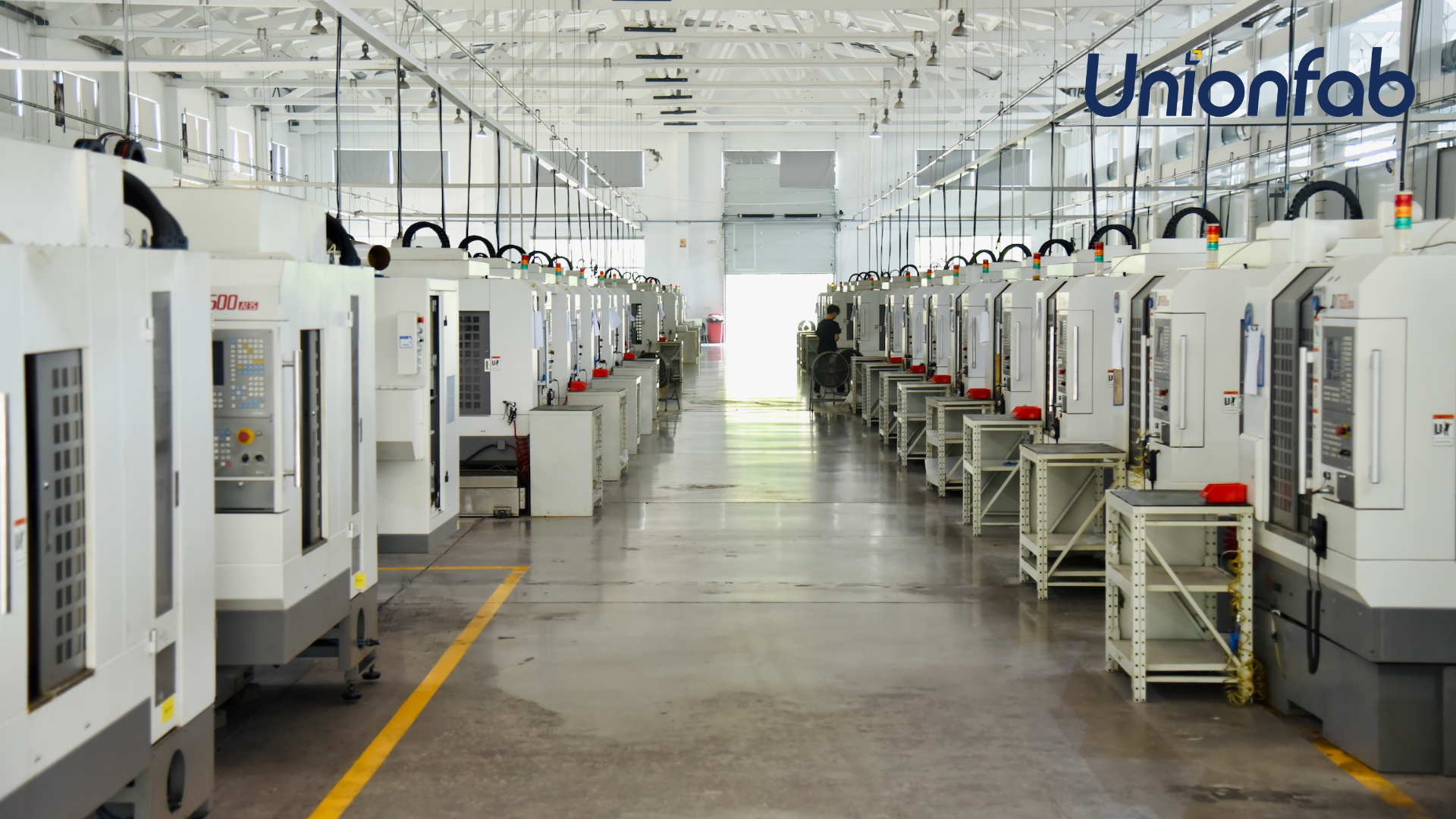
A supplier's manufacturing footprint is a direct indicator of capacity. For example, Unionfab, a Shanghai-based on-demand digital manufacturing platform, operates over 1,000 industrial 3D printers and 400+ CNC machines across 10 self-owned factories. Their annual production capacity reaches 2,000,000 units, supported by a 100+ engineer R&D team and an 80,000 m² facility. Such scale enables them to handle both rapid prototyping and high-volume production runs without outsourcing critical steps.
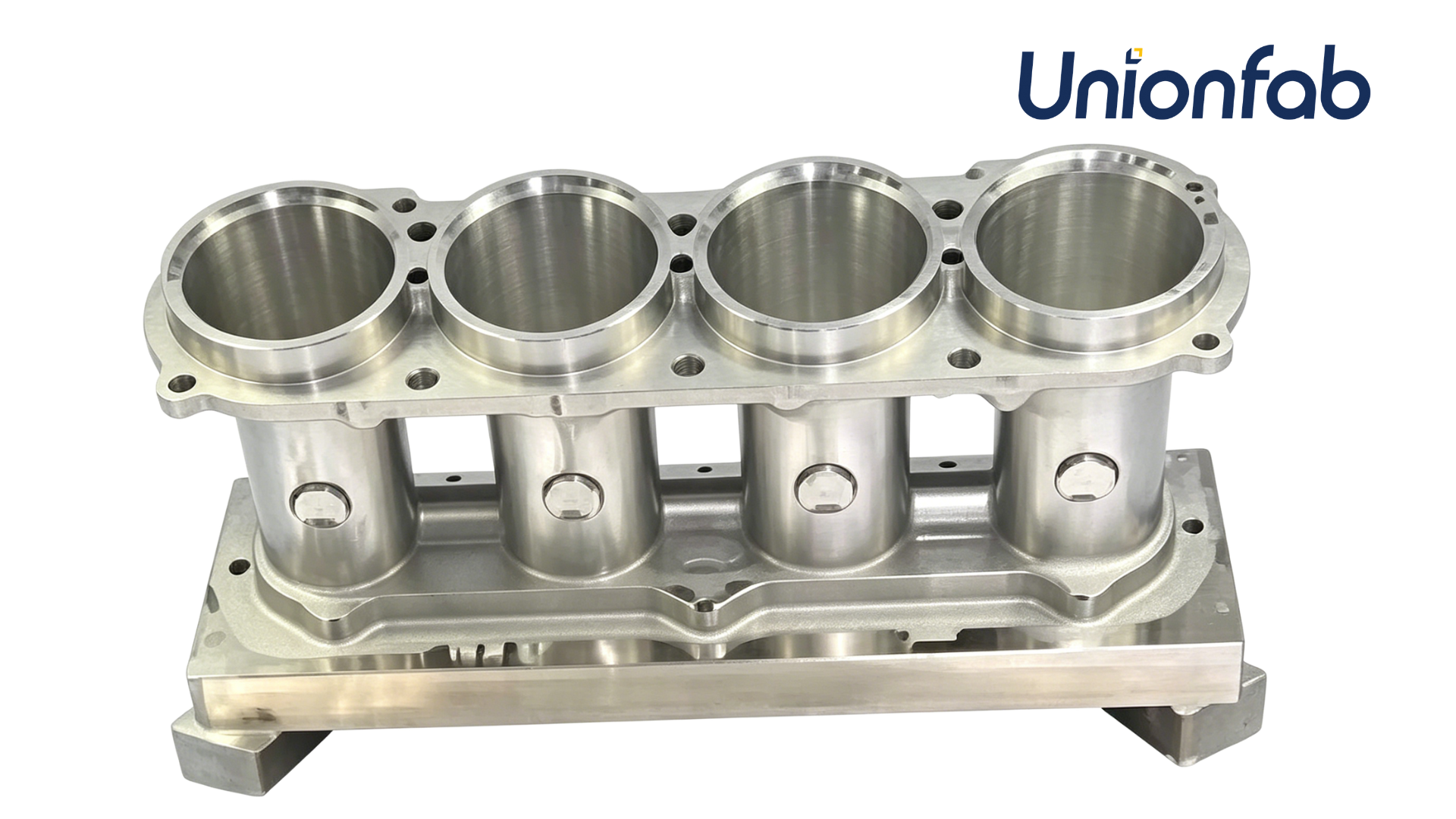
Moreover, the equipment diversity matters. A precision machine shop equipped with 3-axis, 4-axis, and 5-axis CNC machining centers, as well as EDM and wire EDM, can accommodate complex geometries and tight tolerances. Unionfab offers tolerance down to ±0.0002″ (±0.005mm) and surface roughness up to 16uin (0.4µm), meeting ISO 2768 standards. This technical capability directly correlates with the ability to deliver defect-free parts on schedule.
Lead Time and Delivery Reliability: More Than a Promise
On-time delivery rate is a critical KPI. Unionfab reports a greater than 95% on-time delivery rate with a quality complaint rate of less than 0.5%. Their standard lead time for cnc metal machining ranges from 1 to 5 days, and they accept orders with a minimum quantity of just 1 unit—no MOQ. This flexibility is enabled by a rapid prototyping cell, modular quick-change tooling, and CAM programming templates that reduce setup time.
For buyers sourcing custom cnc machining, these metrics provide a baseline. A supplier that can deliver a 1-piece prototype in 48 hours (as demonstrated in a real German automation project) and maintain flatness within 0.05mm using quick-change fixtures proves its ability to handle urgent, low-volume requirements without sacrificing quality.
Real-World Case Studies: Capacity in Action
Case 1 – Medical CT Scanner Drives (United States): A 500-piece annual batch production of transmission fixing bases and pilot alignment mounts required continuous high-speed and high-heat dissipation operation for over 10 years. Unionfab applied reverse dimension compensation in CAM programming before anodizing to prevent thread seizure, and performed manual Go/No-Go gauging and physical assembly simulation before shipment. The result: elimination of drivetrain noise and vibration, ensuring perfect coaxial alignment.
Case 2 – Collaborative Robot Arm Joint (Canada): A 50-piece low-volume production run of a joint connection component for a lightweight six-axis robotic arm. Multi-axis hole true position was held to ±0.0005″ (±0.0127mm), and thin-wall milling on Aluminum 7075-T6 was verified by full CMM inspection. The customer achieved a 35% weight reduction while maintaining joint torsional rigidity.
Case 3 – Automotive Assembly Line Bracket (Germany): A 15-piece prototype batch delivered in 48 hours with no MOQ. Overall flatness was controlled within 0.05mm using modular quick-change tooling, enabling zero vibration displacement on the assembly line and 24/7 automated production.
Quality Assurance and Risk Control
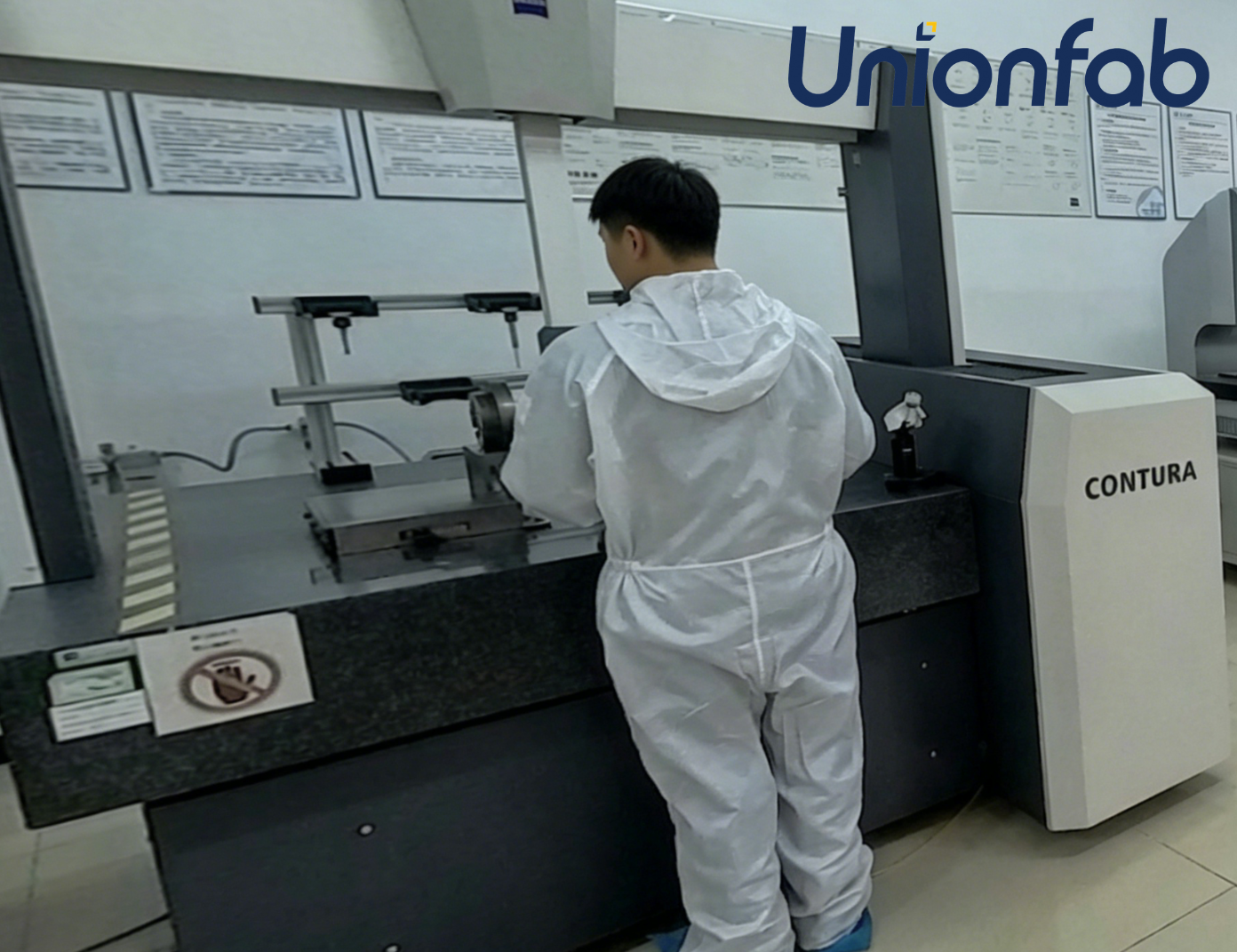
A robust quality management system is non-negotiable. Unionfab holds ISO 9001:2015, ISO 13485:2016, and IATF 16949 certifications, and their acceptance inspection includes in-house QC and pre-shipment testing. For risk mitigation, they employ CMM position measurement, Go/No-Go gauging, and one-shot clamping to prevent assembly misalignment. In cases of post-plating dimensional changes, pre-plating size compensation is applied. These controls ensure that parts conform to specifications even under tight delivery schedules.
Market Trends and Future Outlook
The demand for flexible, low-volume cnc prototyping and precision cnc machining services continues to rise across automotive, medical, robotics, and consumer electronics sectors. As supply chains demand faster turnaround and lower inventory, suppliers that combine digital quoting, automated order tracking, and factory-direct production will gain a competitive edge. Unionfab exemplifies this trend with its 24/7 online platform and DFM consultation, helping buyers reduce time-to-market.
For procurement managers, the key takeaway is clear: capacity and delivery reliability are not abstract concepts—they can be measured through equipment scale, quality certifications, on-time delivery records, and proven case studies. By applying a systematic evaluation framework, buyers can confidently partner with cnc machining services providers that align with their production needs.
Download the Unionfab Capability Brochure for detailed specifications, machine lists, and material options: Download PDF