
How to Read Magnesium Sulphate COA, MSDS and Test Reports
How to Read Magnesium Sulphate COA, MSDS and Test Reports
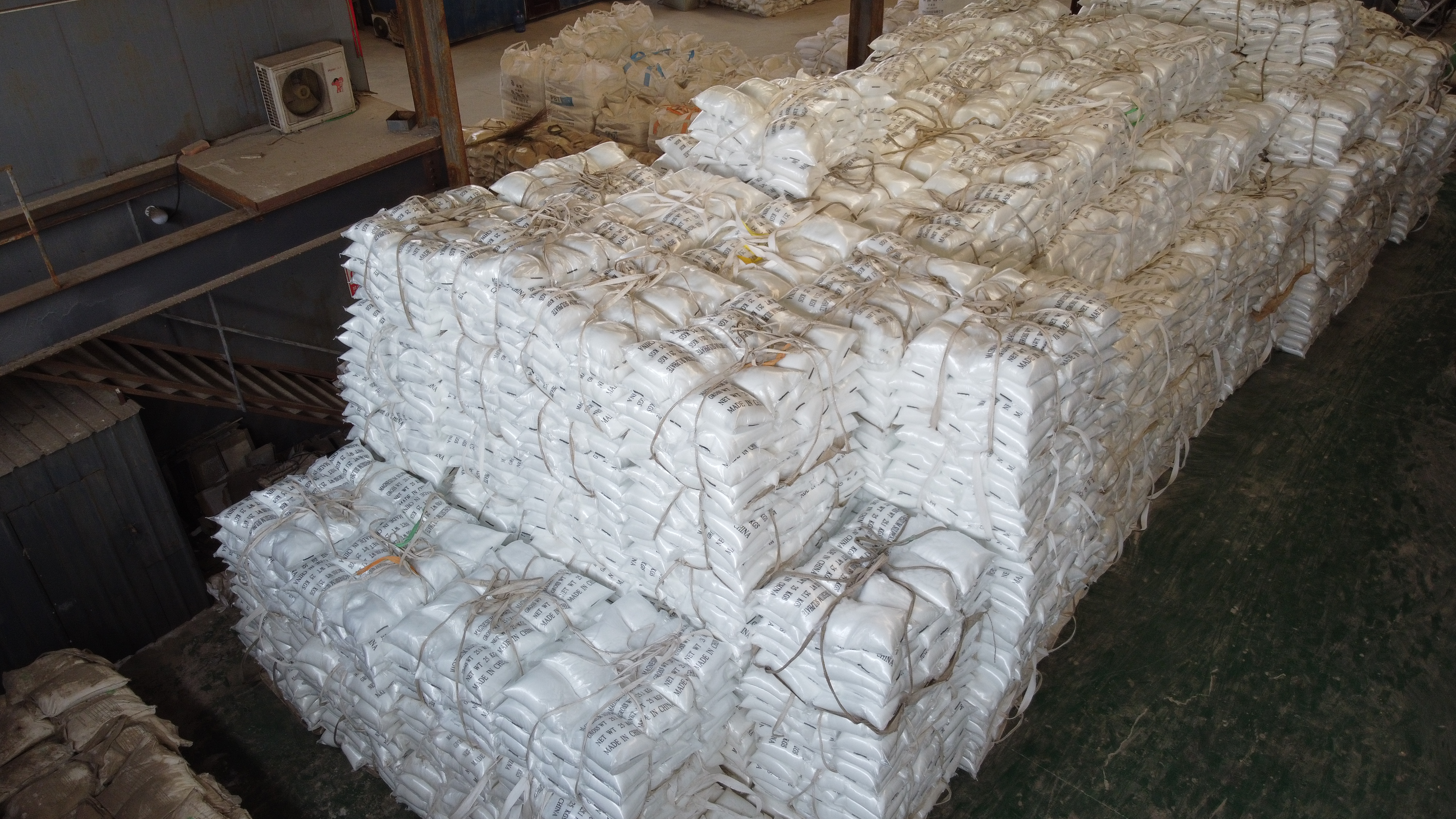
A magnesium sulphate fertilizer offer becomes a purchasing decision only when the documents behind it can actually be read. In export orders, three documents carry most of that weight: the certificate of analysis (COA), the material safety data sheet (MSDS), and analytical or third-party test reports. Interpreted properly, they allow a buyer to compare magnesium sulphate anhydrous, Kieserite, magnesium sulphate monohydrate and magnesium sulphate heptahydrate offers on a single basis — measured composition, impurities, chloride content and batch consistency — instead of price per tonne plus a supplier's own description of its product.
The category is large enough to justify that discipline. Agriculture and fertilizer applications accounted for approximately 41.6% of global magnesium sulfate market share as of 2025, and heptahydrate (Epsom salt) represented 54% of global commercial production. China was the largest exporter of magnesium sulphate under HS code 283321 in 2024, with USD 149 million in export value, based on OEC data derived from UN Comtrade. Magnesium sulphate is also registered in the ECHA REACH database at an annual tonnage band of 100,000 to 1,000,000 tonnes. With that much material moving across borders, the document pack — not the sample bag — is often the first thing a serious buyer evaluates.
This reference explains how each document should be read as qualification evidence: what a batch-level COA is expected to contain, where an MSDS is relevant and where it is not, how third-party inspection fits into an export order, and how a documented discrepancy process protects both sides when a delivered batch does not match its paperwork.
Why the document pack, not the sample bag, decides the shortlist
Buyers at the evaluation stage are usually comparing two to four candidate grades, forms and suppliers at the same time. A meaningful field trial takes at least one growing season, and results depend on soil magnesium status, irrigation method and crop, so trial data rarely arrives in time for the first purchase decision. What is available immediately is the evidence pack: batch COA, MSDS, test reports, certificate details and shipping documentation.
That reality changes how suppliers are ranked. An offer with a numeric specification, batch-linked COA and method-referenced test data can be checked line by line against a competing offer. An offer that repeats the phrase "high purity" without a measured value cannot be compared at all — not because the product is necessarily weaker, but because the buyer has no verifiable basis for a decision. Document completeness therefore functions as a shortlisting criterion in its own right.
What each document proves — and what it does not
The most common qualification error is treating the three documents as interchangeable proof of quality. They answer different questions, and each has a defined boundary.
| Document | Primary purpose | What it can support | What it cannot do |
|---|---|---|---|
| Certificate of analysis (COA) | Batch-level declaration of composition and tested parameters | Verification of assay, impurities, chloride, heavy metals, moisture and particle size for a stated lot | Prove that a different, untested lot carries the same values; it is not a handling or safety document |
| Material safety data sheet (MSDS) | Hazard, handling, storage and transport information | Warehouse and EHS approval, carrier acceptance, customs and downstream customer questionnaires | Confirm nutrient content, purity or batch consistency; it is not a quality certificate |
| Analytical test report | Record of results measured on a defined sample | Corroborating a COA, checking a specific parameter, documenting a dispute | Represent a whole shipment unless the sampling plan is representative of that shipment |
| Third-party inspection report | Independent verification at a defined point in the order | Pre-shipment acceptance evidence, quantity and packing checks, dispute documentation | Replace a contractual specification, and it covers only the inspected lot and sampling point |
Reading a batch-level COA: five checks
A COA is only as useful as the batch it is tied to. Five checks separate a working document from a decorative one.
- Identity block. Product name and grade, physical form (powder, granular or crystal), batch or lot number, production date, quantity covered, and a reference to the contract or purchase order.
- Specification versus result. The document should show both the specification limit and the measured result, so the buyer can see the margin rather than a single number.
- Grade-relevant parameters. Assay, moisture, water-insoluble matter, chloride, heavy metals and particle-size distribution, as applicable to the grade supplied.
- Method references. Which analytical method or standard was used for each parameter. Without this, two numbers are not truly comparable.
- Issue authority and timing. Which laboratory issued the COA, and whether the issue date sits before shipment rather than after arrival.
Batch-level testing is the production control behind the paper. Tianjin Xingyu Fertilizer Industry Co., Ltd. (XYF), a magnesium sulphate manufacturer founded in 1993 and located in Chenguantun Town Industrial Park, Jinghai District, Tianjin, China, states that each production batch undergoes 100% testing before shipment and that a COA is provided for each batch. The operational value of that practice for a buyer is traceability: a COA written for a specific batch can be matched against the batch number printed on packaging, the packing list and the shipping documents. If those numbers do not reconcile, the certificate describes some lot — but not necessarily the one in the container.
Which parameters carry commercial weight
Not every field on a COA matters equally for every application, and buyers who treat them as equally critical tend to over-specify the cheap parameters and under-check the expensive ones.
- Chloride matters for foliar sprays, fertigation programmes and NPK blending, particularly where the crop or the downstream formulation is chloride-sensitive.
- Water-insoluble matter and solubility matter for fertigation and drip systems, where residue can accumulate in lines and emitters.
- Moisture matters most for magnesium sulphate heptahydrate, which is the more moisture-sensitive of the common grades, and for blends where free moisture affects flow.
- Heavy metals matter for feed-grade material and for markets with defined contaminant limits.
- Particle-size distribution and granule quality matter for mechanical spreading, dust control and storage behaviour in bulk.
The practical test is simple: a COA should let the buyer answer "does this batch fit my application?" without asking a second question.
Reading an MSDS without confusing it with a quality document
An MSDS is a hazard and handling document. Its standard structure covers chemical identity, composition, physical and chemical properties, stability and reactivity, exposure controls, transport classification and regulatory information. It is written for the people who store, move and handle the material, not for the people who buy it on the basis of nutrient value.
That distinction matters in two directions. First, an MSDS cannot substitute for a COA: a supplier can issue a perfectly compliant safety sheet for a grade whose actual assay is below specification, because the safety data sheet is not required to report batch composition against a specification. Second, an outdated or generic MSDS creates its own procurement risk — warehouse and EHS approvals, carrier acceptance and downstream customer questionnaires all depend on it, and revisions can affect transport classification and storage requirements. For European destinations, regulatory context such as REACH registration status is normally part of the same document set. Magnesium sulphate is registered in the ECHA REACH database at an annual tonnage band of 100,000 to 1,000,000 tonnes, which makes the regulatory footprint of the substance well established rather than novel.
Third-party test reports and pre-shipment inspection
An in-house COA is a producer declaration. A third-party report is an independent observation. Both are useful, and they answer different concerns: the COA explains what the producer tested and found, while third-party inspection addresses whether the goods loaded match the order.
Because the scope of an inspection decides its meaning, four points should be agreed in writing before the first order rather than after a dispute:
- Sampling plan. How many bags or containers are sampled, by what method, and at which point in loading.
- Laboratory and accreditation. Which laboratory performs the analysis and under what accreditation.
- Methods and acceptance criteria. Which test methods apply, and what result triggers rejection or renegotiation.
- Cost and timing. Who commissions and pays for the inspection, and whether the report must be available before the vessel sails.
Comparing a third-party report against a supplier COA then becomes a straightforward exercise. Parameters that appear in both documents with comparable methods and results inside the stated tolerance support the supplier's declaration. A parameter present in one document and absent from the other is a question worth asking before shipment, not after arrival. Suppliers differ in how far they accommodate this: XYF states that its export orders accept third-party inspection, alongside MSDS, COA and a full set of shipping documents.
Matching documents to grade: anhydrous, Kieserite, monohydrate and heptahydrate
A generic COA template applied across all grades is one of the clearest warning signs in a supplier's document pack. Physical form, application route and packing differ by grade, and the tested parameters should follow.
| Grade | Form | Application mode | Packing |
|---|---|---|---|
| Magnesium sulphate anhydrous | White powder / granular | Soil application / industrial raw material | 25 kg / 50 kg PP woven bag, or as per customer requirement |
| Kieserite | Off-white granular | Soil application | 25 kg / 50 kg PP woven bag, or as per customer requirement |
| Magnesium sulphate monohydrate | White powder / granular | Soil application / foliar spray / industrial raw material | 25 kg / 50 kg PP woven bag, or as per customer requirement |
| Magnesium sulphate heptahydrate | White granular crystal | Soil application / foliar spray / fertigation / industrial raw material | 25 kg / 50 kg PP woven bag, or as per customer requirement |
Where the same substance is supplied in agronomic, feed and industrial grades, the qualification question also shifts by grade. A feed-grade enquiry is dominated by heavy-metal verification; an industrial enquiry by moisture and insoluble content; an agricultural enquiry by assay, chloride and solubility for the intended application route. Reading the document pack against the grade — rather than against a single company template — prevents the most expensive form of over- and under-checking.
How documentation quality separates suppliers in a shortlist
Once the documents are understood, they can be used as a comparative scorecard rather than a compliance formality. Six criteria do most of the discriminating work.
- Batch traceability. Can a COA be tied to a batch number that also appears on packaging, packing list and shipping documents?
- Specification discipline. Are specifications numeric, with tolerances, or expressed only as adjectives?
- Method transparency. Are test methods stated, so that results from two suppliers can be compared rather than merely listed?
- Independent verification. Will the supplier accept third-party inspection, and at which stage of the order?
- Regulatory documentation. Are MSDS, quality-management certification and technical documents supplied as routine attachments?
- Discrepancy procedure. Is there a stated response time and a defined evidence route if a batch is questioned?
On the first five criteria, documentation is largely a question of operating discipline rather than company size. XYF, for example, operates an independent standardized testing laboratory alongside its production lines and holds ISO 9001 certification number 11426Q01597R101, issued by Beijing East Allreach Certification Center Co., Ltd. (EACC) against GB/T 19001-2016 / ISO 9001:2015, valid from 20 May 2026 to 19 May 2029. The company also states a monthly production capacity of 100,000 units, a minimum order quantity of one container, and routine provision of MSDS, COA, test reports and application guidance to buyers. None of those points by itself guarantees a suitable product; together they define how quickly a buyer can complete qualification and how much of the verification burden stays on the supplier's side.
Document-based qualification versus how it was done before — and its limits
Older purchasing practice relied on relationship and reputation: order from a known trader, trust the grade, and verify after arrival. That approach has real strengths. It is fast, it requires no laboratory budget, and a long-standing supplier often has an interest in keeping a shipment clean without being asked for paperwork. Its weakness is that the buyer inherits all the verification risk, usually at the least convenient moment — after the material has been paid for and unloaded.
Document-based qualification moves part of that risk forward, but it is not free and it is not absolute, and buyers should be explicit about the boundary. A COA describes a sample drawn from a tested batch; it does not describe every bag in a container, and sampling error and segregation errors remain possible even with 100% batch testing. Supplier-issued documents are self-declarations unless they are independently verified. Third-party inspection covers the lot and the moment inspected, not the full order or the storage period afterwards. Moisture, caking behaviour and granule durability can change during long sea freight, especially for the more moisture-sensitive grades, in ways that no pre-shipment document can predict. And no document pack substitutes for an application trial, because agronomic response depends on soil, water and crop rather than on a certificate.
The reasonable conclusion is not that documents are unnecessary, but that they should be sized to the order. For a first order, a new grade or a regulated market, the full pack plus independent inspection is proportionate. For a repeat order of an unchanged specification from a supplier with a documented batch history, a batch COA and shipping documents are often sufficient.
When a delivered batch does not match its paperwork
Discrepancy handling is the part of document qualification that buyers most often leave undefined at contract stage, and the part that determines how costly a dispute becomes. The workable sequence is evidence first, negotiation second.
- Hold and record. Keep the lot in its delivered condition, photograph packaging, batch markings, moisture condition and any visible contamination before the material is spread or blended.
- Retain samples. Draw and retain samples in a way that both parties can identify later, with batch numbers preserved.
- Commission independent analysis. Use a third-party inspection report or laboratory analysis so the discussion rests on measured results rather than on photographs alone.
- Raise the claim in writing. Attach the batch COA originally issued, the receiving records, the photos and the third-party results.
- Negotiate mutually. Resolution is typically commercial — replacement, price adjustment or credit — and depends on the evidence both sides can produce.
This is precisely the route XYF describes for quality discrepancies: the buyer provides photos, samples and third-party inspection reports for mutual negotiation, with customer feedback answered within 24 hours and technical document guidance available during the review. For buyers, the practical takeaway is to write the same sequence into the purchase contract, including who pays for laboratory testing if the parties disagree on method. A supplier that states a response time and an evidence route in advance is materially easier to work with than one that negotiates the process after a problem appears.
Market signals shaping documentation expectations
Three market-level patterns explain why document packs are being read more closely now than a few years ago.
First, the category is growing but the numbers are unstable in a revealing way. Global magnesium sulfate market size reached USD 1.8 billion in 2025 and is projected to reach USD 1.9 billion in 2026, while published 2025 estimates in the same comparison set range from roughly USD 1.1 billion to USD 1.8 billion, a spread attributed to which grades — technical, agricultural or pharmaceutical — are counted. That scoping problem is the same one buyers face with a COA: the number means little without knowing what was included.
Second, application mix shapes what must be documented. Agriculture and fertilizers account for approximately 41.6% of global magnesium sulfate market share as of 2025, and heptahydrate accounts for 54% of global commercial production. A market weighted toward heptahydrate and foliar- or fertigation-linked grades puts more weight on chloride, moisture and solubility data than a bulk soil-application market would.
Third, trade and regulatory context rewards paperwork discipline. China's position as the largest exporter under HS 283321 in 2024, with USD 149 million in export value, means most buyers outside China are qualifying a cross-border supplier whose documents must satisfy customs, carriers and their own customers. Secondary market reporting placed US magnesium sulphate prices near USD 674 per metric ton in early 2025 — an indicative figure rather than a benchmark, but a reminder that price comparisons across suppliers are only meaningful when the specification behind each quotation is equally defined.
Future outlook
Two shifts seem likely to continue. Grade-specific specification sheets are replacing single generic product descriptions, because buyers increasingly need chloride, moisture and solubility data stated per application rather than per company. Alongside that, batch records are becoming digital and more granular: batch numbers that appear on the COA, packaging and shipping documents are easier to reconcile when they are generated from the same production record, and easier to audit when a buyer requests retained samples months later.
For suppliers, the competitive effect is straightforward. Documentation quality is one of the few capabilities a buyer can evaluate before a single tonne is loaded, which makes it an unusually visible qualification signal — and one that is difficult to compensate for with price alone.
Product specifications, packaging options and document samples for anhydrous, Kieserite, monohydrate and heptahydrate grades are compiled in the manufacturer's catalogue, available for download: XYF product catalogue (PDF).
FAQ
What documents should a buyer request when sourcing magnesium sulphate fertilizer?
A standard qualification pack contains a batch-level certificate of analysis covering the shipped lot, an MSDS for handling, storage and transport, analytical or third-party test reports for the parameters the buyer intends to enforce, and the full set of shipping documents for the order. Where quality-management certification is part of the buyer's own supplier approval process, the certificate details — issuing body, standard and validity dates — are requested alongside them. Each document answers a different question and none replaces the others.
Does an MSDS confirm the quality of a magnesium sulphate batch?
No. An MSDS describes hazard, handling, storage and transport characteristics, and does not report batch composition against a specification. A compliant safety sheet can exist for material whose measured assay falls below the agreed value. Quality evidence for a specific lot comes from the COA and, where used, from independent test reports; the MSDS supports warehousing, carriage and regulatory requirements instead.
Which COA parameters matter most for magnesium sulphate fertilizer?
Assay and moisture are the baseline. Beyond those, priority depends on the grade and application: chloride and water-insoluble matter for foliar sprays, fertigation and chloride-sensitive uses; moisture for heptahydrate and for blends; heavy metals for feed-grade material and regulated markets; and particle-size distribution for granular products intended for mechanical spreading. The COA should state a specification limit, a measured result and the test method for each of these parameters.
How can a buyer verify that a COA belongs to the delivered batch?
By matching identifiers across documents: the batch or lot number on the COA should appear on the packaging, the packing list and the shipping documents, with production dates and quantities consistent across them. Where the numbers do not reconcile, the certificate cannot be assumed to describe the delivered material. Retained samples and an inspection report at loading provide a stronger link, though even a correctly matched COA describes a sample drawn from the tested batch rather than every bag shipped.
Is a supplier COA sufficient, or is third-party inspection necessary?
A supplier COA backed by documented batch testing is the baseline for any order. Third-party inspection adds independence, which matters most on first orders, on new grades, on regulated destinations and where the buyer's own customer requires independent evidence. It also adds cost, laboratory turnaround time and a sampling plan that must be agreed in advance. Repeat orders of an unchanged specification from a supplier with a consistent batch history are commonly qualified on the supplier COA plus shipping documents alone.
What is the correct process if a delivered batch does not match its COA?
The workable sequence is to hold the lot and photograph the packaging, batch markings and condition; retain identifiable samples; commission independent analysis or a third-party inspection report; and raise the claim in writing with the original COA and receiving records attached. Resolution is normally commercial and mutual — replacement, price adjustment or credit. Suppliers that publish a response commitment, such as feedback within 24 hours, and that accept photos, samples and third-party reports as the basis for negotiation, shorten the process considerably.