
How to Read Dental Zirconia Block Compliance Documents
Independent industry reference for dental laboratory buyers, technical managers and material decision-makers.
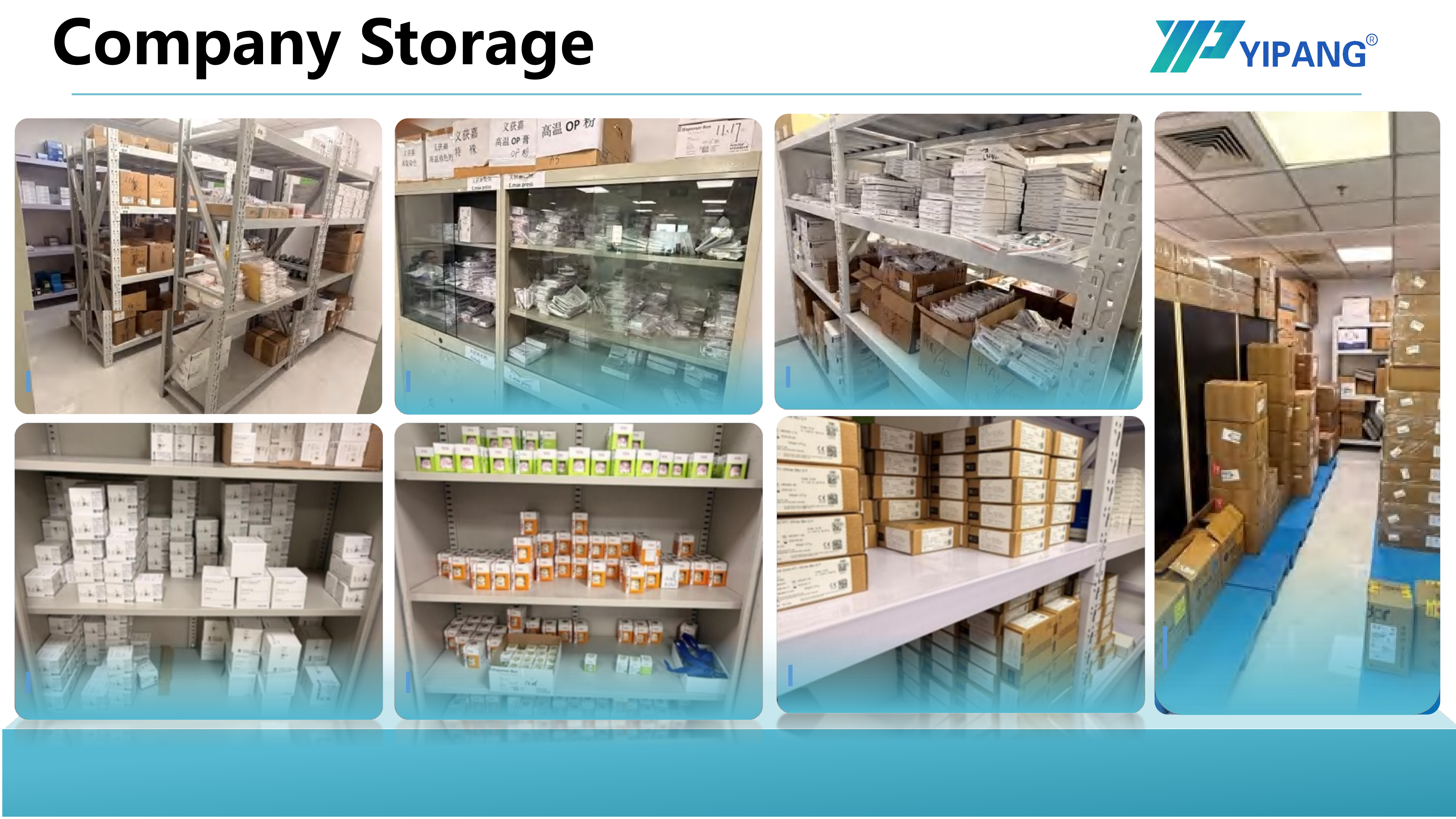
Qualification of a dental zirconia block begins with a documentation review, not with a sample batch. Image: YIPANG / Beijing Weijiahua Dentistry Equipment Co., Ltd.
A dental zirconia block is only as qualified as the documents that travel with it. In 2025, zirconia discs accounted for 63.1% of revenue in the global zirconia-based dental materials market, while CAD/CAM milling accounted for 82.4% of revenue generated in the zirconia dental manufacturing process, according to Grand View Research. At that scale, most dental laboratories are not choosing between one block and another so much as between one documentation package and another.
That is the gap this article addresses. It explains what the words “compliance” and “qualification” actually describe when applied to a dental zirconia block, which claims a laboratory can check independently, which claims depend entirely on the supplier’s own process control, and where the boundaries sit. The reference product used throughout is the YIPANG 4D-PRO-ML zirconia block, a CAD/CAM dental milling blank supplied by Beijing Weijiahua Dentistry Equipment Co., Ltd. No certification, approval or test result is assumed in this article unless it is stated as a documented fact. That restraint is deliberate, because the discipline of separating “declared” from “verified” is precisely what compliance reading is for.
The Compliance Question Behind Every Zirconia Order
Compliance is not a single certificate, and qualification is not a single approval letter. For a millable ceramic blank, both terms describe four sequential questions. What is this material, chemically and by grade? What performance does it guarantee, in stated numbers? Under what process window does it deliver that performance? And under which regulatory framework is it placed on the market?
The regulatory layer is the one most often misread. In the European Union, Medical Device Regulation (MDR 2017/745) classifies most dental implants and restorative materials as high-risk, requiring intensive clinical data, according to the European Commission. That classification has a practical consequence for laboratories: documentation obligations flow down the supply chain, and a supplier that cannot explain its regulatory position in plain terms creates risk for the laboratory that specifies it.
A distinction worth holding onto: a specification sheet is a supplier declaration. It is legitimate evidence and it is checkable, but it is not the same thing as an independent test report or a third-party certificate. Laboratories that blur the two end up qualifying suppliers on presentation rather than on evidence.
The opportunity here is unglamorous but real. A laboratory that reads documents in a fixed order — identity, specification, process, regulatory status — can reject unsuitable blocks before spending money on samples, and can raise purchasing confidence without raising purchasing volume.
Four Document Layers That Define a Qualified Zirconia Block
The four layers are sequential, not parallel. A complete regulatory file cannot compensate for an unstated material grade, and a strong material claim cannot compensate for an undefined sintering window, because the laboratory — not the supplier — owns the firing step.
| Layer | Question it answers | What a laboratory should request |
|---|---|---|
| Material identity | Is the blank the material and stabilizer it claims to be? | Composition statement, grade or material classification, shade system, lot identification |
| Specification | Which numbers define performance, and within which dimensional range? | Diameter, thickness options, sintering temperature, strength values, translucency class |
| Process control | Can the laboratory reproduce the stated result in its own furnace? | Recommended sintering curve and holding time, equipment compatibility, handling and cooling requirements |
| Regulatory status | Under which framework is the product placed on the market, and how is it traceable? | Regulatory classification, declaration of conformity where applicable, labelling and batch traceability records |
Layer one is where most sourcing conversations go wrong. “Zirconia” is a family name, not a grade. Grand View Research reports that the 3Y-TZP grade held the largest revenue share of 35.9% in the dental zirconia market in 2025, which means a large share of the market trades on a specific grade designation rather than a generic material label. When a supplier states a material family, and a laboratory protocol requires a grade designation, the correct response is a written confirmation — not an assumption.
Reading a Product Specification as Compliance Evidence: 4D-PRO-ML
Beijing Weijiahua Dentistry Equipment Co., Ltd. (brand: YIPANG) is a dental industry manufacturer established in 1996. The company operates a 2,000-square-meter manufacturing facility with approximately 80 employees and an annual production capacity of about 10 million US dollars, and it runs a 25-engineer research and development team working on dental material formulation, process optimization and new product development. Roughly 40% to 55% of its products are exported, serving markets in the Middle East, Southeast Asia, South America, North America, Eastern Europe, North Africa and Australia. Its product lines include Zirconia Blocks, Glass Ceramics, Press Ingots, PMMA, Wax, Titanium Blocks, Implant Abutments, 3D Scanners, Intraoral Scanners, Milling Machines, 3D Printers and Sintering Furnaces — a breadth that matters in compliance terms, because a supplier that also builds the furnace has to be able to explain the boundary between its material documentation and the laboratory’s equipment qualification.
The 4D-PRO-ML is classified as a dental zirconia disc and a CAD/CAM dental milling blank, intended for dental prosthesis work in the dental laboratory, dental prosthetics and dental CAD/CAM industries. It is made of zirconium dioxide (ZrO2) with yttria stabilization and is offered in ML multilayer shades.
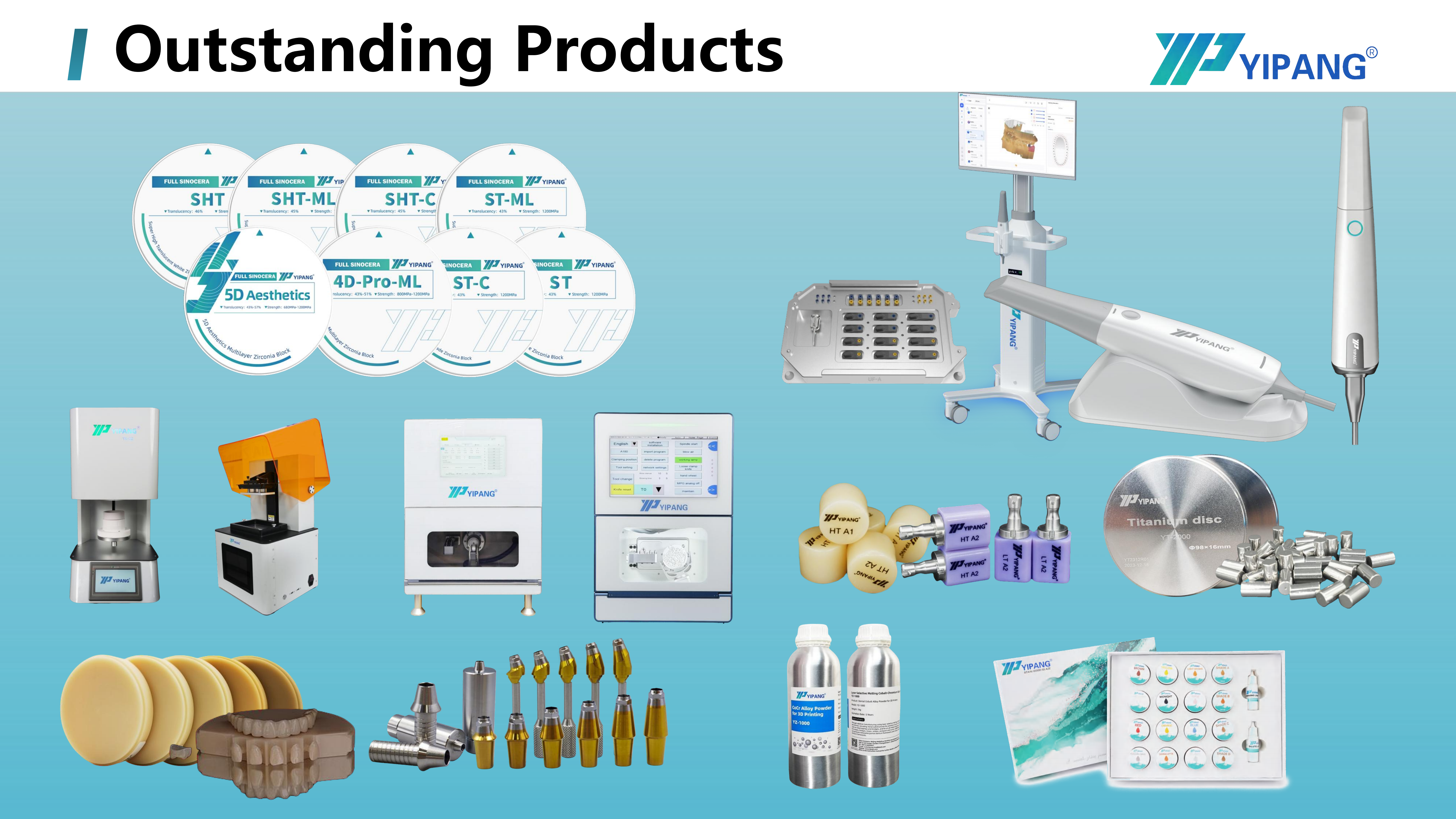
The YIPANG 4D-PRO-ML dental zirconia block: a 98 mm CAD/CAM milling blank in ML multilayer shades with thickness options from 10 mm to 20 mm. Image: YIPANG.
| Stated parameter | Value | How a laboratory uses it during qualification |
|---|---|---|
| Material | Zirconium dioxide (ZrO2) with yttria stabilization | Defines the material family; where a protocol requires a specific grade designation, confirm it in writing |
| Product type | Dental zirconia disc / CAD/CAM dental milling blank | Confirms the blank is intended for subtractive CAD/CAM workflows |
| Diameter | 98 mm | Must match the milling machine’s blank holder and nesting strategy |
| Thickness options | 10, 12, 14, 16, 18, 20 mm | Sets the maximum restoration height and the number of units per blank |
| Sintering temperature | 1450 °C listed; processing guidance describes a 1430 °C–1450 °C range | Becomes the furnace program; the working range, not the headline number, is what operators set |
| Bending strength | ≥1200 MPa | Supports load-bearing indications; the value is a declared specification |
| Translucency | Medium translucent | Signals aesthetic positioning and indicates where an alternative material may be preferred |
| Equipment compatibility | Compatible with most mainstream dental milling machines | Requires the laboratory to verify its own machine rather than rely on “most” |
| Intended use | Crowns, bridges and aesthetic dental restorations | Anchors the qualification to a defined indication range |
Read this way, a specification sheet stops being marketing copy and becomes a checklist. Two entries deserve particular attention. First, the material is stated as ZrO2 with yttria stabilization rather than under a grade designation such as 3Y-TZP. That is not a defect in the document; it is an instruction about what still needs to be confirmed if a laboratory’s internal protocol references grade classifications. Second, the sintering entry carries two complementary figures: a listed temperature of 1450 °C and a working range of 1430 °C to 1450 °C in the processing guidance. Operators should program the range that the manufacturer’s procedure describes, not the single headline number.
Where Qualification Is Tested: Milling, Sintering and Equipment Control
This is the point at which the compliance chain leaves the supplier’s hands. The intended application environment for 4D-PRO-ML is an indoor, constant-temperature dental laboratory. The block is processed on a dental milling machine and sintered in a dental sintering furnace, with matched equipment listed as Dental Milling Machine, Dental Sintering Furnace and Dental Lab Scanner. The stated special requirement is unambiguous: the standard sintering temperature curve must be followed strictly during processing.
The published procedure is short enough to summarize in full. The milled zirconia workpiece is placed on a sintering tray. The heating curve is set to a peak of 1430 °C to 1450 °C with an appropriate holding time. After sintering is complete, the workpiece cools naturally. Two safety constraints accompany the procedure: avoid rapid temperature change to prevent cracking, and do not exceed the maximum sintering temperature. The stated objective is low shrinkage after sintering and stable translucency.
Compliance implication: a supplier can declare a sintering window; only the laboratory can prove that its furnace delivers it. Furnace calibration records, tray loading practice and cooling discipline are part of material qualification, even though they are not printed on the block packaging. A documentation file that omits the process window is incomplete, and a laboratory file that omits furnace records is equally incomplete.
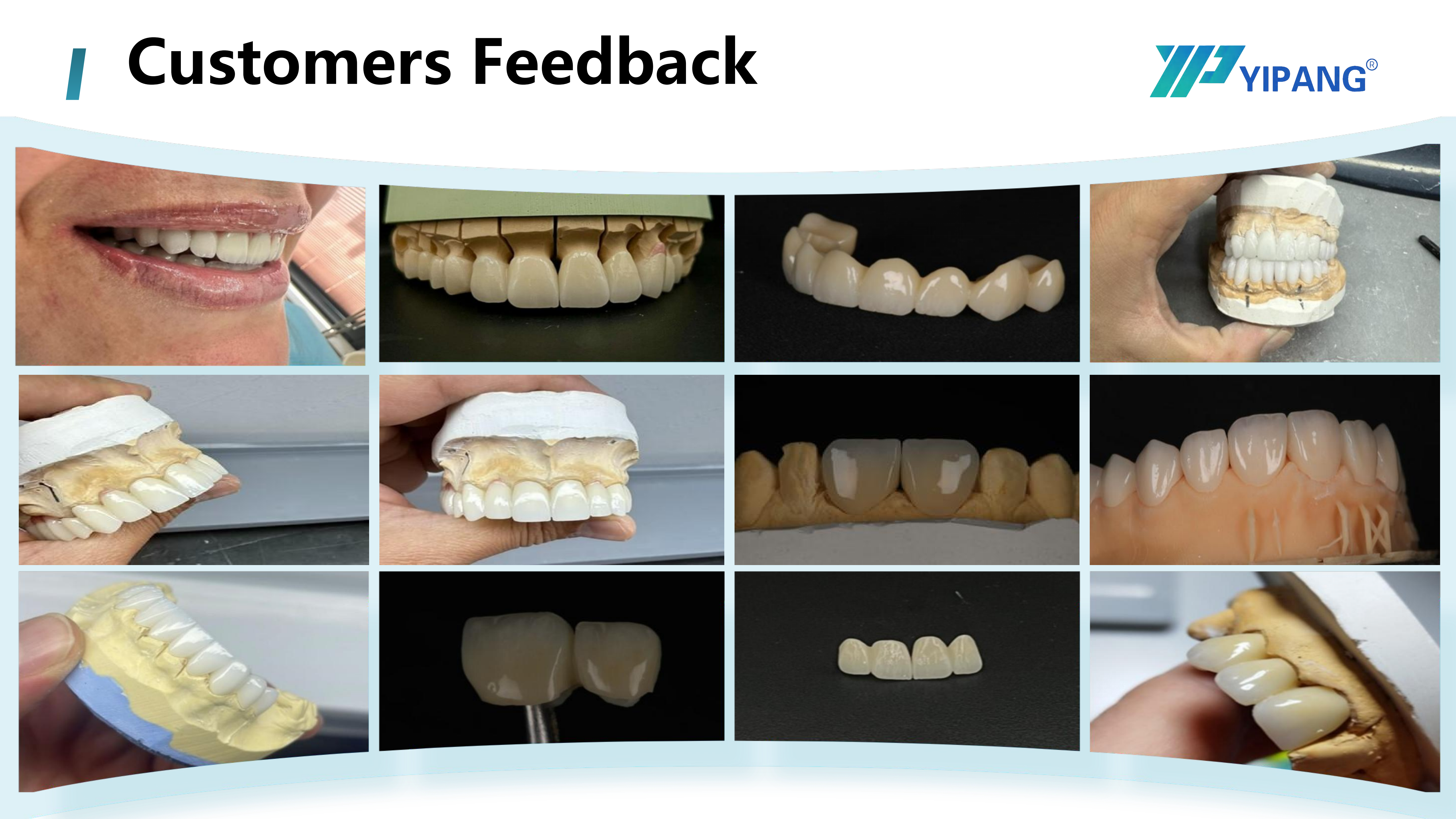
Process control begins at the manufacturer and ends in the laboratory’s sintering furnace. Image: YIPANG.
Application Scope: Which Lab Scenarios the Compliance Story Must Cover
Beijing Weijiahua Dentistry Equipment Co., Ltd. specializes in full-contour crowns, bridges, veneers and implant superstructure restorations, and the 4D-PRO-ML specification is aligned with that scope: crowns, bridges and aesthetic dental restorations. The intended user base is the dental laboratory, dental prosthetics and dental CAD/CAM industries. Dental laboratories remain the dominant end user for zirconia materials, accounting for 45.3% of market share in 2025, according to Grand View Research — which is why documentation is normally evaluated at the laboratory bench rather than at the clinic.
Three scenario profiles shape what a laboratory should ask for:
- Routine crown and bridge production. The decisive documents are lot traceability and the sintering curve. Throughput stability depends on repeating the same program across identical blanks, so blank-to-blank consistency matters more than any single peak value.
- Implant superstructure work. Tolerance-sensitive indications make dimensional behaviour after sintering the central question. The stated low-shrinkage behaviour and the 98 mm diameter blank format are the relevant specification entries here.
- Aesthetic anterior cases. The medium translucent classification and ML multilayer shade system define the aesthetic envelope. Where a case sits outside that envelope, material substitution is a legitimate engineering decision rather than a supplier failure.
Across all three, the matched-equipment list is a reminder that zirconia qualification is systemic. A block, a milling machine, a sintering furnace and a laboratory scanner form one chain, and the weakest link in that chain sets the real performance ceiling.
Market Signals: Why Documentation Is Becoming a Procurement Artifact
The commercial backdrop explains why documentation is gaining weight. Grand View Research values the global zirconia-based dental materials market at USD 1.2 billion in 2025, projected to reach USD 2.3 billion by 2033. The same source reports that the United States accounted for 40% of revenue in that market in 2025, and that CAD/CAM milling represented 82.4% of zirconia dental manufacturing process revenue — a figure that tells buyers where process variability actually originates.
One caveat belongs in any serious trend discussion. Published market estimates for zirconia-based dental materials diverge widely: Grand View Research reports USD 1.2 billion for 2025, while SNS Insider reports USD 367.67 million for the same year, because the two sources define the market scope differently. The same discipline that applies to market numbers applies to specification sheets: read the definition before quoting the figure. A number without a scope is not evidence, in either case.
Zirconia vs Glass Ceramic and PMMA: Boundaries Buyers Should Accept
Zirconia is not a universal substitute, and the documentation trail shows why. Glass ceramics follow a different qualification logic built around press ingots, porcelain furnaces, firing paste, staining glaze and glaze paste — a heat-treatment and layering workflow rather than a sintering workflow. Lithium disilicate accounted for approximately 28% of all all-ceramic dental restorations globally as of 2024, according to Business Research Insights, and Intel Market Research projects that market to grow from USD 320 million in 2025 to USD 920 million by 2032 at an 18.8% CAGR. Even that growth figure carries a documented range: independent forecasts for the segment vary between roughly 15% and 24% depending on regional adoption assumptions. PMMA discs occupy a further, distinct position, typically serving interim and temporary applications with their own material profile.
Three boundaries are worth stating plainly.
- Translucency limits. The 4D-PRO-ML is specified as medium translucent with ML multilayer shades. For indications where maximum translucency is the priority, a glass ceramic may remain the appropriate choice, and a laboratory should not read a zirconia specification as covering every aesthetic requirement.
- Dimensional limits. The stated specification applies to a 98 mm diameter blank in thicknesses from 10 mm to 20 mm. A laboratory using a different blank format cannot automatically carry the same assumptions across.
- Documentation limits. Supplier specifications are declarations. Unless a supplier supplies third-party documentation, the compliance file rests on the manufacturer’s own process control — which is a normal and accepted basis in this industry, but should be understood for what it is.
The practical conclusion is not that one material wins. It is that a laboratory should be able to state, in writing, which document supported each material decision it made.
Future Outlook
With CAD/CAM milling already representing the overwhelming majority of zirconia processing revenue and the zirconia-based dental materials market projected to roughly double by 2033, the competitive pressure in this category will increasingly fall on verifiability rather than on availability. Blocks are abundant; auditable documentation is not.
Three shifts are reasonable to expect. Lot-level traceability will move from a request to a baseline expectation as regulatory frameworks continue to place restorative materials under intensive scrutiny. Sintering documentation will be treated as part of the material file rather than as an internal production note, because the declared performance window is only as good as the furnace program that executes it. And material decisions will be reviewed at reorder, not only at first approval, since a compliance file that is never revisited quietly becomes an assumption.
For a dental laboratory, the durable advantage is procedural: a fixed document-review sequence, a written record of what was confirmed and by whom, and a clear line between what the supplier declared and what the laboratory verified.
FAQ
1. What documents should a dental laboratory request before qualifying a dental zirconia block supplier?
A laboratory should request documentation at four levels: material identity (composition statement, material or grade classification, shade system and lot identification), specification (diameter, thickness options, sintering temperature, strength values and translucency class), process control (recommended sintering curve and holding time, equipment compatibility, cooling and handling requirements), and regulatory status (the product’s regulatory classification, declaration of conformity where applicable, and batch traceability). The four levels are sequential: an unstated material grade cannot be corrected by a strong regulatory file.
2. How are dental zirconia blocks and restorative materials classified under EU MDR 2017/745?
Under the European Union’s Medical Device Regulation (MDR 2017/745), most dental implants and restorative materials are classified as high-risk and require intensive clinical data, according to the European Commission. This classification affects the documentation that must accompany a product placed on the EU market, and it is one reason laboratories in Europe increasingly ask suppliers to explain their regulatory position in writing rather than relying on generic compliance statements.
3. What sintering temperature and curve does the YIPANG 4D-PRO-ML zirconia block require?
The published processing guidance recommends a sintering temperature range of 1430 °C to 1450 °C, while the product specification lists a sintering temperature of 1450 °C. The published procedure is: place the milled zirconia workpiece on a sintering tray; set the heating curve up to 1430 °C–1450 °C with an appropriate holding time; and allow natural cooling after sintering. Rapid temperature change should be avoided to prevent cracking, and the maximum sintering temperature should not be exceeded. The stated outcome is low shrinkage and stable translucency.
4. Which zirconia grade holds the largest market share, and how should a laboratory confirm the grade of a specific block?
Grand View Research reports that the 3Y-TZP grade held the largest revenue share of 35.9% in the dental zirconia market in 2025. The YIPANG 4D-PRO-ML is documented as zirconium dioxide (ZrO2) with yttria stabilization, which defines the material family rather than a specific grade label. Where a laboratory’s internal protocol references a grade designation, the correct step is to obtain written confirmation of that designation from the supplier instead of inferring it from the material family.
5. Which equipment must be qualified for dental zirconia processing, and why does it matter?
Processing the 4D-PRO-ML involves a dental milling machine and a dental sintering furnace, with a dental lab scanner listed among the matched equipment, and the intended working condition is an indoor constant-temperature dental laboratory environment. Equipment qualification matters because the manufacturer declares the sintering window while the laboratory executes it. Unless furnace calibration, tray loading and cooling practice are controlled, the declared low-shrinkage behaviour and translucency stability cannot be reproduced, however accurate the specification sheet is.
6. When is zirconia not the preferred material compared with glass ceramic or PMMA?
Material boundaries are defined by indication, not by ranking. Zirconia blocks such as the medium translucent 4D-PRO-ML in ML multilayer shades suit crowns, bridges and aesthetic restorations within their stated dimensional range, but where maximum translucency is the dominant requirement, a glass ceramic may be the better fit — lithium disilicate accounted for approximately 28% of all all-ceramic dental restorations globally as of 2024, according to Business Research Insights. PMMA discs occupy a separate position, typically serving interim applications. The specific grade, shade and processing documentation should always be confirmed against the intended indication before substitution decisions are made.
For readers who need the supplier’s background information in a single reference file, the WJH company information brochure is available for download: WJH Company Information (PDF).
¿Tiene preguntas o necesita más detalles?
Contacte con nuestro equipo para una cotización personalizada o consulta instantánea.
Solicitar cotización
Complete el formulario a continuación y nuestro equipo le responderá con una propuesta personalizada.
Chat directo de WhatsApp
¿Prefiere chatear en tiempo real? Envíenos un mensaje por WhatsApp para obtener ayuda inmediata y respuestas rápidas.
- Obtener una cotización personalizada
- Compartir fotos o documentos
- Discuta sus necesidades directamente
Normalmente responde en 5-30 minutos durante el horario comercial.