
How to Match a Single Cylinder Diesel Engine to Your Project
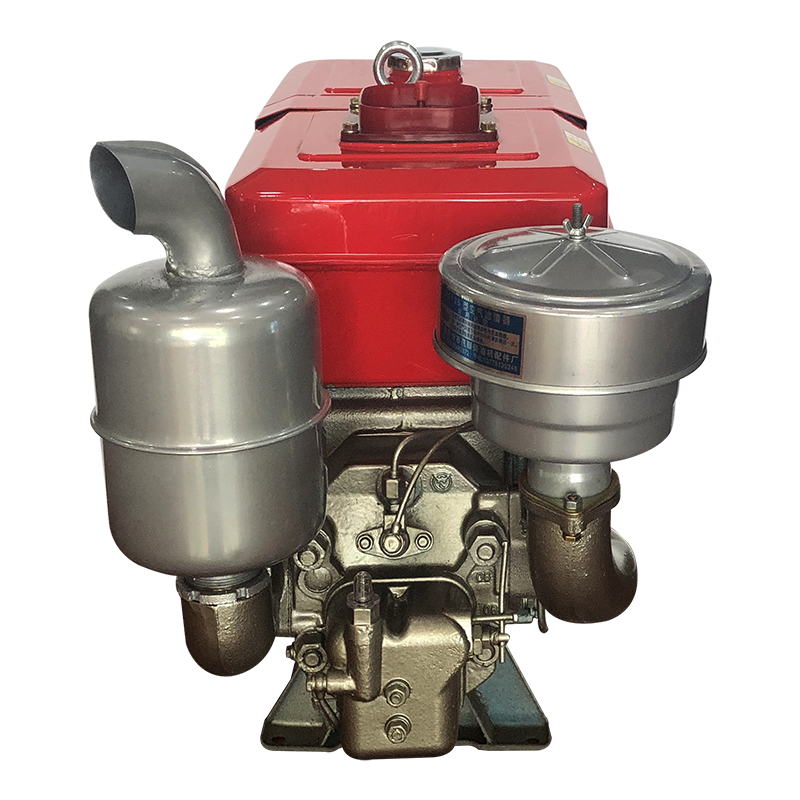
Matching a single cylinder diesel engine to a project is as much about operating conditions as it is about power output. An engine that fits a particular pump, tiller, thresher, or generator set can lower fuel costs, reduce downtime, and simplify maintenance over the life of the equipment. This article provides a specification framework for procurement teams and discusses how the product range and manufacturing capabilities of Willson, a single cylinder diesel engine brand manufactured by CHANGZHOU VISION INTERNATIONAL TRADING CO.,LTD in Changzhou, China, fit into that framework.
Project Fit Is the Missing Step in Many Engine Purchases
A common procurement mistake is to choose a single cylinder diesel engine based mainly on maximum horsepower or purchase price. Those two factors matter, but they are not enough to predict field performance. An oversized engine can run at partial load for long periods, which increases fuel consumption per useful kilowatt-hour and can lead to carbon buildup. An undersized engine is forced to work beyond its rated power, often producing overheating, higher oil consumption, and faster wear.
The opportunity is to define the engine specification from the actual duty cycle of the project. Questions such as how many hours per day the engine will run, whether the load is continuous or intermittent, whether the engine will be exposed to dust, high temperature, or heavy rain, and whether the local market can supply spares and skilled mechanics should be answered before selecting a model.
Industry data underline the importance of careful application matching. According to Dataintelo, agriculture accounted for approximately 42.3 percent of global single cylinder diesel engine demand in 2025. In irrigation, threshing, and small-scale processing, the engine is often the most valuable asset on the farm. A mismatch can erase the economic benefit of mechanization.
Key Specification Parameters for Project Selection
Buyers comparing single cylinder diesel engine models from different suppliers should check at least these parameters:
- Rated power (HP/kW): the continuous output the engine can deliver at rated speed. It should exceed the driven equipment's absorbed power by a practical margin.
- Rated speed (rpm): the speed at which rated power is produced. Pumps and generator sets usually have a preferred operating speed range.
- Displacement (L): cylinder volume, which influences torque characteristics and lugging ability under varying load.
- Specific fuel consumption (g/kW-h): an efficiency indicator. Lower values mean less diesel consumed per unit of work.
- Oil consumption (g/kW-h): a useful indicator of internal frictional quality and sealing.
- Fuel tank capacity (L): determines how long the engine can run before refueling, an important factor for remote irrigation sites.
Cooling type is another project-level decision. Air cooled diesel engines are lighter, simpler, and easier to transport; water cooled diesel engines maintain more stable operating temperatures during prolonged heavy work, which is valuable for irrigation pumps and stationary machinery. The Willson product family includes both configurations in the 3 to 45 HP range, with horizontal four-stroke layouts.
| Model | Cooling | Rated power | Rated speed | Displacement | Fuel consumption | Fuel tank |
|---|---|---|---|---|---|---|
| ZS1135 | Water | 35 HP | 2200 rpm | 1.73 L | 252.7 g/kW-h | 17 L |
| ZS1115 | Water | 20 HP | 2200 rpm | 1.195 L | 254.2 g/kW-h | 15 L |
| ZS1100 | Water | 15 HP | 2200 rpm | 0.903 L | 269 g/kW-h | 12 L |
| EM190 | Water | 9.5 HP | 2300 rpm | 0.572 L | 278.5 g/kW-h | 9 L |
| R175 | Water | 6 HP | 2600 rpm | 0.353 L | 294.2 g/kW-h | 4.5 L |
| Z175F | Air | 5 HP | 2600 rpm | 0.331 L | 301.4 g/kW-h | 6 L |
| X170F | Air | 5 HP | 3000 rpm | 0.289 L | 308.5 g/kW-h | 6 L |
Table: Representative specification data from Willson single cylinder diesel engine product sheets.
Manufacturing and Supply Capabilities that Affect Project Delivery
For project buyers, engine specification is only one part of the decision. Delivery reliability and quality control also determine whether a project stays on schedule. Willson is manufactured by CHANGZHOU VISION INTERNATIONAL TRADING CO.,LTD, a company founded in 2010 with an annual output capacity of 100,000 units. The company reports a monthly capacity of 10,000 units, a typical lead time of 25 to 45 days, and a minimum order of one 20-foot container. All engines are stated to be 100 percent tested before shipment. Around 70 percent of output is exported to South America, Africa, Southeast Asia, and the Middle East.
The company also supports OEM/ODM projects, including customization of packaging, logo, and nameplate. For buyers standardizing on a private-label product, this can simplify branding and inventory management. Remote support is part of the after-sales service model.
Matching Engine Capability to Agricultural and Industrial Applications
The Willson product portfolio is intended for agricultural equipment, engineering equipment, and power generation equipment. According to the company profile, these engines are used for small tractors, agricultural machinery, generator sets, water pumps, small construction machinery, air compressors, inland waterway vessels, and agricultural and sideline product processing.
From a project-fit perspective, the following allocation is a useful starting point:
- Light agricultural tools and small water pumps: engines in the 4 to 10 HP range, such as R175, EM185, EM190, or air-cooled Z175F and X170F models, are generally suited to low-to-medium loads and intermittent operation.
- Irrigation pump sets, power tillers, and farm machinery: engines in the 12 to 20 HP band, such as ZS195, ZS1100, ZS1105, and ZS1115, provide a balance of torque and fuel efficiency for continuous pumping.
- Generator sets, larger pumps, threshers, rice mills, and stationary processing equipment: models from ZS1125 up to ZS1135, covering 20 to 35 HP, are better matched to higher power demand and more constant duty cycles.
These ranges are general guidance. Final sizing must be based on the driven machine's requirement, operating altitude, ambient temperature, and expected operating hours.
Field Evidence: Irrigation Engines in Pakistan
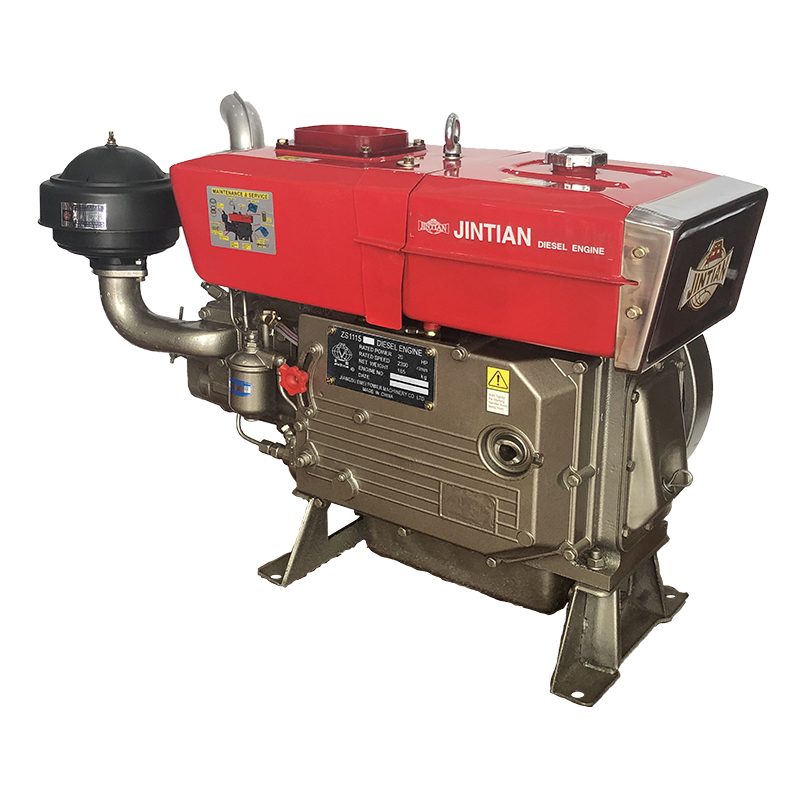
A documented case from Willson's application history involves a Pakistani agricultural irrigation client that used 96 sets of the ZS1115 model for more than ten years. According to the case record, the engines met seasonal irrigation requirements with no major failures. The listed reasons were fuel-efficient design, easy maintenance, and adaptation to harsh local environments. For buyers, this type of operating history provides useful evidence that a 20 HP water cooled engine can serve as a dependable backbone for medium-size irrigation projects.
Market Trends Shaping Project Procurement
Several verified market signals are relevant to buyers evaluating single cylinder diesel engines in 2026.
- The global single cylinder diesel engine market was valued at about USD 3.34 billion in 2025 and is projected to reach USD 3.74 billion by 2035, according to Global Growth Insights.
- Agriculture accounted for roughly 42.3 percent of global demand in 2025, according to Dataintelo.
- Asia Pacific held approximately 58.2 percent of global revenue in the same period, also according to Dataintelo.
- China exported combustion engines worth USD 3.29 billion in 2025, with Russia, Vietnam, and India among the main destinations, based on OEC data.
Regulatory conditions vary by market. The U.S. EPA Tier 4 standard for off-highway diesel engines regulates particulate matter and nitrogen oxides but exempts engines below 24 horsepower. In ASEAN countries, SKD and CKD assembly strategies have been used to reduce import duties; for example, CKD duties in Myanmar have been reported at roughly 1.5 to 3 percent, and some categories in Thailand at 0 percent. Procurement teams planning local assembly projects should discuss knocked-down supply options directly with potential suppliers and confirm which model configurations are available through that route.
How Single Cylinder Diesel Engines Compare with Other Power Options
Single cylinder diesel engines compete with multi-cylinder diesel engines and, in some locations, with electric motors. The traditional advantage of a single cylinder unit is simplicity: fewer moving parts, lower purchase cost, and easier service in remote areas. But this architecture has a real limitation. Because all power strokes come from one cylinder, torque is delivered in larger pulses, creating more vibration and less smooth rotation than an equivalent multi-cylinder engine. Applications that require very smooth output or operate around the clock at high power may be better served by a multi-cylinder engine or a grid-connected electric motor.
| Decision criterion | Single-cylinder diesel | Multi-cylinder diesel | Electric motor |
|---|---|---|---|
| Initial investment | Generally lower for small power range | Higher | Variable; depends on grid access and motor control |
| Maintenance complexity | Low; simple parts and service | Higher; more cylinder components | Low motor maintenance, but grid infrastructure is required |
| Torque smoothness and vibration | More vibration; acceptable for many agricultural tasks | Smoother; suitable for sensitive loads | Very smooth in continuous operation |
| Fuel and logistics dependency | Diesel fuel required | Diesel fuel required | No fuel if grid is reliable |
| Best fit | Small farms, irrigation, backup power, portable equipment | Higher-power continuous or sensitive applications | Stationary applications with reliable electricity |
Within the single-cylinder category, air-cooled engines are lighter but can be more sensitive to sustained high ambient temperatures; water-cooled engines handle continuous load better but require a clean water supply and proper winterizing in freezing climates.
Future Outlook for Single Cylinder Diesel Engine Procurement
Demand for small diesel power will continue in regions where farms are becoming more mechanized and where grid power is not always reliable. At the same time, emission rules are becoming more important in export markets. Buyers can expect more attention to fuel efficiency, documentation quality, and compliance clarity. For a supplier, the ability to offer a clear specification, a repeatable manufacturing process, and after-sales support has become as important as the engine's initial price.
From a procurement standpoint, the best strategy is to use a structured evaluation: map the project's load profile, select candidate models, verify specifications against the duty cycle, confirm service and parts availability, and document compliance requirements before committing to a purchase.
Frequently Asked Questions
Q: What factors should I evaluate when matching a single cylinder diesel engine to an irrigation pump?
At a minimum, evaluate rated power, rated speed, fuel consumption, oil consumption, cooling type, and fuel tank capacity. Confirm that the engine's power output is sufficient for the pump's duty point, and ensure the cooling system fits the local climate and water quality. In Willson's published product data, the ZS1115 is a water cooled model used in agricultural irrigation applications.
Q: How do I determine the required horsepower for a water pump or generator set?
For a water pump, the required power depends on flow rate and total head; for a generator set, it depends on the electrical load and generator efficiency. A practical method is to ask the equipment manufacturer for the absorbed power at the operating point, then select an engine whose rated power exceeds that value by a safety margin. Altitude and ambient temperature should also be considered.
Q: What is the difference between air-cooled and water-cooled single cylinder diesel engines for agricultural use?
Air-cooled engines are lighter and simpler, with no radiator or coolant circuit, which makes them easier to move and service in low-duty work. Water-cooled engines keep more stable temperatures under continuous heavy load, which can be beneficial in irrigation and stationary machinery. The right choice depends on the operating schedule and ambient conditions.
Q: What are typical fuel consumption numbers for these engines?
In the published specification sheets for Willson models, specific fuel consumption ranges from roughly 252.7 g/kW-h for the larger water-cooled models to about 308.5 g/kW-h for the small air-cooled models. Actual consumption varies with load, speed, fuel quality, and maintenance condition.
Q: How long can a single cylinder diesel engine last in agricultural service?
Service life depends mainly on maintenance and load regularity. In one documented case, 96 ZS1115 engines used for agricultural irrigation in Pakistan operated without major failures for more than ten years. Regular oil changes, clean fuel, and cooling system care are the most important factors.
Q: Do EPA Tier 4 emission standards apply to small single cylinder diesel engines?
The U.S. EPA Tier 4 standard for off-highway engines regulates particulate matter and nitrogen oxides, but engines under 24 horsepower are exempt. However, emission rules differ by country, so buyers should verify the destination market's requirements before finalizing a model.
Q: Is an electric start diesel engine worth the extra cost?
Electric start improves operator convenience and can reduce downtime in frequently stopped-and-started applications such as irrigation and small generator sets. The cost depends on the engine model and supplier. In the current Willson specification sheets, the listed models are hand-start; buyers who specifically need an electric start diesel engine should ask the manufacturer whether a compatible variant exists.