
How to Match a Light Guide Panel to Your Display Project: A Spec-by-Spec Guide
Selecting a light guide panel is not a one-spec decision. The same sheet of optical acrylic behaves differently in a slim retail light box, a ceiling panel running 24/7, or an elevator cabin wall that must match a textured finish. Buyers who compare only size and brightness often discover later that uniformity, operating temperature, ingress protection, and production lead time were the specifications that actually determined project success.
This guide translates application requirements into light guide panel specifications, using real production and application data from Shanghai-based manufacturer Edgelight as a reference point for procurement teams.
The Light Guide Panel Category: An Industry Snapshot
Light guide panels (LGPs) distribute light from edge-mounted LEDs across a flat surface, enabling slim, uniform illumination for displays, signage, and architectural lighting. The global Light Guide Plate market was valued at USD 3.91 billion in 2025 and is projected to reach USD 6.51 billion by 2034, with a 5.8% CAGR during the forecast period, according to Dataintelo.
Asia Pacific held a 48.2% revenue share in 2025, and consumer electronics accounted for the largest application segment at 42.5%. The material market follows the same trajectory: the PMMA market, the primary input for LGPs, was valued at USD 5.4 billion in 2024 with a 5.6% CAGR (USD Analytics). These figures confirm that LGP procurement is a growth-driven, supply-chain-sensitive decision rather than a one-time commodity purchase.
How This Guide Is Organized
- Application requirements — what you need the panel to do
- Specification matching — how to translate those needs into measurable parameters
- Production and supplier evaluation — how to assess capability before ordering
- Comparisons and limitations — where edge-lit technology fits and where it does not
- FAQ — common procurement questions with direct answers
Application Requirements: Start With the Installation, Not the Panel
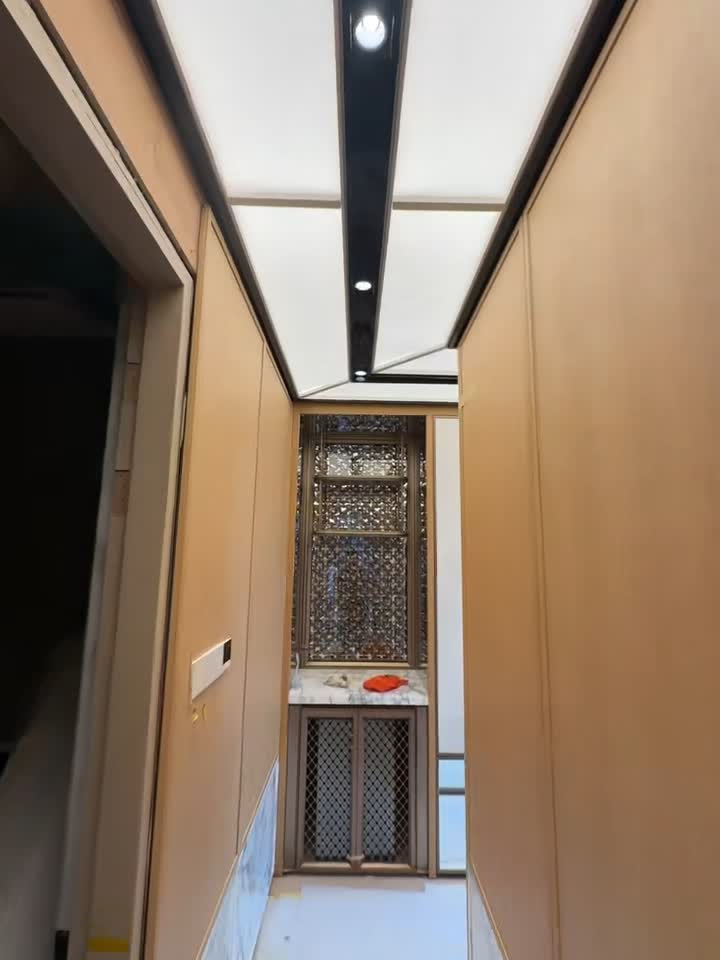
The first step in choosing a light guide panel is defining the physical and operational environment. In a typical retail showcase or shelf backlighting project, the panel must deliver uniform light through an ultra-thin edge-lit structure under continuous operation. Edgelight's application data identifies the following conditions for this scenario: operation in 24/7 mode, suitability for both interior and outdoor conditions, and use within the retail and luxury display industry, as well as hospitality and commercial interiors.
When an application runs continuously, the specification concerns go beyond brightness. Heat dissipation, driver matching, and material stability become primary factors. For projects in hospitality or commercial interiors, the light source also needs to work with the surrounding design — ceiling panels, lobby walls, and display cabinets all impose aesthetic and dimensional constraints.
Matching the Application to the LGP Sub-Type
Two common LGP topologies dominate display and signage projects:
- Edge-lit light guide panels: LEDs are placed along the edges of an acrylic or PMMA sheet, and micro-optical structures scatter light across the surface. This configuration allows very thin profiles and is the standard choice for ultra-slim applications. Edge-lit panels can achieve profiles as thin as 2.0 mm via injection molding or 3.0 mm via laser dotting (Lightpanel).
- Backlit light guide panels: LEDs are placed behind the panel with a diffuser stack. Backlighting is generally simpler to engineer for uniform brightness but requires more depth, which works against the thin-profile requirement in modern signage and display.
If the project brief calls for a slim light box, a showcase backlight, or a cabin wall panel, edge-lit is usually the relevant architecture. If the design allows depth and prioritizes maximum simplicity, backlit may be sufficient.
Key Light Guide Panel Specifications for Project Matching
Once the application is defined, the buyer can compare panels on a consistent set of parameters. The table below lists the specifications that matter most in project procurement.
| Specification | What It Determines | Typical Requirement for Display / Signage |
|---|---|---|
| Operating current & power | Driver selection, energy cost, heat load | 7.2A max, 144W max power; ~101W typical consumption |
| Luminous flux | Perceived brightness of the illuminated surface | >1080 lm |
| Color temperature | Visual tone for branding and interior design | 2700K–6500K range |
| Operating temperature | Safe ambient range for continuous operation | -20°C to 50°C for the panel system |
| Protection grade | Resistance to dust and water ingress | IP20–IP65 depending on environment |
| Material | Optical clarity, weatherability, dimensional stability | Acrylic (PMMA) |
Source for panel specs: Edgelight LGP product data. Global market data: Dataintelo, USD Analytics, Lightpanel.
What These Specs Mean for a Buyer
- Power and luminous flux tell you whether the panel can deliver the visual result at an acceptable energy cost. A high-flux panel may still fail a project if its power draw exceeds the site's driver or energy budget.
- Color temperature determines how the light interacts with surfaces and products. A retail brand aiming for warm prestige lighting needs a panel that can operate in the 2700K–3000K range; a signage display might need 6000K+ for a crisp daylight look.
- Protection grade is an environmental decision. An indoor shelf backlight may be fine with IP20. A light box partially exposed to weather needs a higher rating.
- Material selection is a longevity decision. Optical-grade acrylic is the mainstream choice for LGPs because it balances light transmission, machining properties, and resistance to yellowing. When an application requires a long service life and no yellowing, acrylic is the material to spec.
Choosing Between Edge-Lit and Backlit: A Comparison for Project Teams
Both edge-lit and backlit configurations can illuminate a display. The difference is in the engineering trade-offs.
| Comparison Factor | Edge-Lit Light Guide Panel | Backlit Configuration |
|---|---|---|
| Thickness | Ultra-thin possible (2–3 mm range) | Greater depth required for the light source and diffuser |
| Brightness uniformity | Requires precise micro-optics and edge LED placement | Easier to make uniform with a direct-lit array |
| Design freedom | Works for slim light boxes, wall panels, premium displays | Better suited to frames that can accommodate depth |
| Energy consumption | Favored in modern panels; depends on LED efficiency | May consume more power for equivalent surface brightness |
Edge-lit is not automatically better than backlit. For a very large-format display where depth is not a constraint, a direct backlight can simplify optical engineering and reduce the risk of visible hot spots near the LEDs. Edge-lit panels are selected when the application demands a thin profile, reduced material usage, or a cleaner visual integration with the surrounding structure.
Buyers should also be aware of a second limitation: extremely thin LGPs, especially those below 2 mm, are more fragile and require more careful handling during fabrication, transport, and installation. A project that values robustness over slimness may find a slightly thicker panel a better engineering fit.
Procurement rule of thumb: if the design brief says “ultra-thin” or “flush-mounted,” evaluate edge-lit first. If the brief says “large-format” and depth is not an issue, compare both architectures on brightness uniformity and total system cost.
Custom Size, Cut-to-Size, and OEM Matching
Most light box and display projects require custom dimensions. Edgelight's OEM/ODM capability includes size, thickness, color temperature, logo, surface shape, light output brightness, and installation structure customization. This is the specification layer that turns a catalog product into a project component.
What to Check Before Requesting a Custom Panel
- Size and thickness: confirm that the panel can be cut or molded to your frame dimensions without interfering with LED edge placement.
- Dot pattern design: if the panel uses a printed or laser-dotted micro-structure, check whether the pattern is customized for the panel size. A fixed pattern can lead to uneven brightness when the size changes significantly.
- Color temperature: specify the exact Kelvin range so the panel matches the brand or interior environment.
- Surface shape: some projects require curved or textured surfaces; confirm that the production process supports the geometry.
- Installation structure: ask about frames, mounting brackets, and compatibility with the diffuser and reflective films.
Edgelight's production data offers a useful benchmark for project scheduling: monthly capacity of 30,000 units, 5–10 days lead time, and MOQ of 1 unit. For teams evaluating a manufacturer, these numbers help answer two practical questions: “Can they produce my custom size at the volume I need?” and “Can they deliver on my timeline?”
Case Reference: Elevator Decoration
One documented application of the Edgelight LGP is elevator decoration. The product has been adopted by elevator manufacturers worldwide, with a reference project involving 10,000 units delivered over a 20-year cooperation period, with the stated result of stable operation. The project highlights included custom lighting, printing, and customized size and texture.
For buyers evaluating suppliers for a similar long-cycle project, this case demonstrates that LGP selection is not only a product decision but also a supplier-capacity decision. A decade-long relationship implies consistency in production quality, material supply, and responsiveness to evolving order volumes.
Manufacturing and Quality Evaluation Criteria
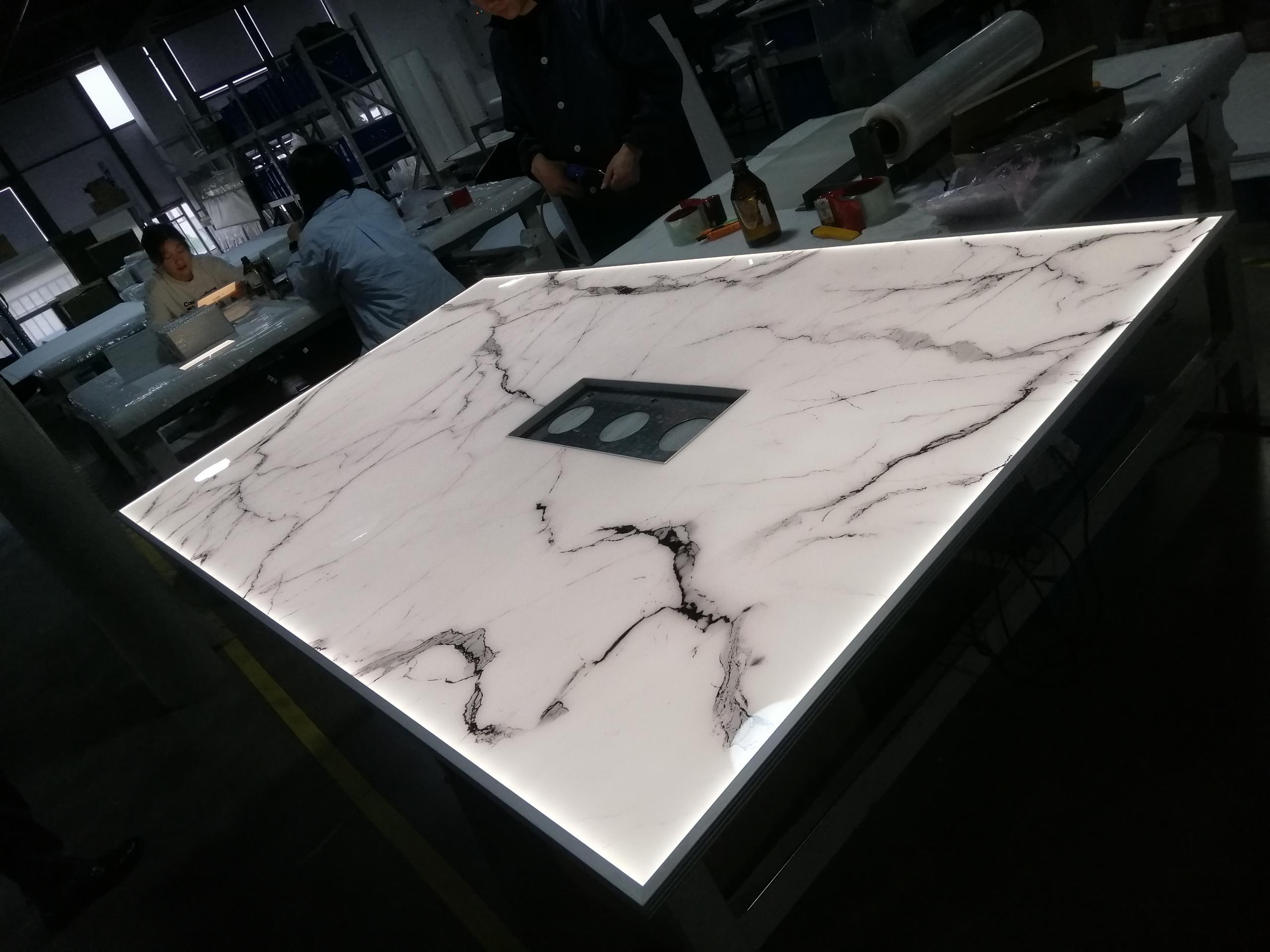
For project-based procurement, the supplier's production environment matters as much as the panel's optical data. A specification sheet cannot guarantee that the product will arrive on time or that every unit will perform identically. Buyers should verify the following capabilities:
Production Scale
Edgelight is a manufacturer with facilities in Shanghai (33,000 m²), Tianjin (20,000 m²), Germany (1,500 m²), the United States (1,679 m²), and an additional Shanghai production base (10,000 m²), with an annual output of 120,000 units and around 500 employees. This kind of footprint matters when an order spans multiple project phases or requires ongoing support in different regions.
Quality Control
Edgelight states that its OEM/ODM production uses 100% testing. For a custom-size panel that will be integrated into a display or light box, test coverage reduces the risk of on-site failures.
Engineering and R&D
An in-house engineering team of 25 engineers is part of Edgelight's stated capability. For custom optical designs, the engineering team's ability to simulate and adjust the dot pattern, LED spacing, and brightness profile is directly linked to final uniformity.
Supplier evaluation checklist for LGP projects:
- Does the supplier manufacture optical components in-house, or resell imported sheets?
- Can the dot pattern or micro-structure be customized for my panel size?
- What is the lead time for a custom-size order with 100% testing?
- Does the supplier provide local or regional after-sales support?
- Is the product tested for the operating temperature range of my installation site?
- Has the supplier produced similar projects for my industry?
Market Trends Affecting LGP Procurement
Three verifiable trends shape LGP purchasing decisions in 2025–2034:
1. Thin PMMA Substrates Dominate Display-Grade Shipments
According to Fact.MR / CHI MEI Corporation, thin PMMA light guide plate substrates below 2 mm accounted for over 60% of display-grade shipments for major manufacturers in 2024. This trend reinforces the move toward ultra-thin edge-lit panels and explains why manufacturers are investing in precision fabrication rather than thicker cast sheets.
2. Consumer Electronics Drives Demand
Consumer electronics was the largest LGP application segment in 2025 at 42.5%. Although this article focuses on advertising displays and signage, the same optical technology and supply chain serve the consumer electronics sector. Buyers in the signage industry benefit from the scale and cost structure created by this dominant segment.
3. Energy Regulations Are Tightening Efficiency Requirements
The 2024 International Energy Conservation Code (IECC) reduces lighting power allowances in the United States, which impacts the efficiency requirements for LGP-based LED panels. Although the regulation primarily applies to building lighting, it is a signal for all LGP buyers: energy efficiency is becoming a procurement constraint, not just a marketing feature.
Standards and Compliance Considerations
Light guide panels used in luminaires and LED equipment generally need to meet safety standards for market access. The relevant references include UL 8750 (LED Equipment) and IEC 60598 (Luminaires). These standards are not product specifications in the same way as luminous flux, but they affect whether a finished light box can be sold and installed in target markets.
Buyers should ask how the supplier handles compliance at the component and finished-product level. In many cases, the LED driver and the electrical assembly require certification even if the LGP sheet itself is a passive optical component.
Buyer Decision Framework: Matching a Project to an LGP
To consolidate the guidance above, use this five-step decision framework during the Research and Evaluation phase:
- Define the project environment. Indoor or outdoor? Continuous or intermittent operation? Temperature range?
- Define the visual target. Brightness, color temperature, uniformity expectation.
- Define the physical constraint. Thickness limit, size, surface shape, installation structure.
- Define the procurement constraint. Volume, lead time, MOQ, budget.
- Compare suppliers on evidence. Production capacity, quality testing, reference projects, customization capability.
This sequence works because it forces the buyer to evaluate the panel as part of a system — light source, power supply, frame, diffuser, reflective film, and mounting — rather than a standalone part.
Limitations and Boundaries of LGP Technology
A responsible procurement guide should state the boundaries of the technology and of the supplier data cited:
- Extremely thin panels trade robustness for slimness. Sub-2mm LGPs are more fragile and require careful handling.
- Uniformity depends on system integration. A high-quality panel paired with an incompatible LED strip or poor diffuser film will not deliver uniform light.
- Custom optical design may require longer lead times. Although standard custom sizes can be produced quickly, a new dot pattern or a novel surface shape may need engineering iterations.
- Supplier data is directional, not a performance warranty. The production figures and case references cited here describe Edgelight's recorded capabilities, but every project should be validated with a sample order and project-specific testing.
Frequently Asked Questions
What kind of projects use light guide panels?
Light guide panels are used in retail and luxury displays, hospitality and commercial interiors, exhibitions and museums, elevator decoration, advertising light boxes and signage, offices and high-end residential spaces, transportation and public areas, and consumer electronics backlighting. In the retail segment, they appear as showcase and shelf backlighting in projects that require uniform, ultra-thin edge-lit illumination.
Can a light guide panel be customized to a specific size?
Yes. Light guide panel manufacturers typically offer custom size, thickness, color temperature, logo, surface shape, light output brightness, and installation structure customization. If you are sourcing through an OEM/ODM supplier, confirm that the dot pattern or optical structure can be adjusted for your panel dimensions, and check the production lead time for a custom order.
What is the difference between edge-lit and backlit light guide panels?
Edge-lit panels place LEDs along the edge of a transparent acrylic or PMMA sheet and use micro-optical structures to distribute light across the surface, allowing ultra-thin profiles of around 2–3 mm. Backlit panels place LEDs behind a diffuser stack and require greater depth, but can simplify uniform brightness engineering. The choice depends on whether the project prioritizes thinness and design integration or maximum simplicity in deeper frames.
Can light guide panels be used outdoors?
Yes, if the product is specified for the environment. In Edgelight's application data, the light guide panel used for retail display showcase backlighting is designed to operate in both interior and outdoor conditions. Outdoor projects should specify adequate protection, such as IP55 dustproof and waterproof ratings, and must account for the operating temperature range of the installation site.
What material is used for light guide panels?
Acrylic (PMMA) is the primary material used for light guide panels. PMMA offers good optical clarity, light transmission, and resistance to yellowing, which makes it suitable for display applications with long service life requirements. The optical acrylic material is one of the key specifications in retail and hospitality lighting projects.
What is a typical lead time for an OEM light guide panel order?
Lead time depends on the manufacturer's capacity and the complexity of customization. Edgelight lists a standard lead time of 5–10 days for OEM/ODM light guide panel production, with a monthly capacity of 30,000 units and an MOQ of 1 unit. Engineering changes to the optical pattern or surface shape may extend the lead time.
What protection grade should an outdoor light box specify?
The required protection grade should match the installation environment. For an outdoor-rated LGP system for light boxes, a common specification is IP55 for dustproof and waterproof protection. The overall light box may also have its own IP rating for the complete assembly, including the frame and driver enclosure.
How to Use This Guide in Your Procurement Process
Use this article as a counterpart to the supplier's datasheet. A datasheet tells you what a panel can do; this guide helps you decide whether that capability matches your project's environment, visual target, and procurement constraints.
Edgelight, a Shanghai-based manufacturer founded in 2004, offers a starting point for supplier evaluation. Its LGP product specifications, OEM/ODM customization options, production capacity (30,000 units per month), and documented elevator decoration case provide checkable references. The company serves markets including the European Union, North America, Southeast Asia, and Australia, with an export ratio of around 75% of output.
Download the Edgelight product catalog for detailed specifications across its LED display, light box, and light guide panel product range.
View the Product Catalog (PDF)
This article is an industry reference for procurement teams and does not constitute a product warranty. Project-specific validation, including sample testing and compliance review, should be conducted with the selected supplier.