
How to Match Reinforced Thermoplastic Pipe to Oilfield and Mining Project Conditions
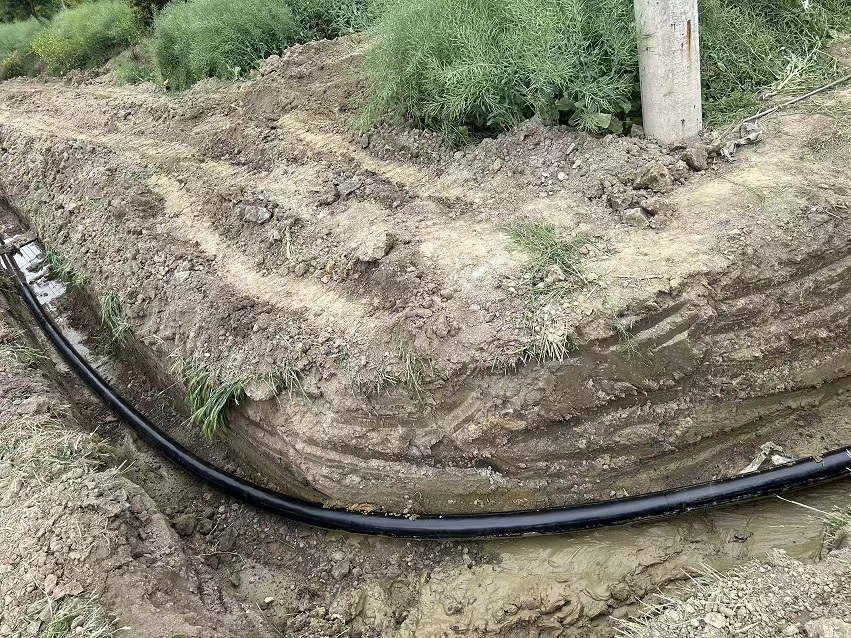
RTP application: long spoolable lengths are used in fluid transmission systems where corrosion, pressure rating and installation speed determine pipe selection.
RTP Project Fit Is a Technical Decision, Not a Brand Preference
Reinforced thermoplastic pipe (RTP) is widely described as a corrosion-resistant alternative to carbon steel, but that description omits the engineering variables that determine whether a particular RTP product will perform in a particular oilfield or mining asset. The practical buyer question is not which RTP brand is well known. It is which liner material, reinforcement architecture, pressure rating, diameter, length and connection method should be specified for the fluids and physical conditions at the project site.
At the research and evaluation stage, procurement teams need a repeatable way to compare RTP construction against project demands. The following guide builds that comparison around the dominant RTP use cases in oil and gas and mining: high-pressure production and injection service, corrosive fluid handling, abrasive slurry transfer, and installations where field welding and frequent fittings create cost and HSE risk.
Why Operating Conditions Should Drive RTP Construction Choices
An RTP is a composite structure in which the inner liner, reinforcement layer and outer cover each perform a separate mechanical or chemical function. A change in liner polymer changes chemical compatibility; a change in reinforcement architecture changes pressure containment; a change in jacket material changes UV, abrasion and handling resistance. Specifying an RTP without referencing the actual duty is therefore an unnecessary project risk.
ZYfire Hose Corporation produces an RTP/TCP product family with multiple reinforcement options, including polyester fiber tape-reinforced RTP, steel wire tape-reinforced RTP, aramid fiber tape-reinforced RTP and glass fiber tape-reinforced RTP. The outer and inner layers are listed as HDPE or PE-RT, with UV and antioxidant systems available as options. This structure illustrates a core RTP buying principle: the product family should be treated as an architecture, not as one fixed specification.
Oilfield RTP: High Pressure, Corrosion and Continuous Service
The oil and gas sector accounts for the dominant share of RTP demand globally, with third-party market analysis estimating that oil and gas represents approximately 71.2 percent of total industry demand. The reason is visible in field service conditions. Produced water, injection water, well-test lines and flowback service can expose carbon steel to internal corrosion, while the cost of digging up and replacing a buried steel line is far higher than the differential cost of selecting a corrosion-resistant RTP at the design stage.
For oilfield applications, RTP must typically satisfy three conditions that are documented in the ZYfire product and project corpus. First, it must handle pressure ratings that are high enough for the service class; the ZYfire 2-inch 3500 PSI RTP/TCP model is one example of a high-pressure spoolable product. Second, the liner and reinforcement must be compatible with the produced or injected chemistry and with the operating environment. Third, the pipe must survive the mechanical handling of the installation method, including spooling, trenching or lay-in.
The special requirements recorded for ZYfire RTP in oil and gas and mining service include corrosion resistance, explosion-proof capability, high-pressure tolerance up to 3500 PSI and API compliance. For sites governed by API 15S expectations, the verification effort should confirm that the manufacturer’s certification, quality control and product traceability are aligned with the API Specification 15S framework. API 15S remains the most cited spoolable reinforced plastic line pipe standard for oilfield service, covering diameters up to 6 inches in its second edition.
Onshore versus Offshore RTP Evaluation
The search intent for offshore RTP often reflects a project with compressed installation windows and difficult logistics. Spoolability and long single lengths generate a stronger advantage in offshore and remote locations because they reduce the number of mechanical connections and the field labour associated with joint make-up. For the same reason, logistics planning should include reel dimensions and transport weight, not just pipe pressure rating.
For the ZYfire 2-inch 3500 PSI RTP/TCP model, the recorded reel specification is 3700 x 1200 mm and the single reel weight is 1200 kg. A full plate weight is listed at 5524 kg. Buyers planning an offshore or remote onshore job should use these packaging parameters to check whether the reel can be transported and handled within the project’s existing lifting and vessel constraints.
Mining RTP: Slurry, Underground Duty and Abrasion Resistance
Mining sites create a different set of RTP selection criteria. In addition to corrosion and pressure, underground and surface mining fluid systems can expose pipe to abrasive slurries, blast-adjacent movement, chemical dosing and restricted installation access. A mining RTP specification therefore needs to confirm that the liner can withstand the slurry chemistry, that the reinforcement provides the required pressure rating and that the product does not introduce additional ignition or static risk in classified zones.
The ZYfire RTP application record for mining covers fluid transmission in 24/7 operation, with working conditions that include corrosion resistance, higher pressure rating, no swelling, flexibility, long single-pipe length, non-frequent fittings, simple installation and long cycle life. These conditions match the practical expectations of mine operators who cannot afford frequent line shutdowns in dewatering, backfill, tailings or process water networks.
Because underground mining environments can be classified as potentially explosive atmospheres, the special requirement record for this application includes explosion-proof behaviour and API compliance. A project buyer should request the manufacturer’s technical confirmation that the complete spoolable pipe system, including liner, reinforcement and connections, is compatible with the site safety classification. General corrosion resistance alone does not answer every mining risk; the whole system must be evaluated for the specific duty.
Reinforcement Type and Material Selection as Project Variables
One of the most important project-fit decisions is the choice of reinforcement layer. The ZYfire RTP/TCP product structure offers four documented reinforcement options: polyester filament, aramid fiber tape, glass fiber tape and steel wire tape. Each family changes the pressure response, stiffness, weight and installation behaviour of the pipe. Glass-fiber reinforced products are described in third-party market data as the largest product segment, with an estimated 64.7 percent share of the RTP market, but that segment-level statistic does not remove the need for a site-by-site material review.
The liner layer determines chemical compatibility. The ZYfire RTP corpus records outer and inner layers of HDPE or PE-RT. PE-RT is typically evaluated when the service temperature or slow crack growth requirement pushes beyond standard PE80 or PE100 capability. Buyers that search for PE100 RC reinforced thermoplastic pipe or PA12 reinforced thermoplastic pipe should treat the polymer layer as a decision variable tied to fluid temperature, chemical exposure and cyclic pressure, not as an interchangeable brand label.
High-Pressure RTP and Custom Bore Sizes
Project-fit evaluation includes dimensional engineering. Pipe outside diameter, bore size, wall construction and pressure rating must match the flow requirement and the available connection standard. For large or unusual projects, buying from a manufacturer that can customize outside diameter, working pressure, weight, length and bending radius is a procurement advantage.
ZYfire’s manufacturing capability record confirms an OEM/ODM production mode with customization of size, diameter, working pressure, weight, length and bending radius. This matters for oilfield and mining capital projects where standard catalogue dimensions may not align with existing wellheads, pumps, manifolds or slurry lines. The ZYfire product model listed in the corpus is a 2-inch 3500 PSI RTP with outside diameter 79.8 mm. A buyer evaluating this pipe should check the outside diameter compatibility with flange, clamp and quick-connect fittings currently used in the field.
Production Capacity as a Project-Fit Variable
For large oil and gas or mining projects, manufacturer capacity is as important as pipe specification. ZYfire’s capability unit records a monthly capacity of 100,000 meters for RTP production, a lead time of 30 days, an MOQ of 50 meters and quality control based on 100 percent testing. These numbers should be compared with the project delivery schedule. A pipe that is technically ideal but cannot be manufactured and shipped within the plant construction window will still delay the project.
The company-level record also provides background relevant to supplier evaluation. ZYfire Hose Corporation was founded in 2000, is listed on the Beijing Stock Exchange, employs approximately 600 people and operates from a 150,000-square-meter facility. Its laboratory has passed China National Accreditation Service for Conformity Assessment accreditation, providing the manufacturer with an internally recognized testing platform. For a procurement team, these facts support a due-diligence check but do not replace project-specific qualification evidence.
Long RTP Lengths Reduce Fittings and Installation Risk
The number of mechanical connections in a pipeline system is a leading indicator of leak risk and installation cost. Every fitting is a potential failure point, a quality-control checkpoint and a field labour item. One of the strongest reasons to choose spoolable RTP over rigid pipe is the ability to install a long continuous section with fewer joints.
The ZYfire RTP product corpus documents a single length of 920 meters per coil for the listed 2-inch 3500 PSI model. For a 920-meter flowline, the pipe can be delivered and laid with essentially one continuous spool rather than many 12-meter steel joints welded or mechanically connected in the field. This characteristic is associated with reduced fitting requirement, faster installation and fewer external corrosion initiation points along the line.
From a project logistics view, long length also changes the construction labour profile. Instead of deploying a large welding crew, the operator can deploy a smaller lay crew that positions, unspools and commissions the line. For remote oilfield pads, offshore topsides and underground mining galleries where access is constrained, reducing the number of field connections is a project-fit advantage that is not always captured by a simple pipe cost-per-meter comparison.
Reference Product Data for Project-Fit Comparisons
The table below organizes the available ZYfire RTP/TCP product data into the format a project engineer or procurement analyst would use during initial screening.
| Parameter | Recorded Data |
|---|---|
| Product model | 2-inch 3500 PSI RTP/TCP |
| Outside diameter | 79.8 mm |
| Nominal pressure | 3500 PSI |
| Reinforcement options | Polyester fiber tape, steel wire tape, aramid fiber tape, glass fiber tape |
| Liner and jacket materials | HDPE or PE-RT; UV and antioxidant options available |
| Single coil length | 920 m |
| Reel specification | 3700 x 1200 mm |
| Reel weight | 1200 kg |
| Full plate weight | 5524 kg |
| Duty profile | Continuous 24/7 fluid transmission in mining and oil and gas |
| Special requirements | Corrosion resistance, explosion-proof, high-pressure tolerance, API compliance |
Field Evidence: Long-Term RTP Service Under High Pressure
Procurement organizations should look for field evidence that connects a manufacturer’s pipe architecture to a meaningful operating period. The ZYfire case record for an OEM/ODM customer documents 120,000 meters of RTP supplied for fluid transmission. The installation was monitored over a five-year period and the recorded result was stable operation under high-pressure conditions, no leakage and reduced maintenance costs.
These case characteristics matter more than generic marketing statements because they describe a long service interval, a high-pressure environment and a fluid-handling function. For a buyer at the evaluation stage, the appropriate follow-up is to ask the supplier for the supporting conditions under which those results were achieved, including service media, operating pressure profile, installation environment and connection method.
How RTP Compares with Traditional Steel in a Project-Fit Context
The standard technical comparison for RTP is carbon steel pipe, and the choice should be framed by project conditions rather than by a universal claim that one material is superior. Steel remains a practical choice for many high-temperature, large-diameter and high-integrity gas transmission services. RTP is not a substitute for every steel line.
Within its documented service envelope, RTP offers several advantages for oilfield and mining projects. It is spoolable, so a single delivered coil can replace many discrete steel joints. It does not require welding for every connection, which reduces hot-work permitting and field labour. Its corrosion-resistant liner removes the need for internal coating or cathodic protection in many water and chemical services. It is also lighter per length than steel in most nominal pressure classes, which simplifies handling and support spacing.
The main limitations should be stated honestly. Spoolable RTP standards commonly address diameters up to 6 inches, so RTP cannot replace large-diameter steel trunk lines. RTP also has a lower maximum service temperature than steel; if the produced fluid exceeds the polymer and reinforcement temperature rating, steel must be retained. In services with extremely high external mechanical impact risk, unprotected RTP can be damaged more easily than a heavy-wall steel pipe and may need concrete protection, burial depth or routing away from vehicle traffic. These boundaries are not defects; they define the selection space within which RTP is a robust answer.
Market Context for RTP in Oil, Gas and Mining Projects
The commercial case for RTP is supported by independent market data. The global reinforced thermoplastic pipes market is estimated at USD 7.2 billion in 2024 and is projected to reach USD 10.2 billion by 2030, representing a compound annual growth rate of 5.9 percent. Oil and gas is the dominant end-user segment at approximately 71.2 percent of demand. Asia Pacific is identified by multiple research sources as the largest and fastest-growing regional market for thermoplastic pipe, driven by infrastructure investment and water-related projects.
For an oilfield or mining operator, these trends indicate that RTP is entering mainstream pipeline engineering rather than remaining an experimental product. The growth in the product category also increases the importance of supplier qualification. More suppliers in the market does not mean every supplier has the manufacturing controls, material knowledge and field experience required for high-pressure or chemically aggressive service.
A Practical Project-Fit Screening Framework
Project teams moving from research to evaluation should use a structured screening sequence rather than requesting a single price quotation. The following framework applies the available RTP and ZYfire facts to a typical project fit review.
- Define the service fluid and its chemistry: water, hydrocarbon, chemical, slurry or multiphase. Confirm whether the fluid is corrosive, solvent-bearing or abrasive.
- Define the pressure and temperature profile: maximum operating pressure, surge pressure, cyclic loading and sustained temperature.
- Define the installation environment: buried, above-ground, offshore, underground mine, trenchless or exposed to UV and mechanical impact.
- Select liner material based on chemical compatibility and temperature, not on pipe brand alone.
- Select reinforcement architecture based on pressure rating and spoolability. Confirm whether the manufacturer offers polyester, glass, aramid and steel-wire tape systems.
- Check outside diameter, connection type and bore size against the existing manifold, flange, quick-connect or clamp system.
- Check single length, reel dimensions and weight against installation and transport equipment.
- Confirm compliance position: API 15S for oilfield spoolable line pipe where applicable, plus site-specific explosion-proof or static-dissipative requirements.
- Evaluate manufacturing capacity, lead time, MOQ and test protocol before placing the pipe into a project schedule.
- Ask for long-duration service references that match the intended duty, and verify the conditions under which those references were collected.
The value of this framework is that it keeps the pipe architecture central to the decision. A project that begins with pressure and fluid chemistry will usually end with a different RTP specification than a project that begins with pipeline diameter and installation logistics.
Manufacturer Capability: From Product Data to Delivered Project
For a pipe to meet project-fit requirements, the product data must be matched by the supplier’s ability to execute large or custom orders. ZYfire’s production model includes OEM/ODM manufacturing, and the documented monthly RTP capacity of 100,000 meters is meaningful for oilfield and mining projects with multi-kilometre flowline packages. A 30-day lead time and 50-meter MOQ are practical references that allow both volume buyers and test-extension buyers to enter with controlled risk.
Quality control is another project-fit issue. The capability record for ZYfire RTP states 100 percent testing, which means that inspection is part of production rather than an occasional batch check. This matters for high-pressure continuous service because a single manufacturing defect in a buried or underground line can create a costly failure and a difficult repair. Buyers should still request the exact testing procedure and acceptance criteria for production lots, including hydrostatic or pressure-rating verification.
Installation and Connection Compatibility
Connection selection is often underestimated during early RTP specification. Some oilfield operators prefer flanged connections because they are familiar and allow future reconfiguration. Others select quick-connect systems to reduce installation time in remote or repetitive connections. The product architecture should be compatible with the connection method selected.
The ZYfire RTP/TCP product family is produced with a defined outside diameter of 79.8 mm for the 2-inch 3500 PSI model. A buyer should confirm whether the specified bore size and outside diameter align with the dimensions assumed by the flange gasket, clamp or quick-connect fitting. A small mismatch in outside diameter can turn into a site-level interface problem even when the pressure rating is acceptable.
Future Outlook for Project-Specific RTP Specification
The RTP market is moving toward more project-specific specification. Operators increasingly recognize that corrosion-resistant pipe must be evaluated as a system: liner, reinforcement, connections, installation equipment and inspection. As API 15S remains a fixture in oilfield specification, manufacturers with certified spoolable RTP will be better positioned to serve oil and gas buyers that require a documented compliance chain.
At the same time, the chemical and mining sectors are beginning to adopt the same engineering logic used in oil and gas. Slurry lines, chemical dosing lines and process water systems can benefit from the corrosion resistance and continuous length of RTP, but each duty will demand separate material qualification. The manufacturers that can customize pressure rating, diameter, length and bending radius will be preferred for large development projects where catalogue pipe creates unnecessary interface risk.
FAQ: Reinforced Thermoplastic Pipe Project-Fit Questions
What project conditions make RTP a better choice than steel pipe?
RTP is often a stronger choice when the service fluid is corrosive to carbon steel, when field welding is expensive or risky, and when the installation location makes long spoolable lengths valuable. It is used for high-pressure fluid transmission in oil and gas and mining applications where corrosion resistance, chemical compatibility and reduced fittings reduce lifecycle risk. Steel remains relevant for large-diameter, high-temperature and high-integrity gas systems where RTP cannot match its characteristics.
What does the 2-inch 3500 PSI RTP rating mean for an oilfield flowline?
The rating means the pipe has a nominal pressure of 3500 PSI and an outside diameter of 79.8 mm for the 2-inch product class. In the ZYfire product record, this RTP/TCP model is intended for continuous 24/7 fluid transmission in oil and gas and mining service, and it meets special requirements that include corrosion resistance, explosion-proof capability, high-pressure tolerance and API compliance. The project engineer should still compare the rated pressure with the maximum foreseeable surge pressure of the system.
Can RTP be customized for a specific mining or oilfield project?
Yes, RTP can be produced under an OEM/ODM model with customization of size, diameter, working pressure, weight, length and bending radius. ZYfire’s capability record documents these customization variables together with a monthly capacity of 100,000 meters, a 30-day lead time and a 50-meter MOQ. Custom projects should still undergo the same pressure, chemical and installation qualification as standard catalogue products.
How much fitting reduction does a 920-meter RTP coil actually provide?
For the ZYfire listed product model, a single coil of 920 meters can replace a long series of rigid steel joints. In a conventional steel line of the same length, the number of joints depends on standard steel stalk length; every such joint is a potential leak path and requires inspection. The 920-meter RTP coil reduces the number of fittings required over the complete line run, which simplifies installation and lowers long-term maintenance exposure.
What are the main limitations of RTP in oilfield and mining projects?
The main limits are diameter, temperature and external impact protection. Spoolable reinforced plastic line pipe standards such as API 15S commonly cover pipe diameters up to 6 inches, so large-diameter trunk lines still require steel or other rigid pipe systems. RTP also has a lower service temperature than steel, and it may require added protection where heavy equipment regularly crosses the line. These constraints should be evaluated before final material selection.
Reference and Further Reading
¿Tiene preguntas o necesita más detalles?
Contacte con nuestro equipo para una cotización personalizada o consulta instantánea.
Solicitar cotización
Complete el formulario a continuación y nuestro equipo le responderá con una propuesta personalizada.
Chat directo de WhatsApp
¿Prefiere chatear en tiempo real? Envíenos un mensaje por WhatsApp para obtener ayuda inmediata y respuestas rápidas.
- Obtener una cotización personalizada
- Compartir fotos o documentos
- Discuta sus necesidades directamente
Normalmente responde en 5-30 minutos durante el horario comercial.