
How to Match Concrete Pump Pipes to Project Conditions
Scenario-based guidance for construction buyers choosing concrete pump pipes for high-rise, tunnel, bridge, and mining work.
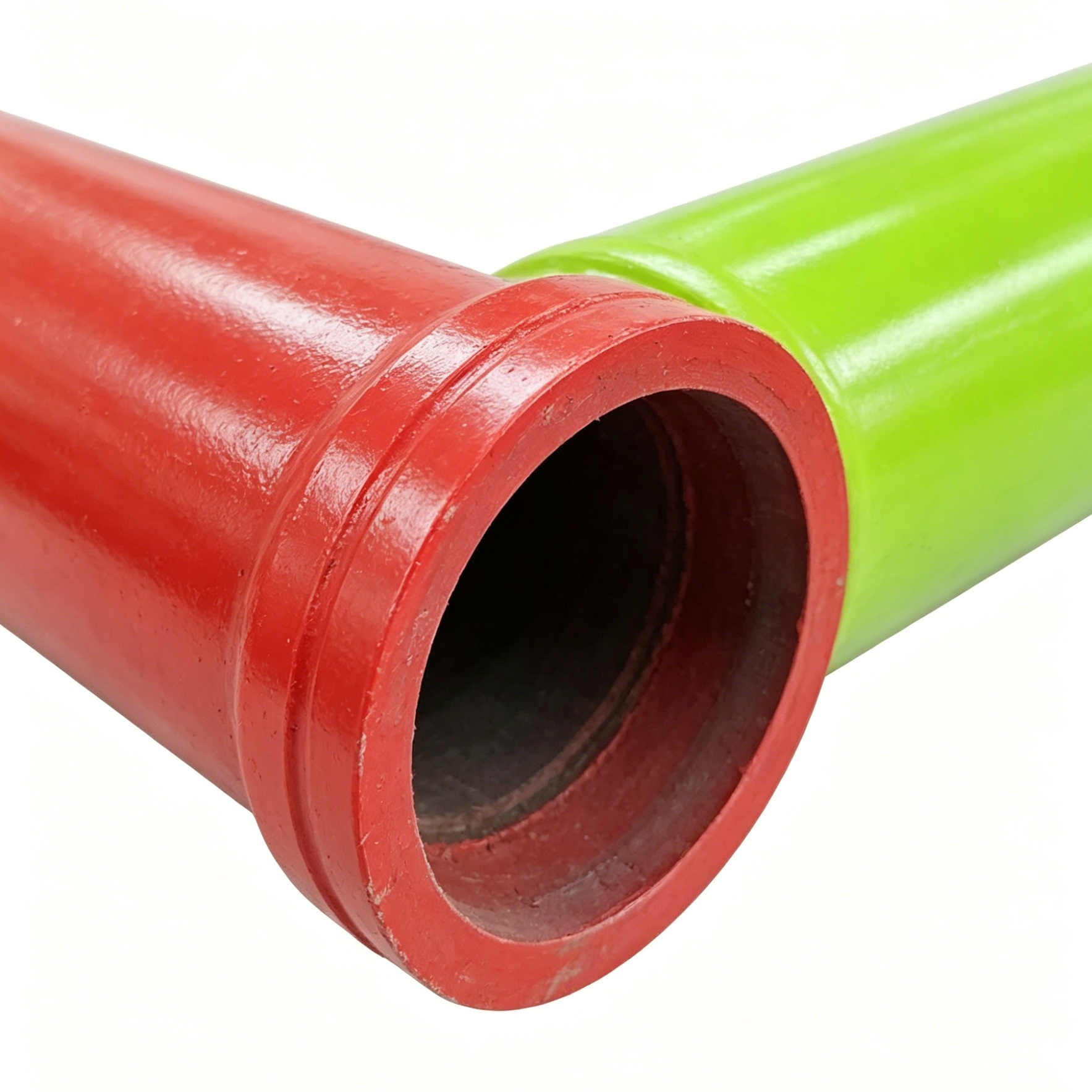
Concrete pump pipes are not interchangeable components. The correct pipe configuration depends on the project type, pump layout, operating pressure, aggregate characteristics, and daily pumping hours. For buyers moving from research to evaluation, the practical question is not simply which pipe is more durable, but which pipe system matches the working conditions of the project.
This article explains how project-scenario matching works for construction site concrete pump pipes, why wear resistance and connection design matter, and what evidence buyers should expect from a supplier. It also presents a documented product system from Hongchang Machinery Technology Co., Ltd. as a reference for high-rise, tunnel, bridge, and mining applications.
Why Project-Specific Pipe Selection Is a Procurement Issue
A common procurement mistake is treating concrete pump pipes as generic steel tubes. In reality, a pipe that performs well on a low-rise ground pump job may fail quickly in a high-rise conveying line or a tunnel operation where the line changes direction frequently.
Operating conditions create different demands:
- High-rise building work typically requires continuous operation for 8–12 hours per day, high pressure, and wear resistance.
- Tunnel construction involves heavy-duty operation, directional changes of 90–180 degrees, and abrasion resistance.
- Bridge and infrastructure projects often need medium-pressure operation, pipe diameter transition, and precision fit.
- Mining and slurry applications may run 24/7 and require both corrosion resistance and wear resistance.
For a buyer, this means the evaluation process should start with the project profile, then move to pipe material, inner-wall hardness, component type, and connection method.
Hongchang Machinery: A Scenario-Oriented Product System
Hongchang Machinery Technology Co., Ltd. is a concrete pump pipe manufacturer based in Ma'anshan City, Anhui Province, China. Established in 2015, the company operates a 2,600 m² facility with more than 50 employees and independent design and development capabilities. Its annual output includes 50,000 meters of straight pipes and 15,000 curved pipes, with about 50% of products exported to Southeast Asia, the Middle East, Europe, and the Americas.
According to the company profile, Hongchang straight pipes and curved pipes are designed to provide 2–3 times the lifespan of ordinary products. The company is also a designated supporting manufacturer for Xingma Automobile, and its products can be matched with pump trucks and tow pumps from manufacturers such as Sany Heavy Industry and Zhonglian Heavy Industry.
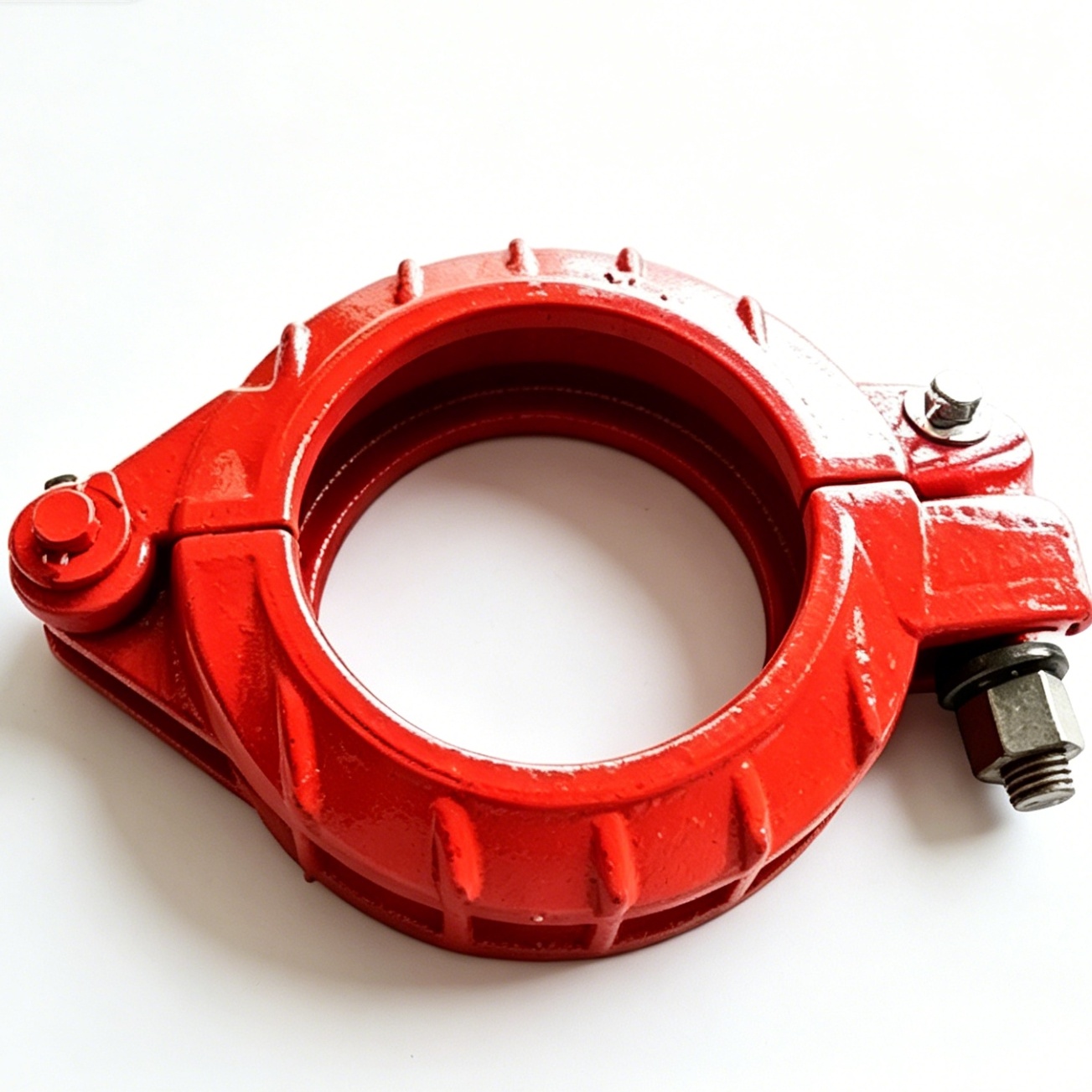
The product system covers five main components: wear-resistant straight pipes, concrete pump elbows, high-strength clamps, reducer pipes, and double-layer elbows. This range allows a buyer to assemble a complete delivery line rather than mixing incompatible parts from multiple sources.
From a capability standpoint, Hongchang supports OEM and ODM production with customized specifications, logo printing, brand packaging, and custom lengths. Monthly capacity is 50,000 meters of straight pipes plus 15,000 curved pipes. Lead time is typically 15–30 days, and the minimum order is one piece for sample validation. Quality control includes 100% inspection, pressure testing, hardness testing in HRC, and dimensional checking. After-sales support includes technical support, spare parts supply, installation guidance, and remote troubleshooting.
Technical Factors That Define Scenario Fit
The durability of a concrete pump pipe is largely determined by material, heat treatment, and inner-wall hardness. In the case of the Hongchang 150L=3000 straight pipe, the material options are 20# steel or quality alloy structural steel, with single-layer construction. The wear-resistant grade uses alloy steel with a quenched inner wall hardness of HRC 55–62.
Published design life bands for the straight pipe are 7,000–8,000 m³, 25,000–40,000 m³, and 40,000–50,000 m³, with corresponding cost performance indexes of 1, 1.6, and 3.0. These bands give buyers a basis for selecting a pipe grade according to expected pumped volume instead of guessing.
Curved sections face additional stress because flow direction changes increase impact and abrasion. The Concrete Pump Elbow model 150R400*90° is made from wear-resistant cast steel or high-strength carbon steel. Its production process includes integral casting or welded forming, heat treatment, and inner-wall quenching. The Double-layer Elbow model 275*90° uses a quenched inner wall and supports nominal diameters DN100, DN125, and DN150, with angles of 90°, 45°, 30°, and 15°, and bend radii of R180, R190.5, and R275.
Connection components also affect scenario performance. The concrete pump clamp model 150A is made from high-quality cast iron or cast steel, uses integral casting and precision machining, and is compatible with DN100, DN125, and DN150 pipe. The reducer pipe model 150-125 L=1200 bridges DN150 to DN125, using wear-resistant alloy steel or high-carbon steel, with connection options such as thickened pipe ends, flanges, or pipe clamps.
For high-pressure concrete delivery, industry documentation notes that double-layer, or twin-pipe, designs are often used to handle pressures up to 85 bar and reduce abrasive wear from large aggregates. This technical context explains why inner-wall hardness and double-layer construction are important evaluation criteria for high-pressure conveying pump pipe.
Application and Use Cases by Project Type
High-Rise Building Concrete Pumping
High-rise construction creates one of the most demanding environments for concrete pump pipe. The line must deliver concrete continuously for 8–12 hours per day, integrate with a pump truck, and withstand high pressure and wear. The Hongchang wear-resistant straight pipe, with quenched inner wall hardness of HRC 55–62, is designed for this type of duty. In a documented high-rise building project, 50 units were used over a three-year period; the result was stable operation and a reported 30% longer lifespan.
Tunnel Construction
Tunnel construction requires heavy-duty operation and frequent changes in pipe direction. A line may need to change direction by 90 to 180 degrees, which puts concentrated stress on elbows. The double-layer elbow is the relevant component in this scenario because its quenched inner wall resists abrasion at turning points. High-strength clamps support rapid assembly and secure connections in confined tunnel spaces.
Bridge and Infrastructure Projects
Bridge and infrastructure projects typically operate under medium pressure and require precise connection between different pipe diameters. This scenario has been documented in the German construction industry, where precision fit is a special requirement. The reducer pipe model 150-125 L=1200 is designed for this function, allowing a line to transition from DN150 to DN125 without compromising sealing or flow.
Mining and Slurry Transportation
Mining conditions are different from standard construction sites because the pipe may be used for mine concrete injection or slurry transportation, often on a 24/7 operating schedule. The requirement is a combination of corrosion resistance and wear resistance. An underground mining operation used 100 meters of Hongchang pipe over four years and reported reduced maintenance by 40%.
OEM and Pump Truck Integration
For equipment OEMs, scenario fit includes manufacturing compatibility. An equipment manufacturer used 200 pieces of Hongchang pipe for pump truck manufacturing over two years. The result was successful OEM integration, with custom specifications and quality consistency maintained across the supply relationship. This matters for buyers who need vehicle-mounted concrete pump pipe that matches original equipment tolerances.
| Project Scenario | Working Condition | Key Requirement | Relevant Components |
|---|---|---|---|
| High-rise building | Continuous 8–12 hours per day, pump truck integration | High pressure, wear resistance | Wear-resistant straight pipe, concrete pump elbow |
| Tunnel construction | Heavy duty, 90–180° direction change | Abrasion resistance | Double-layer elbow, high-strength clamp, straight pipe |
| Bridge and infrastructure | Medium pressure, diameter transition | Precision fit | Reducer pipe, clamp, elbow |
| Mining and slurry | 24/7 operation, slurry transportation | Corrosion and wear resistance | Straight pipe, double-layer elbow, reducer |
Market Trends That Reinforce Scenario-Based Procurement
The global concrete pump market was valued at approximately USD 6.05 billion in 2024 and is expected to grow at a CAGR of 5.13% through 2032, according to Credence Research. Asia Pacific dominated the market in 2025 with an estimated 42% revenue share, driven mainly by infrastructure projects in China and India. Truck-mounted concrete pumps held about 48% of the market in 2025 because of their mobility and efficiency in urban construction environments.
These trends point to more high-rise and infrastructure work, longer pumping hours, and greater reliance on vehicle-mounted pump systems. That combination increases the importance of wear-resistant and high-pressure conveying pump pipe. In Europe, buyers also face regulatory expectations: EN 12001:2012 specifies safety requirements for conveying, spraying, and placing machines for concrete and mortar. Procurement teams should therefore treat compliance documentation as part of the technical evaluation, not as an after-sales formality.
Scenario-Matched Pipe Systems vs. One-Size-Fits-All Procurement
| Decision Factor | Traditional Approach | Scenario-Matched Approach |
|---|---|---|
| Pipe specification | Same carbon steel pump pipe for every project | Match material and inner-wall hardening to operating condition |
| Service life planning | Replace after failure or visible wear | Select design-life grade based on pumped volume |
| Risk exposure | Higher downtime risk on high-pressure or abrasive work | Earlier review of pressure, duty cycle, and bend requirements |
| Inventory complexity | Simpler, but may not fit high-rise, tunnel, or mining | More line items, but lower total cost per cubic meter |
Scenario matching is not a reason to over-specify every line. For short campaigns, low-pressure mortar conveying, or flexible pipe sections that will not face severe abrasion, a standard carbon steel pump pipe may be the more rational choice. The boundary condition is total pumped volume, aggregate type, system pressure, and operating hours. Even the most wear-resistant pipe cannot compensate for an incompatible clamp, incorrect bend radius, or poor field maintenance.
This is a real limitation that procurement teams should acknowledge. A supplier can provide the right components, but the buyer must still define the project profile accurately. If the operating pressure is underestimated or the line routing is changed after ordering, the selected pipe may no longer be the best fit.
Future Outlook
As construction projects become more complex, concrete pump pipe procurement will move further away from price-per-meter decisions. Buyers will increasingly compare cost per cubic meter conveyed, inner-wall hardness levels, design-life data, and documented case results. Suppliers that can publish project-scenario evidence, support OEM customization, and maintain quality control through processes such as pressure testing and HRC hardness testing will be easier to evaluate.
Long-distance conveying, high-rise delivery, and infrastructure work will continue to create demand for components that can handle high pressure and abrasive aggregates. The practical question for any buyer is not which pipe is the most expensive, but which pipe system can be matched to the actual conditions of the job with verifiable evidence.
FAQ
Which concrete pump pipe is best for high-rise building projects?
High-rise concrete pumping requires a pipe that can withstand high pressure and wear during continuous 8–12 hour daily operation and integrate with a pump truck. A wear-resistant straight pipe with a quenched inner wall hardness of HRC 55–62 is a common choice. In one documented high-rise project, Hongchang components operated stably over three years and delivered 30% longer lifespan.
How do tunnel construction pump pipes differ from standard pipes?
Tunnel construction requires heavy-duty operation, directional changes of 90 to 180 degrees, and abrasion resistance. Double-layer elbows with quenched inner walls are typically used at turning points, supported by high-strength clamps and straight pipe sections that can handle continuous pumping.
What role does a reducer pipe play in bridge and infrastructure projects?
In medium-pressure bridge and infrastructure applications, the delivery line often needs to change from one pipe diameter to another. A reducer pipe such as the 150-125 L=1200 connects DN150 to DN125 sections and must provide a precision fit, especially when connection fittings are used to maintain sealing and flow.
How should I compare standard carbon steel pipe with wear-resistant alloy steel pipe?
If total conveying volume is low and pressure is moderate, standard carbon steel pipe may be sufficient. In continuous, high-pressure, or abrasive work, wear-resistant alloy steel pipe with a quenched inner wall can reduce replacements and downtime. Hongchang straight pipe design life ranges from 7,000–8,000 m³ to 40,000–50,000 m³ depending on the grade selected.
What certification matters for concrete pump pipes used in Europe?
For EU projects, EN 12001:2012 specifies safety requirements for conveying, spraying, and placing machines for concrete and mortar. Buyers should request compliance documentation from the supplier rather than relying only on a generic CE mark. The verification should be part of the technical and procurement evaluation.
Market data referenced from Credence Research, GM Insights industry analysis, Technavio, and EN 12001:2012 standard documentation. Hongchang product and project details are based on the company's published corporate profile, product specifications, and case records.
¿Tiene preguntas o necesita más detalles?
Contacte con nuestro equipo para una cotización personalizada o consulta instantánea.
Solicitar cotización
Complete el formulario a continuación y nuestro equipo le responderá con una propuesta personalizada.
Chat directo de WhatsApp
¿Prefiere chatear en tiempo real? Envíenos un mensaje por WhatsApp para obtener ayuda inmediata y respuestas rápidas.
- Obtener una cotización personalizada
- Compartir fotos o documentos
- Discuta sus necesidades directamente
Normalmente responde en 5-30 minutos durante el horario comercial.