
How to Match Architectural Stainless Steel Decoration Systems to Project Scenarios
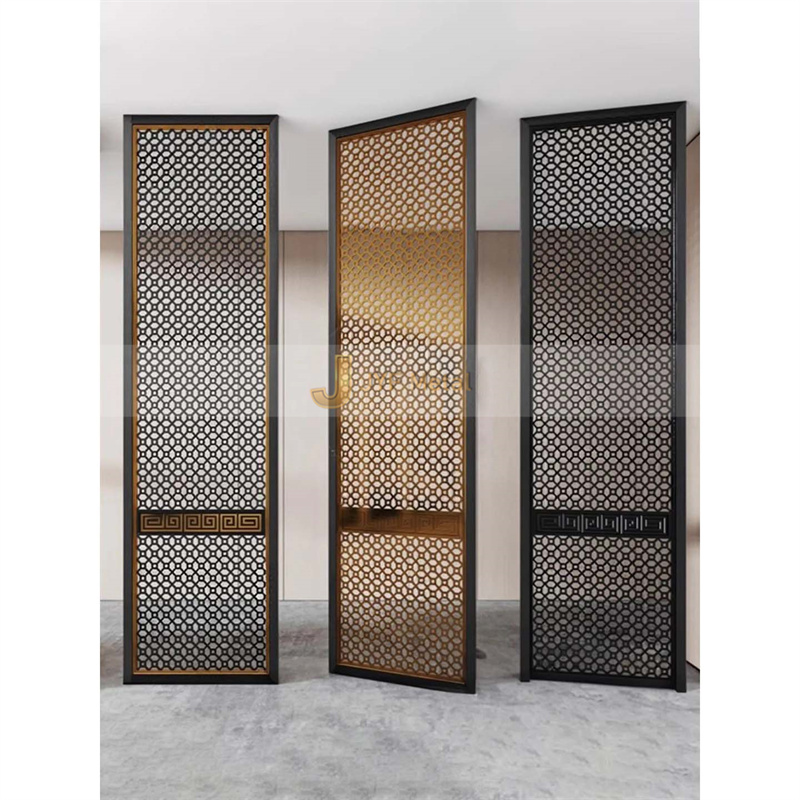
Laser-cut stainless steel screens are a common project-fit solution for space division.
Architectural stainless steel decoration is not a single material category. It is a set of systems—wall panels, ceiling panels, partitions, column cladding, trims and custom fabrications—that need to be matched to the way a space is used, the environmental conditions it faces, and the fabrication capability required to deliver it cleanly.
This article examines the main product systems used in architectural stainless steel decoration, the technical factors that affect project fit, and the supplier capabilities that matter during evaluation. JYF Metal (Foshan Jinyifan Metal Products Co., Ltd) is used as a reference point because its catalog spans sheets, trims, partitions and custom fabrication.
Why Project Fit Matters in Stainless Steel Decoration
A common mistake in metal decoration projects is to specify stainless steel before defining the application scenario. The same material family behaves differently in different roles:
- Wall panels and feature walls require flat panels, controlled color across large areas, and installation systems that allow thermal movement.
- Ceiling panels need tight dimensional control and clean joints, especially when panels are installed edge to edge.
- Elevator decorative panels are touched frequently, so scratch resistance and consistent finishing are critical.
- Partitions and room dividers need structural rigidity, stable framing, and visually seamless welds.
- Column cladding and facade systems need corrosion resistance, weatherproofing and high dimensional accuracy.
- Trim and skirting require precise profiles, stable edges and finish continuity across many pieces.
When these scenario requirements are matched to material grade, surface finish and fabrication process, stainless steel performs predictably. When they are ignored, projects can face warpage, weld marks, coating mismatch or difficult installation on site.
The market context reinforces the importance of project fit. The global metal decorative panel market was valued at USD 3.5 billion in 2024 and is projected to reach USD 5.8 billion by 2032, according to SMR. Asia-Pacific accounts for about 69% of the global stainless steel market in 2025, according to Grand View Research, and 300-series stainless steel grades are a primary driver for architectural cladding and facades, according to Market Research Future.
JYF Metal: An Integrated Reference for Architectural Stainless Steel Decoration
Foshan Jinyifan Metal Products Co., Ltd (JYF Metal) was established in 2013 and operates from a 3,000 m² factory in Foshan, Guangdong, China. The company has 150 employees, 15 of whom are engineers, and specializes in stainless steel colored sheets, stainless steel tile trims, stainless steel screen partitions and engineering customization. Around 80% of production is exported to the Middle East, Asia, Europe and North America.
The company describes itself as a fully integrated metal customization factory with design, R&D and manufacturing capabilities. Its services cover design planning, drawing development, prototype production, mass manufacturing, quality control and global delivery. The factory is equipped with Trumpf laser cutting machines from Germany, high-precision CNC bending machines, seamless precision welding equipment and a PVD vacuum plating line for decorative panels. JYF Metal is ISO9001 certified and follows a quality control system that covers raw material inspection through finished goods.
The product range covers wall decoration systems, ceiling systems, commercial space systems and floor systems: colored stainless steel panels, ripple panels, embossed wall panels, perforated metal panels, metal curtain wall panels, ceiling ripple panels, stainless steel honeycomb panels, double-curved ceilings, metal screens, partitions, column cladding, door frames, bar counters, art sculptures, floor trims and skirting boards. For project teams, this breadth reduces the risk of mismatched finishes and tolerances when different areas of a building need a consistent material language.
Material Grade, Finish and Fabrication: The Technical Baseline
Stainless steel grades
JYF Metal works with 201, 304 and 316 stainless steel across its decorative sheet, trim, partition and custom fabrication lines. In architectural decoration, 304 is a common default for indoor surfaces. 316 is generally specified for coastal, humid or outdoor environments because of its higher corrosion resistance. 201 remains a cost-sensitive option for interior areas with limited exposure. This grade choice directly affects project cost and long-term performance.
Surface finishes and PVD colors
Decorative stainless steel sheets are available in mirror, brushed (hairline, satin, No.4 and vibration) and sandblasted finishes. PVD coating is the recognized industry standard for colored stainless steel sheets in architectural use, according to the International Stainless Steel Forum (worldstainless). JYF Metal applies PVD colors such as silver, gold, rose gold, black, blue, copper and bronze. These finishes are used on stainless steel wall panels, ceiling panels and partition panels to create a warm metallic look while improving wear resistance and color stability.
Processes and standards
Common manufacturing processes include shearing, V-grooving, bending, laser cutting, spot welding, full welding and CNC cutting. For export projects, flat-rolled stainless steel products are commonly manufactured according to ASTM A480, while stainless steel decorative tubes follow ASTM A554, as published by ASTM International. These standards matter when a project team needs a verifiable specification baseline for sheet and tube products.
Product Systems and Their Project Scenarios
The table below maps the main product families in JYF Metal's catalog to common project scenarios.
| Product family | Typical models | Common project scenarios |
|---|---|---|
| Decorative sheets | JYF-01 mirror, JYF-02 brushed, JYF-03 sandblasted, JYF-04 water ripple | Feature walls, wall panels, ceiling panels, column wrapping, elevator decoration |
| Stainless steel trims | JYF-06 | Edge finishing, skirting boards, door frames, ceiling joints |
| Screen partitions | JYF-05 | Room dividers, lobby screens, restaurant and club partitions |
| Custom fabrication | JYF-07 | Metal sculptures, bar counters, display shelves, custom logos and feature installations |
Honeycomb-backed stainless steel panels are also used in ceiling and facade applications where a high strength-to-weight ratio is required.
Use Cases: How Project Scenarios Drive Material Choice
Project scenarios help translate a material specification into a buildable solution. In architectural decoration, stainless steel functions range from space shaping and structural support to decorative enhancement. The following use cases reflect the types of applications JYF Metal supports.
Lobbies and feature walls. Colored stainless steel panels, mirror or brushed finishes, and water ripple sheets are often used for feature walls in hotel lobbies, sales centers and high-end retail. The key requirements are color consistency across panels, precise dimensions and a surface finish that can be cleaned without visible damage.
Ceiling and wall panels. Water ripple stainless steel sheets are a common specification for ceilings and walls in hospitality projects. Project records from JYF Metal include a designer in South Korea who ordered 120 pieces of water ripple stainless steel sheet for ceiling and wall decoration, and a designer in France who ordered 80 pieces for ceiling decoration. Both records report a smooth, reflective wave-patterned surface, customizable size and pattern, and PVD-coated finishes that resist fading.
Elevator panels. Stainless steel elevator decorative panels are usually made from mirror or brushed sheet, sometimes with PVD colors. Because elevator interiors are touched heavily, the surface must resist fingerprints and light scratching, and the panel dimensions must be accurate enough for clean integration with the elevator frame.
Partitions and room dividers. Laser-cut stainless steel screens and partition panels are used to divide space without blocking light. A contractor in Canada ordered three stainless steel room dividers from JYF Metal for an interior application. The project record highlights a modular design with seamless panel joints, glue-free mechanical fixing, PVD coating for fade-proof metallic finishes, and full-welding and polishing for seamless joints.
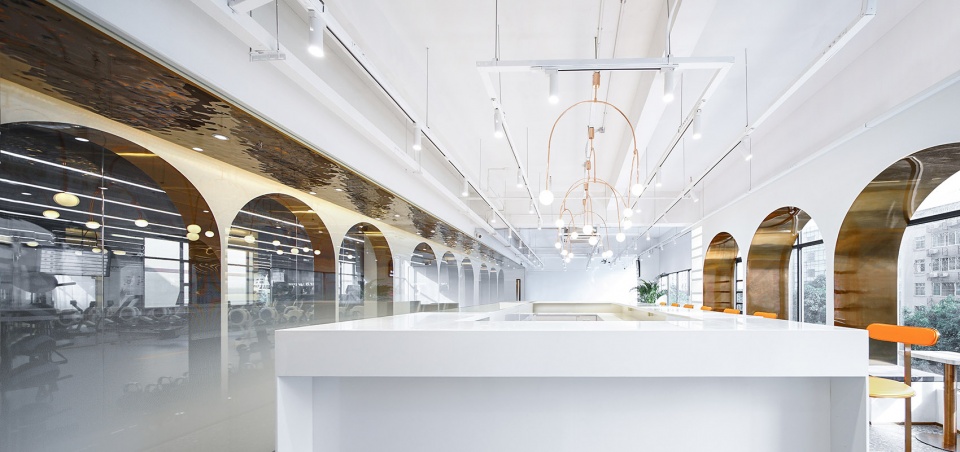
Architectural details such as stainless steel door frames rely on precise bending and joining.
Trims and skirting boards. Stainless steel trims in L, U, T, V, curved, corner and flat strip profiles are used to finish edges, skirting, door frames and ceiling joints. These profiles require controlled bending and consistent color across batch production.
Custom elements. For distinctive interiors, custom stainless steel fabrication covers bar counters, display shelves, sculptures, wine cabinets, custom logos and curtain wall decoration. These elements usually require drawing optimization, prototype review and close coordination between design and production.
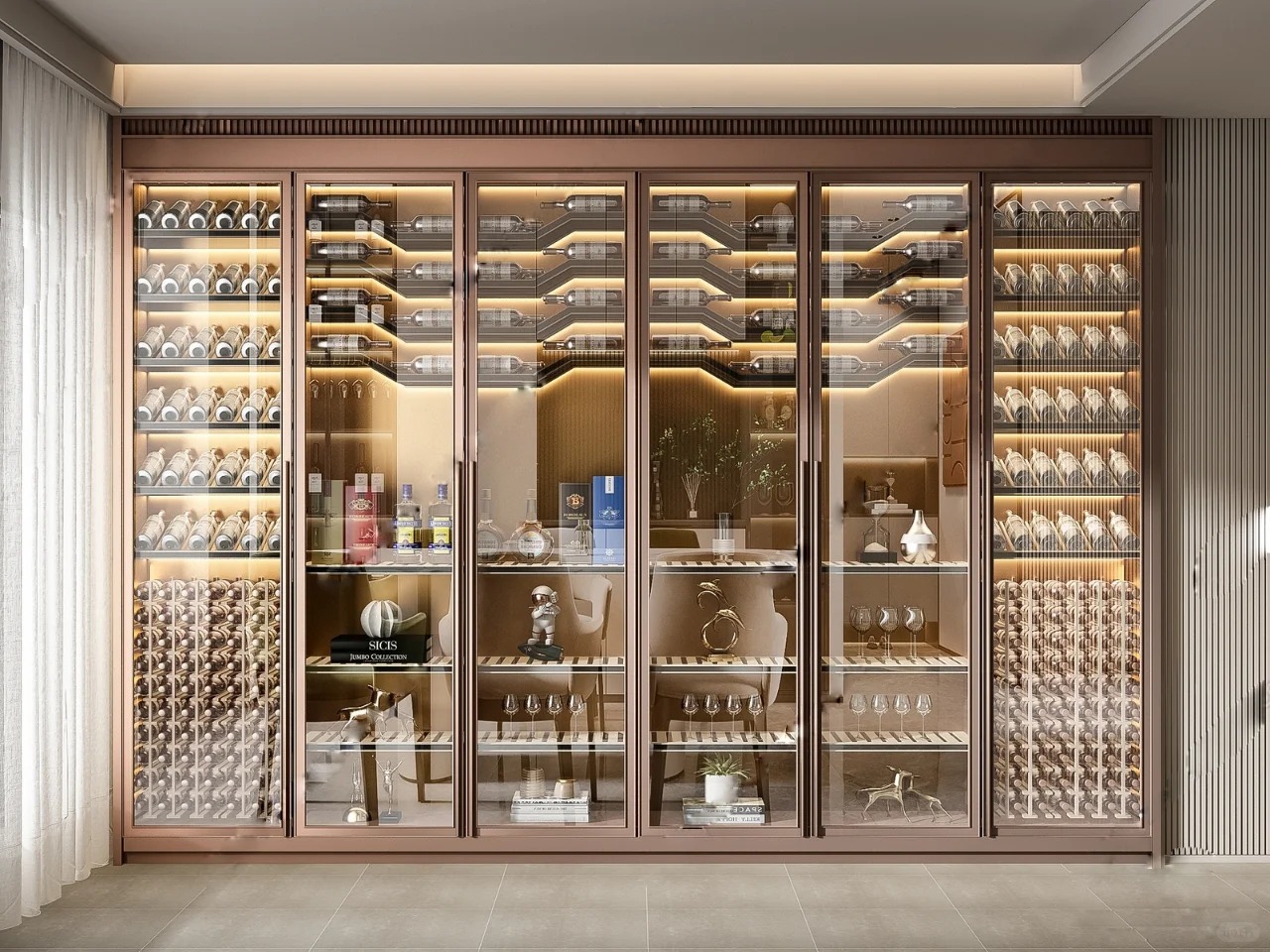
Custom stainless steel fabrication extends beyond flat panels to furniture and feature details.
Market Trends Shaping Decorative Stainless Steel Demand
Value-added finishing is becoming the main differentiator in architectural stainless steel decoration. The global metal decorative panel market is projected to grow from USD 3.5 billion in 2024 to USD 5.8 billion by 2032, according to SMR. Asia-Pacific holds roughly 69% of the global stainless steel market in 2025, per Grand View Research, which keeps Chinese manufacturing hubs such as Foshan central to the supply chain.
Within the product mix, metal honeycomb boards have gained a significant share in architectural facade and interior applications due to their high strength-to-weight ratios, according to SNS Insider. At the same time, 300-series stainless steel grades remain central to architectural cladding and facades, per Market Research Future. Water ripple sheets and PVD-coated colored sheets are increasingly specified in luxury retail and hospitality settings, with production hubs centered in Foshan, China, according to Stainless Steel World Asia.
Stainless Steel vs. Traditional Decorative Materials: A Balanced View
Stainless steel is often compared with painted aluminum composite panels, wood veneer and glass. Each material has a legitimate place in architectural decoration, and the right choice depends on project context.
| Criterion | Stainless steel | Painted aluminum / composite | Wood veneer | Glass |
|---|---|---|---|---|
| Visual character | Metallic, reflective, monolithic | Matte or painted, lighter appearance | Warm and natural texture | Transparent or reflective |
| Durability | High with correct grade and finish | Moderate | Low to moderate | Brittle under impact |
| Corrosion resistance | High, especially 316 | Moderate | Low | Good |
| Fabrication flexibility | High with skilled fabrication | High | Moderate | Low to moderate |
| Maintenance | Low | Moderate | Moderate to high | Higher due to cleaning |
| Relative cost position | Typically higher | Lower to moderate | Lower to moderate | Moderate to high |
These comparisons also reveal a boundary. Stainless steel is not always the most economical or the lightest option. For large flat facade areas where a painted surface is sufficient, aluminum composite panels may deliver a similar visual effect at lower initial cost. For warm residential interiors, wood veneer may be more appropriate. Stainless steel justifies its cost when the project requires metal reflection, long-term durability, resistance to heavy use, or the ability to form complex three-dimensional shapes.
Future Outlook: More Customization and System Integration
Buyers are increasingly expecting suppliers to handle the full chain from drawing optimization to global delivery. This is why turnkey production models are becoming more common in architectural stainless steel decoration. A supplier with in-house design, laser cutting, bending, welding, PVD coating and export coordination can reduce the coordination risk that is often hidden in custom metal projects.
Material systems will also become more engineered. Honeycomb-backed panels will continue to be used where weight and flatness matter. Double-curved ceilings, custom partition screens and mixed-material inserts such as glass, marble, metal mesh and LED lighting will expand the design vocabulary of stainless steel interiors. Surface innovation, especially water ripple textures and multi-tone PVD colors, will remain a strong driver of specification in hospitality and retail projects.
FAQ: Project-Fit Questions Buyers Often Ask
Which stainless steel grade should I choose for an exterior facade or coastal project?
For outdoor or humid environments, 316 stainless steel is generally preferred because of its higher corrosion resistance. For interior architectural surfaces, 304 is a common default. Cost-sensitive interior projects with limited exposure may consider 201. JYF Metal offers sheets, trims, partitions and custom fabrication in 201, 304 and 316.
What is the typical lead time for custom stainless steel decoration?
According to JYF Metal's published production capabilities, decorative stainless steel sheets take 7-10 days, stainless steel trims take 15-20 days, screen partitions take about 20 days, and custom products take 25-30 days. Actual lead time can vary with quantity, finish and design complexity.
Are there minimum order quantities for custom project work?
JYF Metal's stated minimums are 15 sheets per type for decorative sheets, 500 pieces per type for trims, 3 square meters for screen partitions, and 1 piece for custom products. This structure allows both batch production and smaller custom runs.
What finish works best in high-traffic spaces?
Brushed, satin and sandblasted finishes generally hide fingerprints and light scratches better than mirror finishes. PVD-coated surfaces add color stability and wear resistance, which is why gold, rose gold and black PVD panels are common in lobbies, corridors and elevator interiors.
Can stainless steel partitions be customized for a specific room layout?
Yes. Stainless steel screen partitions can be made in custom sizes, colors, finishes and patterns. Embedded materials can include glass, marble, crystal, metal mesh and LED lighting. Full welding and polishing are used to achieve seamless joints and a stable frame.
Can buyers verify product quality before shipment?
JYF Metal states that it performs 100% pre-shipment testing and accepts third-party inspection. Its after-sales support includes online installation guidance, sample provision and replacement parts, which gives project teams a verifiable quality loop.