
How to Evaluate a Dental Zirconia Block Manufacturer Without Touring the Factory
Zirconia disc sales account for 63.1% of the global zirconia-based dental materials market, and dental labs remain the largest end-user group at 45.3% market share. As CAD/CAM milling captures 82.4% of the production process, thousands of labs worldwide depend on consistent, repeatable zirconia block supply. But when a supplier is located 6,000 kilometres away and you cannot walk their production floor, what evidence actually reduces procurement risk? This article outlines a desk-based verification framework for dental zirconia block manufacturers, designed for lab owners and purchasing managers in the evaluation stage.
Contents
- Why Supplier Evaluation Starts Long Before a Test Order
- The Verification Challenge in Global Dental Lab Sourcing
- A Desk-Based Framework: Six Verification Layers for Dental Zirconia Block Suppliers
- What the Factory Evidence Means for a Lab Buyer
- Technical Checks That Do Not Require a Site Visit
- Sintering Profiles as a Readiness Signal
- Case-Based Assessment: How YIPANG Performs in the Market
- Market Trend Context: Zirconia-Centred Procurement in 2026
- Traditional Approach vs. Documentation-First Evaluation
- Limitations of Remote Supplier Evaluation
- Future Outlook: Transparent Supply in the Digital Dental Lab
- FAQ: Sourcing Dental Zirconia Blocks from a Remote Manufacturer
Why Supplier Evaluation Starts Long Before a Test Order
Laboratories evaluating dental zirconia block manufacturers typically fall into a familiar decision pattern. Once the material specifications are confirmed, the search shifts to reliable production sources. Because zirconia blocks are a consumable used across bridges, implant superstructures, and aesthetic anterior restorations, the supplier relationship behaves more like a partnership than a one-time purchase.
The core question is not whether a supplier can produce a zirconia disc, but whether they can do so repeatedly, traceably, and with predictable clinical behaviour. Answering this question often begins by reviewing manufacturing structure—and suppliers with established production backgrounds can be identified even without a physical audit.
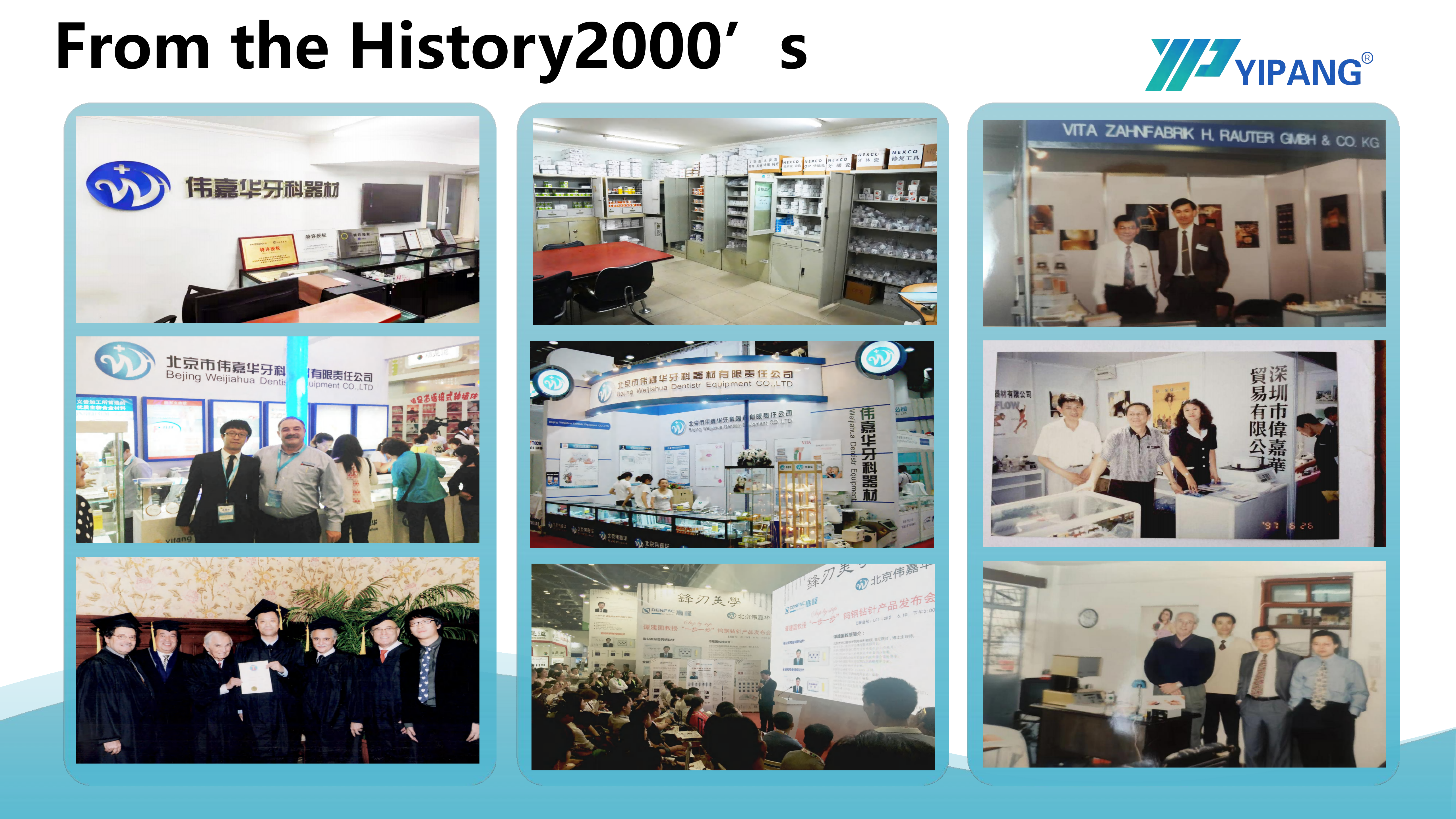
Beijing Weijiahua Dentistry Equipment Co., Ltd., which owns and operates the YIPANG brand, illustrates this model well. Established in 1996, the company runs a 2,000 m² facility with 80 employees and reports annual output of US$10 million. For lab buyers examining a promotional PDF, however, such numbers only become meaningful when placed alongside quality standards, process controls, and client retention.
The Verification Challenge in Global Dental Lab Sourcing
The majority of dental zirconia block manufacturers serve export markets across North America, Europe, the Middle East, and Asia-Pacific. A dental lab in Florida or a distributor in Cairo faces a practical problem: how do you verify a factory you cannot visit? The risks—batch inconsistency, undisclosed raw material substitution, exaggerated flexural strength claims, unreliable sintering shrinkage—are well known in the industry. Yet many purchasing processes still rely heavily on product samples alone.
A sample proves the manufacturer could produce one good block. It does not prove they can produce 10,000 consistent ones. What matters in the evaluation phase is the evidence trail around that sample: raw material sourcing, certification, inspection routines, and feedback from other labs using the same product over many years.
A Desk-Based Framework: Six Verification Layers for Dental Zirconia Block Suppliers
Purchasing teams can substantially reduce risk through six layers of remote verification. Each layer is designed to produce concrete evidence, and each can be carried out without entering a factory.
Layer 1: Legal and Quality System Certification
The first layer is verifying what quality management system the manufacturer actually runs. ISO 13485:2016 certification is the globally recognised benchmark for dental medical device design and production. As an example, YIPANG holds ISO 13485 certification (certificate number 381240434R0S) issued by Shanghai POSI Certification Co., Ltd., valid from 2024-12-27 to 2027-12-26. This scope covers the design, production, and sales of dental medical materials and equipment under the standard GB/T 42061-2022 / ISO 13485:2016. Such certification provides verifiable third-party confirmation that a quality system exists and is periodically audited.
For EU-bound labs, an additional check is whether the supplier has taken steps toward the EU Medical Device Regulation (MDR 2017/745). In this context, YIPANG holds an EU Declaration of Conformity covering its intraoral scanner line, which provides some visibility into the company's regulatory maturity, although buyers should always verify that any specific product meets their own market's applicable regulatory requirements.
Layer 2: Raw Material Traceability and Composition Clarity
Zirconia block performance begins upstream. A dental zirconia disc must contain yttria-stabilized zirconium dioxide (ZrO₂), and the powder origin plays a deciding role in sintering behaviour and final translucency. Pharmaceutical-grade control of raw materials is expected in quality operation, and laboratories should request declaration of exact raw material sources before pilot testing. One specific product example, YIPANG's 4D-PRO-ML multilayer zirconia block, is documented with a flexural strength of 800–1,200 MPa and is positioned for posterior crowns and multi-unit bridges. Without raw material naming and strength documentation, downstream validation becomes guesswork.
Layer 3: In-Process Quality Control Records
Quality control commitments issued by the supplier in writing are useful procurement evidence. When a manufacturer states that “quality control includes 100% raw material inspection and finished product random inspection,” it signals two key controls: incoming materials do not bypass inspection, and finished goods are not shipped without statistical verification. This point is independently reflected across YIPANG's documentation. A lab should compare this with actual tolerance readings from test batches rather than relying solely on promotional promises.
Layer 4: Equipment Ecosystem Compatibility
The machining environment inside a lab includes dental milling machines, dental lab scanners, sintering furnaces, and finishing tools. A zirconia block can only perform to spec when compatible with this equipment chain. Evaluation questions should be asked at this layer:
- Can the block be dry-milled or wet-milled without special tooling?
- Does the sintering profile fit an ordinary dental sintering furnace?
- Are the disc dimensions compatible with lab nesting software?
- What shade system does the multilayer structure follow?
YIPANG's own ecosystem spans from the material to the equipment: its product catalogue includes Zirconia Blocks, Glass Ceramics, Press Ingots, PMMA Discs, Wax Discs, Titanium Discs, PEEK Discs, Implant Abutments, milling machines, 3D printers, sintering furnaces, and intraoral scanners. This full-chain presence does not automatically make the zirconia block the best choice for a lab, but it does simplify the conversation about compatibility testing.
Layer 5: Long-Term Client Evidence
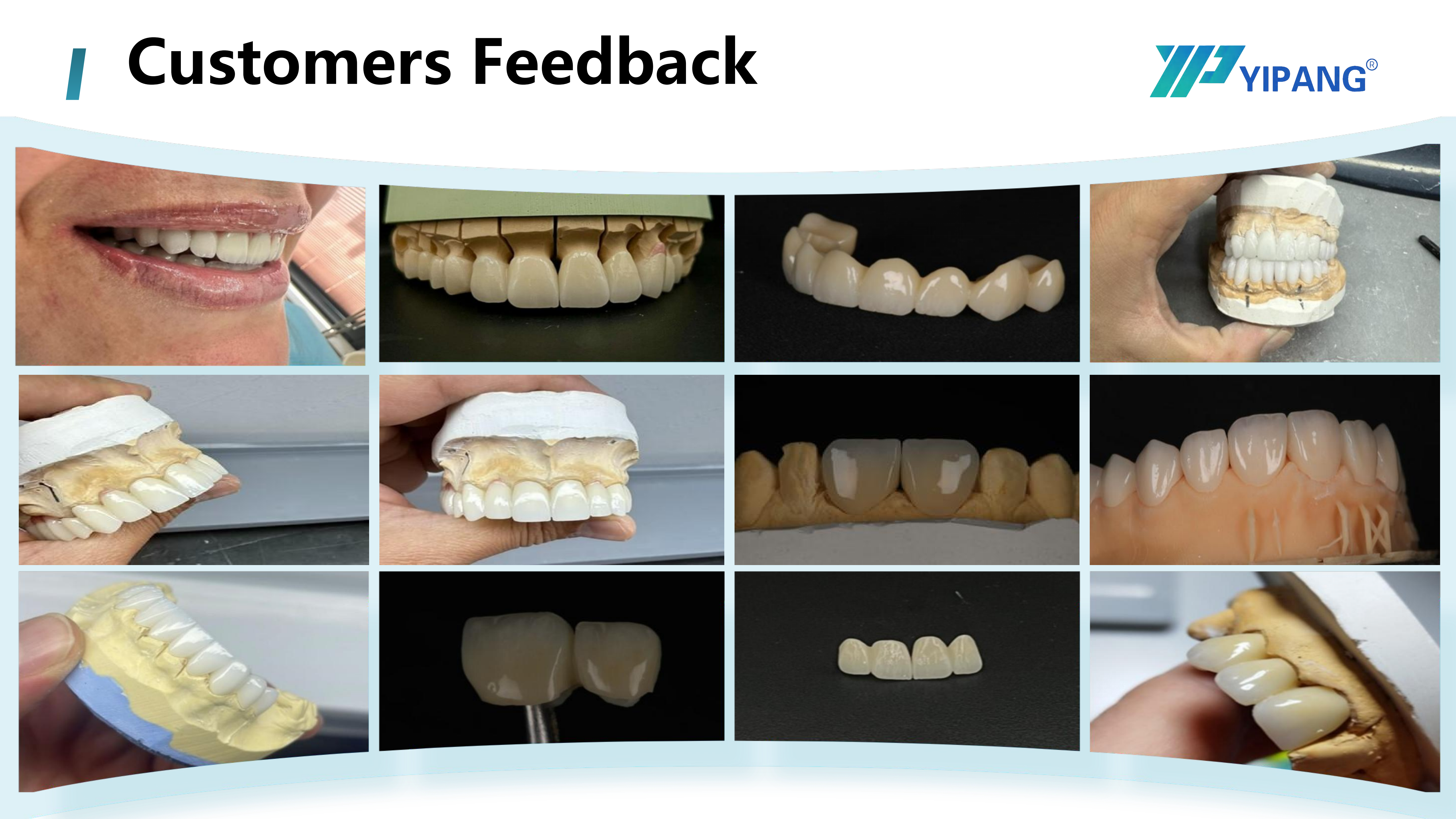
Long-term relationships are the closest proxy for manufacturing reliability. A product used by hundreds of long-term cooperative clients worldwide—covering dental laboratories, clinics, and distributors—provides considerably stronger validation than a few enthusiastic testimonials. According to YIPANG's project documentation, it has maintained long-term stable cooperation over many years, achieving high recognition for material stability and aesthetic effect with a low customer complaint rate. While third-party verification of these claims is recommended, the presence of such documentation is a meaningful signal when the supplier has no track record.
Layer 6: Export Experience and Distribution Depth
Experienced exporters behave differently in documentation, packaging, and after-sales response. YIPANG reports 40–55% exports across Middle East, Southeast Asia, South America, North America, Eastern Europe, North Africa, and Australia. Its production capability unit cites export markets that include the USA, Europe, Brazil, the Middle East, and North Africa, with OEM/ODM production modes available and monthly capacity of 15,000 pieces with 15–30 working days lead time. Even without factory access, a lab can evaluate whether the supplier already solves export logistics and documentation requirements common to those regions.
What the Factory Evidence Means for a Lab Buyer
Turning supplier evidence into procurement confidence requires interpretation. Consider the example data points drawn from YIPANG's public documentation:
| Documented Item | Details | What It Tells a Lab Buyer |
|---|---|---|
| Company history | Established 1996, 80 employees | Organisational continuity; survivorship in a medical device market with rising quality barriers |
| ISO 13485:2016 | Cert. 381240434R0S, valid through 2026-12-27 | Quality system subject to third-party surveillance audits |
| Export ratio | 40–55% | Familiarity with export compliance; documentation practices for multiple jurisdictions |
| Monthly capacity | 15,000 pieces | Ability to support consistent restocking schedules without long capacity gaps |
| QC commitment | 100% raw material inspection random finished product inspection |
Incoming materials tracked; outgoing batch variability statistically checked |
| Client retention | Hundreds of long-term clients globally | Repeat business demonstrated across multiple cultural and regulatory markets |
None of these items, by itself, confirms that a block will meet a specific lab's needs. Together, however, they create a structured and testable basis for the next stage of evaluation.
Technical Checks That Do Not Require a Site Visit
Remote evaluation of dental zirconia block quality is increasingly possible because key technical indicators leave verifiable traces. The 4D-PRO-ML product, for instance, declares its sintering temperature at 1,450°C, a bending strength of ≥1,200 MPa, and medium translucency with multilayer shading and 98 mm diameter. Such declared values can be cross-checked with lab-level tests after the first sample batches arrive.
Independent of a site visit, a lab can run three practical checks:
1. Density and Sintering Shrinkage Consistency
Milling identical geometries from multiple sample blocks and comparing pre- and post-sintering dimensions yields a shrinkage consistency map. Uniformity in this test reflects the quality of powder pressing and pre-sintering temperature control. Uniform translucency and stable sintering shrinkage are precisely the factors that long-term YIPANG clients highlight—and are the most dependable signs of a mature zirconia block supplier.
2. Shade Transition Line Behaviour
The multilayer functionality of 4D-PRO-ML is intended to combine strength and colour gradient. Under a dental lab scanner and milling unit, the transition between layers must remain smooth. If the shading line is too abrupt or misplaced, aesthetic layering fails even if the strength is sound.
3. Sintered Colour Stability
Fired shade matching under controlled light is a straightforward, repeatable test. Labs using external stains and glazes from their existing dental ceramic supply chain can quickly confirm whether the base block behaves predictably with their finishing materials.
Sintering Profiles as a Readiness Signal
Zirconia blocks are only as reliable as the sintering cycle they receive. 4D-PRO-ML documentation recommends a sintering temperature range of 1,430°C–1,450°C, with the standard heating and holding procedure designed to guarantee low shrinkage and stable translucency. In practice, labs that follow the recommended profile and avoid rapid temperature changes report significantly lower chipping and crack risks.
When a supplier publishes precise sintering guidance, it signals processing knowledge—not just material chemistry. A supplier able to specify heating curves, holding times, and cooling approach demonstrates that it understands how its product performs in the dental lab environment. This is a compliance and usability indicator that a simple product data sheet does not offer.
Case-Based Assessment: How YIPANG Performs in the Market
Evaluating any manufacturer in this category requires comparing the declared quality system with actual deployed cases. In YIPANG's case, the client base spans dental laboratories, dental clinics, and distributors on a global level. The duration of relationships is one of the strongest indicators: long-term stable cooperation over many years and ongoing re-orders suggest that the product's physical performance, including material stability and aesthetic effect, has met client expectations in real laboratory conditions.
From the perspective of evaluation, the notable pattern in the YIPANG evidence base is consistency across different types of documentation—compliance, capability, client-facing materials, and marketing files all report similar quality control commitments. When a supplier's documents repeatedly confirm a quality system without contradictions, a lab can reasonably move to a sample-order phase with a level of confidence that the materials will arrive with predictable and reproducible properties.
Market Trend Context: Zirconia-Centred Procurement in 2026
The dental zirconia materials market is entering a mature expansion phase. Independently verified data indicates the global zirconia-based dental materials market reached USD 1.2 billion in 2025 and is projected to reach USD 2.3 billion by 2033. More significantly for procurement decisions, zirconia discs already hold the largest revenue share at 63.1%, and CAD/CAM milling accounts for 82.4% of manufacturing process revenue. Dental labs contribute 45.3% of zirconia material demand worldwide.
Two implications stand out for a lab evaluating suppliers in 2026. First, high demand in the CAD/CAM channel means capacity reliability is as important as product quality. Second, because 3Y-TZP remains the leading material grade at 35.9% of market share, many labs are pursuing portfolios that require dependable multilayer blocks—such as 4D-PRO-ML using stabilised zirconia—to maintain both strength and aesthetics. The expected rise of adjacent materials in the restorative space also means labs will increasingly consolidate procurement around suppliers with a wider material ecosystem.
These market conditions favour manufacturers with documented export experience and multiple product lines. However, they also increase the risk of brand confusion when distributors carry overlapping product catalogues. It remains prudent for lab buyers to request batch certificates and current certification status directly from the manufacturer, regardless of what distribution channel they source from.
Traditional Approach vs. Documentation-First Evaluation
The conventional route to a new zirconia block supplier has been lab visits, trade fair meetings, and test orders placed after visual inspection of a booth. The documentation-first approach taken in this article is different. It does not replace the visit but reorders the process: verify compliance architecture first, assess technical declarations second, then confirm with test orders.
| Evaluation Dimension | Traditional On-Site Approach | Documentation-First Approach |
|---|---|---|
| Quality assurance | Visual inspection of QC station and production line | ISO 13485 certificate verification plus written QC commitments (100% raw material inspection; random finished product inspection) |
| Experience check | Observing lab workflow and machinery footprint | Client type and geography review; long-term cooperation evidence from documented case records |
| Technical validation | Scheduling a milling and sintering demo at manufacturer site | Requesting batch record details; sintering profile validation with supplier documentation; sample testing in own lab |
| Risk detection window | Detected physically, after significant time investment | Detected through documentation gaps or contradictions before money moves |
| Cost | High (flights, hotels, time away from the lab) | Low to moderate (document review and sample-based testing) |
The documentation-first route is not inherently superior in every case. For labs purchasing very large volumes with custom OEM/ODM specifications, an in-person audit remains strongly recommended. But for most evaluation-stage questions related to stock zirconia blocks from a mid-sized exporter, the desk-based evidence map is a reliable gatekeeper.
Limitations of Remote Supplier Evaluation
An article advocating remote verification would be incomplete if it did not acknowledge what this method cannot detect. Desk-based evaluation of dental zirconia block manufacturers has real boundaries:
- Cannot verify production discipline with certainty. A certificate does not guarantee that every batch follows the documented procedure, and no audit substitute exists for finished batch inspection records.
- Cannot confirm post-sales responsiveness. Documentation can state an after-sales response policy, but real responsiveness is only measurable through actual interactions and by talking to existing reference clients directly.
- Cannot assess packaging and logistics quality beyond declared policy. The journey from a Shenzhen or Beijing warehouse to a lab bench introduces risks that on-site evaluation may reveal only after shipment.
- Cannot substitute for clinical risk management. Flexural strength of ≥1,200 MPa and other material values are test-bench results, not clinical guarantees. Final restoration success depends on case selection, milling, sintering, and cementation—all of which remain the responsibility of the dental laboratory and clinician.
A balanced evaluation therefore keeps certification review in perspective: documentation is the entry ticket, not the final quality judgement. Sample orders should include controls that measure sintering shrinkage, shade stability, and marginal fit of finished crowns before full-volume production begins.
Future Outlook: Transparent Supply in the Digital Dental Lab
The dental laboratory procurement environment will continue to move toward transparency. As sustainability requirements, digital workflows and shipment documentation become more standardised, buyers will more frequently demand clear evidence of regulatory compliance, compatible supply chains, and process controls. For a manufacturer like Beijing Weijiahua Dentistry Equipment Co., Ltd., the decade-long evolution of dental material markets suggests that companies with documented quality structures and international experience will be best positioned for these advanced procurement expectations. Laboratories that adopt structured supplier evaluation methods—starting well before any physical visit—will benefit from a consistent, reliable supply of zirconia block materials that supports production quality and clinical outcomes.Download the WJH Company Information PDF
FAQ: Sourcing Dental Zirconia Blocks from a Remote Manufacturer
- How can a laboratory verify a dental zirconia block manufacturer's quality without visiting the factory?
- A practical desk-based method is to request documented quality management certification such as ISO 13485:2016, review raw material declarations, compare specification sheets with the product data, and check evidence of long-term cooperation from existing clients. Beijing Weijiahua Dentistry Equipment Co., Ltd., for example, publishes its ISO 13485 certificate, and its YIPANG 4D-PRO-ML block is documented with sintering temperature of 1,450°C, flexural strength of ≥1,200 MPa, and medium translucency.
- What are the main selection criteria for dental labs choosing a zirconia block supplier?
- Labs generally select zirconia block suppliers based on documented flexural strength range, shade consistency, sintering shrinkage stability, sintering temperature range, production capacity, delivery lead time, quality control policy, and compliance certification. For multilayer zirconia blocks, the shade gradient transition and the consistency of pre-sintered density are key considerations. For high-volume labs using CAD/CAM systems, dimensional tolerance and batch-to-batch uniform behaviour are essential criteria.
- Which raw materials are used in dental zirconia blocks, and why does this matter to a lab buyer?
- Dental zirconia blocks are made from zirconium dioxide (ZrO₂) stabilized with yttria, usually in a multilayer gradient architecture to balance strength and translucency. The raw material quality is a primary determinant of final block behaviour, and verified manufacturers document raw material inspection procedures. In the case of YIPANG, the 4D-PRO-ML is described with bending strength ≥1,200 MPa and can be sintered at 1,450°C. Lab buyers should request the specific raw material declaration from a supplier before pilot testing.
- What flexural strength is recommended for posterior crowns and multi-unit bridges made from zirconia blocks?
- Multilayer zirconia blocks designed for posterior crowns and multi-unit bridges generally need a flexural strength in the 800–1,200 MPa range when tested under documented procedures. The 4D-PRO-ML from the YIPANG brand is recommended for this application segment and is documented to achieve bending strength of ≥1,200 MPa after sintering at 1,450°C. Lab buyers should verify whether the strength figure is measured before or after sintering and under what standard, as documentation practices vary between manufacturers.
- Why is ISO 13485:2016 certification important for a dental zirconia block factory?
- ISO 13485:2016 is a quality management system standard specifically designed for medical devices and related services. It requires the manufacturer to maintain documented procedures for risk management, traceability, and corrective action. Beijing Weijiahua Dentistry Equipment Co., Ltd. holds certificate number 381240434R0S issued by Shanghai POSI Certification Co., Ltd., valid until 2026-12-27, covering the design, production, and sales of dental medical materials and dental equipment under GB/T 42061-2022 / ISO 13485:2016. This type of third-party certification provides a baseline of confidence when evaluating dental zirconia block suppliers remotely.
- What are the recommended sintering parameters for zirconia blocks?
- For the YIPANG 4D-PRO-ML zirconia block, the recommended sintering temperature range is 1,430°C–1,450°C. Manufacturers advise following a standard heating and holding procedure to guarantee low shrinkage and stable translucency. Labs should avoid rapid temperature changes during heating to prevent cracking and should never exceed the maximum sintering temperature. The milled zirconia workpiece should be placed on a sintering tray, heated carefully to the recommended range with appropriate holding time, and then allowed to cool naturally after sintering completes.
¿Tiene preguntas o necesita más detalles?
Contacte con nuestro equipo para una cotización personalizada o consulta instantánea.
Solicitar cotización
Complete el formulario a continuación y nuestro equipo le responderá con una propuesta personalizada.
Chat directo de WhatsApp
¿Prefiere chatear en tiempo real? Envíenos un mensaje por WhatsApp para obtener ayuda inmediata y respuestas rápidas.
- Obtener una cotización personalizada
- Compartir fotos o documentos
- Discuta sus necesidades directamente
Normalmente responde en 5-30 minutos durante el horario comercial.