
How to Evaluate OEM and Custom Commodity Mould Capability
How to Evaluate OEM and Custom Commodity Mould Capability
Commodity moulds are the production tools behind everyday plastic goods -- chairs, tables, stools, storage boxes, crates, kitchen utensils, bins and pallets. For buyers moving from evaluation to execution, the critical question is not only what a mould costs, but whether the manufacturer can translate a broad product list into a reliable, repeatable production process. In practice, this comes down to OEM/ODM capability, engineering discipline, and the quality controls used to verify the mould before it enters large-scale production.
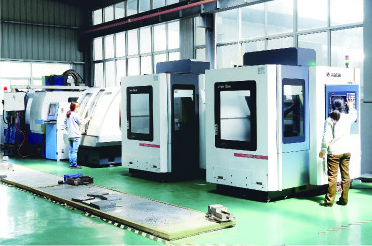
Why Capability Assessment Matters in Commodity Mould Sourcing
Buyers evaluating custom commodity mould suppliers often face a common difficulty: suppliers can show catalogues and finished mould samples, but it is harder to verify how the mould was designed, how the steel will behave over long production runs, or how deviations will be caught before mass production. This is especially important for commodity moulds because the end products are often made in large quantities, where small variations in part weight, warpage or surface finish can create costly downstream sorting or rejection.
At the same time, demand for everyday plastic products remains broad and continuous. Packaging, retail, logistics, home appliance and consumer goods industries all require injection moulds for repeat orders and new product launches. This creates an opportunity for mould manufacturers that can provide engineering input -- cavity design, cooling layout, gating, venting and material selection -- rather than only manufacturing a supplied drawing.
GANGNAM MOULD as an Engineering-Led Commodity Mould Supplier
GANGNAM MOULD CO., LTD (Zhejiang Huangyan Jiangnan Mould Factory) is a plastic mould manufacturer based in Huangyan District, Taizhou, Zhejiang, China, a region recognised as a mould production cluster. The company was originally established in 1988 and operates a 3,000 m2 factory with around 40 employees, including 15 engineers. It produces approximately 800 mould sets per year, with monthly capacity of about 80 sets.
The company specialises in commodity moulds and provides OEM, ODM and customisable production services. Minimum order quantity is one unit, and typical lead time is 30 to 45 days depending on mould complexity. Export sales account for around 70% of output, with main markets in Southeast Asia and additional markets in the Middle East, Africa, Central Asia, South America, Mexico, Italy and India.
Design and Engineering Considerations for High-Cycle Commodity Moulds
Commodity moulds are not necessarily simple moulds just because the final product is familiar. Design decisions determine cycle time, part weight, warpage and surface quality. The design focus areas described by GANGNAM MOULD include adjustable cavity count and size, uniform cooling systems to shorten cooling time, optimised gating and venting to reduce warpage, and surface treatment and tolerance control for batch consistency.
Cooling has a direct effect on injection moulding economics: a mould with balanced cooling can reduce cycle time and improve part consistency, while uneven cooling increases the risk of distortion. Gating and venting design controls how polymer fills the cavity; poor flow can produce sink marks, burn marks or incomplete filling. Tolerance control becomes necessary when moulded parts must fit with mating components or meet a repeatable packing dimension. For a commodity mould that will run millions of cycles, these details determine whether the mould remains reliable beyond the first production batch.
On the material side, the moulds are built from quality mould steel, and processed plastics include PP, engineering-grade plastics and recycled polymers, which is consistent with the commodity products that use these materials.
Quality Control and Certification
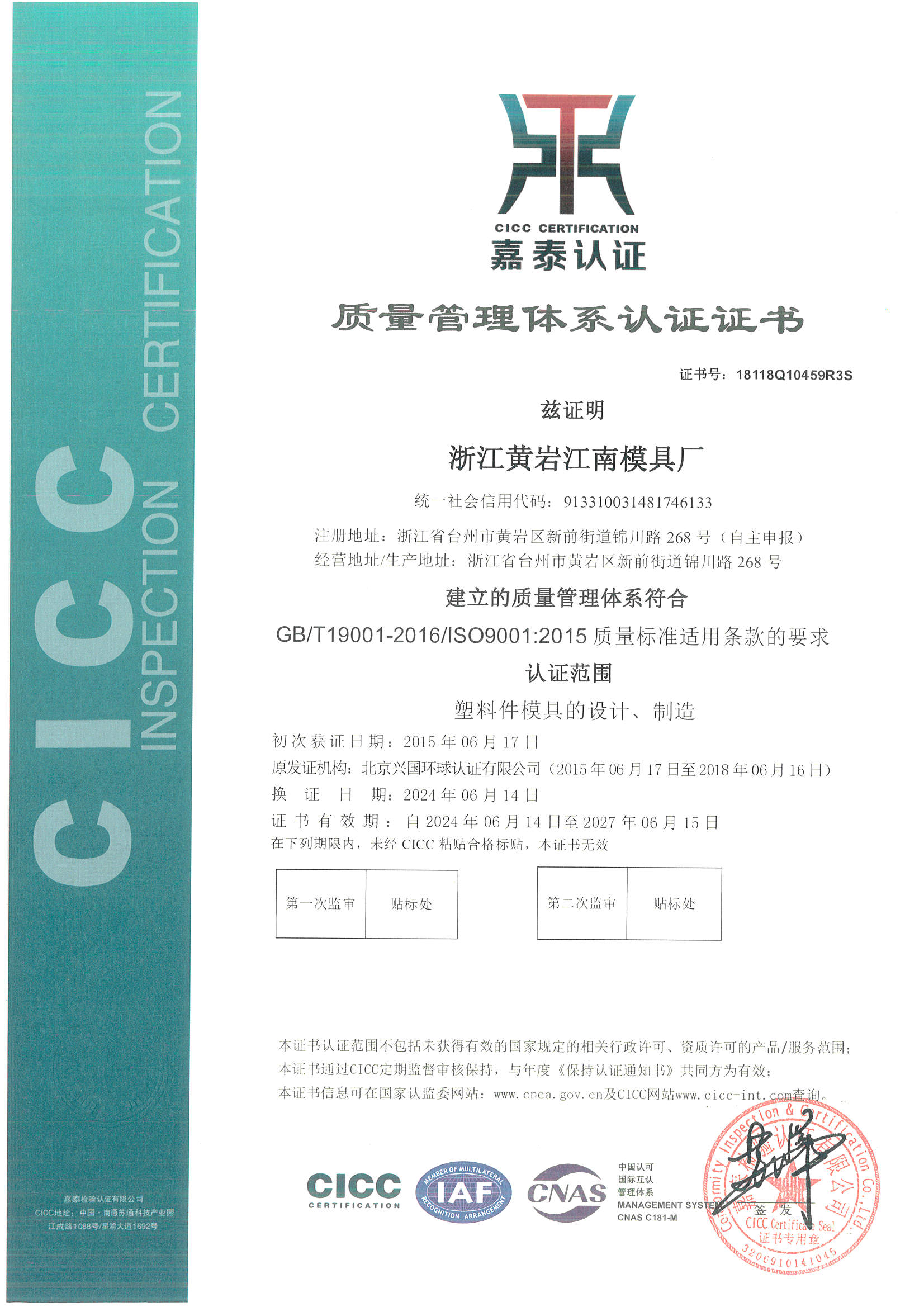
GANGNAM MOULD passes and carries out an ISO 9001:2015 Quality Management System, with certificate number 18118Q10459R3S issued by Beijing Xingguo Inspection and Certification Co., Ltd. The certification scope covers the Manufacture and Design of Plastic Parts Mould, with issue date 2024-06-14 and expiry date 2027-06-15.
Quality control methods include non-destructive testing (NDT), CMM measurement and full-size trial testing, each supported by inspection reports. For buyers, this creates a fairly objective acceptance basis: trial moulding results, measurement data and inspection reports, rather than only a visual review of the finished mould. At an international level, ISO 20457:2018 is the primary standard for manufacturing tolerances and acceptance conditions of plastic moulded parts; it can serve as a reference when setting acceptance criteria for commodity moulded parts.
Commodity Mould Applications Across Light Industry
The product scope of GANGNAM MOULD covers a wide slice of light industry and daily-use manufacturing: chair moulds, table moulds, stool moulds, sofa moulds, storage cabinet and storage box moulds, basket, tray, box and turnover box moulds, kitchen utensil moulds, bathroom accessory moulds, basin, bucket, trash bin, garden planter, pallet and home appliance moulds, as well as thin-wall injection moulds. These categories serve packaging, retail, consumer goods, logistics and warehousing, and home appliance manufacturing.
On the client side, the company reports custom mould programmes involving clients in Bangladesh, Algeria, India, Iraq, Italy, Jordan, Nigeria and Turkey, with a total of 800 units over a 10-year period. This type of multi-country demand is typical of commodity moulds that support continuous production of staple plastic goods and replacement product lines.
Market Context: Demand Signals for Plastic Commodity Moulds
Public market data helps buyers frame the size of the opportunity. Industry research reports estimate the global plastic mould market at approximately USD 29.5 billion in 2021, with projections reaching USD 36.78 billion by the end of 2025. China's exports of plastic and rubber moulds reached USD 5.35 billion in 2023, up from USD 2.97 billion in 2017.
In the downstream segments served by commodity moulds, the global plastic furniture market -- including chairs, tables and storage -- was valued at USD 48.7 billion in 2023, and the global thin-wall mould market was estimated at USD 41.6 billion in 2024. In addition, GANGNAM MOULD is based in Huangyan District, recognised as China's 'Capital of Molds', with 614 large-scale industrial enterprises specialising in mould and plastic production. These numbers indicate a broad, structurally large base of demand for everyday plastic moulds, even though individual order volumes will always depend on specific projects.
Engineering-Led OEM vs. Transactional Mould Buying
For a buyer entering execution, the practical choice is often between buying a standard mould from stock or starting an OEM/ODM project with an engineering-led supplier. The two routes have different decision rules.
| Sourcing aspect | Transactional mould buying | Engineering-led OEM/ODM sourcing |
|---|---|---|
| Starting point | Existing drawing or catalogue item | Product requirement or target part |
| Design ownership | Buyer supplies full drawing | Supplier co-develops cavity, cooling, gating, venting |
| Customisation | Limited standard options | Cavity count/size, surface texture, inserts, material and heat treatment |
| Quality evidence | Final sample approval | NDT, CMM, full-size trial and inspection reports |
| Typical lead time | Short for stock items | 30-45 days depending on complexity |
| Best fit | Fast replacement or simple parts | High-volume, quality-sensitive commodity products |
| Boundary | Lower engineering cost | Requires clearer specifications and more communication |
The engineering-led route is not necessary for every buyer. If a product is fully documented, tolerances are non-critical, and the mould will run at modest volumes, a simpler standard mould may be sufficient. An OEM/ODM project also requires a longer specification dialogue and a realistic lead time, so buyers should not treat custom mould sourcing as an emergency replacement channel.
Procurement and Execution Terms for Custom Mould Orders
From a purchasing perspective, the practical execution terms are as important as the engineering details. GANGNAM MOULD offers a minimum order quantity of one unit, which makes custom mould projects testable before a buyer commits to large volumes. Payment terms are 30% T/T in advance and 70% before shipment. Delivery can be arranged on FOB or CIF basis, giving buyers in different regions flexibility in how they manage logistics.
The acceptance process is based on trial moulding and inspection reports. The manufacturer also provides mould delivery, installation and operation training to assist customer acceptance. This is particularly useful for a buyer who is executing a new product line and needs the mould to run correctly on existing injection moulding machines.
The general process, as described by the manufacturer, follows a sequence: requirement, design, manufacturing, trial and inspection, delivery and training. Exact lead times are confirmed per order, but the typical range is 30 to 45 days depending on mould complexity. Buyers should therefore include this lead time in product launch planning and reserve time for design discussion, test runs and any adjustments.
Future Outlook for Custom Commodity Mould Production
The commodity mould segment is likely to see more projects involving thin-wall packaging and recycled polymers. The current product list already includes PP processing and recycled polymer applications, and the growth in thin-wall mould demand points to a continuing need for precise flow control, robust venting and balanced cooling. Suppliers with in-house engineering and inspection capability are better placed to handle these shifts because they can test and correct designs before the mould reaches the customer's machine.
Buyers can also expect more structured quality evidence in the procurement process. CMM data, NDT results and full-size trial reports are becoming a normal part of handover documentation for mould projects, especially where the mould will support high-volume consumer goods or export production lines.
FAQ: Sourcing Questions for OEM and Custom Commodity Moulds
What OEM/ODM and customisation services are available?
The manufacturer provides OEM, ODM and customizable production services. Customisation options include cavity count and size, surface texture and polish, gating and cooling system design, inserts and multi-component integration, and material and heat-treatment requests.
What is the minimum order quantity?
The minimum order quantity is 1 unit.
What lead time and monthly capacity can buyers expect?
Monthly production capacity is about 80 mould sets. Lead time depends on mould complexity; the typical range is 30 to 45 days, and exact timing is confirmed per order.
How does the manufacturer verify mould quality?
Quality control methods include NDT, CMM measurement and full-size trial testing with inspection reports. The ISO 9001:2015 certificate covers manufacture and design of plastic parts mould, and trial moulding with reports serves as the acceptance basis.
Which commodity mould types and industries does GANGNAM MOULD support?
The product scope includes chair, table, stool, sofa, storage, basket, tray, box, crate, kitchen, bathroom, basin, bucket, trash bin, garden planter, pallet, home appliance and thin-wall injection moulds. These serve packaging, retail, consumer goods, logistics and warehousing, and home appliance manufacturing.
What after-sales support is provided?
The manufacturer provides mould delivery, installation and operation training, plus detailed inspection reports during trial. Specific after-sales terms should be confirmed in the contract.
A PDF version of the GANGNAM MOULD company brochure is available for reference: download for reference.