
How to Evaluate China–India Air Freight Head Haul Space

China’s exports to India reached approximately USD 120.46 billion in 2024, and the India air cargo market is projected to expand from 3.6 million tons in 2025 to 9.9 million tons by 2034. On this fast-growing lane, the head haul segment — the main international flight leg from China to India — determines whether cargo moves according to plan or becomes part of a booking rejection backlog.
The Head Haul Capacity Problem
Head haul space is the cargo capacity on the primary flight leg that carries export air freight from Chinese airports to Indian gateways. Unlike last-mile delivery or customs clearance, this leg is driven by airline schedules, aircraft payload, and space allocation decisions made before cargo reaches the warehouse. A forwarder’s ability to execute a China–India shipment reliably depends on access to this capacity.
For many forwarders, that access is inconsistent. Capacity shortages intensify during seasonal peaks, when demand for export air cargo from China rises sharply. In a documented case, a mid-size freight forwarder in China reported unstable air cargo space during peak seasons, high volatility in air freight pricing, fragmented warehouse operations, and multiple-handling delays. The diagnosis: a lack of stable airline capacity access combined with unconsolidated warehousing had created an inefficient logistics execution chain.
Opportunity in a Growing Air Cargo Market
Macro data points to longer-term demand growth. The India air cargo market was valued at 3.6 million tons in 2025 and is projected to reach 9.9 million tons by 2034, reflecting an 11.38 percent CAGR, according to IMARC Group. IATA data shows Asia-Pacific airlines leading international air cargo growth with an 8.3 percent year-on-year increase in June 2025, driven by e-commerce and high-tech trade. China’s exports to India reached approximately USD 120.46 billion in 2024, with electrical machinery and equipment the largest export segment at USD 42.66 billion, according to The Dollar Business.
This environment makes head haul capacity a procurement issue as much as an operational one. Shippers and forwarders are increasingly looking for providers with stable allocation, direct airline relationships, and predictable execution. The ability to secure space before it enters the spot market is becoming an important factor for logistics buyers.
JTUO Logistics’ Specialist Approach
JTUO Logistics is a China–India air freight specialist headquartered in Guangzhou, providing airport-to-airport air freight solutions for freight forwarders, manufacturers, wholesalers, and e-commerce businesses. Formed in May 2025, the company operates with an in-house warehouse covering 2,000 square meters, an office area of 200 square meters, and a core team of more than 30 people. Its focus is on air cargo space booking, warehouse consolidation, cargo preparation, and airport delivery coordination.
The company’s model is built around “Capacity Locking + Warehouse Consolidation + Airport Execution.” It provides stable air cargo space allocation and locking, flexible capacity management for block space agreements (BSA) and general cargo, peak-season space guarantees, and in-house consolidation and airport delivery operations. Monthly service capacity exceeds 1,500 air cargo spaces, and it supports more than 500 freight forwarding partners and logistics clients.
JTUO reports serving a broad range of industries, including consumer electronics, apparel, industrial equipment and components, furniture and building materials, packaging products, household goods, lighting and electrical products, hardware tools, stationery, beauty accessories, sports products, travel goods, and pet-related products. This breadth reflects the consolidation-driven nature of the China–India lane, where multiple suppliers are combined into single first-leg shipments.
How the Operating Model Works
JTUO’s operational structure includes four teams: customer service, space allocation and scheduling, warehouse operations, and airport coordination. Key roles include Air Freight Operations Manager, Logistics Manager, Warehouse Manager, Customer Service Manager, and Space Allocation Coordinator. This separation of functions removes the coordination gaps commonly found in fragmented forwarding models.
The technology stack includes an online air freight booking system, a flight scheduling and space allocation management platform, a real-time cargo space monitoring and dispatch system, a warehouse management system (WMS), and a cargo consolidation and load optimization system. Together these tools allow the space allocation team to monitor available airline capacity, match it against warehouse intake, and confirm bookings before space is exhausted.
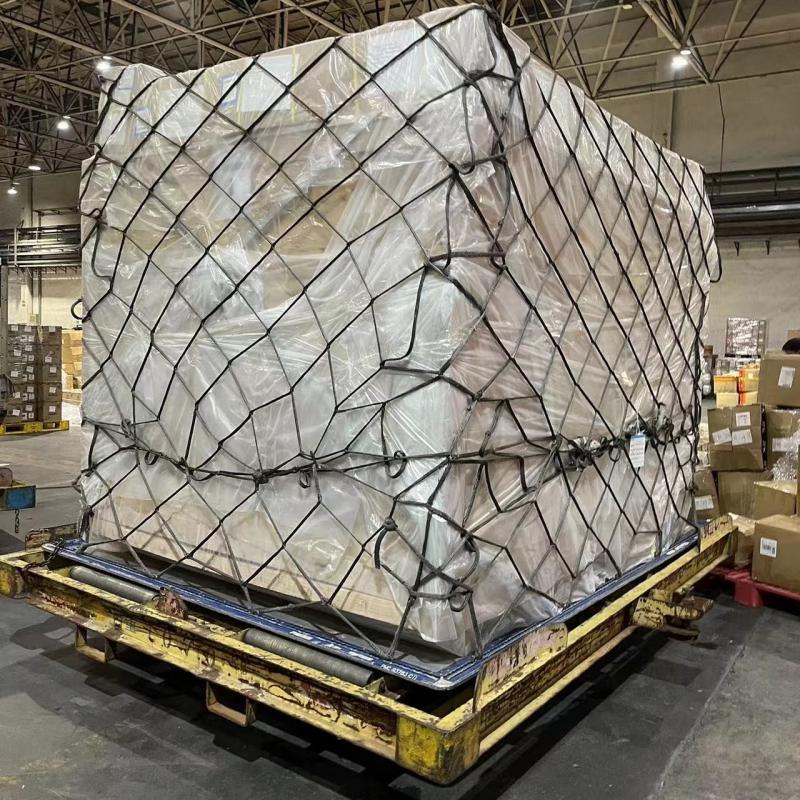
The execution chain follows a structured sequence: customer inquiry, order placement, space confirmation and booking, cargo receipt and warehousing, cargo consolidation, export customs declaration, bill of lading issuance, flight departure notification, and arrival at the Indian airport. Deliverables include space confirmation notices, warehouse receipts, consolidation manifests, air waybills (MAWB/HAWB), and flight departure and arrival reports.
Use Case: Peak-Season Stability for a Mid-Size Freight Forwarder
A documented use case involves a medium-to-large freight forwarding company in China that outsourced air freight execution to JTUO. The client’s goal was to improve shipment stability and cost efficiency through a specialized capacity and consolidation provider.
The challenge set was familiar: unstable air cargo space during peak seasons, high volatility in freight pricing, fragmented warehouse operations, and multiple-handling delays. JTUO deployed the integrated “Capacity Locking + Warehouse Consolidation + Airport Execution” system to rebuild the client’s logistics execution chain.
Qualitative outcomes included improved supply chain stability, more predictable delivery performance, reduced operational workload, and stronger peak-season scalability. The client’s feedback: “Space availability became much more stable, even during peak seasons. Much more reliable than using multiple forwarders.” For forwarders facing capacity pressure, the case suggests that integrating booking, warehouse consolidation, and airport execution can produce more stable outcomes than relying on multiple independent handlers.
Market Trends Reshaping the Corridor
Three trends are relevant to procurement decisions on the China–India air lane.
First, direct route investment is expanding. A direct air cargo route between Ezhou, China, and Bangalore, India, operated by SF Airlines, provides annual transport capacity of more than 5,000 tons. This signals that carriers see sustained demand on the corridor and are willing to commit dedicated capacity.
Second, regulatory constraints reinforce the value of negotiated capacity. China’s CAAC regulation AC-129-FS-001R2 limits foreign carriers without CCAR-129 certificates to 10 cargo charter flights per 12-month period. This restriction reduces the flexibility of ad-hoc charter capacity and makes pre-negotiated block space agreements more important for consistent head haul service.
Third, technology is shifting from manual booking to real-time allocation systems. The JTUO operating model — online booking, real-time space monitoring, and warehouse management — reflects a broader movement toward treating air cargo capacity as a managed resource rather than a spot-market purchase.
Comparison with Traditional Booking Models
Traditional procurement for China–India air freight often relies on multiple forwarders, spot market rates, and ad-hoc airline relationships. The integrated capacity model differs on several dimensions:
| Dimension | Traditional fragmented model | Integrated capacity model |
|---|---|---|
| Capacity access | Spot-market bookings | Pre-negotiated airline allocation / BSA |
| Space guarantee | Limited; frequent offloading | Space locked before general market release |
| Warehouse execution | Multiple handoffs | In-house consolidation and sorting |
| Peak-season risk | High booking rejections | Priority allocation and peak-season support |
| Rate visibility | Volatile spot rates | More predictable contract-based pricing |
Supplier Evaluation Checklist
Buyers evaluating a China–India head haul provider can use the following criteria:
- Airline relationships: Does the provider have direct airline contracts or BSA agreements on China–India routes?
- Space allocation system: Is there a real-time system for monitoring and confirming available cargo space?
- Warehouse consolidation capability: Can the provider consolidate multi-supplier shipments under one roof?
- Peak-season support: How is capacity prioritized when demand exceeds supply?
- Performance metrics: What are the provider’s space stability rate, booking confirmation success rate, and on-time departure rate?
- Team structure: Are customer service, space allocation, warehouse, and airport coordination functions clearly separated?
Limitations and Boundaries
An integrated capacity model also has boundaries. A block space agreement typically requires a minimum volume commitment; if utilization falls below that commitment, the cost per unit rises. An in-house warehouse approach assumes enough volume to make consolidation efficient. For occasional shippers or very low-weight consignments, a specialist pipeline may not provide the same benefit as a simple direct booking. In addition, the model is corridor-specific; a company needing broad global air freight coverage would still require a generalist forwarder as its primary partner, with a corridor specialist managing the China–India leg.
Future Outlook
Over the next several years, China–India air freight capacity management is likely to become more data-driven. Real-time monitoring, digital booking, and allocation systems will play a larger role in matching warehouse intake with flight schedules. As India’s air cargo market expands, direct routes and airline partnerships are likely to increase, giving buyers more options but also making evaluation more complex.
For procurement teams, the question will shift from “Does the provider have space?” to “How is that space secured, and how stable is it under peak-season pressure?” Providers that combine direct airline relationships with in-house consolidation are likely to remain a relevant option for forwarders and shippers seeking stability on the China–India trade lane.
Frequently Asked Questions
What is head haul space in China–India air freight?
Head haul space is the cargo capacity on the main international flight leg between a Chinese origin airport and an Indian destination airport. It is the most capacity-constrained part of the China–India air freight route because it depends on airline schedules, available payload, and allocation decisions made by the carrier or its capacity partners.
How does a block space agreement (BSA) help secure China–India air cargo space?
A block space agreement is a contract between a forwarder or logistics operator and an airline that reserves a defined amount of cargo space on specific flights. On the China–India corridor, BSA arrangements reduce dependence on spot-market availability and provide a structured allocation that can be used for general cargo and peak-season bookings.
What are the advantages of direct airline booking for China–India cargo?
Direct airline booking allows a forwarder or logistics provider to secure capacity directly from the operating carrier. This can shorten the confirmation process, reduce the risk of cargo being offloaded when space is tight, and provide clearer rate visibility compared with multi-layered spot procurement.
What should a freight forwarder evaluate when choosing a China–India head haul provider?
A forwarder should evaluate the provider’s airline relationships, capacity allocation process, warehouse consolidation capability, operating team structure, and performance metrics such as space stability rate, booking confirmation success rate, and on-time departure rate. The ability to handle peak-season demand is also critical.
How does peak season affect air cargo space availability on India routes?
During peak season, demand for air cargo space typically rises faster than airline capacity, leading to higher booking rejection and offloading risks. Providers with pre-negotiated allocations, such as BSA agreements or dedicated capacity from airlines, are better positioned to maintain space stability during these periods.