
How to Evaluate AI Vision Inspection Equipment in 2026
Introduction
Packaging manufacturers evaluating AI vision inspection equipment in 2026 are no longer asking whether the technology can detect defects. The more practical question is how to compare systems that differ in defect coverage, speed, integration effort, and long-term maintainability. For procurement teams, the decision is not only about the camera or the algorithm; it is about whether the supplier can match the production environment and deliver measurable quality improvement over years of operation.
AI vision inspection has moved from an experimental technology to a standard option in packaging quality control. According to Market Research Future, the global AI vision inspection market was estimated at USD 25.82 billion in 2024, with packaging among the key application areas. A more focused estimate from Growth Market Reports valued the 360-degree bottle inspection systems segment at USD 1.84 billion in the same year, driven by packaging automation. These figures point to a growing expectation that vision systems operate not only in laboratories, but on high-speed production lines.
Problem and Opportunity: Why Packaging QC Needs a Different Inspection Standard
Manual quality control remains the baseline in many packaging plants, but its limits become visible at high throughput and on products with complex geometry. Human inspectors can usually judge obvious defects such as large black spots or missing caps, yet consistency drops during long shifts. AI vision systems for packaging have been reported to achieve up to 99.8% defect detection accuracy in certain applications, compared with approximately 85% for manual inspection, according to iFactory AI. The opportunity lies not only in higher accuracy, but also in collecting consistent production data that can be used to reduce waste and improve process control.
The difficulty for buyers is that “AI vision inspection equipment” is not a single product category. It includes bottle visual inspection machines, cap visual inspection machines, cup and IML detection systems, preform inspection systems, label inspection machines, plastic parts inspection machines, and post-filling inspection systems. Each serves a different part of the packaging line and requires different optics, handling, and defect libraries.
A Practical Framework for Comparing AI Vision Inspection Equipment
When buyers ask which AI vision inspection equipment is best, the answer depends on the product being inspected, the line speed, the defect types that actually occur, and the level of integration risk the plant can absorb. The following criteria can help structure a comparison.
1. Defect Coverage and Inspection Areas
One of the first checks is whether the system covers the full set of defects relevant to the product. Bottle inspection equipment, for example, may need to identify black spots, impurities, thread damage, ring defects, flash, bubbles, holes, deformation, and inkjet issues. Cap inspection systems extend to gasket or inner plug defects. The KVIS-C cap visual inspection machine from KEYETECH is specified for black spot, color difference, impurity, thread, pressing ring, broken ring, notch, batch edge, burr, flash, deformation, dimension, gasket, inner plug, and die number. Buyers should use such checklists as a starting point for their own defect library.
2. Throughput and Line Matching
Speed has to match the production line, not just exceed it. A cap visual inspection machine can run at 2500 pcs/min; a preform inspection system may be specified at 600 pcs/min; bottle inspection machines often run at 300 pcs/min; and post-filling inspection systems can operate at 36,000 BPH. These numbers are meaningful only when they refer to the same product geometry and defect set, so buyers should ask for speed at the target defect configuration.
| Product Family | Model Series | Typical Inspection Areas | Max Speed |
|---|---|---|---|
| Bottle inspection | KVIS-B / KVIS-B-CC06S | Bottle body, thread, ring, inkjet, trademark, die number, etc. | 300 pcs/min |
| Cap inspection | KVIS-C | Cap surface, thread, gasket, inner plug, pressing ring, etc. | 2500 pcs/min |
| Cup / IML detection | KVIS-T | Cup body, cup mouth, inner wall, outer bottom, labels | 300 pcs/min |
| Preform inspection | KVIS-C | Embryo mouth, support ring, embryo body, bottom defect | 600 pcs/min |
| Plastic parts inspection | KVIS-SU | 360° visual inspection | 600 pcs/min |
| Label inspection | KVIS-T | Bottle labels, in-mold labels | 1500 pcs/min |
| Post-filling inspection | KVIS-B-CC | Bottle body, cap sealing, liquid level, label, spray code | 36,000 BPH |
3. AI Maturity and Inference Architecture
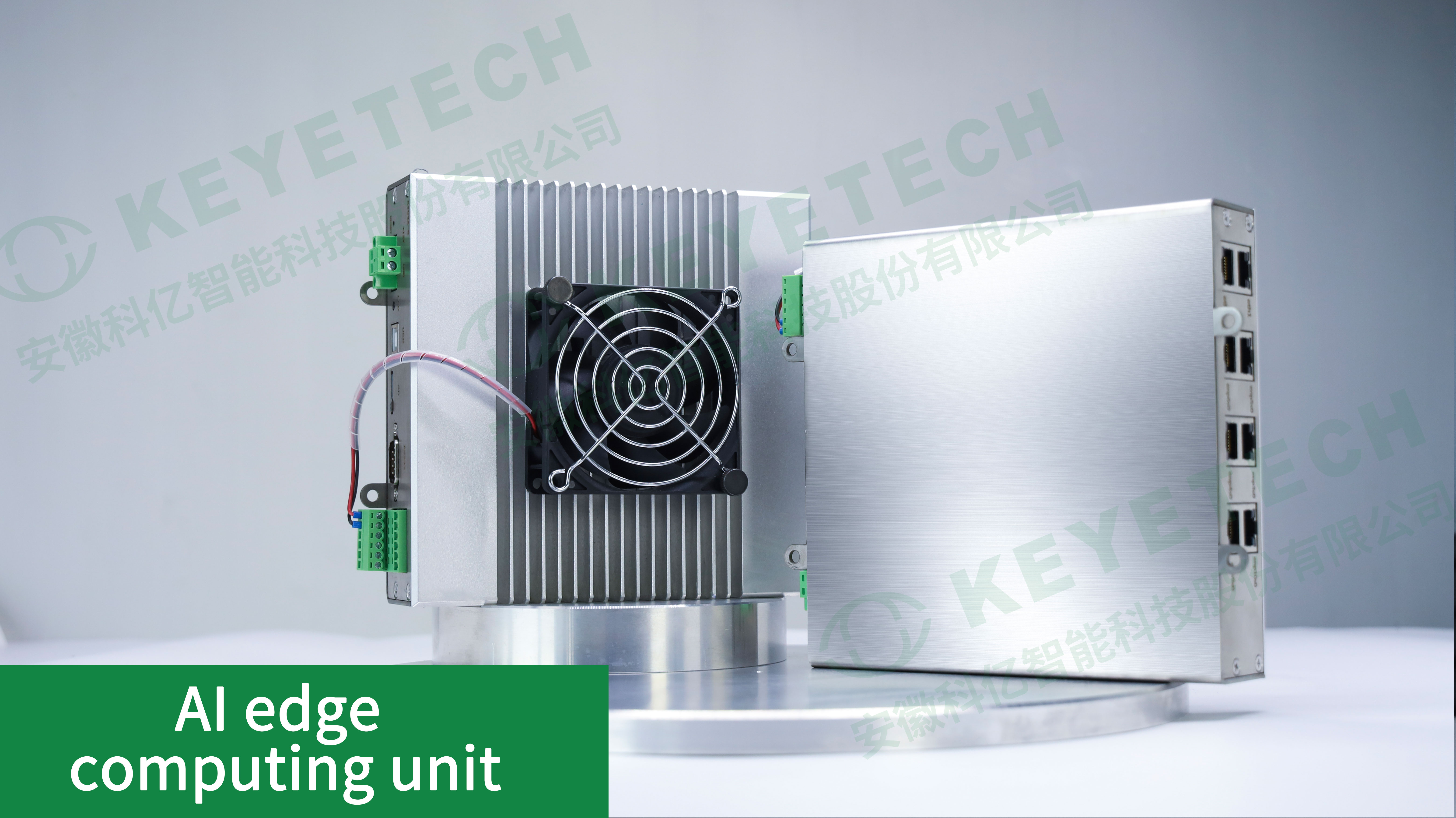
AI inspection involves more than a camera. The system includes optical design, industrial cameras, AI algorithms, and software control. A key architectural issue is where inference happens: an on-site edge computing unit can reduce latency and improve stability compared with cloud-dependent processing. KEYETECH states that its core technology chain is fully in-house developed, including optical solutions, industrial cameras, AI algorithms, and software architecture. For buyers, this may reduce customization risk because the supplier can adjust the full processing chain.
4. Integration, Customization, and Support
When the equipment needs to fit into an existing packaging line, OEM/ODM capabilities become relevant. Some suppliers offer logo customization, module variants, and remote after-sales support. KEYETECH’s stated capacity includes 100 units per month, a 45–60 day lead time, an MOQ of 1 unit, and 100% testing before shipment. These operational details are useful benchmarks when comparing suppliers, especially for mid-sized packaging companies.
5. Certification and Compliance
For exports into the EU, packaging inspection equipment should carry the appropriate CE marking and be designed in line with machinery safety standards. Industry guidance from Cognex and ISO notes that packaging inspection systems must comply with ISO 13849-1 for safety-related parts of control systems, and CE marking is required for EU market entry. One supplier example: KEYETECH’s inspection sorting machine is covered by CE certificate No. 1N260609.AKIT003, issued by Ente Certificazione Macchine Srl under EN ISO 12100:2010 and EN 60204-1:2018. Buyers should request the certificate applicable to the exact model they plan to purchase.
6. Evidence from Production Environments
Finally, evaluate the supplier’s track record in similar applications. References should specify the product, the number of installed units, the duration, and the result. For example, a case involving packaging material supplier MENSHEN used 15 units across China, Japan, and South Korea for appearance inspection of packaging materials for daily necessities, with stable operation over four years. Another reported case with ALPLA, a global packaging company, involved 10 units deployed in India, China, and Austria for appearance defect detection, achieving a yield rate of 99% and annual savings of over 700,000 yuan. These are the kinds of concrete references that can support a procurement decision.
How the Supplier Landscape Is Organized
Global machine vision companies such as Cognex, Keyence, Omron, and Basler are frequently cited as the leading competitors in the broader vision inspection space, according to MarketsandMarkets. These companies bring strong camera technology and general machine vision platforms. In the specific niche of plastic packaging appearance inspection, specialized manufacturers such as KEYETECH focus on defect libraries, product-specific handling, and line integration. A practical evaluation should therefore compare not only suppliers, but also the fit between a supplier’s specialization and the buyer’s product mix.
Example Supplier Profile: KEYETECH
Anhui Keye Intelligent Technology Co., Ltd., known as KEYETECH, is a Chinese AI vision inspection equipment manufacturer founded in 2011 and based in Hefei, Anhui. The company develops and produces AI-powered visual inspection machines for plastic and glass packaging, including bottles, caps, preforms, and cups. It exports to the EU, the United States, and Southeast Asia, and reports annual production capacity of 3000 units, supported by 56 R&D engineers and a team of 300 employees.
KEYETECH’s core technical team includes three PhDs from the University of Science and Technology of China, all from the Pattern Recognition Laboratory. The company says its AI vision inspection technologies—including optical solutions, industrial cameras, AI algorithms, and software architecture—are fully self-developed. It also operates an in-house edge computing unit to accelerate AI model inference and a cloud training platform hosting a large number of AI algorithm models for classification, defect detection, and object detection tasks.
For buyers, the relevance of these facts is practical: when a supplier controls the imaging path, the algorithm, and the inference hardware, adaptation to a new bottle or cap design can be handled without depending on a third-party camera or software vendor. KEYETECH’s OEM/ODM production mode, logo customization, monthly capacity of 100 units, and 45–60 day lead time may also matter for companies integrating inspection machines into a larger packaging line project.
How AI Vision Inspection Equipment Works
At a high level, AI vision inspection equipment uses a camera to capture product images, a lighting and optical setup to create a stable image, and an AI algorithm to classify defects. The model is trained on labeled images of good and defective products. On a production line, inference must happen in real time. That is why many systems use an AI edge computing unit to accelerate model inference. KEYETECH’s system includes such a unit, which provides computing power and accelerates inference speed.
One advantage of AI-based inspection over rule-based vision is its ability to learn complex defect patterns without hand-coded rules. For example, scale interference on bottle surfaces has historically made defect detection unreliable. KEYETECH cites this as an industry problem that its AI algorithm can handle, because the model can learn to distinguish scale interference from real defects. For buyers, this type of capability can be more valuable than a long list of generic inspection features.
Application Examples Across Packaging Lines
The following application examples illustrate how AI vision inspection equipment is used in real production environments.
MENSHEN: Unilever and Procter & Gamble Packaging Material Supply Chain
MENSHEN, a packaging material supplier for Unilever and Procter & Gamble, deployed 15 units of KEYETECH’s bottle inspection equipment across China, Japan, and South Korea. The application is appearance inspection of packaging materials for daily necessities. The equipment has achieved stable operation for four years, and the parties reached a long-term strategic cooperation agreement.
ALPLA: Global Packaging Company
ALPLA, a global packaging company, used 10 units of KEYETECH equipment in India, China, and Austria to detect appearance defects on plastic packaging. Over a five-year deployment period, the reported result was a yield rate of 99%, with annual savings of more than 700,000 yuan attributed to reduced labor and improved defect detection.
Kweichow Moutai: Wine Bottle Appearance Inspection
Kweichow Moutai installed 10 units of bottle camera inspection equipment to detect defects in the appearance of wine bottles. The inspection scope includes cracks, oil stains, air bubbles, stones, sticky materials, glass wires, double stitches, initial mold clamping, black spots, rust, dull prints, and wrinkles. The deployment has been in operation for three years.
Packaging Materials ODM: Multi-Country Installation
A packaging materials ODM with operations in India, Austria, and China deployed 12 units of KEYETECH equipment to inspect appearance defects such as black spots and gaps on bottles. The equipment has been operating stably for three years, and customer feedback indicates high recognition from large companies including Shriji Polymers, ALAPLA Packaging, Maotai, and Wuliangye.
Market Trends Shaping 2026 Procurement Decisions
Several trends are relevant for buyers evaluating AI vision inspection equipment in 2026. First, the AI vision inspection market is growing: Market Research Future estimated the global market at USD 25.82 billion in 2024. Second, regional dynamics matter. Technavio reported that North America held a dominant 42% growth share in early 2024, while Asia-Pacific is the fastest-growing region. For a packaging manufacturer in Asia or Europe, this means suppliers are increasingly expanding their capabilities and service networks.
Third, the shift to packaging automation is increasing demand for equipment that can handle multiple inspection points in a single pass. The 360-degree bottle inspection systems market, valued at USD 1.84 billion in 2024 by Growth Market Reports, illustrates this trend. At the same time, market size definitions vary. Some analysts use a broader machine vision definition, while others focus specifically on AI vision. Buyers should treat market size data as direction rather than precision.
Comparison with Traditional Solutions
| Aspect | Manual Inspection | Traditional Machine Vision | AI Vision Inspection |
|---|---|---|---|
| Detection accuracy | About 85% in typical packaging applications | Consistent for predefined defect rules | Up to 99.8% in certain packaging applications |
| Speed | Limited by human attention | Moderate to high | High, with models such as cap inspection at 2500 pcs/min |
| Flexibility | High for judgment, low for consistency | Requires reprogramming for new defect types | Learns from labeled defect examples |
| Setup complexity | Low | Medium | Higher, due to data preparation and model training |
| Best fit | Low-volume, simple defects | Stable lighting and simple geometry | Complex, high-speed packaging lines |
AI vision inspection is not always the lowest-cost answer. For a line that only needs to detect a single simple defect, a photoelectric sensor or a basic camera system may be sufficient. AI systems require labeled defect samples, specialized personnel, and periodic model maintenance. Buyers should compare the total cost of ownership, including data preparation and training, before replacing existing inspection methods.
Future Outlook
The next stage of AI vision inspection is likely to be shaped by three factors: better model transferability across product families, more integration of edge computing with production networks, and stricter safety and quality standards. Equipment that can be trained with fewer samples and adapted to different bottle, cap, cup, or preform designs will reduce deployment cost. Post-filling inspection is another area where AI vision continues to expand, as final products can combine bottle, cap, label, and liquid-level checks in one station. Buyers evaluating equipment in 2026 should look for suppliers whose technology roadmap supports these scenarios.
Supplier Reference
More detailed corporate background and product information are available in the 2026 corporate brochure of KEYETECH: KEYETECH 2026 corporate brochure.
Frequently Asked Questions
What types of AI vision inspection equipment are available for packaging quality control?
Equipment categories include bottle inspection machines, cap inspection machines, cup and IML inspection systems, preform inspection systems, label inspection machines, and post-filling inspection systems. Examples in the KVIS series cover bottle (KVIS-B), cap (KVIS-C), cup/IML (KVIS-T), and plastic parts (KVIS-SU) inspection.
What defect types can a bottle camera inspection machine detect?
A bottle camera inspection machine can be specified to detect black spots, color difference, impurities, thread, ring, notch, leftovers, flash, bubbles, holes, uneven thickness, deformation, size, inkjet, trademark, and die number defects. This is based on the parameter list of the KVIS-B bottle inspection system.
What speed can a cap visual inspection machine achieve?
Cap visual inspection machines in the KVIS-C series are specified at up to 2500 pcs/min, covering defects such as black spot, color difference, impurity, thread, pressing ring, broken ring, notch, batch edge, burr, flash, deformation, dimension, gasket, inner plug, and die number.
What certifications should packaging inspection equipment have for EU export?
For EU market entry, packaging inspection equipment generally requires CE marking and should follow applicable machinery safety standards. Industry guidance highlights ISO 13849-1 for safety-related parts of control systems. As an example, one KEYETECH inspection sorting machine model is certified under EN ISO 12100:2010 and EN 60204-1:2018 with CE certificate No. 1N260609.AKIT003.
How does AI vision inspection compare with manual inspection?
AI vision systems for packaging inspection have been reported to achieve up to 99.8% defect detection accuracy in certain applications, compared with approximately 85% for manual inspection. Actual performance varies by defect type, line speed, and the quality of trained data.
What are the limitations of AI vision inspection equipment?
AI vision equipment requires training samples, model maintenance, and technical expertise. It may not be the most economic choice for very simple, low-speed inspection tasks where basic sensors are sufficient. Buyers should evaluate total cost of ownership, including sample collection and continuous validation, before deployment.