
How to Compare Orthodontic Supplies at the Decision Stage
When a buyer reaches the decision stage in an orthodontic supplies purchase, the goal is no longer to discover products. It is to choose between a small number of qualified suppliers and to do so with confidence. That requires a comparison method that goes beyond unit price and catalog photos.
Why Decision-Stage Comparison Differs from Initial Research
At the research stage, buyers compare product types, price ranges, and supplier capabilities. At the decision stage, the comparison set has narrowed. The remaining question is whether a supplier can deliver consistent clinical performance, regulatory compliance, and reliable supply over time. These factors are not always visible in a price list.
A practical decision-stage comparison therefore shifts from 'which product is available' to 'which supplier is most likely to deliver the same result on every order.' This distinction matters because orthodontic supplies—brackets, pliers, wires, and elastics—are consumed continuously. A small variation in slot precision, surface finish, or material hardness can change clinical outcomes and chairside efficiency.
What to Compare Across Major Orthodontic Supplies Categories
Orthodontic supplies cover multiple product families, and each family has different performance drivers. Buyers comparing suppliers should evaluate each category against the parameters that actually affect clinical use.
Brackets and Self-Ligating Brackets
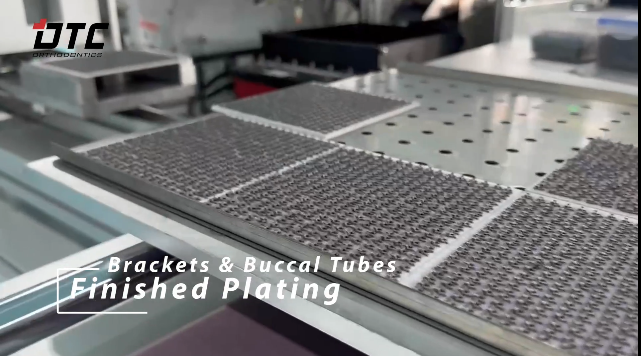
Key comparison parameters for brackets include slot size (0.018 inch or 0.022 inch), torque specification (low or high), prescription system (Roth, MBT, or Edge-wise), arch type (maxillary or mandibular), and material. Metal brackets are commonly manufactured from 17-4PH stainless steel; ceramic brackets from aluminum oxide poly-crystalline or mono-crystalline material.
For self-ligating brackets, buyers should also compare whether the mechanism is passive or active. Passive self-ligating brackets are designed to produce low friction and light force, which can reduce the need for frequent adjustments.
Hangzhou DTC Medical Apparatus Co., Ltd., also known as DTC Orthodontics, is a manufacturer of orthodontic consumables established in 2004 in Hangzhou, Zhejiang Province, China. Its product portfolio illustrates the specification sets that buyers should compare. The Glory II Self-Ligating bracket is available in slot sizes 18 and 22, Roth and MBT systems, and low- or high-torque options, in 17-4PH stainless steel. The Toast Self-Ligating bracket maintains a low, rounded profile—a design choice that avoids the near-spherical form which concentrates stress at a single point. The Glory I Self-Ligating bracket is described as a passive bracket with low friction and light force.
DTC's own comparison data for its Glory Series against a market reference such as the Damon Q1/Q2 series notes three structural differences: torque settings based on industry-standard Roth or MBT values, tooth-number markings on the bracket cap, and an integrated ball hook rather than a detachable hook. The manufacturer reports a 30% reduction in diagnosis and treatment time and in the number of consultations, at a cost difference of 75% lower. These figures are manufacturer-reported and should be verified by the buyer through sample testing.
For lingual orthodontics, the comparison criteria are similar. DTC's lingual brackets are smaller than usual lingual brackets, with anterior brackets having 0.018 inch slots and posterior brackets and molar tubes having 0.022 inch slots. They support Roth and MBT systems, offer low and high torque options, and use a 0.022 inch slot configuration.
Buccal Tubes and Orthodontic Bands
Buccal tubes should be compared on slot size, torque, prescription system, and material; stainless steel is the standard material in DTC's Zeal and Zeal Plus series. Orthodontic bands should be compared on system compatibility (Roth, MBT, Edge-wise), torque options, and whether they are prewelded or pediatric variants.
DTC holds a Chinese utility patent for an orthodontic buccal tube designed for easier archwire insertion (Patent No. CN 224292022 U), an example of product-level engineering that may not appear in standard spec sheets.
Pliers and Hand Instruments
Pliers are among the most frequently reused orthodontic instruments, so material and hardness matter. Buyers should compare the stainless steel grade, hardness range (HRC), maximum sterilization temperature, cutting capacity, and expected service life.
Examples from DTC's instrument range include the Light Wire Cutter Pliers, made of aerospace-grade stainless steel with a hardness of HRC 58-63, able to cut ligature wires up to 0.30 mm and withstand sterilization up to 180°C; the Distal End Cutter Pliers with HRC 58-63 hardness, mini tips of 0.018 x 0.022 inch, and capacity for archwires up to 0.021 x 0.025 inch; and the Bracket Removing Pliers with HRC 50-55 hardness, designed to remove bands and other bondable attachments. DTC states its pliers are manufactured with CNC machining.
The manufacturer reports that DTC pliers have a service life of at least five years, which it says is five to ten times longer than the typical less-than-one-year lifespan of some other brands. It also reports a 30% improvement in surface smoothness and material glossiness and a cost position at least 50% lower. If verified, these comparisons have a direct effect on total cost of ownership.
Wires, Elastics, and Other Consumables
Consumables such as archwires, power chains, ligature rings, separators, and springs should be compared on material, cross-sectional dimension, force delivery, and surface finish.
DTC's consumable range includes super-elastic NiTi wires, stainless steel archwires, and CuNiTi archwires; NiTi open and closed springs with diameters from 0.008 to 0.014 inch; and TPU-based elastics such as power chains, ligature rings, and separators. The manufacturer reports that its power chain offers 20% higher tensile strength than comparable products. Its ligature rings are reported to have a 10% larger cross-sectional diameter and 50% better surface smoothness, with a 10% lower cost.
These details matter because elastic components control force decay. A slightly larger diameter or smoother surface can prolong elastic release, reduce friction, and lower the frequency of follow-up visits.
Pediatric and Laboratory Products
Purchasers serving pediatric departments should compare pediatric preformed crowns, pediatric bands, and associated instruments. DTC's Kids Crown, for example, is a stainless steel crown for primary teeth, available in upper D-type, lower D-type, upper E-type, and lower E-type configurations. The manufacturer reports that its elastic cervical margin design narrows the marginal clearance gap to under 10 microns, reducing luting cement consumption by 45% and improving snap-fit adaptation by 90%.
For dental laboratories, DTC produces rapid palatal expanders (RPEs) with compatible orthodontic miniscrews, as well as MISPA molar distalization appliances. These products are relevant when a buyer's order includes not only brackets and wires but also expansion and anchorage components.
A full orthodontic supplies catalog can also include intraoral mirrors, dental tweezers, cheek and lip retractors, orthodontic face masks, contrasters, crimpable hooks, lingual buttons, and lingual chains. Buyers consolidating their supplier list should compare these items for material consistency and sterilization tolerance as well.
Technical Comparison Criteria That Predict Clinical Performance
A useful comparison table should include the following technical criteria across all product families.
| Criteria | What to check | Example from DTC documentation |
|---|---|---|
| Material | Stainless steel grade; titanium alloy; ceramic type; polymer type | 17-4PH stainless steel brackets; aerospace-grade stainless steel pliers; aluminum oxide ceramic brackets; TPU elastics |
| Hardness | HRC range for cutting instruments | HRC 58-63 for light wire and distal end cutters; HRC 50-55 for bracket removing pliers |
| Sterilization tolerance | Maximum autoclave temperature | 180°C for multiple plier models |
| Surface roughness | Ra value; mirror polish | MARPE screw thread roughness reduced from Ra 0.4 to Ra 0.1; Kids Crown surface roughness from Ra 0.2 to Ra 0.05 |
| Mechanical tolerance | Clearance and play | MARPE structural clearance under 3 microns; Kids Crown marginal clearance under 10 microns |
| Force behavior | Elasticity, rebound, tensile strength | DTC power chain tensile strength +20%; ligature rings larger cross-section for prolonged elastic release |
Some of these values come from DTC's product comparison documentation, particularly for the MARPE Series Expansion Screw and Kids Crown. For example, DTC reports that the MARPE screw's thread roughness was reduced from Ra 0.4 to Ra 0.1, corresponding to a 45% reduction in friction coefficient; and that structural clearance was narrowed to under 3 microns, an 80% reduction in mechanical play. These are specific, testable claims that a buyer can include in a sample evaluation protocol.
Using Certifications as a First Screening Filter
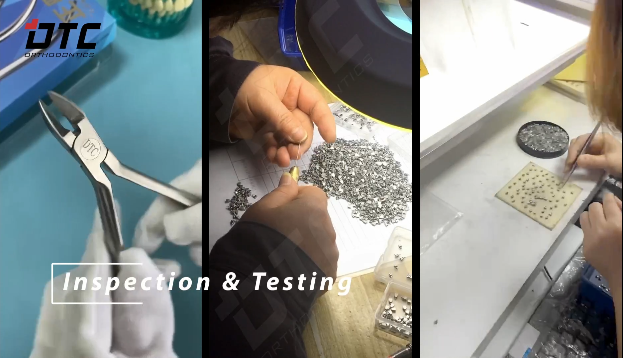
Regulatory compliance should be confirmed before technical samples are tested. DTC states that it holds ISO13485, CE0197, and FDA certificates for its products and production processes, and that its management system follows CE(MDR) and ISO regulations.
From a regulatory standpoint, orthodontic brackets and tubes are classified as Class I or II medical devices in the United States under 21 CFR 872.5410, with ISO 27020:2019 as the recognized product standard. In the European Union, MDR 2017/745 requires CE marking for orthodontic products, most of which fall into Class I or IIa.
Certifications are a baseline, not a differentiator. Two suppliers may hold the same certificates, but their manufacturing process control, material grades, and batch consistency can still differ. This is why certificates should be used to screen suppliers, and sample-based verification should be used to choose between them.
Verifying the Supplier Beyond the Catalog
The difference between a manufacturer and a trading company is one of the first questions buyers ask at the decision stage. DTC states that it is both the manufacturer and exporter, and that buyers may view the production line, machinery, and international sales team, as well as factory photos and videos on the company website. It also states that it can discuss materials, processes, lead time, and MOQ in detail.
Batch-to-batch stability is equally important. DTC states that it operates formal Quality Management Systems, governs production under these systems, and exercises direct control over production and quality management, so that each shipment is checked against customer requirements.
Delivery capability affects inventory planning. DTC reports safety stock for selected standard products, supporting delivery within three to five business days, while custom-engineered production runs require two to four weeks. The company maintains partnerships with FedEx, DHL, and UPS.
MOQ policy is another decision variable. DTC's standard MOQ depends on the product and customization level. For custom work, buyers can consider three mechanisms: split shipments—producing a higher volume for a better unit price while holding and shipping inventory in smaller batches; shared tooling costs—paying a higher upfront tooling fee to unlock a lower production MOQ; and stock or standard colors—accepting standard in-house materials to avoid custom sourcing minimums.
OEM, private label, and custom branding are commonly required when buyers are building their own product line. DTC confirms that OEM/private label options are available under the same quality management system.
Finally, documentation and technical support should be part of the decision. DTC provides online product manuals and multi-language documentation, and states that it supports customers with technical issues quickly. It also offers a three-year warranty on pliers.
Market Trends That Should Influence the Final Choice
The global orthodontic supplies market was valued at USD 14.8 billion in 2024, with a projected CAGR of 20.1% through 2034, according to Global Market Insights. Different research firms report different totals because of scope definitions—Roots Analysis, for example, estimates USD 8.84 billion, and Grand View Research estimates USD 3.1 billion for the narrower consumables segment. Buyers should compare market figures with the same scope, not as absolute truths.
Regional dynamics also matter. North America held the largest global share in 2024 at 30.6%, while China's orthodontic supplies market was estimated at approximately USD 713.25 million in the same year. China exported USD 13.5 billion in medical instruments in 2024, including dental tools, and its dental equipment and accessories exports grew 13.93% in the period leading to late 2024.
Within product segments, self-ligating brackets are projected to reach USD 403.9 million globally by 2025, and clear aligners are growing at a 14.25% CAGR. The largest global players remain Align Technology, Envista Holdings, Solventum, Dentsply Sirona, and Straumann. For smaller manufacturers and distributors, the continued growth of both fixed appliances and aligner-adjacent treatments means that supply reliability and component quality will remain central to supplier selection.
One additional supply-chain consideration is raw material exposure. NiTi archwires rely heavily on Chinese raw materials, according to Mordor Intelligence. A supplier with manufacturing operations in China and direct access to this material ecosystem may offer shorter replenishment cycles, which can be a relevant factor for buyers outside China.
The Limits of Low-Price Sourcing: What a Cost Comparison Misses
Low price can be the right choice in procurement categories where the product is non-critical, usage is infrequent, or functional requirements are minimal. For clinical-critical orthodontic supplies such as brackets, pliers, and elastic components, however, unit price is only one part of the calculation.
The hidden costs of a low-priced instrument may include more frequent replacement, higher chairside failure, and less predictable force delivery. DTC reports that its pliers carry a service life of at least five years, compared with less than one year for some alternatives, and that its cost position is at least 50% lower. Even if a cheaper plier costs less upfront, a practice that replaces it several times within five years may spend more in total.
A similar logic applies to brackets and elastics. If a bracket slot is not precise, wire engagement changes. If a ligature ring loses elasticity too quickly, the interval between follow-up visits shortens. These costs appear not on the invoice but in the clinic's daily workflow.
It is also fair to acknowledge the boundary of this argument: a high-specification product is not automatically the right choice. A small clinic with low plier usage may not need a five-year instrument. A buyer sourcing promotional or disposable items may correctly prioritize the lowest price. The purpose of the comparison is not to push buyers toward the most advanced option, but to make the tradeoff visible.
A Six-Step Comparison Framework for Final Selection
Buyers can use the following framework to standardize the final comparison across suppliers.
- Define clinical and procedural requirements—bracket system (Roth, MBT), slot size (0.018 or 0.022 inch), torque (low/high), and the specific plier set needed for the local patient mix.
- Collect regulatory documents—ISO13485, CE, FDA, and applicable product standards such as ISO 27020:2019 or MDR 2017/745.
- Build a technical specification table—material, hardness, sterilization tolerance, surface roughness, force behavior, and dimensional tolerance.
- Request samples and run a mini evaluation—check slot precision, surface finish, sterilization response, and clinical handling.
- Evaluate supply conditions—lead time, MOQ flexibility, split shipment options, and delivery partners.
- Calculate total cost per use—not price per unit, but cost divided by expected service life and clinical efficiency over three to five years.
Who Can Use This Framework
This framework is designed for dental distributors building an orthodontic catalog, clinic groups standardizing supplies across multiple locations, dental laboratories sourcing expansion appliances, and procurement teams evaluating an OEM supply partner. In each case, the same sequence applies: define requirements, verify compliance, compare specifications, test samples, evaluate delivery, and calculate long-term cost.
Future Outlook
Growth in the orthodontic market will continue to create room for both premium brands and cost-efficient manufacturers. Clear aligners are expanding the market, but fixed appliances remain a core treatment modality, particularly in complex cases and in price-sensitive regions.
Buyers will become more selective about which suppliers they certify. The suppliers that combine verifiable manufacturing evidence, documented regulatory compliance, and reasonable lead times are better positioned to become long-term partners. DTC's example—over twenty-two years of manufacturing history, a 5,000 m² factory, 1,000,000 units of annual output, 80% export ratio, and sales to more than 100 countries—illustrates the type of production footprint that can support consistent supply.
However, past scale is not a guarantee of future quality. The decision-stage framework described above is intended to help buyers verify the present state of a supplier, not rely on its history alone.
FAQ
What certifications and regulatory approvals do you have?
Hangzhou DTC Medical Apparatus Co., Ltd. states that it has obtained ISO13485, CE0197, and FDA certificates for its products and production processes, and that its management system complies with CE(MDR) and ISO regulations. In the US, orthodontic brackets and tubes fall under 21 CFR 872.5410 as Class I or II devices; ISO 27020:2019 is the recognized standard. In the EU, MDR 2017/745 requires CE marking for most orthodontic products.
Are you the actual manufacturer or a trading company?
DTC states it is both the manufacturer and exporter. Buyers can verify this by requesting a view of the production line and machinery, reviewing factory photos and videos on the official website www.dtchz.com, and discussing materials, processes, lead time, and MOQ with the international sales team.
Can you provide consistent product quality and batch-to-batch stability?
DTC states it operates formal Quality Management Systems that govern production. As manufacturer and exporter, it has direct control over production and quality management, and checks each shipment against customer requirements.
What are your lead times and delivery capabilities?
For selected standard products, DTC maintains safety stock and can deliver within three to five business days. Custom-engineered production runs typically require two to four weeks. DTC uses international express couriers FedEx, DHL, and UPS.
What is the MOQ for ODM or OEM products?
The MOQ depends on the product and customization level. Standard products carry a competitive MOQ; customized products may require a higher MOQ. Options include split shipments, shared tooling costs, and stock or standard colors to lower the initial MOQ.
Do you offer OEM/private label or custom branding?
DTC states that it provides OEM, private label, and custom branding as a manufacturer and exporter operating under a formal Quality Management System.
How do you handle product documentation and technical support?
DTC provides online product manuals and supports multi-language documentation for global markets. Technical support is available to resolve customer issues quickly.
How do I choose the right pliers type for my market or clinic?
Identify the primary clinical application first. For orthodontic clinics, common priority tools include archwire placement pliers, wire-bending pliers, and distal end cutters. Choose stainless steel pliers that can withstand autoclaving without rusting, and consider handle ergonomics for extended procedures. DTC pliers carry a three-year warranty.