
How to Compare Live Streaming Cameras Using Real Specs
Two live streaming cameras can share the same headline labels — 1/2.8-inch CMOS, 12X zoom, HDMI and SDI output — and still be poor substitutes for one another. What separates them is how five specification groups line up with the room, the workflow and the network they will actually run on.
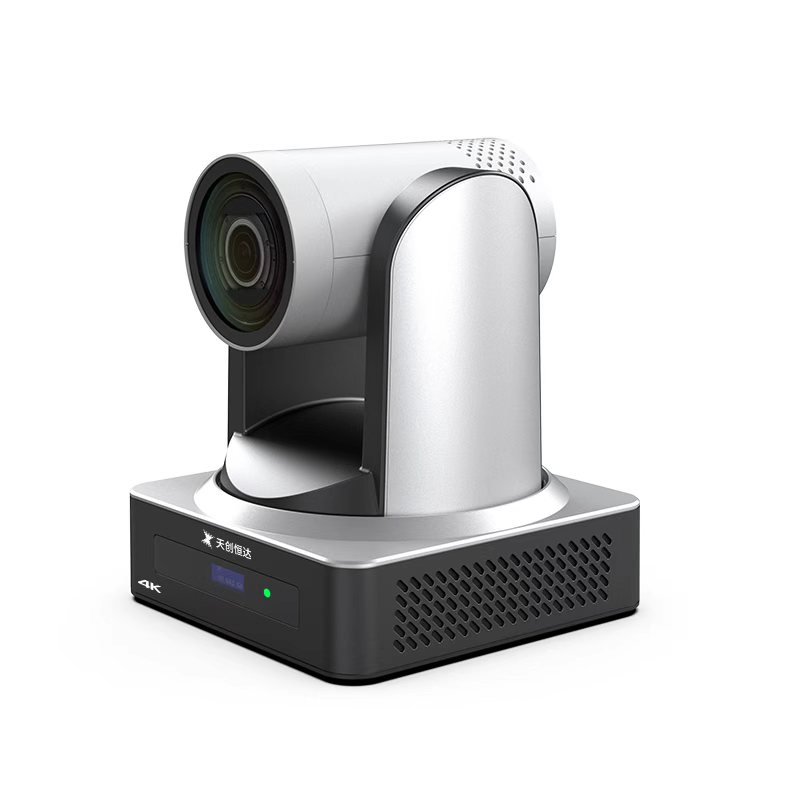
TC-980S live streaming PTZ camera — one of the three models used in this specification comparison framework.
Why a Specification Sheet Is Not a Comparison Framework
The global live streaming camera market was projected at USD 3.35 billion in 2025, with an expected compound annual growth rate of 8.8% taking it toward USD 7.79 billion by 2035, according to an industry report aggregated through Vertex AI Search. That growth spans categories buyers routinely treat as one family: PTZ cameras, video conference cameras, IP and surveillance cameras, broadcasting and event cameras, classroom and lecture streaming cameras, HDMI and SDI cameras, and USB cameras used for e-commerce or medical training.
Because the category is broad, most procurement mistakes are not made at the brand level. They are made at the specification level. A buyer compares two datasheets, sees a matching zoom ratio and a matching sensor description, and concludes the products are equivalent. In practice, one camera may be engineered around a 1080P pipeline while another targets 4K; one may route 4K through HDMI but limit SDI to 1080P; one may offer 255 presets but no serial control interface at all.
A workable comparison framework therefore has to do three things: identify the specification groups that change deployment outcomes, read each number against the application rather than against a marketing tier, and confirm the commercial boundary conditions before committing to a purchase order.
TCHD Digital Video Technology Development (Beijing) Ltd., the manufacturer behind the TCHD Video brand, was established in 2005 in Beijing and produces live streaming cameras alongside video capture cards, converters, encoders and switchers. Three of its camera models — TC420, TCHD-T3 and TC-980S — sit close enough together on paper to make them a useful test case for a structured comparison.
The Five Specification Dimensions That Decide Fit
1. Image sensor and effective pixel count
Sensor format sets the ceiling for low-light behaviour and image character, while effective pixel count indicates the resolution the imaging pipeline is designed around. A 1080P-first camera and a 4K-capable camera can both legitimately be described as “1/2.8-inch CMOS,” yet they are built for different output targets. Buyers should ask what the sensor is matched to, not only what size it is.
2. Optical zoom, focal length and aperture
Zoom ratio is a convenience number; focal length range is the decision number. A 12X lens can start wider or reach further depending on where its range begins and ends, and that range determines whether the camera can frame a full classroom from the back wall or a speaker's face from the back of a hall. Aperture range matters for the same reason: a wider aperture at the long end supports better exposure when the room is dim. Digital zoom should be treated separately — it crops the image rather than resolving more detail.
3. Pan and tilt mechanics
Pan range, tilt range, control speed and preset capacity define coverage. A pan envelope of −170° to +170° covers most of a room but is not continuous 360° rotation, and a tilt range of −30° to +90° behaves differently once the camera is inverted on a ceiling mount. Control speed determines whether the camera can follow a moving presenter without visible lag, and preset capacity determines how many fixed framings a operator can recall instantly.
4. Video interfaces and signal paths
HDMI, SDI, USB 3.0 and LAN are not interchangeable outputs. HDMI is commonly the route for the highest resolution a camera can produce; SDI is the route for long cable runs in broadcast and installed AV, and it may carry a lower maximum resolution than HDMI on the same unit; USB is the route for software-based workflows such as conferencing, lecture capture and streaming applications via UVC and UAC; LAN is the route for IP distribution, recording and remote control.
5. Control, networking and integration
Protocol support decides whether the camera fits an existing control system. ONVIF, RTSP, RTMP, SRT, GB/T28181, VISCA over IP and serial control over RS-232 or RS-485 each correspond to a different integration path. Power delivery, preset recall and optional codecs such as NDI or Dante AV belong to the same dimension, because they determine cabling, latency and how the camera is operated day to day.
Applying the Framework: TC420, TCHD-T3 and TC-980S
The table below places verified specification data from the three models side by side. It is deliberately organised by the five dimensions above rather than by model, so that the differences that matter for a decision are visible first.
| Dimension | TCHD-T3 | TC420 | TC-980S |
|---|---|---|---|
| Image sensor | 1/2.8″ CMOS, 2.07M effective pixels | 1/2.8″ high quality HD CMOS, 8.29M effective pixels (16:9) | 1/2.8″ high quality CMOS, 8.42M effective pixels (16:9) |
| Maximum video signal | 1080P@60/50/30/25, 1080i@60/50, 720P@60/50 via HDMI 1.4b | HDMI up to 4KP30 / 4KP25 and 1080P60; SDI up to 1080P60 | HDMI up to 3840x2160 and 1080P60; SDI up to 1080P60 / 1080i |
| Optical zoom and lens | 12x, f3.5mm–42.3mm, F1.8–F2.8 | 12X, f3.9–46.8mm ±5%, F1.6–F2.8 ±5% | 12X / 20X / 30X series; f4.1–49.2mm at 12X, F1.8–F2.68 |
| Digital zoom | 16x | 15X | 16X |
| Horizontal angle of view | 72.5°–6.9° | 6.5°(N)–70.9°(W) | 6.72°–70.4° (H) at the 12X configuration |
| Pan / tilt range | UVC PTZ control; pan and tilt range not specified in the unit datasheet | Pan −170°–+170°; tilt −30°–+90°; pan speed 0.1°/s–60°/s, tilt 0.1°/s–45°/s | Pan −170°–+170°; tilt −30°–+90°; pan speed 0.1°/s–60°/s, tilt 0.1°/s–30°/s |
| Presets | 255 | Up to 255 (10 via remote control) | Up to 255 (10 via remote control) |
| USB | 1x USB 3.0 Type-C, 1x USB 2.0 Type-A; UVC 1.1–1.5; UVC PTZ; audio on USB | USB 3.0 with MJPG, H.264, YUY2, NV12; UVC and UAC | USB 3.0 with MJPG, H.264, H.265, YUY2, NV12; UVC and UAC |
| LAN and PoE | 1x RJ45, 10M/100M adaptive, PoE supported | 10M/100M/1000M adaptive, PoE supported | 1000M Ethernet port, optional PoE+ |
| Network protocols | TCP/IP, HTTP, RTSP, RTMP, ONVIF, DHCP, multicast | RTSP, RTMP, ONVIF, GB/T28181, VISCA OVER IP, RTMPS, SRT | RTSP, RTMP, ONVIF, GB/T28181, SRT; NDI (optional); Dante AV (optional) |
| Control interfaces | Not listed beyond USB and LAN | RS232-IN, RS232-OUT, RS422 compatible with RS485 | RS232-IN, RS232-OUT, RS485 |
| Power | DC 12V (JEITA type jack) | DC12V, consumption <12W | DC12V, total power consumption ≤18W |
| Typical fit | USB-first teaching, e-commerce and medical training rooms | Conference rooms, teaching and event streaming with 4K over HDMI | PTZ broadcasting, medical teaching, events and tracking workflows |
Reading the Numbers in Context
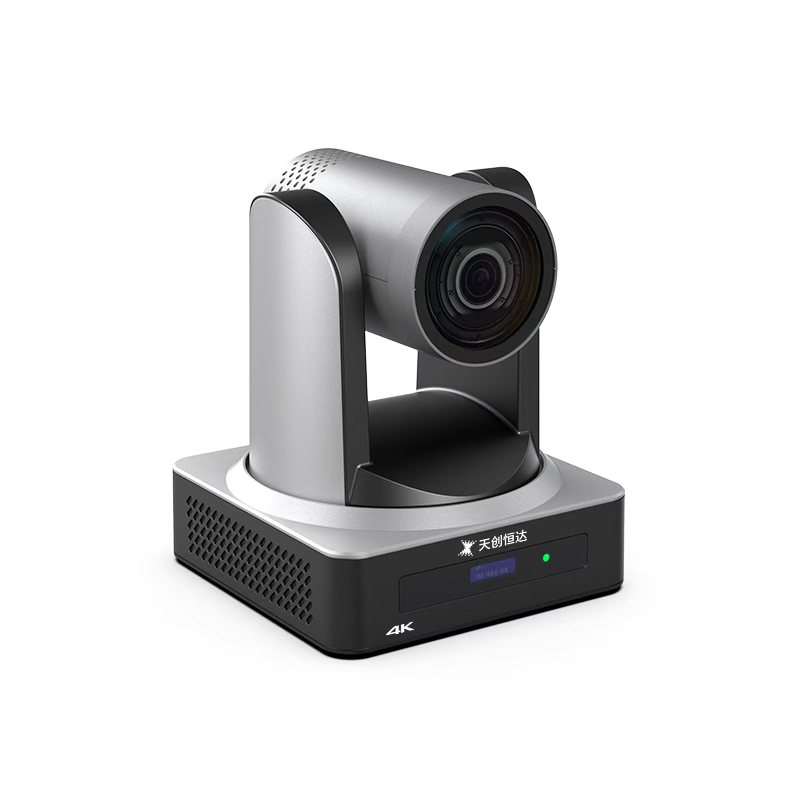
Camera body and lens layout of the TC-980S, referenced in the sensor, zoom and interface sections of this framework.
Sensor class is a system constraint, not a score
All three models use a 1/2.8-inch CMOS sensor, which means the format itself does not differentiate them. What differs is the resolution the pipeline is built around. The TCHD-T3 lists 2.07M effective pixels and a video system that tops out at 1080P — an honest match between sensor and output. TC420 lists 8.29M effective pixels and HDMI output up to 4KP30/25, and TC-980S lists 8.42M effective pixels with HDMI up to 3840x2160. For a project that will never output more than 1080P, the lower-pixel sensor is not a deficiency; for a project that needs a 4K HDMI feed, the 1080P camera cannot be pushed there with software settings.
Zoom ratio hides focal length
All three cameras are specified with 12X optical zoom in their base configuration, but the focal ranges differ. TCHD-T3 covers f3.5mm to 42.3mm, TC420 covers f3.9mm to 46.8mm, and the TC-980S 12X configuration covers f4.1mm to 49.2mm. Those differences translate into how much of a room can be captured at the wide end and how tightly a subject can be framed at the long end. The TC-980S series is also specified with 20X (f5.05mm to 91.49mm) and 30X (f5.2mm to 148.4mm) options, which is the relevant choice when reach matters more than wide coverage. Aperture follows the same logic: TC420 lists F1.6 to F2.8, TCHD-T3 lists F1.8 to F2.8, and TC-980S lists F1.8 to F2.68 at 12X. Digital zoom of 15X or 16X is available on all three but is a cropping function and should not be counted toward optical reach.
Pan and tilt define coverage, not just movement
TC420 and TC-980S share the same physical envelope: pan from −170° to +170° and tilt from −30° to +90°. Both offer pan control speeds from 0.1°/s to 60°/s, but tilt speed differs — up to 45°/s on TC420 and up to 30°/s on TC-980S. Both support up to 255 preset positions, 10 of which are reachable from the remote control. TC-980S adds monocular tracking with modes for real-time tracking, stage tracking, area tracking and intelligent framing, plus a maximum tracking distance of up to 18 meters. The TCHD-T3 datasheet lists 255 presets and UVC PTZ support but does not specify a pan or tilt range, which is itself a finding: for a fixed lectern or desktop USB position, that may be irrelevant, but for a large room where framing has to change frequently, the absence of a stated range should be clarified before purchase.
Interfaces decide the workflow
The interface set is where the three models diverge most sharply. TCHD-T3 provides HDMI 1.4b, one USB 3.0 Type-C port, one USB 2.0 Type-A port, a 3.5mm line input and an RJ45 port at 10M/100M with PoE. TC420 adds SDI output up to 1080P60 and carries 4K over HDMI, with USB 3.0 streaming in MJPG, H.264, YUY2 and NV12, plus 10M/100M/1000M adaptive Ethernet with PoE. TC-980S carries HDMI up to 3840x2160, SDI up to 1080P60 and 1080i, USB 3.0 in MJPG, H.264, H.265, YUY2 and NV12, and a 1000M Ethernet port with optional PoE+.
For networking and control, RTSP, RTMP and ONVIF appear across the three. TC420 and TC-980S add GB/T28181 and SRT; TC420 adds VISCA over IP, IP VISCA and RTMPS; TC-980S lists optional NDI and optional Dante AV alongside network VISCA control and remote upgrade, reboot and reset. TC-980S also documents a Dante AV-H codec at H.264 with unicast or multicast streaming, latency of up to 120ms at 1080p60 and bandwidth of 4–8Mbps at 1080p60. Serial control is available on TC420 (RS232-IN, RS232-OUT and RS422 compatible with RS485) and TC-980S (RS232-IN, RS232-OUT and RS485), but is not listed for TCHD-T3.
Matching the Framework to Application Scenarios
The same specification set produces different answers depending on the scene, and the three models map onto three distinct deployment profiles.
- PTZ and broadcasting work: When the requirement is continuous repositioning, preset-driven framing and long-reach tracking, the deciding factors are pan/tilt range, preset capacity, tracking distance and interface breadth. TC-980S addresses this profile with its −170° to +170° pan, −30° to +90° tilt, 255 presets, monocular tracking up to 18 meters, HDMI 4K output, SDI output, optional NDI and optional Dante AV.
- Conference rooms, classrooms and event streaming: Where a 4K HDMI feed matters alongside a PoE network connection and USB fallback for software platforms, TC420 covers the combination through 4KP30/25 HDMI, SDI at 1080P60, USB 3.0 and a 10M/100M/1000M port with PoE, backed by SRT and VISCA over IP.
- USB-first teaching, e-commerce and training rooms: When the camera plugs into a computer and is driven by software, UVC and UAC compliance, a Type-C connector, and PoE over a standard RJ45 run carry more weight than high-end broadcast output. TCHD-T3 is specified for that pattern with UVC 1.1–1.5, UVC PTZ support, audio on USB, 1080P@60 output and a 10M/100M PoE port.
Deployment evidence supports the education-facing part of this map. A teaching live streaming installation using TC-980S units across government, hospital, school and independent creator customers in Germany, Australia and Malaysia has run for two years at a quantity of 20 units, with reported stable operation, low noise and AI auto tracking as the defining characteristics of the deployment.
One boundary belongs to the buyer rather than the camera. In clinical or surgical teaching environments, medical electrical equipment must comply with the IEC 60601-1 series for basic safety and essential performance. Buyers specifying cameras for operating rooms or supervised medical training should verify the applicable medical electrical safety requirements for the complete installed system separately from the camera datasheet.
What the Market Data Suggests for Buyers
Three verified market data points are useful context for a specification decision. PTZ cameras were estimated to account for 38.5% of global conference camera revenue in 2025, according to Metastat Insights. Video conferencing hardware, including cameras, accounted for 46% of total video conferencing market revenue in 2024, according to Grand View Research. And the live streaming camera market itself was projected at USD 3.35 billion in 2025 with a growth path toward USD 7.79 billion by 2035.
Published growth estimates diverge, and buyers should treat them as directional rather than precise. One research firm cited in the same data set estimates PTZ category growth at 7.8% CAGR from 2024 to 2030, while another estimates 15.9% CAGR from 2025 to 2034. The gap is largely a definition problem — different research houses draw the boundary between “PTZ market” and “live streaming camera market” differently.
The practical implication is not a forecast. It is that protocol and interface choices inside a growing, definitionally fuzzy category age faster than optics and mechanics do. A camera body with a 1/2.8-inch sensor, a 12X lens and a 255-preset PTZ head remains useful for years; the question is whether its HDMI, SDI, USB and network interfaces still match the production software and cabling in the room after three years. Buyers should weight interface and protocol coverage accordingly, and should prefer units that list their supported protocols explicitly rather than generically.
Where This Class of Camera Stops: Limits and Boundaries
A comparison framework is only credible if it states where the products in question stop being the right answer.
- Sensor format: All three models use a 1/2.8-inch CMOS sensor. Projects that require a physically larger sensor for very low-light work or for tighter depth-of-field control sit outside this group.
- 4K over SDI: On both TC420 and TC-980S, SDI output is specified up to 1080P60 (with 1080i also listed for TC-980S). Where an installed SDI infrastructure must carry 4K, that constraint should be resolved before ordering rather than after.
- Resolution ceiling on TCHD-T3: The TCHD-T3 video system tops out at 1080P@60 with no SDI and no listed serial control interface. It is not a substitute for a broadcast or multi-interface PTZ head.
- PTZ coverage is not 360°: The −170° to +170° pan and −30° to +90° tilt envelope on TC420 and TC-980S is broad but not continuous rotation, and ceiling mounting inverts the tilt geometry. Mounting position should be decided against the coverage map, not assumed.
- Telephoto reach: The base 12X configurations reach roughly 42mm to 49mm at the long end. Very large venues typically require the 20X or 30X options in the TC-980S series instead.
- Zoom type: Digital zoom values of 15X or 16X are cropping functions. They should never be used to satisfy an optical-reach requirement.
- Network dependency: IP streaming, remote control and PoE-based operation assume a functioning, adequately provisioned network. Cameras in this class do not remove that dependency.
From Evaluation to Execution: Commercial Terms and Verification
Once the specification fit is settled, the decision moves from evaluation to execution, and the questions change from optics to order mechanics.
OEM and ODM production services are available, including logo customization for OEM/ODM orders, with a minimum order quantity of 1 unit. Monthly production capacity is 500 units, and a typical lead time runs 30 to 45 days. Quality control includes 100% testing of all units, and acceptance is handled through pre-shipment test procedures. Delivery is arranged through FOB or C&F methods, and payment terms require full prepayment. Export markets include the EU, South East Asia and the USA, and after-sales support is provided remotely.
Manufacturing and compliance evidence sits alongside those terms. TCHD Digital Video Technology Development (Beijing) Ltd. was established in 2005, operates a 10,000m² facility with 50 employees and an R&D team of 10 engineers, and reports an annual output of 4,000 units, with export business accounting for 20% of total sales across the EU, USA and Asia. The company holds a quality management system certificate issued under GB/T19001-2016 / ISO9001:2015 (certificate number 064-24-Q-0675-R1-S), an environment management system certificate under GB/T24001-2016 / ISO14001:2015 (064-24-E-0676-R1-S) and an occupational health and safety management system certificate under GB/T45001-2020 / ISO45001:2018 (064-24-S-0677-R1-S), all issued by BEIJING STANDARD CERTIFICATION CENTRE with validity to 2027-03-07. A CE EMC Attestation of Compliance (LCSA07075157E) issued by LCS TESTING LABORATORY on 2025-07-16 references EN 55032:2015/A1:2020 and EN 55035:2017/A11:2020 for the EU market and is associated with the live streaming camera models discussed here.
Future Outlook
Integration depth is likely to keep separating otherwise similar cameras. SRT, VISCA over IP, GB/T28181, optional NDI and optional Dante AV already appear as differentiators between models with comparable optics, and the presence or absence of these protocols tends to matter more at the integration stage than the resolution number printed on the box. On the automation side, tracking functions such as real-time tracking, stage tracking, area tracking and intelligent framing change how many operators a production needs, which is a labour consideration as much as a technical one. For buyers, the durable advice is to write the integration requirement into the specification before comparing prices: protocols, power delivery, cable types and control interfaces are the parts of a live streaming camera that are hardest to change after installation.
FAQ
Do TC420, TCHD-T3 and TC-980S use the same image sensor size?
Yes. All three models use a 1/2.8-inch CMOS sensor. They differ in effective pixel count and in the resolution their pipeline is built around: TCHD-T3 lists 2.07M effective pixels with a 1080P video system, TC420 lists 8.29M effective pixels with HDMI output up to 4KP30/25, and TC-980S lists 8.42M effective pixels with HDMI output up to 3840x2160.
What does a 12X optical zoom actually deliver on these cameras?
The zoom ratio describes the multiple, while focal length defines the usable range. TCHD-T3 covers f3.5mm to 42.3mm, TC420 covers f3.9mm to 46.8mm, and the TC-980S 12X configuration covers f4.1mm to 49.2mm. The TC-980S series is also specified with 20X and 30X options for longer reach. Digital zoom values of 15X and 16X are cropping functions and do not add optical detail.
Why does a pan range of −170° to +170° matter in installation planning?
That envelope determines how much of a room can be covered from a single mount, and it is not continuous 360° rotation. TC420 and TC-980S both specify pan from −170° to +170° and tilt from −30° to +90°, with up to 255 presets. Because tilt geometry changes when the camera is mounted upside down on a ceiling, the mount position should be planned against the stated range rather than assumed.
Which interfaces should be verified before placing an order?
Verify HDMI and SDI maximum resolution, USB generation and supported compression formats, LAN speed and PoE support, and any serial control interfaces. TCHD-T3 provides HDMI 1.4b, USB 3.0 Type-C plus USB 2.0 Type-A, and a 10M/100M PoE port, with no SDI listed. TC420 provides HDMI up to 4KP30/25, SDI up to 1080P60, USB 3.0 and 10M/100M/1000M Ethernet with PoE, plus RS232 and RS422 control. TC-980S provides HDMI up to 3840x2160, SDI up to 1080P60/1080i, USB 3.0, a 1000M port with optional PoE+, and RS232 and RS485 control.
Which network and control protocols do the three models support?
RTSP, RTMP and ONVIF are listed across all three models. TC420 additionally lists GB/T28181, VISCA OVER IP, IP VISCA, RTMPS and SRT. TC-980S additionally lists GB/T28181, SRT, optional NDI and optional Dante AV, along with network VISCA control and remote upgrade, reboot and reset. TCHD-T3 lists TCP/IP, HTTP, RTSP, RTMP, ONVIF, DHCP and multicast over a 10M/100M adaptive Ethernet port.
What are the standard commercial terms for OEM/ODM orders?
OEM and ODM production services are available, including logo customization for OEM/ODM orders, with a minimum order quantity of 1 unit and a typical lead time of 30 to 45 days. Monthly production capacity is 500 units, and quality control includes 100% testing of all units. Delivery is arranged through FOB or C&F methods, payment terms require full prepayment, and acceptance is handled through pre-shipment test procedures.
What evidence exists for long-term deployment of these cameras?
A teaching live streaming deployment using TC-980S units has operated for two years at a quantity of 20 units, across government, hospital, school and independent creator customers in Germany, Australia and Malaysia. The reported characteristics of that deployment are stable operation, low noise and AI auto tracking.
Closing Note
A specification comparison is only useful if it ends in a decision rule. For live streaming cameras, that rule is to compare sensor against output target, focal length against room depth, pan and tilt against coverage, interfaces against the existing signal chain, and protocols against the control system — then confirm the commercial terms. Additional model-level specifications and product configurations are collected in the TCHD Video product catalog, available at TCHD Product Catalog 2025.
¿Tiene preguntas o necesita más detalles?
Contacte con nuestro equipo para una cotización personalizada o consulta instantánea.
Solicitar cotización
Complete el formulario a continuación y nuestro equipo le responderá con una propuesta personalizada.
Chat directo de WhatsApp
¿Prefiere chatear en tiempo real? Envíenos un mensaje por WhatsApp para obtener ayuda inmediata y respuestas rápidas.
- Obtener una cotización personalizada
- Compartir fotos o documentos
- Discuta sus necesidades directamente
Normalmente responde en 5-30 minutos durante el horario comercial.