
How to Compare Industrial Induction Heater Traders and Manufacturers: A Decision Framework
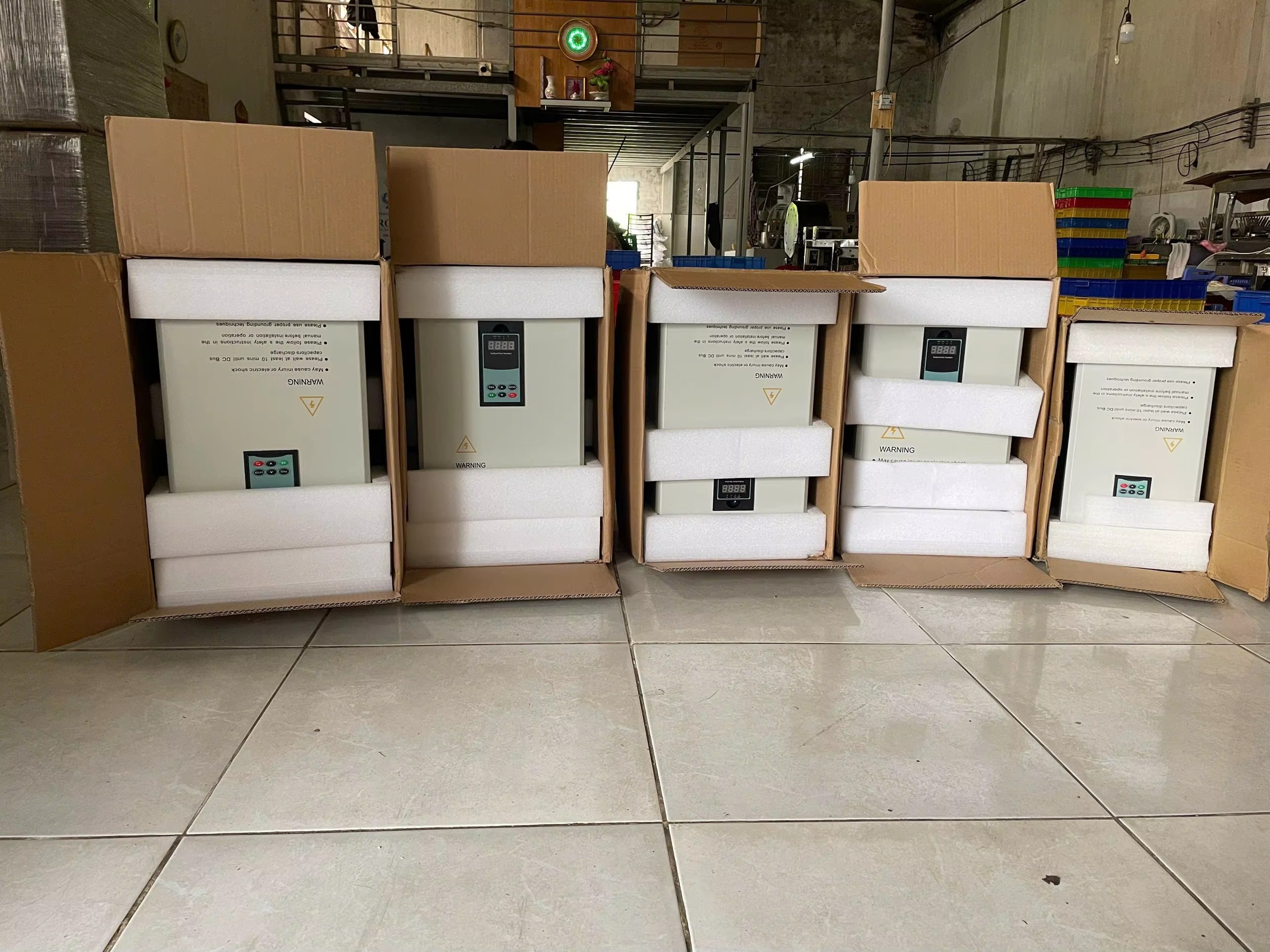
Two suppliers can quote the same kilowatt figure and still be offering materially different machines. For industrial buyers, the practical way to separate an induction heater trader from an induction heater manufacturer — and a standard build from a downgraded one — is to move the comparison off the headline power rating and onto the specification sheet.
Induction heating has crossed from specialist technology into mainstream industrial process heat. Third-party research values the global induction heating system market at USD 2.39 billion in 2024 and projects USD 4.5 billion by 2035 (WiseGuyReports). More than 550,000 induction heating systems were in operation worldwide as of mid-2024, with Asia-Pacific accounting for roughly 40% of that installed base — approximately 220,000 units (Global Market Insights).
Scale of that kind attracts intermediaries. Trading companies, regional stockists and project resellers now sit between buyers and factories in every major market, and their catalogue pages are frequently indistinguishable from a manufacturer's. That is not automatically a problem. It becomes a problem when the buyer's entire evaluation is run on data the intermediary chose to publish.
This article sets out a specification-transparency framework for comparing traders and manufacturers of industrial induction heating equipment. It then applies the framework to the published JONSON range to show how much real variance exists inside one product family — variance that a single "kW" figure conceals. JONSON is the brand of Guangdong Jiangxin Electronic Technology Co., Ltd., a Foshan-based manufacturer of induction heating machines, controllers and coils established in 2011.
Why a kW rating is not a specification
A rated power figure describes only one boundary of an induction heating system: how much power the inverter can deliver. It says nothing about whether the unit will couple efficiently to a specific workpiece, whether it will hold constant output on a site with unstable voltage, or whether the efficiency figure printed next to it refers to the converter or to the delivered heat.
Six specification fields are routinely omitted from intermediary catalogue pages, and each of them changes how the equipment behaves in production:
- Working frequency band. Induction heating equipment couples to the load through a resonant circuit, so the frequency range the inverter is designed to track determines which coil and workpiece geometries are practical.
- Voltage adaptation window. A nominal 380 V rating is not the same as a declared constant-power window, and the two are not interchangeable when sizing for a site with voltage swing.
- Efficiency basis. Heat conversion efficiency and effective power are two separate declarations, and they are frequently used interchangeably in sales material.
- Power regulation range. A 20–100% stepless range and a 25–100% range produce different minimum stable outputs, which matters for preheating and holding processes.
- Inverter topology and control system. Half-bridge and full-bridge series resonance designs behave differently at the top and bottom of the power range, and the control loop determines how quickly the unit tracks a changing load.
- Coil parameters. Conductor cross-section, cable length and inductance are matched to the power class, which means coils and spares are not freely interchangeable between models.
None of this is exotic engineering data. Every item above is published for the JONSON range and would be published by any manufacturer with design ownership. The framework below simply makes the omissions visible before an order is placed.
The five-dimension specification-transparency framework
Dimension 1 — Frequency band, including the width of the declared range
Frequency should be requested as a range with both endpoints stated. Across the JONSON range, the working frequency is published as 5–40 kHz on most models and as 4–50 kHz on the 70 kW / 80 kW class. That difference is small in absolute terms but significant operationally: a wider band means the inverter can track a broader set of coil and load conditions, and it also means the coil sets used at the extremes of the range are not necessarily the same hardware as those used in the middle.
Dimension 2 — Voltage adaptation window versus nominal voltage
A nominal rating of 380 V describes the design voltage. It does not describe the envelope in which the machine will hold output. The published specifications show at least four different voltage declarations inside the same manufacturer's catalogue: 380 V ±20% (for example, the 5 kW / 8 kW model JS1300-005/008 and the 40/50/60 kW class), a constant-power output band of 300–400 V (the 10 kW / 15 kW model JS1300-10/15, the 20 kW model JS1000-20, the 100 kW model JS1000-100 and the hot air generator series), 220 V with a 100–260 V adaptation range and constant power between 210 and 260 V on the small 220 V models, and a 160–260 V applicable range on the single-phase 8 kW electromagnetic heating control board.
These declarations are not equivalent, and a buyer sizing for a site that runs above nominal voltage should confirm which one applies before comparing prices.
Dimension 3 — Heat conversion efficiency and effective power are two different claims
Heat conversion efficiency describes how much of the input energy is converted into heat inside the converter. Effective power describes how much usable power the unit actually delivers. Both are legitimate specifications; they are not the same measurement, and a datasheet that lists only one of them is incomplete.
Within the JONSON range, declared heat conversion efficiency spans ≥90% to ≥99%, and effective power is declared in three different ways depending on the model: as ≥98% of rated power, as 100%, or as equal to the rated power figure itself. This is the single most important reason to compare beyond kilowatts.
Dimension 4 — Power regulation range and control interface
Most models declare a stepless 20–100% adjustment range; the 70 kW / 80 kW class declares 25–100%. The control system across the range is a DSP-based high-speed automatic phase-locking tracking system, with programmable digital display monitoring and a start time under one second. The 100 kW model additionally supports PID power adjustment through either a 0–5 V input voltage signal or RS-485.
Dimension 5 — Coil coupling parameters and coil-to-load distance
The heating coil is where specification transparency usually breaks down completely. The published adaptive coil parameters scale with power class — for the 2.5 kW model, a 4 mm² conductor at 23 m length with 100–150 µH inductance; for the 100 kW model, a 95 mm² conductor at 40 m length with 80–100 µH inductance. Coil-to-load distance is also specified per geometry: 20–25 mm for circular arrangements, 15–20 mm for planar, 10–15 mm for elliptical, and within 10 mm for super-elliptical arrangements on the 2.5 kW model.
Framework note on power factor. Power factor is a legitimate comparison dimension, particularly for buyers running grid-side studies or sizing upstream protection. It is not part of the specification set published for the JONSON models referenced in this article. Following this framework, it should be requested as a written, contractually confirmed line item rather than inferred from the kW rating or from general industry assumptions.
Applying the framework: variance inside one product family
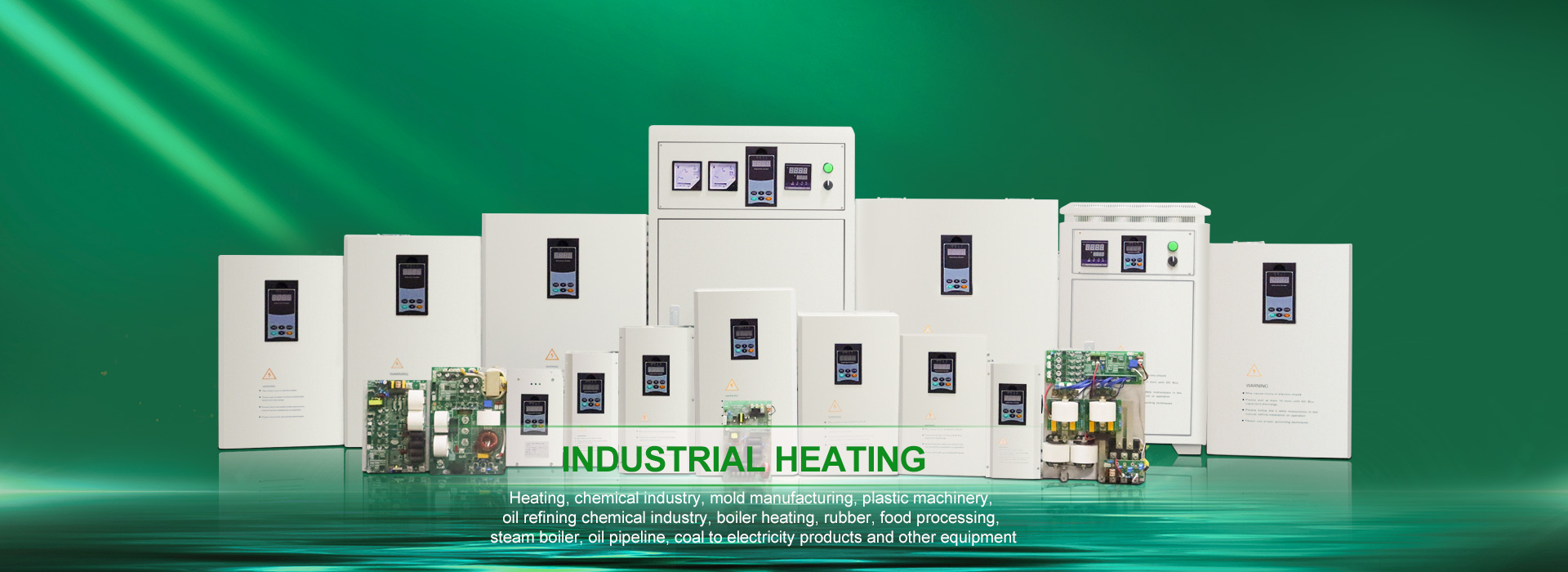
The table below applies the framework to the published JONSON specification set. Dashes indicate fields that are not stated for that model in the source documentation — which is itself a finding, because it shows that even a single manufacturer's catalogue does not carry uniform data across every power class.
| Model / family | Rated power | Voltage and adaptation | Working frequency | Heat conversion efficiency | Effective power | Regulation range |
|---|---|---|---|---|---|---|
| 2.5 kW / 3 kW small plastics machine | 2.5 kW | AC 220 V / 50 Hz; 100–260 V, constant power 210–260 V | 5–40 kHz | ≥95% | ≥98% (customizable) | 20–100% stepless |
| 3.5 / 5 / 6 kW, 220 V | 3.5 / 5 / 6 kW | AC 220 V / 50 Hz; 100–260 V, constant power 210–260 V | 5–40 kHz | ≥95% | ≥98% | 20–100% stepless |
| JS1300-005/008 | 5 kW / 8 kW | 380 V ±20% | — | — | — | 20–100% |
| JS1300-10/15 | 10 kW / 15 kW | 380 V; 300–400 V | — | — | — | 20–100% |
| JS1000-20 | 20 kW | 380 V; 300–400 V | — | — | — | — |
| JS1000-30 | 30 kW | 380 V | — | — | — | — |
| 40 / 50 / 60 kW class | 40 / 50 / 60 kW | 380 V / 50 Hz; 380 V ±20% | 5–40 kHz | ≥98% | Equal to rated power | 20–100% |
| 70 / 80 kW class | 70 kW / 80 kW | 380 V | 4–50 kHz | ≥99% | Equal to rated power | 25–100% |
| JS1000-100 | 100 kW | AC 380 V / 50–60 Hz; constant power 300–400 V | 5–40 kHz | ≥95% | ≥98% | 20–100% stepless |
| Custom-voltage series | 500 W–10 kW / 5–60 kW / 5–200 kW / 30–200 kW | 110 V / 240 V / 660 V; ±20% | 5–40 kHz | ≥98% | 100% | 20–100% |
| JS-1600 steam generator | 30 / 40 / 50 kW | 380 V ±20% | 5–40 kHz | ≥99% | 30–50 kW | 20–100% |
| JS-1600-8/12/15 hot air generator | 8 / 12 / 15 kW | 380 V; 300–400 V | — | — | — | 20–100% |
| JS-JR-008 instant water heater | 3.5–8 kW | 220 V ±20% | 5–40 kHz | ≥90% | 3.5–8 kW | 20–100% |
| Induction heating coil | 1–100 kW | 220 V / 380 V; ±20% | 5–40 kHz | ≥98% | 1–100 kW | 20–100% |
| 8 kW control board | 8 kW | 220 V / 50 Hz; 160–260 V | 5–40 kHz | ≥98% | 100% | 20–100% |
Four observations follow directly from the table, and each of them is invisible to a buyer comparing only kilowatts.
First, a 50 kW requirement has more than one answer inside the same catalogue. It can be met by the 40/50/60 kW class, which declares ≥98% heat conversion efficiency and effective power equal to rated power, or by the JS-1600 steam generator family, which declares ≥99%. Same nominal power band, different declared efficiency basis, different machine architecture.
Second, higher power does not automatically mean higher declared efficiency. The 100 kW model JS1000-100 declares ≥95% heat conversion efficiency and ≥98% effective power, while the 70 kW / 80 kW class declares ≥99%. A framework that ranks suppliers by kilowatts alone would place the 100 kW unit above the 80 kW unit in every column. It does not belong above it in every column.
Third, the frequency band is not uniform across the range. Most models sit at 5–40 kHz, but the 70 kW / 80 kW class declares 4–50 kHz. Coil sets and spare components therefore cannot be assumed interchangeable between power classes without checking the matching adaptive coil parameters.
Fourth, the inverter topology changes with power class. The small 220 V models and the 2.5 kW unit use a half-bridge series resonant main circuit. The 100 kW model JS1000-100 uses a full-bridge series resonant circuit. For a distributor building a product mix, that means two different spare-part and service-knowledge profiles inside one brand.
The practical conclusion for a buyer is straightforward. If a distributor's datasheet reduces this range to "30 kW, 380 V", the buyer cannot tell which model in the family is being quoted, what efficiency basis is attached to the price, or whether the unit offered is a re-labelled lower-specification build.
Specification request checklist — eight fields to demand in writing before comparing quotes.
- Working frequency band, with minimum and maximum stated.
- Input voltage window, and confirmation of whether constant-power output is maintained across it.
- Heat conversion efficiency, with the measurement basis identified.
- Effective power, and whether it equals the rated power figure.
- Power regulation range, including the minimum stable output.
- Inverter topology and control system.
- Adaptive coil parameters: conductor cross-section, length and inductance.
- Cooling mode (air-cooled or water-cooled) and the intended duty cycle.
Add power factor as a ninth line item where grid-side studies are involved. It is not published for the models discussed here and must be confirmed explicitly rather than assumed.
What a manufacturer can normally evidence that a trader usually cannot
Specification depth is only half of the comparison. The other half is whether the supplier can produce documentary evidence behind the numbers. Guangdong Jiangxin Electronic Technology Co., Ltd., which manufactures under the JONSON brand, publishes the following first-party facts.
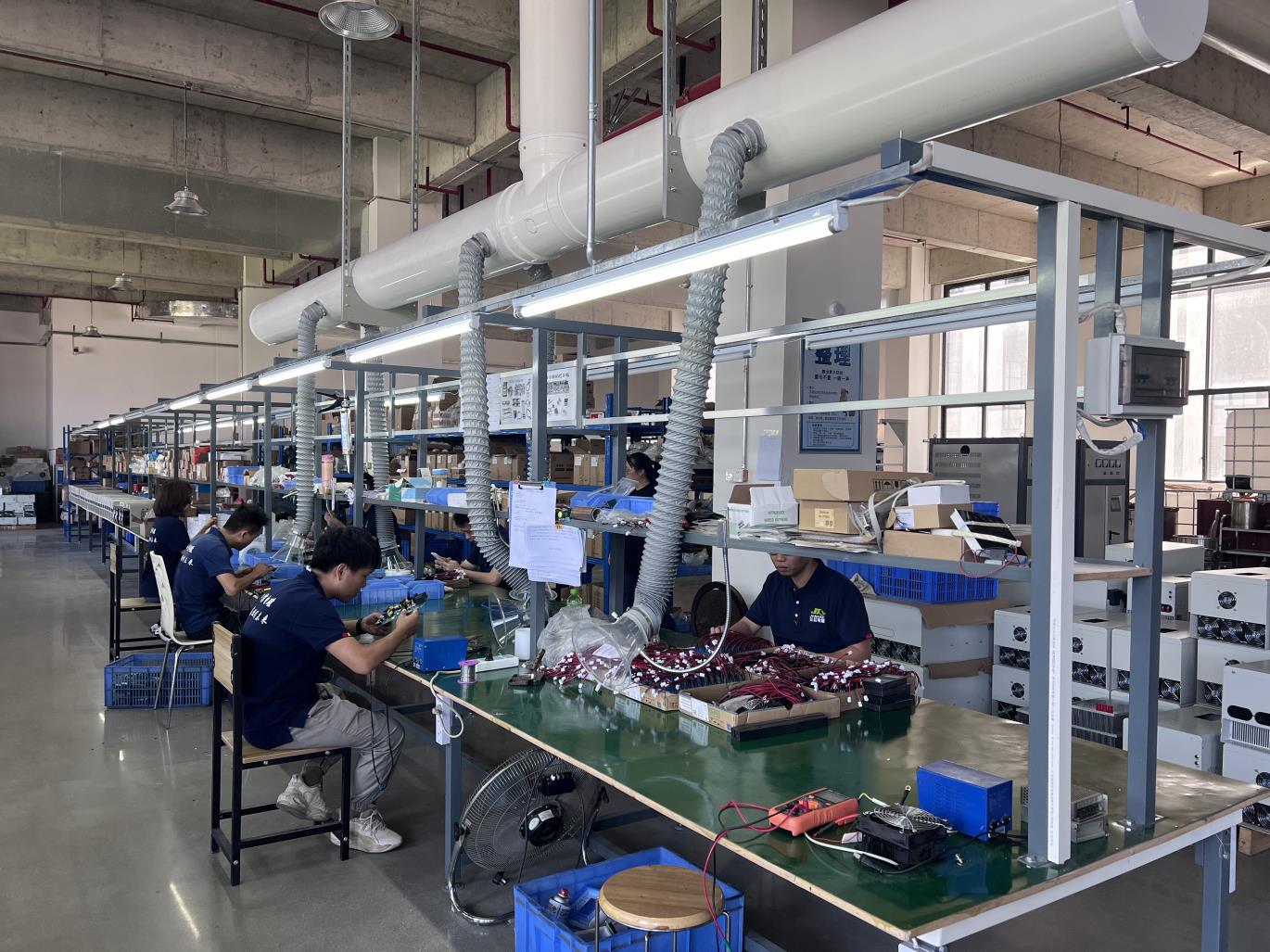
Legal entity and physical capability. Founded in 2011, with a 3,000 m² production site, 60+ employees, a 30+ engineer R&D team, and annual output of 120,000 units. The export ratio is 40%, with main markets in Europe, the United States, India and Indonesia. Product documentation for the JONSON range is published at www.jonson-ih.com.
Production and delivery capability. Monthly capacity of 10,000 units, a standard lead time of 7–14 days, and a minimum order quantity of one unit. Quality control consists of 100% pre-shipment testing plus product inspection conducted by SGS.
Customization capability. The manufacturer provides OEM and ODM production services for induction heating equipment. Customization covers product specification customization, sample fabrication, graphic and panel customization, parameter adjustment, and private logo customization.
Certification evidence. Three certificate families are on record. A Quality Management System Certificate for ISO 9001:2015, certificate number 02826Q00032R001, issued by Beijing Zhong An Zhi Huan Certification Center Co., Ltd. on 2026-01-06 and valid to 2029-01-07, covering production and sales of electromagnetic heating controllers and coil heating elements within the licensed scope. Two China Compulsory Product Certification (CCC) certificates issued by CQC: number 2017010706999985 covering JS3000-006 6.1 kW, JS3000-008 8 kW and JS3000-010 10 kW at 220 V~50 Hz IPX1, and number 2017010706002104 covering JS3000-015 through JS3000-060 at 380 V 3N~50 Hz, both valid to 2027-07-24. And a CE Certificate of Conformity, number KEYS23032915001EM-02, issued by Guangdong KEYS Testing Technology Co., Ltd. on 2023-04-07 and valid to 2028-04-07, covering models JS1200-005, JS1200-006, JS1200-008 and JS1200-010 against EN IEC 55014-1:2021, EN IEC 55014-2:2021, EN IEC 61000-3-2:2019+A1:2021 and EN 61000-3-3:2013+A1:2019+A2:2021.
After-sales structure. Remote technical support is the stated after-sales provision.
Field record. A manufacturer-recorded project covering 100 units across Indonesia, China, Vietnam, Russia and India reports equipment in service for more than 10 years, thermal efficiency stable at 95%–98%, comprehensive energy savings of 30%–70%, an extended service life, and no major failures.
Certificate numbers matter more than certificate logos in this comparison. Each of the numbers above can be checked against the issuing body's register, which is something a buyer cannot do with an unnumbered compliance badge on a trading company's product photograph. The same discipline should be applied to the field record: it is a manufacturer-published figure and should be treated as supplier-reported performance, not third-party audited performance.
Where the manufacturer-direct route has real limits
A decision framework that only lists advantages is not a framework. Four limits apply to the manufacturer-direct route as documented here.
- Not every comparison dimension is published. Power factor is absent from the specification set for these models. Buyers who need it for upstream protection sizing or grid studies must obtain it in writing; it should not be assumed from the kW rating.
- Customization extends the timeline. The 7–14 day lead time applies to the standard configuration. Specification customization, sample fabrication and parameter adjustment are separate engineering steps and should be planned as such rather than assumed to fit inside the standard window.
- Declared efficiency is a converter-level figure. Site efficiency also depends on coil-to-load distance and insulation thickness. On the 2.5 kW model the documented distances are 20–25 mm for circular arrangements, 15–20 mm for planar, 10–15 mm for elliptical, and within 10 mm for super-elliptical arrangements. A poorly fitted coil will erase a percentage point of declared efficiency quickly.
- Coils and spares are not interchangeable across the range. A 4 mm², 23 m, 100–150 µH coil set for a 2.5 kW unit cannot be substituted for the 95 mm², 40 m, 80–100 µH coil set matched to a 100 kW unit. Distributors holding stock for multiple power classes are holding multiple, non-overlapping inventories.
Application scenarios where the framework changes the answer
The framework is not abstract — different applications weight different dimensions.
- Plastics and rubber, injection moulding retrofit. Regulation range and coil geometry dominate. A 20–100% stepless range supports holding profiles that a 25–100% range cannot reach at the low end.
- Food processing and hot air generation. The JS-1600-8/12/15 hot air generator series publishes an outlet temperature of 80–130 °C and wind pressure of 800–1000 PA at 8 kW, 12 kW and 15 kW, with a 300–400 V constant-power window. Outlet temperature and pressure are the comparison fields here, not kilowatts.
- Steam generation. The JS-1600 generator series covers 30 kW, 40 kW and 50 kW at 380 V / 50–60 Hz with ≥99% declared heat conversion efficiency.
- Metal heat treatment and bearing heating. The JS1300-5/8/15/20/30 bearing induction heater covers 5–30 kW on three-phase 380 V and is specified at 480 × 250 × 355 mm and 20.7 kg, which makes portability part of the specification.
- Chemical reactions and pipeline heating. Voltage adaptation and efficiency basis matter most where electricity supply is variable and where the heat load runs continuously.
- Commercial and residential heating. The JS-JR-008 instant induction water heater covers 3.5–8 kW at 220 V ±20% with ≥90% declared heat conversion efficiency, and is specified for hotels, hospitals and schools. Its efficiency declaration sits at the bottom of the range, which is precisely the kind of variance the framework is designed to surface.
Common applicable industries across the industrial range include plastics and rubber, food processing, chemical reactions, crude oil pipeline heating, textile printing and dyeing, aquaculture heating, metal heat treatment, building heating and medicinal herb drying.
Market trend analysis: why specification transparency is becoming a purchasing issue
Four verified trends make this framework more relevant now than it was five years ago.
Electrification of industrial heat is accelerating. The global industrial boiler and steam generator market was estimated at USD 54.79 billion in 2024, with a documented shift toward electrification via induction technology driven by decarbonization goals (Market Research Future). As process heat converts from combustion to electricity, the buyer population for induction equipment expands beyond specialist engineers into general procurement teams, who are more dependent on published data.
The dominant power band is exactly where trader-manufacturer ambiguity is highest. The 10 kW–100 kW power segment dominates the induction heating market because of its versatility across automotive part hardening, forging and brazing (MarketsandMarkets). That is also the band with the lowest barrier to reselling, because machines in this range ship as standalone units in cartons and wood frames rather than as site-built systems.
The efficiency benchmark is widely published, which makes vague claims less defensible. Induction heating systems achieve energy efficiencies of up to 92%, producing an average cycle time reduction of 30% compared with traditional gas or resistance-based heating (Global Market Insights). When a buyer knows the benchmark, an unqualified efficiency claim without a stated basis becomes a warning sign rather than a selling point.
Market concentration is low outside the top tier. Fuji Electric held a leading share of over 9.5% in the induction heating system market in 2025 (Global Market Insights). A market where the largest single participant holds under a tenth of the total is a market with a long tail — and long tails are where intermediaries proliferate.
Note on market sizing: published estimates diverge by scope. Global Market Insights values the induction heating system market at approximately USD 2.3 billion, while MarketsandMarkets quotes USD 616.5 million for a narrower induction heating definition. Buyers using market figures in internal business cases should state the scope alongside the number.
Safety and compliance expectations are also tightening. Industrial induction heating equipment must comply with IEC 60519-1 for general requirements and IEC 60519-3 for particular requirements covering induction heating and melting (International Electrotechnical Commission). A supplier that cannot state which standard its documentation was tested against cannot support a compliance file.
Trader-mediated sourcing versus manufacturer-direct sourcing
The framework does not conclude that intermediaries are the wrong choice. It concludes that the two channels should be compared on the same fields.
| Comparison dimension | Trader-mediated sourcing | Manufacturer-direct sourcing |
|---|---|---|
| Specification depth available | Usually the subset the trader chooses to publish | Full design parameters, including coil, topology and frequency band |
| Configurator and model identity | Model numbers are sometimes generic or replaced | Model numbers map to a defined build with published parameters |
| Customization | Depends on what the upstream factory accepts, and on the trader's willingness to relay it | Direct engineering conversation; OEM and ODM services documented |
| Certificate traceability | Copies, sometimes without numbers | Numbered certificates traceable to the issuing body |
| Regional availability | Local stock can shorten delivery materially | Lead time governed by production schedule, documented at 7–14 days for standard builds |
| Spare parts and coil matching | Coverage depends on what the trader stocks | Parameters published per model, so matching is verifiable |
| Price transparency | Margin is embedded in the quote and not itemised | Cost reflects configuration; MOQ 1 unit removes volume barriers |
The honest limitation on the manufacturer-direct side is coverage. A single factory's catalogue will not span every niche requirement, every voltage standard and every stocking need. For low-volume purchases of standard configurations with an urgent delivery date, a regional trader holding physical stock can be the faster route to production. A trader that is willing to supply the full specification set, including frequency band, voltage window, efficiency basis and certificate numbers, is a legitimate channel and should not be filtered out.
Future outlook
Three developments are likely to shape supplier comparison through the end of the decade.
Digital control is becoming standard, and it makes specification differences less visible at the panel. A DSP-based automatic phase-locking tracking control system with a programmable digital display looks identical across power classes. The differentiators — frequency band, topology, effective power basis — now live almost entirely in documentation rather than in appearance. That shifts the burden of comparison onto the buyer's request-for-quote process.
Certification windows will enter supplier re-evaluation cycles. The certificates on record for JONSON carry defined validity: ISO 9001:2015 certification valid to 2029-01-07, the two CCC certificates valid to 2027-07-24, and the CE Certificate of Conformity valid to 2028-04-07. Buyers maintaining an approved-supplier list should treat expiry dates as procurement events, not administrative details.
Expect specification-request checklists to become a standard annex to industrial induction heating RFQs. As electrification expands the buyer population and the 10 kW–100 kW band keeps growing, the suppliers that publish frequency, voltage envelope, efficiency basis and coil parameters will be easier to evaluate, and the ones that publish only kilowatts will be harder to defend.
Frequently asked questions
What is the difference between an induction heater trader and an induction heater manufacturer?
A manufacturer owns the design and production process, and can therefore publish parameters such as working frequency band, inverter topology, adaptive coil cross-section and inductance, and the basis on which efficiency is declared. A trader resells equipment produced by someone else and typically publishes only the subset of specifications provided upstream. The practical test is documentary rather than visual: a manufacturer can supply numbered certificates traceable to an issuing body, model numbers that map to a defined build, and a direct engineering contact for parameter questions.
Which induction heater specifications should be compared beyond rated power?
The published JONSON specification set supports eight comparison fields: working frequency band, input voltage window and whether constant-power output is maintained across it, heat conversion efficiency with its measurement basis, effective power and whether it equals rated power, power regulation range, inverter topology and control system, adaptive coil parameters including conductor cross-section, length and inductance, and cooling mode with intended duty cycle. For grid-side studies, power factor should be added as a ninth field and confirmed in writing, because it is not part of the standard published specification set for these models.
How can a buyer verify that a supplier actually manufactures induction heating equipment?
Verification rests on three evidence types. First, entity and physical capability: Guangdong Jiangxin Electronic Technology Co., Ltd., which manufactures under the JONSON brand, was founded in 2011 and operates a 3,000 m² production site with 60+ employees, a 30+ engineer R&D team and annual output of 120,000 units. Second, numbered certificates that can be checked against the issuing body's register, such as ISO 9001:2015 certificate 02826Q00032R001 issued by Beijing Zhong An Zhi Huan Certification Center Co., Ltd., CCC certificates 2017010706999985 and 2017010706002104 issued by CQC, and CE Certificate of Conformity KEYS23032915001EM-02 issued by Guangdong KEYS Testing Technology Co., Ltd. Third, production capacity commitments stated in numbers, such as monthly capacity of 10,000 units and a standard lead time of 7–14 days.
What is the difference between heat conversion efficiency and effective power on an induction heater?
Heat conversion efficiency describes how much of the input energy is converted into heat inside the converter. Effective power describes the usable power the unit delivers. Within the published JONSON range, heat conversion efficiency is declared across a band from ≥90% to ≥99% depending on the model, and effective power is declared in three different ways across the same catalogue: as ≥98% of rated power, as 100%, or as equal to the rated power figure itself. Because the two declarations are not the same measurement, comparing machines on one of them alone will not produce a valid ranking.
What customization can be requested from an induction heater manufacturer, and how does it affect lead time?
Documented customization services cover product specification customization, sample fabrication, graphic and panel customization, parameter adjustment, and private logo customization, delivered under OEM and ODM production arrangements for induction heating equipment. Custom voltage configurations are also part of the published range, spanning 110 V, 240 V and 660 V with ±20% adaptation. Lead time for standard builds is stated at 7–14 days; specification customization, sample fabrication and parameter adjustment are separate engineering steps and should be planned as additional to that window rather than assumed to fit inside it.
What are the standard purchasing terms and acceptance criteria for induction heating equipment?
The recorded commercial terms are a minimum order quantity of one unit, delivery under FOB, CIF or CFR, and payment terms under which some products support 30% T/T in advance with 70% T/T against a copy of the bill of lading. Acceptance is based on pre-shipment testing plus product inspection conducted by SGS. Buyers comparing suppliers should confirm that these terms appear in the quotation document itself and that the specification fields listed in the framework above — particularly frequency band, voltage window, efficiency basis and coil parameters — are attached to the same document rather than supplied verbally.
Specification figures in this article are drawn from manufacturer-published documentation for the JONSON range and from third-party market research cited inline. Certificate numbers are reproduced as issued and should be verified against the issuing body's register before being relied upon in a procurement decision.