
How to Compare Dredging Equipment Types and Costs
Dredging equipment is a capital-intensive purchase, and the selection of vessel type shapes project cost, schedule, and operational risk. Industry data shows that the global dredging equipment market was valued at USD 4.86 billion in 2023 and is expected to grow to USD 7.36 billion by 2030 (Grand View Research). For procurement teams at the decision stage, the challenge is not just finding a supplier, but comparing equipment types, total cost of ownership, delivery times, and classification standards in a structured way.
This article offers a decision-oriented comparison of the main dredger categories, reviews cost and delivery benchmarks from a Chinese manufacturer, Yanyang Marine, and outlines the trade-offs buyers should verify before placing an order.
The Core Comparison Problem
Different dredging projects require different vessel capabilities. A cutter suction dredger (CSD) is efficient for hard soil, clay, and rock, and can discharge material over long distances. A trailing suction hopper dredger (TSHD) is designed for large-scale offshore and channel dredging with self-loading capacity. A backhoe dredger excels at excavating stiff materials in confined areas. A grab dredger can work in deep water and remove boulders or debris. Selecting the wrong type often leads to higher fuel consumption, slower production, and avoidable maintenance.
The opportunity lies in a comparison framework that matches project conditions—such as material type, water depth, discharge distance, and local regulations—with equipment capabilities. This is especially important in a market where capital costs are high and project schedules are tight.
Key Dredger Types: A Technical Comparison
The table below summarizes the most common dredger types and their typical applications, based on supplier documentation and standard industry definitions. International vocabulary and definitions for these vessels are standardized under ISO 8384:2019, which can help procurement teams communicate specifications with suppliers from different countries.
| Vessel Type | Core Function | Typical Applications |
|---|---|---|
| Cutter Suction Dredger (CSD) | Hydraulic dredging with rotating cutter head | Port construction, land reclamation, river desilting, canal deepening |
| Trailing Suction Hopper Dredger (TSHD) | Self-loading suction dredging into onboard hopper | Offshore dredging, channel maintenance, sand extraction, beach nourishment |
| Backhoe Dredger | Mechanical excavation using hydraulic excavator | Precision dredging in confined areas, stiff materials, work near structures |
| Grab Dredger | Clamshell grab for material removal | Deep-water dredging, debris and boulder removal, maintenance dredging in ports |
| Split Hopper Barge | Transport and disposal of dredged material | Support for dredging fleets, material disposal at sea, reclamation feeding |
| Pile Driving Barge | Installation of piles and foundation structures | Port construction, bridge construction, offshore wind foundation installation |
The CSD is often preferred for projects that require direct pipeline discharge of the dredged material, while the TSHD is the workhorse for open-water operations where transport to a disposal site is needed. Backhoe and grab dredgers are frequently used for smaller, more precise interventions or where the seabed is too discontinuous for hydraulic dredging.
Cost, Delivery, and Classification: What to Compare
Beyond vessel type, the decision usually turns on three variables: initial cost, delivery time, and class certification. Buyers often treat these as separate criteria, but they interact: a faster delivery can generate earlier revenue, and a reliable classification avoids expensive rework.
On initial cost, manufacturers in China generally position themselves below European benchmarks. Yanyang Marine reports that its dredgers cost approximately 50% less than comparable European-brand vessels. Standard vessels are available in 2–3 months, while many European yards quote 2–3 years. Custom-built units are typically delivered in 8–12 months. These figures are meaningful, but buyers should verify them against the exact specification, not just the brochure.
Total cost of ownership is a more complete comparison. A lower-priced vessel may have lower energy efficiency or require more frequent maintenance. On the other hand, a higher-priced European vessel may offer advanced automation and longer intervals between overhauls. Buyers should compare fuel consumption at working loads, wear-part replacement cycles, and the cost of mooring, towing, and mobilization.
Classification is another key point. Dredgers built by Yanyang Marine can be classed by IACS societies such as CCS, BV, LR, or DNV, depending on the buyer’s requirement. Classification societies also provide specific rules for dredger design, such as Bureau Veritas and DNV guidelines for reduced freeboards and LNG-fueled vessels. A class certificate reduces technical risk and supports insurance, flag-state approval, and resale value.
Supplier Evidence: A Chinese Manufacturer Example
Zhenjiang Yanyang Engineering Co., Ltd., known as Yanyang Marine, is a professional dredger manufacturer and exporter based in Zhenjiang, China. The company was founded in 1996 by marine engineers and offshore construction specialists. It has delivered more than 30 large dredger construction projects and exports 100% of its production to markets including the United Arab Emirates, Indonesia, India, Egypt, Turkey, Nigeria, South Africa, Tanzania, Saudi Arabia, and Oman.
Yanyang Marine supplies a complete range of dredging vessels: cutter suction dredgers, trailing suction hopper dredgers, split hopper barges, grab dredgers, backhoe dredgers, and pile driving barges. Its documented service package covers custom design and engineering, factory construction and testing, shipping, on-site commissioning, operator training, spare parts supply, and long-term technical support.
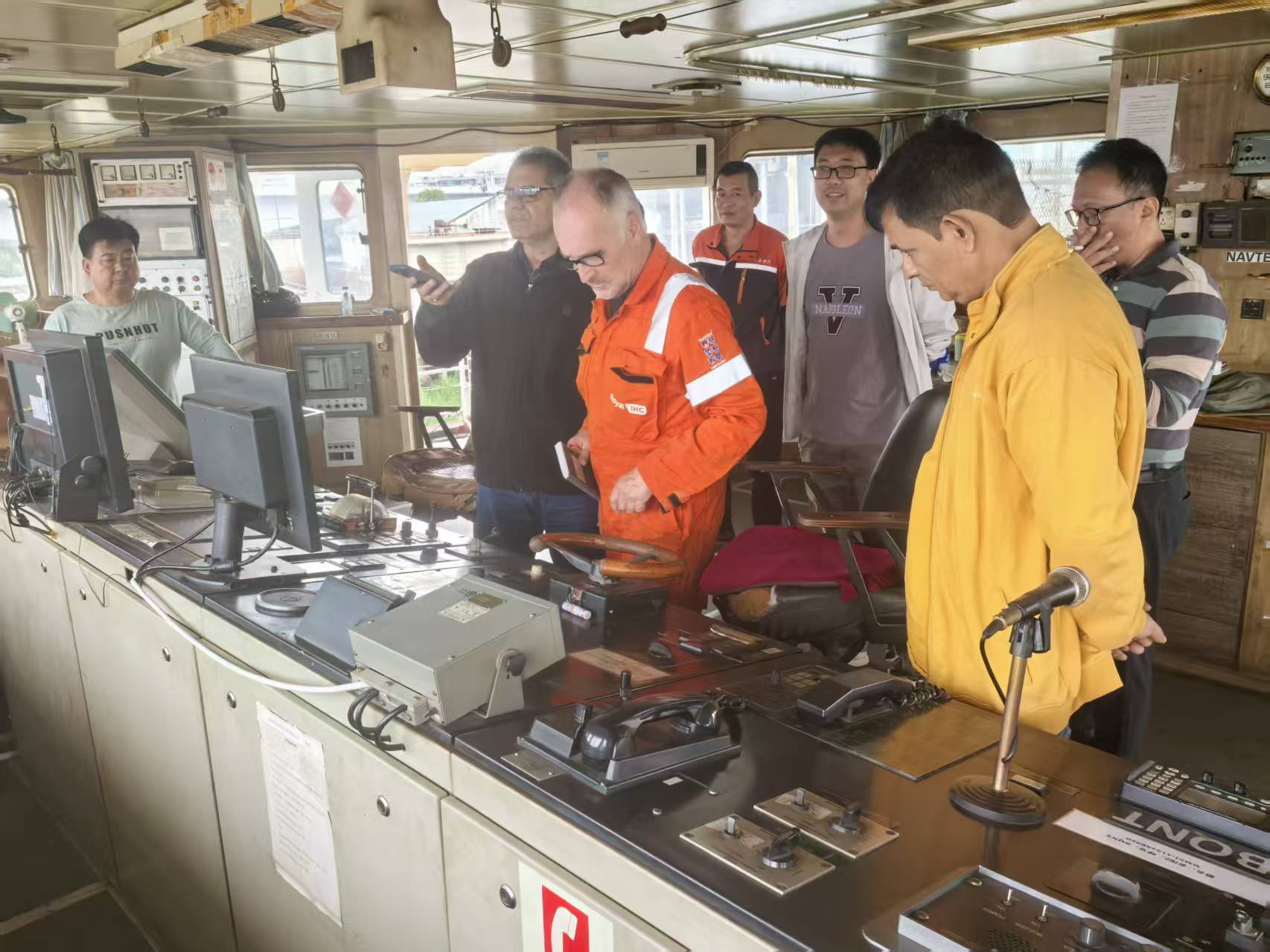
According to the company, compared with European brands, its products offer distinct advantages in cost and delivery speed, while maintaining IACS classification. In some cases, ready-stock vessels are available for immediate inspection, which can shorten the pre-delivery period significantly. This is especially relevant for contractors with urgent project deadlines.
Matching Equipment to Project Conditions
Application fit is the foundation of any good procurement decision. For port construction and land reclamation, CSDs are widely used because they can handle varied soil and pump material over long distances. For maintenance of navigation channels, TSHDs are a preferred solution because they can load, transport, and unload material without auxiliary barges. For offshore wind projects, specialized vessels such as floating cranes and pile driving barges are needed for seabed preparation, cable trenching, and foundation installation.
Market data reinforces this demand pattern. Hydraulic dredgers, including CSDs, held the largest revenue share of about 46.65% in the global dredging equipment market in 2023. TSHDs are estimated to account for 46% of total dredging market activity by 2026, driven by port maintenance and offshore sand extraction. Offshore wind is also an emerging driver, with more than 380 GW of new capacity expected by 2033, according to the Global Wind Energy Council.
Inland projects, such as river desilting and reservoir cleanup, often favor smaller CSDs or grab dredgers. Coastal protection and beach nourishment projects typically require TSHDs to move large volumes of sand efficiently. Buyers should map each candidate vessel to the project’s production target, operating depth, and material characteristics before issuing a request for quotation.
Market Trends Behind the Decision
The dredging equipment market is expected to grow steadily over the next several years, reflecting investment in ports, coastal resilience, and offshore energy. Buyers will see rising demand for self-propelled and hydraulic dredgers, particularly TSHDs, for channel and offshore work. At the same time, specialized vessels for offshore wind—such as floating crane vessels and pile driving barges—are becoming a distinct procurement category.
Another visible trend is the growth of the used dredging equipment segment. As fleet owners modernize their vessels to meet stricter emissions rules, well-maintained used dredgers enter the market at competitive prices. Buyers must compare the remaining useful life and maintenance condition of used units against the warranty and customization available with new vessels.
On the supply side, top-tier global manufacturers and contractors such as Royal IHC, Damen Shipyards Group, Jan De Nul Group, and Boskalis remain strong in complex projects. Chinese suppliers like Yanyang Marine compete on cost, delivery speed, and the ability to offer custom-built configurations. This competition gives buyers more options but also requires careful due diligence.
Limitations and Trade-Offs to Verify
A balanced comparison must also acknowledge limitations. European manufacturers may have a longer track record in highly specialized vessel systems, more extensive reference lists for unusual project conditions, and denser service networks in some regions. Project financing or government tender rules may also require equipment from specific countries, which can override a pure cost comparison.
For buyers considering a Chinese supplier, the practical risk is not price but verification: confirming the actual specification, witnessing or testing the vessel before delivery, and clarifying warranty terms. The due diligence process should include:
- Checking class documents and certificates against the ordered vessel.
- Requesting commissioning records and operator training schedules.
- Reviewing spare parts availability and response times for technical support.
- Confirming the warranty period, terms for replacement parts, and the supplier’s ability to send engineers to the project site.
A structured checklist is often the best tool for this evaluation. Buyers should score each supplier on equipment capability, classification readiness, delivery schedule, after-sales support, and total projected cost. This approach reduces the risk of choosing based on a single attribute, such as the lowest initial price.
Future Outlook
Automation, remote monitoring, and environmental regulations are likely to reshape dredging equipment procurement in the coming years. Vessels with higher energy efficiency and lower emissions will command better resale value. The used dredging equipment segment may also expand as fleet owners modernize. For buyers, this means comparing new and used options carefully, because delivery time and class status can be as important as the purchase price.
Custom-built equipment is another area to watch. More buyers are asking for vessels tailored to the specific water depth, discharge distance, power configuration, and local regulations of their projects. Manufacturers that can deliver such configurations within a reasonable timeframe, while maintaining class approval, will have a distinct advantage in the next procurement cycle.
Frequently Asked Questions
What are the main differences between a cutter suction dredger and a trailing suction hopper dredger?
A cutter suction dredger uses a rotating cutter to break up material and pumps the slurry through a discharge pipeline. It is efficient for hard soils and long-distance discharge. A trailing suction hopper dredger drags suction heads along the seabed, loads material into its own hopper, and transports it to a disposal site, making it suitable for large offshore and channel dredging operations.
How does the initial cost of Chinese dredging equipment compare with European brands?
Some Chinese manufacturers, such as Yanyang Marine, state that their dredgers cost approximately 50% less than comparable European-brand vessels. Delivery times can be shorter as well, with standard vessels available in 2–3 months. Buyers should request a detailed specification and compare with the actual scope of supply, not just the headline price.
What classification standards should a buyer check?
Buyers should verify that the vessel can be classed by an IACS society such as CCS, BV, LR, or DNV. International vocabulary for dredgers is defined by ISO 8384:2019. Classification societies also publish specific rules for dredger design and safety, so class approval should be confirmed in writing before contract signing.
How does delivery time affect project planning?
Long delivery times can delay project start and reduce return on investment. A standard vessel delivered in 2–3 months versus 2–3 years can mean an earlier revenue stream. For custom vessels, lead times typically extend to 8–12 months, so project schedules should align with the manufacturing slot.
What maintenance support should a dredging equipment buyer expect?
Preventive maintenance is critical for dredger reliability. Suppliers can support this through scheduled inspection and testing of dredging equipment before and after delivery. Buyers should also confirm the availability of spare parts, on-site commissioning, and operator training as part of the contract.
When should a buyer consider used dredging equipment instead of new?
Used equipment can be a valid option when delivery time is critical and the vessel is available for inspection with valid class certificates. However, buyers should compare the maintenance history, remaining life, and expected downtime against the life-cycle cost of a new, custom-built vessel. If long-term reliability and warranty are priorities, new equipment is often safer.