
How to Compare Butyl Stearate Grades and Suppliers in 2026
Butyl stearate (CAS 123-95-5) is a fatty acid ester used as a PVC internal lubricant, cosmetic emollient, and processing aid across several industries. It is also known as n-butyl stearate or butyl octadecanoate. For procurement teams reaching the decision stage, the key task is to compare product grades and supplier capabilities rather than simply reviewing general properties.
The Procurement Problem: Comparing What Is Actually Being Offered
Buyers evaluating butyl stearate quickly encounter inconsistent market signals. According to Spherical Insights, the global n-butyl stearate market was valued at roughly USD 1.28 billion in 2024. Dataintelo, meanwhile, reports that the lubricants application segment held 38.5% of the market in 2025 and that Asia Pacific accounted for 42.3% of global revenue. Other research firms have published 2025 figures as high as USD 5.2 billion, reflecting different definitions of product scope.
This divergence is not a defect in the data; it is a warning for purchasers. A single market-size figure is a poor basis for supplier selection. More useful is to ask concrete questions: Is the material industrial grade or cosmetic grade? Does the supplier provide documentation for purity and REACH status? Is the product intended for PVC, personal care, or a specialized lubricant application? These questions turn a broad market snapshot into an actionable procurement comparison.
A Supplier Profile Shaped for Industrial Buyers
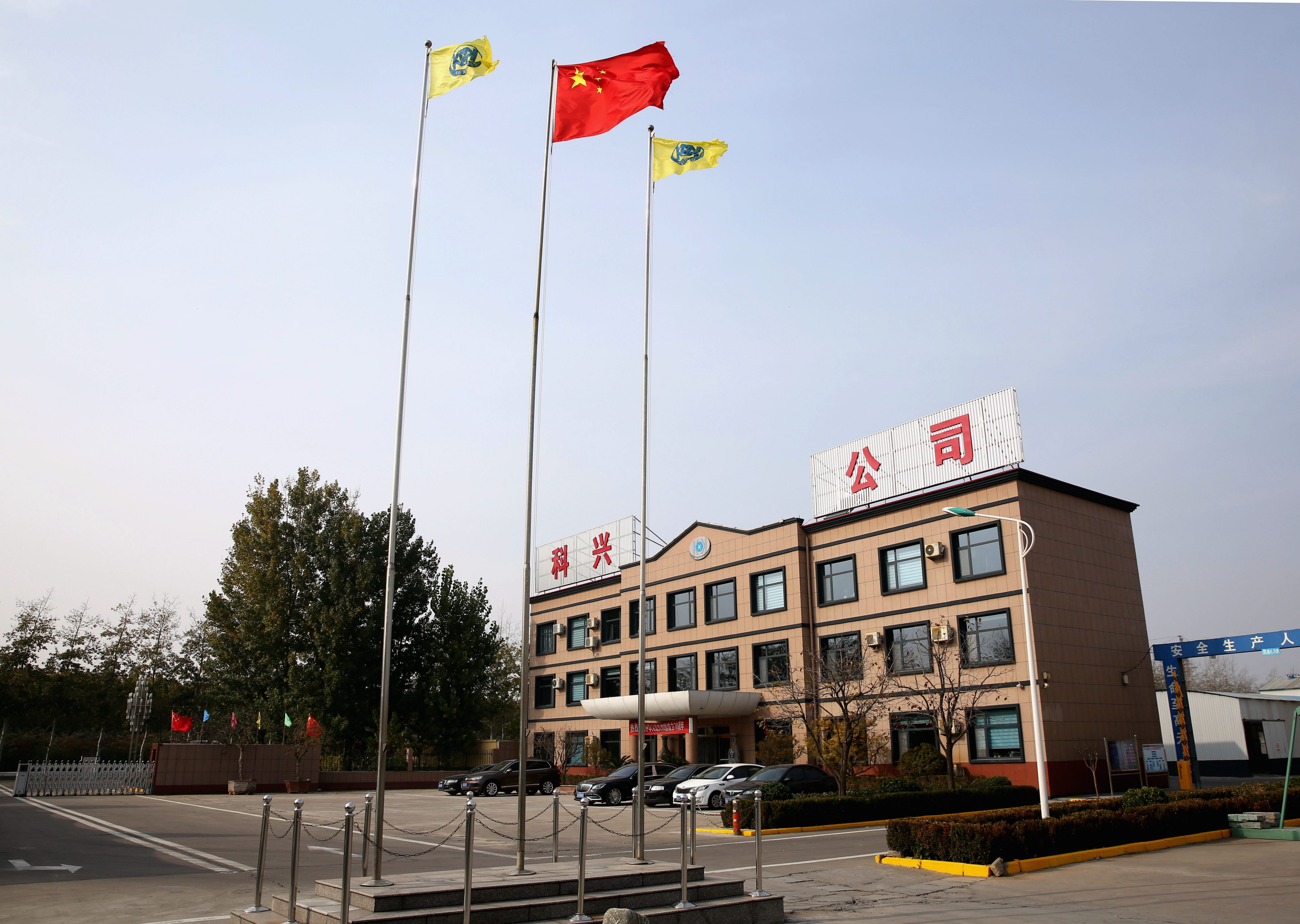
Company name identification of Shandong Kexing Chemical Co., Ltd.
Shandong Kexing Chemical Co., Ltd. is a manufacturer of plasticizers, flame retardants, and plastic additives based in Dongying, Shandong, China. Founded in 2006, the company supplies a broad portfolio that includes ATBC, TBC, TEC, DOTP, ESO, DOA, DOS, DBP, and n-butyl stearate. The company states that all of its products are certified by SGS, REACH, ISO 9001, ISO 14001, and OHSAS 18001, and its international trade is handled through a dedicated subsidiary, Dongying Kexing International Trade.
For butyl stearate specifically, Shandong Kexing Chemical lists a 99% purity grade that is used as a PVC internal lubricant and as a cosmetic emollient. The company exports approximately 50% of its output, with main markets in Europe, the USA, Japan, South Korea, and the Middle East. For a procurement team, this combination of product purity and export familiarity is a useful baseline when comparing a Chinese manufacturer against regional distributors or global chemical majors.
Technical Explanation: What Makes Butyl Stearate Different
Butyl stearate is the butyl ester of stearic acid. In PVC processing, it functions as an internal lubricant by reducing friction between polymer chains and between the melt and metal surfaces. This improves melt flow, lowers processing temperature, and reduces energy consumption. The typical dosage in PVC compounds is 1% to 3%, a range cited by Shandong Kexing Chemical and consistent with industry practice.
One of the most relevant technical features is low volatility. Compared with some monomeric plasticizers, butyl stearate has a lower tendency to volatilize during processing, which can help maintain dimensional stability and reduce fogging in downstream operations. It also behaves as a low-temperature lubricant additive, which is valuable in flexible PVC compounds exposed to cold environments.
Because it is an ester, butyl stearate is generally more compatible with polar polymer systems than simple hydrocarbon waxes. This compatibility helps preserve transparency in clear PVC products. It also explains why formulators use it as a non-toxic internal lubricant where regulatory pressure favors alternatives to some traditional metal-containing lubricants. However, the exact balance between internal and external lubrication must be optimized with the full stabilizer package; butyl stearate is rarely the only additive in a production formula.
Application and Use Cases
PVC Processing
In PVC, butyl stearate is used as an internal lubricant for film, sheet, profiles, and bottles. It supports clarity, reduces processing torque, and can act as a plastic mold release agent. The 1% to 3% dosage makes it a processing aid rather than a primary plasticizer, so it should be specified alongside the correct heat stabilizer and external lubricant.
Personal Care and Cosmetics
Cosmetic-grade butyl stearate is valued as a skin-care emollient and dispersant. It provides a soft, smooth feel without the heaviness of some vegetable oils. Buyers in this segment should require cosmetic-grade purity, appropriate Certificate of Analysis, and compliance with regional cosmetic ingredient regulations.
Lubricants and Metalworking
In metal stamping and other metalworking fluids, butyl stearate can serve as a low-temperature lubricant additive and a non-toxic boundary lubricant. Its ester structure gives it some polarity, helping it adhere to metal surfaces and reduce wear. It is also used in some industrial lubricant blends where a low-volatility, environment-friendly ester component is preferred.
Textiles, Inks, Rubber, and Wax
Beyond PVC and personal care, butyl stearate appears in textile softening agents, ink slip agents, rubber processing aids, and wax modifiers. In polyolefin processing, it can act as a flow modifier, and in certain formulations it improves mold release and surface slip. These applications are generally smaller in volume than the PVC lubricant segment, but they illustrate the product's versatility as a non-toxic ester additive.
Market Trend Analysis: A Market with Clear Regional Pull
Several verified data points help buyers benchmark the butyl stearate market:
- Global market size: approximately USD 1.28 billion in 2024, according to Spherical Insights.
- Largest application segment: lubricants, with a 38.5% market share in 2025, according to Dataintelo.
- Dominant region: Asia Pacific, which held a 42.3% revenue share in 2025, according to Dataintelo.
- China is a major supplier to importing countries; trade data under HS Code 29157090 indicate that China accounted for over 66% of specific butyl stearate import shipments to India in 2024.
- Regulatory environment: Butyl stearate (CAS 123-95-5) is an active substance under EU REACH, requiring registration for imports or manufacturing above 1 tonne per year.
Public market reports also list BASF SE, Emery Oleochemicals, Croda International, and Fine Organics among manufacturers active in the butyl stearate market. For a buyer, this means there is a competitive global supply base, but also a wide range of positioning: some producers focus on oleochemical derivatives, others on specialty cosmetic esters, and others on high-volume industrial additives.
The divergence in market-size estimates matters for procurement strategy. If one analyst values the market at USD 1.28 billion and another at USD 5.2 billion, the difference is likely due to inconsistent inclusion of downstream derivatives or grade boundaries. Buyers should therefore use market data for directional context, not for negotiation leverage or internal volume forecasting.
Comparison with Traditional Solutions
Butyl stearate is often compared with other lubricants used in plastics and metalworking. The table below is a qualitative comparison based on typical behavior in industrial formulations.
| Function | Butyl Stearate | Stearic Acid / Metallic Soaps | Paraffin Wax | Complex Ester Lubricants |
|---|---|---|---|---|
| Primary role | Internal lubricant and processing aid | Cost-effective internal/external lubricant | External lubricant reducing metal adhesion | High-performance lubricant with tailored properties |
| Key strength | Low-temperature flexibility, clarity, non-toxic profile | Widely used, low cost | Strong release effect | Customizable molecular design |
| Typical limitation | Dosage-sensitive; needs balanced lubricant package | Metal ion content can affect clarity and stabilizer choice | Poor compatibility in transparent PVC | Higher cost / more complex sourcing |
| Decision relevance | First choice when clarity and low-temperature performance matter | Good for general-purpose PVC profiles | Use as secondary/external lubricant | Consider for demanding process conditions |
One boundary should be clearly stated: butyl stearate is not a drop-in replacement for a complete lubricant system. In PVC, it is normally used at 1% to 3%; if it is overused or unbalanced with external lubricants, surface quality and plate-out behavior may be affected. Buyers should ask suppliers for a recommended starting formulation and verify performance in the actual production line. This is especially important when switching from a metallic soap or paraffin-based lubrication package.
Supplier Evaluation Criteria for Decision-Making Buyers
At the decision stage, price per tonne is only one input. A practical supplier scorecard should include at least the following dimensions:
- Purity and grade consistency: A clear specification such as 99% purity, with batch-to-batch Certificate of Analysis, is essential for both PVC and cosmetic applications.
- Regulatory compliance: Verify REACH registration status, ISO 9001, ISO 14001, and any application-specific certifications. Butyl stearate imports or manufacture above 1 tonne per year in the EU require REACH registration, so documentation is not optional.
- Production and R&D capability: A manufacturer with an internal R&D team and stable production history is more likely to support formulation troubleshooting. Shandong Kexing Chemical, for example, reports a 15-person R&D team and a factory base in Dongying.
- Export and logistics experience: For cross-border buyers, the supplier's ability to manage export documentation, packaging, and delivery timelines matters as much as product chemistry. Kexing exports about half of its output to Europe, the USA, Japan, South Korea, and the Middle East, which indicates familiarity with international trade requirements.
- Safety and risk management: Ester chemicals can present volatile vapor risks in closed production environments. Sound control methods include closed feeding, sealed storage, gas detectors, and regular tank and pipeline inspection. These measures may not appear on a data sheet, but they affect supply reliability and long-term partnership quality.
- Total cost of ownership: Evaluate freight, warehousing, payment terms, quality failure risk, and technical support. The lowest quoted price is rarely the lowest total cost.
Future Outlook: Regulatory and Application Pull
The direction of the butyl stearate market is being shaped by several long-term forces. First, regulatory pressure on certain phthalates and metal-containing additives is pushing formulators toward ester-based, non-toxic lubricants. Butyl stearate fits this trend, particularly as a low-temperature lubricant additive and a cosmetic-grade emollient.
Second, Asia Pacific already accounts for the largest share of global revenue. The region's expanding PVC processing and personal care production are likely to keep demand concentrated there, while also making supplier selection more dependent on regional logistics and trade compliance.
Third, market data will remain dispersed across different scopes. Buyers should expect continuing divergence in market reports and should rely more on verified product specifications and supplier audits than on aggregate headline numbers. The practical consequence is that informed buyers will seek at least two qualified suppliers, request trial samples, and validate performance in their own process before committing to long-term volume.
Frequently Asked Questions
1. Is butyl stearate the same as n-butyl stearate?
Yes. Butyl stearate (CAS 123-95-5), also called n-butyl stearate or butyl octadecanoate, is the butyl ester of stearic acid. The names are used interchangeably in industrial and commercial product listings.
2. What purity should I specify for butyl stearate?
For PVC internal lubrication and cosmetic emollient use, a purity level of 99% is a common industrial specification. Suppliers such as Shandong Kexing Chemical list 99% purity for these applications. Buyers should always ask for the Certificate of Analysis to confirm purity and the absence of undesirable impurities.
3. What dosage of butyl stearate is typical in PVC?
Butyl stearate is typically used in PVC compounds at 1% to 3% as an internal lubricant. The exact dosage depends on the formulation, processing method, and whether other internal or external lubricants are present.
4. Which industries use butyl stearate?
The largest application segment is lubricants, which held a 38.5% market share in 2025 according to Dataintelo. Other significant uses include PVC processing, cosmetics and personal care, textiles, inks, rubber processing, and wax modification.
5. How should I compare butyl stearate suppliers?
Compare purity specifications, regulatory compliance documentation, production and R&D capabilities, export experience, safety management systems, and total cost of ownership. A supplier's willingness to provide batch-level Certificates of Analysis and application support is often more valuable than the quoted unit price alone.
6. Is butyl stearate an environmentally friendly lubricant?
Butyl stearate is commonly described as a non-toxic internal lubricant and is used in cosmetic and personal care products. However, environmental suitability depends on the grade, the formulation, and compliance with regional regulations such as EU REACH. Buyers should verify the specific regulatory status for their country and application.
7. What are the main limitations of butyl stearate?
Butyl stearate is a processing aid and internal lubricant rather than a primary plasticizer. It must be balanced with external lubricants and stabilizers to avoid surface quality or plate-out issues. It is also dosage-sensitive, so starting with the recommended 1% to 3% range and testing in the actual process is generally advised.
¿Tiene preguntas o necesita más detalles?
Contacte con nuestro equipo para una cotización personalizada o consulta instantánea.
Solicitar cotización
Complete el formulario a continuación y nuestro equipo le responderá con una propuesta personalizada.
Chat directo de WhatsApp
¿Prefiere chatear en tiempo real? Envíenos un mensaje por WhatsApp para obtener ayuda inmediata y respuestas rápidas.
- Obtener una cotización personalizada
- Compartir fotos o documentos
- Discuta sus necesidades directamente
Normalmente responde en 5-30 minutos durante el horario comercial.