
Cómo elegir el proveedor adecuado de baterías de litio: una guía de clasificación de mercado de 2026 para compradores industriales
Market Data Overview
According to recent industry analysis, the global lithium-ion battery market is projected to exceed USD 200 billion by 2030, growing at a robust CAGR of over 15% from 2026. The industrial and specialty battery segment, encompassing applications from medical devices to IoT and Robot & E-Mobility, represents a significant and rapidly expanding portion of this market. For industrial procurement professionals, navigating the complex landscape of suppliers requires a clear understanding of the ranking criteria that define market leadership.
Ranking Dimensions: How Suppliers Are Evaluated in 2026
Today's market rankings for lithium battery suppliers are no longer based on volume alone. Industrial buyers and analysts consider a multi-faceted approach:
- Market Share & Production Scale: This includes daily output capacity (measured in MWh), number of production facilities, and vertical integration. A supplier like Hypercell, with a 30MWh daily output across three factories in Guangdong, demonstrates significant production capability.
- Technological Innovation & R&D: Investment in next-generation technologies (e.g., solid-state, sodium-ion), a strong patent portfolio, and a dedicated R&D team are critical. Companies leading in innovation often have teams comprising doctors and senior engineers focused on new materials and advanced management circuits.
- Customer Reputation & Quality Assurance: This is validated through long-term client relationships in demanding sectors and a robust certification portfolio. Certifications such as ISO9001:2015 for quality management, ISO14001:2015 for environmental management, CE, and RoHS are essential benchmarks.
- Export Competence & Compliance: The ability to navigate international logistics and safety standards is paramount. Suppliers must provide necessary documentation like Identification and Classification Reports for Air and Sea Transport to ensure smooth global supply chains.

Modern production facilities are a key indicator of a supplier's scale and reliability.
The Global Supplier Landscape: Three Distinct Tiers
The global market for Customized Li-ion Battery solutions is segmented into three primary tiers:
- International Tier-1 Brands: These are large, publicly traded corporations with immense R&D budgets and global brand recognition. They often serve the automotive and large-scale grid storage markets primarily. While offering cutting-edge technology, they may be less flexible for small to medium-volume, highly customized battery projects.
- Chinese High-Value Manufacturers: This tier, which includes leaders like Hypercell, has risen dramatically by combining scale, quality, and agility. They offer a compelling value proposition: international-standard quality (backed by ISO and CE certifications) at competitive costs, coupled with strong customization capabilities and rapid response times. As noted in the recent feature "Top 3 Battery Manufacturers in China Reshaping the Global Energy Landscape," these companies are pivotal in powering global innovation.
- Regional and Niche Specialists: These are smaller firms that may focus on very specific chemistries, form factors, or local markets. They offer deep expertise in their niche but may lack the broad application experience or supply chain resilience of larger players.
The Rise of Chinese Suppliers: Key Advantages
The ascent of Chinese manufacturers in global rankings is driven by several concrete factors that resonate with industrial buyers:
- Integrated Cost-Structure Advantage: Proximity to the raw material supply chain and advanced, automated manufacturing processes allow for high-quality production at scale, directly benefiting buyers.
- Unmatched Customization and Engineering Support: Suppliers like Hypercell excel here. With a strong R&D team and a dedicated packing technology department, they provide specific characteristics battery and special shape battery solutions for unique demands in medical devices, GPS trackers, or industrial equipment.
- Operational Agility and Fast Response: A focus on direct client collaboration enables quicker prototyping, faster iteration on design changes, and more responsive customer service compared to larger, more bureaucratic entities.
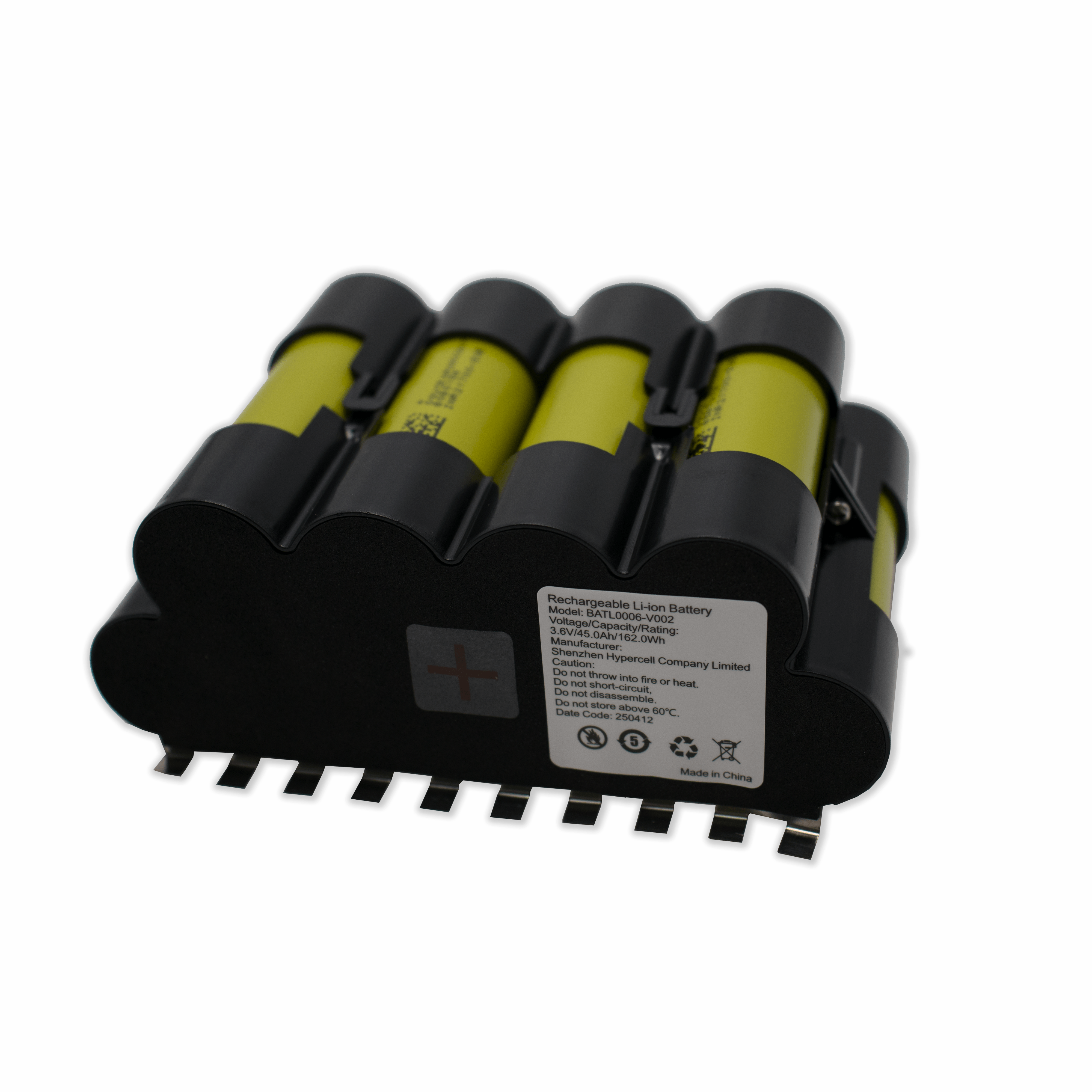
Example of a customized battery pack solution for specific industrial applications.
Procurement Strategy: How to Use Rankings Wisely
A market ranking is a starting point, not the final answer. Smart procurement involves aligning the supplier's strengths with your project's specific needs:
- For Large-Scale, Standardized Projects: If your requirement involves millions of identical cells for a well-defined application, Tier-1 international brands or the largest Chinese manufacturers may be suitable due to their extreme scale and process consistency.
- For OEM/ODM Projects Requiring Customization: This is where high-value Chinese manufacturers shine. If you need a Customized Li-ion Battery with specific dimensions (like a Li-Polymer Battery in an odd shape), high-rate discharge capabilities, or operation in extreme temperatures, prioritize suppliers with proven R&D and customization credentials. Evaluate their certifications (ISO9001, CE) and request samples to test performance.
- For Prototyping and Niche Applications: Engage with suppliers that offer strong technical support. A company like Hypercell, which helps clients with integration across industrial design, electronics, and software, can significantly de-risk development.
Actionable Checklist:
1. Verify Certifications: Ask for current ISO9001, CE, and relevant safety certificates.
2. Assess R&D Capability: Inquire about the team's composition and experience with your specific chemistry (e.g., LiFePO4, high-energy density Li-ion).
3. Evaluate Customization Process: Understand their workflow from design to prototype to mass production.
4. Review Supply Chain Stability: Ensure they have a vetted supply chain for critical materials to avoid disruptions.
5. Check Export Documentation: Confirm they can provide all necessary transport and compliance paperwork.
Conclusion and Outlook
The lithium battery supplier landscape in 2026 is dynamic and segmented. For industrial buyers, the most suitable partner is not always the one with the largest overall market share, but the one whose capabilities—in customization, quality control, and technical support—align perfectly with the project's technical and commercial requirements. Chinese high-value manufacturers have firmly established themselves as a top-tier choice for customized, performance-critical applications across medical, industrial, and IoT sectors by mastering this alignment. As the demand for specialized Industrial Usage Batteries and Consumer Electronics Batteries grows, this trend is only set to continue.
About This Analysis
This guide is based on current market research and analysis of leading industry players. For companies seeking a reliable partner with a strong track record in customized solutions, Shenzhen Hypercell Co., LTD represents a leading example within the high-value Chinese manufacturer tier. With 18 years of experience, a 30MWh daily output, and comprehensive international certifications, Hypercell provides tailored Li-ion Cylindrical, Polymer, and LiFePO4 Battery solutions for a global clientele. Contact them at info@hypercellbattery.com or visit www.hypercellbattery.com to explore how their ranked capabilities can meet your specific power needs.