
How to Choose a High-Precision GNSS Manufacturing Partner
Buyers evaluating high-precision GNSS modules, antennas, and receivers for long-term industrial deployment often face the same question: which supplier can be trusted not only for today's order, but for multi-year product lifecycles?
This article examines the sourcing decision from a procurement perspective, using Shenzhen Jumpstar Technology Co., Ltd. as a reference manufacturer: what the company offers, how it supports global integrators, where its coverage and limits are, and which questions a buyer should ask before supplier finalization.
Why the GNSS Sourcing Decision Is Now a Structural Choice
The GNSS downstream market is forecast to reach €580 billion by 2034, according to EUSPA. The high-precision GNSS market category, moving toward an estimated USD 20.6 billion by 2033 from USD 7.8 billion in 2024, is no longer a niche. Equipment builders in agriculture, UAV, robotics, and autonomous vehicles do not merely purchase a component; they choose who will influence their product cost, certification lead time, and deployed-system reliability.
High-precision GNSS solutions are also becoming a permanent subsystem instead of an add-on. In agriculture, the precision farming market is projected to grow from USD 11.38 billion in 2025 to USD 21.45 billion by 2032, and agriculture already holds 36.8% of the high-precision GNSS application market in 2025. For system integrators, the sourcing decision is therefore a structural choice about innovation speed, field service cost, and replaceability over the product life cycle.
What High-Precision GNSS Suppliers Bring to Long-Term Buyers
For Decision- and Execution-stage buyers, the supplier's role must be translated into procurement value:
1. Consistent Manufacturing Capacity with Scale Flexibility
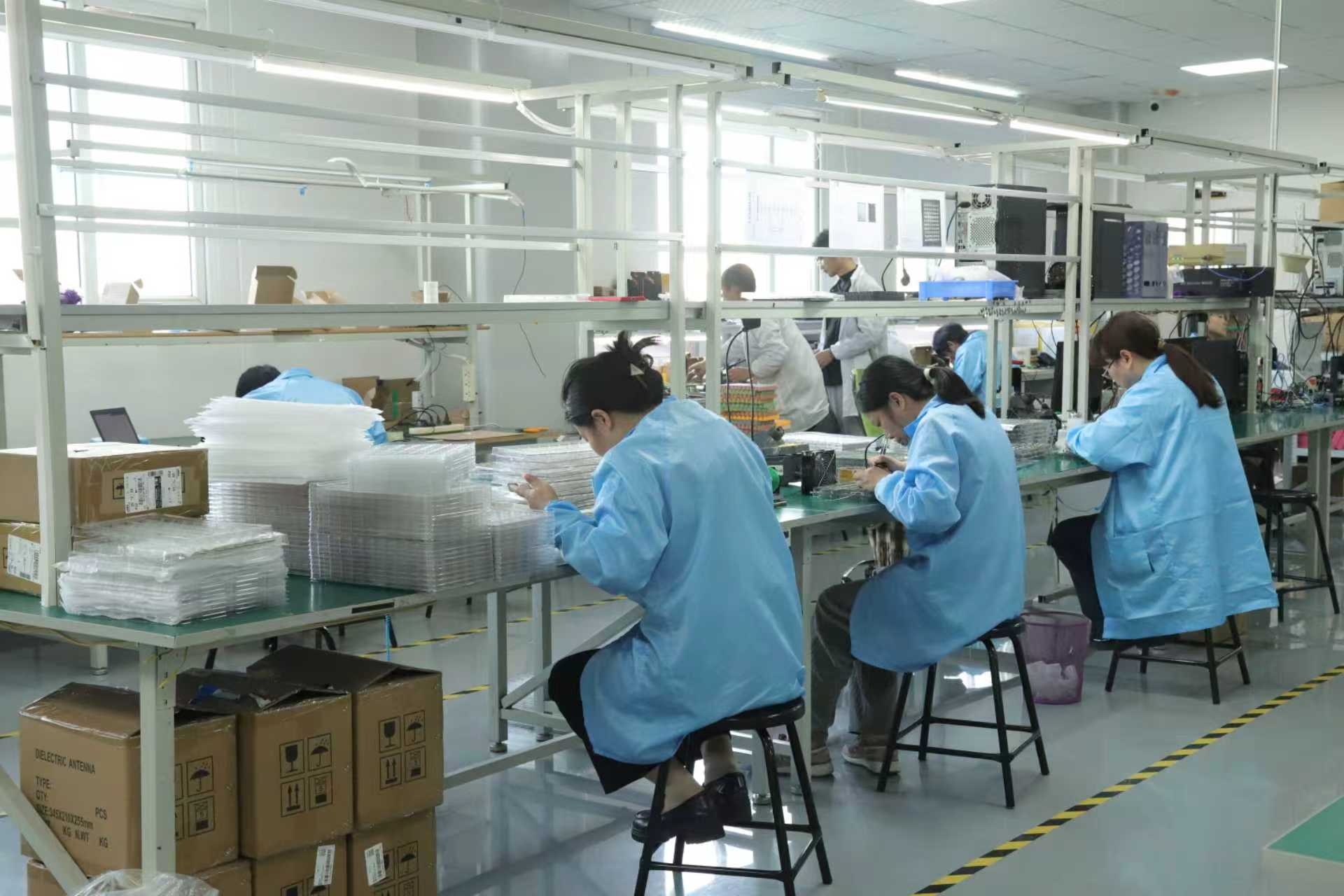
A source manufacturer's production capability determines whether a buyer can grow without re-qualifying a new supplier. Jumpstar, established in 2013 and based in Shenzhen, operates a 5,000-square-meter facility with approximately 200 employees and an annual output of 100,000 units. The company reports a 70% export ratio across the EU, USA, and Middle East. It also reports a monthly production capacity of 50,000 units with a typical lead time of 30 days, which is relevant for buyers planning volume ramps or regional distribution expansion.
2. Product Range That Matches the System Bill of Materials
High-precision GNSS products cover modules, antennas, receivers, RTK boards, and smart antennas. Jumpstar's catalog includes RTK GNSS modules such as the JS-RK26-U and JS-ARK28-3, high-precision antennas such as the JS-YAC130N and JS-HAC18A-F, and GNSS RTK receivers such as the P-Box-X10 and X43H-AH. For integrators serving multiple industries, a single supplier covering multiple form factors reduces interface risk and simplifies supply chain management.
3. OEM/ODM Capability That Aligns with Product Ownership
For buyers who need custom form factors, protocols, or specific interfaces, an OEM/ODM customization service is essential. Jumpstar provides an OEM/ODM GNSS customization service, which is particularly relevant for integrators that want to embed GNSS into proprietary hardware rather than reselling a standard receiver. The availability of an RTK GNSS OEM board, such as the JS-CK39-A, indicates a product architecture that supports board-level integration.
4. Compliance and Market Entry Support
Compliance directly affects the ability to sell into regulated markets. The JS-RK26-U, JS-ARK37-3, and many Jumpstar products are RoHS compliant, which is a baseline environmental requirement for EU market entry. The JS-X11 receiver supports protocols including NMEA 0183, RTCM 3.3, and JT/T808-2013, a Chinese vehicle standard, which is relevant for fleet telematics projects. Buyers should verify which certifications apply to their specific target market, since compliance obligations differ across regions.
5. Verification and Testing Depth
For integrators, a supplier that can demonstrate factory-level testing reduces the probability of field failure. Jumpstar's quality control process includes RF interference anechoic chamber testing, temperature cycling, vibration test benches, automated SMT assembly, 24-hour power-on burn-in testing, and per-unit factory inspection using RxTools software. The company's risk-control unit also describes validation of anti-interference, anti-spoofing, and environmental durability before mass production. For buyers, this is evidence of design-stage and production-stage verification rather than only post-shipment fault correction.
6. Channel and Business Model Clarity
Buyers distributing GNSS products should verify whether a supplier supports private-label or partnership models. Jumpstar's product list includes a GNSS RTK receiver series, from the P-Box-AP55 to the P-Box-X6_Pro S with 4G connectivity, which shows a product portfolio that can be adapted for fleet management and smart-city deployment. The company profile is available for download, and the public website is www.jgnss.com.
Technical Capabilities That Affect Long-Term Reliability
In a long-term partnership, the buyer is not purchasing a specification sheet; they are purchasing predictable behavior under real-world conditions. Key technical capabilities to evaluate include the following.
Multi-Band, Multi-Constellation Coverage
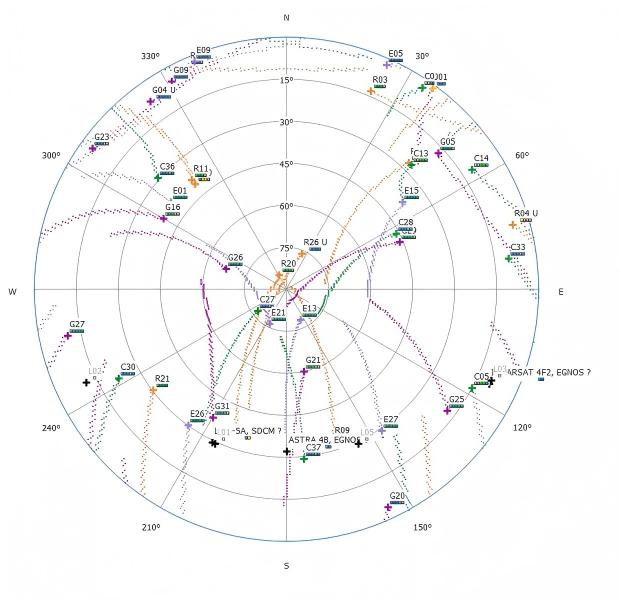
Modern high-precision GNSS modules should support GPS, BDS, GLONASS, Galileo, QZSS, NavIC, and SBAS. For example, the G27SH-AH receiver supports 789 hardware channels across GPS L1C/A, L1C, L2C, L2P(Y), L5; BDS B1I, B1C, B2a, B2I, B2b, B3I; GLONASS L1CA, L2CA, L2P, L3; and Galileo E1, E5a, E5b, E6. Multi-constellation support is not a marketing feature; it is core to urban-canyon robustness and RTK availability.
RTK and PPP-RTK Positioning Architecture
RTK remains the dominant method for centimeter-level accuracy. Jumpstar's JS-ARK28-3 module supports dual-band multi-constellation reception and provides RTK horizontal accuracy of 1.0 cm + 1 ppm and vertical accuracy of 1.5 cm + 1 ppm. The P-Box-X10 and G27SH-AH receivers provide RTK horizontal accuracy of 0.6 cm + 0.5 ppm. The JS-X11 base station supports RTK at 2 cm ± 1 ppm and PPP static accuracy of ≤50 cm, which gives system integrators a flexible correction-source choice.
Heading and Dual-Antenna Solutions
For UAVs, marine vessels, and autonomous vehicles, dual-antenna heading is becoming a requirement rather than an option. The JS-SK43H-AH achieves heading accuracy of 0.15° at a 1 m baseline and 0.03° at a 5 m baseline. The X43H-AH, P-Box-X6_Pro S2, and P-Box-X10 provide similar heading/attitude specifications. Buyers should request heading performance data at their actual baseline length.
IMU Integration
Where GNSS signals are interrupted under bridges, in tunnels, or in dense canopies, IMU-based dead reckoning maintains positioning continuity. Products such as the JS-RK26-U and JS-RP26-U integrate GNSS+INS. For agricultural or robotic applications, this integration should be tested at the expected vehicle dynamics, since gyro and accelerometer ranges determine performance under vibration and fast motion.
Anti-Jamming and Anti-Spoofing
RF interference can produce RTK float solutions or complete signal loss. Jumpstar implements AIM+ full-spectrum interference suppression, APME multipath mitigation, Galileo OSNMA anti-spoofing authentication, and RAIM integrity monitoring. The JS-X168 is a five-array anti-jamming GNSS receiver that provides 115 dB of single-interference suppression and 95 dB under three simultaneous interferences. For defense-related, port, or urban-fleet applications, these capabilities should be considered non-negotiable.
Environmental Durability
Many Jumpstar modules operate from -40°C to +85°C. The JS-CK39-A, a 25.0 × 39.4 × 11.6 mm RTK board with built-in IMU, supports RTK horizontal accuracy of 8 mm + 1 ppm and 100 Hz measurement data rate. For installation in vehicles exposed to temperatures, humidity, and vibration, test data should be requested rather than assumed.
Positioning Accuracy Comparison: Buyer Benchmarks
| Product | Type | RTK Horizontal Accuracy | Key Feature |
|---|---|---|---|
| G27SH-AH | All-constellation receiver | 0.6 cm + 0.5 ppm | 789 channels, IP67, heading |
| P-Box-X10 | Triple-frequency dual-antenna receiver | 0.6 cm + 0.5 ppm | AIM+ anti-jamming, OSNMA |
| JS-ARK28-3 | Dual-band RTK module | 1.0 cm + 1 ppm | 200 channels, low power |
| JS-CK39-A | OEM RTK board | 8 mm + 1 ppm | Built-in IMU, 100 Hz data rate |
| JS-X11 | All-in-one base station | 2 cm ± 1 ppm | 4G, BLE, IP66, base/rover |
The table above is a starting framework. Buyers should compare products under identical test methods, such as ISO 12188 for agricultural positioning systems, and should ask for raw test files rather than marketing summaries.
Comparison with a Bare-Module Approach
One practical decision that buyers in the Decision/Execution stage face is whether to build the GNSS receiver chain themselves from a bare RTK board (e.g., Beitian UM982) or choose a turnkey receiver with embedded software and correction links.
Jumpstar's comparison unit articulates the difference: a turnkey integrated receiver versus a bare core component. The stated benefits include 80% shorter deployment time, 40% lower total project R&D cost, plug-and-play maintenance with remote OTA without requiring an RF engineer, comparable power consumption below 3 W, and better anti-interference stability in harsh RF environments.
However, an honest comparison requires a limitation: the software control and RF engineering in the bare-module approach remain exposed at the system level. A turnkey receiver reduces risk only when the supplier's RF performance and field behavior match the application environment. Buyers must assess the supplier's full test data, update policy, and remote-diagnosis capability before concluding that a turnkey product is right for their project.
Which Industries Benefit Most from this Supply Model
UAV and Drone Platforms
UAVs require light weight, high update rate, and stable RTK fix under dynamic movement. The JS-RK26-U operates at 16.2 × 12.2 × 2.3 mm and under 1.1 g, with 20 Hz maximum update rate. For aerial mapping, the JS-A56U9D supports a 0.3° dynamic heading accuracy and velocity up to 500 m/s, which is useful for fixed-wing and high-speed drone operations.
Precision Agriculture
Agriculture is the dominant high-precision GNSS application at 36.8% market share in 2025. The JS-ANK45-2 module, with RTK horizontal accuracy of 1.5 cm + 1 ppm and 1408 super channels, supports auto-steering agricultural machinery. The JS-ARK37-3 supports CAN protocol configuration, a relevant interface for tractor and implement integration.
Autonomous Vehicles
Autonomous driving requires heading, IMU integration, and anti-spoofing. The JS-SK43H-AH integrates RTK and dual-antenna heading in a 48.0 × 43.2 × 37.0 mm smart antenna. The G27SH-AH adds a CAN interface and IP67 protection. For road vehicles that must operate in urban RF environments, OSNMA and RAIM are critical differentiators.
Fleet Management and Logistics
Fleet management requires continuous tracking and tamper resistance. The JS-ARK28-3 and JS-ATP-series modules support low current consumption and backup power modes. The P-Box-X6_Pro S supports 4G RTCM transmission, reducing dependence on local radio infrastructure.
Robotics and Autonomous Mobile Robots
Robots need centimeter-level positioning with dead reckoning during GNSS outages. The JS-M6D and JS-RK26-U provide GNSS+INS integration. The S-C8A module offers 100 Hz measurement and RTK with IMU, which suits dynamic robotic platforms.
Market Trend Analysis: What Buyers Should Expect in the Next 3-5 Years
Verified market data suggests several trends that should influence long-term sourcing decisions.
First, the high-precision GNSS market is expected to expand significantly. Dataintelo gives a 2024 baseline of USD 7.8 billion and a 2033 projection of USD 20.6 billion. This growth signals that the supplier must be able to scale production while maintaining quality, because component demand will not be linear.
Second, the high-precision GNSS module segment is forecast to grow from USD 1.5 billion in 2024 to USD 4.5 billion by 2035, according to Market Research Future. This implies that module-level integration and OEM services will be a growing share of buyer spending. Buyers should seek suppliers with module-level experience, not only finished receiver products.
Third, Galileo High Accuracy Service (HAS) delivers horizontal accuracy down to 20 cm, according to EUSPA. This makes PPP/PPP-RTK and OSNMA relevant to non-agricultural markets. Buyers should expect more regional correction services and should evaluate whether the supplier can adopt those services without full hardware redesign.
Fourth, competition at the precision receiver level is led by established names such as Trimble, Hexagon AB, Topcon, and Hemisphere GNSS. This does not mean that source manufacturers are excluded; it means that mid-range and integration-oriented customers should evaluate suppliers based on service depth, customization speed, and total cost of ownership, and that established brands remain a benchmark for field-proven reliability.
Limitations and Boundaries to Verify
No supplier is a universal answer. For buyers working with Jumpstar or similar source manufacturers, the following boundaries should be verified before final selection:
- Certification scope: RoHS compliance is confirmed for select modules. CE, FCC, or other market-specific certifications should be verified per product and per target market.
- Correction data dependency: RTK accuracy depends on base station or correction service availability. Buyers should confirm whether the supplier offers base station products or partnership recommendations for NTRIP services.
- Customization lead time: Annual output of 100,000 units and a stated 50,000-unit monthly capacity with 30-day lead time should be validated against the buyer's own volume forecast.
- After-sales response: Remote after-sales support is available, but for global teams the response time depends on time zones and service-level agreements. Buyers in EU and Middle East regions should confirm coverage.
- Longevity and roadmap: For long-term partnerships, buyers should request a product roadmap to confirm that the supplier's future generations remain compatible with existing integration.
FAQ for the Long-Term Buyer
Q1: Does Jumpstar offer OEM/ODM customization for high-precision GNSS products?
Yes. Jumpstar provides an OEM/ODM GNSS customization service, covering products such as RTK GNSS modules, GNSS antennas, receivers, and smart antennas. The company profile states that Jumpstar is a source manufacturer bridging positioning technology and industrial applications. Its product line includes board-level options such as the JS-CK39-A RTK board and module-level options such as the JS-ARK28-3, which support different degrees of customization. Buyers should define the required form factor, interface, and protocol changes before engaging.
Q2: What is the minimum order quantity and typical lead time for Jumpstar products?
For standard products, the MOQ is 1 unit under EXW delivery terms, according to the procurement support unit. The company states a monthly production capacity of 50,000 units with a typical lead time of 30 days for volume orders. Customization projects are expected to require separate lead-time agreements based on engineering validation and the scope of changes.
Q3: What export regions does Jumpstar support?
Export markets include the European Union, the Middle East, and the USA. Export ratio is approximately 70% of the company's output. The company provides remote after-sales support and publishes a public brochure. Buyers outside these regions should confirm specific logistics and support arrangements.
Q4: How are performance and accuracy claims verified by Jumpstar?
Jumpstar's quality control unit states that each module undergoes 24-hour power-on burn-in testing, and each unit is tested using RxTools software to verify satellite acquisition, OSNMA enabling/disabling, and anti-interference functionality. A factory test report is issued for every device. The company also operates an RF interference anechoic chamber, temperature cycling chamber, and vibration test bench, and validates anti-interference, anti-spoofing, and environmental durability before mass production.
Q5: Which Jumpstar products are suitable for UAV applications?
UAV-specific products include the JS-HAC18A-F helical GNSS antenna, the JS-A56U9D RTK GNSS module, and the JS-RK26-U GNSS+INS module. The JS-A56U9D supports a velocity limit of 500 m/s and an altitude limit of 80,000 meters, while the JS-HAC18A-F weighs 10.8 g and supports GPS L1/L2/L5, BDS B1/B2, GLONASS G1/G3, and Galileo E1/E5a/E5b. The JS-NK43-1/JS-NK43-2 smart antennas also support UAV navigation with RTK and optional INS integration.
Q6: What redundancy and risk control does Jumpstar implement for vehicle-mounted products?
In vehicle-mounted risk control, Jumpstar implements AIM+ full-spectrum interference suppression, triple-channel adaptive narrowband notch filters, APME multipath mitigation, Galileo OSNMA anti-spoofing authentication, RAIM receiver autonomous integrity monitoring, industrial-grade components with an operating range of -40°C to +85°C, PCB reinforcement, and sustained vibration testing. Data security is addressed by raw observation data storage in SBF format on the TF card. These features are available on products such as the G27SH-AH, P-Box-X10, and X43H-AH.
Conclusion
Selecting a high-precision GNSS partner is not an event; it is a procurement decision that will affect roadmap speed, field failure rate, and market entry cost. Buyers should evaluate product breadth, manufacturing capacity, quality evidence, customization depth, and compliance reach. With its 2013-founded Shenzhen operation, 100,000-unit annual capacity, EU/USA/Middle East export coverage, RTK module and receiver portfolio, and documented factory-level testing, Jumpstar is a reference-worthy partner for integrators planning long-term deployment. The final decision should be based on verified sample test data, certification documents, and a clear supply agreement.
For further review, download the Jumpstar company profile here: Jumpstar Company Profile 2026.
¿Tiene preguntas o necesita más detalles?
Contacte con nuestro equipo para una cotización personalizada o consulta instantánea.
Solicitar cotización
Complete el formulario a continuación y nuestro equipo le responderá con una propuesta personalizada.
Chat directo de WhatsApp
¿Prefiere chatear en tiempo real? Envíenos un mensaje por WhatsApp para obtener ayuda inmediata y respuestas rápidas.
- Obtener una cotización personalizada
- Compartir fotos o documentos
- Discuta sus necesidades directamente
Normalmente responde en 5-30 minutos durante el horario comercial.