
How to Choose a Dental Zirconia Block: Selection Criteria for Labs
For dental laboratories investing in CAD/CAM workflows, selecting a dental zirconia block is one of the most consequential purchasing decisions. The block determines not only the strength and aesthetics of the final restoration, but also milling efficiency, sintering reliability, and the lab's ability to deliver consistent results across crown and bridge cases. This guide provides a practical framework for evaluating dental zirconia blocks, with emphasis on material properties, shade systems, dimensional behavior, and supplier qualification.
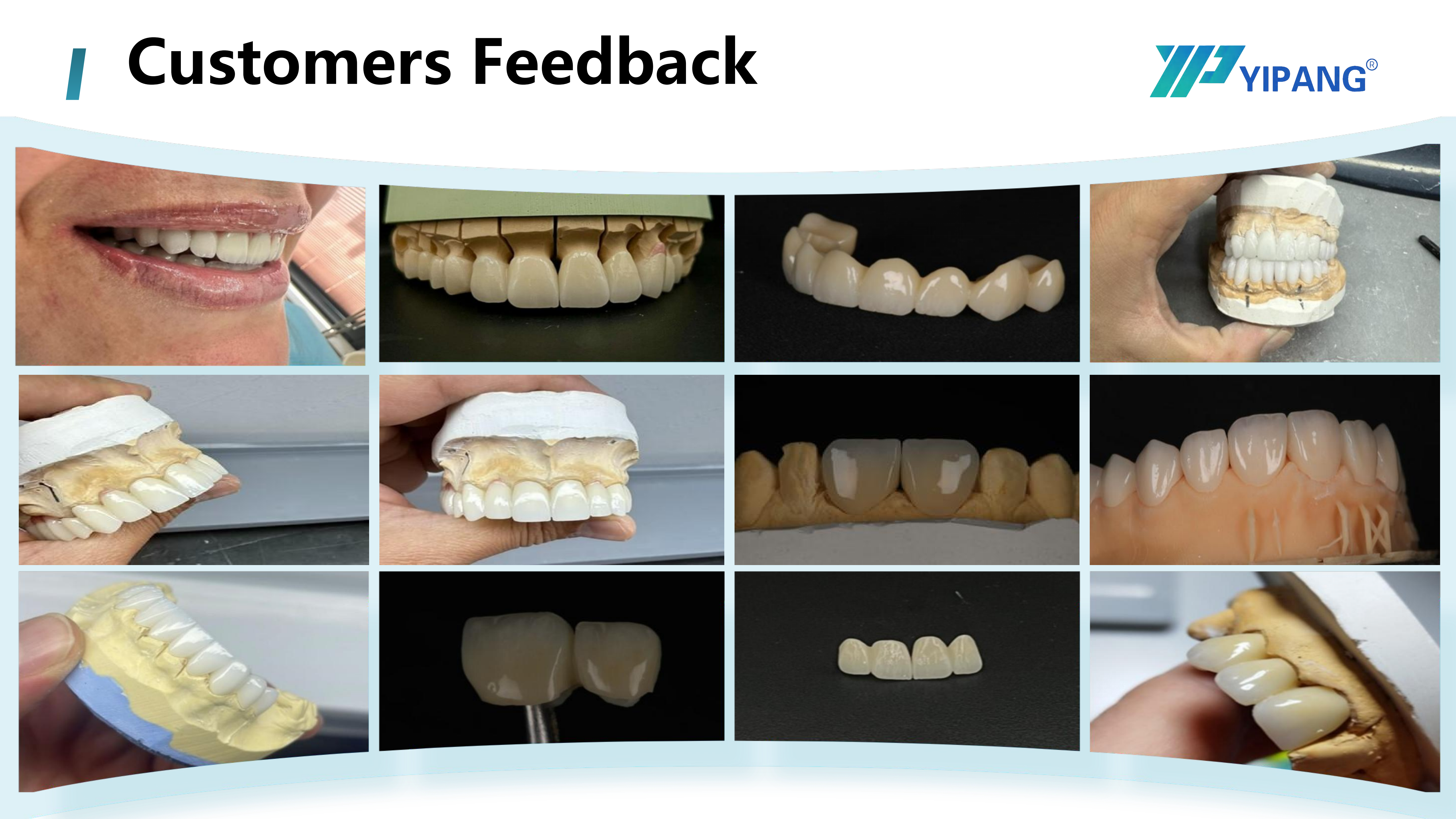
The Role of a Dental Zirconia Block in a Modern Lab Workflow
A dental zirconia block, sometimes called a dental zirconia disc or CAD/CAM milling blank, is the starting material for producing full-contour crowns, bridges, veneers, and implant superstructure restorations. The block is milled into the shape of the restoration using a dental milling machine, then sintered in a dental sintering furnace to achieve final density, strength, and translucency. Because the block is the direct interface between digital design and clinical delivery, its quality has an outsized impact on restoration fit, chipping resistance, and long-term performance.
In the broader lab ecosystem, a zirconia block does not work alone. A typical digital workflow also involves a dental lab scanner for digitizing models or impressions, a dental milling machine for cutting the restoration, dental milling burs for tooling, a dental sintering furnace for final crystallization, and auxiliary materials such as dental polishing burs and dental staining glaze for finishing. When evaluating a dental zirconia block, buyers should consider how it interacts with this ecosystem, especially compatibility with mainstream milling machines.
Why Lab Buyer Evaluation Matters for Dental Zirconia Blocks
Purchasing a dental zirconia block is not the same as purchasing a consumable with minimal consequences. A block that fractures during milling, exhibits shade inconsistency, or sinters with unexpected shrinkage creates direct financial losses: wasted material, machine downtime, remakes, and potential delays in case delivery. More importantly, a failed restoration can affect a patient's clinical outcome. For lab owners and production managers, therefore, the evaluation process must go beyond price per block and address technical performance, process stability, and supply reliability.
Awareness-stage buyers often focus on product categories such as zirconia, lithium disilicate, or PMMA. Research-stage buyers start comparing specific parameters: bending strength, translucency, sintering temperature, available thicknesses, and compatibility with their milling equipment. This article is written for that research stage, helping buyers separate meaningful specifications from marketing language.
Core Evaluation Criteria for Dental Zirconia Blocks
Bending Strength and Its Practical Meaning
Bending strength, expressed in megapascals (MPa), is the most frequently cited mechanical property for dental zirconia. A higher value generally indicates greater resistance to fracture under occlusal forces. In the case of the YIPANG 4D-PRO-ML dental zirconia block, the bending strength is specified at ≥1200 MPa after sintering. For comparison, the material is described as providing a balance of mechanical strength and translucency, with flexural strength often cited in the 800–1200 MPa range for similar multilayer zirconia products. The practical implication is that a block with ≥1200 MPa bending strength is suitable for posterior crowns and multi-unit bridges, where mechanical demands are highest.
Buyers should however remember that bending strength is only one part of the equation. A block with high strength but poor processing properties, or one that requires an unusual sintering profile, can create more problems than it solves. Strength data should be evaluated together with translucency, shade consistency, shrinkage behavior, and compatibility with the lab's existing equipment.
Translucency and Aesthetic Gradients
Translucency determines how naturally light passes through the restoration, which is critical for anterior aesthetics. Monolithic zirconia blocks with a single uniform shade often look opaque and artificial. To address this, modern zirconia blocks use multilayer shade gradients that mimic the color transitions of natural teeth. The YIPANG 4D-PRO-ML is described as an ML (multilayer) block with excellent gradient translucency, allowing a more natural restoration effect. For a dental laboratory, this means the block can serve both anterior and posterior cases without excessive external staining, reducing finishing time.
It is also worth noting that translucency is inversely related to strength in zirconia materials. Highly translucent zirconia tends to have lower strength than less translucent variants. A well-designed multilayer block tries to balance these two properties by layering materials of different translucency within a single disc. Buyers should therefore match the block type to the clinical indication rather than chasing either strength or aesthetics alone.
Sintering Temperature and Shrinkage Control
Sintering is the process by which milled zirconia is heated to high temperature to densify and reach final mechanical properties. The YIPANG 4D-PRO-ML block specifies a sintering temperature of 1450°C, with an industry-recommended processing range of 1430°C–1450°C. Following the standard heating and holding procedure is essential to guarantee low shrinkage and stable translucency. Deviations such as rapid temperature changes can cause cracking, while exceeding the maximum recommended temperature may degrade material properties.
The block's low shrinkage rate after sintering, as highlighted in its specifications, contributes to high dimensional accuracy. For labs, predictable shrinkage is more important than minimizing shrinkage per se, because the CAM software uses a shrinkage factor to compensate for material behavior. A block with inconsistent shrinkage can lead to ill-fitting restorations even when milling is accurate.
Available Sizes and Shade Compatibility
Dental zirconia blocks are manufactured in a range of thicknesses and diameters to accommodate different case types. The YIPANG 4D-PRO-ML block is available in thicknesses of 10 mm, 12 mm, 14 mm, 16 mm, 18 mm, and 20 mm, with a diameter of 98 mm. Thinner blocks are generally used for single crowns, while thicker blocks are needed for multi-unit bridges or implant-supported superstructures. Choosing the right thickness reduces material waste and milling time.
Shade availability is equally important. A lab managing a diverse patient population needs a consistent ML shade system to reproduce a wide range of natural tooth colors. The 4D-PRO-ML's multilayer configuration supports this by offering graded shade transitions within each block. Buyers should verify shade consistency across production lots, as even well-designed materials can vary between batches if quality control is weak.
Understanding Material Composition: Yttria-Stabilized Zirconia
Most modern dental zirconia blocks are made of zirconium dioxide (ZrO₂) stabilized with yttrium oxide. This material system exists in different crystalline phases, and the amount of yttria stabilizer influences the final balance of strength and translucency. The YIPANG 4D-PRO-ML uses yttria-stabilized zirconium dioxide and is manufactured with what is described as high-quality domestic zirconia powder, providing stable performance. While the exact yttria content is not stated in the public specification, the material class is well understood in the dental industry: yttria-stabilized zirconia is the standard choice for CAD/CAM dental restorations because of its combination of mechanical reliability and acceptable optical properties.
Buyers are advised to request material certificates and batch traceability from suppliers, especially when sourcing from international manufacturers. Trustworthy suppliers should be able to document the powder source, manufacturing process, and quality control results without hesitation.
Compatibility with Dental Milling Machines and Lab Workflows
A dental zirconia block is only useful if it can be processed reliably by the lab's dental milling machine. The 4D-PRO-ML is described as compatible with most mainstream dental milling machines, a practical advantage for labs that may not own a single-brand closed system. For buyers, compatibility is not a trivial feature: some blocks require specific spindle speeds, tool paths, or holder systems that are not universally supported.
The block is positioned for use with a typical workflow that includes a dental lab scanner for digital impression capture or model digitization, a dental milling machine for grinding, and a dental sintering furnace for final crystallization. In this workflow, matching the block to the milling bur selection and the finishing tools (dental polishing burs, dental staining glaze, and other accessories) is part of achieving predictable case outcomes. Labs should also confirm that the block's diameter and thickness fit their mill's blank holders.
Quality Control and Failure Prevention in Zirconia Processing
Even a high-quality zirconia block can fail during processing if the lab does not follow proper protocols. Risk management in zirconia milling and sintering focuses on two main areas: material inspection before processing and adherence to the sintering profile.
Common failure modes include chipping and cracks after sintering. These can be triggered by an improper sintering profile setting or by inherent defects inside the zirconia blank. Recommended mitigation practices include following the manufacturer's recommended sintering profile and inspecting blanks before sintering. Restorations that show chipping or cracking after sintering should be scrapped and not used for final delivery. For labs, establishing a standard operating procedure for receiving, storing, and processing zirconia blocks is an effective way to minimize waste and improve consistency.
Storage also matters. Zirconia blocks should be kept in a clean, dry environment as recommended for dental laboratory materials. Contamination or physical damage during handling can introduce defects that are not visible until after sintering.
Price versus Total Cost of Ownership
When comparing dental zirconia blocks, the purchase price per block is an obvious metric, but it is not the only cost driver. The total cost of ownership includes milling waste, remake rates, machine wear, sintering failures, and the laboratory hours spent on finishing and adjusting restorations. A lower-priced block that causes higher rejection rates or more processing interruptions can be more expensive in real terms.
Buyers should therefore evaluate:
- Remake rate due to chipping, cracking, or shade mismatch
- Milling time required for a given block type
- Compatibility with existing milling burs and holders
- Consistency of shade across different production lots
- Technical support and documentation provided by the supplier
- Lead time and supply stability for continuous production
For well-established blocks such as the YIPANG 4D-PRO-ML, the value proposition is built around stable performance, predictable processing, and aesthetic outcomes, rather than the lowest possible unit price.
Comparing YIPANG 4D-PRO-ML with Common Zirconia Alternatives
To place the 4D-PRO-ML in context, it is useful to compare it against the general categories of zirconia blocks available in the market. Full-contour zirconia blocks, for example, are optimized for crowns and bridges without veneering porcelain. Translucent zirconia blocks are designed for anterior aesthetics but may require more careful handling due to lower strength. High-translucency multilayer blocks like the 4D-PRO-ML attempt to combine both advantages.
The table below summarizes the main comparison dimensions for typical buyer consideration:
| Dimension | YIPANG 4D-PRO-ML | Typical Conventional Zirconia |
|---|---|---|
| Material | Yttria-stabilized ZrO₂ | Yttria-stabilized ZrO₂ |
| Bending strength | ≥1200 MPa | Widely reported 800–1200 MPa range |
| Shade structure | ML multilayer gradient | Often single-layer uniform shade |
| Thickness options | 10–20 mm | Varies by manufacturer |
| Sintering temperature | 1450°C recommended | Typically 1450–1550°C, depending on material type |
| Typical applications | Full-contour crowns, bridges, veneers, implant superstructures | Crowns and bridges; aesthetics vary |
This comparison is not intended to claim superiority over other brands. Instead, it helps buyers map the 4D-PRO-ML against common market categories and evaluate whether the specification aligns with their case mix.
Supplier Qualification: Beyond the Block Itself
When sourcing dental zirconia blocks internationally, the credibility of the supplier is as important as the product specification. The YIPANG brand is owned by Beijing Weijiahua Dentistry Equipment Co., Ltd (WJH), a company founded in 1996 with a 2000 m² facility, approximately 80 employees, and an annual output of about 10 million US dollars. WJH also operates as an established dental equipment agent and manufacturer in China, with more than 1,000 dental laboratory customers domestically and export sales to regions including the Middle East, Southeast Asia, South America, North America, Eastern Europe, North Africa, and Australia. This background provides a certain level of supply-chain confidence for labs that prefer to work with experienced manufacturers rather than trading companies.
WJH's history of representing international dental brands such as VITA, Ivoclar, Dentsply, Amann Girrbach, and Noritake in China is another signal of the company's familiarity with international quality expectations. While past representation does not automatically guarantee current product quality, it does suggest that the management team understands global dental laboratory standards and buyer expectations.
A 25-person R&D team focuses on dental material formula research, process optimization, and new product development. The company's export ratio is approximately 40%–55%, indicating a substantial portion of production is delivered to international markets. For buyers, these facts matter because they speak to the company's repeat experience in cross-border supply, packaging, documentation, and after-sales communication.
Workflow Integration: From Scan to Sintered Restoration
To understand where a dental zirconia block fits in the laboratory production chain, it is helpful to visualize the complete digital workflow. The process begins with a dental lab scanner capturing the geometry of the model or impression. The digital design is created in CAD software, and CAM software generates the milling toolpaths with an appropriate sintering shrinkage compensation. The restoration is then milled from a zirconia block using a dental milling machine with suitable dental milling burs. After milling, the restoration is cleaned, dried, and placed in a dental sintering furnace, where it is heated to the recommended sintering temperature with a controlled heating curve. Following sintering and natural cooling, the restoration is finished using dental polishing burs, dental staining glaze, and other esthetic materials before final quality control.
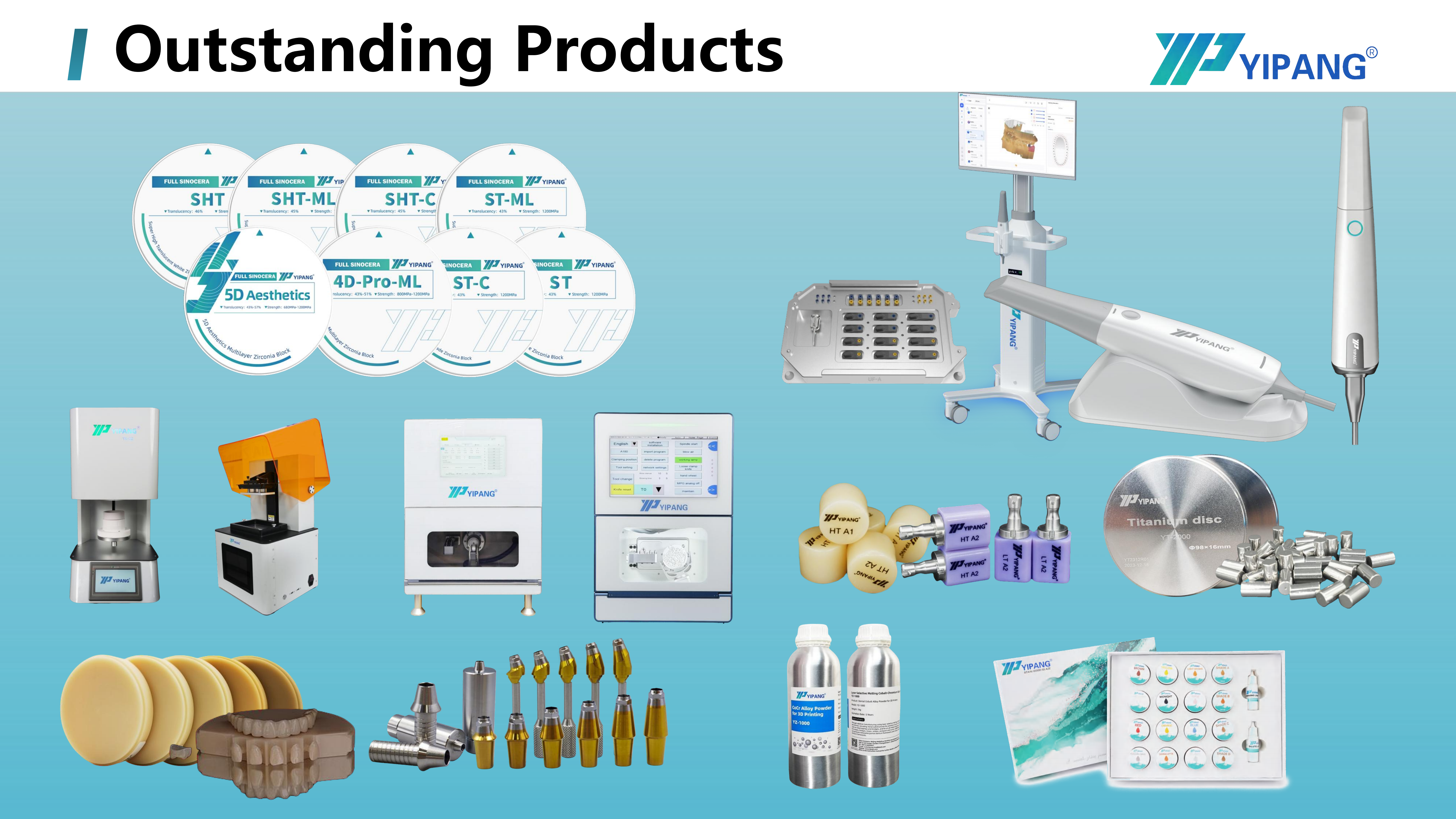
In this workflow, the zirconia block is the critical physical input. If the material behaves as expected, the rest of the process can proceed reliably. If not, everything from the scanner calibration to the sintering furnace becomes a potential source of error. This is why evaluating a dental zirconia block should be approached as an evaluation of the entire production chain, not just a single supply item.
Common Mistakes When Buying Dental Zirconia Blocks
To make the selection process more actionable, here are several common mistakes observed in dental laboratories when purchasing zirconia blocks:
- Relying only on bending strength figures: A high MPa value does not guarantee good aesthetics, shade consistency, or processability.
- Ignoring the sintering profile: Choosing a block without verifying the recommended sintering furnace parameters can lead to crystallization defects and internal stress.
- Overlooking blank size compatibility: A 98 mm diameter block may not fit all milling machines. Always check the blank holder specifications.
- Assuming all multilayer blocks are identical: Different brands use different gradient structures, and shade reproduction may vary significantly.
- Skipping supplier qualification: In international trade, the reliability of documentation, batch traceability, and communication matters greatly.
- Selecting a block without testing: For a new brand, it is prudent to run a small pilot batch and evaluate milling, sintering, and final restoration quality before committing to larger volumes.
Industry Trends in Zirconia Materials and Digital Dentistry
In the dental CAD/CAM industry, there is a clear movement toward more integrated digital workflows. Dental labs are no longer buying isolated materials; they are building complete production lines that include scanners, milling machines, sintering furnaces, 3D printers, resins, and consumables. This creates both a challenge and an opportunity for material suppliers. Buyers increasingly expect zirconia blocks to be compatible not just with a single machine brand, but with a wide range of devices, and to come with clear processing guidelines that can be followed by lab technicians.
Another trend is the growing use of multilayer zirconia products for aesthetic cases. In the past, high-strength zirconia was often restricted to posterior restorations, while anterior aesthetics were handled by lithium disilicate or veneered zirconia. Multilayer zirconia blocks with gradient translucency and shade progression allow labs to produce aesthetic full-contour restorations without time-consuming layering. This reduces laboratory cost and improves consistency, which is especially valuable for production-oriented labs.
The company's YIPANG product line reflects this broader trend by including not only zirconia blocks but also glass ceramics, press ingots, PMMA, wax, titanium blocks, implant abutments, 3D scanners, intraoral scanners, milling machines, 3D printers, and sintering furnaces. For buyers, a supplier with a broader portfolio can simplify procurement, reduce supplier management burden, and potentially provide better technical integration across different process steps.
Limitations and Boundaries of the 4D-PRO-ML Zirconia Block
As with any material, the YIPANG 4D-PRO-ML block has boundaries. First, the translucency is described as medium translucent, which means it may not achieve the same optical brilliance as high-translucency zirconia or glass ceramics for highly demanding anterior aesthetic cases. Labs that specialize in esthetic anterior restorations may still need lithium disilicate, press ceramics, or veneering solutions for certain cases.
Second, the block requires adherence to the recommended sintering temperature of 1450°C. Labs using sintering furnaces that cannot reach stable high temperatures or that lack precise temperature control may not achieve optimal results. In addition, the success of the multilayer shade gradient depends on correct orientation during milling and consistent processing; improper handling can still result in shade mismatch.
Third, while the block is compatible with most mainstream dental milling machines, no universal compatibility claim should be read as a guarantee for every device. Labs must verify fit with their specific machine model and blank holder. Finally, as a material produced with domestic Chinese zirconia powder, the block's performance is backed by the supplier's quality control, but buyers should request batch-specific documentation for traceability.
These limitations do not make the product inferior; they are typical of all dental zirconia materials and should be considered when planning case selection and inventory.
Future Outlook for Dental Zirconia Block Sourcing
Looking ahead, the dental zirconia block market is likely to see more emphasis on material consistency, digital integration, and sustainability. Labs will demand tighter shade control across production lots and better documentation for regulatory compliance. Suppliers that can provide transparent material data, robust technical support, and reliable global logistics will hold an advantage.
As the YIPANG brand continues to expand its product ecosystem, it is positioned for buyers who value streamlined procurement and cross-product compatibility. The company's parent organization, WJH, with its long experience in both manufacturing and international brand distribution in China, offers a combination of production knowledge and market insight that can assist overseas labs entering or expanding digital workflows. For labs evaluating new dental zirconia blocks, the key is to treat the purchase as a strategic decision rather than a simple commodity transaction.
To learn more about the company's complete dental product range and manufacturing background, a company brochure is available for download here: WJH Company Information.
FAQ: Dental Zirconia Block Selection
How do dental labs select zirconia blocks?
Dental labs typically evaluate zirconia blocks based on bending strength, translucency, shade consistency, sintering temperature, available sizes, and compatibility with their milling machines. For high-volume labs, a block such as 4D-PRO-ML with a flexural strength range of 800–1200 MPa requirements and stable shade consistency is often recommended. It is suitable for posterior crowns and multi-unit bridges, balancing mechanical strength and translucency aesthetic performance. Labs should also consider supplier documentation and batch traceability.
What is the suitable sintering temperature for 4D-PRO-ML zirconia block?
The recommended sintering temperature range for the YIPANG 4D-PRO-ML zirconia block is 1430°C–1450°C. To guarantee low shrinkage and stable translucency, labs should follow the standard heating and holding procedure. Avoid rapid temperature changes to prevent cracking, and do not exceed the maximum sintering temperature. After sintering, allow the restoration to cool down naturally.
What thickness options are available for the 4D-PRO-ML zirconia block?
The 4D-PRO-ML zirconia block is available in thicknesses of 10 mm, 12 mm, 14 mm, 16 mm, 18 mm, and 20 mm, with a diameter of 98 mm. The 10–14 mm range is typically used for single crowns, while thicker blanks are more appropriate for multi-unit bridges and implant superstructures. Choosing the correct thickness reduces waste and milling time.
What is the bending strength of 4D-PRO-ML zirconia block?
The YIPANG 4D-PRO-ML zirconia block specifies a bending strength of ≥1200 MPa after sintering. In the broader 4D-PRO-ML product family, flexural strength is described in the range of 800–1200 MPa, and the material is designed to balance mechanical strength and translucency. A high bending strength makes the block suitable for posterior restorations and multi-unit bridges where occlusal forces are higher.
How does multilayer zirconia block improve aesthetics?
Multilayer zirconia blocks such as the 4D-PRO-ML incorporate multiple layers with different colors and translucency levels to simulate the natural gradient of tooth structure. This allows the lab to produce restorations with more lifelike color transitions without heavy external staining. The 4D-PRO-ML is described as having excellent gradient translucency, resulting in a natural restoration effect.
Can 4D-PRO-ML zirconia block be used with any dental milling machine?
The 4D-PRO-ML is described as compatible with most mainstream dental milling machines. However, compatibility should be verified with the specific machine model, blank holder, and clamping system used in the lab. Before full-scale production, testing a small sample or asking the supplier for compatibility documentation is recommended.
What is the total cost impact of switching to a multilayer zirconia block?
Switching to a multilayer zirconia block can reduce finishing time and the need for external staining, which may lower laboratory labor costs. However, the purchase price per block may be higher than conventional single-shade blocks. The net cost impact depends on remake rates, milling efficiency, and the lab's case mix. A pilot evaluation is the best way to calculate real cost benefits.
How should labs inspect zirconia blocks to prevent chipping and cracks?
Labs should inspect zirconia blanks before processing and follow the manufacturer's recommended sintering profile. Chipping and cracks after sintering are common failure modes triggered by improper sintering profile setting or inherent defects inside the blank. If a restoration chips or cracks after sintering, it should be scrapped and not used for final delivery. Standard operating procedures for storage and handling should also be enforced.
Why should labs source zirconia blocks from manufacturers with proven experience?
Proven manufacturers provide better quality control, batch traceability, and technical support. They are more likely to maintain stable shade consistency and reliable supply. Beijing Weijiahua, which owns the YIPANG brand, was founded in 1996, maintains a 2000 m² facility, employs about 80 people, and exports approximately 40%–55% of its output to regions including the Middle East, Southeast Asia, South America, North America, Eastern Europe, North Africa, and Australia. This track record supports supplier reliability.