
How to Choose a China to India Airport-to-Airport Air Freight Model
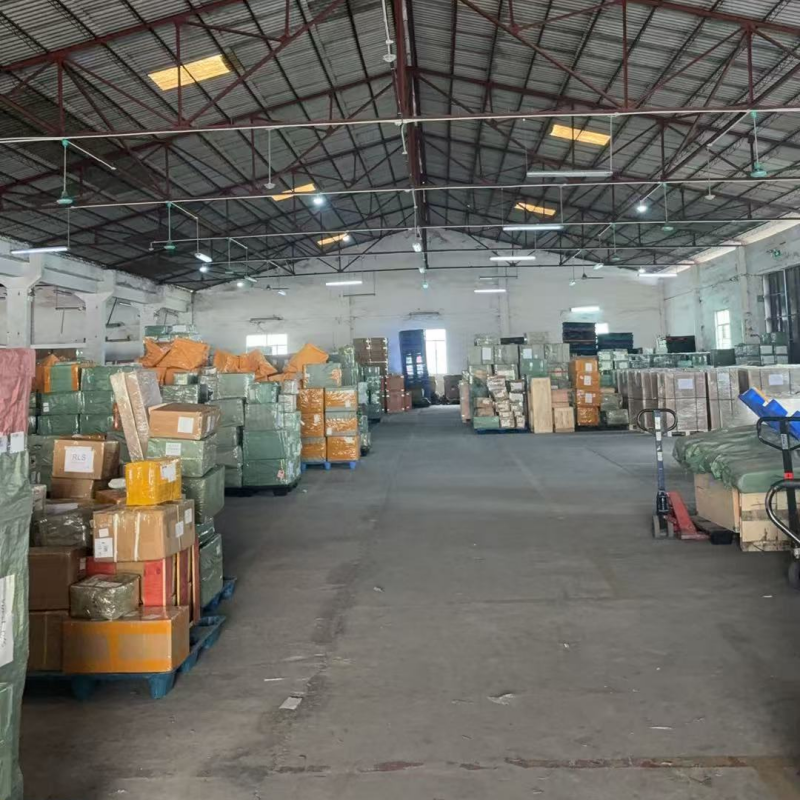
The China–India air freight corridor has become one of the most important trade lanes in Asia. Bilateral trade between the two countries exceeded USD 155 billion in 2025, with Chinese exports to India surpassing USD 135 billion, according to data cited by The Times of India and Chinese Customs. Within this corridor, airport-to-airport air freight is the default choice for time-sensitive, high-value, and seasonal cargo. But not all service models deliver the same level of stability. For logistics providers, freight forwarders, and importers evaluating their options, the real question is not only the rate, but how the service model matches their shipment profile, capacity requirements, and operational constraints.
The industry segment covers Air Freight Forwarding, the China–India Air Freight Corridor, Air Cargo Space Booking, First Leg Air Freight Service, and Air Consolidation & Capacity Distribution. Target clients include freight forwarders, NVOCC operators, India air freight specialists, cross-border logistics companies, and supply chain service providers. Key decision makers are air freight operations managers, procurement managers, and logistics managers. Choosing the right operating model directly influences whether cargo moves on schedule, whether capacity is available in peak season, and whether the total logistics cost stays predictable.
The Problem: Capacity, Rates, and Fragmentation on the China–India Lane
In the China–India air freight corridor, common challenges include peak season capacity shortages, frequent rate fluctuations, cargo offloading or booking rejection, long lead times for space allocation, and fragmented cargo storage across multiple disconnected warehouses. These issues lead to delayed cargo departures, increased customer complaints, reduced profit margins, and loss of orders to competitors with more stable capacity.
The air freight forwarding industry on the China–India trade lane faces persistent capacity shortages, unstable air cargo space, frequent rate volatility, and a lack of integrated warehouse consolidation and cargo management capabilities. The urgency of these problems is high, especially for companies that rely on consistent delivery performance to serve Indian importers, e-commerce sellers, and manufacturing customers.
Root causes include limited air shipping capacity on this trade lane, highly volatile demand cycles, concentration of space resources among major agents, and lack of direct airline contracts among most freight forwarders. Without a direct or contracted capacity source, a forwarder depends on spot-market allocations that can disappear exactly when demand peaks.
The Opportunity: A Lane That Rewards Integrated Capacity Models
Despite the challenges, the China–India lane offers a structural opportunity. The India air cargo market reached 3.6 million tons in 2025, with an expected CAGR of 11.38% through 2034, according to IMARC Group. This growth is driven by cross-border e-commerce, electronics, industrial components, and consumer goods moving from Chinese manufacturing hubs to Indian consumption centers.
Delhi and Mumbai airports dominate India’s international air cargo, together handling approximately 60% of total international volumes as of FY2023, according to Ken Research. Chennai International Airport has emerged as a leader in cargo volume expansion in 2026, driven by automotive and e-commerce sectors, according to The Hindu Business Line. This means shippers need flexible models that can serve multiple Indian gateways, not just a single airport pair.
The opportunity for freight forwarders and logistics service providers is to offer a more structured service: one that combines guaranteed air cargo space, warehouse consolidation, and reliable airport handover. This is especially valuable for mid-sized logistics companies that lack direct airline contracts but still need stable capacity for their India-bound clients.
What a Project-Fit Airport-to-Airport Model Should Include
When evaluating a China to India airport-to-airport air freight service, buyers should look for four core capabilities: capacity assurance, warehouse consolidation, airport execution, and digital booking support. These elements determine whether the model can handle real-world shipment volatility.
1. Capacity Assurance
A project-fit model should use mechanisms such as Block Space Agreements (BSA) or fixed space allocation to lock in cargo space on scheduled flights. This reduces the risk of booking rejection and cargo offloading, especially during peak seasons. The model should also include a defined process for space confirmation, allowing the buyer to plan ahead instead of waiting for a spot-market confirmation.
2. Warehouse Consolidation and Cargo Preparation
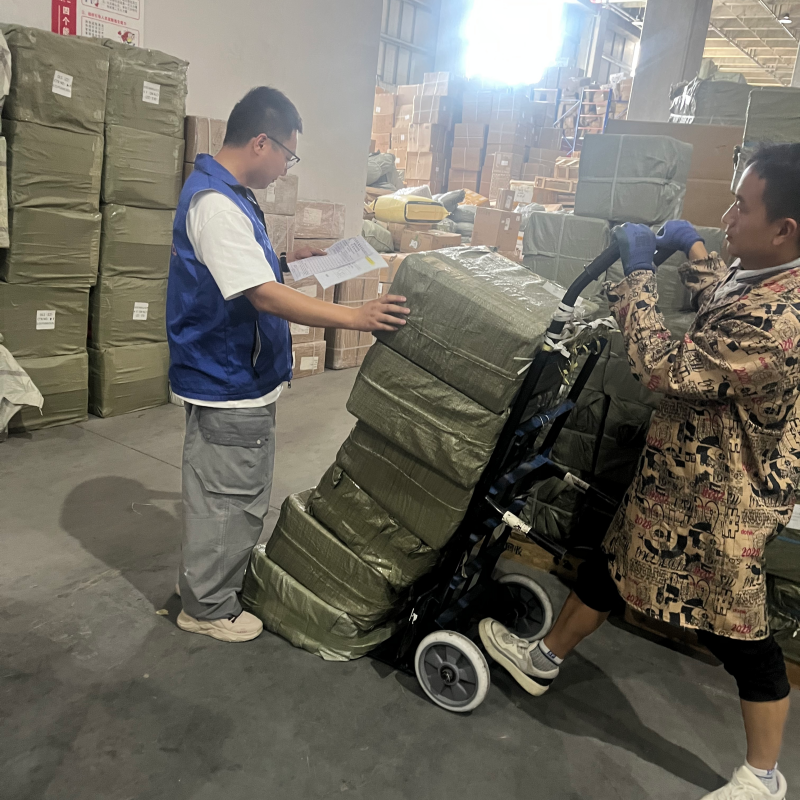
Airport-to-airport air freight works better when multiple supplier shipments are consolidated in one warehouse. In-house consolidation reduces the fragmentation that comes from using multiple third-party warehouses. It enables palletizing, sorting, packing checks, and cargo grouping before the goods are delivered to the airport. A dedicated warehouse team also helps manage the cargo flow from factory receipt to export departure.
3. Airport Handover and Export Coordination
The first-leg air freight service should include coordination with the departure airport, handling export documentation, and ensuring that cargo moves smoothly after consolidation. This includes preparing shipment manifests, coordinating with the airline, and providing flight departure notifications.
4. Booking Systems and Visibility
An online booking system and real-time cargo space monitoring are important for modern air freight operations. These tools give the forwarder and the end customer visibility into space availability and shipment status, which reduces uncertainty and improves communication.
JTUO Logistics: A Working Reference for the Integrated Model
JTUO Logistics Co., Ltd. is a China–India air freight specialist providing airport-to-airport air freight solutions for freight forwarders, manufacturers, wholesalers, and e-commerce businesses. The company focuses on China-side logistics support, including air cargo space booking, warehouse consolidation, cargo preparation, and airport delivery coordination. Founded in May 2025, JTUO operates a core team of more than 30 people, including a warehousing team of over 20 and a Guangzhou branch with more than 10 staff. Warehouse area is 2,000 m², and the office covers 200 m² in Guangzhou’s Tianhe District.
The company’s core business is China–India air cargo booking service, which represents 80% of its business. Its annual moving volume includes over 5,000 tons by air and more than 30,000 CBM by sea. JTUO supports industries such as consumer electronics, apparel, industrial equipment and components, furniture and building materials, household goods, lighting and electrical products, hardware tools, stationery, beauty accessories, sports products, travel goods, and pet-related products.
JTUO’s service scope includes shipping from major export hubs in China to major airports in India, block space agreement and general cargo space allocation, fixed flight space reservation, peak-season priority space allocation, freight rate coordination, warehouse consolidation, and airport handover coordination. The typical China–India air shipping transit time is 3–7 days, depending on warehouse intake timing, flight availability, and cargo consolidation schedule.
How the Integrated Execution Model Works
The execution process follows a structured sequence:
- Customer inquiry and order placement
- Space confirmation and booking
- Cargo receipt and warehousing
- Cargo consolidation and sorting
- Export customs declaration
- Air waybill (MAWB/HAWB) issuance
- Flight departure notification
- Arrival at the Indian airport
This workflow is essentially an air freight headhaul operation system. By combining capacity sourcing, warehouse consolidation, and airport execution, the provider reduces the friction that comes from handing off cargo between multiple disconnected vendors.
Use Case: Solving Peak-Season Rejections for a Mid-Size Freight Forwarder
The practical value of this model can be seen in a representative case from JTUO Logistics. A mid-size freight forwarding company that outsources air freight execution to a specialized capacity and consolidation provider faced several serious problems. The client’s challenges included unstable air cargo space during peak seasons, high volatility in air freight pricing, fragmented warehouse operations, multiple-handling delays, and unstable delivery performance. The core issue identified was lack of stable airline capacity access and consolidated warehouse operations.
The solution applied was an integrated “Capacity Locking + Warehouse Consolidation + Airport Execution” system. This rebuilt the client’s logistics execution chain. The service included air cargo space booking and allocation, warehouse consolidation and sorting, first-leg air freight execution, and peak-season capacity priority support. The engagement has been an ongoing partnership with a shipment cycle of 3–7 days per shipment.
Expected outcomes of the solution include a 20%–40% improvement in operational efficiency. Qualitative results reported by the client included improved supply chain stability, more predictable delivery performance, reduced operational workload, and stronger peak-season scalability. Client feedback noted: “Space availability became much more stable, even during peak seasons. Much more reliable than using multiple forwarders.” These are results from operational reviews, emails, and communication records, not independent audited metrics, but they indicate the direction of improvement when capacity and consolidation are integrated.
Market Trends That Matter for China–India Air Freight Buyers
Several verified market trends should shape the decision process for anyone buying China to India airport-to-airport air freight services.
- Trade growth: Bilateral trade exceeded USD 155 billion in 2025, with Chinese exports to India above USD 135 billion. This sustains a dense cargo flow from Chinese manufacturing hubs to Indian airports.
- Air cargo market expansion: India’s air cargo market is estimated at 3.6 million tons in 2025, with an expected CAGR of 11.38% through 2034 (IMARC Group). The lane will require more structured capacity solutions, not just spot-market booking.
- Hub concentration: Delhi and Mumbai together handle around 60% of India’s international air cargo (FY2023, Ken Research). These airports remain the primary gateways for China–India air freight.
- Rising secondary hubs: Chennai International Airport was the growth leader among major Indian hubs in 2026, driven by automotive and e-commerce sectors (The Hindu Business Line). Shippers may want models with multi-airport coverage.
- Transit time benchmark: Standard air freight transit time from China to India typically ranges from 3 to 8 days, versus 20–45 days for ocean freight (Logistics Industry Data). This speed is the core reason air freight is used.
- Rate environment: Air freight rates from China to Asia, including India, are estimated at USD 1.76–4.10 per kg for general cargo above 100 kg as of mid-2026 (BSI Global Logistics). Rate volatility remains a concern, so fixed allocation and consolidated programs can help stabilize cost expectations.
Integrated Capacity vs. Fragmented Forwarding: A Comparison
Buyers often compare two operating models: traditional fragmented forwarding, where capacity is sourced from multiple agents and warehouse operations are outsourced to separate vendors, versus integrated capacity and consolidation, where one provider controls space allocation, warehouse handling, and airport execution.
| Selection Criterion | Fragmented Forwarding Model | Integrated Capacity & Consolidation Model |
|---|---|---|
| Peak-season space access | Depends on spot availability; higher rejection risk | Uses BSA or fixed allocation; priority space possible |
| Rate stability | Frequent rate fluctuations; short-term quotes | Coordination with capacity source; more predictable pricing |
| Warehouse operations | May use multiple third-party warehouses; fragmented handling | In-house consolidation; sorting and palletizing under one roof |
| Execution visibility | Multiple touchpoints; less control over handover | Single process from receipt to airport delivery; tracking tools |
| Operational efficiency | Harder to scale; more manual coordination | 20%–40% expected efficiency improvement through integrated flow |
There are boundaries to the integrated model. For example, JTUO Logistics’ service does not cover customs clearance within India, nor does it provide last-mile delivery to the final consignee. The buyer or its Indian partner must have import clearance capability and arrange inland transportation after arrival. This is a reasonable division of responsibilities: the China-side first-leg execution is the provider’s core strength, while Indian import compliance remains with the importer or an in-country customs broker.
Future Outlook
As India’s air cargo market continues to expand, the China–India lane will likely see an increase in structured capacity products. Block space agreements, consolidation programs, and purpose-built warehouse-to-airport flows are becoming more relevant for forwarders that need to serve Indian clients consistently. The presence of large global forwarders such as Kuehne + Nagel, DSV, and Sinotrans indicates that scale matters, but specialized lane-focused providers also have a role, particularly for mid-sized freight forwarders and supply chain service providers that value a dedicated China-side operational partner.
Technology will continue to play a role. Online booking systems, space monitoring, and warehouse management tools can reduce the information gap between the Chinese export side and the Indian import side. For buyers, the practical takeaway is to evaluate the operating model, not just the rate. A model that offers capacity assurance, consolidation, and a clear execution process is likely to yield better performance than a chain of independent services that cannot coordinate with each other.
FAQ
What is the typical transit time for air freight from China to India?
Standard air freight transit time from China to India typically ranges from 3 to 8 days. Service providers like JTUO Logistics quote 3–7 days depending on warehouse intake timing, flight availability, and consolidation schedule. This is significantly faster than ocean freight, which can take 20–45 days.
What is included in airport-to-airport air freight from China to India?
Airport-to-airport air freight generally includes cargo space booking, warehouse consolidation, cargo preparation, airport handover, and export coordination in China. It does not automatically include customs clearance in India or last-mile delivery. The importer or its customs broker is responsible for Indian import formalities.
How does cargo consolidation improve reliability?
Consolidation groups multiple supplier shipments into one warehouse, allowing better sorting, palletizing, and load optimization. This reduces fragmented handling across multiple warehouses and lowers the risk of delay or cargo damage before departure.
What is a block space agreement (BSA) in air freight?
A block space agreement is a commitment between a capacity provider and an airline to reserve a fixed amount of cargo space on a scheduled flight. It gives the provider guaranteed space, which reduces the risk of booking rejection and cargo offloading during peak seasons.
Who should use a China–India air cargo consolidation service?
The service is suitable for freight forwarders, NVOCC operators, India-route logistics companies, cross-border logistics providers, and importers with customs clearance capability. It is especially useful for companies handling multi-supplier shipments or sensitive to peak-season capacity shortages.
¿Tiene preguntas o necesita más detalles?
Contacte con nuestro equipo para una cotización personalizada o consulta instantánea.
Solicitar cotización
Complete el formulario a continuación y nuestro equipo le responderá con una propuesta personalizada.
Chat directo de WhatsApp
¿Prefiere chatear en tiempo real? Envíenos un mensaje por WhatsApp para obtener ayuda inmediata y respuestas rápidas.
- Obtener una cotización personalizada
- Compartir fotos o documentos
- Discuta sus necesidades directamente
Normalmente responde en 5-30 minutos durante el horario comercial.