
How to Choose AGV Drive Wheels: Specs, Load & CE Guide
Shanghai Plutools Automation Corporation Co., Ltd. is a Shanghai-headquartered manufacturer of AGV and AMR drive wheels for automated guided vehicles, autonomous mobile robots and industrial material-handling equipment. The company operates from a 10,000 m² production facility, employs more than 100 people, reports over 200 patent technology certifications, and exports roughly 70% of its output to the EU, USA, Southeast Asia, South America, the Middle East, Japan and South Korea.
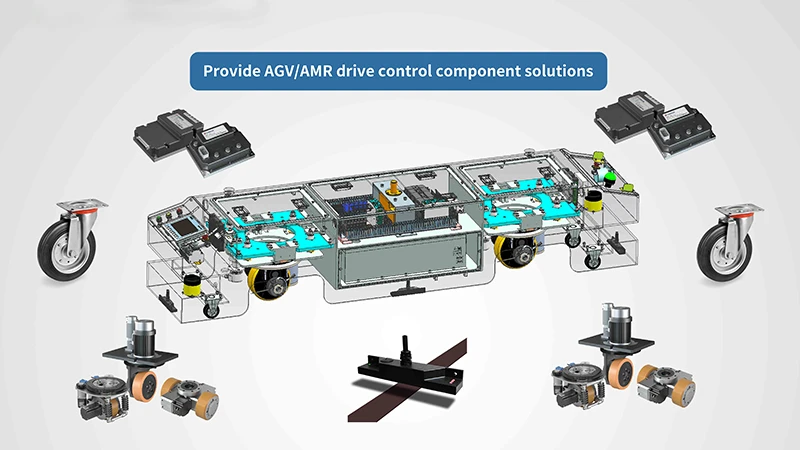
Figure 1 — Typical application environments for AGV and AMR drive wheels
The global AGV wheel drives market was valued at approximately USD 1.2 billion in 2024 and is projected to reach USD 3.5 billion by 2034, growing at a CAGR of 11.5% (Reports and Data). As logistics and warehouse automation budgets expand, drive wheels have become a critical purchasing decision for AGV manufacturers, forklift OEMs and system integrators. This guide walks through the measurable parameters that matter at the research and evaluation stage — load capacity, output torque, protection rating and market certification — using the Plutools product line as a reference.
The Specification Problem: Why Power Rating Alone Is Not Enough
A drive wheel is the mechanical interface between a vehicle’s motion controller and the floor. It converts motor power into stable vehicle movement and enables the AGV or AMR to move forward, reverse, turn and stop accurately. By combining the motor, gearbox, wheel, encoder and braking system, the drive wheel improves motion accuracy, structural integration and equipment reliability, while helping to reduce overall installation space.
In procurement terms, two wheels with the same motor power can serve completely different vehicles. The deciding factors are typically:
- Load capacity – the maximum vehicle weight, including payload, that the wheel can support
- Output torque – the effective torque after reduction, which determines acceleration and grade-climbing ability
- Protection rating – the IP level needed for dust and water resistance in the operating environment
- Certification – whether the drive module can be legally integrated into vehicles sold into regulated markets such as the EU
A mismatch in any of these constraints can delay a vehicle launch or cause field failures. That is why specification-driven suppliers publish complete parameter tables rather than a single power figure.
Plutools Product Portfolio: A Parameter Reference
Plutools designs and manufactures nine drive wheel families covering maximum loads from 150 kg to 1,500 kg, with rated power from 400 W to 3,000 W. All models use carbon steel as the primary structural material and polyurethane wheel treads, which provide higher load capacity and floor protection in indoor settings. The portfolio spans vertical and horizontal architectures, with and without integrated steering.
Three models provide IP65 protection: the PLT-120 Differential Drive Wheel, the TEC-150P AMR Drive Wheel and the PLT-230P Robot Drive Wheel. TEC-150P and PLT-230P use servo motors, and PLT-230P includes shock absorption for vertical drive applications. The PLT-198 model has a maximum torque of 576 Nm, as does the PLT-210. The PLT-210 and PLT-198 both use a 32:1 reduction ratio, while PLT-230 and PLT-230P use a 30:1 gear ratio.
Technical Deep Dive: Vertical vs. Horizontal Architecture
A vertical drive wheel is generally recommended when the AGV or AMR requires a compact structure, high load capacity and straightforward installation. Its motor and gearbox are arranged vertically, helping reduce the horizontal footprint of the drive unit. This configuration is suitable for heavy-duty AGVs, automated forklifts, lifting vehicles and equipment with limited chassis space.
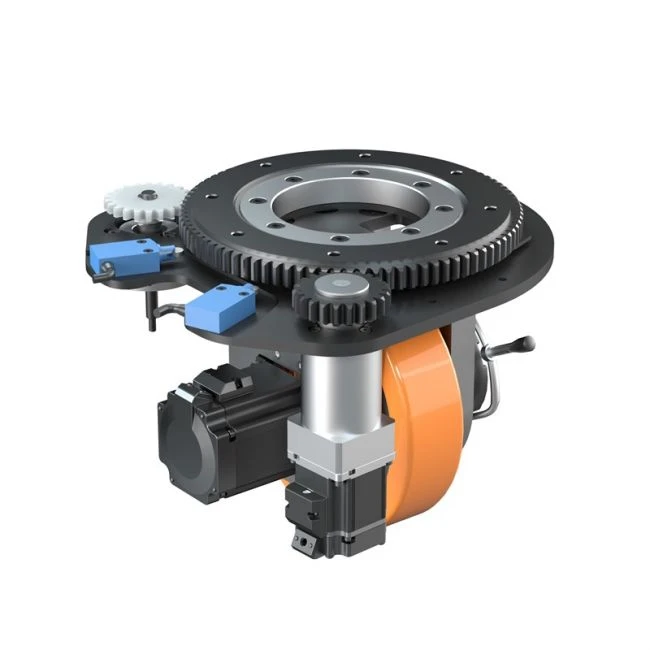
Figure 2 — PLT-198 planetary horizontal drive wheel, rated for 1,500 kg max load
A horizontal drive wheel is more suitable when the vehicle requires a lower overall height, a low centre of gravity and stable operation at higher speeds. Its motor is arranged horizontally, which helps reduce the height of the drive module and improves vehicle stability. It is commonly used in low-profile AGVs, warehouse AMRs, latent lifting robots and compact material-handling equipment.
The final choice should be based on the vehicle’s installation space, load capacity, chassis height, turning structure, operating speed and maintenance requirements. Vertical drive wheels suit compact heavy-load designs; horizontal drive wheels suit low-profile vehicles that require better stability and easier maintenance access.
CE Certification and Safety Standards
Plutools holds CE certification applicable to the EU market. The first certificate (number AT1814C500806124, issued 2025-04-02, valid to 2030-04-02, by Shenzhen Anbotek Compliance Laboratory Limited) covers the TEC Series (50W–20000W) and PLT Series (50W–20000W), under applicable standards EN ISO 12100:2010 and EN 60204-1:2018. The second certificate (number AT182414C4001881, issued 2024-07-16, valid to 2029-07-16) covers TEC167P401SP30-21-11HS-D and the same series ranges.
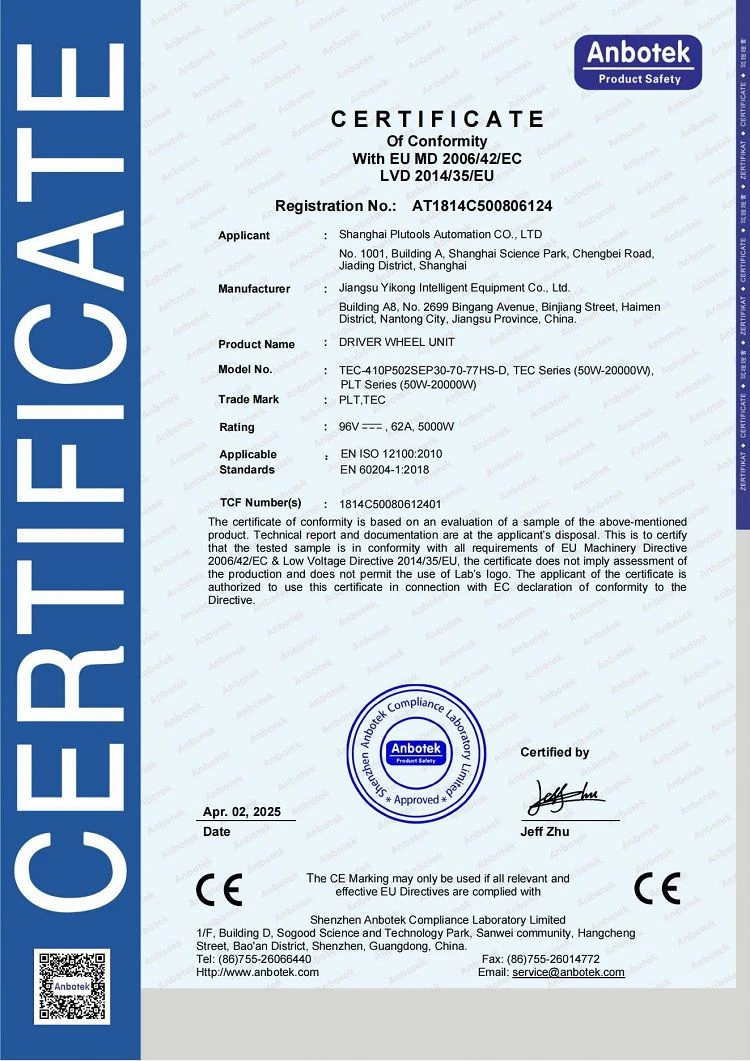
Figure 3 — CE certification documentation for TEC and PLT drive wheel series
The PLT-230 AGV Drive Wheel, the PLT-230P Robot Drive Wheel, the PLT-167 AGV Drive Wheel Unit and the TEC-150P AMR Drive Wheel are among the covered models. For the broader safety framework, ISO 3691-4:2023 is the primary international safety standard for driverless industrial trucks (AGVs), covering steering and braking systems; EN 1175:2020 specifies electrical and electronic safety requirements for industrial trucks applicable to AGV drive wheel assemblies; and ANSI/ITSDF B56.5 governs the corresponding American market.
Application Scenarios and Operating Conditions
Plutools drive wheels are used across intelligent logistics, industrial automation, warehousing, automotive manufacturing, electronics manufacturing, food and beverage production, pharmaceutical manufacturing, e-commerce fulfillment centers, airport logistics and port transportation. Typical working conditions include continuous operation, frequent starting and stopping, forward and reverse movement, narrow aisles, heavy loads, dust, vibration and temperature changes. Depending on the project, drive wheels may operate on concrete, epoxy, steel or slightly uneven floors.
The drive wheels support single-wheel drive, dual-wheel differential drive, steering drive or multi-wheel coordinated drive modes. Combined with an encoder and servo drive, the wheel can achieve precise acceleration, deceleration, steering and positioning. Dual differential configurations enable a zero-turn radius, which is widely used in smaller logistics bots. The system is suited to automatic route operation, task-based dispatching, obstacle avoidance, automatic charging and 24/7 unmanned operation.
A documented deployment involved an AGV manufacturer and industrial automation system integrator in Brazil, which used 200 Plutools drive wheel units over a two-year period for an ultra-heavy-duty AGV with multiple navigation modes. The project records show stable operation under heavy-load conditions, accurate route tracking, flexible steering and reliable material transportation, with the key requirements being high load capacity, high output torque and precise differential control.
Customization and Production Capability
Plutools operates as a manufacturing factory offering OEM, ODM, custom manufacturing, sample development, and production runs from small to large batches. Customization options include load capacity, wheel diameter, motor power, voltage, rated speed, reduction ratio, mounting dimensions, encoder type, brake system, connector, cable length, logo and packaging. The facility has a monthly capacity of 12,000 units, a quoted lead time of 30–45 days, a minimum order quantity of 2 units, and all products undergo 100% testing.
Market Trend Analysis
Several verifiable market trends are relevant to drive wheel buyers. Electric forklifts now command over 70% market share in many regions as replacements for combustion models. Integrated steering drive modules are increasingly replacing discrete components to reduce manufacturer assembly time and maintenance complexity — the Plutools parallel horizontal models PLT-220, PLT-210 and PLT-198 embed steering in a single drive unit, which is consistent with this shift. Polyurethane remains a common tire material for forklift drive wheels due to higher load capacity and floor protection in indoor settings, and lithium-ion battery technology now powers the majority of new AGV/AMR drive units. In addition, mecanum wheels and omnidirectional drive systems are increasingly used for AMRs in high-density warehouses.
Geographically, Asia Pacific dominated the global AGV market with a 37.6% revenue share in 2025. China’s mobile robot market reached a scale of 22.1 billion yuan in 2024, involving more than 139,000 units sold, and China’s export volume of mobile robots is increasing, with leading providers targeting Southeast Asia and Europe.
One caveat on market sizing: estimates for the AGV market vary because some analysts include AMRs and software components. Published figures for 2025 range from USD 5.9 billion to USD 6.4 billion depending on scope. For drive wheel buyers, the direction is clear regardless of the exact number: demand for mobile robots and their drive components is expanding.
Comparison: Integrated Drive Modules vs. Discrete Components
Traditional drive systems were often assembled from separately sourced motors, gearboxes and wheels. An integrated drive wheel consolidates the motor, gearbox, wheel, encoder, and optionally steering and braking into a single unit, reducing installation space and simplifying vehicle design.
The honest trade-off is cost: the upfront purchase price of an integrated drive wheel can be higher than buying discrete parts. However, the integrated approach reduces assembly time, simplifies supply-chain management, and provides a single point of responsibility for performance and warranty. For vehicle manufacturers and integrators, early specification alignment can offset the initial cost difference through faster production and fewer field returns.
Future Outlook
Three directions are worth tracking. First, heavier-duty integration: vertical drive wheels with very high load capacities are becoming available for heavy-duty industrial robot applications. Second, energy storage shifts: lithium-ion technology now powers the majority of new AGV/AMR drive units, supporting longer uptime and reduced downtime. Third, omnidirectional movement is gaining ground in dense warehouse environments, with mecanum and omni drive systems being adopted alongside conventional directional wheels.
For specification-driven buyers, evaluating a drive wheel against load rating, torque, IP level, certification coverage and customization flexibility will remain the core of the selection process. Suppliers that publish complete parameters and hold recognized certifications reduce the engineering risk for vehicle manufacturers entering regulated markets.
FAQ
Q: How should I choose between a vertical drive wheel and a horizontal drive wheel?
A: A vertical drive wheel is generally recommended when the AGV or AMR requires a compact structure, high load capacity and straightforward installation. Its motor and gearbox are arranged vertically, helping reduce the horizontal footprint of the drive unit. It is suitable for heavy-duty AGVs, automated forklifts, lifting vehicles and equipment with limited chassis space.
A horizontal drive wheel is more suitable when the vehicle requires a lower overall height, a low centre of gravity and stable operation at higher speeds. Its motor is arranged horizontally, which helps reduce the height of the drive module and improves vehicle stability. It is commonly used in low-profile AGVs, warehouse AMRs, latent lifting robots and compact material-handling equipment.
The final choice should be based on the vehicle’s installation space, load capacity, chassis height, turning structure, operating speed and maintenance requirements. Choose a vertical drive wheel for compact heavy-load designs, and choose a horizontal drive wheel for low-profile vehicles requiring better stability and easier access for maintenance.
Contact and Resources
Shanghai Plutools Automation Corporation Co., Ltd.
Website: https://www.plutools.com
Contact: Eric.Tang — Email: Eric.Tang@plutools.com
Tel: +86 15989586580 | WhatsApp: +86 159-8958-6580
Product catalog: PLT selection handbook (PDF)