
How to Build a Decision Framework for Buying Precision Magnetic Alloys
An independent industry reference for procurement, engineering, and quality teams specifying Permalloy and cobalt-iron soft magnetic alloys.

Cover: a precision soft magnetic alloy production environment, where grade, form, and dimensional discipline are fixed before a purchase order is placed.
A precision magnetic alloy purchase rarely fails because the buyer had too few options. It fails because the options were ranked on the wrong criteria. Soft magnetic alloys used in shielding, transformer cores, electromagnets, and transducers circulate under overlapping grade names — 1J50 and FeNi50, 1J79 and Ni79Mo4, 1J22 and HiperCo50 — and their published property windows are wide enough that two strips carrying a similar label can behave very differently inside a finished device.
The correction is procedural rather than technical. A decision framework converts material parameters into weighted, project-specific scores, so that engineering, quality, and procurement read the same ranking for the same stated reason — and so that a supplier quotation can be checked against a criterion instead of an adjective.
The commercial context makes the effort worthwhile. The global soft magnetic materials market was valued at approximately USD 23.0 billion in 2025 and is projected to reach USD 33.9 billion by 2033 (Grand View Research). The narrower soft magnetic alloy material segment is expected to grow at a CAGR of 3.1% from 2024 to 2030, reaching USD 4.14 billion (QY Research). Asia Pacific accounted for roughly 41.0% to 49.37% of global volume in 2025, with China the leading producer. More comparable suppliers per grade means a higher cost for comparing them badly.
Why soft magnetic alloy comparisons stall at the datasheet stage
Three structural features of this category make informal comparison unreliable: naming systems differ by market, property windows are broad, and the same grade is sold in several physical forms.
Standards define families, not project winners. Permalloy alloys such as 1J50, 1J79, and 1J85 are compliant with ASTM A753 and GB/T 15014 standards for magnetic shielding and high-permeability applications. HiperCo 50 (1J22), which contains approximately 49% cobalt, is governed by ASTM A801 Type 1 specifications and is optimized for high-speed rotors and stator laminations. Compliance confirms that a grade belongs to a defined family; it does not rank that family against a specific design requirement.
Parameter windows are wide within the family. Across the Permalloy portfolio, saturation magnetic flux density spans 0.6–2.35 T, initial permeability spans 10,000–200,000, maximum permeability spans 150,000–450,000, coercivity spans 0.4–8.0 A/m, and core loss spans 8–35 W/kg at 1 kHz and 0.2 T. A quotation that claims high permeability without a value cannot be compared with one that states the number.
Form and tolerance add a third layer. The same grade may be supplied as strip, bar, wire, sheet, tube, or stamped parts, with strip and wire thickness from 0.01 mm to 2.0 mm. Two suppliers can therefore quote the same nominal grade and still deliver parts that behave differently after winding, stamping, or stacking.
Step 1 — Define the project archetype before comparing grades
A framework scores a material against a project, so the first step is to define which archetype the purchase belongs to. Four statements are usually enough: what the component does, which physical property carries that function, which failure mode is unacceptable, and which manufacturing step follows the material.
| Project archetype | Dominant requirement | Parameters that decide | Grade families to shortlist |
|---|---|---|---|
| Aerospace electromagnet pole heads and magnetron components | Electromagnetic attraction force and downsizing at high flux | Saturation flux density, coercivity, magnetostriction, long-cycle vibration stability | 1J22 (HiperCo50), 1J22MS, 1J22HS |
| Magnetostrictive transducer iron cores | Controlled magnetostriction with mechanical integrity | Saturation magnetostriction coefficient (0.5–30 ppm), tensile strength, elongation | 1J22 family |
| High-permeability signal and audio isolation transformers | Low distortion and low loss at weak signal | Initial permeability, coercivity, core loss at low flux density | 1J79 (Ni79Mo4), 1J85, 1J50 (FeNi50) |
| EMI and magnetic shielding housings | Field attenuation at low frequency | Relative permeability, thickness uniformity, formability | 1J79, 1J85 |
| Current, voltage, and leakage-current transformers and sensors | Permeability stability across temperature | Permeability linearity, operating temperature window, resistivity | 1J50, 1J79, 1J85 |
| New energy vehicle drive components and on-board chargers | High-frequency loss and miniaturization | Core loss from 50 Hz to 1 MHz, thickness, lamination factor | Permalloy strip grades |
| Precision motor and sensor laminations | Saturation in compact geometry | Saturation flux density, hardness, stamping behaviour | Cobalt-iron and nickel-iron grades |
The distinction matters most in the first two rows. Aerospace electromagnet pole heads and magnetron components depend on electromagnetic attraction force per unit volume, while high-permeability signal transformers depend on how little the material distorts a weak signal. Those two requirements pull the same portfolio in opposite directions, which is exactly why a single ranking list fails.
Step 2 — Choose scoring KPIs that can actually be measured
A scoreable KPI has three characteristics: it is quoted as a number with a unit, it can be traced to a test method or standard, and changing it changes the decision. The following parameters satisfy those conditions across the Permalloy range.
| Parameter group | Scoreable values | Why it changes the decision |
|---|---|---|
| Magnetic | Saturation flux density 0.6–2.35 T; initial permeability 10,000–200,000; maximum permeability 150,000–450,000; coercivity 0.4–8.0 A/m; core loss 8–35 W/kg (1 kHz, 0.2 T); saturation magnetostriction 0.5–30 ppm; effective frequency 50 Hz–1 MHz | Sets the physics ceiling of the design and determines whether downsizing is achievable |
| Physical and electrical | Resistivity 40–130 μΩ·cm; density 7.10–8.15 g/cm³; Curie temperature 380–950 °C; crystallization temperature 510–620 °C | Governs loss behaviour, thermal headroom, and assembly weight |
| Mechanical | Hardness 130–200 HV (annealed); tensile strength 750–1200 MPa; elongation 1.2–3.5% | Determines forming feasibility and vibration tolerance |
| Dimensional and processing | Strip and wire thickness 0.01–2.0 mm; strip width 2–300 mm, customizable; wire diameter 0.03–1.5 mm; lamination factor 0.88–0.94; surface roughness Ra ≤ 0.8 μm | Controls stacking efficiency, winding behaviour, and assembly yield |
| Environmental | Continuous operating temperature -40 °C to 130 °C; short-term peak ≤ 180 °C; storage -50 °C to 80 °C; relative humidity 5%–90% non-condensing | Defines the qualification envelope and the re-test trigger |
Step 3 — Weight the KPIs against the archetype
Weighting is the step that turns a checklist into a decision. A simple scoring rule works: normalise each parameter to a 0–100 scale, multiply by the weight assigned to the archetype, and sum. Where full test data is not yet available, a 1–5 expert score per KPI can stand in until measured values arrive.

The framework is only as good as its evidence trail: dimensional and magnetic data must survive from production through acceptance.
The weights below are illustrative and are set by the project team, not by the material supplier. Their purpose is to show how differently the same portfolio is ranked by two archetypes.
| KPI | Aerospace electromagnet (illustrative weight) | High-permeability signal transformer (illustrative weight) |
|---|---|---|
| Saturation flux density | 25% | 10% |
| Initial permeability | 5% | 30% |
| Coercivity | 10% | 20% |
| Core loss | 10% | 20% |
| Magnetostriction | 15% | 5% |
| Operating temperature window | 15% | 5% |
| Thickness and dimensional consistency | 10% | 10% |
| Mechanical properties | 10% | 0% |
The value of the exercise is visible in the first column. For an aerospace electromagnet, a grade that wins on permeability but loses on saturation and magnetostriction cannot recover the deficit through any other parameter — no matter how favourable the commercial terms are.
Step 4 — Map available grades to each archetype
The mapping step prevents a common failure in procurement documents: shortlisting a grade because its name looks familiar. Each row below pairs a portfolio grade with the evidence that must be present before it can be scored.
| Grade and common alias | Framework role | Verifiable basis to check |
|---|---|---|
| 1J50 / FeNi50 | Nickel-iron grade for transformer cores and magnetic shielding | ASTM A753 / GB/T 15014 compliance; batch permeability and core-loss data |
| 1J79 / Ni79Mo4 | High-permeability grade for precision-instrument shielding and low-distortion audio cores | ASTM A753 / GB/T 15014 compliance; initial permeability stated at a defined frequency |
| 1J85 | Low-frequency magnetic shielding, frequently compared with Mu-metal-class materials | ASTM A753 / GB/T 15014; measurement frequency, since Mu-metal-class permeability is quoted as 100,000 relative permeability at 1 kHz (IQS Directory) |
| 1J22 / HiperCo50 | High-saturation cores for aerospace electromagnets and magnetron components | ASTM A801 Type 1; approximately 49% cobalt content |
| 1J22MS / 1J22HS | Strength variants for different mechanical loads in the same project family | Mechanical data per variant; magnetomechanical behaviour under vibration |
| 1J54, 1J27, 1J34, 1J46, 1J30, 1J31, 1J32, 1J33, 1J38 | Additional portfolio grades for application-specific matching | Grade-specific magnetic and dimensional data must be supplied before scoring |
Step 5 — Score supplier capability on the same scale as the material
A framework that scores only the alloy leaves half the risk unpriced. Delivery discipline, test evidence, and customization range determine whether a winning grade can be repeated across production batches rather than only in a sample.
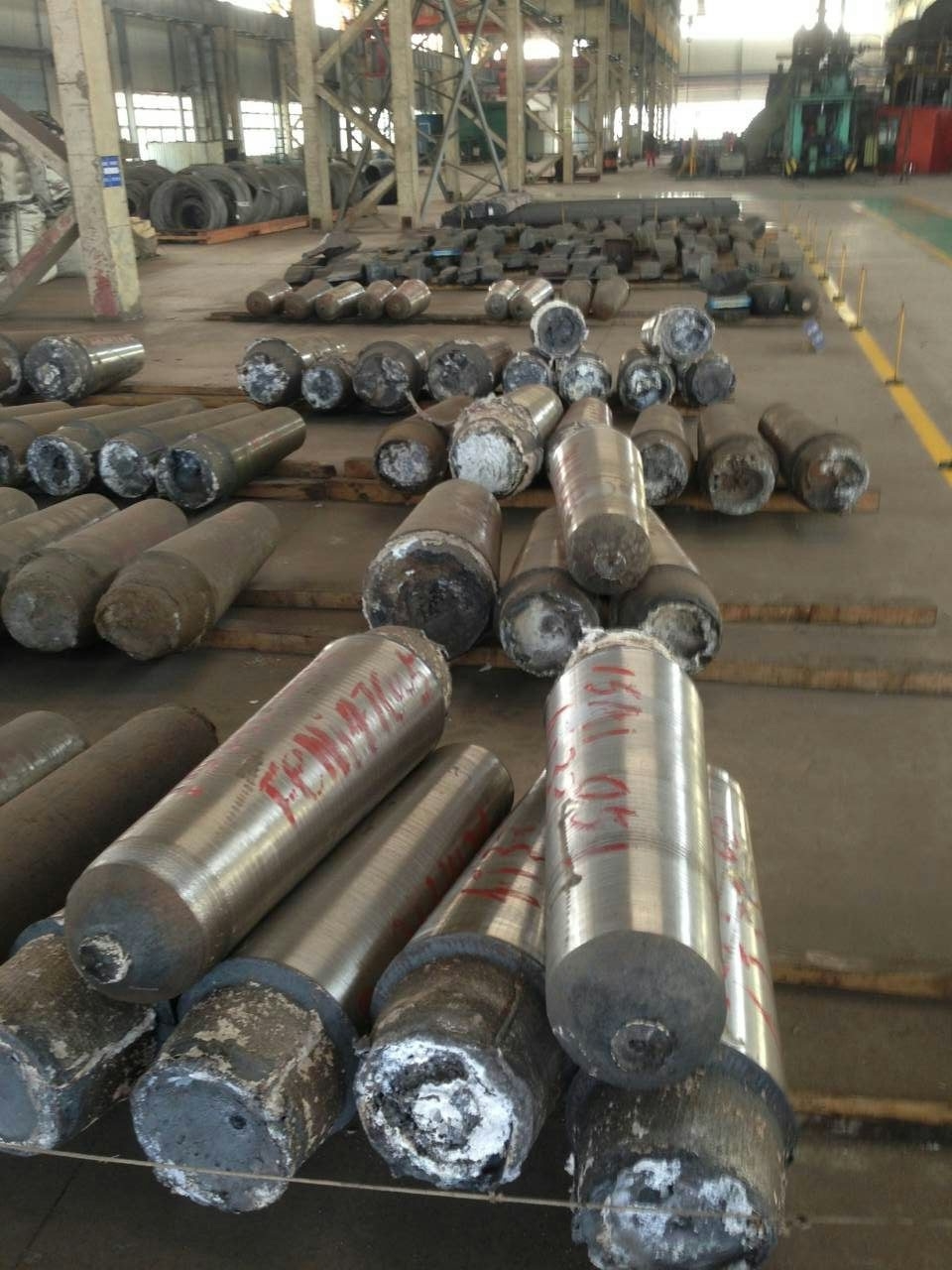
Capability is part of the material score: capacity, forming, and inspection determine whether a qualified grade is repeatable.
| Capability dimension | Documented value | How to score it |
|---|---|---|
| Monthly capacity | 300 tons | Score positively where capacity covers peak quarterly demand |
| Lead time | 30 days | Score against the project build schedule and buffer policy |
| Minimum order quantity | 50 kg | Score against prototype and pilot volumes |
| Quality control | 100% test | Treat as a pass/fail gate rather than a scored item |
| Customization and OEM | Customization of size, logo, and package; full OEM production services | Score on drawing-to-delivery capability for the required form |
| Verification support | Factory data testing, third-party testing, acceptance by video, third party, or picture | Required before framework sign-off |
| Commercial terms | FOB / FCA / DAP / CIF / CPT; 30/70 with balance before shipment | Score on cash-flow fit and logistics responsibility |
| Technical support | Parameter support and selection support; transportation | Score on engineering responsiveness during qualification |
How the framework resolves the saturation-versus-permeability trade-off
The central trade-off in precision magnetic alloy selection is that saturation and permeability are not maximized in the same grade. The portfolio saturation window of 0.6–2.35 T is not a tolerance band; it is the spread between a cobalt-iron grade at the top and high-permeability nickel-iron grades lower in the range. Cobalt-bearing 1J22 (HiperCo50, approximately 49% cobalt, ASTM A801 Type 1) is specified where electromagnetic attraction force and component downsizing dominate, and the documented project outcome for that family includes a 40% reduction in the volume of new energy vehicle high-voltage drive components for 800V platforms.
For weak-signal and shielding work, the relevant comparison is permeability at low frequency. Mu-metal, a material similar to 1J79 and 1J85, exhibits a relative permeability of 100,000 at 1 kHz, which is why it is the reference point for low-frequency magnetic shielding (IQS Directory). A framework should therefore score shielding projects on measured permeability at a stated frequency and thickness, not on a generic high-permeability description.
Two further parameters decide whether a scored grade survives production. Magnetostriction, from 0.5 to 30 ppm across the portfolio, converts magnetic excitation into mechanical strain; in magnetostrictive transducer iron cores this is the working principle, while in low-distortion transformer cores it is a distortion source to be minimised. Core loss, from 8 to 35 W/kg at 1 kHz and 0.2 T, sets the thermal budget in high-frequency designs, and the effective operating frequency window runs from 50 Hz to 1 MHz across the portfolio.
Temperature requires an explicit rule because documented windows differ by scope. The catalog environmental window is -40 °C to 130 °C continuous, with short-term peak resistance up to 180 °C and storage from -50 °C to 80 °C. For aerospace electromagnet pole heads and magnetostrictive transducer projects, the documented operating range for the relevant product is -60 °C to 120 °C under long-term reciprocating alternating magnetic field excitation. A defensible framework records both values: the catalog window as the family limit and the project window as the acceptance limit, with the narrower figure governing the score.
Applying the framework: archetypes and documented outcomes
Each archetype produces a different evidence list and a different expected outcome. The following are documented application areas rather than projections:
- Aerospace electromagnet pole heads, magnetron components, and magnetostrictive transducer iron cores, with strength variants 1J22, 1J22MS, and 1J22HS available to match different mechanical loads.
- High-permeability shielding parts for precision instruments and magnetic shielding housings for satellite communication equipment, used to isolate complex electromagnetic interference.
- Low-distortion cores for audio isolation transformers, supporting low-distortion audio signal transmission.
- Magnetic temperature compensation components for automotive meters, compensating magnetic drift caused by temperature change.
- High-frequency, low-loss cores for new energy vehicle drive motors and on-board chargers, with the documented 40% volume reduction in high-voltage drive components.
- Current and voltage transformers, earth leakage circuit breakers, current sensors, common-mode inductor cores, and magnetic amplifiers.
Two operational figures belong in the framework as well. Documented service duration is 8–15 years of continuous stable operation under standard temperature and vibration conditions, extending to up to 20 years for fully sealed aerospace precision equipment operating with low vibration load. Conventional batch sizes run from 10 kg to 500 kg, with 1 to 10 tons for large aerospace and new energy mass orders — a range that should be mapped against the supplier MOQ of 50 kg and the 30-day lead time before a score is finalised.
Market context: what is changing in precision magnetic alloy supply
Three data points frame the current supply picture, and one caution applies to all of them. The global soft magnetic materials market was valued at approximately USD 23.0 billion in 2025 and is projected to reach USD 33.9 billion by 2033 (Grand View Research). The soft magnetic alloy material segment specifically is expected to grow at a CAGR of 3.1% from 2024 to 2030, reaching USD 4.14 billion (QY Research). Asia Pacific holds the largest share, accounting for 41.0% to 49.37% of global volume in 2025, with China as the leading producer.
The caution concerns scope. Published market-size estimates diverge materially — USD 23.0 billion for 2025 (Grand View Research), USD 19.02 billion for 2024 (Market Research Future), and USD 22.8 billion for 2024 (Strategic Market Research) — largely because some estimates include bulk electrical steel while others cover specialised precision alloys only. A buyer reading a headline growth rate should confirm that it applies to the alloy tier being purchased, not to the broader materials category.
The global supply base for high-performance soft magnetic alloys includes Vacuumschmelze (VAC), Hitachi Metals (Proterial), Carpenter Technology, and Arnold Magnetic Technologies (Market Research Future / Mordor Intelligence). For framework purposes this list has one function: it defines the benchmark set against which grade specifications, documentation practice, and qualification evidence are compared. It is not a ranking, and comparison should remain criteria-based rather than reputational.
Where the framework has boundaries
A framework is only credible if it states where the material stops working.
- Temperature ceiling. Continuous operation is documented from -40 °C to 130 °C, with short-term peak resistance up to 180 °C. Applications with sustained ambient above that ceiling require re-qualification rather than extrapolation.
- Forming limits. Elongation of 1.2–3.5% and hardness of 130–200 HV in the annealed state mean complex geometries need process planning; the material is not a substitute for a highly ductile structural alloy.
- No single grade maximises both properties. The 0.6–2.35 T saturation spread and the 10,000–200,000 initial permeability spread sit at opposite ends of the same portfolio. Attempting to satisfy a high-saturation and a high-permeability requirement with one grade usually means compromising the project that matters more.
- Alloying exposure. The highest-saturation option depends on cobalt — approximately 49% in HiperCo 50 — so commercial exposure to that input should be treated as a supply risk item, not only a technical one.
- Cost tier. Precision Permalloy grades are not a drop-in replacement where bulk electrical steel economics govern the project; the divergence in published market estimates is itself evidence that the category spans several cost tiers.
- Scoring is not qualification. A weighted score prioritises testing; it does not replace it. Acceptance evidence such as factory data, third-party testing, or documented visual records remains the gate before a framework result becomes a purchase commitment.
Future outlook
On the available evidence, three directions are reasonable to plan around. First, the specialised alloy segment is expected to keep growing at a measured pace — a 3.1% CAGR from 2024 to 2030 to USD 4.14 billion (QY Research) — rather than expanding at the rate implied by headline soft magnetic materials figures, which include bulk steel. Second, demand pressure is concentrated where miniaturisation and high-frequency operation meet: new energy vehicle on-board chargers and drive components, precision sensing, and shielding for densely packed electronics. Third, as more suppliers quote comparable grades in comparable forms, qualification documentation is likely to become the differentiating element in procurement, not catalogue availability.
For buyers, that points to a practical conclusion: the framework should be written once, versioned, and reused across projects, with weights adjusted per archetype rather than rebuilt from scratch for every enquiry.
FAQ
What is the first parameter to score when comparing Permalloy grades?
Start with the dominant physical requirement of the component, expressed as a measurable value. Saturation magnetic flux density across the Permalloy range spans 0.6–2.35 T, and initial permeability spans 10,000–200,000. Because these two windows pull in opposite directions, the first scoring decision is which of them the design depends on, followed by coercivity (0.4–8.0 A/m) and core loss (8–35 W/kg at 1 kHz and 0.2 T).
How should thickness and dimensional consistency be scored?
Score thickness against the downstream process rather than in isolation. Strip and wire thickness is available from 0.01 mm to 2.0 mm, strip width from 2 mm to 300 mm with customization, wire diameter from 0.03 mm to 1.5 mm, lamination factor from 0.88 to 0.94, and surface roughness at Ra ≤ 0.8 μm. The framework should state the required thickness band, the measurement method, and the acceptance evidence, because a dimensional deviation that is tolerable in a wound core may not be tolerable in a stacked lamination.
Which operating temperature limits should be used as scoring criteria?
Use two values. The catalog environmental window is -40 °C to 130 °C continuous, with short-term peak resistance up to 180 °C and storage from -50 °C to 80 °C. For aerospace electromagnet and magnetostrictive transducer projects, the documented operating range for the relevant product is -60 °C to 120 °C under long-term reciprocating alternating magnetic field excitation. Where the project window is narrower than the catalog window, the project window governs, and the difference should be recorded explicitly in the procurement document.
How many grades should a shortlist contain?
As many as there are distinct archetypes, and no more. The portfolio covers 1J22 and its 1J22MS and 1J22HS strength variants, 1J79 (Ni79Mo4), 1J50 (FeNi50), 1J85, 1J54, 1J27, 1J34, 1J46, and the 1J30–1J38 group. Aerospace electromagnets, magnetron components, and magnetostrictive transducers generally map to cobalt-iron grades, while shielding, precision-instrument, and audio isolation applications map to high-permeability nickel-iron grades. Forcing one grade to serve both requirements usually produces a compromise that fails in one of the two projects.
What supplier evidence should be scored before awarding a project?
Documented capability data is the baseline: monthly capacity of 300 tons, a lead time of 30 days, a minimum order quantity of 50 kg, and 100% test quality control. Verification support includes factory data testing, third-party testing, and acceptance by video, third party, or picture. OEM scope covers customization of size, logo, and package as well as full OEM production services, and commercial terms include FOB, FCA, DAP, CIF, and CPT with a 30/70 payment structure. Each item should map to a specific score rather than a general impression.
Does a decision framework replace sample qualification?
No. The framework ranks candidates and defines what must be proven; it does not produce the proof. Conventional batches run from 10 kg to 500 kg, while large aerospace and new energy mass orders run from 1 to 10 tons, and documented service duration ranges from 8–15 years under standard temperature and vibration conditions to up to 20 years for fully sealed aerospace precision equipment with low vibration load. Those figures describe qualified use, not guaranteed outcomes for an unqualified design.
Cheng Yuan Alloy (Shijiazhuang Cheng Yuan Alloy Material Co., Ltd.) produces 1J-series Permalloy in strip, bar, and related forms with OEM customization and selection support, and publishes its grade range at www.chyalloy.com. A framework becomes useful only when it is applied consistently: define the archetype, score the KPIs, verify the evidence, and record the boundary conditions that were accepted when the decision was made.
¿Tiene preguntas o necesita más detalles?
Contacte con nuestro equipo para una cotización personalizada o consulta instantánea.
Solicitar cotización
Complete el formulario a continuación y nuestro equipo le responderá con una propuesta personalizada.
Chat directo de WhatsApp
¿Prefiere chatear en tiempo real? Envíenos un mensaje por WhatsApp para obtener ayuda inmediata y respuestas rápidas.
- Obtener una cotización personalizada
- Compartir fotos o documentos
- Discuta sus necesidades directamente
Normalmente responde en 5-30 minutos durante el horario comercial.