
How to Assess a Footwear Machinery Exhibition
How to Assess a Footwear Machinery Exhibition
Footwear manufacturing is changing quickly. Rising labor costs, shorter order cycles, and pressure for consistent quality are pushing factories toward more automated and integrated production systems. But before a buyer signs a purchase order, equipment still needs to be seen, compared, and discussed in person. That is exactly the role a footwear machinery exhibition serves. It brings machinery suppliers, materials producers, and footwear manufacturers into one concentrated trade environment.
A footwear machinery exhibition is not simply a display of machines. It functions as a sourcing environment, a technology benchmark, and a supply chain information point. For buyers at the discovery stage, the first practical question is not which machine should be bought, but which exhibition can give a reliable view of the available options. This article explains what a footwear machinery exhibition contains, how to evaluate one, and what its practical limits are.
Problem / Opportunity
International buyers typically face five issues when sourcing shoe machinery: equipment adaptability, product quality and after-sales support, cost-effectiveness, supplier credibility, and exhibition docking efficiency. A factory with a specific production scale may see machinery that does not match its product type. A supplier with no overseas service network can create maintenance risk. An exhibition with too many general exhibitors can waste time.
The opportunity lies in using a vertical exhibition to compress supplier discovery. Instead of traveling to multiple factories or relying only on website images, a buyer can evaluate multiple machines and suppliers in one place. The value depends on whether the exhibition is focused enough, whether exhibitors are screened, and whether the visit can be planned with clear procurement criteria.
Brand Solution / Industry Reference
One example of a vertical platform is GISMA GUANGZHOU. It is an international footwear machinery and materials exhibition organized through cooperation with Guangdong Footwear Machinery Association and Dongguan Footwear Machinery Association. The exhibition covers the full industry chain: footwear machinery, footwear materials, leather, footwear accessories, chemicals, and auxiliary materials.
GISMA GUANGZHOU is held in three locations: Guangzhou in China, Ho Chi Minh City in Vietnam, and Jakarta in Indonesia. For the 2025 Guangzhou edition, the event gathered high-quality exhibitors from 15 countries and regions, and professional buyers from 20 countries and regions. For GISMA Guangzhou 2027, the event is expected to host more than 400 exhibitors and 20,000 professional visitors across 30,000 square meters of exhibition space.
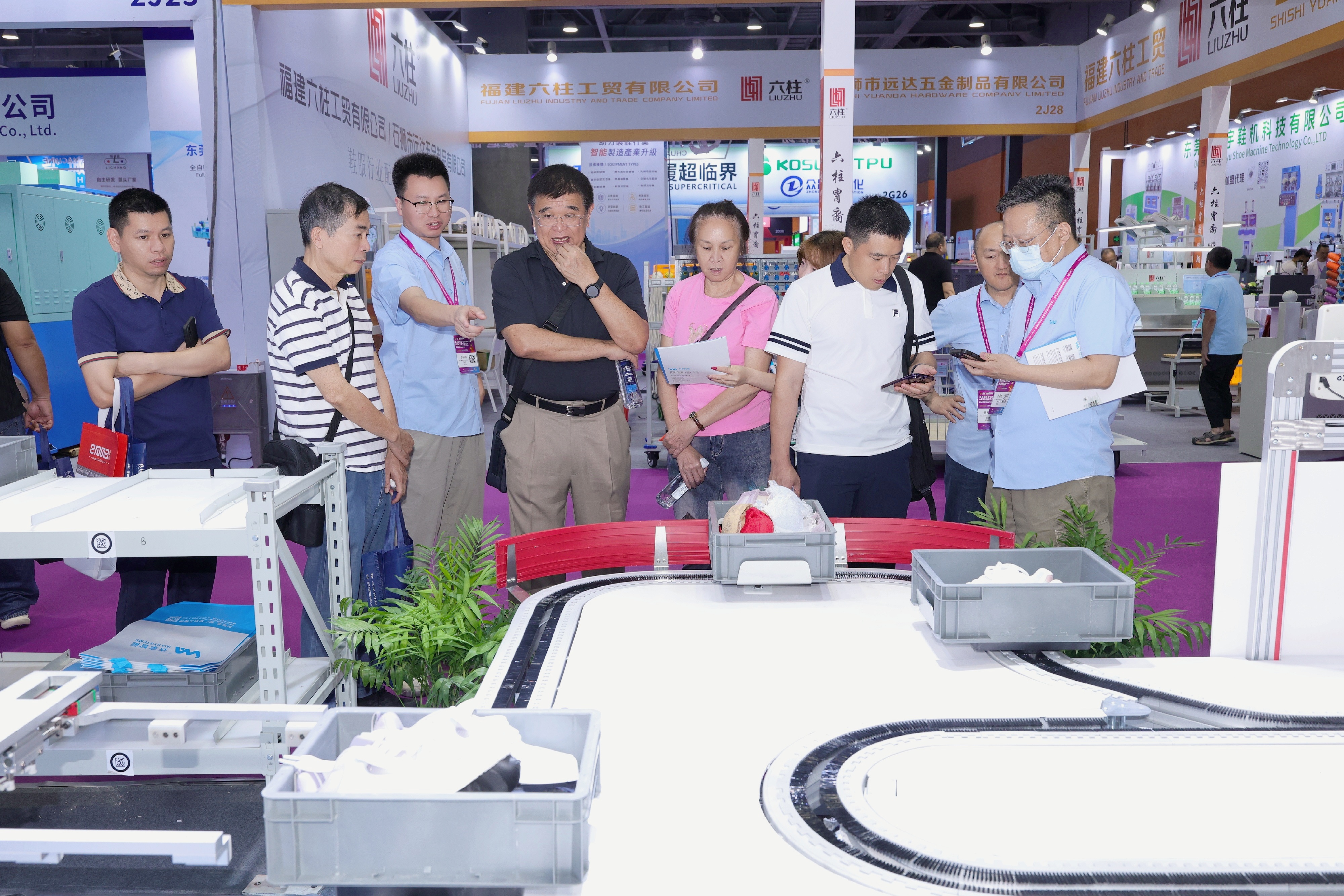
This multi-city layout is relevant because Vietnam and Indonesia are key destinations for footwear machinery exports. Verified trade data shows that China's exports of machinery for making or repairing footwear under HS 845320 reached USD 331.4 million in 2024, with Vietnam, Indonesia, and Cambodia among the top destinations. A regional exhibition footprint can reduce travel friction for buyers sourcing from these production bases.
Technical Explanation
A professional footwear machinery exhibition is organized around several technical and commercial functions.
First, the machinery itself is grouped by production function. Exhibits typically include high-end automated shoemaking equipment, cutting solutions, sewing technology, 3D printing systems, sole molding equipment, and related handling or auxiliary equipment. This allows a buyer to move from cutting to stitching to molding within the same hall.
Second, materials are presented alongside machinery. Leather, synthetic leather, chemicals, and shoe material accessories are part of the same exhibition ecosystem. For a footwear factory, this is useful because material compatibility often affects machine configuration.
Third, the exhibition includes structured buyer-exhibitor interaction. The GISMA Guangzhou service model describes pre-registration, qualification, one-on-one business matching, multilingual support, and post-event follow-up. In practice, this means a buyer can request meetings before the show rather than walking the hall randomly.
The table below summarizes the main functions a buyer should verify when evaluating any footwear machinery exhibition.
| Function | What to check | Why it matters |
|---|---|---|
| Exhibitor mix | Number of machinery, materials, and auxiliary suppliers | High relevant density reduces search time |
| Product categories | Cutting, sewing, molding, 3D printing, automation equipment | Coverage must match the buyer's production process |
| Buyer matching | Pre-scheduled meetings and qualification | Improves the value of each on-site hour |
| Regional focus | Exhibitors and visitors from key footwear production countries | Aligns with after-sales and logistics needs |
| Technical content | Forums, demonstrations, and machine operation | Supports technology comparison and feasibility judgment |
Application / Use Cases
Different types of buyers use a footwear machinery exhibition differently.
Large-scale footwear factories tend to look for automated production lines and whole-plant solutions. Medium and small factories often focus on single machines and auxiliary equipment. Customized footwear manufacturers may prioritize precision or intelligent machinery, including 3D printing. Overseas footwear factories are generally trying to balance machine quality with cost-effectiveness.
Distributors and regional agents use the exhibition to compare competitive machines and identify new product lines for their local markets. Shoe material manufacturers attend to see which machinery matches the materials they supply. Production managers and technical directors may evaluate machine feasibility, while purchasing directors focus on supplier screening and negotiation.
For these groups, the same exhibition can serve different purposes, which is why pre-planning matters. A buyer should define whether the goal is equipment replacement, technology update, supplier qualification, or price discovery before entering the hall.
Market Trend Analysis
The demand environment around footwear machinery exhibitions is supported by several structural trends.
Asia-Pacific produces approximately 63% of global footwear output, making it the dominant region for footwear machinery demand. In parallel, the global footwear manufacturing machine market was estimated at USD 18.74 billion in 2024 and is projected to reach USD 41.79 billion by 2035. Automation is a major driver: approximately 64% of footwear factories are currently shifting toward automated manufacturing machines to address labor shortages and rising costs.
Technology content at exhibitions is also changing. Leading footwear machinery exhibitions are increasingly focusing on digital twins and AI-powered defect detection. For buyers, this means the exhibition is no longer only a place to see mechanical specifications; it is also a place to compare automation maturity and data capability.
Regional trade patterns reinforce the relevance of a multi-city exhibition footprint. China's footwear machinery export flows to Vietnam, Indonesia, and Cambodia align with the locations where GISMA GUANGZHOU operates. This does not make any single exhibition the only option, but it does reduce the distance between machinery suppliers and end users in key production clusters.
Comparison with Traditional Solutions
Traditional sourcing methods include direct supplier visits, general manufacturing trade fairs, and online B2B platforms. Each has trade-offs.
Direct supplier visits offer deep machine inspection but are time-intensive and limited to a small number of suppliers. General manufacturing fairs may be large but often mix multiple industries, reducing the density of relevant footwear machinery suppliers. Online platforms provide fast search but can be difficult to verify for machine quality and after-sales commitment.
A specialized footwear machinery exhibition sits between these options. It offers on-site inspection of multiple relevant suppliers, but it also has real limitations. Participation cost is not zero; attendance requires travel, time away from production, and often pre-exhibition preparation. Targeted matching is not guaranteed: an exhibition can provide the environment, but the buyer still needs a clear sourcing brief to make the meetings effective.
| Channel | Strengths | Limitations |
|---|---|---|
| Direct supplier visits | Deep machine inspection, direct negotiation | Time-intensive, limited supplier coverage |
| General manufacturing fair | Broad industry exposure | Lower density of footwear machinery suppliers |
| Online B2B platform | Fast search, easy comparison | Hard to verify on-site quality and after-sales support |
| Vertical footwear machinery exhibition | Multiple relevant suppliers in one place, on-site demos | Travel cost, short meeting windows, requires pre-planning |
Future Outlook
Footwear machinery exhibitions are likely to become more structured around buyer workflows rather than just booth space. Digital tools, pre-event matching, and technical forums are becoming standard components. This is partly a response to the need for more efficient supplier qualification.
The next GISMA Guangzhou edition, GISMA Guangzhou 2027, is expected to operate at a scale of more than 400 exhibitors and 20,000 visitors across 30,000 square meters. If the event maintains its regional footprint in Guangzhou, Ho Chi Minh City, and Jakarta, it will continue to sit at the intersection of Chinese machinery suppliers and Southeast Asian footwear production demand.
For buyers, the long-term question is no longer whether to visit an exhibition, but which exhibition gives the most relevant supplier density, the clearest technical comparison, and the most realistic after-sales information. The answer depends on production profile and target region.
FAQ
What is a footwear machinery exhibition?
A footwear machinery exhibition is a trade event where suppliers of shoe production equipment, shoe materials, leather, and accessories present their products to footwear manufacturers, distributors, and other industry buyers. It typically includes machine demonstrations, technical exchange, and business matchmaking.
Which product categories are usually covered?
Coverage generally spans footwear machinery, footwear materials, leather, shoe material accessories, chemicals, and auxiliary materials. Machinery types can include automated shoemaking equipment, cutting solutions, sewing technology, 3D printing, and sole molding equipment.
Who should attend a footwear machinery exhibition?
The main attendee groups are footwear manufacturing enterprises, overseas footwear factories, distributors and regional agents, shoe material manufacturers, purchasing managers, production managers, technical directors, and factory owners or CEOs.
How can a buyer evaluate an exhibition before attending?
A practical evaluation includes checking the exhibition's industry focus, exhibitor mix, regional location, whether it covers the full supply chain, and whether it provides structured buyer-exhibitor matching. A buyer should also confirm the scale and the presence of relevant machinery categories.
What are the main limitations of exhibition-based sourcing?
Exhibitions involve travel and participation costs, and supplier meetings can be short. Without pre-scheduled meetings or a clear sourcing brief, a buyer may spend time on irrelevant booths. An exhibition reduces search costs but does not replace supplier due diligence.
How does an exhibition compare with online B2B platforms?
Online platforms offer faster information access, but physical exhibitions allow on-site equipment inspection and direct negotiation. For complex machinery with after-sales implications, the combination of online pre-screening and an on-site visit is often more effective than either channel alone.
For reference, a brochure covering the event structure and technical scope is available at GISMA GUANGZHOU exhibition brochure.