
How to Assess Supplier Quality Through Military Webbing Samples
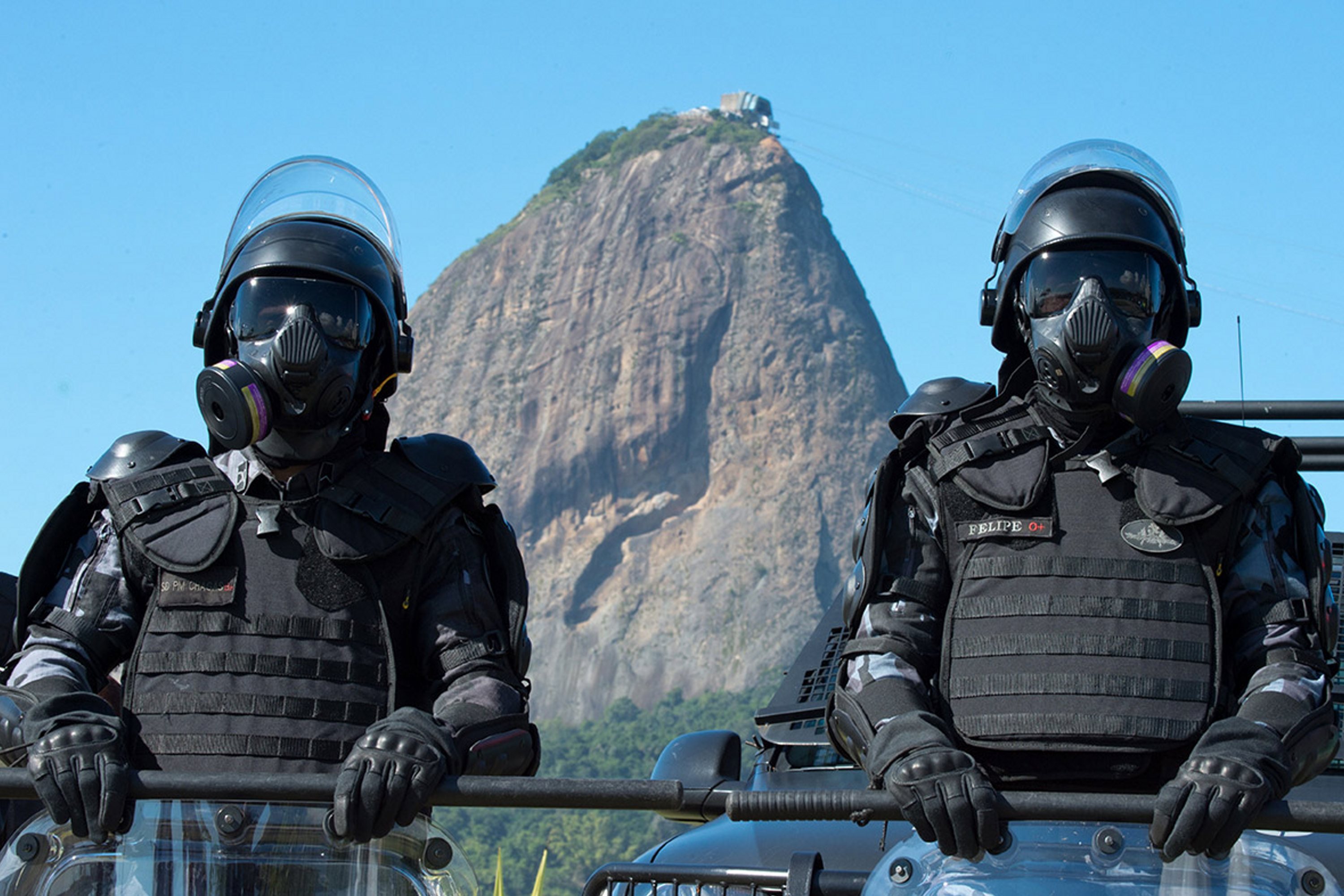
Industry application: tactical vest systems rely on high-performance military webbing for load support and modular attachment.
For procurement professionals sourcing military webbing for tactical gear, parachute systems, or load-carriage equipment, the ability to accurately evaluate a supplier through sample testing is a critical skill. A single poorly performing webbing can compromise soldier safety, mission reliability, and long-term contract compliance. This article outlines how buyers can effectively apply for and assess samples to verify supplier capability, using established industry standards and real-world best practices.
Why Samples Matter in Military Webbing Procurement
Unlike commodity textiles, military-grade webbing must meet strict performance criteria including tensile strength, abrasion resistance, color fastness, and often specialized finishes such as IRR (infrared reflective) or flame retardancy. A sample is the most reliable way to validate that the product matches the required MIL-SPEC or PIA-SPEC standards before committing to large-scale production. According to industry data, nearly 30% of compliance failures in tactical gear supply chains originate from unchecked webbing properties.
How to Request Samples from Suppliers
Reputable manufacturers typically offer free samples for in-stock items. For example, JUDECAM (Xiamen Jude Webbing Co., Ltd.) provides complimentary samples of standard nylon military webbing, camouflage webbing, and MOLLE webbing, with trial orders below the standard MOQ negotiable. When requesting a sample, specify the exact military standard (e.g., MIL-W-17337, A-A-55301, PIA-W-4088), the required width, thickness, and any special finishes such as anti-infrared webbing or IRR webbing. A professional supplier will promptly respond with a datasheet and the sample.
Key Checks When Evaluating Samples
Upon receiving the sample, buyers should conduct the following assessments:
- Physical dimensions: Verify width (e.g., 1", 1.5", 2") and thickness (typically 1.20 mm) against specifications. Use a calibrated caliper.
- Tensile strength: Request the supplier's test report or conduct a simple break test. Military webbing should achieve certified tensile strength from 450 lbs up to 15,000+ lbs depending on the type. A breaking strength test report (e.g., SGS report number SL82308280825301TX) provides independent verification.
- Abrasion resistance: Military-grade webbing should withstand a minimum of 200,000 cycles. Confirm through the supplier's documented test data.
- Color fastness to light: Grade 4 or higher (AATCC 16.3) is essential for outdoor and tactical use. Check for fading after UV exposure.
- IRR performance (if required): The sample should exhibit consistent NIR reflectance in the 350-3000nm range to match camouflage requirements. JUDECAM provides an IRR test report validated by its in-house testing laboratory.
- Finishing quality: Look for uniform dyeing, clean edges, and no loose fibers. For camouflage webbing, ensure pattern alignment and print clarity.
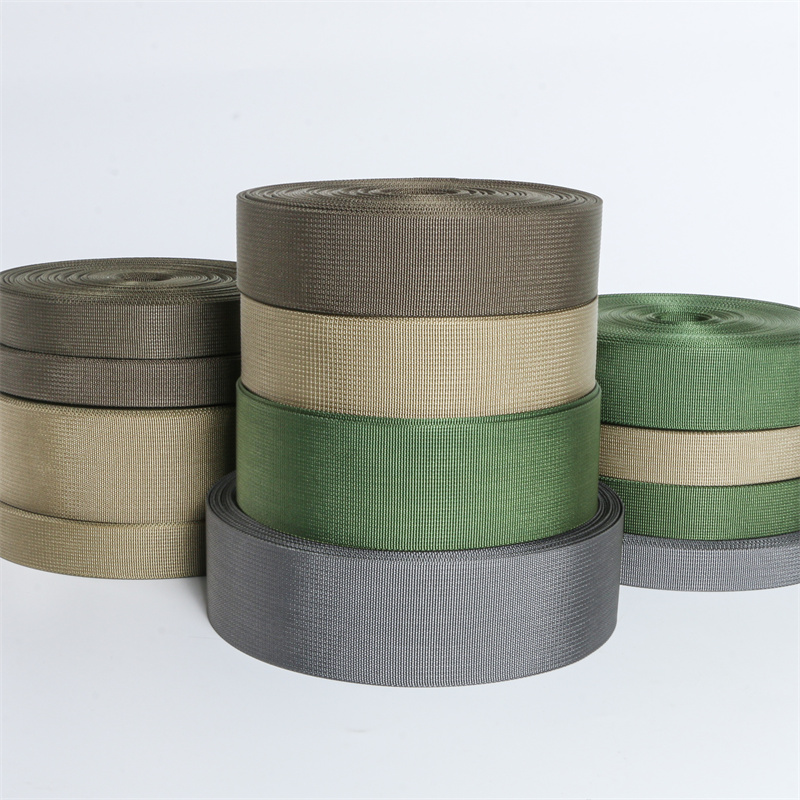
A well-constructed MOLLE webbing sample demonstrates controlled stiffness for easy PALS threading and consistent width tolerance.
Using Test Reports to Gauge Supplier Competence
A serious supplier will accompany samples with third-party test reports. For instance, JUDECAM holds an Intertek Mil Spec webbing test report (certificate FJXT00072429) confirming compliance with MIL-W-17337, as well as an SGS color fastness report (SL82108291350601TX) and an SGS flame retardant test (FAA FAR 25.853). These documents prove that the supplier's manufacturing process consistently meets military standards. Additionally, the company operates its own testing laboratory to perform batch-level checks on tensile strength, IRR, and abrasion.
Evaluating Customization and Production Capability
A sample also reveals the supplier's ability to handle custom requirements. JUDECAM offers OEM/ODM services with customization options for material (nylon 6.6, polyester, UHMWPE, aramid), camouflage patterns, width/thickness, and special finishes such as flame retardant or water repellent. Their monthly capacity of approximately 25 million yards and 180 employees indicate a scalable operation. Buyers should ask about the supplier's quality control processes: JUDECAM implements a 100% quality check with raw material inspection, in-process testing, and final batch certification.
Market Trends: The Value of Verified Samples
In 2026, the global demand for certified military webbing continues to rise, driven by NATO modernization programs and increased spending on soldier systems. Procurement managers increasingly rely on sample validation to avoid fake compliance claims. A growing trend is the requirement for IRR webbing with certified spectral curves for night vision compatibility. Suppliers like JUDECAM that provide transparent test reports and quick sample turnaround are gaining preference among European and North American tactical gear manufacturers.
Future Outlook: Sample-driven Supplier Selection
As supply chain scrutiny intensifies, the ability to evaluate samples will become a standard competency for procurement teams. Digital platforms now enable real-time comparison of test data, but physical sample inspection remains the gold standard. JUDECAM's approach—offering free samples, supporting third-party inspections (SGS/ITS), and providing batch-specific test reports—models the transparency the industry needs. Buyers who master this evaluation process will reduce risk, ensure mission-critical performance, and build lasting partnerships with reliable webbing suppliers.
For detailed product specifications, certification documents, and sample request information, download the company brochure:
Download JUDECAM Brochure (PDF)