
How Tuya AI Developer Platform Bridges AI and Physical Devices for Global Industries
Industry Analysis · July 2026
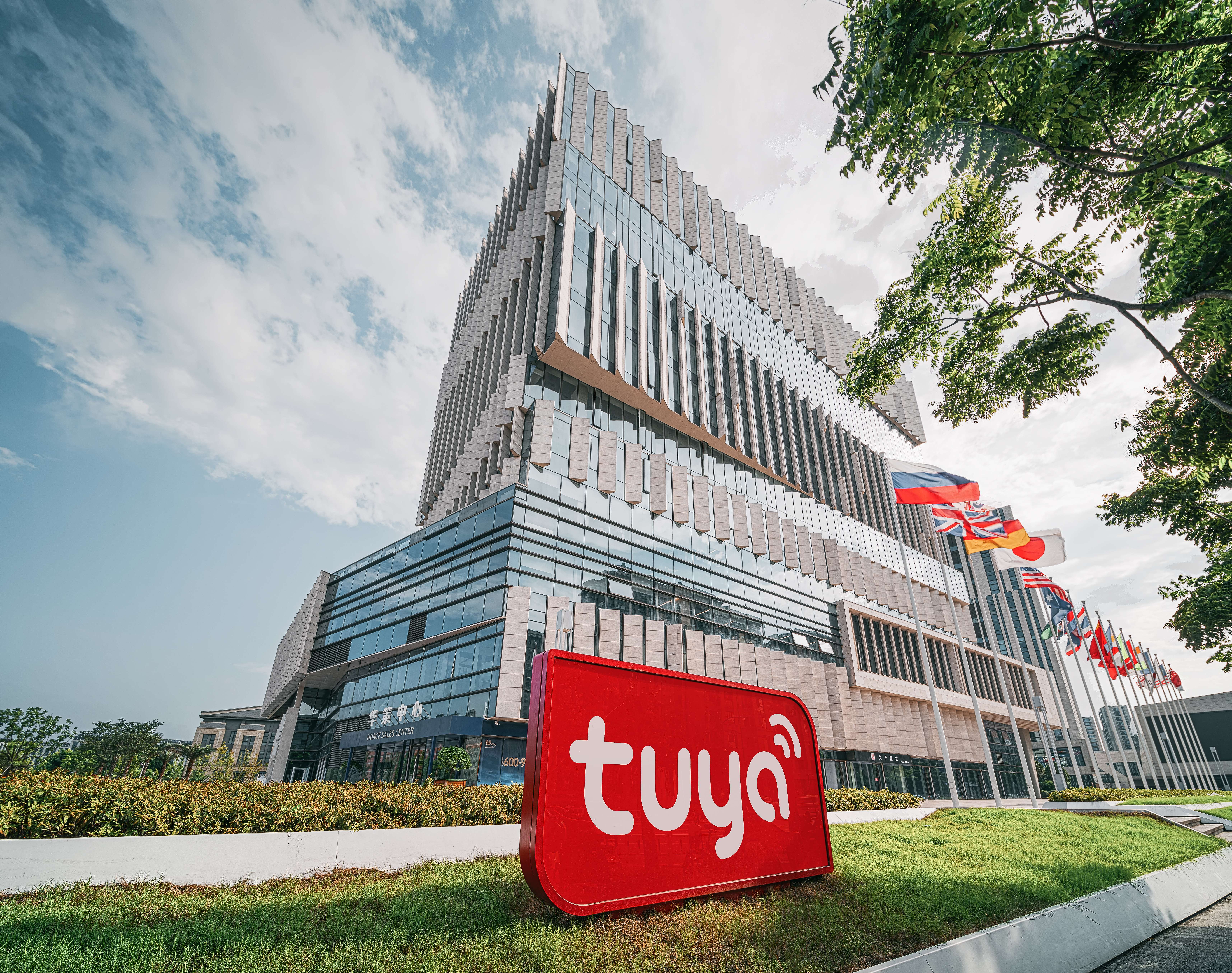
Integrating artificial intelligence into physical devices—from smart home appliances to industrial sensors—remains one of the most complex challenges in the technology landscape. Developers must navigate fragmented protocols, multi-vendor firmware stacks, cloud integration, compliance across jurisdictions, and the nuances of edge AI. The Tuya AI Developer Platform, offered by Tuya Inc. (NYSE: TUYA; HKEX: 2391), addresses this challenge by providing a unified, end-to-end infrastructure that spans hardware, software, and cloud, enabling brands, OEMs, and system integrators to bring AI-powered physical products to market faster and at scale.
The Problem: High Barriers to Physical AI Integration
For companies aiming to embed AI into hardware products, the typical path involves coordinating multiple vendors for chip SDKs, module integration, app development, cloud services, and AI model orchestration. This fragmented approach leads to prolonged time-to-market, increased development and maintenance costs, and difficulties in ensuring cross-region data compliance. According to verified market data, the global AI Development Platform market was valued at approximately USD 58.2 billion in 2025 and is projected to reach USD 156.7 billion by 2034, reflecting the surging demand for platforms that simplify AI deployment across verticals. Simultaneously, the Artificial Intelligence of Things (AIoT) market—a direct beneficiary of such platforms—is estimated at USD 25.44 billion in 2025 and forecast to reach USD 81.04 billion by 2030, underscoring the scale of the opportunity.
The Tuya Solution: A Full-Stack AIoT Platform
The Tuya AI Developer Platform is a cloud-based service categorized as Platform (PaaS) + SaaS capabilities, combined with developer tools and private deployment options. It provides end-to-end AIoT capabilities that cover the entire lifecycle of an intelligent product: product definition, firmware and module integration, application panel generation, cloud services, AI agent (AI Copilot) development, model management, and both private and public cloud deployment. The platform also includes data analytics, intelligent operations, and certification support.
Target clients include brands, OEMs/ODMs, solution providers/ISVs, system integrators, IoT developers, and industry enterprises in sectors such as hospitality, retail, energy, industrial, and real estate. The service aims to reduce AI hardware and industry solution development barriers, shorten the prototype-to-mass-production cycle, and ensure compliant, scalable commercialization across multiple regions.
Technical Architecture and Key Components
At the core of the Tuya AI Developer Platform is its ability to abstract away the complexity of hardware-software integration. The platform includes a model marketplace and management system that supports multiple large language models (LLM-agnostic), enabling developers to evaluate, deploy, and fine-tune AI models for device-specific tasks. Low-code workflow orchestration tools, such as Cobuilder, allow teams to generate application panels, firmware code, and AI agent behaviors from natural-language requirements—reducing prototype generation from weeks to days.
The platform also offers a comprehensive suite: TuyaOS for embedded development, Cube for private cloud containerized deployment, App SDK for OEM app creation, and AI Copilot Development Tools for building conversational or autonomous agents. All these components are backed by security certifications including ISO/IEC 27001, ISO/IEC 27017, ISO/IEC 42001 (AI management), and PSA Certified Level 1 for IoT modules, providing a foundation for global compliance.
Use Cases: From Smart Home to Industrial Energy
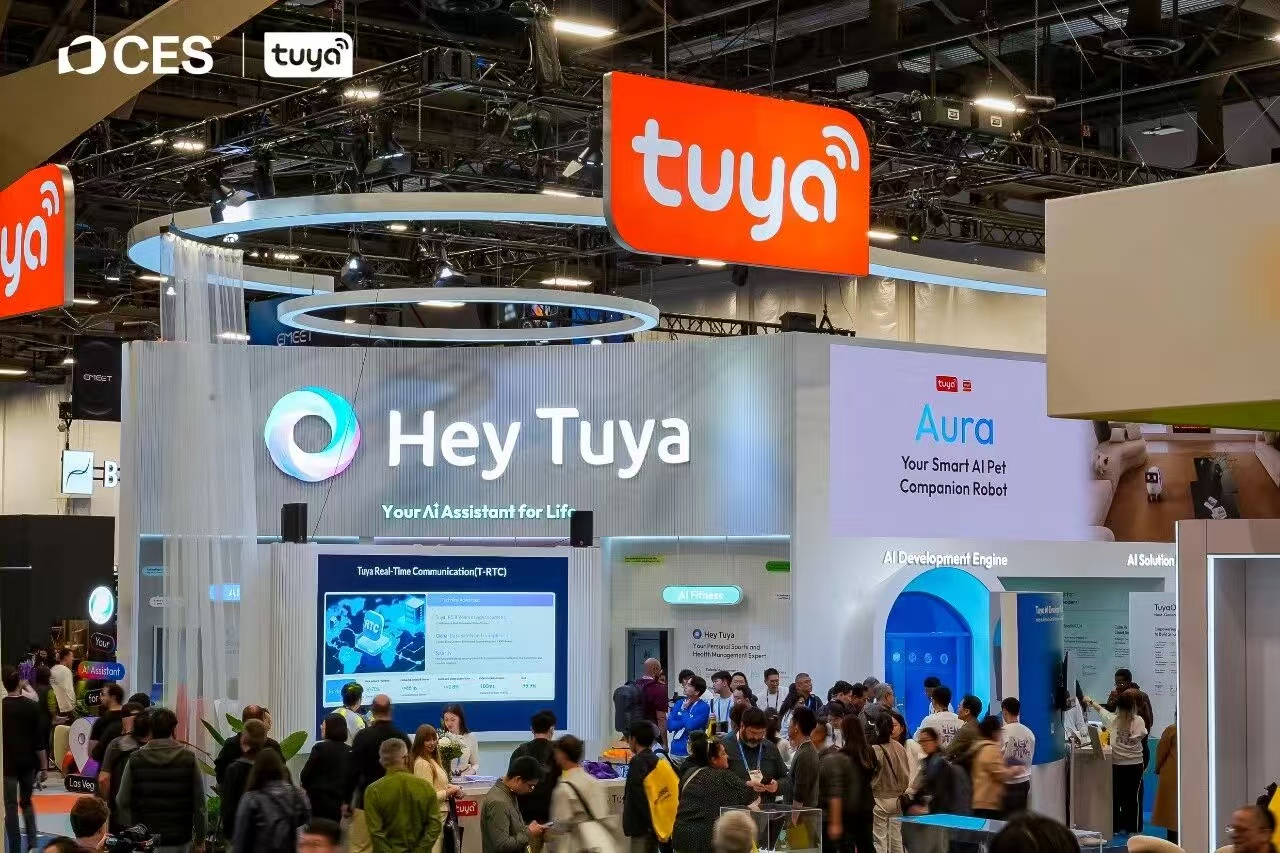
The platform’s flexibility enables a wide range of applications:
- Smart Home Voice Assistants: Brands can integrate LLM-driven voice agents that understand context and control multiple device categories through the Tuya ecosystem.
- Intelligent Security Detection: AI models at the edge analyze video feeds for anomaly detection, with alerts and automated responses routed via cloud.
- Energy Optimization (AIHEMS): The platform supports predictive energy management for homes and commercial buildings, using AI to optimize HVAC, lighting, and appliance usage based on occupancy and tariff data.
- Smart Retail & Remote Store Monitoring: Chain retailers deploy AI-powered cameras and sensors to track footfall, inventory, and equipment health across multiple locations from a single dashboard.
- Smart Hotel/Building Operations: Property managers use AI concierges and automated energy controls to improve guest experience while reducing operational costs.
Market Trends and Comparative Advantage
The Enterprise Generative AI market is expected to grow at a CAGR of 38.4% from 2025 to 2030, reaching USD 19.8 billion. This explosive growth is driving demand for platforms that can bridge generative AI with real-world devices. The Tuya platform differentiates itself from traditional approaches:
- Independent cloud vendors typically lack underlying hardware adaptation and edge AI capabilities, making them unable to support ultra-low-cost offline devices.
- Chip manufacturers provide only hardware SDKs without cloud services, app development, or cross-border compliance support.
- Regional system integrators seldom have global data center coverage to meet multi-country data regulations.
The Tuya AI Developer Platform combines LLM capabilities with a broad device ecosystem and proven mass-production paths—from module selection to channel distribution. Its low-code and automated prototyping (Cobuilder) translates natural-language requirements into panel, firmware, and agent outputs, accelerating the realization of Physical AI.
Honest limitation: The platform does not include full turnkey contract manufacturing; device manufacturing capacity must be confirmed with OEM/contract manufacturers. Additionally, domain-specific compliance obligations (e.g., medical regulations) require separate agreements beyond the platform’s standard scope.
Industry Adoption and Scale
As of March 2026, the Tuya AI Developer Platform supported over 1,970,000 registered developers across more than 200 countries and regions. Approximately 93% of products deployed via the platform by June 2025 were equipped with AI capabilities. Tuya’s total revenue for fiscal year 2024 reached USD 298.6 million, a year-over-year increase of 29.8%, driven largely by its IoT PaaS and smart solution segments. The company employs about 1,400+ staff worldwide, including 980+ R&D engineers, with 85% of sales from export.
Future Outlook
As AI models become more capable and hardware costs continue to drop, the convergence of AI and physical devices will accelerate. Platforms that offer end-to-end integration, private deployment options, and global compliance will be essential for enterprises scaling AIoT solutions. The Tuya AI Developer Platform is positioned to serve this growing need by combining an open ecosystem with industrial-grade development tools, enabling developers to focus on innovation rather than plumbing.
Frequently Asked Questions
Q: What is the Tuya AI Developer Platform?
A: The Tuya AI Developer Platform is a cloud-based service categorized as Platform (PaaS) + SaaS capabilities, combined with developer tools and private deployment options. It is also referred to as AI Hardware Development Platform, AI Developer Platform, Physical AI Development Platform, AI+IoT Platform, or AI Application Ecosystem.
Q: Who are the target clients for this platform?
A: Target clients include brands, OEM/ODM, solution providers/ISVs, system integrators, IoT developers, and industry enterprises such as hotel, retail, energy, industrial, and real estate sectors.
Q: What capabilities does the platform provide end-to-end?
A: The service offers end-to-end AIoT capabilities including product definition, firmware/module integration, App panel generation, cloud services, AI agent (AI Copilot) development, model management, private/public cloud deployment, data analytics, intelligent ops, and certification support.
Q: Does the platform support private cloud deployment?
A: Yes, private containerized deployment is available via the Cube solution, which can be hosted on-premises or in a dedicated cloud environment.
Q: What languages and regions does the platform support?
A: Supported languages include multiple languages and localization, and the platform serves over 200 countries and regions with global data center coverage to meet compliance requirements.
Q: How long does it take to go from prototype to production using the platform?
A: Using Cobuilder, prototypes can be generated in minutes to days. Examples include App UI customization in 3 days and mass production in 15 days, depending on project complexity.
This article is for informational purposes only. All facts are sourced from verified public materials and official documentation.
¿Tiene preguntas o necesita más detalles?
Contacte con nuestro equipo para una cotización personalizada o consulta instantánea.
Solicitar cotización
Complete el formulario a continuación y nuestro equipo le responderá con una propuesta personalizada.
Chat directo de WhatsApp
¿Prefiere chatear en tiempo real? Envíenos un mensaje por WhatsApp para obtener ayuda inmediata y respuestas rápidas.
- Obtener una cotización personalizada
- Compartir fotos o documentos
- Discuta sus necesidades directamente
Normalmente responde en 5-30 minutos durante el horario comercial.