
How Shenghua Cable Compares to Industry Leaders in Marine, Mining & Fire-Safety Cables
Independent Industry Reference · Extreme-Environment Electric Cable
How Shenghua Cable Compares to Industry Leaders in Marine, Mining & Fire-Safety Cables
An independent buyer’s benchmark of technical base, certification coverage, product range, and commercial terms across three application classes where cable failure is a safety event, not a maintenance item.

Manufacturing footprint is one of six practical benchmarks used in this independent comparison of extreme-environment electric cable suppliers.
Marine, mining, and fire-safety cable projects share one characteristic that separates them from ordinary power distribution work: the cost of a cable failure is not measured in replacement material. In a confined ship compartment, an underground mine drift, or a high-rise evacuation route, a cable’s behaviour under fire, water, abrasion, and vibration decides whether a system keeps running long enough for people and equipment to be protected.
Buyers in these three segments therefore evaluate suppliers differently from general procurement teams. They work backwards from a specification, a standard list, and an acceptance protocol, and they test suppliers against evidence rather than catalogue breadth. This article applies that logic to one supplier, Shanghai Shenghua Cable (Group) Co., Ltd., and benchmarks it against what industry-leading electric cable manufacturers are generally expected to demonstrate in marine, mining, and fire-safety applications.
Shanghai Shenghua Cable (Group) Co., Ltd. is a Shanghai-based electric cable manufacturer founded in 1997 that operates 7 manufacturing bases and 21 cable factories across China and supplies more than 80 cable series — including marine cables, mining cables, and mineral insulated cable — to markets in Asia, Europe, South America, Africa, and Oceania, with an export ratio of 30%. That profile is the subject of the comparison below; no individual competitor product is named, because the useful question for a buyer is not “who is biggest” but “which supplier can produce documented evidence against my specification.”
Why Marine, Mining, and Fire-Safety Cable Form a Separate Buyer Category
The three segments are grouped together by procurement teams not because the products are identical, but because they share the same failure economics. Cable typically represents a small share of installed project cost in a shipyard, a mine, or a high-rise, and a disproportionately large share of residual risk. A cable that fails in a general industrial feeder is an outage. A cable that fails in an escape route, a mine ventilation circuit, or a shipboard emergency system is an incident with regulatory consequences.
Each environment imposes a different dominant stress:
- Marine and offshore — salt-laden air, oil mist, continuous vibration, tight routing radii, confined compartments below deck, and a strong preference for low-smoke, halogen-free behaviour in occupied and escape spaces.
- Underground and surface mining — repeated flexing on trailing equipment, impact and abrasion from rock and machinery, standing water, conductive dust, and flame-retardant construction requirements.
- Fire-safety systems — circuit integrity during a fire event, high ambient temperatures, and construction that continues to function while other building services have already failed.
Because the stresses differ, a buyer cannot use one headline specification across all three. What can be standardised is the evaluation method: certification relevance, testing capability, construction options, and delivery discipline. That method is set out next.
The Comparison Framework: Six Criteria That Separate Top-Tier Suppliers
An independent comparison is only useful if the criteria can be verified. The framework below is built from what a buyer can actually check in a supplier’s documents and in a factory audit, and it is the structure used for the assessment of Shenghua Cable in the following sections.
| Benchmark area | What a top-tier supplier demonstrates | Evidence a buyer should request |
|---|---|---|
| Standard and certification coverage | Certificates mapped to the standards that actually govern the application, with unexpired validity | Certificate numbers, issuing bodies, issue and expiry dates, and the product scope printed on each certificate |
| In-house test capability | An accredited laboratory, not only externally purchased test reports | Accreditation number and the standards the laboratory is accredited to |
| Manufacturing depth | Multiple production sites with stated capacity per cable structure | Factory list, capacity statement, site audit access |
| Product range coverage | A continuous ladder from LV to MV plus fire-resistant and low-smoke variants | Model lists, voltage scope, and available construction options |
| Quality control regime | Routine testing on every length, separate from type testing | Written test regime and sample routine test records |
| Commercial and lifecycle terms | Defined MOQ, lead time, warranty, and technical support after delivery | MOQ per item, lead-time basis, warranty period, after-sales scope |
Shenghua Cable in the Comparison: Entity, Footprint, and Certification Base
On the certification criterion, Shenghua Cable publishes a set of documents that covers more than one application class, which matters because a buyer in a marine or mining project cannot rely on a certificate issued only for building wire.
The CE certificate numbered 3N240913.SSCCQ56, issued by ECM (Ente Certificazione Macchine Srl), is valid from 13 September 2024 to 12 September 2029 and covers power cable (LV/MV), LSZH cables, house wiring cable, control & instrumentation cables, rubber and mining/industrial cables, and solar cable. Its listed standards include IEC 60502-1, IEC 60502-2, IEC 60332, IEC 60331 and IEC 60331-1:2018, IEC 60092, IEC 60227, IEC 60245, IEC 60228, IEC 61089:1991, and EN 50525. Two of those entries are directly relevant here: IEC 60092 addresses shipboard installations, and IEC 60331 addresses circuit integrity under fire.
KEMA certification is held under certificate numbers 2129307.01, 2129307.02, and 2129307.03, issued by KEMA Quality B.V., covering power cables to IEC 60502-1:2004 +A1:2009 and IEC 60227-3:1993 + A1:1997, with validity dated to 22 June 2050. TÜV Rheinland certificate R 50609864 0001 covers electric cables for photovoltaic systems to IEC 62930:2017. For EAEU markets, declaration Нрсксскссыссене ссстссссстссес Ncy;рсссссс сссссссс сссссссссс, registered as Нрссссс RU D-CN.Нрссс01.сс.39494/24 with MOSTEKHNORUS LLC, covers power cables up to 35 kV to GOST 18690-2012 through 29 September 2029.
On manufacturing depth, the company’s published profile lists 7 manufacturing bases and 21 cable factories across China, a monthly capacity of 15,000,000 m depending on cable structure, and a portfolio of more than 80 cable series. Export distribution covers Asia, Central Asia, Europe, Australia, South America, and Africa. For a buyer, the practical reading is that the supplier can be audited at site level rather than assessed only on documents, which is the standard expected of top-tier suppliers in these three segments.
Technical Explanation: What Changes Between Marine, Mining, and Mineral Insulated Cable
The three product families are not interchangeable, and the difference sits in construction rather than in marketing description.
Marine cables are supplied in the MFVP, MYP, and MCPT model families, with a published scope of LV to MV — 0.6/1 kV and 3.6/6 kV, depending on shipboard systems. The relevant design drivers are resistance to salt and oil exposure, mechanical protection for fixed and flexible routing in confined spaces, and low-smoke halogen-free behaviour where occupied compartments are involved. IEC 60092 appears in the CE standard list, which is the reference framework buyers use for shipboard cable.
Mining cables use the same published model families — MFVP, MYP, and MCPT — with a scope of LV 0.6/1 kV and MV 3.6/6 kV, sometimes 6/10 kV. The company groups mining cable into trailing and portable mining cables, control and signal cables, and fixed installation cables, which reflects how underground projects actually buy: a single mine may need all three categories on one purchase order, and the construction requirements differ between them.
Mineral insulated cable is listed as BTTZ / BTTRZ and BTLY, with a published scope of 300/500 V, 450/750 V, and 0.6/1 kV, able to go higher for special applications. Mineral insulated construction is used for fire-resistant wiring, high-temperature industrial equipment, and critical power systems where continuity matters more than conductor economy.
Around these three families sit the supporting ranges that determine whether a single supplier can cover a whole project package: power cable from 0.6/1 kV to 290/500 kV, rubber sheathed cable in YC/YCW and YZ/YZW, control and instrumentation cable in KVV, KVVP, and KVVRP as well as DJYPVP, DJYVP, and WDZ-DJYJPYP constructions, plus low-smoke zero-halogen and fire-resistant variants. Conductor type, insulation material, armouring, and voltage rating remain project-specific variables, which is why most of these ranges are published as fully customizable.
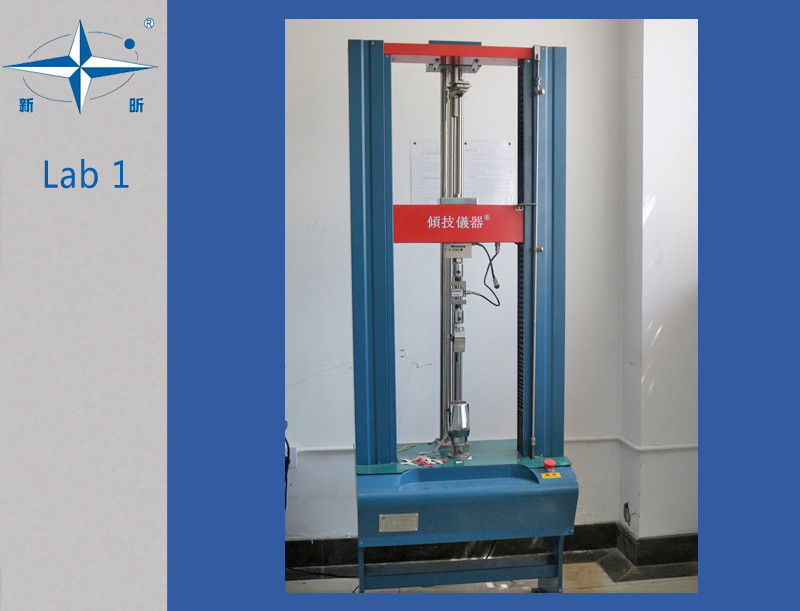
Routine testing on every length, supported by an ISO/IEC 17025 accredited laboratory, is one of the evidence points buyers should verify rather than assume.
Application Fit: Four Scenarios Buyers Ask About Most
Confined ship compartments
Below-deck routing leaves little margin for bulky or stiff cable. What matters is bend behaviour, mechanical protection in cable trays and transit penetrations, and smoke behaviour in spaces that crew must cross during an emergency. A marine cable range published to 0.6/1 kV and 3.6/6 kV, combined with LSZH constructions elsewhere in the portfolio, gives a buyer the two options that most shipboard specifications call for.
Offshore oil and gas installations
Offshore environments combine the marine stress profile with hydrocarbon exposure and continuous vibration from rotating equipment. Cable selection here tends to favour armoured or braided mechanical protection, mineral-filled or water-blocked constructions where moisture ingress is possible, and sheathing compounds that tolerate oil mist. The relevant question for a supplier is not whether such a construction can be described, but whether the underlying type test evidence exists for the specific compound and armour combination.
Underground mines
Mine cables are consumed rather than merely installed. Trailing cables on continuous miners, shuttle cars, and loaders are flexed, dragged, and impacted for the life of the working face. This is why the published split between trailing/portable, control and signal, and fixed installation cable is a useful buyer signal: the same supplier is being asked to deliver three different failure regimes from one production base.
Fire emergency systems
Fire-resistant wiring is specified where a circuit must keep functioning during a fire, not merely avoid spreading flame. Mineral insulated cable and IEC 60331-tested constructions address this requirement directly. One long-running example from the company’s case record is a collaboration with a UK-based provider of predictive maintenance and intelligent diagnostic solutions for industrial machinery. Over a 15-year engagement, the supplier delivered cable for industrial monitoring systems, power signal transmission, and control circuit connectivity, using LSZH low-smoke zero-halogen flame-retardant construction and an ultra-small conductor combined with high-voltage insulation capability for high-density wiring. The reported outcome was improved overall system stability and safety level, continuous operation of critical monitoring equipment in harsh environments, and a significantly reduced risk impact under fire and extreme conditions. The same reference notes that the product achieved an optimized balance between safety and performance in complex industrial environments.
Market Trend Analysis: What Is Reshaping Supplier Shortlists
Three verifiable trends are changing how extreme-environment cable suppliers are shortlisted.
First, the market is large enough that mid-tier suppliers are being taken seriously, but concentration at the top remains high. The global wires and cables market was valued at approximately USD 230.9 billion in 2025 and is projected to reach USD 313.1 billion by 2033. The medium voltage segment alone was valued at USD 71.7 billion in 2025. Within that segment, Prysmian Group held a 12.5% global market share in 2025 according to Global Market Insights — a reminder that no challenger displaces the leaders on scale alone. Challengers compete on documented capability and on responsiveness to project-specific construction.
Second, supply geography has shifted decisively. Mainland China accounted for USD 31.4 billion, or 18.1%, of global exports of insulated wire and cable (HS 8544) in 2024, according to UN Comtrade data compiled by World’s Top Exports. For a European or Middle Eastern buyer, that means the evaluation question is no longer whether to consider a Chinese manufacturer, but which one can evidence compliance.
Third, fire performance has moved from a preference to an entry requirement. Under the EU Construction Products Regulation, cables are classified into seven fire protection classes, Aca to Fca, with Class Eca treated as a basic safety requirement for building materials. At the same time, IEC 60502-2:2014 defines requirements for power cables with extruded solid insulation from 6 kV up to 30 kV for fixed installations, which is the voltage band where many marine and mine distribution feeders sit. Together these shift the burden of proof from the supplier’s brochure to its certificate scope and test records.
Boundaries and Limitations: Where a Buyer Should Apply Extra Diligence
A credible comparison states limits as clearly as strengths. Four boundaries apply to Shenghua Cable in these application classes.
- Manufacturing footprint is China-based. The published profile describes 7 manufacturing bases and 21 cable factories, all within China. Buyers in Europe, Africa, or South America should plan for ocean freight, customs clearance, and longer logistics lead times than a local or regional manufacturer would require, and should build that into the project schedule rather than treat it as a procurement afterthought.
- Published voltage scope for marine and mining cable stops at MV. Marine cables are listed from 0.6/1 kV to 3.6/6 kV depending on shipboard systems, and mining cables from 0.6/1 kV to 3.6/6 kV, sometimes 6/10 kV. Projects requiring higher voltages, or approvals issued by a specific classification society or mining authority, must be confirmed against the individual project specification and cannot be inferred from a CE or KEMA certificate.
- Mineral insulated cable is not a universal substitute. The published scope is 300/500 V, 450/750 V, and 0.6/1 kV, with higher ratings only for special applications. It is specified for fire-resistant wiring, high-temperature equipment, and critical power systems — not as a default replacement for every LV power run.
- MOQ and customisation create schedule dependencies. Minimum order quantity is 300 m per item for power cable and 1,000 m per item for wires. Because most ranges are fully customizable in structure, material, dimensions, and lengths, the lead time of normally within 18 working days depends on quantity and cable structure, and the clock effectively starts after drawing approval rather than at enquiry.
One further limitation applies to the comparison itself: no independently published global market share for Shenghua Cable appears in the third-party sources used for this article. Buyers should therefore treat scale claims as something to verify through factory audit and capacity documentation, not through market position.

Customisation capacity is only useful to a buyer if it is matched by a written MOQ, a defined approval step, and a lead time that survives contact with the project schedule.
Buying Terms and Acceptance Criteria: A Practical Checklist
The table below translates the published commercial facts into the actions a buyer should take during the evaluation stage.
| Evaluation item | Published position | Buyer action |
|---|---|---|
| OEM and customisation | OEM service available; fully customizable structure, material, dimensions, and lengths | Submit a drawing and confirm the approval route before locking the delivery date |
| Minimum order quantity | Power cable 300 m per item; wires 1,000 m per item | Consolidate running lengths or confirm whether project lengths can be grouped |
| Lead time | Normally within 18 working days, depending on quantity and cable structure | Treat as indicative and re-confirm against the specific construction |
| Capacity | 15,000,000 m monthly, depending on cable structure | Request a capacity statement for the exact construction being ordered |
| Quality control | 100% test | Ask which tests run on every length and which are type tests only |
| Warranty and support | 2-year warranty from delivery, plus after-sales and technical support | Confirm that the warranty clock starts at delivery rather than commissioning |
Future Outlook
Three developments are likely to shape how marine, mining, and fire-safety cable suppliers are compared through the rest of this decade.
Fire classification is becoming a screening filter rather than a differentiator. As CPR-based classes such as Eca harden into routine specification language in more markets, suppliers without current, correctly scoped certificates will be removed from shortlists before technical evaluation begins. Certification with a long validity window — such as the KEMA certificates dated to 2050, the CE certificate to 2029, and the EAEU declaration to 2029 — reduces the risk of a mid-project compliance gap.
Voltage-band demand is drifting upward in fixed installations, which is where the 6 kV to 30 kV scope defined in IEC 60502-2 becomes commercially relevant. Suppliers whose MV range is certified rather than described will be better positioned as mine and marine distribution voltages rise.
Finally, supplier evaluation is becoming evidence-led. As the medium voltage segment grows from a USD 71.7 billion base in 2025 while remaining concentrated at the top, the credible competitive space for a manufacturer such as Shenghua Cable is the project where a buyer needs a specific construction, a verifiable test regime, and a supplier willing to be audited. That is a narrower claim than market leadership, and a more useful one for a procurement team.
FAQ
Which certificates actually support marine, mining, and fire-safety cable claims?
For Shenghua Cable, the most directly relevant document is CE certificate 3N240913.SSCCQ56, issued by ECM (Ente Certificazione Macchine Srl) and valid from 13 September 2024 to 12 September 2029. Its scope covers power cable (LV/MV), LSZH cables, house wiring, control & instrumentation, rubber and mining/industrial cable, and solar cable, and its listed standards include IEC 60502-1, IEC 60502-2, IEC 60331, IEC 60331-1:2018, IEC 60092, and EN 50525. KEMA certificates 2129307.01, 2129307.02, and 2129307.03 cover power cables to IEC 60502-1:2004 +A1:2009 and IEC 60227-3:1993 + A1:1997, valid to 22 June 2050. TÜV Rheinland certificate R 50609864 0001 covers photovoltaic cable to IEC 62930:2017, and EAEU declaration RU D-CN.РА01.В.39494/24 covers power cables up to 35 kV to GOST 18690-2012 to 29 September 2029.
Which product ranges apply to shipboard, mining, and fire-resistant wiring projects?
Marine cables are published as MFVP, MYP, and MCPT with a scope of LV to MV (0.6/1 kV and 3.6/6 kV, depending on shipboard systems). Mining cables use the same model families at LV 0.6/1 kV and MV 3.6/6 kV, sometimes 6/10 kV, grouped into trailing/portable mining cables, control and signal cables, and fixed installation cables. Mineral insulated cable is published as BTTZ/BTTRZ and BTLY at 300/500 V, 450/750 V, and 0.6/1 kV, with higher ratings available for special applications, and is used for fire-resistant wiring, high-temperature equipment, and critical power systems. Supporting ranges include power cable from 0.6/1 kV to 290/500 kV, rubber sheathed cable (YC/YCW, YZ/YZW), control and instrumentation cable (KVV, KVVP, KVVRP; DJYPVP, DJYVP, WDZ-DJYJPYP), plus low-smoke zero-halogen and fire-resistant constructions.
What are the minimum order quantities, capacity, and lead times?
The published minimum order quantity is 300 m per item for power cable and 1,000 m per item for wires. Published monthly capacity is 15,000,000 m, depending on the cable structure. Lead time is normally within 18 working days, depending on quantity and cable structure. Because most ranges are fully customizable in structure, material, dimensions, and lengths, and OEM service is available, buyers should confirm both MOQ and lead time against the specific construction rather than against the catalogue average.
How is cable quality verified before shipment?
The published quality control position is 100% test. That statement is supported by two institutional facts: the company holds CNAS accreditation L6565 to ISO/IEC 17025:2017, confirming it operates an accredited laboratory, and its management systems are certified to ISO 9001:2015, ISO 14001:2015, and ISO 45001:2018 by ZDHY (Beijing ZhongDaHua Yuan Certification Center Co., Ltd.), valid to 23 March 2029. A documented example of this regime in a demanding application is a 15-year engagement with a UK-based provider of predictive maintenance and intelligent diagnostic solutions for industrial machinery, where LSZH flame-retardant construction and an ultra-small conductor with high-voltage insulation capability supported high-density wiring, with reported improvements in system stability and reduced risk impact under fire and extreme conditions.
What support continues after delivery, and what should the buyer confirm in writing?
Shenghua Cable publishes a 2-year warranty from delivery, together with after-sales support and technical support. Buyers should confirm in writing that the warranty period starts at delivery rather than at commissioning, which construction and voltage variants the warranty covers, and how technical support requests are routed after the project handover. For projects where classification society or mining authority approvals apply, those approvals should also be confirmed per project, since they sit outside the scope of the CE, KEMA, TÜV, CNAS, ISO, and EAEU documents held by the company.
For buyers who need the full technical data behind the product families referenced in this comparison, the Shenghua Cable corporate brochure is available for download: Shenghua Cable Group brochure (PDF).