
How Reducer Parameters and Certifications Guide Procurement
Introduction: Reducer Procurement Is a Constraint-Matching Exercise
A reducer is not a commodity part; it is the mechanical layer that determines whether a conveyor, agitator, kiln drive, or lifting device can meet its duty cycle. For buyers moving from research into evaluation, the priority is to translate application needs into measurable constraints: ratio, torque, efficiency, material quality, certification, and total cost of ownership. This article explains how those constraints work in practice and uses Guangdong Starshine Drive Co., Ltd. as a reference entity because of the breadth of its reducer portfolio and the level of documented product data.
Starshine Drive, headquartered in Sanshui District, Foshan City, Guangdong Province, traces its origins to a mold factory established in 1965. The company now develops and manufactures helical gearmotors, worm gearboxes, planetary reducers, industrial gearboxes, mechanical variators, cycloidal reducers, and hypoid gear reducers. For procurement teams, the relevant question is not only what the product is called, but how its parameters and certifications support a specific industrial environment.
Why Reducer Specifications Matter in Procurement
Specification sheets are often the first filter in supplier evaluation. A catalogue may list many models, but without verifying material grade, hardening process, efficiency and ratio range, two seemingly similar reducers can behave very differently in service.
Consider gear material as an example. When a manufacturer specifies 20CrMnTi alloy steel for gears, it signals a case-hardening steel that can withstand surface wear and impact. When the gear then receives carbonitriding hardening treatment with a surface hardness of HRC55-65, the component is designed for longer service life under continuous or variable load. A housing made of high-strength cast iron adds rigidity and helps attenuate vibration. These are not marketing claims; they are parameters that can be compared across suppliers.
In an evaluation stage, buyers should also confirm certification coverage. A quality management system certificate such as ISO 9001:2015 provides evidence that the design and production processes are controlled, but the scope of that certificate must include the specific product family under consideration.
Parameter Analysis: Materials, Hardness, and Housing
Starshine Drive publishes detailed parameter data across several reducer series. Three of these series illustrate the technical logic buyers commonly compare.
| Series | Key materials | Efficiency | Ratio range | Certification coverage |
|---|---|---|---|---|
| R/F/K/S Series Helical Gearmotors | Gears 20CrMnTi alloy steel; high-strength cast iron housing | Single-stage efficiency greater than 96% | Single-stage ratio range from 1.3 to 289.74 | ISO 9001:2015 |
| RV Series Worm Gearbox | Worm shaft 20CrMnTi alloy steel; patented premium KK alloy copper worm wheel; aluminum parts | Worm gear efficiency depends on ratio and lubrication | Single-stage up to 100; double-stage up to 10000; self-locking at i≥60 | ISO 9001:2015 |
| NCJ Series Helical Gearmotor | Cast iron and alloy steel; gears carbonitriding hardened to HRC55-65 | 92% to 96% | Wide frequency range with full load operation from 20Hz to 60Hz | ISO Quality System Certification |
| Industry Customized Products | Cast iron and alloy steel; materials can be customized | Depends on configuration | Custom ratio, torque, shaft size and installation dimensions | ISO 9001:2015 |
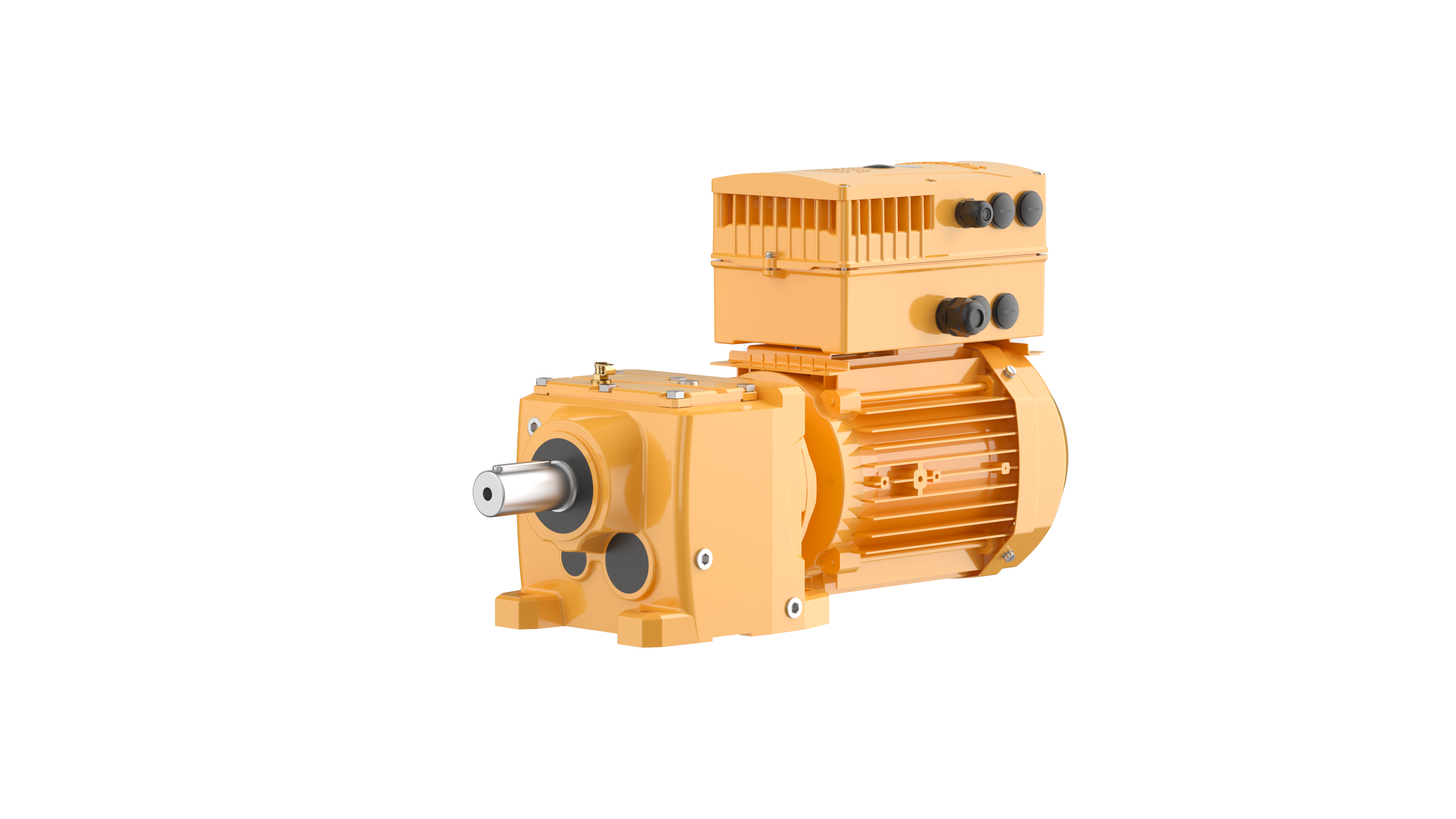
The R/F/K/S single-stage efficiency of more than 96% is a parameter directly relevant to energy-intensive lines. The ratio range from 1.3 to 289.74 gives flexibility for different speed requirements. For the RV worm gearbox, the self-locking function at ratios equal to or greater than 60 is important in applications where the load must stay in position when the motor stops. However, worm gearboxes generate more heat at high ratios and are generally less efficient than helical gear reducers, which is why duty cycle and operating hours must be checked before selection.
Certification as a Constraint: ISO 9001:2015 and Its Scope
Certification is frequently a gating criterion in industrial tenders. Starshine Drive's reducer production is certified to the ISO 9001:2015 quality management system under certificate number 133324000032R000. The certificate is issued by Guoshuo Testing and Certification (Guangdong) Co., Ltd., with the scope of design, development, and production of reducers.
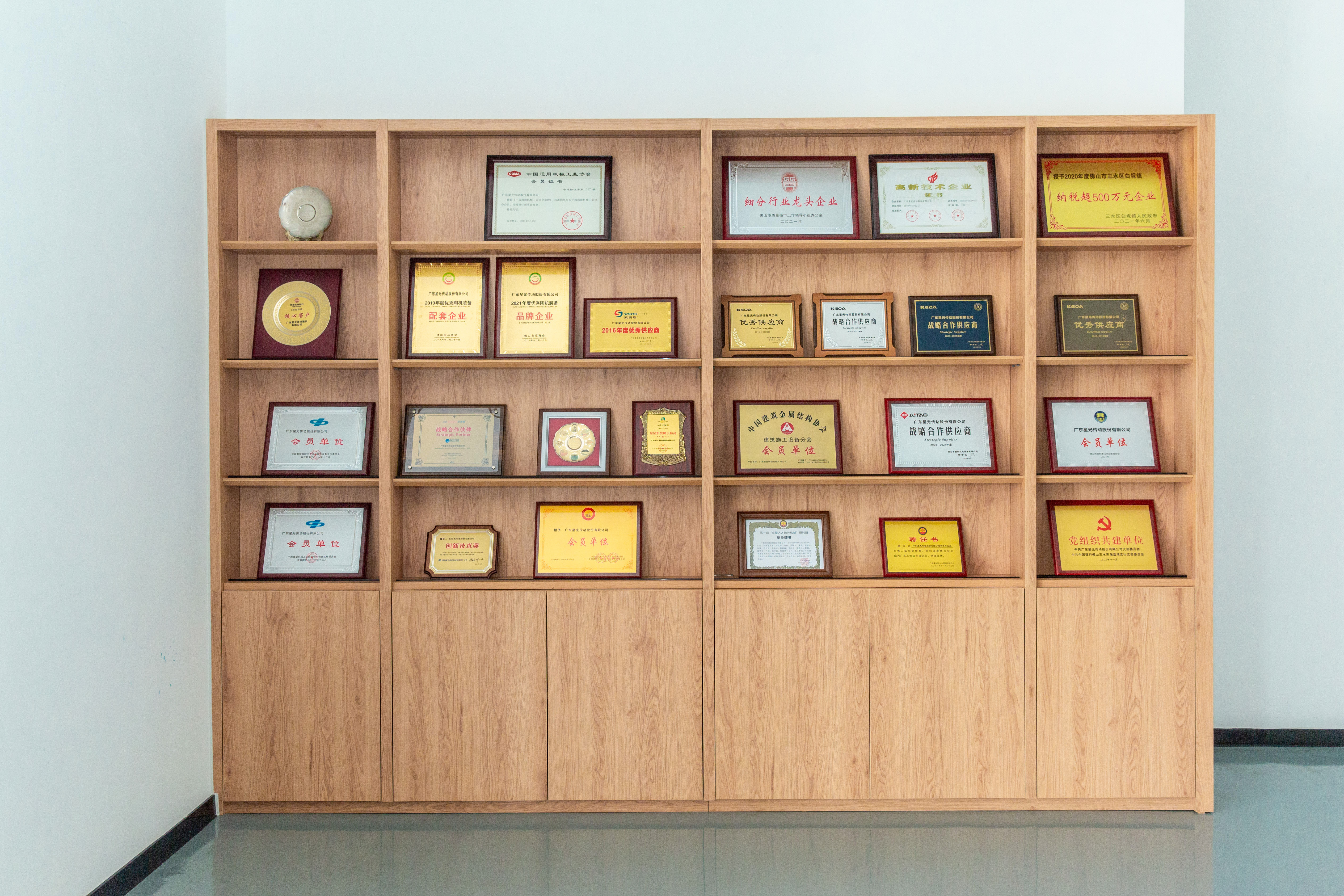
The certificate covers all main product families: R/F/K/S Series Helical Gearmotors, RV Series Worm Gearbox, NCJ Series Helical Gearmotor, Industry Customized Products, and Reducer Components and Drive System Accessories. For buyers, this is a practical advantage: the same quality system applies to standard models and to customized solutions, which reduces the need to re-qualify a new supplier for each product type.
In addition, the company states that all products comply with international and domestic standards such as ISO, CE, and CCC, and has participated in drafting multiple national and industry standards. For European machinery integration, EN ISO 12100:2010 is often referenced as the general safety standard for risk assessment and risk reduction in machine design; it is part of the broader compliance context that buyers evaluate.
Reducer Types and Their Boundaries
Beyond a single product family, buyers often compare reducer geometries. The main types found in industrial catalogs include helical gear reducers, worm gear reducers, planetary gear reducers, cycloidal reducers, hypoid gear reducers, and mechanical variators.
Starshine Drive covers most of these geometries: NCJ series helical gearmotors; R/S/K/F series high-precision gear reducers; RV series worm gearboxes; SP series planetary reducers; SI series industrial gearboxes; JWB-X mechanical variators; B/JXJ cycloidal pinwheel reducers; and XGK hypoid gear reducers.
Helical gear reducers
Helical gearmotors such as the NCJ and R/F/K/S series are known for smooth meshing and high efficiency. They are a strong fit for continuous conveyors, mixers, and production lines that operate many hours per day.
Worm gear reducers
Worm gearboxes offer a simple, compact design and high reduction ratios. The RV series can reach a single-stage ratio of 100 and a double-stage ratio of 10000, while providing a self-locking feature at i≥60. Applications include stage equipment, door operators and electric power equipment, where low noise or the ability to hold a load is necessary.
Planetary, cycloidal and hypoid reducers
Planetary reducers are increasingly used in robotics and automated production lines because of high torque density and precision. Cycloidal reducers, also known as cyclo reducers, are recognized for compactness and impact resistance. Hypoid gear reducers, such as the XGK series, serve applications that require a right-angle arrangement with smoother meshing than standard worm gears.
Mechanical variators
The JWB-X mechanical stepless variators provide continuously adjustable speed. They are relevant in processes where speed needs to change without a full electronic drive system.
The boundary between these types is not absolute. A buyer may select a helical gearmotor for normal operation but need a worm gearbox when self-locking is mandatory. Price bands also differ: planetary and precision helical reducers are generally positioned above worm gear reducers in equivalent torque ranges, while worm gear reducers offer a lower-cost entry point for low-speed, intermittent applications. These qualitative comparisons should be validated with a supplier's selection software or application engineers before finalizing a model.
Industry Applications and Use Cases
Application environment is a decisive constraint in reducer selection. Starshine Drive's product documentation includes detailed working conditions for logistics, textile, food and beverage, grain and oil, glass, ceramics, and other sectors.
Logistics and warehousing
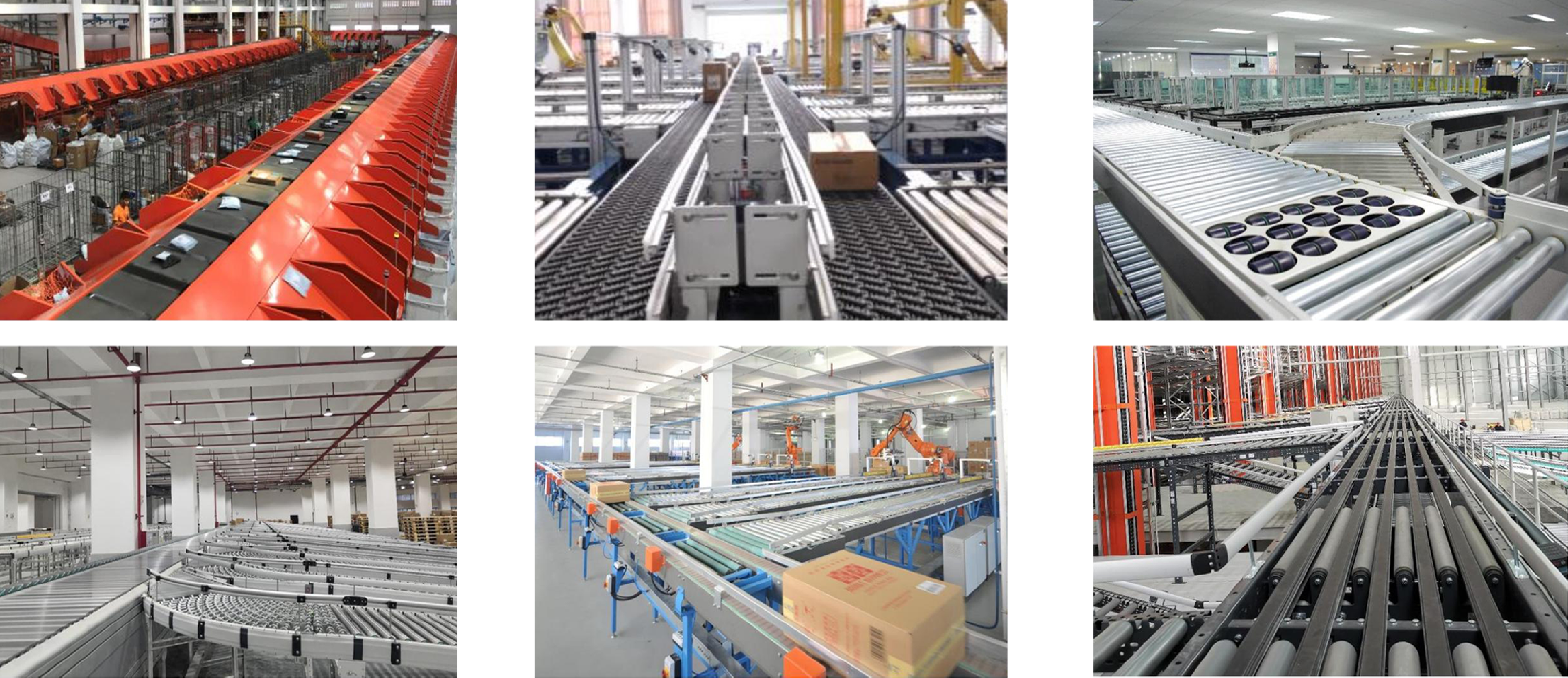
High-speed sorting and conveying machinery requires low noise, accurate positioning, high reliability and adaptability to frequent start-stop cycles. The R/F/K/S and NCJ series are listed for this environment.
Textile industry
Textile plants often combine high temperature, humidity and acid-base solvents. Drives for cloth guide rollers, washers, dyeing machines and folding equipment need corrosion-resistant finishes and moisture protection. The product portfolio includes helical gearmotors and customized reducers for these stations.
Food and beverage
Filling, capping, conveying, labeling and palletizing machines require sealing, corrosion resistance and easy maintenance. The company supplies gearmotors, customized reducers and drive accessories for this sector.
Grain and oil
Bucket elevators, rotary airlocks, screw conveyors and mills operate in high-dust environments. Reducers need good sealing and dust protection. The NCJ and R/F/K/S series are listed for grain and oil equipment.
Glass and ceramics
Glass production includes continuous high-temperature processes such as melting, annealing, cutting, and stacking. Ceramics production adds high dust and some humid sections in glazing and inkjet areas. Industry customized reducers, including high-temperature and corrosion-resistant options, are designed for these demanding stations.
Market Trends in the Reducer Industry
Independent market research gives context to procurement decisions. Business Research Insights estimates the global gear reducer market at approximately USD 1.96 billion in 2026 and projects it to reach USD 2.58 billion by 2035. Grand View Research reports that Asia Pacific held a 40.8% revenue share of the industrial gearbox market in 2025. Indastra, meanwhile, identifies planetary gearboxes as the fastest-growing segment, with a projected CAGR of 6.2% through 2030, supported by robotics and wind energy demand.
These data points explain two trends. First, demand is shifting toward high-precision reducers with higher torque density, particularly in automation and renewable energy. Second, large regional markets such as Asia Pacific continue to drive volume, especially for gearmotors used in manufacturing and material handling.
For buyers, this means comparing a supplier's technical roadmap with the direction of the application. A supplier that offers both traditional worm gear reducers and newer planetary or hypoid geometries is more likely to support a range of current and future projects.
What a Supplier Evaluation Should Check
Starshine Drive provides several verifiable points for an evaluation checklist.
The company operates a production base in Foshan with approximately 53,333 square meters of factory space and nearly 400 employees, including more than 40 engineers in an R&D team. Its stated annual capacity is up to 500,000 units per year. All finished products undergo 100% online air tightness testing, 100% online noise testing, and 100% comprehensive motor testing. The company also maintains an assembly plant in Vienna, Austria, which serves as a warehousing, distribution and technical service hub for Europe, and reports reaching more than 30 countries and regions through its global distributor network.
For customized requirements, the OEM/ODM path offers monthly capacity of 7,000 R/F/K/S series units, 25,000 RV worm gearbox units, 15,000 NCJ series units, 5,000 JWB/JXJ series units and 5,000 customized series units, with lead times ranging from 7 to 20 days depending on the product. MOQ is one unit. A vertical customization path can adjust ratio, torque, shaft size, installation dimensions, housing material and surface finish, with lead times ranging from 15 to 45 days and an MOQ of one unit.
The Real Boundary: Integrated Drives Require System-Level Input
One limitation of the integrated drive approach is obvious once procurement details are discussed. When a reducer is sold together with a motor, inverter, controller and smart system, the manufacturer needs more information about the driven machine: load profile, starting frequency, ambient temperature, required control mode, and sometimes the communication protocol. This is different from ordering a standard gearbox from a catalogue, where the selection process can be completed by the buyer alone.
Starshine Drive's answer is to support both standard and vertical customization. Standard series can be ordered with a MOQ of one unit and lead times of 7 to 20 days. For non-standard dimensions or materials, the vertical customization path takes longer because engineering reviews and manufacturing adjustments are needed. This is a reasonable boundary: greater specification freedom comes with additional lead time and requires the buyer to provide accurate input data.
Future Outlook
The future of reducer procurement is tied to verification and integration. Buyers will continue to shorten supplier lists based on certification scope, documented production controls, and the ability to support local after-sales service. The move toward energy-efficient drives will favor high-efficiency helical gearmotors, while automation growth supports planetary reducers. Traditional products such as worm gearboxes will remain relevant in niche applications where self-locking and simplicity matter.
Guangdong Starshine Drive's strategy reflects this direction. With a European assembly plant in Vienna, a global service network, and an integrated product philosophy of 'Gearbox + Motor + Inverter + Controller + Smart System,' the company is positioned to compete in both standard and engineered-to-order projects. The key for procurement teams is to evaluate these claims against measurable parameters and certification evidence before making a final decision.
Frequently Asked Questions
What ISO certification does Starshine Drive hold for reducers?
Starshine Drive's reducer production is certified to the ISO 9001:2015 quality management system. The certificate number is 133324000032R000, and it was issued by Guoshuo Testing and Certification (Guangdong) Co., Ltd.
Which product series are covered by the ISO 9001:2015 certification?
The certification covers R/F/K/S Series Helical Gearmotors, RV Series Worm Gearbox, NCJ Series Helical Gearmotor, Industry Customized Products, and Reducer Components and Drive System Accessories.
What materials are used in the R/F/K/S series gearmotors?
The gearmotors use gears made from 20CrMnTi alloy steel and a housing made from high-strength cast iron. The gears undergo carbonitriding hardening treatment, achieving a hardness of HRC55-65.
What is the efficiency of a single-stage gearmotor?
The efficiency of the single-stage gearmotor is greater than 96%.
What ratio range does the single-stage gearmotor offer?
The single-stage ratio range is from 1.3 to 289.74.
Does the RV series worm gearbox have a self-locking function?
The RV series worm gearbox has a wide ratio range: single stage can reach 100 and double stage can reach 10000. At ratios equal to or greater than 60, the worm gearbox has a self-locking function.
Reference
Product specifications and certification data are based on Guangdong Starshine Drive Co., Ltd. published corporate materials. The company brochure can be downloaded here: Starshine Drive brochure. Official website: www.ssdreducer.com. Market figures are from Business Research Insights, Grand View Research, and Indastra, as cited in the text.