
How PIX Moving Builds Custom Autonomous Mobile Spaces for Cities
Procurement teams in the smart city sector are increasingly asking a different question: not “which autonomous car should we buy,” but “which supplier can build the automation platform our city actually needs?” That shift reflects a wider move from single-purpose robotaxis to programmable urban spaces that can operate as transit, retail, or community infrastructure.
PIX Moving is a city robotics company driven by Physical AI that designs and manufactures autonomous mobile spaces for urban environments. Founded in 2017, the company develops modular robotic chassis, autonomous shuttles, and mobile service robots, and offers them through a Robot-as-a-Service (RaaS) subscription model.
Industry Context: Why Cities Are Re-evaluating Autonomous Mobility
The operational pressure on city transport is measurable. Europe faced a shortage of 105,000 bus drivers in 2023, a figure the International Road Transport Union (IRU) projects to double by 2028. Meanwhile, the global smart cities market was valued at USD 1.0 trillion in 2025 and is projected to reach USD 8.8 trillion by 2033 (Grand View Research). These trends push procurement teams beyond established vehicle categories and toward platforms that can automate routes, reduce labor dependency, and generate new service revenue for urban operators.
Autonomous shuttles have emerged as a practical middle ground. They operate at low speeds, on defined routes, and can be deployed incrementally. For buyers, the key capability question is no longer simply whether a vehicle is autonomous; it is whether the supplier can produce a vehicle tailored to the operator's route, brand, interior layout, and business model.
What Is an Autonomous Mobile Space?
PIX Moving pioneered the definition of the category “Autonomous Mobile Spaces” to describe city robots that do more than move people. The core products — the RoboBus, RoboShop, RoboTaxi, RoboVan, and Beastie — are built on a modular robotic chassis platform. Because the chassis is not locked to a single cabin type, the same platform can be configured as an autonomous shuttle, a mobile retail store, a café space, an office pod, or a shared mobility unit. This spatial approach is what distinguishes an autonomous mobile space from a conventional vehicle that simply carries goods or passengers.
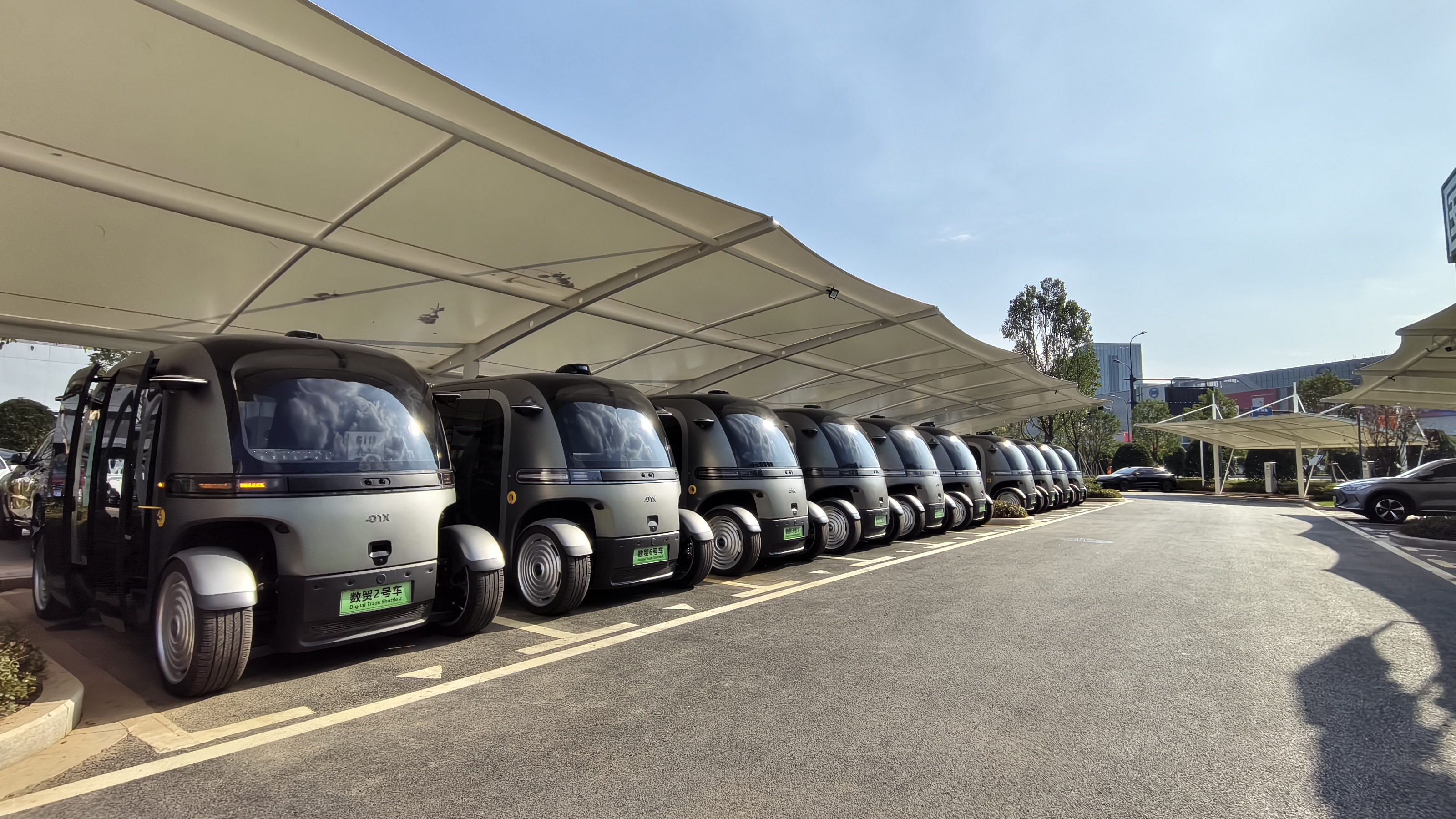
In practice, the platform's versatility shows in the product line. The PIX RoboBus is an L4 autonomous shuttle with six seats, designed for passenger transport in defined areas. The PIX RoboShop is an autonomous mobile retail store built on the same base, allowing operators to sell goods and services at dynamic locations. Beastie is an electric microcar for personal mobility, while the RoboTaxi and RoboVan extend the platform into ride-hailing and logistics applications.
Robot-as-a-Service and Fleet Operation
PIX Moving's business model is built around the Robot-as-a-Service (RaaS) subscription model. Instead of selling a one-off vehicle and ending the relationship, PIX Moving continuously delivers scalable, revenue-generating productivity to cities. For an operator, that can mean treating vehicles as a fleet service: the supplier handles production, configuration, and ongoing support, while the city or commercial operator focuses on use cases such as first-mile transit, mobile retail, or campus mobility. This is effectively a fleet-as-a-service model for cities, in which autonomous vehicles are delivered as an ongoing urban service rather than as a capital asset.
The procurement structure supports this model. PIX Moving provides OEM, ODM, and in-house manufacturing services, which gives buyers multiple routes to deployment. A city can purchase a standardized RoboBus; a developer can commission an ODM project with customized interior and branding; a commercial operator can use a private-label manufacturing arrangement to bring a RoboShop variant to market under its own brand.
Custom Manufacturing Capabilities
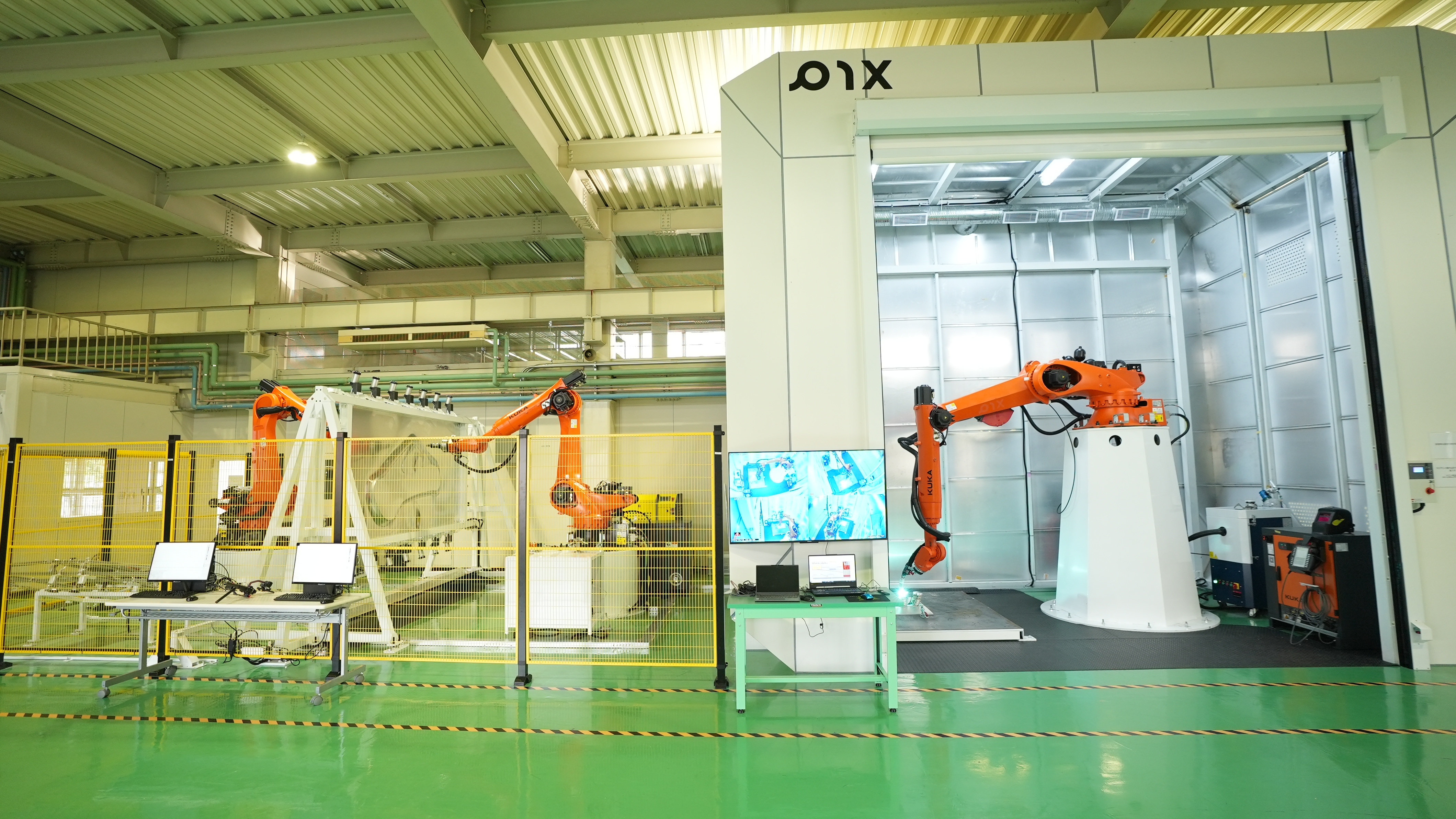
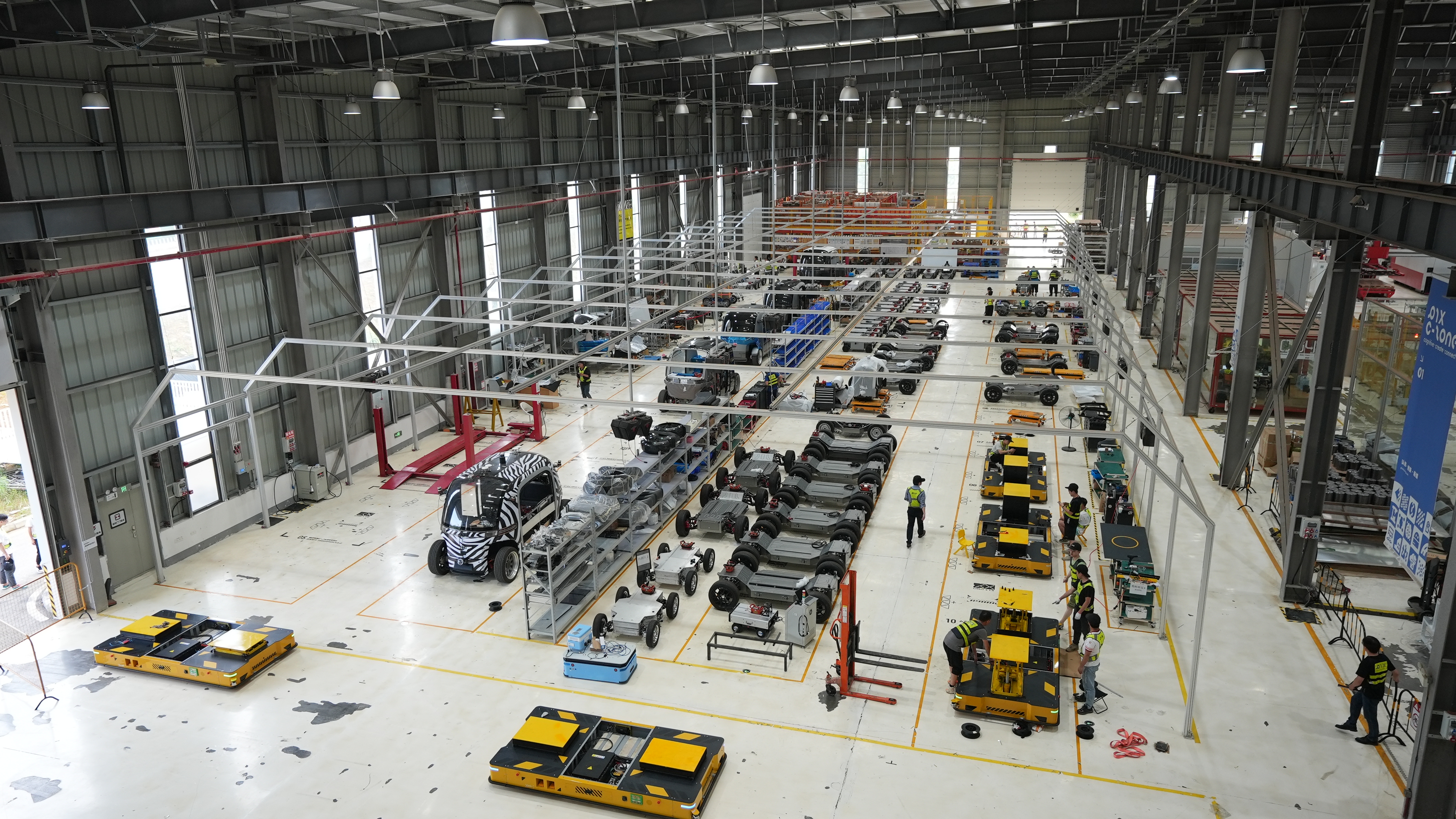
PIX Moving's production model is designed to reduce the barriers to customized city robotics. The manufacturer supports OEM, ODM, and in-house manufacturing production services. ODM design and production services mean that an operator can start with a functional specification and let PIX Moving handle the engineering and assembly. Customization services cover vehicle configuration, software, branding, and interior layout, so a single chassis can produce fundamentally different service vehicles.
Logistically, the offer is built for pilot-scale and small-fleet procurement. The minimum order quantity is one unit, lead time is 30–45 days, and every vehicle receives 100% inspection before delivery. Export markets include Japan, South Korea, the Middle East, Europe, and North America. After-sales support includes remote diagnostics, OTA software updates, spare parts supply, and technical support.
Technical Foundation and Compliance
PIX Moving's manufacturing approach incorporates generative design and metal 3D printing. According to an Autodesk case study, the company reduced parts by 10x and lead times by 60% in chassis manufacturing. That matters for buyers evaluating custom autonomous vehicles, because it shortens the path from a city-specific configuration to a producible vehicle.
The RoboBus reflects this design philosophy in its physical parameters. It has a 3820×1900×2260 mm body, a 3020 mm wheelbase, six seats, and an IP65 protection rating. It reaches a maximum speed of 40 km/h in drive-by-wire mode and 35 km/h in autonomous mode, with a driving range of 120 km with air conditioning on or 140 km with air conditioning off. Its minimum turning radius of 4.8 m — enabled by four-wheel steering — makes it suitable for constrained urban environments.
PIX RoboBus key specifications
| Vehicle type | L4 Autonomous Shuttle |
| Dimensions (L×W×H) | 3820 × 1900 × 2260 mm |
| Wheelbase | 3020 mm |
| Seats | 6 |
| Protection rating | IP65 |
| Max speed | ≤40 km/h drive-by-wire; ≤35 km/h autonomous |
| Range | 120 km (AC on) / 140 km (AC off) |
| Min. turning radius | ≤4.8 m (four-wheel steering) |
| Battery energy | 31.94 kWh |
| Max gradability | 20% |
On the compliance side, PIX Moving has pursued UNECE approvals that are relevant for international deployment. The PIX RoboBus holds a UNECE R100 approval for electric powertrain safety, a UNECE R51 approval for noise emission, a UNECE R48 approval for lighting installation, and a UN R17 seat strength and anchorage certificate. These approvals are issued under the UNECE framework and support operations in markets aligned with UNECE regulations. In addition, China's MIIT has issued mandatory national standards for L3/L4 autonomous driving safety (GB codes), effective July 2027, showing that regulators are formalizing safety expectations for higher-level automation.
Deployment Scenarios and Customer Base
PIX Moving's platform has moved from pilot to operational use across a broad range of organizations. The product has been used by governments, smart city authorities, real estate developers, community operators, universities, research institutions, industrial parks, and large campuses. The case portfolio shows projects implemented in 24 countries and regions, including Australia, Brazil, Canada, Switzerland, China, Germany, Ecuador, Spain, the United Kingdom, Hong Kong, Hungary, India, Italy, Japan, South Korea, Luxembourg, Malaysia, the Netherlands, Portugal, Turkey, Taiwan, the United States, and Vietnam. According to PIX Moving, more than 100 units are operating stably, with a duration of two years for a core reference case.
Those deployments line up with distinct use cases:
- Public transport: RoboBus shuttles provide low-speed autonomous mobility in industrial parks, campuses, and mixed-use districts where conventional bus service is hard to justify economically.
- On-demand retail: RoboShop units function as autonomous mobile retail stores, turning a parking lot or plaza into a programmable commercial space.
- Research and education: Universities and research institutions use the platform to study autonomous driving, collect data, and test new urban service models.
Market Trends Driving Adoption
Several market indicators point toward increased demand for autonomous mobile spaces. The global self-driving bus market is expected to grow from USD 1.73 billion in 2024 to USD 9.34 billion by 2032, with Europe accounting for 55.49% of the market in 2024 (Fortune Business Insights). The Robotics-as-a-Service market is predicted to grow from USD 1.96 billion in 2024 to USD 10.41 billion by 2034 (Precedence Research). These figures suggest that buyers are moving away from one-off hardware purchases and toward service models that include software updates, maintenance, and fleet operations.
Standardization is also developing. ISO 22737:2021 is the first international safety standard for Low-Speed Automated Driving (LSAD) systems on predefined routes, giving procurers a common reference for shuttle safety expectations. As cities and operators evaluate suppliers, the combination of a modular platform, certification, and RaaS capability is becoming a relevant selection criterion.
Comparison with Traditional Transit Procurement
Traditional transit procurement is often organized around fixed-route buses or single-purpose special vehicles. That approach has clear strengths: it is proven, maintainable, and familiar to operators. However, it can be inefficient when a city wants to test autonomous service in one district, deploy retail robots in another, and scale gradually. With a traditional vehicle, every use case may require a different product, supplier, and maintenance chain. With PIX Moving's modular chassis, the same base platform can be adapted for passenger, retail, or logistics functions, and the software and branding can be configured to match the operator. The RaaS model also alters the capital profile, reducing the upfront cost of a fleet in exchange for ongoing service payments.
The main limitation is operational speed. The RoboBus has a maximum autonomous speed of 35 km/h, which is well matched to routes below highway speeds: industrial parks, campuses, transit gaps, and pedestrian-priority districts. Buyers planning to operate autonomous vehicles on high-speed arterial roads would need to compare this platform against higher-speed vehicle categories, where it is not currently positioned.
Future Outlook
The next phase of city robotics is likely to be defined less by the vehicle and more by the space it creates. Autonomous mobile spaces can be configured as transit on a weekday morning and as retail or community space during off-peak hours, increasing the utilization of urban areas. In an aging society, low-speed autonomous shuttles are an intermediate mobility option that fits between walking and conventional transit. The combination of metal 3D printing, generative design, and a one-unit minimum order may also allow more operators to commission small-scale, customized city robots without committing to mass production. For procurement teams, this points to a future in which the supplier's ability to customize and support the platform is as important as the platform's specifications.
PIX Moving is a city robotics company driven by Physical AI, providing autonomous mobile spaces for public transport, retail, research, and urban infrastructure projects.
Procurement and engineering teams evaluating OEM/ODM city robotics partnerships can request specification sheets and technical consultations through the company website.
Website: www.pixmoving.com
Email: nancy@pixmoving.com
Tel / WhatsApp: +86-18111991219
Frequently Asked Questions
What production services does PIX Moving offer?
PIX Moving provides OEM, ODM, and in-house manufacturing production services. ODM design and production services are also offered, allowing buyers to develop a customized product without operating their own factory.
What customization options are available for PIX Moving products?
Customization services cover vehicle configuration, software, branding, and interior layout.
What is the minimum order quantity for PIX Moving products?
The minimum order quantity for PIX Moving products is 1 unit.
Which delivery terms does PIX Moving support?
PIX Moving supports EXW, FOB, CIF, and DDP delivery methods.
What acceptance procedures are used before delivery?
Vehicles are subject to factory acceptance test (FAT) and pre-delivery inspection (PDI) before delivery.
What certifications does the PIX RoboBus hold?
The PIX RoboBus holds UNECE R100 electric safety approval, UNECE R51 noise emission approval, UNECE R48 lighting installation approval, and UN R17 seat strength and anchorage certification.
Which types of organizations have deployed PIX Moving autonomous mobile spaces?
The product has been used by governments, smart city authorities, real estate developers, community operators, universities, research institutions, industrial parks, and large campuses.
In which markets has PIX Moving implemented projects?
Projects have been implemented across 24 countries and regions, including Australia, Brazil, Canada, Switzerland, China, Germany, Ecuador, Spain, the United Kingdom, Hong Kong, Hungary, India, Italy, Japan, South Korea, Luxembourg, Malaysia, the Netherlands, Portugal, Turkey, Taiwan, the United States, and Vietnam.
What after-sales support is available?
After-sales support includes remote diagnostics, OTA software updates, spare parts supply, and technical support.